What I read in September.

September was another month when I put away a ton of books with the help of the book readers on my new smart phone. The quality of what I read doesn’t quite match up with most of the rest of the year, but I can’t really say I’m sorry I read any of the books that I read this month. And in the case of the last book on the list, I am glad to be done with what was a more than 6-year long ordeal.

Long Live the King!
Mary Roberts Rinehart.

This was a strange book. I found it on Aldiko’s list of public domain books and it sounded interesting, so I read it. Rinehart is apparently a famous mystery writer, but this isn’t a mystery. It is an adventure with very little adventuring or a romance without much romance. This is the story of a fictional European Kingdom that is trying to fend off a communist revolution and survive the death of an elderly king when the heir is still a small child.

What makes this book even slightly interesting is that it is written from a decidedly American point of view. The revolutionaries are very clearly bad guys, if they were to gain control of the country it would be a disaster. The monarchy, however, is portrayed as mostly corrupt and incompetent. It doesn’t really get the reader to root for them. There is constant talk of America and the great Abraham Lincoln that never stops reminding the reader that this monarchy business is all nonsense. There are plots within plots and several different factions vying for power, but by the end of the novel, nothing really comes from it.

Long Live the King! is a slog. The elements for a quality adventure or romance story are here, but they never build to any sort of satisfactory climax. It is long and too unfocused to be worth reading.

Pagan Passions
Randall Garrett and Laurence M. Janifer

This is the second of my forays into unknown old stuff on my phone. Pagan Passions is a sci-fi story about what the world would be like is the Greek Gods showed back up after being away for 2000 years. And apparently, what would happen are orgies. Big, oddly sexless orgies.

The protagonist (whose name escapes me) is a college professor and disciple of Athena who is suddenly called upon to become the new stand in for Bacchus. Because Bacchus is dead. Since no one says no to the Gods, he does it. Though he does start to wonder how a God died. During an orgiastic festival in his honor, he sleeps with Aphrodite and pisses off Ares. So as he fights Ares, he finally learns what is up with the Gods.

I’ll just spoil it, since this book is kind of trash. The Greek Gods were actually immortal space criminals. Except for a few who had to be replaced. So the new Bacchus turns them in to the space authorities and frees Earth from their influence. The premise of this book is interesting, but what it actually is is garbage.

Tarzan of the Apes.
Edgar Rice Burroughs

There is a damn good reason that Tarzan has remained a part of pop culture for the more than 80 years since this book was written. This is one fine adventure. It draws heavily on Kipling and is full of pure nonsense, but it hit with the force and energy of a train. The whole thing is rarely, if ever believable. Still, it is hard not to get caught up in it anyway.

Tarzan’s story is the one that everyone knows. A family is marooned in Africa and after his mother as die; a tribe of apes adopts Tarzan. His life with them trains him to be superhumanly strong. After reaching adulthood, he chafes at the primitive society of the animals and luckily encounters another set of castaways, including his famous love Jane. This sets of a series of events that lead to Tarzan rejoining human society.

There is no excuse to have not read Tarzan. It is a short, quick read and is easily available since it is in the public domain. It is a thoroughly pleasant diversion.

The Return of Tarzan.
Edgar Rice Burroughs.

This is just more Tarzan. The first Tarzan was about a sadly abandoned boy growing up in the jungle and eventually returning to civilization. This second book simply contains his further adventures.

After he saw Jane betrothed to another man at the end of the first book, Tarzan returns to his friend in France, who sets him up with a job as a counter-spy for the French government. So Tarzan goes to Morocco and wrestles lions while pissing off some Russian spies. What follows is a series of betrayals, shipwrecks and lion wrestling that strains credulity. Even more so than the first book about a boy being raised by gorillas and teaching himself to read.

It is tough to ignore how much of the plot relies on absurd coincidence, but there is still some entertaining pulp adventure to be found here.

The Princess Bride
William Goldman

This is a re-read and the Princess Bride is one of my favorite novels. Also, I want to write a full post about this book and movie. So I am only going to give the merest review here. The Princess Bride novel has everything you love about the movie (and you love the movie because you aren’t a soulless monster, right?) plus more. It is simply slightly better than the movie in every way. And the movie is a classic. Read this.
The Once and Future King
T.H. White

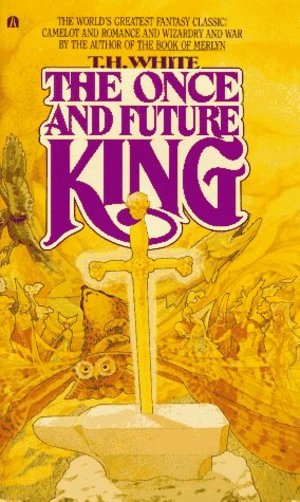
This should be the centerpiece of this month’s book reviews but I can’t write it. Part of it has to do with the troubles I’ve had reading this book. (see here) I have been reading The Once and Future King off and on for nearly 6 years. So yes, the early parts are somewhat foggy in my memory. If any of it managed to sink in past the thoughts of the Disney version of the first book. The fogginess of the early parts makes it hard to say exactly how the themes fit together. And this book is all symbolism, theme and anachronism.

It assumes the reader knows the story of King Arthur and Camelot and its fall. Which everyone does. Right? At least the gist of the story, about the triangle of Arthur, Lancelot and Guinevere. And of Mordred’s treachery. People should know it and if they don’t they should follow the advice of White and read Mallory. Instead of doing much in the way of recounting what happened. The Once and Future King tries to explain why the events were inevitable. So the first half of the book is about young Arthur and his education at the hands of Merlin. As well as about the early life of the Orkney clan, Gawaine, Gareth, Gaheris, Agrivaine and eventually Mordred. Then the second half is about Lancelot and his triumphs and failings. Then finally about the fall of Camelot.

Arthur’s problem is his inability to reconcile the concepts of ‘might’ and ‘right.’ He starts off fighting the idea that might makes right, but that eventually fails because he fights might with might. In the end, might must win. He tries other approaches of enforcing right and channeling might, but while he has a vision of how civilization is supposed to work, Arthur lacks the ability to realize this vision.

Knowing how this story ends makes it all the more tragic. Everyone, with the possible exceptions of Agrivaine and Mordred, tries to do what is right, but each and every one of them fails in some way. It ends with Arthur dying and/or heading for Avalon, but not before bestowing his vision on a young Thomas Malory and tasking future generations with trying to realize it. There is so much in this dense, dense work that I feel it needs greater focus than I can give it here. It is enough to say that everyone should read this.

Its Secret is Sincerity

The game I’ve been playing for the last 2 weeks, Solatorobo, is a late gem for the slowly fading DS. I’m just having some trouble articulating why I like it so much. In many ways, it is exactly the kind of game I don’t tend to like. It is very shallow. All fights play out basically the same, with in the way of difficulty or design. At the same time, it goes out of its way to hold the players hand. Everything gets a tutorial or an explanation from the characters. The game doesn’t allow, let alone expect, the players to figure out anything on their own. This ties into the last big problem, that the game is terribly talky. Characters won’t shut up. The players every action prompt more dialogue from somebody. Despite these problems, and more, I still really like the game, though. Somehow, a piece of quality shines through the crap that might have drowned this game.


One area is shines is in the graphics. This is a fine looking DS game, especially for one with 3D graphics. It honestly gives Final Fantasy: 4 Heroes of Light a run for best on the system. The sound is likewise excellent. There are still some problems, though. For all that there is a beautiful world to explore, the game denies the player that exploration. The areas available to venture into are usually cramped walkways, sewers and caves and the like. It tantalizes with beauty, but hides it.

As I said before, Solatorobo is quite shallow. All fighting generally boils down to dodging the opponent’s one attack, running behind it, picking it up and throwing it. Ad naseum. There are some flying areas, both sort of explore-y spots and races, but neither of those adds much. Playing the game becomes somewhat rote after a very short period.

If I have all these complaint about the game, how can I saw I like it so much? I think it comes down to the games attitude. This is a bright, optimistic game. Its outlook is more like Skies of Arcadia than Final Fantasy 7. Sure, many of the elements that make up the game world are perfectly designed to appeal to me. I love airships and floating continents. And the fighting robots look like they came straight out of Miyazaki. Much work has clearly gone into the world on which this game takes place. It feels less like the usual checkpoints of places to go in a game, here is a snow town and there a tropical island, and more a cohesive world. There is a history and sense of place that most games miss.

However, that alone would not be enough to buoy a lackluster game. Somehow, Solatorobo is more than the sum of its parts. It is talky, but the story is much better than the usual fare. It is not great by any means, but its tone is so different, so optimistic and bright, that it distinguishes itself. Many times, I sit grinding my teeth every time a game interrupts my play to let some douche-y characters jabber on. (I’m looking at you every Tales game ever!) In Solatorobo, the dialogue, while rarely essential, is usually worth hearing. The picking up mechanic has some life to it, though it is too simple to really power a whole game, but combat is infrequent enough that it is rarely a problem. The game is relaxing. It is a stress free, frustration free romp through a colorful world. Solatorobo is not a great game. It is not a game that will go down as one of its systems best or something essential. What it is is an easy, cheerful diversion. It has its problems, but it is hard to hold those problems against a game that so firmly has its heart in the right place.

Comics Reviews October, Part 1

Action Comics 2. Grant Morrison and Rags Morales. [****]
I loved the first issue of Morrison’s revitalization of Superman. He deftly fused some of the best of the golden age Superman with choice pieces of Byrne’s reboot and later versions. It had an energy that most comics, let alone most Superman comics, lack. It was great, this brash young Superman fighting for the little people and against the studied hate of Lex Luthor. This second issue doesn’t lose the energy, but it does lose control of it some.
Captured at the end of the previous issue, Superman is subjected to torturous tests by Lex and a cadre of military scientists, defended only by Doctor Irons, who in previous continuity was the hero Steel. It is still a magnificent re-imagining of the Superman mythos, with as many warts as possible sanded off. However, the plot of this issue falls into the trap that people often erroneously claim Morrison’s stories fall into. Somewhere in the ideas and the big moments, it loses cohesion and any sense of actual narrative. While that is usually a bogus claim of those whose reading comprehension is poor, I believe this issue strays into incoherence. It feels like 30 pages of story crammed into 20 and that compression leads to a story that feels like some important parts are missing. Still, the ideas underlying the carry it well enough, as long as this is a one-issue blip and not a continued problem.

Frankenstein: Agent of S.H.A.D.E 2. Jeff Lemire and Alberto Ponticelli. [****½]
The first issue of this series promised much, but didn’t quite deliver it. This issue does. It cleans up the action from the first, throws a few more big science fiction concepts onto the page and manages some deft characterization of the monster fighting crew of monsters that populate this book.
Frankenstein is a no nonsense man of action. Griffith, the werewolf, is an eager young soldier. Mazursky, the sea monster, is a committed, possibly mad scientist with a combination of determination and damage. Velcoro, the vampire, has gotten the least characterization so far, but he seems to be a bit of a sociopath. Then there are the scientists of SHADE, who supply the team with support and crazy tools. It is like a monster sci-fi James Bond. Ponticelli’s scratchy art is a perfect complement to the black humor of the story. It all adds up to a terrific comic.

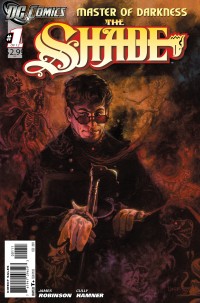
The Shade 1 of 12. James Robinson and Cully Hamner. [*****]
James Robinson returns the world where he really made his name. Back to Opal City and to the Shade, one of the biggest characters from Robinson’s seminal Starman run. The villain turned hero, sort of, Shade was easily the best character from that series, save for maybe its star.
Despite it being ten or so years since Starman ended, Shade manages to pick up right where it left off but not be alienating to new readers. All information needed is on the page. Shade is jovial and verbose, though he claims to be in the dumps. His girlfriend, police officer Hope O’Dare, suggests an adventure to perk him up. Interspersed in between Shade scenes in an encounter between one Von Hammer and a group of hit men. What he learns from them points him to Shade. There is an undeniable charm to the Victorian born Shade. He is acts like a man who has lived for more than a century might act. He is calm and never surprised but also not jaded. At least not anymore. This is just a great book. I look forward to the rest of it eagerly.

QUICK REVIEWS:

Continue reading

NFL Week 6 Picks

No time for much commentary this week. Last week I was 9-4. Not my best week, but not an embarrassment. This Sunday is a day I have no confidence in my picks. I’m going to take the Eagles over the Redskins because the Eagles have too much talent to keep losing. If they do lose this week, I’m not sure I’ll pick them again. As much as I am a believer in the Bills, I’m taking the Giants over them. Because the Giants motto seems to be “fuck predictability” and after losing to the Seahawks I don’t think many are taking them over the Bills. I’m also taking the 49ers over the Lions. The Lions are going to lose eventually, and the 49ers have been really good so far.

Panthers at Falcons: Falcons
Colts at Bengals: Colts
49ers at Lions: 49ers
Rams at Packers: Packers
Bills at Giants: Giants
Jaguars at Steelers: Steelers
Eagles at Redskins: Eagles
Browns at Raiders: Raiders
Texans at Ravens: Ravens
Cowboys at Patriots: Patriots
Saints at Buccaneers: Saints
Vikings at Bears: Bears
Dolphins at Jets: Jets

Last Week: 9-4

Season: 53-24

You Call this Archaeology? Part 4 Kingdom of the Crystal Skull

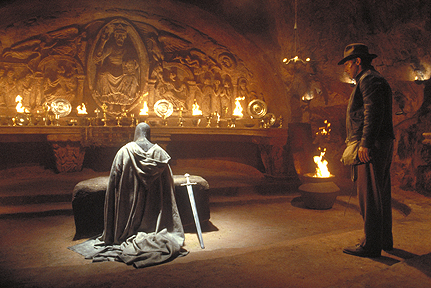
Indiana Jones and the Kingdom of the Crystal Skull

So now, it is time for the last, at the present, of the Indiana Jones movies, the much-maligned Kingdom of the Crystal Skull. I know a lot of people don’t like this movie and think it is a crime against the rest of the franchise if not cinema itself. Those people are wrong, and probably stupid. Indiana Jones and the Kingdom of the Crystal Skull, while not without its foibles and a few sour notes, is an excellent continuation of the series. It takes the impossible task of making a sequel after 20 years that still feels like the earlier films and not only succeeds, it turns the time gap into one of the films greatest strengths. I have two goals in this review. The first is to show why I like the movie so much. The second is to show how wrong you (the hypothetical you that dislikes this movie, because I‘m sure most people reading this are smart enough to see how awesome this movie is) are for hating it. Sounds easy to me.

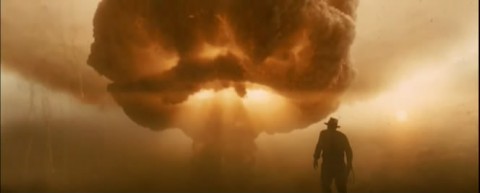
Like with the rest of the movies, we can look to the opening scene for a statement of intent. In Raiders it was the Indy/Belloq rivalry, in Temple ‘Anything Goes’ and in Crusade it was Jones Sr./Jr. The opening scene in Kingdom of the Crystal Skull is a statement of intent for the rest of the film. Only it seems that most viewers were too distracted by CG prairie dogs to notice. The first sound heard is Elvis Presley’s Hound dog. That is important. It is one of the most famous songs from the ‘50’s and the film is trying to establish setting. It is the same as the shot of the mushroom cloud in a few minutes. This is Indiana Jones in the nuclear age. By this time, the pulp heroes of the ‘30’s that he is based on had disappeared. In their place rose Sci-Fi movies and creature features. Concerns over the dangers and opportunities presented by new science trumped interest in mysticism and the occult. Indy no longer belongs. The world that exists in 1956 is not the world of 1936. Seeing the mushroom cloud in Indy’s brave new world moment. Such people fill this world as Mac, Indy’s treacherous supposed friend and the villainous Irina Spalko with her interest in pseudo-science. We also get the message that while the world has changed, Indy hasn’t. He is still quick with a supposedly witty quip or an opportunistic escape.

The sticking point for people seems to be Indy’s escape from a nuclear explosion via refrigerator. It is patently ridiculous. Much like him being drug for a few miles behind a truck on rough terrain. Or escaping a crashing plane in a life raft. Judging an Indiana Jones movie on realism is flatly refusing to entertain the film on its terms. I can only assume that the people who decided that this scene was where suspension of disbelief was irrevocably broken has never went back an examined the plausibility of the previous films. The unbelievability is a feature, not a bug and it has been that way since Raiders of the Lost Ark. I agree that in some cases, it crosses the line of acceptance, like most of Temple of Doom, and I’ll agree, grudgingly, that the fridge scene fits that bill. It is but a small thing, and an unimportant one to boot. (Also, the fridge was lead lined, what more do you want?) The important thing is the mushroom cloud. That is the image that should dominate Kingdom of the Crystal Skull.

One of the biggest reasons I like Kingdom of the Crystal Skull so much is that it is the only Indian Jones sequel. It is the only one of the movies to pick up on theme’s and characters from previous movies and advance them. In fact, it plus Raiders and Crusade tie together to make an effective trilogy. Temple of Doom can safely be ignored. Raiders of the Lost Ark is the story of Indiana’s romance of Marian Ravenwood, but neither appears or is mentioned in Last Crusade. Something must have happened to them in between, and the films’ chronology places 2 years between the two movies. It also has Indy chafing against the bureaucracy of government agencies. He is willing to risk life and limb to help them and they are more than willing to deny him his prize. The Last Crusade is about Indy fixing his relationship with his father, about both of them realizing the importance of family. Kingdom of the Crystal Skull ties those two ideas together. While Indy was preserving one family, he was ignoring another. The lessons he learned in the third movie help Indy resolve his problems from the third.

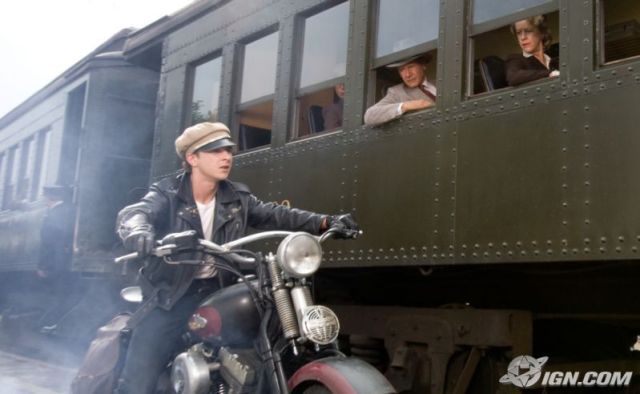
And we get a stupendous motorcycle chase with Shia LaBeouf looking exactly like Marlon Brando in the Wild One. Now an old man, Indy’s backseat dialogue mirrors his father’s. It is also why the reveal that Indy is Mutt’s dad is not much of a surprise at all. The movie could be any plainer about what was going on. For the next hour of so the adventure is as fresh and pop-y as it ever was. A breathless rush around the world, with only the most tenuous claim archaeological research.

Sticking point number 2 for many people is that the maguffin leads to aliens and not some religious mystical discovery. Frankly, this complaint is asinine. As I alluded to earlier, Kingdom of the Crystal Skull is deliberately echoing the zeitgeist of ‘50s, which means aliens and monsters. Indy is still the pulp hero from the 30s, but it is not the 30s anymore. The early parts of the film use a hammer to establish the time period, with popular music of the time and references to greasers and McCarthyism. It is brilliant, placing the pulp hero in a different milieu. Drawing the line at the existence of aliens, period, in the world seems a strange choice, since no one had problems with the veracity of Hindu death cults, the powers of the Ark of the Covenant or meeting immortals thanks to drinking from the actual Holy Grail. The Sci-Fi twist is one that makes perfect sense for what Kingdom of the Crystal Skull is doing. Same goes for the giant ants. They fit in perfectly with a crazy sci-fi adventure. This is why the Mutt as Tarzan scene fails so terribly. That obvious reference flat doesn’t fit in the rest of the movie. It is jarring and definitely strains suspension of disbelief. Luckily, it last all of 1 minute.

There are several one those jarring moments in Kingdom. Not as many as in Temple of Doom, but enough that it doesn’t rise to the level of Raiders of the Lost Ark or The Last Crusade. Those are two the best adventure movies of all time, Kingdom isn’t near that level. But it is not the unholy abortion that people want to make it seem. It is a good, very good even, adventure movie. It is certainly better than any entry in the genre since the Last Crusade. (I would love to be proved wrong about this, by the way. Just don’t say National Treasure or I’ll laugh in your face then push you down.) All that Indiana Jones and the Kingdom of the Crystal Skull needs to be enjoyed is a willingness to engage it on its own terms. A willingness not to go in wanting exactly Raiders of the Lost Ark again. An open mind. Too bad that seems too tall a task to ask of most viewers.

You Call this Archaeology? Part 3 The Last Crusade

Indiana Jones and the Last Crusade

I’ve said that Raiders of the Lost Ark is a perfect adventure movie, a movie that will never be surpassed. Indiana Jones and the Last Crusade equals it. I honestly cannot say which film I like better, usually it is the one I last saw. Unlike Temple of Doom, which tried to top it predecessor with a darker tone, slapstick and shocks, the Last Crusade aims for lighter tone and is a more character based experience. Raiders and even Temple are movies about what Indiana Jones does, The Last Crusade is a movie about who Indiana Jones is and why.

The first two films open with the ending of Indiana’s previous adventure that leads into his next one. It gives him a sense of continuous motion, that he is always on an adventure and this is just the one we happen to get to see. They were both great scenes and perfectly laid out the focus of the rest of the movie, either Indy’s rivalry with Belloq in Raiders or Anything goes in Temple. In Last Crusade we do not get the end of Indy’s previous adventure, at least not at first. Instead, it is an almost too perfect origin story for all of the famous Indiana Jones traits. How did he come to wield a bullwhip, fear snakes and wear the hat? It is all shown right there. The most important part of the scene is what is conspicuously not shown, Indy’s father. By making the short scene with his father part of their intentional Indiana Jones origin, it tries to show him as important an aspect of the character as any of the other things shown during the opening. But if Henry Jones, Sr. is vital to Indy’s story, where has he been for the first two movies? That is the question that Last Crusade asks and answers.

The action in Last Crusade is if anything less amazing or fantastic than Raiders of the Lost Ark, let alone Temple of Doom. That is not to say it is lacking, but it is more mundane. And like the rest of the movies it is still excellently shot. There is clearly a lessened focus on making the action shocking and more on making it fun. The lighter tone comes through in Last Crusade’s focus on humor. Even the big action scenes are laced with humor. Humor that comes naturally from the characters, not forced slapstick. The early escape and chase scenes are not quite as well done as Raiders’ big car chase, but they are as close as I’ve ever seen. The big showdown with the Nazi’s and their tanks near the end is possibly my favorite scene from any movie. It is all that is great about the Indiana Jones series compounded into twenty perfect minutes.

Where the last movie faltered badly, Indy’s companions, the Last Crusade shines even above the first. It brings back Sallah and Brody and gives them more time to define themselves. Ilsa is probably the best of Indiana’s love interests, being both a believable romantic interest and the closest any of the later movies gets to a Belloq replacement. While her knowledge doesn’t match Indy’s like Belloq’s did, she shows herself to be tolerably competent in the field and much more personally dangerous to Indy. All that dances around what truly elevates Last Crusade above most films. The presence of a star to rival Harrison Ford.

Sean Connery as Henry Jones, Sr. makes The Last Crusade. The damaged, nearly broken relationship between the Doctors Jones is what drives the film, and the elder one had to match Ford on screen and Connery absolutely does. In every other situation Indiana Jones is the man. He is the that everyone looks to to solve their problems. He is often exasperated and tired, but he is never at a loss. He always has an idea if not a plan. Around his father he reverts to Junior. To his father he is still a child, always a child. Indy’s actions in this movie are to prove his manhood to his father, to earn his respect. To earn his recognition. All he wants is to earn his father’s notice.

Henry Jones, Sr. is blinded by his quest enough to not even realize how close he is to losing his son. Even through their trip to Berlin he barely acknowledges his son. It is best seen in the motorcycle chase, with Indy’s proud smile being stopped by his father’s disapproving stare, except when he takes down one via joust. That earns him a brief smile. It is all about the grail to him. Until the tank scene, that is. Until he truly sees Indy in action as Indy he is always Junior to his father. During that scene, his truly realizes how capable his son is. When he thinks Indy has gone over the cliff he is finally forced to realize how broken their relationship is. It all culminates at the end when his father finally calls him Indiana, an admission that he is a man.


What makes Crusade so good is that every thing feels so natural. From Jones, Sr. constant casual dismissal of his son to Brody’s complete inability to function in the real world to the marvelous, kinetic and funny action scenes. Much of the slapstick in Temple felt forced and out of place, constantly testing the viewers sense of disbelief. The lighter tone of Crusade makes it fit with much more fluidity. It is the family film version, both in that it is about the Jones family and that it is meant for families. The Last Crusade can’t match Raiders of the Lost ark in straight adventure. If it tried it could never feel like more than a pale imitation. So instead it makes a different experience. While Raiders was a somewhat humorous adventure movie, the Last Crusade goes full on adventure/comedy. The humor is no longer a pleasant side effect of Harrison Ford being so charismatic, but it is given weight equal, or at least much closer to equal, to the action. The adjustment of that balance makes Indiana Jones and the Last Crusade a different experience but an equal one to Raiders of the Lost Ark.

You Call This Archaeology? Part 2 Indiana Jones and the Temple of Doom

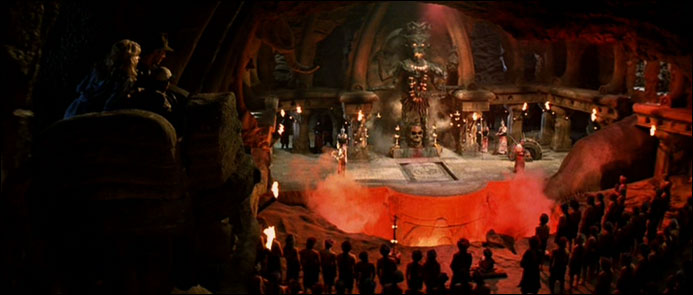
Indiana Jones and the Temple of Doom

Welcome back to my week long re-watch of the best series of films to ever be released in American Cinemas, in my humble opinion at least.  Today I’m reviewing what in my opinion is the weakest of the Indiana Jones movies, though even at that is a mostly enjoyable 2 hour adventure.

Raiders of the Lost ArK gets almost everything right, Indiana Jones and the Temple of Doom messes it all up. Still, it is a hard movie to hate. The problem is that it is impossible not to compare it to the rest of the series and it cannot hold up to that comparison. To Lucas and Spielberg’s credit and the movie’s detriment, they didn’t simply rehash Raiders. Temple of Doom is darker and despite being built around some supposedly cut Raiders’ set pieces more ambitious than the first movie. Unfortunately, its reach was beyond its grasp.

The first and biggest problem with Temple of Doom is its attempts to top Raiders of the Lost ArK. The attempts to make this one bigger pushes it beyond the limits of believability, both in the narrative itself and in the special effects. Indy’s feats were on the outer cusp of believability in Raiders, possible if improbable. With Temple possible is thrown right out of the window. Part of that is the tone of the film sung to the viewer in the opening musical number. Anything goes. (If you don’t enjoy the musical number this is definitely the wrong movie for you.) That holds throughout the movie. Anything goes in terms of what Indy is capable of. Have Indy jump out of a falling airplane on an inflatable life raft into a waterfall? Sure, why not. Anything goes. Too bad the special effects couldn’t quite make it believable. Indy’s greatest strength is in his humanity. That his adventures, while exotic and amazing, are within his abilities. The situations do not have to be even remotely believable. The magic stones and Indian murder cults are not this movie’s problems. Its biggest flaw is that often I do not believe that Indy could do what he is doing. Which is not that frequent, but it happens. Like the crash scene I mentioned already. He occasionally gets pushed out beyond his capabilities by the movies attempt to top Raiders. And while Raiders has the face melting scene, Temple of Doom is filled with effects that have aged poorly.

Anything goes with the tone as well. The villains are more visibly villainous, probably because no one need to be told how evil Nazi’s are. There are murders from the opening minutes. Not death by ancient trap, but actual murders. This movie is notably and intentionally darker than the rest of the series. It is right there in the title Temple of Doom. It is about Indiana Jones breaking up a child slavery ring. While it is darker, it is also goofier. Indy’s two sidekicks are wholly comic relief. Short Round is mostly enjoyable as Indy’s young double, though it has uncomfortable racist overtones. Willy Scott is a crime against the rest of this film. Marian was capable, if in over her head. Willy is completely out of place and wholly unlikable. She undermines the movies attempts to set up a central family dynamic among the three protagonists. She is even more of a child than Short Round. By the end of the film, the viewer is supposed to believe that they have grown together into a believable family unit, but the relationship between Indy and Willy never feels real. Indy and Short Round, however, become a very believable father/son duo. The setting and subject are much darker than the rest of the series, but it is counter by increasingly jokey and forced humor. Nowhere is the divide more visible than in the dinner scene at Pankot. While Indiana tries to get to the bottom of the rumors of the stolen stone and the rise of the Thuggee cult, Willy and Short Round face a farcical array of disgusting looking food. One side of the table is dark and mysterious, the other if filled with bad gross out jokes. Anything goes, no matter how schizophrenic it makes the experience.

While there are failures in tone and effect, they do not overwhelm the quality of the adventure. The opening scene in Shanghai is nearly perfect; from the song and dance routine to the chaotic shoot out to the car chase, it is a scene worthy of the best of the series. Once they get into the Temple, the movie picks up. Indy’s forcible induction into the Thuggee cult, through the Black sleep of Kali (reminiscent of Hot Potting from Rider Haggard’s She, though less murderous), lays it on a bit strong. It manages to continue the tone of being both startlingly dark and laughably silly at the same time. Telling, perhaps, is that Indy is saved by Short Round, not Willy. There is no chemistry between Indy and Willy; I can easily believe that the thought of sending her to her death wouldn’t snap him out of it. However, when Short Round arrives he does manage to snap Indy out of it. Those two have a connection that Willy doesn’t share.

The last half hour of Temple is a whirlwind that, aside from some badly aged special effects, is on par with Raiders. The freeing of the slave children is Indy at his put upon finest. From then on the film gets away from the purely dark and purely silly and is purely fun. The mine-cart chase sequence and the iconic confrontation on the bridge are both excellent scenes. They are bigger in scope than anything in the previous movie, but that doesn’t work to their advantage.

In all Temple of Doom is a flawed film. Indy is not quite the same character as he is in the rest of the series. He is more cynical and seems greedier. It feels as though Ford is playing Han Solo instead of Indiana Jones. The combination of the poorly conceived sidekicks, more Willy than Short Round, and the badly aged special effect keep this film from matching the rest of the series. As a simple adventure movie, it is fine. Slightly too dark for kids and slightly too silly for adults, but a reasonably pleasant ride for all that. Unfortunately, it is hard to view this movie without comparing it to its predecessor and sequels. In that light, it simply cannot hold up. Being the weakest film in an excellent series is the worst one can say about Indiana Jones and The Temple of Doom, but that is enough to get it damned in most circles.

You Call This Archaeology? Part 1: Raiders of the Lost Ark

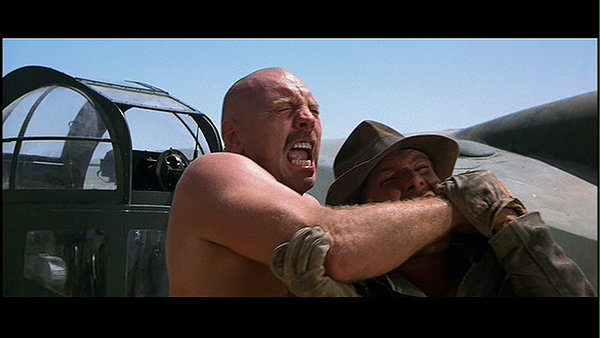
Raiders of the Lost Ark

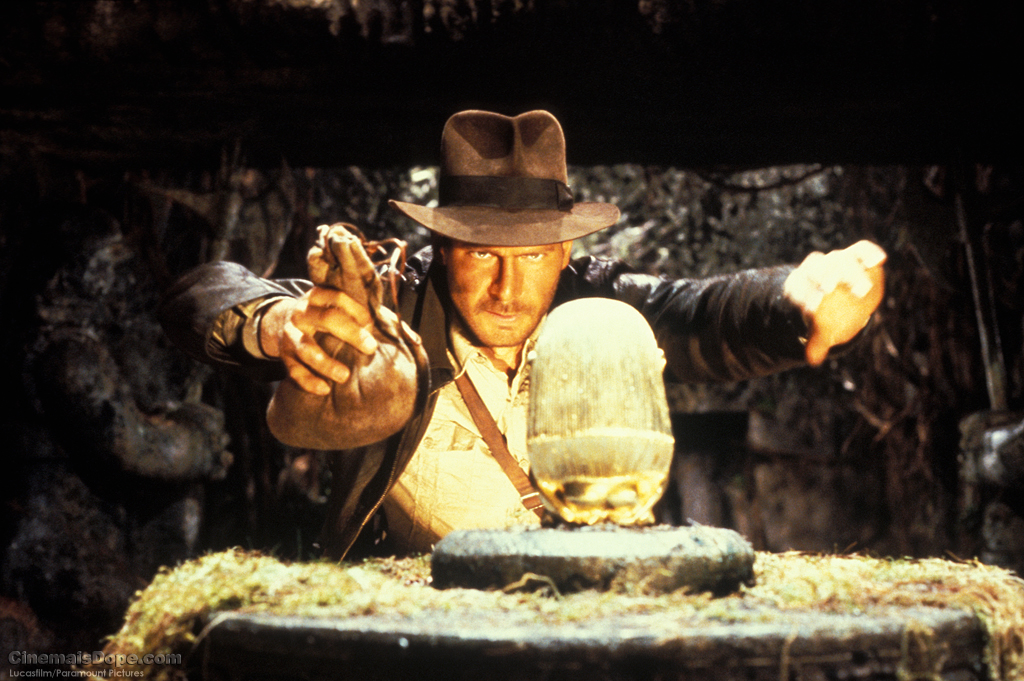
I usually try to keep a sizable variety of post topics here. Yeah, last week I had three posts about comic books, but that was mostly an anomaly. This week I had several posts planned. My usual quick post about what video game I’ve been playing, my book reviews for last month and maybe something about how stupid Mizzou going to the SEC would be were all ready to go. Sometime late last week, however, I decided, “screw that, I’m going to write about Indiana Jones.” Why you may, but probably didn’t, ask? Because it is almost my birthday, and around my birthday I like to watch some of my favorite movies. The Indiana Jones movies are some of my best-loved movies, and are frequently watched around my place. So, this week I am going to review all four Indy movies. Starting today with my thoughts on Raiders of the Lost Ark. (Spoilers: I like Raiders a whole lot.)

Raiders of the Lost Ark is a perfect adventure movie. There is no film in the genre that can touch it. It is terse and action packed, fun but not stupid. This first one is particularly focused, with some but little of the slapstick humor that would come later. It is the only film in the series with a believable love story. While Indy visits large portions of the globe, it is tightly plotted and steams from start to finish without ever losing momentum. In short, it is everything an adventure movie should be.

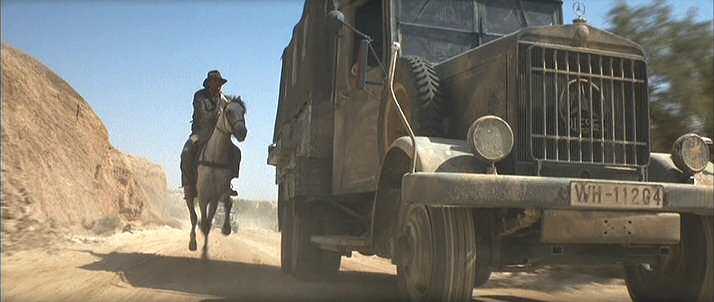
Much of lure for this film, and the whole series, lies in its hero. Indiana Jones is the possibly the greatest character to ever appear on screen. He is simultaneously larger than life and believably human. Indy does amazing things, like out run a giant boulder and hijack trucks filled with Nazis single-handedly, but doing so is visibly difficult for him. His feats are a struggle, they leave him physically drained and damaged. He doesn’t win because he is smarter, though he often is. He doesn’t win because he is stronger, though he sometimes is. Indy wins because he perseveres. He will not, cannot quit. It is primarily his struggles that make him appealing. The other part of his appeal is Harrison Ford. Indiana Jones is nowhere close to a wholly original character. He is a throwback to pulp heroes like Doc Savage and Allen Quartermain (I don’t think Quartermain actually counts as a pulp hero, but the intent is the same.) There is even a dash of Superman in there with his mild mannered Dr. Jones who, with a change of hats, becomes the unstoppable Indiana. Ford infuses Indy with a perfect roguish charm, alternately exasperated and amused by what he encounters. There is not movie star from the last 30 years that has charisma like Ford. Even when he is sleepwalking through a movie, he is still eminently watchable. Raiders of the Lost Arc, and the rest of the Indiana Jones films, feature Harrison Ford at his best.

The part of this movie that shines above the rest is in its villain. Rene Belloq is the only true rival Indiana Jones faces in any of his movies. Belloq claims that he and Indy are alike, but that is far from true. Their goals and their skills are similar, but their methods and outlooks are wholly different. Belloq is cynical, he is ruthless. As long as he achieves his goal there is no deal he won’t make or break. Indy is an idealist, he has limits. A big visible difference is in whom they ally themselves with. Indy has friends, from Marian to Sallah to Jock with his plane at the beginning. Belloq has tools that he uses to achieve his goals. There is no trust between Belloq and the Nazis, just like there is none between him and the Hovitos (?) at the beginning. He has constructed his relationship with them to last as long as it is convenient. Indy has to rely on his partners, and sometimes they let him down.

The conflict between Indiana Jones and Belloq is established wonderfully in the opening scene. We see Indy do all the work to find the idol, but Belloq comes in with an army and takes it from him. “Dr. Jones. Again we see that there is nothing you can possess that I cannot take away” is likely Belloq’s most famous line. That right there is the conflict that drives the movie. The Nazi’s are but window dressing, not important other than to have someone to fight. Belloq is whom Indy is truly at war with. Over everything. Belloq tries to seduce Marian not because he is attracted to her, or at least not only for that, but because she is with Indy. Belloq employs an army of Nazi’s to find the ark, using his expertise, of course. Indy digs with a small crew right under his nose to get it first. Note how Indy gets down and dirty to help with the actual digging; Belloq seems to believe that he is above that.

Their rivalry drives the movie to its conclusion, when Belloq opens the arc. There we see Belloq’s true cynicism and Indy’s romanticism. Unlike the Nazis, Belloq believes in the Ark’s power, but he doesn’t fully believe in it. He thinks he can control it, that he can master it. Indy does believe in the power of the Ark and knows the dangers it represents. He is romantic enough to believe in the mystical power of ancient artifacts, and wary enough to believe that power poses a threat. Belloq believes he is untouchable and that is his downfall.

There is no real point in going over the plot of Raiders of the Lost Ark. Nearly every scene is iconic, from the rolling boulder in the opening temple to the melting faces at the end. My personal favorite is the whole truck hijacking scene. It is perfect. The whole movie is nearly perfect. This is the gold standard for adventure movies.

NFL Week 5 Picks

I guess I was right about last week being an easy week to pick. I went 13-3. I missed the KC/Min game, but that one was a complete toss-up. I expected the Eagles to rebound after a couple of tough losses, but they blew it. And while I expected Buffalo to falter sooner or later, I didn’t think the Bengals had enough bite to beat them. Other than those three I was on the money.

Fantasy Football took a turn for the better last week as well. I won in 2 of my leagues and tied in the other. Which was the first FF tie I’ve ever seen; it occurred mostly because that leagues scoring system it straight up stupid. Hopefully this is a sign of things to come.

This week coming up looks like one to give me fits. Lots of good teams playing good teams and bad teams playing bad teams. Some games that look interesting to me are Oakland at Houston, Kansas City as Indianapolis and the Monday Night game Chicago at Detroit. The Raider and Texans both have pretensions of being playoff teams. The Raiders especially need this game, and with Andre Johnson out I think they win it. Did the Chiefs turn a corner last week or did they beat a woeful Vikings team? The Colts have given two good teams a run the last couple week, I think they take the Chiefs at home. Even without Manning they can’t lose them all. Chicago really needs to beat Detroit to keep from falling into a big hole. Detroit has tried to give the last two games away. I don’t think Detroit has another comeback in them this week, but I’m not sure they’ll need it.

Philadelphia at Buffalo: Philadelphia
Kansas City at Indianapolis: Indianapolis
Arizona at Minnesota: Minnesota
Seattle at New York G: New York G
Tennessee at Pittsburgh: Pittsburgh
New Orleans at Carolina: New Orleans
Cincinnati at Jacksonville: Jacksonville
Oakland at Houston: Oakland
Tampa Bay at San Francisco: San Francisco
San Diego at Denver: San Diego
New York J at New England: New England
Green Bay at Atlanta: Green Bay
Chicago at Detroit: Detroit

Last Week: 13-3

Season 44-20

JSA Re-read Part 1

This is the first entry in a new weekly — hopefully — series I am writing about the Geoff Johns/David Goyer (later just Johns, who is the writer of focus here) JSA, which is hands down my favorite comic series. This series is the reason I went from someone who liked superhero movies and had read some X-Men comics long, long ago to a someone who actually buys and reads comic books. JSA is not a book that would normally be considered a good series for new readers. It is the reason I am never convinced that that continuity is the reason comic sales are in a prolonged funk. (I’d finger general awareness and physical accessibility.) JSA is not just a book with some reliance on continuity, it is a book steeped in it; it revels in it. JSA is about history, it is a book looking back at and remembering the past. That the JSA was dropped, at least temporarily, in the re-launch makes sense. The series focuses on the legacy of a world with superheroes and DC seems intent on jettisoning that, for better or worse. Without history, there is no Justice Society.

Despite the title’s reliance on history, JSA was still a new reader friendly series. Each arc, if not each issue, is comprehensible to people who have never read the book before. That is impressive especially with the fact that most recognizable character in the series is probably Hawkman. Maybe Captain Marvel or Black Canary, I’m not sure which one is best known. C-list characters at best no matter how you look at it. Much of this is thanks to the writing team. While he is certainly never subtle, Johns (I’ll credit him since he has done this on more books than this. Goyer certainly contributed as well) has a knack for distilling characters down to a core idea that drives all their stories. Not that the characters are one note; it gives them a central, relatable theme. As he does this for each of the numerous characters, he also does it for the team as a whole. And the theme of JSA is legacy. They are a team built on remembering the past, on how that past affects the future. They are about carrying on an ideal and a specific legacy; it is about the importance and dangers of following in the footsteps of parents/mentors/teachers.

Before we got to the run proper, there are the first 5 issues of the series to deal with. Because while Goyer was on to start the book, his co-writer is James Robinson for the first arc rather than Geoff Johns. Robinson was at the time closing in on the end of his wonderful Starman series and was at the time a superstar. Since Goyer was co-writing, I am going to cover it. It is part of the run; it sets up much of what comes later, even though it isn’t Johns work. That being said, I am not going to give it quite the same level of focus that I do the later issues. So let’s begin with JSA issues 1-5
Continue reading