What I Read in Feb ‘14

I read four books in February, which feels like a good number. Especially with how much time one in particular took me (see the last entry). Honestly, I didn’t love any of the books I read this month.  I did find a couple of them somewhat enjoyable, though. Hopefully March will be better.
2tltwtw

The Lion the Witch and the Wardrobe

C.S. Lewis

I was very familiar with this book, but I had never read it. I have seen two film versions of it and have read plenty of criticism of it, but I never managed to pick it up. SO one night last month I did. It was slightly more of a children’s book than I realized, but otherwise was exactly what I expected.

I’m sure nearly everyone knows what this book is, four children transported to a fantastic land inside a wardrobe. It has some heavy Christian symbolism, but it works very well and in no way detracts from the book. One thing that I was not ready for was the humor in the book. While this is a children’s book, Lewis managed some witty and wry humor along the way. Lines and observations that don’t necessarily fit into the narrative, but they got a chuckle out of me anyway. Comparing it to the recent, largely faithful, movie, the biggest thing I noticed is how downplayed the battle is. It happens, but the book stays with the girls and leaves all the action off the page, only covering the tail end of the battle. It shows just where Lewis’ focus was. A classic for a reason.
2ud

Unnatural Death

Dorothy Sayers

All the Wimsey stories were on sale not too long ago, so I picked up most of the rest of them. This was the next one in the series. Here, Wimsey hears a story about a mysterious death from a Doctor and even though there is no evidence of a crime he starts to investigate. Actually, he sends Miss Climpson, a spinster that he has employed, to investigate things in the town. Unfortunately, his investigation causes the murderer to panic and commit more crimes to try to hide the first one.

The most interesting part of this book, especially since the mystery is not very mysterious, is that the victim was pretty obviously a lesbian. The book never comes out and says it, but it is still pretty obvious. The victim, who died as an old lady supposedly from cancer, lived her whole life with another woman. She is leaving all her money to her friend’s niece. The murderer’s situation is quite similar. While not all the characters necessarily approve of these character’s lives, they really aren’t judged or excluded. The stable hand who work his whole life for this women doesn’t see them as anything other than a couple of ladies. Of course, the book is set in 1927, after WW1 when there simply were many more women than men. The mystery here is not the best, but the lives of the characters are interesting enough to make this worth reading.

2tmael

To Marry an English Lord

Gail MacColl and Carol McD. Wallace

I picked this up on a whim from the Kindle store. It is a study of the phenomenon of rich American girls, excluded from the elite of New York society turned instead to the nobility of Europe, primarily England. This worked to both sides advantage, as the women got high places in Society and the nobility got all that American money. This happened quite frequently for about thirty or so years around the turn of the century before it just sort of stopped.

It is a fairly intriguing look at something that I wasn’t aware of. The biggest problem I had was that this book wasn’t really formatted for the Kindle. Large part s of it were simple hard to follow because of how the pages were laid out. It was also reliant on a lot of photographs, which again didn’t make the translation to the Kindle very well. Still, large parts of it came through well. It is fascinating to read about the seemingly slight differences between the two English speaking nations and how they were actually much bigger than most of the women who married realized. Also, it shows a thawing in the relations between America and Great Britain. Americans were both proud of our lack of class distinctions and envious of the lack. This is far from an essential read, but largely entertaining.
2gotm

Gardens of the Moon

Steven Erikson

I hated this book. I am generally a fan of fantasy and this came highly recommended, but I hated Gardens of the Moon. This read like the heavy metal version of a fantasy world. Everything is blood, guts and rust. It is a deeply unfriendly world. There seems to be no good in this world. It is all war, war that would seem completely unsupportable in term of feeding people. It is also written as though the writer didn’t care if anyone could read it. It starts with a series of flashbacks and chapters that are separated by time and space, so it takes a long time to get to anything resembling a plot.

The thing, once it does get going it isn’t too bad. Unfortunately, that isn’t until more than a third of the way through the book. When the book finally introduces the gang of miscreants from Darujhistan it actually becomes entertaining. That group is not unlike the core cast of The Lies of Locke Lamora. Of course, realizing that made me wish I was reading that instead of this. Still, this book is long, unfriendly and absurd in its “gritty” darkness. I am glad to be done with it.
What I Read in January ’14

I got 2014 started with a solid month of reading.  A decent number of books, in a wide variety of subjects.  February is shaping up to be just as good, even is the books themselves aren’t as good.  Still, I hope I can keep this momentum up.

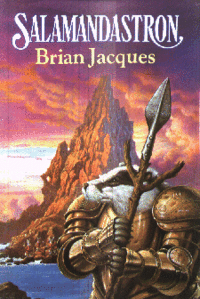
200px-SalamandastronUK

Salamandastron

Brian Jacques

Salamandastron is yet another entry in Brian Jacques Redwall series.  This one focuses on the mountain fortress that the formidable Badger Lords make their home.  It is one of the better entries in the series, shifting focus enough off the abbey to feel fresh, but still keeping somewhat close to the well-loved setting.  While many of the series constant tropes are present, it rearranges them so they don’t feel stagnant.

Salamandastron has two storylines that begin as separate but eventually intertwine.  There is the titular mountain Salamandastron, where its Lord, the badger Urthstripe, tries to balance ruling with raising his adopted daughter, Mara.   Soon, the fortress is assaulted by a horde of vermin and young Mara and her friend Pikkle the hare end up separated from their home.  Meanwhile, at Redwall Abbey, they are throwing a feast, as they often seem to be doing.  Added to the usual assortment of mice, hedgehogs, mole and squirrels are two rats who have escaped from the same vermin horde assaulting Salamandastron.  While at first trying to appear good, the rats soon commit murder, if only accidently, and leave with Martin’s Sword in tow.  A young squirrel and mole chase after them, while the inhabitants of the abbey start to fall ill.  So an otter must travel to a faraway mountain to retrieve the cure.

The two pairs of youngsters eventually meet up and have the usual sort of growing up adventures that happen in this series.  The events at Salamandastron are more epic, but not surprising.  Those sets of stories dovetail nicely, with the young warriors bringing aid to the beleaguered defenders of the mountain.  It’s the otter’s quest for a cure that seems oddly out of place.  It is a fine story on its own, but it is almost wholly disconnected to the rest of the book.

Still, Salamandastron is a fine adventure.  The characters rarely rise above the generic, but they are a suitably diverse and interesting group and the plot is fast moving and exciting.  Salamandastron is one the better Redwall books.

outlander

Outlander

Diana Gabaldon

I listened to part of this book years ago riding with my aunt to a family reunion.  The part I heard was pretty great, a woman being interrogated and threatened by a man before being rescued by her husband.  My aunt tried to explain what was going on to that point, but her version was muddled and disorganized, but she got across that is was a time-travel adventure romance.  While usually just shrug off suggestions of what to read from family members, I made note of this one.

I read it recently, though not for the first time, and it is still highly entertaining.  The romance aspect does take up a large portion (i.e. there is a lot of boning) but the whole thing is more entertaining than it has any right to be.  Outlander follows the adventures of Claire Beauchamp, a woman who, while on vacation with her husband on Scotland, is transported back in time by a Stonehenge-like circle of standing stones to the mid-18th century.  Believed by everyone to be a spy for everyone else, she is taken by the clan Mackenzie to their castle.  Her attempts to get back home lead her all over the highlands and eventually she is forced to choose between her husband in her own time and the love she has found in the past.

It is melodramatic and romancey most of the time, but there is plenty of adventure in there as well.  Claire and Jamie, the two protagonists, really make everything work.  She is a sarcastic “modern” woman whose reaction to many of the past’s sensibilities is hilarious.  It is the intellectual knowledge of that’s how things were meeting her new reality that that is how things are.  He seems to have been designed to be almost the perfect romantic hero, something of a thoughtful barbarian.  Even his flaws seem carefully chosen to appear attractive.  Despite that, he eventually becomes as real as a character as one is likely to find in any sort of genre fiction.

Outlander is ha hefty tome, being more than 800 pages long, but it reads fast.  There are slow parts, but things move relatively quickly.  It meanders a bit and simply explodes with subplots and side characters, but the end result is a full tale that creates its own believable world.

overtime

Over Time: My Life as a Sportswriter

Frank Deford

I wasn’t really familiar with Deford before I read this.  I had seen his name in plenty of articles in Sports Illustrated, but I rarely paid attention to the real articles, wanting more to get to the more current rumors, speculation and stats.  This book kind of makes me wish I had paid more attention, so at least I’d know how much I should care about what is written here.

Over Time is a memoir, as the title suggests a collection of anecdotes about Deford’s sports writing career.  This is split between recollections of athletes and events and his ruminations about other sportswriters.  Much is a glimpse into the work of a handful of writers and editors I’ve never heard of.  His genuine admiration of some people shine through, Arthur Ashe, while so does his disdain for others, Rodney Dangerfield.  Since I am not familiar with Deford or many of the people he was writing about, this book did not have the effect on me it could have.  Still, as a look back and a look into how the sausage of sportswriting is made, it is a good enough read.

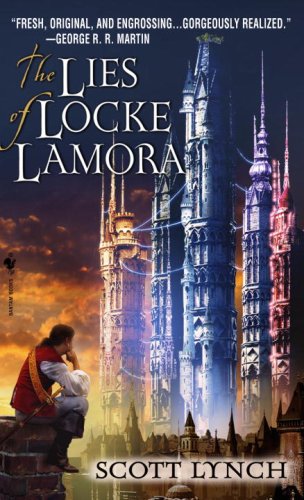
the-lies-of-locke-lamora-US

The Lies of Locke Lamora

Scott Lynch

I have been largely away from the fantast genre for most of the last year.  I did spend a lot of time reading the Wheel of Time series, and many of the books I’ve read would fall into the periphery of the genre, but I’ve been largely avoiding what was once my favorite genre.  So far this year I have been back with a vengeance, and I started with one of the best I’ve read.

The Lies of Locke Lamora is a fantasy done as a heist.  Sanderson’s Mistborn had a similar starting place, but in the end it felt more like a traditional fantasy story.  This manages to keep that heist the feeling all the way through.  The book follows Locke Lamora in both the present as he and his team of thieves plan and execute daring robberies and in the past when he meets his current friends and learns his trade.  The alternating present and past is sometimes a bit clumsy, with Lynch giving back information about characters just before it becomes relevant.

Locke’s past, while important, is not as good as his present.  While his group, the Gentlemen Bastards, perform intricate grifts, they pose as more humble thieves before the thieves’ guild.  The aging leader of the thieves, Capa Barsavi, is facing a challenge to his authority and while Locke has no problem deceiving him, he sides with him in the conflict.  Unfortunately, the Grey King who is threatening Barsavi’s dominance forces Locke to help him.  As often happens with heists, things don’t go quite as planned.

While they are nominally bad guys, being thieves and all, they are remarkable likeable.  Locke has a different set of skills than the usual fantasy hero, which makes him all the more likeable.  His closest ally, Jean, is also an unusual character for the genre.  While a lot of the world building is standard fantasy’s stuff, well done but the same kind of stuff one would expect from a fantasy novel,  the unique characters make is seem all the more different.

Really, this is just and excellent, fresh fantasy adventure.  I am eager to jump on the sequel. It is just really great.

cap30

Capcom’s 30th Anniversary Character Encyclopedia

Casey Lee

It’s not a lot of book, but it counts.  This is just a collection of character biographies from Capcom’s voluminous catalogue of games.  There really isn’t a lot of new information for me here; as far as video game companies go Capcom is second in my heart only to Nintendo.  That’s even with their almost adversarial dealings with their fans over the last couple of years.

This is an excellent primer on the various heroes and villains that populate Capcom’s games.  They do memorable characters better than just about anybody.  The whole cast of Street Fighter 2 are solidly recognizable and Mega Man has two incarnations that are all-time great characters.  This book is not really much of a read, but it is an excellent spotlight on these characters.

mindtomurder

A Mind to Murder

P.D. James

More classic mysteries, though this one did not leave much an impression on me.  It was fine, but I never really took a liking to the main character, which makes the while book from his perspective hard to get really into.

There is nothing overtly wrong with this, it just didn’t grab me.  A woman is murdered in a psychiatrist’s office, and Det. Da;gliesh must work his way through her colleagues to find the one who killed her.

What I Read in December 13

I had a little more free time than usual in December so I managed to actually hit what had been my average, though I hadn’t got close most months in 2013. Really, 2013 was a disappointing year as far as quantity of books read goes, but I did read some really good books, so I guess it balances out.

race

The Race

Clive Cussler & Justin Scott

I’ve generally enjoyed this duo’s Isaac Bell adventures. They aren’t groundbreaking, but they are generally well-plotted and entertaining. The time period, in turn of the 20th century America and a decade or so thereafter, is of great interest to me. The series also tends to focus on cutting edge technology of the time, with this one being focused on a biplane race. Issac Bell, the protagonist, is a little too good to be believed, but no more than many adventure protagonists.

As the title suggests, this book focuses on a race. A cross country airplane race. While Bell and the Van Dorn Detectives are there to investigate a specific threat to the race, there are a handful of other mysteries ongoing at the same time. One of the racers, Josephine Frost, is being hounded by her crazed and vengeful husband, so the race’s sponsor hires the Van Dorns to protect her and the race. The husband, Henry, is a mobster that Bell had an encounter with early in his career. There are some parts of this entry I really liked. Since his fiancé Marian is photographing the race, there is more time for her’s and Issac’s relationship than usual, which allows the reader to see more of somewhat off the job Isaac. There are times when I wish the book was more focused on the race rather than the manhunt since the racers and their stories are more interesting and believable than the villain. That apparent villain, the husband, is almost superhuman. He shrugs off bullets, beats everyone to their destination and survives what should be fatal accidents. But there isn’t much to him other than the fact that he is angry over his wife’s apparent betrayal. Josephine and her lover/mechanic are more interesting, but the whole plot comes off as less than inspired outside of the actual race itself. Then there is the fact that Bell teaches himself not only how to fly, but how to fly as well as the racers in all of twenty minutes. This wasn’t my favorite entry in the series, but it is a fine addition. I’ll likely pick up the remaining Isaac Bell books before the end of the year.

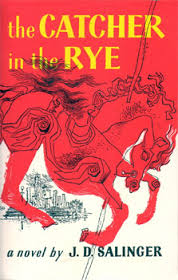
rye

Catcher in the Rye

J.D. Salinger

I subbed for an English teacher and pulled this off the shelf to read while the kids read. I never encountered it in school, but reading it now, and quite quickly, is seems juvenile. Not necessarily in a bad way, though. Holden is a teenager and he acts like it. He is the perfect expression of teenage angst and rebellion. There is a strong note of self-loathing in him. He hates “phonies” and calls himself the biggest liar. He is one of the “phonies” he hates. He is troubled and desperate and confused. Like many teens. Of course, my reading may be facile, I didn’t have much time with the book, reading it in about 5 hours while supervising jr. high students. I probably need to give it a more careful read.

luke

The Legend of Luke

Brian Jacques

Of the Redwall books I’ve read, somewhere between five and ten, this is one that strays the furthest from Jacques’ usual formula for assembling these books. The usual story, the part actually starring Luke, only takes up about a third of the book. The rest is kind of an amorphous trek for Martin and some of his friends. The problem is that there is no pressure on Martin’s group, no stakes. They don’t have an adversary and nothing stopping them from going home and trying the trek another time. Luke’s story is more in line with the average Redwall story and while free of surprises still has a solid structure. Luke does have a real goal and trial. It makes for easily the weakest Redwall I’ve encountered. There is just no tension for large parts of the book, the biggest draw seemingly the lure of returning characters Martin and Gonf. I have derided some Redwall for sticking too closely to the formula, but The Legend of Luke shows the dangers of straying too far from it. This one is just kind of dull.

welltime

The Time Machine

H.G. Wells

This is a classic for good reason. The unnamed time traveler goes to the far future, where humanity has evolved into two separate and equally inhuman races. The Eloi are the frail placid surface dweller and the Morlocks, who live underground and appear and act monstrously. This is a rather pessimistic take on the future of mankind; Wells basically supposes that we have no future. That is softened by just how far into the future the events of this story take place. As far a cautionary tales go, it is certainly better than many, such as the bafflingly highly regarded movie Idiocracy. This is a parable designed to strike fear in the low class, not wanting to become monsters, and the upper class, not wanting to become useless. The end result of the imbalance is not good for anybody.

mop

Mysteries of Pittsburgh

Michael Chabon

I have loved everything else by Chabon I’ve read, but this left me cold. Actually, I pretty much hated this novel. The writing is mostly as good as Yiddish Policemen’s Union or The Amazing Adventures of Cavalier and Klay. There are frequently sentences that make me a little sick to my stomach at just how good they are. They make me embarrassed by my attempts at writing. In that way, The Mysteries of Pittsburgh is just as good as previously read Chabon. What killed my enjoyment is the story. This is the story of a handful of self-centered douche nozzles and their interactions near the end of college. They are not likeable, they are not relatable. They are insufferable. It hurts more because I wanted so badly to like them, to like this book. Maybe it’s just that the experiences of the people in this book are so human, yet so unfamiliar to me. I’ve never encountered people like the ones in The Mysteries of Pittsburgh yet they seem real. They are alien and strange and completely self-absorbed. The central character, Art is at the very least bi-curious, but he seems not usure ofhis sexuality but of himself completely. He seems drawn to the strongest personality in the room. When he is with the other Art, his gay friend sometimes lover, he is entranced with Art. When he meets Phlox, her needy, loud persona grabs him. His vacillation between them seems to be based on which is the least familiar at the time. Maybe I missed something. I hope I did because I want to like this. But I didn’t like the characters so I didn’t care about the things they did, no matter how well written their adventures were.

What I Read in Nov ‘13

Yep. This is a low volume year for me. I’ll likely end on a decently high note, as I should finish 5 or 6 books in December. But November was a 1 book month. Unless I forgot a book. Which has happened before, but it doesn’t say much for the book or my reading abilities.

The Pastures of Heaven

John Steinbeck

I found a weathered, beaten copy of this after my basement flooded a few months ago. It was printed in the mid 40’s and was in the local library through the 60’s. The mysterious appearance of this old copy of this book is as interesting as the book itself. The Pastures of Heaven is the first I’ve read of Steinbeck. Somehow I never managed to read Of Mice and Men or The Grapes of Wrath. After reading this, they have moved up my to read list. The Pastures of Heaven is not considered one of his better works, but it was good, if slight.

The Pastures of Heaven is a connected short story collection. Each chapter is its own story, but together they tell the larger story of the town in the valley known as the Pastures of Heaven. The stories deal with small town life, poverty and family. It tells the story of the town as well as the people who live there. The themes aren’t really strong enough to tie the stories together, though. It is just a collection of loosely related stories, none of which are that interesting on their own. Still, its short, easy read that is just interesting enough to be worth it.

That is the only book I finished in November.

What I Read October ‘13

I kicked reading’s butt this month. Coming back from a series of two or three book months, I finished seven in October. I don’t think I read more than I have been, I just finished some books that I had started in previous months and read some shorter books. Only one of the books I read this month were from series or authors that I had been reading this year. I hope I can keep it up through the end of the year.

oct1

The Iron Wyrm Affair

Lilith Saintcrow

I picked this up sometime on my Kindle and arbitrarily decided to read it one weekend. It seemed like an interesting combination of fantasy, steampunk and mystery.

The setting is pretty great. It is an alternate reality Britain where all sorts of fantasy trappings are real, like some sort of steampunk Harry Potter. I did want to learn more about this world and how it works. That information is tightly guarded, presumably to keep up the mystery aspect of the story. That is all fine and good. Where this story fell apart was that it didn’t make me care at all about any of the characters. They had little chemistry with each other and they weren’t interesting on their own. That the killed the whole thing for me. I didn’t hate The Iron Wyrm Affair, but I’m not going to continue with this series.

oct2

All Yesterdays

Darren Naish, C.M. Kosemen, John Conway

This is an examination of representations of dinosaurs and how the traditional looks might not be accurate. Not that all the depictions are wrong, but in merely pointing out that there are holes in the information we use to make those pictures. Plenty of common representations of those outsides of dinosaurs are educated guesswork. All Yesterdays points out where some of these guesses are and shows alternate possibilities. It also gives us different poses and angles from the usual depictions. It is really quite thought provoking.

oct3

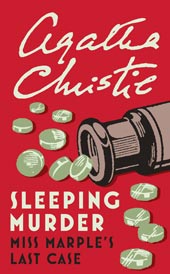
Sleeping Murder

Agatha Christie

Another Christie, this one much better than the last. This time, Ms Marple actually investigates and solves the mystery, instead of hiring someone else to investigate and showing up at the end with the answer despite having no evidence. There are still younger characters that do the bulk of the heavy lifting in the investigation, but Marple is involved and actually has the information to draw her conclusion

In this story, a young married woman buys a house and has flashbacks to seeing a murder in that house. She finds out that she lived there briefly as a child and that her Step-mother has been missing since about the same time. So she and her husband enlist Ms Marple to help them figure out just what happened. This story really shows why Christie is one of the giatns of the genre

The only strange part is Ms Marple’s thought that leaving the mystery unsolved is better; that they should let a sleeping murder lie. While she does have some legitimate concerns for the investigator’s safety, but that doesn’t seem to be the reason for her objection. It is not like things are worse from knowing. Still, it is just an odd note in an otherwise highly entertaining mystery.

oct4

Cod: A Biography of the Fish that Changed the World

Mark Kurlansky

This was a school book of my brother’s and I picked it up the other day and just read it. It is an interesting and sad look at the history of this fish. It starts out with how and why the fish was important to the history of the settlement of North America by Europeans. Then it moves to the sad ending of modernization and overfishing. Which is of course what we did.

All throughout the book and in a special section at the end are recipes on how to prepare cod. Many of these are historical, some are more modern. It is an odd but interesting addition. I wish I had the opportunity to try some of those recipes. It also sucked to get to the end and find out the book is 15 years old and ends with some questions about what would happen going forward. I’ll have to research and find out if the conservation efforts outlined at the end of this book worked.

oct5

A Splendid Hazard

Harold McGrath

This is supposedly an adventure novel, one that ended up on my kindle after I read A Prisoner of Zenda last year. This is occasionally well written, there are some really enthralling passages. But there is no adventure. The hero’s sole bit of action is getting punched out by the villain. The villain, other than punch, only loosed a duel with minor characters at the end.

It is about a search for lost Napoleonic treasure and a possible Napoleon descendant. But they just find and map and go get the treasure, there is little conflict. The villain may have been planning to set himself as Napoleon’s heir, but he doesn’t. This is an adventure where no adventure happens. Still, I actually enjoyed it quite a lot. I would read another McGrath, though I hope more would happen in it.

oct7

The Hanover Square Affair

Ashley Gardner

Another book that ended up on my kindle and sounded good enough.  This one turned out better than the one I started this post with.  This is mystery starring a former cavalry officer trying to find a missing girl.  This leads him to another mystery about a missing girl.

This is clearly a set up for a longer series, with characters introduced that do not have much of a role in this book, but have history and very obviously a future with the protagonist.  Still, Captain Lacey is a good character.  He is an honorable man in a world that is somewhat less honorable.  He sometimes comes off as rigid and maybe a touch self-righteous, but he is largely a sympathetic character.  His goodness strongly contrasts with how awful the criminals are.

The mystery unfolds nicely, but it is a little too obvious.  The answers are all there at the start, most of the investigation just obfuscates the obvious answers.  Still, it is a fine read even if I’m not rushing to get to the rest of the series.

oct6

Maps and Legends

Michael Chabon

Every time I read something by Chabon, I am hit with two separate impulses. The first is to all my writing stuff and throw it away because I will never be able to write this good. The second is to stop whatever it is I’m doing and just start writing, because even if I can’t match Chabon I might be able to manage something worthwhile.

This is a collection of essays about genre fiction. Some examinations of specific books, some reflections on what they mean to Chabon. It is thoroughly enthralling. There is a lot of food for thought here, and the recommended reading section of the back is going in its entirety on my to read list. This also reminded me that I bought a bunch of Chabon when his stuff on a Kindle sale. I’m an going to be powering through that shortly.

Next month I hope to finally finish The Lies of Locke Lamora and I am reading The Mysteries of Pittsburgh. Also, during a recent flooding of my basement, I found a beaten copy of Steinbeck’s The Pastures of Heaven, so I will likely read that too.

What I Read in September ‘13

At this point I am just having a down year for reading. September was another 2 book month. I don’t know why I’m just not reading at the pace I normally do, but I’m just not. Let’s get on with it.

Lord Peter Views the Body

Dorothy Sayers

This one is a collection of Wimsey shorts. Some are good, some were not as good. Some had serious, high stakes; others were jokey and inconsequential. Mostly they were good. The first is another one of these with an absolutely gruesome conclusion. It’s hard to write much about any of these stories without giving the mystery away. Many of them are so short there isn’t much there beside the set up and conclusion.

Wimsey is still an interesting character, even if he is largely beside the point in many of these stories. He shows up and solves the mystery, but the stories are about the mystery, not the characters. It is a nice change of pace from the full length mysteries.

4:50 From Paddington

Agatha Christie

I thought this was my first full length Christie, but then I remember that The Mysterious Affair at Styles was not a short. So it is my second Christie and my first Marple. I’m not familiar with Mrs. Marple, but her role in this story seemed strange to me. Her friend thinks she sees a murder while on the train, but the police don’t believe her. So she goes to Mrs. Marple, who does believe her and does some investigating. She finds the spot where the murder was likely to have occurred, then hires a woman to work as a housekeeper at the nearby home. That woman, Miss Eyelesbarrow, then takes over as the primary character. She investigates at the manor, meets the family all of whom are suspects and uncovers tons of red herrings. Then just at the end, Marple swoops in with the conclusion.

I didn’t love this book. The mystery doesn’t cheat, but the conclusion kind of comes out of nowhere. I get that a mystery’s goal is generally to mislead the reader so they don’t figure it out, but in this case the conclusion was not satisfactory. It really feels like the least interesting choice was made for the killer. His plan was just bad. I’ve been told that 4:50 From Paddington is not one of Christie’s best, and I believe it. This was moldy entertaining, but I wouldn’t call it good.

Next month: I am sure I will have read more than 2, but probably not enough to have any hope of hitting my yearly goal.

What I Read in August ’13

August continued my trend this year of not really getting any reading done. I read only two books in the month. Both of them were quite good, but the high quality doesn’t quite make up for the continuing lack of quantity. August was also the month that I finally ran out of new Jasper Fforde books to read. I truly was a sad day when I finished The Woman Who Died a Lot and realized that I didn’t have another like to immediately start in on. Hopefully Mr. Fforde has something coming soon. Maybe I should start rereading the Thursday Next books from the start. Decisions, decisions.

Gaudy Night
Dorothy Sayers
This is ostensibly a continuation of Sayers’ Peter Wimsey mystery series, but he is very much not the protagonist of this novel. That would his love interest Harriet Vane, the mystery writer first introduced in Strong Poison. She gets involved investigating some harassment happening at her Alma Mater, Shrewsbury College.
While there is definitely a mystery to be solved, Gaudy NIght isn’t so much a mystery as it is an examination of the changing roles of women in society at the time it was written. It is about Harriet’s relationship to Lord Peter and whether marriage, both in their case specifically and in general, is desirable or even worthwhile. It looks at the role of women in a world where the idea of separate spheres for the gender’s is crumbling. Harriet attends her class reunion and sees women who have taken all sorts of paths in life. Some married high, some married low, some gave up their studies to marry, some gave up marrying to study and very few that managed to have it all. She must face, after the end of her longtime relationship with a fellow writer, what path she wants to take. No one choice is shown to be absolutely right or wrong, she must decide what is best for her. It is fitting that culprit is someone upset about a woman supposedly usurping the rightful place of a man in academia.
Gaudy Night works as both a mystery and a feminist examination. While many of the problems are not particularly relevant here some seventy years later, a surprising number of them are. It is nice to read a mystery not wholly bound by it genre.

The Woman Who Died a Lot
Jasper Fforde
Yet another Thursday Next book, one I take as proof that while Thursday’s adventure’s may be coming to a close, though I hope not, Fforde is far from out of ingenious ideas. In a big change, this entry in the series almost totally ignores the BookWorld that has been such a big part. Instead, it features the return of the giant, evil Goliath Corporation as immediate villains. It also finally deals with the continuing Jenny situation.
The biggest thing The Woman Who Died a Lot does is hammer home that fact that Thursday is getting old. While that has been a running plot thread in the second series, it is really front and center here. The only way she knows that she’s been replaced by a synthetic duplicate is that they are in much better shape than she is. She solves a mystery dealing with stolen duplicates, the last gasp of the ChronoGuard and the final ramifications of the stupidity surplus. Most importantly, at least to me, is that she finally deals with Aornis Hades and her fictional daughter Jenny.
Shocking no one, I loved this book. It isn’t my favorite Fforde, that’s still Shades of Grey, but I would put this one in the upper half of the Thursday Next series. I eagerly await whatever Mr. Fforde has coming next.

What I Read in July ‘13

Three straight book posts? Well that’s what I’ve got ready to go. July basically confirmed that I am not making my usual 50 books read this year. I again came up short of the pace, having only read three books. None of which were particularly long. Still, three books is three books.

Clouds of Witness

Dorothy Sayers

The second Peter Wimsey book has a much more personal case than the first one. This time it is Peter’s brother who is suspected of murder. Suspected for the murder of their sister’s fiancé. All Lord Peter knows is that everyone involved is lying, including his siblings. There are holes in his brother story of taking a midnight walk and holes in his sister’s relationship with the victim. Our intrepid detective eventually uncovers everything, even though he has to make a daring transatlantic flight to do so in time.

I have one real problem with this book. It has to do with the ending, so if you don’t want the mystery spoiled don’t read the rest of this. My problem is there is no murder. It is a suicide. They set up a house party and everyone is a suspect, but they are all red herrings. There is still a mystery for Lord Peter to solve, but it is the immediately suspected and dismissed option. Still, it sis a fun read.

Strong Poison

Dorothy Sayers

The cheap Sayers mysteries skipped to the introduction of Wimsey’s eventual love interest Harriet Vane. She is suspected of murdering her lover. She is also something of an author stand in, being a mystery writer herself. Lord Peter immediately falls in love with her and vows to clear her name.

It’s hard to talk about these mysteries without spoiling them. This is another good one. Harriet is better character than she might seem at first. Seeing Lord Peter go gaga over her is entertaining. It is kind of odd that Lord Peter is not the one doing a lot of the heavy lifting with the investigation, at least not the part than ends up mattering.

Llana of Gathol

Edgar Rice Burroughs

This is the last Barsoom book that Burroughs finished and it reads like a capstone for the series. While there is clearly some self-parodying going on here, it also features nods to just about every previous book in the series. Most of the primary characters reappear, as do all the various races of Martians. Still, it gets repetitive to see John Carter repeatedly captured, only to get forced to fight an arena and beating all comers. Carter and his granddaughter, the titular Llana, at one point get caught by Martians that can make themselves invisible, but not just to the enemies but to each other as well. The whole thing is more ridiculous than even the usual Barsoom book.

What I Read in June ’13

Hey, I’m back!  I took a break for a couple of months.  My work schedule was in flux and honestly I just didn’t feel like writing on my blog.  I feel more like writing now, at least sporadically.  So I’m back with more book reviews.

I read three books in June.  Not my eternal goal of four, but one of them was so good that I don’t mind.

whose

Whose Body

Dorothy Sayers

I’ve been wanting to read some classic mysteries, so stumbling onto a handful of Sayers’ Peter Wimsey books on sale at Amazon was some good luck.  Whose Body, you might guess, is the first of those.  It sets up Lord Peter, a gentleman detective, who tends to babble and seems a bit useless, but has strong deductive powers and has made being a detective something of a hobby.  He is helped by his assistant/manservant/butler Bunter as he solves crimes.

As for this book, it involves a missing banker, an unidentified body and one of the most gruesome solutions I can remember.  It is well paced and well written and just generally good fun.  A good mystery is like comfort food and Whose Body is like a nice slice of cake.

elegy-225

Elegy for Eddie

Jacqueline Winspear

Another Maisie Dobbs book.  Here she heads back to where she spent her youngest years, as some men from her old neighborhood ask her to look into the death of a man who today would be called autistic.  Her investigation takes her to still mechanizing factories and high brow parties with dignitaries.

There are two big undercurrents in Elegy.  The first is the preparation for WWII.  This series has moved past its looking back at the first World War and is now foreshadowing the world war coming. The second is the Maisie looking back at her life apart from that war.  In the last book she went back to where she went to school, to the life she might have had if she had not went to war as a Nurse.  In this one, she sees the life she might have had if she stayed with her father in the poorer section of London.  The other important thrust of the book is Maisie’s deepening relationship with James.  I liked this entry in the series very much.

Cover of "Shades of Grey: A Novel"

Cover of Shades of Grey: A Novel

Shades of Grey

Jasper Fforde

This book is now my answer when anybody asks me what is my favorite book.  Sure, I’ll have to clarify that I don’t mean the yeah its porn 50 Shades of Grey, but this book is good enough to be worth it.  Especially if my gushing gets anybody else reading this phenomenal book.

Shades is set in world where people’s ability to see color is limited and they are stratified by what colors they can see.  At first this color based world is a source of amusement, but soon it becomes apparent that this society is built on some rather sinister foundations.  We are lead through this world by appealing protagonist Eddie Russet.  Eddie is young and naïve, but kind.  He doesn’t at first question the rightness of his world.  Why would he? It’s all he’s ever known.  However, he does show a willingness to break the rules  for small personal gain or to help people.  A trait he learned from his Dad.

Thanks to a mistake on Eddie’s part, Eddie and his Dad are shipped out to the boonies.  There he must confront some unusual townspeople and the increasingly hard to ignore flaws in the system. Fforde beings his signature wit to the book, but in service to a much more serious story than usual.  It all just works so well together to make a truly excellent book.

What I Read in May 2013

I actually had a solid reading month in May, finishing 5 books. That is a lot for what I managed for most of this year. It’s just been a slow couple of months. I still think I am going to make my yearly total of fifty, but we’ll see.

Moonraker

Ian Fleming

The most notable thing about Moonraker is just how different it is from the eventual movie version. It shares a few names like the title and Hugo Drax, the villain, but otherwise they are very different. The movie was the Bond franchise’s response the Star Wars, in the book he doesn’t even leave England. The first third of the book is just Bond playing cards at M’s club, trying to catch Drax cheating. He then investigates a murder, and possible espionage, at Drax’s plant where he is building a new type of missile, the Moonraker. Spoiling nothing, there is more going on there than it initially seems. There is also a lady for Bond to romance.

It continues the trend of Bond not actually accomplishing much. He survives, and the villain is defeated, but he is mostly a side player in the defeat. It didn’t really leave much of an impression on me, so I might have conflated this book with Live and Let Die. I don’t think this series is for me.

Colonel Roosevelt

Edmund Morris

Reading Morris’ Colonel Roosevelt is both inspiring and exhausting. Theodore Roosevelt did not just quietly recede after his presidency, his life after is at least as interesting as during. He had hunting and exploring trips to Africa and South America. But despite his energy, Morris’ writing makes it clear that he is a storm that has almost run it course. You can almost feel his body betray him

The biggest event this book covers is his unsuccessful bid for another presidential term. Morris shows him to be a great man, but not a perfect one. His running for that bid is both due to policy differences and personal differences. Taft didn’t really follow his lead, but TR was a man that had difficulty relinquishing power. He had good reason to feel betrayed, but it seemed like he took some things too personally.

Callahan’s Crosstime Saloon

Spider Robinson

Callahan’s is kind of weird and kind of schmaltzy, but it is also heartfelt and uplifting. It is a collection of stories about a science fiction bar where patrons come to air their sci fi problems. That aren’t any easy answers, just a few compassionate ears. It really succeeds in making reader feel camaraderie, like most problems aren’t as bad as they first seem. These stories just create a really great place to read a story about and hangout, with little riding on it except a neat idea or two.

A Lesson in Secrets

Jacqueline Winspear

With this Maisie Dobbs book, the series finally stops looking back on the aftermath of the first World War and starts foreshadowing the coming of the second. Not that the Great War isn’t still a factor, it always will be with Maisie’s history, but it is further in the part. Here she is recruited to look into communist sympathies on a college campus, which turns into a murder investigation when the Dean is killed. There are some Nazi sympathizers among the suspects, but the Nazi’s are seen as a secondary concern at this point. Maisie also moves forward with her relationship and helps out her former flatmate Sandra after the death of her husband. I thought this was one of the series better mysteries. The investigation actually mattered, it didn’t just take up time until her New Agey stuff solved the case. I don’t think I have much more to say about this series. It’s been more like than love the whole way and I liked this entry.

The Fourth Bear

Jasper Fforde

I was a little disappointed in The Big Over Easy. I liked it, but not as much as the Thursday Next books. The second Nursery Crime, though, is much improved. I liked the plot a lot more, and we get to see characters other than Jack developed. There are two intertwining investigations going on here. The first is the escape of the notorious serial killer the Ginger Bread man. The other is the disappearance of reporter Goldilocks. There is also some dealing with porridge smuggling and addressing the very nature of the fictional characters that make up the cast. Best of all, Mary Mary, Jack’s partner, gets a lot more developed. It has the same playing with the nature of detective stories and Nursery Rhymes that the first one did, but the plot is tighter. Plus, it is just charming as all hell. That is a common thread to all of Fforde’s work. They are so much damn fun to read. I look forward to the next one in this series, and not just because I am running desperately low on new Fforde to read.