What I Read in Nov ‘14

This month all my reading time was stolen away, again for NaNoWriMo. I still managed to finish a couple of books, though one was a reread. I’ll have to really tear through some in December to hit my yearly goal of fifty. Right now I am six books short. I’ll need to read quickly to catch up.

The_curse_of_chalion_cover

Curse of Chalion

Lois McMaster Bujold

I read this yet again, this time for inspiration while writing my own stuff. It is still really great. My thoughts haven’t changed much from when I read it last year. It is maybe the best stand-alone fantasy novel ever.

dmf

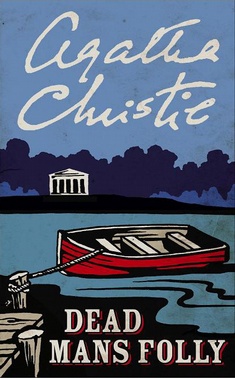
Dead Man’s Folly

Agatha Christie

A Poirot mystery, and not the best one. There are a lot of points of interest in this story, but the mystery is not really one of them. One of the characters is a mystery writer, a sure stand in or reflection for the writer, at least in some capacity. If I had liked the rest of the story more, I might have been interested in tangling out just what Mrs. Oliver is about. There are also some repugnant racial sentiments expressed by characters, though whether those are simply the opinions of the characters or the author is a question. A character is mentally challenged and several characters suggest that it is due to her mixed race heritage. The book also uses the conceit of a “murder party” something that I guess happens, though I’ve only ever heard of it in mysteries and every time someone is actually killed. This time, it is the assigned victim of the murder scavenger hunt thing. Poirot eventually sorts it out, and it is a pretty awful, in that what happened was terrible not that is was no good. While not exactly obvious, the solution was also not particularly surprising either. It is just not Christie’s best work.

What I Read in October ‘14

I did quite a bit reading in October, all of it in two series. I finished up my reread of the Outlander series, which was largely entertaining. I also got caught up with Jasper Fforde’s Last Dragonslayer series. I don’t expect to come close to matching this pace next month, since NaNoWriMo will be taking up a lot of my free time. It is also why I am kind of phoning in these reviews. Let’s get on with it.

soq

The Song of the Quarkbeast

Jasper Fforde

I saw that a new Jasper Fforde book was coming out, which reminded me that I never read the one before it. So I bought both this book and its sequel. These are his Young Adult books, skewing a little younger than his other work, but they are still highly entertaining. Jennifer Strange is still leading the magic company of Kazam, with its founder, the Great Zambini, still missing. Now she is facing problems with the only other magical practitioners in the Ununited Kingdoms, meddling from the King, the reproduction habits of Quarkbeasts, and the mystery of what happened to The Once Magnificent Boo. She has to hold together Kazam in the face of a competition to determine who controls the future of magic itself.

Song of the Quarkbeast is another great Jasper Fforde book. It keeps the trademark humor and wit, but aims it at a younger set than something like the Thursday Next series. This book is funny. It also pulls the curtain back a little more on how the word of this series works. I liked this one more than the first one. It spends less time getting to know the characters; it just gets to the fun.

teoz

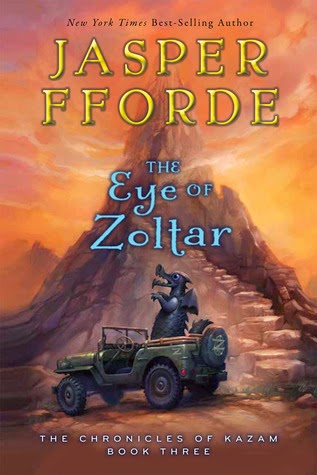
The Eye of Zoltar

Jasper Fforde

I followed up book two with book three immediately. It is a similar thing. This time, Jennifer goes to a foreign country where magic is outlawed to rescue the Once Magnificent Boo, as well as look for a magical macguffin that may or may not exist, the Eye of Zoltar from the title. It is not a quest, though, those require regulations that Jennifer doesn’t want to deal with.

On its own, this is a fine story, but it is kind of a digression from the characters and setting that the previous two books established. The Eye of Zoltar is an excuse to the a few characters out of the way in order to set up the next (final?) book in the series. That would be a problem if this book wasn’t still supremely entertaining. It introduces some interesting new characters and some entertaining concepts. Again, I don’t like this series quite as much as I do Fforde’s “adult” books, but there is still enough wit and humor to make it worthwhile.

abosnaa

A Breath of Snow and Ashes

Diana Gabaldon

It had been a long time since I had read this book. I remembered snatches of events, but not the sequence or the totality of them. Much like Dragonfly in Amber, this book is one to close up all the lingering plot threads from the previous books and clearing the way for the next one. The community of Fraser’s Ridge in the back country of North Carolina is firmly established by now, and thing are moving rapidly to the start of the Revolutionary War.

This is a sprawling book, with tons of small stories, but no strong central one. There is the growing unrest in the colony, with Jamie, knowing the outcome, trying to balance safety and his other obligations, with not allowing them to get caught on the wrong side of history again. They also have to deal with Ian’s return from living with Indians and some troubling new tenants, along with a host of other problems. It does let the stories take their time in the telling. The tale of the Christies’ is a sad, strange saga, with Claire’s protégé Malve doomed by the regressive gender notions of the time as well as her father’s harshness. It ended the only way it could. Her attempts to pin her out of wedlock child on Jamie is a strange soap opera-esque note, mostly because there is no chance that it is true. The fact that dealing with that accusation takes up a good portion of the back of the book is somewhat disappointing. The big deck clearing decision is Roger and Brianna taking their family back to the future. It was necessitated by the heart condition their baby had, but seemed to be mostly an effort to focus the narrative of the next few books.

A Breath of Snow and Ashes is a somewhat weak book on its own, but as a part of the ongoing Outlander Saga it is a fine entry in the series.

Aeitb

An Echo in the Bone

Diana Gabaldon

Another Outlander book. This one deals with start of the Revolutionary War and, despite their best efforts to the contrary, Jamie and Claire’s participation in it. At the start of the book, Jamie and Claire attempt to go back to Scotland, both to visit his sister and to get his printing press, which is how he plans to aid in the war effort. However, their attempts to secure a berth on a ship lead to a series of misadventures that bring them right to the heart of the fighting. It is a story scattered all over colonial America.

It is a little too scattered. The sheer number of POV characters has gotten out of hand, and Gabaldon doesn’t stick with any one of them long enough for the reader to get comfortable. Especially with the frequent trips to the ‘future’ with Brianna and Roger. It is not that their portion of the story isn’t interesting, but it is completely divorced from the rest of the book. It also brings in Jamie’s son William as a major player in the story. He is still unaware of his paternity, but he and Jamie keep crossing paths. Ian also begins a romance with a young Quaker girl. Other than its inability to keep focused on one story for any length of time, this is a fine entry in the series, though it is clearly a part one with a part two coming.

wimohb

Written in my Own Hearts Blood

Diana Gabaldon

I did another quick read through of the most recent Outlander novel after I caught back up. It reads a lot better when you know what happened to lead to the situation where the book starts. It also is a lot more of a focused book than either of the last two. While there is just as much Roger and Brianna stuff, it is kept to its own section, letting it stand on its own better and not interfere with the other part of the story.

This one lets the Revolutionary War part play out, but with everything at the end seems to be setting up could be the end of this series. Roger and Brianna are back, William knows who his Daddy is and the Frenchman is not letting up in his search for Fergus, who may or may not be heir to a French Lord. I don’t profess to have any clue about how it will play out, but it seems like it is leading to a conclusion.

Top 5 Friday Favorite Books

Another Top 5 Friday. Favorite books this time, with the one stipulation that no more than one book by any author appear on the list.  One thing I like about making these lists is that they help me realize things about my tastes that I wouldn’t on my own.  Four out of the five books on this list deal with metafictional themes, as do some that just missed the list, like Jonathan Strange and Mr. Norrell.

5:top51

The Dragon Reborn.  Robert Jordan – The Dragon Reborn is on this list as a placeholder of the Wheel of Time as a whole. I unabashedly love the series. The world Jordan created in this series is just so well realized and the characters that populate it are so real. TDR is the book where the series really comes into its own, with the protagonists finally starting to act as much as react to the events going on around them. I love this book.

4:top52

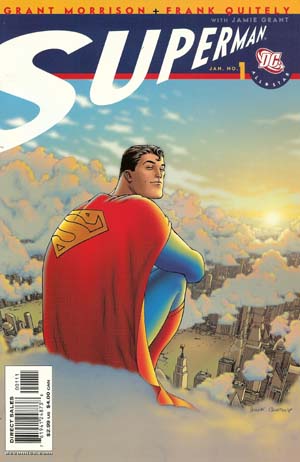
All-Star Superman. Grant Morrison & Frank Quitely & others – I debated on whether or not to include a comic on this list, but since All-Star Superman is a completed work in and of itself and it is stupendously great, I put it on here. Honestly, this is just one of the best things I’ve ever read.

3:top53

The Amazing Adventures of Kavalier and Clay. Michael Chabon – Chabon is the best and this is his best work. Kavalier and Clay is about two young Jewish comic book creators and their personal and professional struggles starting in the late 1930’s. I don’t want to give anything away; just read it.

2: top4

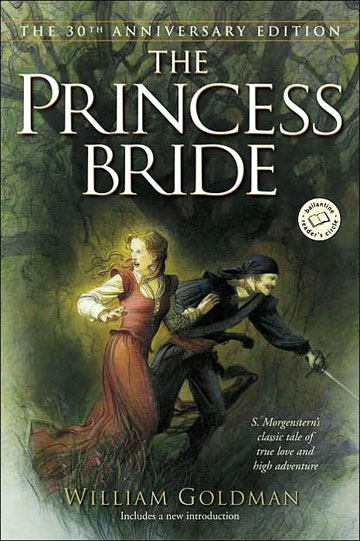
The Princess Bride. William Goldman – I had long loved the movie, so when I heard there was a book, I quickly snapped it up. Written by the same person who wrote the screenplay, the book is largely the same as the film, but where it deviates it generally improves. I realize the book came first, but that is the opposite of how I encountered them.

1:top55

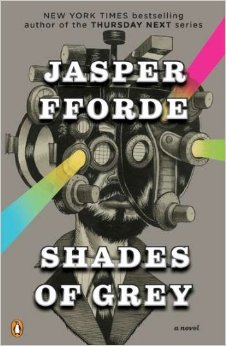
Shades of Grey.  Jasper Fforde – Another author I love. Fforde’s Thursday Next books are uniformly excellent, but with Shades of Gray he takes things to another level. It is more serious than the Thursday books, but it doesn’t lack the wit. It is a simply amazing dystopian story.

What I Read in September ‘14

I didn’t do enough reading in September; of course, I often say that no matter how many books I read. My goal is four books, though, and I didn’t reach that milestone this month. I just didn’t spend the time reading that I normally do. I expect to get more reading done in October, though I don’t know how much more. Probably the next Outlander book, a Christie and maybe something more.

tbh

Busman’s Honeymoon

Dorothy Sayers

This is the final Peter Wimsey mystery and I didn’t like it much at all. It was apparently adapted from a play, and it reads like it. Much more of the story is told through dialogue with minor characters, with much less time for the protagonists. This story does include Lord Peter and Harriet’s wedding. That early section of the book is great, but it has little to do with the mystery. It goes on for a good quarter of the book and gives a nice send off for some of the smaller supporting characters. Then there is the mystery in the middle; this is the part that feels like a play adaptation. The majority of the dialogue is told through cumbersome dialogue. It also makes it harder to get into the mystery. That mystery is also meaner than the norm for this series. It ends with what feels like a final wrap up. Lord Peter is less sure of “hobby” as a detective now that he is married. Also, he was disgusted by the petty monstrousness of this case. It provides a fitting, if somewhat depressing, end to this series.

tfc

The Fiery Cross

Diana Gabaldon

This fifth volume of the Outlander series follows Claire and Jamie as it draws close to the start of the American Revolution, as well as a community starting to form around Fraser’s Ridge in the North Carolina back country. The Fiery Cross largely continues plotlines started in the last book, like dealing with the despicable Steven Bonnet and the growth of Brianna and Roger’s relationship. It seems significantly slower paced than previous books. The first quarter or so of this 1000+ pages long book take place at a Gathering of emigrated Scots, where both Brianna and Rogers and Duncan Innes and Jamie’s Aunt Jocasta’s weddings are scheduled. Little events, eventually important little events, keep dragging this scene out further. It is simultaneously amazing that Gabaldon keeps the scene moving without really moving anything and frustrating that that is how the book starts.

The one big development in this book is the complete dismantling that Roger goes through. He was a university professor in the twentieth century, with skills that aren’t exactly useful in the frontier of the eighteenth century, but he made due. Over the course of this book, Roger is crushed even further down. His attempts to learn to shoot end when he discovers that he is physically incapable of being a good shot. While early in the book he is lauded for his musical skill, which is soon taken from him as well. There are always difficult trials that characters face, but few times in this series has a character taken the brunt of misfortune that Roger faces in this book. While this book does move ponderously at times, there is a central mystery that ties it together nicely.

tga

The Guns of August

Barbara Tuchman

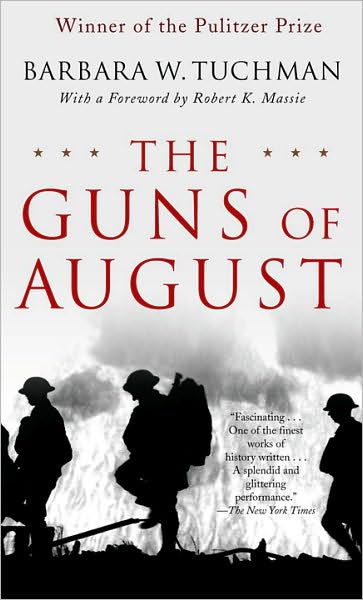
This is an exhaustive look at the first month of the start of WWI, as well as the days the immediately led to it. It is a fascinating read, illuminating the characters of the men in charge while also clearly illustrating the sequence of events. What comes across most clearly is the arrogance of everyone involved. The French had their plan if it came to war, and they were going to stick to it no matter what the situation actually was. The Russians were completely disorganized and incompetent, with their entire government crumbling. Germany was flush with economic and military success and eager to expand their country. All of them thought any conflict would be short lived and decisive. That arrogance is most apparent with Germany’s decision to invade Belgium. If they would have avoided it, then there was a good chance that Britain would not get involved or at least not involved as fast. But they didn’t think that Belgium would fight. The idea that they might not like the idea of being conquered by Germany seems to have never occurred to them. They somehow didn’t expect the reaction they got for burning their way through a country that had been neutral. The personalities of the leaders come through, as well. None are shown to be true villains, but neither are any portrayed as heroes. One of the most fascinating was Joffre, the Commander in Chief of the French Army. He stuck to his initial plan, despite what the Germans were doing not matching what he expected. But he also helped maintain control during their retreat without breaking.

The one weakness of The Guns of August is that other that a few chapters covering a naval engagement and Russia’s disastrous campaign against Germany in the East, it is almost totally about the Western front. Weakness isn’t really the right word, I guess. That’s just not what the book is about. For example, it does give just enough of a glimpse of the goings on to make me want to know more about Russia’s war with Austria. Still, I am sure there are other books about that very subject; I just need to read one of those.

What I Read in August ‘14

I did a lot of reading in August. Fresh off of reading the latest Outlander volume, I decided to go back and quickly read through the series. I was really lost for the first half of Written in My Own Heart’s Blood and I wanted to jog my memory. I also continued with reading Sayers’ Wimsey books, which I’ve just about run out of at now, as well as some nonfiction and knocked another tome off of my stack of unread fantasy novels. It was a good month.

oos

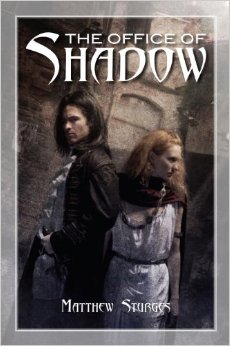
The Office of Shadow

Matthew Sturges

I mostly liked Sturges’ Midwinter. Its good parts were really good, but it was all around sort of uneven. Office of Shadows is of similar quality, though it is steadier; it doesn’t have the highs and lows in quality of its predecessor, but I’m not sure I liked it as much. Instead of being a fantasy Dirty Dozen, this is more of a fantasy spy thriller. Except in Midwinter the supposed suicide mission got started pretty much immediately, where the thriller stuff here takes a long time to get moving. The cast is also less enjoyable. Returning character Silverdun is still an interesting character, a man of many talents but filled with self-loathing. His new allies feel like missed opportunities. Sela is a girl trained from birth to kill and Ironfoot is lowborn soldier turned scholar who is plucked from his studies to become a spy. They are at least theoretically interesting characters, but the book doesn’t explore them and their motivations as well as they could. Ironfoot is almost ignored at times and Sela spends her time dealing with a completely uninteresting romantic subplot.

The big danger the Seelie elves, the “good guys” country, face is a weapon being developed by the Unseelie that could tip the balance of their Cold War. The thriller part of book is just too abbreviated. Too much of the book is taken up with the training. It takes just way too long to get the three agents to be agents. Then their spy mission is somewhat short and conspiracies and plots that precipitate the coming conflict are dealt with almost perfunctorily. The biggest problem is that the political situation between these two warring countries is not very well explored. It is hard to get a read on the stakes when the make-up of the conflict is so vague. Still, while I’ve spent most of my time complaining, I actually liked The Office of Shadow quite a bit. Silverdun is a great character, one who has already grown significantly in the last book and grows further here. And the world of Faerie here is interesting enough that I wanted to know more. The Office of Shadow is almost a great book, but it has enough flaws that it ends up being merely interesting.

outlndr

Dragonfly in Amber, Voyager, Drums of Autumn

Diana Gabaldon

I sped through books 2-4 of Gabaldon’s Outlander series. I’ve read them before; this was a speed reread just trying to jog my memory for what was going on heading into Written in My Own Hearts Blood. Plus, my interest in this series was rekindled by the TV Adaptation (see post coming … sometime soon). I do like each of these books, with Voyager likely being my favorite in the series.

Dragonfly in Amber is interesting because it is the one true tragedy, meant in the sense of genre and not judgment, in this series. It starts by letting the reader know that the happy ending from the first book did not last, then slowly showing how everything went wrong. It also feels like the end of the first chapter of this extensive saga. Most of the characters introduced in the first book are out of the series after this one, with the next book building up the supporting cast again. The sense of inevitability as things go wrong really helps it feel all the more tragic. Still, since it is tragic, it also tends to be an entry in the series that I am not too eager to revisit.

The third book, Voyager, is a pretty big shake up. The book ranges all over the place. It starts with a really neat section where in the present (actually 1968) Claire, Roger and Briana search for records of Jamie surviving Culloden is intertwined with Jamie’s first hand experiences in the 18th century. Once they track him to 1767, Claire does the inevitable and goes back again. After meeting Jamie in Edinburgh, Claire and Jamie’s adventures take them from Scotland to the Caribbean. It is a far reaching adventure that introduces a host of new characters to replace all the ones lost in Dragonfly in Amber. It is a long book, but one with several separate stories going on, starting with the search for Jamie, then Claire and him getting to know each other again and then their experiences in the New World. It is really just a load of fun.

Finally, Drums of Autumn is Briana and Roger’s book. It does have Clair and Jamie settling in the North Carolina wilderness, but the most compelling story is the romance between Briana and Roger. At first it is just her adjusting to living without either of her parents. Eventually, inevitably, Bree ends up also going back through the stones, followed closely by Roger. Drums of Autumn is not as tight a narrative as the previous three books. Aside from the first bit of Voyager, they each covered a relatively short time period. Drums takes place over the course of several years, time enough for Jamie and Claire to turn a bit of North Carolina wilderness into a thriving community. This is the first part of the American part of the series and the first where my memory of the order of events starts to get shaky.

Next month I hope to get through the next two. I am already at the point where I can’t remember what happened in which book, so the next few should be slower going than the more familiar ones.

bos

The Battle of Salamis: The Naval Encounter that Saved the Greece – And Western Civilization

Barry Strauss

This was an interesting look at the Battle of Salamis between the Persian Empire and the Greeks. It is a good primer to that conflict, giving the reader a good introduction to the big players in that fight and the political set up that lead to not only the war but the two sides’ manner of prosecuting it. It is hard to say much about nonfiction when you aren’t that familiar with the subject, and I’m not here. That is why one tends to read nonfiction, to gain understanding, which this book does a good job of imparting.  The writing style, though, is good. It is informative, but not dry. It tells it like a story, albeit one with research behind it. While there is enough uncertainty is events that long ago, The Battle of Salamis does a good job of presenting what happened along with a few likely scenarios for how it happened. In all this a good read.

hhc

Have His Carcase

Dorothy Sayers

Yet another Peter Wimsey mystery, this one being the second to feature Peter’s love interest Harriet Vane. Have His Carcase is one of the most enjoyable Wimsey stories. It starts with Harriet stumbling across a body while talking a walk along the beach during her vacation. Being a mystery writer and fairly versed in the ways of murder and murder investigations immediately gathers relevant details, which is fortunate since by the time she makes it to the police and the get back to the scene the body has went out with the tide. With Harriet involved in a murder, Lord Peter Wimsey is not going to be far behind. He shows up to help her investigate and renew his attempts to woo her. The two of them work together to get to the bottom of a case that involves a disappearing body, an uncertain time of death and victim with absurd Ruritanian notions.

While I’ve enjoyed Ms Vane’s other appearances, I think this one may be her best. She was mostly just the victim/suspect in her first appearance and in the later Gaudy Night she works separate from Peter almost the entire time. Here the two of them actually work together. They do have some nice chemistry. You can see her appreciation for his talents and exasperation with his idiosyncrasies. He has to try to help her without overwhelming her; to convince her that he is not just there to rescue her. I liked the contrast between their fledgling relationship with the sad and dysfunctional ones of the victim and her gigolo fiancé.

What I Read in July ‘14

I got my usual four books in this month, but I am already blowing by that for next month. I’ve got one finished and one near done for August already. The four books in July were some really good ones, and a wide mix. I’ve got some adventure, some mystery, some fantasy, some magic realism; tons of stuff for just four books.

tfc

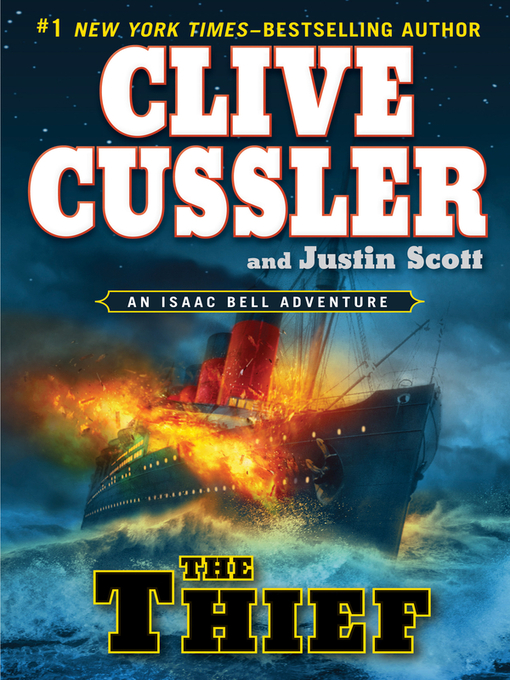
The Thief

Clive Cussler and Justin Scott

This is just pure adventure. This time, Isaac Bell is helping out a man who has found a way to shoot talking motion pictures, while working against a German man trying to get the invention back for the Kaiser. This time Isaac’s fiancée Marion takes a larger role than before, since the case deals with her line of work.

There is very little outstanding about the Thief, other than it more ridiculous than usual plot. It is an excellently executed adventure. While the clients invention of a talking picture would be a big deal, the villain, a German called the Acrobat thanks to his athletic abilities, want it so he can use propaganda to make sure the United States is on Germany’s side should they go to war with France and Britain. It is a flimsy plot, but one that makes for some fun scenes and set pieces. It is slightly less ridiculous for Isaac to display the prowess he does here than in The Race, when he immediately picks up how to fly a plane as well as the expert pilots in the race. Here he just works as a stunt man on film sets, which fits him perfectly. Really, this is just a might fun adventure.

tfs

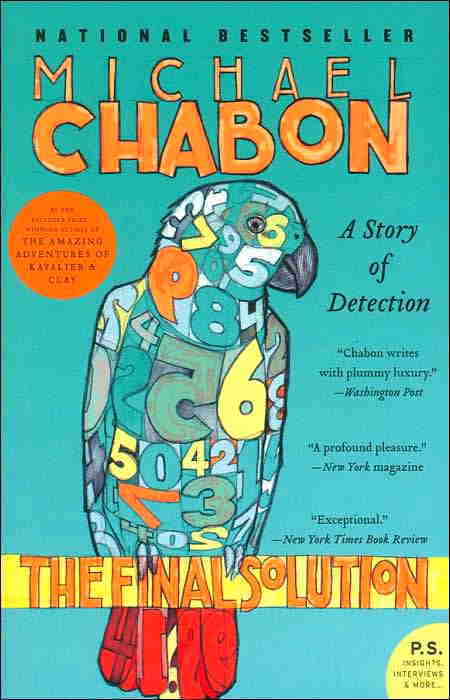
The Final Solution

Michael Chabon

Michael Chabon is great, and this book doesn’t change that. It is a bit different, being essentially Sherlock Holmes fan faction. Of course, the old detective in this book is never directly named as Sherlock, but it is clear who he is. It is also better thought out than calling it fan fiction would suggest. As the title would suggest, while it is a mystery it is also about the Holocaust. A young boy has lost his parrot, plus a man has been murdered, and an elderly Sherlock Holmes decides to help track down the bird, which will likely lead to the killer. The boy, a young Jewish kid who was traumatized by what he saw before he fled Germany, is unable to speak, but Sherlock is still able to help him. It is an excellent novella, a satisfying mystery with plenty extra to chew on as well. Like everything else by Chabon, I highly recommend this.

wimohb

Written in My Own Hearts Blood

Diana Gabaldon

This is the eighth book in Gabaldon’s Outlander series and it continues to be enjoyable. Though I could swear I’ve read book seven, An Echo in the Bone, I can’t for the life of me recall most of what happened in it. So that made some of the early chapters in this one kind of frustrating. After I found my footing, it was a great ride. Somehow this book is almost a thousand pages long, yet still left me wanting more. It also somehow felt uneventful for a book of this length. Part of that is the problem with a long running series like this. After eight books, this series is populated with a host of interesting and intriguing characters and there just aren’t enough pages to go around. That is a problem that plagued the middle part of my favorite book series, the Wheel of Time. Here it is less pronounced, but still extant. Another problem it shares with that series is that that this book feels less like a complete piece and more of a chapter in a larger Saga. In the first half of this series, each book was complete, though they all left hooks for further stories. Outlander is the story of how Claire came to be in the past and with Jamie. Dragonfly in Amber is the story of how that all fell apart. Voyager brings them back together and ends with another fresh start. The two books previous to Written in My Own Heart’s Blood, while the definitely contain complete stories, don’t feel as complete as the previous ones. They are as enjoyable on a page to page basis, but not as cohesive a whole. Of course, I may just be misremembering them, since I can’t really recall book seven all that well.

Heart’s Blood takes Jamie and Claire, and all their friends, through the Battle of Monmouth and finally back to their home in North Carolina. Plenty of time is spent hobnobbing with historical figures like George Washington and Benedict Arnold, one of the big draws of the series for me, as well as balancing the conflict of being friends and relatives with people on the other side of the conflict. There is also the aftermath of Jamie’s son William finding out that he is the bastard son of a Scottish traitor. This book has the younger players really growing up. Ian finds love, William takes some adult responsibilities and even young Germaine starts to become a man. In a section that kind of doesn’t work, Roger ends up mucking about in the history of this series, revisiting things that have long since been dead while Brianna deals with some sort of kidnapping plot. Having those two in the future makes it hard to incorporate them in the story, though I think that problem has been resolved. The real problem is with William’s portion of the story. While he does show growth, the book ends with almost none of his questions being answered. Not only about him and his father, though that part of the story does have a least some sort of closure, but also about his search for his possibly dead cousin and/or his cousin’s wife/widow and child. Speculation about him and her is present from the very start, but it is not at all resolved by the end of the book. I assume there are answers to come in the coming volumes of this series, but that means years of waiting and a significant portion of this book used to essentially tread water on this story.

Still, it is another fine entry in this series. I can’t recommend anyone start with this book, but it is a fine continuation of this series.

tgatj

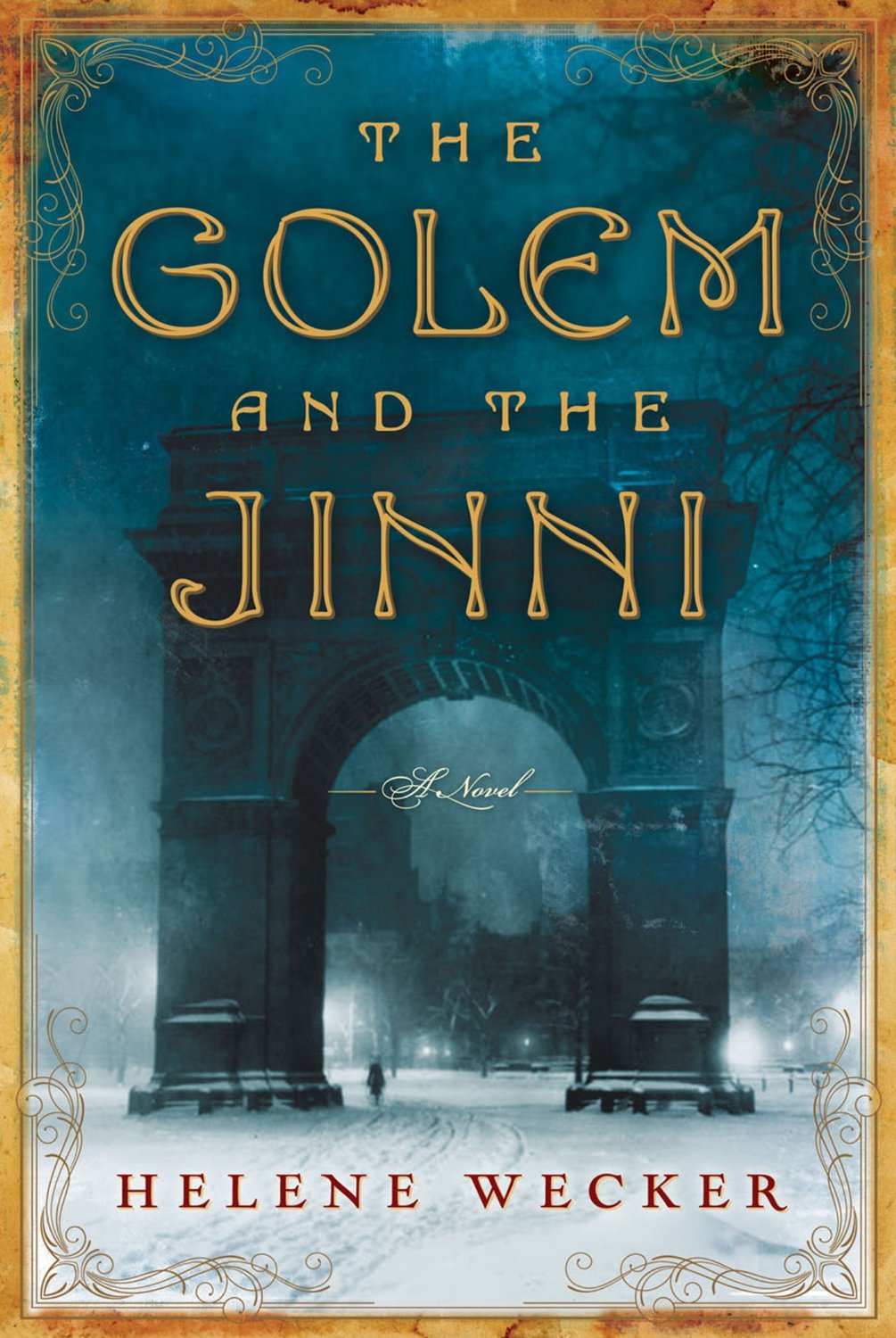
The Golem and the Jinni

Helene Wecker

This one was certainly interesting. It follows two magical beings as immigrants in early 20th century America: a Golem created for a man to be his wife, though he died on the crossing passage so she is alone and masterless, and a Jinni who had been trapped for centuries but unleashed by a tinsmith. While situations as virtual immigrants are similar, their points of view and natures are not. The Jinni want’s nothing more than to be free of the spell that traps him in human form. He acts just as would if he were still a still free in the desert, with no concern or regard for anyone else. The Golem, however, is intimately aware of everyone’s feelings, being able to sense people’s thoughts, and desire’s nothing more than to fulfill her purpose and help them. They both have to deal with being immigrants in America, along with trying to conceal and master their natures.

The first three quarters of the book are excellent. It slowly reveals the characters and their problems. Soon the two protagonists meet and help each other grow. Unfortunately, the ending is a real let down. The slow building cracks in the two’s facades of humanity start to crack naturally as they become more involved with people, but the novel doesn’t allow this to come to fruition. The last part of the book does not deal with the very human problems of these inhuman characters, it becomes all about the magic of how they came to be. The struggles that each character has been facing aren’t really dealt with, merely pushed aside to have a big magical ending. Not that their problems are solved by any means, merely that a completely different kind of struggle takes over the last quarter of the book. It was much less compelling than what came before it. Still, The Golem and The Jinni is an enthralling read, just one that has a somewhat suspect ending. There are some really well drawn characters here, very human whether they are human or not.

What I Read in June ‘14

Another four book month and this one includes a reread. At least I finally got the millstone that is Acacia off my back. I am so glad to not be reading that book any more. I hope to keep up the pace in July, which it looks like I will at this point.


acacia

Acacia

David Anthony Durham

This is the book that has been slowing me down for the better part of four months. It came highly recommended by some people I know, but the more I read it the less I enjoyed it. It follows the royal family of the Acacian Empire: the Emperor and his four children. At the end of the first part, the Emperor is killed, his empire crushed and the children are scattered. It is quite similar in set up to A Song of Ice and Fire. In the second half of the book, the children have grown and they come together to save their homeland. The big twist is that the protagonist’s empire is an awful place. The government distributes drugs to the populace and pays of a distant power with a yearly quota of slaves. Of course, the people that conquer them are no better.

My big problem with this book is that is ponderously written. It features a lot of telling rather than showing. Instead of having the read find out about the drugs or slaves, it just flat tells it in narration. The reader doesn’t get to see the characters mature, they are just told that it happens. It switched between the four, as well as a few other characters so frequently that it is hard for any of them to build any narrative momentum.

SPOILERS. I also don’t buy a lot of the events in the second half of the book. The eldest daughter is captured by the bad guys and spends ten years (or however many it was) a essentially a prisoner trapped in the palace. Suddenly, she goes from hating Hamish Mien, the villain, she falls in love with him. Falling for her captor, that is an understandable development, but having her hate him for all those years before suddenly changing her mind was hard to swallow. Then there is the death of the eldest son. While leading an army, he accepts a duel to the death to determine a battle. Instead of finishing a battle he has already essentially won, he chooses to fight a man he knows he can’t beat in a duel that even he calls a bad idea as soon as it is suggested. It is just a monumentally stupid plot twist. END SPOILERS

Those moments of just flat out stupidity, on top of how far removed the book keeps the reader from the characters, really killed the book for me. I understand why this got recommended to me, but I really didn’t enjoy it at all.

5red

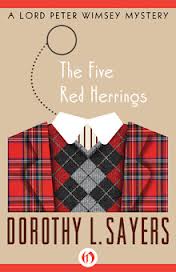
The Five Red Herrings

Dorothy Sayers

Another Wimsey mystery. Possibly my least favorite in the series. There is just no personal stake here. There is no victim to feel for or diabolical criminal to catch. There is just a guy that nobody liked getting killed and everyone is a suspect because nobody liked him. Wimsey also doesn’t get a lot to do in this book. That was also true of Gaudy Night, but there he was replaced by his love interest and an interesting character on her own. Here he is replaced by some bland policemen. The mystery itself is actually quite enjoyable, but most of the Wimsey stories I’ve read have had another layer that this one lacks.

daf

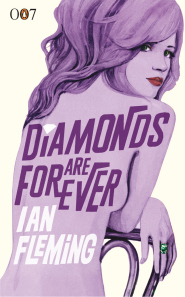
Diamonds are Forever

Ian Fleming

The odd thing about this fourth Bond novel is that the spy stuff doesn’t really get going until past the halfway point of the book, and even then there is very little of it. Bond is investigating a diamond smuggling operation, so he goes somewhat undercover and smuggles some diamonds into America. His payment is arranged by the mobsters he’s smuggling for in a fixed horse race. He meets up with former CIA Agent Felix Leiter, who is investigating the same people. Leiter throws arranges for the fixed jockey to throw the race. So Bond’s mobster employers arrange for him to get paid with fixed gambling. So he goes to Vegas.

I guess the point of the book is Bond’s growth as a character. He feels like he’s moved on from Vesper in Casino Royale and actually connects with her as a person. Most of the book is just Bond touring America and sharing his thoughts. Unsurprisingly, his thoughts tend to be sexist and racist. Shocking, I know. This book was pretty much the opposite of what I want from a Bond story. I would rather have action and monomaniacal villains, not normal gangsters and ruminations on the fleeting nature of life and love.

tea

The Eyre Affair

Japser Fforde

I first read this more than two years ago and absolutely loved it. Now that I’ve read the rest of the series, as well as the rest of Fforde’s body of work, I still love. It is a great book. One of my absolute favorites.

Thursday Next is just a great character. She is highly competent and brave, but also flawed. The big conflict between her and her love interest is that she is unwilling to admit that the tragedy she was involved with in the ongoing, at least in the books reality, Crimean War was at least partly the fault of her brother who died in that tragedy. It is her loyalty to her brother straining everything else because he was at fault. She is also the perfect kind of character to be the lead this sort of screwed up mystery. She is tolerant of nonsense while not stooping to participate in it.

I think on of things that draws me to this is that Jane Eyre is one of my favorite classic novels. It is also a weird book, being kind of Gothic and kind of a fairy tale and kind of a romance. It is the prefect book to fiddle with in this sort of meta-fictional manner. Read this.

What I Read in May ‘14

I hit my reading average again in May. I would be reading more, but I am stuck on a book I’m really not enjoying. Not because the book is particularly bad, it is just not what I want to read right now. Unfortunately, I am constitutionally incapable of not finishing a book I’ve started. So instead of reading, I do something else, like play DS or watch basketball. Still, I guarantee that I’ll have that book finished by the end of June and hopefully a higher total number of books read. This month is almost all mysteries.

narnia

The Magician’s Nephew

CS Lewis

I really wish I had read the Narnia books when I was younger. The two I’ve read so far have been excellent children’s books, but definitely children’s books. They are good, but definitely for a young audience. Still, CS Lewis is a great writer and he writes kids really well. His child characters actually feel like children, changing rapidly from the most selfish little assholes to kind and generous sweethearts. Of course, the children don’t appear quite as simply foolish as many of the adult characters here. The magician is a complete fool, and even the Witch is both dangerous and ridiculous.

This is a slightly more involved tale that The Lion the Witch and The Wardrobe. That one is fairly simple. They children go to Narnia, then save Narnia. Here, you have Polly and Digory going back and forth, visiting several different worlds, accidentally bringing people back with them, and the creation of Narnia. But the book is no longer than the next one (since I read them out of order) just a little more scattered. Still, there is something clearly building in Lewis’ melding of mythologies.

todd

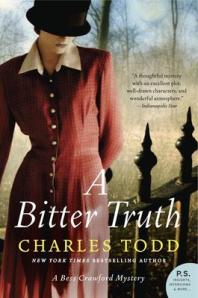
A Bitter Truth

Charles Todd

This is the first (I think) in a series of mysteries about Bess Crawford, a WW1 Nurse. She returns to England on leave only to find a battered woman freezing on her doorstep, so she takes her in. Helping Lydia, the woman on the doorstep,  leads to Bess getting involved in a murder and a mystery about a missing child. It is not great, but it is largely enjoyable. Lydia’s family is haunted by past and current traumas and their suspicious behavior is actually justified by the situation. At least, it is if you accept the pall cast over this family by a death that happened more than 30 years before.

Bess is an interesting enough character, but her role in this book is odd. She plays the role of the traditional detective, investigating the mystery but revealing little about herself. But when it comes to the actual crime, she doesn’t do much. She is mostly an observer. Now, with the plot thread about the missing child she is the big mover, but she has little to do with checking murder. Still, it was a fun read overall.

marple

A Murder is Announced

Agatha Christie

Another Miss Marple mystery. I am starting to get a better feel for how Marple’s stories work. She doesn’t really do most of the investigating, she simply solves. Other people do the legwork. Miss Marple does more investigating in this book than she did in the previous books. She actually gets involved rather than just showing up to name the murderer.

This is a rather fun story. Several neighbors of Letitia Blacklock all get letters saying there is going to be a murder that night. There was a party planned, and everyone assumes it is part of a party game. When someone actually dies during a quickly deduced fake break in, everyone’s secrets start to come to light. The eventual solution is a little farfetched, but in a fun way. It is not something that anyone would guess, but doesn’t really break the rules.

james

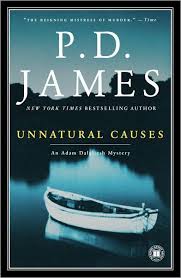
Unnatural Causes

PD James

I picked up two of these Dalgliesh books when they were cheap on Amazon, and now I’ve read them both. They are very good mysteries, with very strong suspect characters and crimes, but I don’t care at all about the protagonist. Maybe I need to read more of these or read them in order, but he’s left no impression on me after two books. He’s just kind of there to move the plot along.

Here, a man washes up in his boat with both of his hands severed. Suspicion then falls on the inhabitants, most of them writers, of the small community where the deceased man lived. Dalgliesh happened to be visiting his Aunt, a resident of said community, at the time and assists in solving the murder. Neither of James’ books really lit me on fire. There is nothing particularly wrong with this book, but it simply didn’t grab my interest.

What I Read in April ‘14

The thing with bloated fantasy epics is that they take a long time to read, even if the reader finds them engaging. When the reader is not such a big fan they take forever. I would have more read for this month if I had been able to force myself to keep reading Acacia. I don’t hate that book or anything, but the more I read it the less I like it. I am completely unable to abandon a book unfinished though. I have only ever found one book bad enough that I will never finish it: Battlefield Earth. Nothing else has been both as truly horrendous and as horrendously long. So it is another four book month, which is what I need to average to hit fifty for the year. I hope the damn breaks and I have a big reading month next month, but we’ll see.


from bossfightbooks.com

from bossfightbooks.com

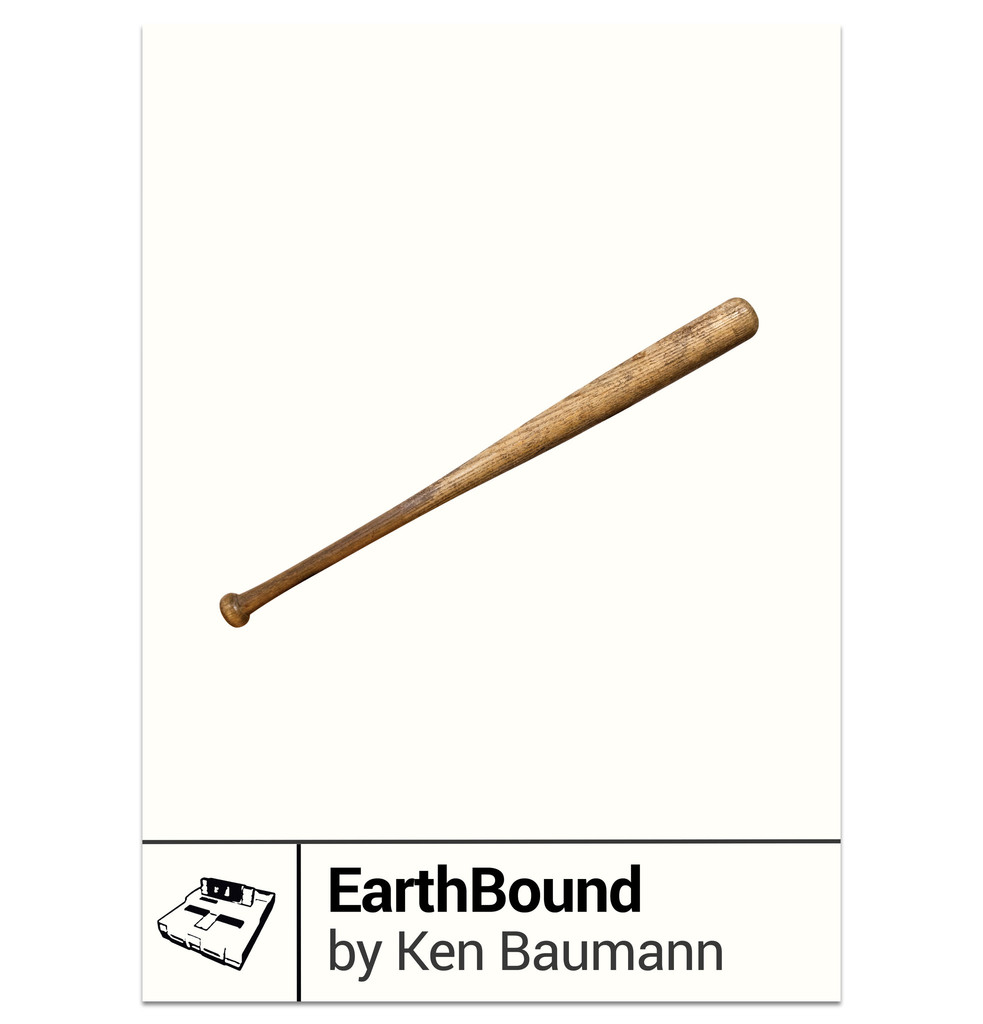
Earthbound

Ken Baumann

I went in with the wrong expectations for this. I wanted a book about the game, a book that looked closely at what made the game work so well, from plot construction to battle mechanics. Something like a critical, close reading of the game. That is not what this book is. It does have some of that, but it is more the personal recollections of the author. It is as much autobiography as it is an examination of Earthbound.

Judging it for what it is, it is a good read. It is his Baumann’s memory of playing the game mixed with anecdotes of his life growing up. He does of good job of paralleling his life with the different parts of the game. The journey through Earthbound is not unlike the journey through childhood. This is supposed to be the first entry in a series of books like this, books about games from boss fight books. I hope the rest are at least this good, though I tend to prefer my books about game to be a little more about the game themselves.

wira2

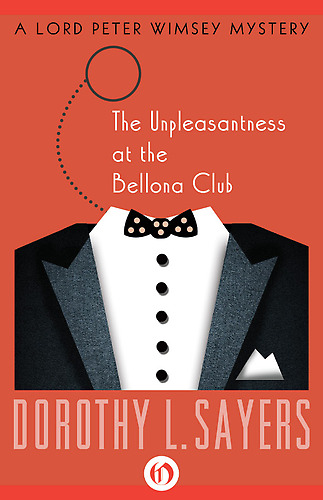
Unpleasantness at the Bellona Club

Dorothy Sayers

Back with to the Wimsey mysteries. This one starts with a dead body found in Lord Peter’s gentlemen’s club. For all appearances it is a natural death, the man was very old, but there are some problems with his will. And the will of his sister, who died the same night. If she died first, her money goes to him and then to his sons. If not, it goes to her niece. So the lawyers hire Wimsey to look into it and try to find out exactly when the man died. It is soon uncovered, though, that he had died earlier and been moved to his place in the Bellona Club. It also appears that it wasn’t a natural death.

This is enjoyable as always. This one starts out innocuous, but soon turns deadly and ugly. There are plenty of suspects and nearly all of them are lying about or hiding something. Peter keeps at things with his usual attitude and persistence. Like usual with Sayers, there is more than just a mystery here, there is also some social commentary. The mystery is what keeps things moving, but it casts a quick eye on class and gender struggles. Not enough to distract from the mystery, but enough to make the reader aware of the struggles of the time. It gives the book something extra to entertain, which it certainly does.

wira3

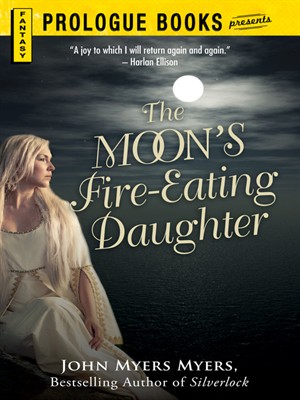
The Moon’s Fire Eating Daughter

John Myers Myers

Another Amazon sale title, this one picked up from a glowing recommendation from an internet acquaintance. It seems like just the sort of thing I would like. It is a romp through mythological history, with appearance from famous writers and fictional characters. In theory, it is not unlike the Jasper Fforde books I love so much. However, I didn’t like this much at all. It occasionally amused me, but mostly it frustrated me.

The Moon’s Fire Eating Daughter uses language that is often poetic and highly referential. Most of it is some historical allusion or reference. I would say that the frequent obscurity of said allusions cloud the story, but they are the story. This book only exists for those references. When they work, the book is amusing; when they don’t, it is a dreary slog. The problem is how much the reader has to bring into the book to get anything from it. I am not unknowledgeable about literature or mythology, in fact I would say that I know more than the average person, but I was lucky suss out more than half of the allusions in this story. Maybe I’ve just gotten used to reading easy material, but the reward didn’t feel worth the effort in this case.

wira4

Cards on the Table

Agatha Christieas four other guests. During the dinner, while the guests are playing cards, someone manages to murder the host. Poirot and the police immediately start investigating, soon discovering that that the four suspects all have been suspected of murder before.

Poirot is less involved in this than he was in The Mysterious Affair at Styles. He asks question about the card game to try to learn what he can about the suspects tendencies, but the bulk of the investigation is left to the police detective. There is also a mystery novelist involved. I can’t help but feel that any time a writer puts a writer in their story that it represents them The mystery writer here tries to be helpful, but I’m not sure how much she help she is. This book lacks the complexity of the Sayers one above, but it might be the better mystery.

What I Read in March ‘14

I didn’t actually get a lot of books read in March.  Mostly because one that I did read, Words of Radiance, was so gosh darn long it didn’t leave me a lot of time to read anything else.  Also, I’ve managed to clear my pile of unread physical books down to just a handful and fantasy novels.  The problem with those is that they tend to be really long, which hurts my overall count.  Still, I expect to get back on track in April and May.

Words of Radiance

Brandon Sanderson

mar 2

The second part of Sanderson epic doorstop series is even better than the first. It does have its rough patches, not unsurprising for a book with a page count well over one thousand, but is overall a very entertaining read. The Stormlight Archive certainly has a different feel than most doorstop fantasy series. While it is only two books in, Sanderson has done a great job of keeping the focus tight. While he is carefully illuminating the fascinating world this series takes place in, the focus has remained on a cast that is remarkably small for a book this size. There are a few chapters that, at this point, are simply world building. The bulk of them, however, follow just a few characters; Shallan, Kaladin, Adolin and Dalinar. Also, by the middle of this volume they are all in the same geographical place, further centralizing the narrative.

While the first book belonged to Kaladin, following his origins and journey, this one is Shallan’s. Here we find out her history and what made her travel halfway across the world to steal something from Jasnah Kholin. Kaladin still has his part, but Shallan is the big mover here. The parts of Words of Radiance set in the present, most of it, were excellent. Especially Shallan’s growth from a sheltered young girl to a more wise and cunning woman, a real player in these machinations. But her past, while not without merit, seemed a little “after school special”-y to me. That sounds harsher than I really mean it to. Her situation is largely gotten across quickly in those scenes, but Words of Radiance repeatedly returns to belabor the points, every time giving just a glimpse more. That recipe worked much better in the first book, but I was not as big a fan of it here, despite actually liking Shallan more as a character than Kaladin.

Most of these epic fantasy series have larger than life protagonists. They are generally heroes, if not at the start then by the end, and accomplish great, near superhuman feats. In The Stormlight Archive, many are expressly superhuman. At first it is due to the Shards, weapons and armor that grant magical abilities to their users. As this book goes on, the Knights Radiant, people with great powers who “failed” and faded into legend, begin to be reformed and their great powers return. The exceptionality of the protagonists and antagonists is made explicit. They are not really normal people anymore. This is not something unique to this series, but the proliferation of such specialness is. In the Wheel of Time, only Mat, Perrin and especially Rand had anything like that. It definitely gives the series an interesting hook.

In the end, what you get with a Words of Radiance is a classic feeling fantasy epic that really does its own thing. Sanderson is putting his own spin on classic elements to create something that, while not exactly new, is still refreshing in a world where most epic series are more than a decade old.

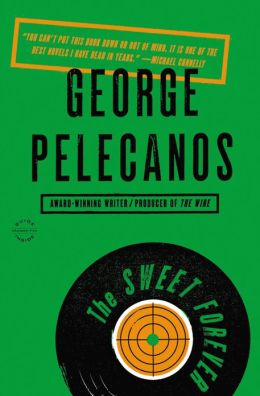
The Sweet Forever

George Pelecanos

mar3

I read this for a book club that I’m in. I wasn’t really familiar with Pelecanos or any of his work, but I really liked this. It is a crime story set in the 1980’s, apparently the third in a four book cycle set in Washington DC during four different decades, with some recurring characters and an emphasis on the evolution of the city. The Sweet Forever starts with a gangbanger dying in a car accident and a guy who happens to be around steal a big bag of drug money out of the car. The rest of the dead boy’s gang are on the lookout for the money, as are a couple of corrupt cops. The only witness to the theft of the money is a youngster who likes to hang out around the local record store, which is owned by Marcus Clay, the one of the recurring characters of the series. I don’t want to give away much of the plot, but it obviously builds from there, with these various factions playing off each other until everything comes to its bloody conclusion.

There are a lot of things woven in with the crime plot. For starters, it all takes place during the opening weekend of the NCAA Basketball Tournament. Nearly all the characters are watching Georgetown and Maryland, the local schools, especially Maryland star and eventual second overall draft pick Len Bias. There is also a lot of very casual cocaine use. Drugs are an ever present threat, with cocaine and alcohol and the foreknowledge amongst the police of the coming scourge of crack. That ties back in with everyone’s love of Len Bias, who would die from drug use only a few days after being drafted. It lends the whole thing a sense of macabre irony. So a great read all around.

Presidential Elections: From George Washington to George W Bush.

Paul F Boller

mar1


Another thing I found on the Kindle Store. It gives a rough overview of every Presidential campaign up to Bush and Gore in 2000. It is not particularly in depth on any of them, but it is a nice introduction to the issues brought up in each of the campaigns. This wasn’t anything particularly profound or enthralling, just something I read a chapter or two at a time before bed for half a month. I was in it more for the historical side, but the emphasis was more on the recent elections with a more political focus. That is not surprising, the more recent elections will obviously be better documented, but I’d rather read about the 1912 or the 1824 election than the 1992 election. Still, it was entertaining enough.