I Got Me a WiiU

I usually wait a year or so after it comes out before I buy a console. That gives them the time to work the kinks out of the system, the launch games to come down in price and for me to get a better idea of the kind of support the system is going to have. I broke that policy with the WiiU. Not because I think it is going to be a must have, unbeatable powerhouse. I see it being a modest success, with plenty of unique asymmetrical multiplayer games to play. But my Wii was on its last legs, unable to play dual layered discs and getting progressively noisier when playing any game. Since I still have a sizable stack of Wii games to play, I decided rather than get a new one or pay to fix mine, I would just get a WiiU. As of right now, I am very happy with that decision.

I of course bought the deluxe edition, because I buy enough downloadable games that having the still too small size of the Deluxe’s internal memory was a must. That and I would have likely bought Nintendoland anyway made it a no brainer. I do have to say I like the look of the white system better, though. I wish the colors weren’t split between the two SKUs. The system itself is tiny, significantly smaller than even the slim PS3. It does look really nice. The big selling point of the system, the tablet controller, is nice as well. It is light, weighing only a little more than a regular controller and fitting comfortably in your hands. While light, it doesn’t feel cheap. It continues Nintendo’s track record of comfortable, if unique, controllers.

Nintendo has been closed mouthed about the technology inside the machine, and honestly, I don’t really care. It seems likely that the WiiU is roughly on the same level as the PS3 and 360, meaning that In a year or so they will be in the same position they were last generation. I see this as being even less of a problem than it was with the Wii. There were very few gameplay improvements in the last generation. Scale increased, but the games are largely the same as they were before. The jump from PS2 to PS3 was not unlike that from NES to SNES. The games looked better and were larger but at the base level the games were mostly the same. I don’t see even the graphical increase being as large this time around. The important thing for the WiiU is not being on a technological level with their rivals, but in providing interesting games to play for their system.

So far, Nintendo has done a fine job of providing the games. Most of the launch games are ports of games released in the last year. All the games are solid, though some of the ports are rough. Still, the variety is something worth noting. There is also a good number of original games. ZombieU has gotten good buzz and Scribblenauts looks great. I bought New Super Mario Bros. U and Sonic and Sega All-Stars Racing Transformed to go with Nintendoland. All three are have been good fun. Sonic Racing is buggy as shit, but the racing is good. It has a very arcade, very Sega feel. Plus, I get to race as Vyse, which is a big plus. Nintendo Land is the Wii Sports equivalent for this system, but I would say it is even better. Instead of a handful of simple sports, it has nearly a dozen games that have surprising depth. Sure, some of them are as simple as they seem, but others seem to never get old. Me and my brother have had a lot of fun playing the Metroid themed shooting game, and playing Mario Chase with a full complement of players is like the best game of Pac-Man ever. The best has been Donkey Kong’s Crash Course, a tilt controlled obstacle course that is as difficult as it is addictive. In all, I have been more than satisfied with Nintendo Land. The stand out title, though, has been NSMBU. While most of the NSMB games have felt like updates of Super Mario Bros or SMB3, NSMBU is a follow up to Super Mario World, which is the best Mario game. The level design is pitch perfect, and the controls are as good as ever. It is truly great.

A highlight for the system so far has been asymmetrical multiplayer. With Nintendo Land’s Mario Chase, one player with the tablet runs away from up to four players with Wii Remotes. It only works because the tablet, so one player has his own screen. With NSMBU, a player with the tablet can make platforms for the other players. More often, the tablet player puts out platforms to screw up the other players. It isn’t exactly useful for beating the game, but it is a fun experience. I hope for more of this sort of content.

The WiiU has the potential to be something great. Even just the ability to just move the video to the handheld screen is worth the price of entry. I like the system a lot. As long as it has Nintendo’s games on it, then I’ll have fun with it.

The Wii’s Last Story

Of the two prominent Wii RPGs released this year, Xenoblade Chronicles has gotten the bulk of the attention. Whether this is due to it epic scope, its fluid yet strategic battle system or simple because it came out first, I don’t know. What I do know, now that I’ve played both equally and beaten The Last Story, is that The Last Story deserves at least as much love a Xenoblade. The Last Story is a classic JRPG filtered through an action game and the result is amazing despite its flaws.

While the action RPG is in no way new, The Last Story is different than the usual in that hybrid genre. It doesn’t just give the player direct control of the fighting, it is paced and structured like an action game. While there is plenty of very RPG-like gadding about town, the mission play out like action game levels. Players are pulled from fight to fight, set piece to set piece at a breathless pace. There is excitement and immediacy that games like the more meandering Secret of Mana or the Kingdom Hearts series can’t match. It is actually more like something from God of War. The game is helped by solid, though not perfect, fighting mechanics. Waling away at opponents is a valid strategy, but the game rewards attacking at a measured pace, alternating attacks with allies to get damage bonuses from chains. Magic attacks leave elemental circles that the player can dispel for status effects. The balance of keeping beneficial elements and hitting status effects give some nice strategy to fights that can break down into chaos. Aside from just firing their one element of magic about even if the enemies are resistant to it, the AI controlled allies work just fine. It is a frenetic, chaotic battle system with just enough strategy to keep being interesting.

The RPG parts are good as well. The Last Story takes cues from numerous classic RPGs and rolls them into a not wholly unoriginal adventure. Its penchant for limiting party members for different tactical challenges is right out of FFIV. I don’t mean to spoil the surprisingly good story, but the plot takes plenty of elements from numerous FFs and Chrono Trigger. There are also some spots that are very reminiscent of the Legend of Zelda. It plays like a greatest hits of all your favorite RPGs

Fortunately, there is more to it than that. In sharp contrast to the expansive, epic scope of Xenoblade, The Last Story is a rather intimate game. There aren’t that many characters and the majority of the story takes place in one city. Though it can’t seem to help itself from escalating events to world shattering proportions, the story is primarily of one man’s attempts to better himself and the world. It all works together very well, especially since Lazulis City has enough personality to remain interesting for as whole game.

There are some flaws, like some overly fiddly battles, especially with a limited party, and an upgrade system that can’t be fully utilized without multiple playthroughs, but none of the flaws significantly diminish what is an excellent game. With the Last Story and Xenoblade, the Wii has received a terrific one-two punch of RPGs. One is perfect for quick play sessions and quick run throughs, the other will keep anyone busy for as long as they want. I wouldn’t say one approach is better than the other, but it is nice to have games that fit both. The Last Story is a perfect send off for the Wii.

Wii Must Say Farewell

With the recent release of the WiiU Nintendo has fully fazed out the original Wii. Really, they gave up on it after last year’s Legend of Zelda: Skyward Sword, releasing only a few dregs like Mario Party and the wholly excellent Kirby Collection since that. Sure, the Wii has been mostly dead all year, with Nintendo just now cutting off life support. While I am not surprised at the almost complete lack of anyone caring that it is gone, I am disappointed. Despite its bafflingly bad reputation, the Wii is one of my favorite gaming systems. It had its problems, like a lack of power and an unfortunate glut of crappy minigame collections, but the Wii also had some of the freshest, most original games since the original NES. I guess it is up to me to highlight some of the best things about the Wii.

The first is Nintendo’s own output for the machine. While there are many who suddenly decided they loved Nintendo’s Gamecube entries in their various series, Nintendo took what it learned from the at very least commercial failure of many of its GC games to good use with the Wii. It launched with a Zelda game. Twilight Princess is a great game, one of the best launch games ever. They followed up with 3 Mario games. No system had three new real Mario games since the NES. The Galaxy games were especially good. Mario Galaxy 2 is easily among my Top 5 favorite games of all time. They had a true Kirby game and an experimental Kirby game. A solid Metroid Prime game, though Other M is better off not mentioned. Then there are the other Nintendo series, a full complement of Mario Sports titles, the solid Super Paper Mario, WarioWare, a Fire Emblem, etc. The idea that the Wii was lacking in traditional games is laughable when Nintendo put out more than two dozen on their own.

Nintendo’s greatest success with the Wii was their new games, the games that got everybody playing. The Wii was a truly inclusive system, inviting everybody to play. Deride it if you will, but Wii Sports sold the system for a reason. While I was only really partial to bowling, there is something to be said for the magic of having your Grandmother play video games with you on Christmas.

The second biggest selling point of the Wii is the virtual console. While downloadable titles are commonplace now, the Virtual Console was what sold me on the idea. Many people seem determined to remember it only for the games it lacks, like the notable absence of Earthbound. However, the sheer wealth of classic games available for only slightly too much should be hard to overlook. While moving it over to my new WiiU, I realized that I have spent more than 200 dollars on VC games, and each one of them was worth the money. A significant chunk of the history of video games is on right there for everyone to experience.

There are also a lot of fun, experimental games. Games like the Trauma Center series, which turned playing doctor into an arcade-like experience or the pseudo-RTS Little King Story. Adventure games were already on their way back, but the Wii helped get them there fully, with games like the utterly charming Zack and Wiki. The motion controls of the Wii were not quite as revolutionary as some people hoped, but there is no arguing that they didn’t help widen the kinds of games available on home consoles.

In all, the Wii lived up to its original name of Revolution, though this Revolution turned out to be a short lived one. It was new and exciting, but Nintendo was unable to hook all their new gamers on buying things other than Wii Sports to play. The rise of tablets and gaming capable cell phones probably didn’t help either. Still there is enough to recommend about the Wii that it will receive an honored retirement at my home, sitting in a box alongside my decrepit PS2 and battered SNES, ready to be taken from the closet and hooked up at any time.

So what were the 10 best Wii games? Here’s my list

  1. Super Mario Galaxy 2: Just the best.
  2. The Legend of Zelda: Skyward Sword: Looks amazing and plays even better
  3. Super Mario Galaxy: Almost as good as its sequel
  4. Donkey Kong Country Returns: On any other system this might have been the best platformer
  5. Super Smash Brothers Brawl: It is hard to imagine any game topping this for a Nintendo love fest.
  6. No More Heroes 2: Brutal and hilarious. Old school in the best way.
  7. New Super Mario Bros. Wii: 2D Mario is back and I love it
  8. Legend of Zelda Twilight Princess: It is this low because it is better on the GC
  9. The Last Story: A great RPG with a nice tactical crunch
  10. Xenoblade Chronicles: An epic of epics, the closest thing we’re likely to get as a follow up to FFXII.

With two exceptions the best Wii games were published by Nintendo, and one of those two was developed by them and published by others. There were plenty of great games not made by the venerable king of video games. Here are the 10 best overlooked Wii games, though in no particular order.

  1. Little King Story. It doesn’t quite work as it should, but it is still fun
  2. Trauma Team. The culmination of the great doctor “sim.”
  3. Zack and Wiki. Some frustrating bits, but on the whole great fun.
  4. Final Fantasy Crystal Chronicles The Crystal Bearers. The title might be longer than the game, but it is a great RPG sandbox.
  5. Sin and Punishment: Star Successor. Shooter heaven.
  6. Fragile Dreams. Haunting, though rough.
  7. Klonoa. Even better than on PS1, but still just as ignored
  8. Muramasa: The Demon Blade. Beautiful, great fun.
  9. A Boy and His Blob. An awesome reimagining of a crusty classic
  10. MadWorld. Dark, violent, funny and tragically overlooked.

Honestly, I look at these two lists and can only think of the games that aren’t being mentioned, like Punch-Out, Kirby’s Epic Yarn or Boom Blox. I’ve also ignored Wiiware entirely. For the last five years I have done the vast majority of my home gaming on the Wii and have never felt like I was missing anything. That is not to say the PS3 and 360 aren’t great, just that we are living in a gaming golden age, where all three consoles have unique, vital games. The Wii deserves to be remembered as the great success it was. The games are different, often weird or ungainly, but they are also innovative and interesting and often fun. Thank you Nintendo, for you little white box.

Professor Layton and the Great Disappointment

For the last five years or so, the Professor Layton series has been one of the best things in gaming. It combined charming story and characters with terrific, brain breaking puzzles for some of the best handheld games ever made. Each of the first four games were great. The previous success us why my expectations were so high for Professor Layton and the Miracle Mask, and why I was so crushed when it failed to get even near those expectations.

While the core gameplay remains what is always was, a myriad of small problems almost render this latest Layton game unplayable. First are the new 3D graphics. The charming characters do not make the jump from two to three dimensions very well. Some, like Emmy, look just fine. More, like the now creepily beady-eyed Layton, look horrifying. While there are some advantages to the great range of animations available, but they lose all of their charm in the translation. This is a small problem, and one that is easy to get past, but it does lessen my enjoyment a little bit.

Then there is the new looking around mechanics. Instead of using the stylus to poke around the bottom screen, the player uses the styles on the bottom screen to poke around to top screen. This causes an unforgivable disconnect. While it does highlight the places where there is something interesting to see and let the environments be in 3D, it is imprecise enough be annoying.

Last, and worst, is that the balance between puzzles and story has tipped to the story. And that is bad. Over the first 4 hours of this game I got to less than 40 puzzles. It was too much talking and not enough puzzle solving. There are as many, or more, puzzles in this game as there have been in previous games, but they are spread out over nearly half again as much game. Most of the Layton games take about 10-12 hours to beat. Miracle Mask took me nearly 20. By the end I was really ready to be done with Layton. The game was slightly less fun to play but it lasted much longer. It became tiresome. The story here is actually not bad, but there seems to be less happening in it than in previous games. There really isn’t enough story to last the extra 5 hours this game does.

Professor Layton and the Miracle Mask is still a solid game. It isn’t as good as the previous Layton games, but the basics of the gameplay are still here and are still entertaining. It just hurts that this series has been so much better in the past. I hope the next, and reportedly last, Layton game gets things back on track.

One of these days I really will catch ‘em all

The Pokémon series has a cycle it has run through since it began that Black/White 2 breaks, and I hope this becomes the new standard for the series. The cycle goes a pair of games with a few cosmetic and roster differences, Red/Blue or Diamond/Pearl. Those games are followed up by an improved third version of those games, Yellow or Emerald. Black/White 2 is something different. It is not the enhanced “Gray” edition to Black/White, it is a true sequel. There is a lot to the game for those who bought Black or White but who are not buying every Pokémon game because Pokémon. While it does push the boundaries with the incremental improvements, it does push against some problems that the series has mostly avoided until now, and for the first time gives me some concern for the direction this series is taking. Still, the massive amount of content lets me comfortably say that this is the best Pokémon game yet.

One of B/W’s biggest selling points was its regional Pokédex. B/W2’s is also a highlight, but for a different reason. Much of B/W’s charm was in how the Pokémon available in the main game were limited to just the ones new to this entry in the series. As a result it was the freshest Pokémon experience is some time, and it gave players a chance to get to know the new ‘mons that hasn’t existed since Red/Blue. B/W2 could not repeat that without a regions worth of new Pokémon, so Game Freak went the opposite way with it. B/W2’s regional Pokedex has around 300 critters in it. Each area has tons of Pokémon. While many of the routes are the same as they were in the last game, the new monsters make them a different experience. One of the best parts is that I’ve discovered that the Gen. 5 Pokémon are probably my favorite since the original 150.

While there are few improvements to the system, there are plenty of new frills. Pokestar studio makes the usual pageant-esque mini-game fun. Each movie is like a puzzle battle that must be solved. There is an achievement system in the way of medals. The new areas are mostly well designed, with straightforward main paths and plenty of side trails. There is really just a lot to this game beyond the usual collect the badges quest. I do need to make sure to note that the player character designs are just awful

B/W2’s biggest deviation from the formula is in its story. It is a sequel, and a sequel to a game that already focused more on story than any Pokémon game before it. The structure is still the same, with badges to collect and an Elite 4 to battle, but there is a lot more going on around it. Team Plasma has split into two factions, with one attempting to atone for their crimes in the previous game and the other dropping the “free the Pokémon” rhetoric and just flat out focusing on conquering the world. The problem is that with the increased focus on story, the player characters remain nonentities. To keep the one of the series biggest draws, the player characters must remain nonentities. So the game has to balance the big role the player must play in the story, with the fact that they can’t really be an active participant. It is the old problem of the silent protagonist. I have no problem with a silent protagonist, not when the game calls for it. When the main character is supposed to be the player, like Pokemon, then it only makes sense not to give them a set personality. Even giving options isn’t perfect, unless someone thinks Sheppard from Mass Effect accurately spoke for them. The Pokémon series has long succeeded in making it feel like the players Pokémon adventure, that is a big part of more personal attachment to the players own caught and chosen Pokémon. In Black/White2, the rival trainer gets to be the hero; he is the one with grudge against Team Plasma and is trying to stop them. The player just shows up and helps. The trouble also shows up with the returning characters. Cheren and Bianca are both around, Cheren now being a Gym leader and Bianca helping out the Professor, but the player character is nowhere to be found. I don’t have much of a problem with where the storytelling in Pokemon is right now. It is strange that the story is becoming more important, but the player is at best a side character. I just hope that the series doesn’t continue down this road. That would force them either abandoning the conceit that the player is the main character or making the main character take an even lesser role in his own story.

I thoroughly enjoyed White 2, and I can see myself returning before too long to catch all those legendaries available in the post-game. This is Pokemon, even with the slight changes everyone should know what they are getting into. Pokemon White 2 is the perfect way to cap off the DS’s life.

Kid Icarus: Uprising is pretty good

Kid Icarus is something of an oddity in Nintendo’s expansive library of games. It is often remembered as being among the best of the early NES first party games, along with the first Mario, Zelda and Metroid games, but it is significantly more flawed than any of those games. The fact that it is remembered at all, rather than forgotten like Ice Climbers was until Smash Brothers, is a testament to the appeal of the game. However, unlike those other classics, Kid Icarus has gone more than 20 years without a sequel. (There was a Gameboy follow up, but I know little about it) It feels like another great Nintendo franchise that was abandoned before it could blossom. Like Nintendo’s big 3, Kid Icarus started with a well-made if primitive game, like SMB, LoZ and Metroid. The each had a divergent follow up, a sequel vastly different in gameplay and divisive in reputation. Mario, Zelda and Metroid 2 all fall into this, maybe Myths and Monsters does too, I don’t know. Then came the codifying classic third game in the series: Super Mario Bros 3, Legend of Zelda A Link to the Past and Super Metroid. Kid Icarus never got this third game, the one that could have made the series a true classic. Now twenty years later, Kid Icarus: Uprising is not that game. It is a great game, but other than being drenched in the flavor of the NES original it is something completely different.

Kid Icarus: Uprising is a shooter, with the old Kid Icarus characters and enemies painted on. It is actually very much like Star Fox Assault or Rogue Squadron 3, with try to balance flying missions with on foot ones. Kid Icarus is better than either of those two games, though. Each of its numerous missions are divided into a flying segment and an on foot segment. While the flying parts are much better than the on foot ones, the disparity is not so great.

While in flight the game is brilliant. It looks wonderful, with a wide variety of enemies and formations. It is strongly reminiscent of Star Fox 64, both in gameplay and in the chatter between characters mid-battle. The controls are perfect in the air, but they suffer on the ground. While they are highly customizable, the default controls have the player controlling Pitt with the control pad and aiming with the stylus and shooting with the left shoulder button. It is a control scheme that is pure torture for a lefty. It works a lot like an FPS. It takes some getting used to, but they actually work, though there are some enemies that require some finer controls than the system is capable of. (I’m looking at you, Cragalanche.) On the good side of the foot battles, there are the different weapons and the bosses. There are 9 different weapon types and they all play uniquely. The clubs have no ranged attack, but are very powerful, while the bows aren’t as powerful but have homing attacks. Choosing the right weapon for the level and your playstyle is a big part of the game. The bosses, for the most part, do no fall into the find weak point, hit weak point pattern (again, Cragalanche is an exception.) The bosses are targets to shoot. Sometimes they require special tactics, but they are mostly just impressively strong enemies. It is different and fun.

While the gameplay has its control flaws, there is a lot to love outside that. There is a surprisingly deep weapon crafting system and a multiplayer mode I didn’t touch. Most of the extra stuff is similar to that in Smash Brothers Brawl, which is no surprise since the same people are behind it. It gives plenty of incentive to replay and experiment with the game. This is aided by the story. While it isn’t anything more than some cartoony anime trappings, it is wholly enjoyable. The constant banter between Pitt and Palutena and their enemies makes even the most frustrating mission enjoyable. Really, the while the story itself isn’t great, the way it is told really is. They got the characters right, in that the characters are just entertaining in action.

The only sticking point with this game is the controls. If you don’t find them too difficult or too painful, there is much to love in this game. Those controls are an unfortunate sticking point, though. They are useable, but there is no ideal control scheme for how this game plays. However, the graphics, music and the once used to the controls actually playing are great. This is games one big flaw is too big to but it up with Nintendo’s best, but it is still a very good game.

Golden Sun Dark Dawn won’t Shut Up

Golden Sun: Dark Dawn has just about everything I love in a JRPG. It reminds me at times the late NES, early SNES games that I enjoyed. Games like Dragon Quest IV and Breath of Fire. Unfortunately, Dark Dawn wants desperately to be more of a PS1 vintage game instead. It attempts to be more like something from that Tales series by adding tons of chatter. The result is a game that emphasizes its weaknesses at the cost of its strengths.

Golden Sun plays great. The battle system is speedy with plenty of strategic options, most of which are unnecessary due to how easy the game is. Changing stats and skills by swapping Djinns gives the characters and battles plenty of flexibility without costing individuality. If the player desires, they can come up with an intricate, carefully considered set up of Djinn. Or they could just put Djinns on characters of the same element and brute force through the game. Each strategy is valid. The dungeons, and the towns to a lesser extent, are a joy to navigate. Instead of just samey corridors and the like, Golden Sun has dungeon more like something out of Zelda, with the characters Psynergy powers replacing Link’s tools. There is usually a fairly easy straight path through the dungeons, with most of the more difficult puzzles used to screen off treasures and hidden Djinn. I am a sucker for puzzle dungeons and Golden Sun is full of them. Really, the game gets a lot of things very right and is a lot of fun.

The trouble with the game is in the story, or more specifically in how the story is told. The plot, at least the first half or so, is a simple adventure, with youngsters leaving home to see the world and right wrongs and eventually get caught up in some world threatening conflict. The characters are paper thin, which in and of itself are not a problem. There really isn’t much to the cast of Dragon Quest IV, but they were a fun bunch to go exploring with. The same is true of FFIV. Besides what is necessary to the plot, they have little to say. This may be due to cartridge space, but the player is left to fill in some very wide blanks. That contrasts with something like Tales of Symphonia, whose characters are incapable of shutting up. They have tons of scenes and dialogue for their personalities to flesh out their personalities. That doesn’t make the cast of Symphonia that complex, they mostly fall into well used archetypes. The player ofFFIV doesn’t know how Cecil gets along with Yang, but the player of ToS can’t help but know how Lloyd and Raine get along. The problem with Golden Sun: Dark Dawn is that the characters have the depth of the first example, but talk as much as the second. The characters talk and talk and talk but never actually say anything. Cutscenes that should take a few minutes drag on with loads of extraneous banal dialogue.

Still, Dark Dawn is more enjoyable than not. The core of the gameplay is strong enough to carry it through the pointless chatter. This is one of the best games that every got me to yell at my DS. It is so frustrating to have what is normally a fun experience broken up by loads of nothing, but it doesn’t really make the fun parts less fun.

I’ve got the Pokemon Blues

I just now realized, by which I mean I realized about a week ago when I started writing this, that Pokemon Black/White 2 is coming out soon. Thinking about that has caused me to catch the Pokemon bug (Weedle, I think) yet again. Luckily, I did not have to wait for my pre-order to arrive; I still had the post-game of White to play through. I powered through White right as it came out, enjoying the freshest Pokemon experience since I first played Red way back in the day, but the big level jump after the big fight with Ghetsis helped me put it down for other things. But an hour or two of exploring the newly opened areas helped me clear the level gap, and I was on to finishing the game up.

I’m a long time Pokemon fan. I picked up Pokemon Red soon after it came out, using money I got for my 13th birthday in October 1998. I hadn’t heard of Pokemon before, but seeing a commercial or something about it in Wal-Mart prompted an impulse purchase. The crazy around Pokemon was something amazing from my point of view. Since I played it beofer any of my friends, I felt like I had gotten in on the ground floor, that me showing the game to my buddies somehow helped the juggernaut. I played that game over and over. When a friend told me about the cartoon, I did something unprecedented: I got up before school to watch it. My interest faded about the time Silver/Gold came out, but I’ve still played all the games in the series and gotten at least a modicum of enjoyment out of them. White 2 is the first time I’ve ever actually double dipped on one generation. I skipped Yellow, I skipped all of the GBA generation at the time, I didn’t play Platinum. Framing the game as a sequel, though I don’t have any idea how sequel-y it really is, is just enough to get me to buy again. That and my Pokemon addiction relapse.

The post-game in White has actually turned out to be more fun than expected. Sure, I haven’t quite managed to beat the Elite 4 for the second time, but I have explored the rest of the White world and caught all the available legendaries. At first, I hated the huge level jump that occurs after the first run through the elite 4, and I still think that it could have been smoothed out somewhat, but now that I’ve caught up I appreciate the high level of competition available. I should be able to take down the Elite 4, and maybe beat Cynthia, before White 2 arrives in the mail. I hope so. I wish I could finally catch the legendaries in Pearl. I played that game for more than 300 hours, caught nearly every normally obtainable pokemon and played though Sapphire and Leaf Green to get the legendaries there. But for some reason, I never went through the effort of catch the Cresselia or any of the legendary Pokemon in that game. Unfortunately, sometime in the year or two since I last played it, it has disappeared. It’ll turn up, I’m sure.

I’ve also been watching the anime. I did get up early to watch it when it first started, but at that time I was already verging on too old for morning cartoons. I saw plenty of the first 60 or so episodes, but after that I stopped paying attention. I did go see the first movie as part of my younger brother’s birthday party. It isn’t particularly interesting, but it is fine as background noise as I read or level Pokemon or fight with Kid Icarus: Uprising. Maybe my opinion will change when I’m more than 15 episodes in.

I am actually excited for White 2. I plan on changing up my play style this time through. Usually I pick 6 monsters as fast as possible, forming a team that I stick with for the majority of the game. So my starter and the bird that is almost always available right away, then the first lightning and fire (or grass or water, depending) along with something like a fighting Pokemon. This time I am going to trade over this Keldeo I just picked up and use a legendary for the first time since Moltres. It should be interesting.

Video Game Archaeology: Burai Fighter

It’s back, hopefully as something regular. Video Game Archaeology is my monthly exploration of an artifact video game found during my excavations of various bargain bins and yard sales; an examination of a game cast off and long forgotten.

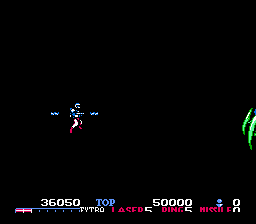
This entry in VGA is Burai Fighter, yet another NES game. I discovered it while looking up information on Low G Man. Both games were made by KID, a smaller NES developer whose output I am coming to really appreciate. Once I turned the game on, I realized I had played it a little at some point in the past. Probably at a friend’s house for a birthday party. Burai Fighter is a solid NES game, not quite spectacular, but definitely better than the average. Burai Fighter was published in America by Taxan in 1990. It is a shooter with less of a focus on the shooting and a greater emphasis on navigation. KID, the developer, also made the GI Joe games, as well as Low G Man and more recently some visual novels. They never really had that big breakout hit, but all of their games that I have played are good. KID also developed the well-regarded shooter Recca, which I have never played. One thing worth noting outside the game is its amazing boxart. The cover to this game looks awesome. According to the game’s manual, the Burai are the are Super-Brains bent on conquering the universe.

Burai Fighter is quite a bit different than the average scrolling shooter. Instead of the usual ship, you play as a man in a flying space suit. Instead of just scrolling to the right or up, Burai fighter scrolls in all directions. Usually it does go in just one direction, but there are places where if you push against the screen at the right time the direction will change. Unfortunately, looking for these can get you squeezed into trap corners. Still, the way it does it is pretty neat. Stage 5, I believe, is kind of a trick stage, where the game scrolls a little way before changing direction and trying to trap the player. Like most shooters, it requires some memorization to beat, but for the most part you can just play. Stages 3 and 6 are completely free scrolling. At the start of the stage it shows the player where the boss is on a grid and it is up to the player to go find it. Those stages are interesting in theory, but the best that can be said of them is that they are better than the bulk of NES special stages.

The controls take some getting used to. You shoot the direction you were pushing, eight possible directions, when you started shooting. As long as you hold the shoot button you will shoot that way. To change you aim you must stop shooting. The other button unleashes a screen clearing attack as long as you have collected enough red whatevers. There are three different weapon upgrades, with a well thought out system behind it. There is the ring, which isn’t very strong but does shoot through walls. Then there is the missile, which shoots right all the time but us very strong. Finally there is the laser, which can shoot through multiple enemies. You collect upgrades and the game saves all the upgrades you get, with three different levels of power for each weapon. When you die, you only lose the one you currently have. The only way to change weapon is to pick up an upgrade for that weapon.

There are a lot of friendly features in Burai Fighter, at least for an NES game. Infinite continues, fairly regular checkpoints, multiple difficulties, keeping weapons after death. Those are all good things. The problem with the game is that the levels are rather simple. Outside of some scrolling tricks, there is just not a lot going on. There aren’t many different enemies and few different patterns. The game is largely simple. It looks good, it plays good and it sounds good. The music for level 2 is especially good. Fans of 8-Bit games should at least give it a try.

I Want to Live in a Mario World

Lately Nintendo has held onto its crown as King of Platformers largely by default. Though Sony made a bid for it in the PS2 era, there has been nothing in the genre to compare to Nintendo’s excellent Wii games. (Kudos, though, to Indie game makers for mastering techniques Nintendo pioneered two decades ago.) Super Mario 3D Land further secures Nintendo’s as the best. Mario’s first 3DS outing captures much of the joyous perfection of Mario Bros. 3, World and Galaxy. While it does execute the usual Mario formula to near perfection, it lacks the imagination and invention that sets the outstanding Mario games apart from the merely great ones.

Other than some gimmicky tricks with the 3D capabilities of the 3DS, there is nothing in Super Mario 3D Land that players haven’t seen before. There are power-ups, like the trusty Fire Flower and the less familiar Hammer Bro suit, to go along with the Tanooki suit, which was used by Nintendo as a selling point. That is despite it lacking much of the functionality that it had in SMB3. (after beating the game you do get a more complete one) Still, it functions perfectly in the context of this game. All of this, though, is familiar territory. Nintendo does nothing clever with the story, which is far from unexpected and not a flaw at all. Some games, even some Mario games, benefit from clever, well-written stories, but there is no shame in ignoring it for straight, pure gameplay. Especially gameplay that is as amazing as it is in a Mario game.

Super Mario 3D Land flawlessly executes the Mario formula. It is a formula, though. One gets the feeling that Nintendo could churn out near classics like this regularly. Mario games thrive on their level design, and Mario 3D Land has some excellent levels. There are minimal water levels, the one place Mario games struggle, some clever uses of power-ups and one of the most epic boss battles in the series. Only one, though, because the only other place where 3D Land struggles, apart from originality, is in its repeating dull bosses. It controls flawlessly. Nearly every other platformer feels awkward unless it controls like Mario. And the slight problem with the camera that has been present since Mario 64 is eliminated with the more focused view. The game really feels like the perfect blend of the 2D and 3D Mario, despite being definitely a 3D game.

Like so many other Mario games, Super Mario 3D Land is a proof of system. A Nintendo console isn’t usually worth owning until there is a Mario game. Anyone with a 3DS should own Mario 3D Land.