Dancing Mad

When I first heard about Final Fantasy Theatrhythm, I dismissed it out of hand. It sounded like a cheap, stupid attempt to cash in on 25 years of Final Fantasy nostalgia. Around its release I heard quite a bit of buzz about it and finally deigned to check out a preview video. Then I immediately preordered. Theatrhythm is not, in fact a cheap stupid cash-in; it is a brilliant, enthralling attempt to cash-in on 25 years of Final Fantasy nostalgia.

I’ve put about fifteen hours into it so far, and have barely scratched the surface of this rhythm game. I haven’t unlocked any of the hidden characters and only a few of the songs, but I have played through the series mode several times. The mechanics are pretty simple, much like the underrated Elite Beat Agents. You tap, hold and slash to the rhythm of a song. The brilliant part is all in the flavor. It fuses some RPG mechanics to the simple rhythm gameplay to make it truly a Final Fantasy game. Players choose from the protagonists of the 13 mainline FF games, get experience from completing songs and learn abilities. That dressing is nice, but the real fun, at least for me is what is going on in the background during the songs. Though they are less involved than the stories that play out in EBA, they are so steeped in Final Fantasy Lore that it is almost disgusting.

There are traveling songs, where the characters walk, or ride chocobos, through the landscapes of the various games. Authentic landscapes from the games. All of the important landmarks are visible in the background. There is some inherent joy in seeing familiar places from a new perspective. Then there are the battle songs. These are less specific to the individual games, but the simulated battles against classic Final Fantasy enemies are cool. The real killers are the movie ones. Behind the main theme of the various games they play the big scenes of the game in the background. It is just an unstoppable wave of nostalgia backed by solid gameplay. Plus there is the charm of the cutesy character designs and the often hilarious pre-song party quotes.

Final Fantasy is one of the few series that could do a game like this and get me the way Theatrhythm does. Zelda and Mario could, so could Mega Man and Suikoden. I think that’s about it. There are other series with games that I love or games that have terrific music, but I don’t have the nostalgia for them that I do for Final Fantasy. As much as I love even Mario and Zelda, I’m sure I’ve spent more time playing Final Fantasy, if only because the games are longer. Also, the greater focus on story in Final Fantasy gives makes it easier to mine nostalgia than Nintendo’s gameplay rich but story poor franchises. As far as anniversary games go, Theatrhythm blows Nintendo’s offerings out of the water. Popping a Super Mario All-Stars ROM on a Wii disc just doesn’t cut it. Theatrhythm is a novel experience that hits me perfectly in the nostalgia center of my brain. Now I’m off to play both Theatrhythm and half of the Final Fantasy series.

Brave Review

The only real problem with Brave is its title. The title doesn’t really reflect what to movie is about. It does better fit in with Pixar’s usually concise titles (Cars, Up, Toy Story) than The Bear and the Bow, but Brave is actually about a bear and a bow. It is not very much about bravery. That is not to say that either of main characters lack courage, but that is not the focus of the movie. Title aside, Brave is as excellent as most of the rest of Pixar oeuvre. It doesn’t quite shine as brightly as their very best, but it is far from the worst.

While much was made of Brave being the first Pixar film with a female protagonist, the most novel part of the story is its focus on a mother daughter relationship. Most animated movies, even those that star women, don’t usually deal with mothers and daughters. I can think of tons of movies, specifically children’s animated movies, that are about friends of either genre, fathers and sons, fathers and daughters and even mothers and sons, but very few mother daughters. Being neither a mother nor a daughter, I can’t say from experience how true to life the mother and daughter in Brave are, but from what I’ve seen of real people it seemed real.

What absolutely rang true were the conflicts of teenagers and their parents. Merida wants to be free to choose her path through life, not tied down by her parent’s decisions. Her parents want what’s best for her and with their greater wisdom and experience have a different idea of what that is. It is an easily relatable situation. The parents are almost always right, they generally do know best, but the heart of the problem is that teenagers are wanting to make the choices and assert their independence. It is a rich vein for drama and Brave mines it wonderfully.

Visually, Brave is one of Pixar’s best. There are some great landscapes and scenery. The body language of the characters is also terrific. Especially the mother as [spoiler] the bear. The sound is largely good, except for some ill-fitting and generally awful vocal songs. They are downright illusion breaking, making their bits in the movie flat out hard to watch. The main characters, father, daughter and mother, are all well developed and most of the side characters are fun without overstaying their welcome. In fact, I wanted to see more of the other lords before the end of the movie.

As good as Brave is, I would say it almost feels more like a classic Disney movie than a Pixar one. Of course, any such feeling is nebulous. It might just be Brave’s fairy tale trappings. Whatever, I thought Brave felt more like Aladdin or Sleeping Beauty than Toy Story or Up. Not that all those movies aren’t excellent, but there is a different feel to them. Either way, Brave is a worthy addition to Pixar’s resume.

Prometheus Review

In the month or so since it has been released, Ridley’s Scott’s pseudo Alien prequel Prometheus has been discussed to death. Whether it is because they felt the movie did not live up to their expectations from Ridley Scott or whether they found the film genuinely thought provoking, it has been far from difficult to find opinions about Prometheus. As late as I’m getting to this, I’m not sure I have much to add to the discussion. For once, just about everybody is right. Prometheus is a thought provoking film. It is also a complete mess. For me, the good outweighed the bad, but I can understand someone feeling the opposite.

The bad in this movie is pretty bad. Characters do dumb things just to help move the plot along, plotlines appear and disappear seemingly at random, and sometimes Looney Tunes-esque slapstick ruins supposedly dramatic moments. The whole set up is a take on those idiotic ancient aliens “theories.” A lot of this stuff is hard to swallow. The script could have used either one more or one less pass, depending on where these problems came from. Most of the problems stem, though, from the wholly forgivable crime of trying to do too much. I’d rather a movie fail with ambition than succeed without it.

There are several great performances in Prometheus. Noomi Rapace is terrific as the main character, competent and quick thinking. And Fassbender does a great job as the secretive, and secretly more human than he lets on David. Nearly everyone does a great job with the material they are given. And while Prometheus doesn’t do so great a job with its science, it does raise some interesting question about the relationships between parents and their offspring.

Where Prometheus truly shines is in its visuals. It is the most visually stunning film I’ve seen in some time. Often big special effects budgets are spent with the effect of only making the movie look like everything else, or making sickening action scenes. Prometheus is clear and wonderful. The world they are on truly looks like an alien planet. When other parts of the film falter, it never, ever stops looking good.

I guess this turned into a pretty wishy-washy review. Possibly this is because one of the big draws for this movie, its connections to the Alien franchise, mean almost nothing to me. I didn’t like Alien, mostly just because it is a horror movie and I do not like horror movies. I was also not a big fan of Aliens. I didn’t see it until 2005 or so, and it never left much of an impression on me. I’ve never seen any of the other Alien movies. I had no expectations. I do like many Ridley Scott films, though I have a big hole in that I’ve never seen Blade Runner, he is what got me to the cinema. What I saw was the Robin Hood to Alien’s Gladiator. Not strictly a bad movie, but not an especially great one.

**1/2

Men in Black 3 Review

I saw Men in Black 3 recently ( I’ve also seen Prometheus and Brave, reviews forthcoming) and for the most part I enjoyed it.  MiB3 is fluff, its cotton candy, but tasty cotton candy.  At times it borders on being something great, but consistently backs away from anything that even hints at having some weight.  The first MiB movie was a ton of fun, but its sequel was hard to watch.  It seriously took me a few tries to get all the way through it.  Luckily, MiB 3 is much closer to the first one than the second.

The movie starts with a space prison breakout (the second one on the screen this year how many years can claim that?) and the escape of Boris, the most dangerous alien criminal that K ever put away.  On Earth, J is chafing against taciturn K, wanting a more personal relationship with his partner.  Boris goes back in time and manages to eliminate past K.  So J time travels himself to stop him, teaming up with a younger version of K and discovering why he is so closed.

MiB 3 is polished and funny, but there is little here that is new or all that inspired.  Will Smith and Tommy Lee Jones are still a great pair to watch, and Josh Brolin does a tremendous job as young K.  The villain Boris does little to justify his reputation as one of the most dangerous foes the MiB have ever faced, but he is less of an obstacle and more of an excuse for time travel shenanigans.  Which are satisfying, if only half explored.

I liked the movie.  It is terrific summer fare, but there is plenty that keeps it from being a really good movie.  Like the reason K is so shut off.  Is it because he let Boris kill [redacted] or is it because he didn’t kill Boris?  There is the relationship between K and O, which is hinted at and starts being elaborated upon then just disappears from movie. That is perfectly fine for a small subplot, but just about every subplot in the movie feels only half-examined.  The pieces are all there for something nearly great, but it doesn’t quite come together.

On the whole, though, Men in Black 3 succeeds in being a fun action comedy.  It doesn’t aim too high, but it manages to hit its mark.  The crazy aliens are as visually interesting as they were in the first movie, though they don’t possess the same wow factor.  Or maybe I’m not 15 anymore.  It also avoids spending too much time reveling in cameos from the earlier movies.  Some characters return, but most for only brief glimpses.  The biggest draw is the byplay between the glib Smith and the gruff Jones and Brolin, more Brolin than Jones.  Worth seeing, even if it is easy to forget.

Yeah, I’ve been gone

Things have been pretty slow around here lately, with only two posts in the last month plus a week or two. Things kept piling up, first one thing keeping me from writing then another. Most of them were the usual boring details of life: I went of vacation for a week, my work schedule changed and took up most of my writing time, etc. A few of those reasons are worth going over in a post.

The first reason is that I bought a Kindle Fire. Time I would previously have used for writing I started using to read crappy free books or watch Arrested Development (speaking of which I really need to write about Arrested Development here) or play terrible app games. I really do like my Kindle. While sorting through a lot of crap books can be tiresome, even if I just used it to read free classics it would be worth the price I paid for it. There is definitely something different about reading a book on a Kindle rather than reading an actual physical book. It is not a good different. I don’t see myself switching over primarily anytime soon, especially not if the price is the same. But while there is a dip in the quality of the experience, often the convenience factor more than enough to make up for it. Luckily it’s not an either or choice, I can have both. Fortunately for my production, both writing here and getting anything else I want done done. So that is a problem that has passed, aside from the fact that I expect my What I Read posts will be slightly longer.

Another reason I stopped posting was that my laptop died. The screen just flat stopped working. Nothing I could do would get it to work again. Which meant I had to get a new one. Not that big of a deal, except I did just spend $200 on a Kindle Fire. No computer means no posts, it’s pretty simple math.

So the distractions and lack of a computer is what shut down my blogging. Honestly, though, I have been meaning to cut back. I’ve been spending too much time writing here on WaFC. If I write fewer posts, I expect I’ll have more time to write better posts. Also, I haven’t seriously written any fiction, something I’ve been doing since I was a freshman in high school, since NaNoWriMo in November. I need to spend more time working on that if I am to meet the goals I set for myself at the beginning of the year. So I do plan on blogging regularly, but only 2 or 3 posts a week, if that. Right now I’m going to concentrate on finishing my Wheel of Time Reread, which I have 3 books worth waiting to go from scattered notes to long rambley posts, and 2nd Quest. Otherwise I’ve got movie reviews, What I Read and Video Game Archaeology.

What’s the point, then? I don’t know, but somehow this post felt necessary.

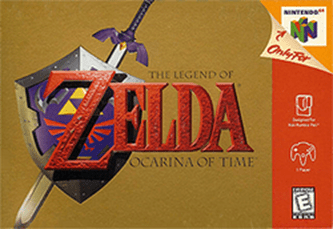
2nd Quest Part 4: Ocarina of Time


There are two games in the Legend of Zelda series that usually get mentioned in “greatest game of all time” discussions: Link to the Past and Ocarina of Time. They are the 2D and 3D epitome of the series, respectively. While LttP’s reputation seems to be unassailable, probably as much as because it is a great game as because it was the last big 2D game in the series, Ocarina of Time lately has faced some harsh critical evaluations. While most people think that at least one or two the later 3D are significantly flawed, plenty find at least one to be better than Ocarina. Flaws pointed out usually involve the mostly empty Hyrule Field, as well as the game being too easy and too ugly. For the most part I disagreed. Hyrule Field is empty, but it only needs to be traversed a couple of times, and for most of them you can ride Epona. Even with its emptiness it helps provide a sense of scale, to make Hyrule seem like a real place. The game does seem easy now, but that is mostly in the difficulty of translating puzzles from 2D to 3D. Plus, I still say it provides enough challenge. There is no defense for its ugliness, there are no good looking N64 games. After playing the new 3DS version of the game, I have reconsidered. I don’t disagree for the most part, I disagree entirely. Ocarina of Time is one of the greatest games of all time. It has flaws, slight, forgettable ones, but on the whole it is a triumph.

One thing I had forgotten about Ocarina was how well it told it story. Story is something that the Zelda series puts so little emphasis on that I find it easy to forget. Ocarina’s story has a fairy tale quality to it. Link is the only Kokiri without a fairy companion, and while he gets along just fine, some of the other Kokiri treat him like a second class citizen. One morning a fairy comes to him and requests that he see the Great Deku tree, beginning his epic journey. The first third of the game, playing as young Link as he tries to help Zelda fight off the evil Gannondorf, is perfectly plotted. It tells a fun, childlike story while planting the seeds for the time jump to the second half. Link leaves his home and meets a Princess, becomes an honorable member of the Goron tribe and inadvertently wins the heart of another Princess, this time of the Zora’s. He also manages to visit almost all of the land of Hyrule and meet just about everybody. This opening part last about 4 or 5 hours, and it is a near perfect introduction to the world, while still providing meaty gameplay. The first dungeon, the Great Deku Tree, is pretty rudimentary, but the next two, Dodongo’s Cave and Jabu Jabu’s Belly, while small are perfectly good Zelda dungeons. The early part of Ocarina is just a wonderful fairy tale.


Which makes the second part particularly jarring, even when you know it is coming. As the player returns with the third magical doodad to open the door to the master sword, he is met by Zelda and her protector Impa being pursued by Gannondorf. He retrieves the magic Ocarina she flings at him and goes to get the power to defeat Gannondorf once and for all. Unfortunately, Gannondorf is thee waiting for him. So instead of stopping him, Link gives him the power he has so desperately sought. When he wakes up 7 (?) years later, finally old enough to wield the sword Gannondorf has turned the Hyrule into a nightmare version of itself. Instead of dancing people and carnival music in Hyrule square, it is full of zombies. Every idyllic place that young Link visited is not a twisted form of itself, ready to fall apart after years of misrule. And Link, being the hero that he is, sets out immediately to right these wrongs by finding the last five of the six sages, as explained to him by Rauru, the Sage of Light. One connection I did not pick up on before I played Zelda 2 was that the names of the Sages are the names of the towns from that game: Rauru, Saria, Ruto etc. He is also helped by the mysterious Sheik, a member of the sheikah, of whom Impa was the last member.

The second part of the game is amazing. The five main dungeons are all impressive, with distinct looks and feels. I know some hate the Water Temple, but it is one of my favorites. I’m not a big fan of the Spirit Temple’s reliance on doing it at different ages, but it is a neat gimmick. Another thing I had forgotten were the mini-dungeons. I had no recollection of the Ice Cave and I had little memory of the bottom of the well. Those small dungeons helped keep the formula of solve a dungeon, mess around in the surrounding area/town, go to the next area fresh. Sometimes there is a little something extra to do. Really, the second part of Ocarina of Time is as good as video games get. There is minimal interferences from the game, it is left up to the players to find their way. Of course, there is only some sequence breaking possible it is more than most of the later games would allow.


I played the 3DS version, but it has been long enough since I had played the N64 one that I can’t really note detailed differences. The graphics have been noticeably cleaned up, fixing the game looking ugly problem. There have been some fixes for the Water Dungeon, with color coded doors for water height and a quicker way to put on and take off the iron boots, but I didn’t remember that being such a problem. On problem it did add was that the 3DS joypad is too close to the shoulder button used to lock on to enemies, making some fights actually physically painful. As far as I could tell, the 3DS version is mostly the same truly excellent game that Ocarina of Time has always been.

The Legend of Zelda: Ocarina of Time is a game that completely deserves it reputation. It is a terrifically designed game from start to finish. Each area builds on the ones that came before it. The young Link set and older Link payoff is much more impressive than the dark world shenanigans of LttP. The story is simple, but it is perfectly executed and given just enough attention, by which I mean very little. Ocarina of Time is the reason that the Zelda series is still relevant today, unlike nearly every other 2D holdover, Mario excluded. Nintendo and Miyamoto found out how to translate the 2D experience into a different, but still completely satisfying new 3D experience. It has been 15 years since Ocarina was released and it is still just as vibrant today as it has ever been. It is a true classic.

Comic Reviews for May ’12

I have three weeks worth of comics to review instead of only two this time, so there are quite a few more. I also hand out mostly good grades again, because nothing I bought was awful. Maybe I should rate these thing tougher, but I know how bad comics can be and none of these issues are really bad at all.

  • Action Comics 9:  Morrison gives us a fun look at a pair of alternate reality Supermen here, with only a few connections to the overarching run he is building in this title. It is an illuminating look at what makes Superman work, and what doesn’t. The two realities that collide here couldn’t be more different, but that collision makes for a nice done in one story. Gene Ha’s art is always a plus, as is Cully Hamner’s in the back-up story. While this issue seems disconnected from the rest of the run so far, I expect major parts of it to come back and influence this title at a later date. A


  • Animal Man 9:  Lemire continues his dark, weird and awesome run on this title. Steve Pugh’s art doesn’t miss a step from Travel Foreman’s (I know he’s been around for a while now). Here Buddy “dies” kind of, and one of the baddies steals his skin. It is weirdly fun. A-
  • Batwoman 9:  JH Williams III and Haden Blackman continue to experiment with their storytelling, but letting the story in small chunks from a multitude of viewpoints. I’m not sure it is working, but it is still an interesting story. Trevor McCarthy takes over art for Amy Reeder, and it is miles better. His art put this book back on the must read list. B


  • Captain Atom 9:  Another excellent issue. This is easily writer JT Krul’s best work to date, and it is possibly artist Freddie Williams II’s as well. The strands of this series are beginning to tie back together, in what I cynically assume is the beginning of the end, with Cap Atom’s time traveling being responsible for some unexplained parts of previous issues. This series has been largely terrific, as is this issue. A-


  • DCU Presents 9: Savage  This is just Robinson and Chang doing Silence of the Lambs with Vandal Savage and one of his numerous offspring. It is well done, but it doesn’t really go beyond its premise yet. The only real compliant I have is that Sook only does the cover, but that is a complaint nearly every time Sook does a cover. B


  • Earth 2 1:  James Robinson has a whole world to play with here. I question the wisdom of using nearly the whole first issue to spotlight characters that won’t be a part of the series as it goes forward, but I do like the seeds laid here. This isn’t going to be the old JSA, but it looks to be shaping up into an interesting series on it own terms. Still, this issue feels like a lot of wasted pages. B-


  • Exiled 1, Journey Into Mystery 637, New Mutants 42:  This crossover should have been a lot of fun, with the New Mutants and Kid Loki trying to fix a reality altering magic spell, but it really isn’t. This has got to be the most boring alternate reality, with all of the Norse Gods becoming normal people. Not with any sort of interesting twist, just normal. It is an adequately executed story, so far anyway, but not an especially good one. Just like the rest of Abnett and Lanning’s New Mutants run. C


  • Frankenstein Agent of SHADE 9:  Lemire ends his run with a touching and fun tie in to his Animal Man series. Frank and Nina try to track down a cop that disappeared in Animal Man and needless to say things get weird. The monster protecting us from monsters is just a fun concept, I don’t care that they stole from Hellboy. I wonder is the growing concerns about Father Time are going to carry over when Kindt takes over, but I hope that the book remains as fun. A-


  • GI Combat 1:  The first story, soldiers vs. dinosaurs, is exactly what the cover makes it look like: soldiers fighting dinosaurs. It isn’t anything special, but it is kind of fun. The back-up Unknown Soldier story is better. Not great, but it works. This issue is verging on crazy enough to work. C+
  • Green Lantern 9:  This issue is all exposition, all the time. We get a look into Sinestro’s past, and what helped turn him to the villain everyone one has known. We also get the sordid history of the Indigo Lanterns, finding out that they are all forcibly reformed villains. And lastly the Guardians go full bad guy. Not a bad issue, but not the most exciting one. B-


  • Green Lantern Corps 9:  John is on trial for killing a lantern a few issues ago, and it is all revealed to be a further plot by the Guardians to undermine the Earth Lanterns in their ongoing plot to eliminate the Green Lantern Corps. I’m not sure I like where this is going, because the series is best when it is about space heroics rather than pseudo-political hand wringing. C+


  • Justice League 9:  Geoff Johns seems like he is having a lot of fun here, and it shines through in how fun this series has been. He and Jim Lee are starting up the second big arc on this title, trying to give the Justice League another legitimate villain in Graves. I really like what Johns is doing with Steve Trevor, and I sure hope he comes out of this okay. The back-up, starring Shazam, is excellent. Billy Batson may not be the angel he has been in most previous incarnations, but he feels very real and is still a good kid, if a damaged one. I wish it was going faster, but such is the way of 8-page back-up stories. B+


  • Mega Man 13:  A new arc, a new artist. The art looks significantly more sloppy here than in previous issues. This in between games arc is starting better than the previous one, with an interesting debate on the ethics of humanoid robots. It is also sowing seeds for games past 3, with Dr Cossack and Pharaoh Man running around a robotics convention. B
  • Saga 3:  I don’t have a lot to say about this issue. Saga continues to be good, even with its rather juvenile sense of maturity (look at us, we have cusses and boobs!). Characters are fleshed out a little more and the story continues, in a mostly entertaining fashion. B


  • The Shade 8:  Robinson teams with Jill Thompson to take another look into Shade’s past. Shade helps his grandson extricate himself from an indiscrete relationship, by destroying the demon that had taken over his boyfriend. It isn’t an especially complex story, but I don’t think Robinson can tell a bad Shade story. Plus, it is always nice to see Thompson on art. Just an all around great comic. A
  • Supergirl 9:  Mahmud Asrar is rapidly becoming one of my favorite artists. His work on Supergirl has been uniformly excellent. This Supergirl series has been mostly very good too. This issue is about 80% fight scene, which I don’t really like, but it does help flesh out Kara some more, as well as Siobhan, the now possibly heroic Silver Banshee. I’d still like the see Supergirl acclimate to Earth a little faster, but so far this series has been good. B+


  • Swamp Thing 9:  This title has been kind of forgotten, what with Batman stealing all the Snyder attention ( I mean from fans about Snyder, not that Snyder is putting less effort into this series) and Animal Man getting the bulk from the dark line. But Swamp Thing has been really good. This is the end of this story, with Swamp Thing taking on Sethe. It emphasizes that this is a horror love story, and it works. Especially the art from Paquette and Rudy. Good stuff. A-
  • Wonder Woman 9:  I get the feeling that Azzarello is having a lot of fun with his romp through Greek Mythology on this title. I hope to get to see Wonder Woman find a way out of her predicament next issue. I rather like his take on Hades, but I hope he isn’t supposed to be a full on villain. The one thing that this book has established is that the Gods are dicks, with the possible exception of Hermes. I don’t expect Hades to be a nice guy, but I don’t like him as a villain. He isn’t the devil. Akins is no Chiang on art, but he isn’t bad. I would probably quite like him in any capacity except filling in for Chiang. B+


  • Worlds Finest 1:  This is light and fun, preserving a lot of the good stuff of previous incarnations of these characters while telling a fresh story. I like the flashback scenes, if only for Maguire’s art, but the ‘current’ stuff isn’t bad either. Power Girl and Huntress have been forcibly transferred across realities and PG wants to go home while Huntress is trying to create a new life on this Earth. It is a good set up, one where either one could get what they want. I hope this series keeps its peppy attitude. B

What I Read in April ’12

April was not really a banner month in reading for me, but the arrival of my new Kindle at the end of the month should turn things around.  I only managed three books last month, once you exclude the one book that was a reread.  AS of writing this, though, I have already surpassed that number in May.


Arsene Lupin

Maurice LeBlanc and Edgar Jepson

I have found out that this is a novelization of a play written by Maurice LeBlanc and not actually part of his series of Lupin mysteries.  This makes perfect sense after I learned it, because this book doesn’t quite fit with the other Lupin I’ve read.  I had already realized something was up when Lupin gave up crime at the end; also nearly all the action, which would be shard to stage, takes place off the page.  Still, its not all bad, though it is rather obvious.  There is no mystery here.  The story goes through the motions with little life or charm, like a play that is expecting its performers to carry the show.

Fires of Heaven

Robert Jordan


The Well of Lost Plots

Jasper Fforde

The third Thursday Next novel takes place entirely in “bookworld,” as Thursday solves book crimes and Fforde plays with his metafictional world.  There is a plot to take over the bookworld, and someone is killing Jurisfiction agents and it is up to Thursday to get to the bottom of it.

It has all of Fforde’s trademark profound silliness.  There are stock characters learning to be more believable, a mind reader erasing Thursday’s memories and counseling for the cast ofWutheringHeights.  The plot is a still a standard detective story, but it wrapped in such a fun interesting world that that is hardly a concern.  The best part of this series has always been just how much Fforde’s love of literature comes across.  There is some gentle ribbing of popular classic novels and threads drawn from so many that it can be hard to unravel, but it is always worth it.  The Thursday Next books satisfy on at least two levels, and I defy any fan of literature to not have a near constant grin from all the in jokes.

Midwinter

Matthew Sturges

I knew Sturges from his comic book work, which I liked well enough to make a point of tracking down his novels.  Midwinter, as the back flap says (though since I read this on my Kindle there is no backflap) is a fantasy Dirty Dozen.  As long as it stick to that set up it was really enjoyable.  Unfortunately, as the book goes on it gets further away from that set-up and much less enjoyable.

Midwinter struggles with tone.  Sometimes it tries for deadly serious drama, others it skews toward jokey.  All of the element here could have gelled into a compelling world, but it falls just short.  Sturges does succeed in putting some genuinely compelling characters on the page.  Mauritane is the stereotypical stoic badass, but he is a well done rendition of that sort of character.  Raieve and Silverdun are also entertaining.  While the plot is nothing special, there are several great scenes as Mauritane and his crew try to complete their mission.  My biggest problem with Midwinter is some half baked subplots.  Outside of the mission itself there is little resolution. Worst of all is the storyline of Mauritane’s wife, which gets just enough time to be insulting but not enough time to seem at all real.  I found it hard to believe that anyone involved there even knew each other. 

I wish I could give Midwinter a glowing review, and when it is good its really good, but the book is very uneven.  Still, I have already purchased the sequel and will likely have it finished in the next month or two.

The Avengers Review

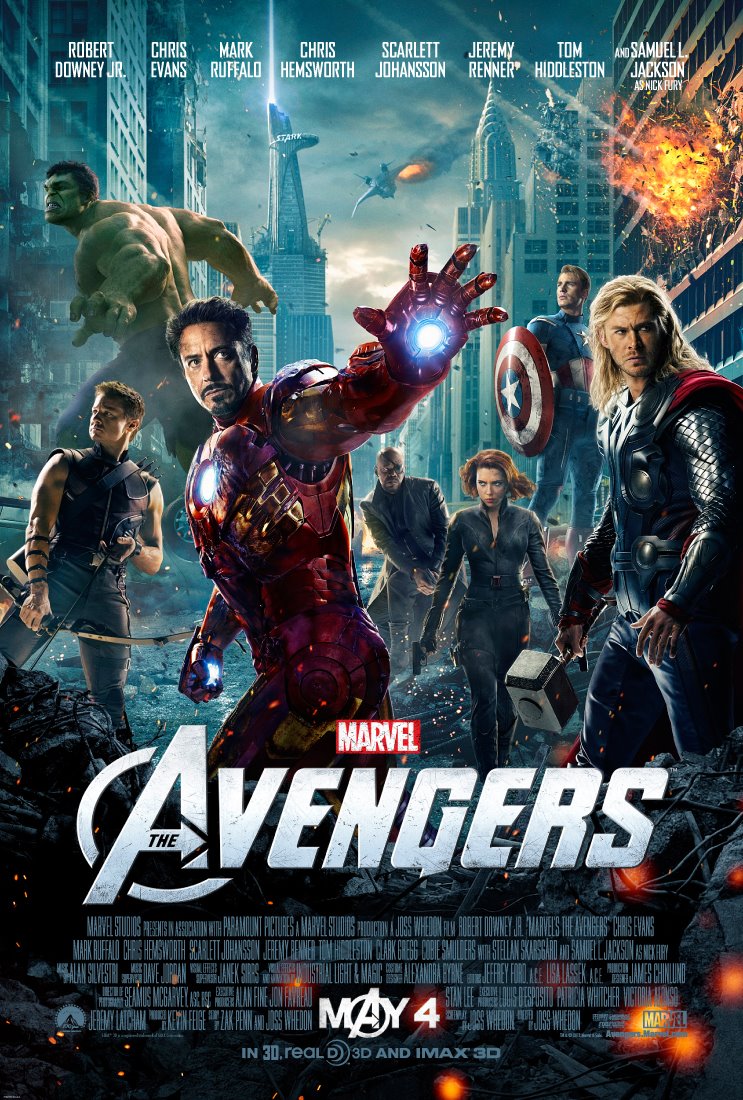
The Avengers is something of a unique phenomenon; a big budget, super-hyped blockbuster that is actually as good as the advertising campaign wants you to believe it is. It isn’t perfect, but it is amazing how close to perfection The Avengers came. Especially considering how many things could have and possibly should have gone wrong. For the most part, The Avengers is superb, the only flaws being a somewhat weak, impersonal 3rd act and some unresolved clashes between characters. Those flaws pale in comparison of how much the movie flat out gets right. Especially with the personalities of all the team members. The Avengers is definitely the best movie that Marvel Studios has put out and rivals the Dark Knight for best superhero film to grace the screen.

What really shines in the Avengers are the characters, from the glib Iron Man to the disaffected Black Widow. It helps that they are played by a host of stars or budding star. Best of all is Mark Ruffalo as Hulk, who steals nearly every scene he is in. He plays the on edge Banner with the perfect nerdy awkwardness. Joss Whedon does a great job balancing all the characters, giving each a chance to shine, though it does kind of become the Iron Man show near the end. For the first two thirds of the movie Loki does a great job as the villain, perfectly showy and Machiavellian. The fear that it might be trouble for all of these characters, many of which can and have carried a movie on their own, to share the screen was unfounded.

Another great part is the films use of humor. Viewers are expecting action and adventure, and The Avengers has those in spades, but it is also a genuinely funny movie. Whedon seems to have realized that the premise is inherently ridiculous, with super soldiers and extra-dimensional Gods and super powered robot suits, so he just has fun with it. Anytime it feels like the movie is getting too heavy, if things are too serious, there is a moment of levity or a jokey line. The Avengers invites viewers to have fun. I am not saying it is a movie that requires the viewer to “turn their brain off,” as some action movies seem to do (coughTransformerschough). It knows the premise is out there, so it uses humor to pull the viewer in, while not losing the humanity or reality of the characters themselves. The humor is what sets The Avengers above most action fare.

The big flaw with the movie is the final act. Until the (spoilers) aliens attack, the movie is great, but the aliens themselves lack personality. There is no reason to care about the aliens, any reason to want to see the Avengers defeat them. They are just a faceless horde. After a fight with Thor, Loki disappears as well. It is fun to see the team take out the aliens, but there is no dramatic weight to it. Then the ending happens just because the script calls for. As good as the few heroes are doing, you would think they would try to send in some soldiers to fight the invaders rather than jumping straight to the nuke, but no, nuke it is. As soon as the gate opens, the viewer knows that the good guys are going to have to close it, but going on the word of Loki that it can’t be closed they leave it alone until it is time for the movie to end. Also, why do the aliens all die when their ship is destroyed? For the first part of the movie there is plenty of heart beneath the spectacle, but at the end it is just spectacle.

Still, I really liked the movie. I continue to look forward to Marvel Studios offerings, especially Thor 2, because Thor is the best. But I hope that the next Avengers movie will fix the flaws with this one, slight as they might be. The teaser at the end of this one reveals a foe that could actually challenge the Avengers now that the team is formed. Even though this movie limps to the end, the first half is good enough to sustain good feelings past the end of the movie. The Avengers is really, really good.

Some thoughts on Downloadable Games and Samurais

One of the best things to come out of this console generation has been downloadable games. Not DCL so much, though I don’t begrudge companies trying to soften the hit of skyrocketing development cost with some cheap extra revenue. But full downloadable titles are great. Not every game needs to be a blockbuster, that kind of thinking leads to skyrocketing development costs. Some games can just be short diversions, worth an afternoon or three of enjoyment and priced accordingly. That is exactly the sort of game Sakura Samurai is, and I like it.

Sakura Samurai: Art of the Sword is basically Punch-Out! with a sword. It is not so much an action game as it is a rhythm game. Much like Punch Out, the player must watch the enemies movements and dodge or counter accordingly. With the exception of the bosses, though, the enemies have much less complex move sets, as does the player character. You can dash in any direction and swing your sword, but that’s about it. The advantage it has over Punch Out is that you face more enemies at once. Instead f just one opponent, there are as many a five squaring off with you.

It is simple, but it is fun. This is a game with personality. It is addicting, as you get into a rhythm dodging and slicing you won’t want to put it down. And I lasts, if what I assume is the last boss is the last boss, just about as long as its simple gameplay warrants. No padding to excuse its price, it last just long enough to fully explore its mechanics. This is the kind of title download services were made for. Short, sweet and fun.

And the best part, the best part of the 3DS’s downloads specifically, is that it is always on the system. The biggest drawback of portability of portable games has been the desire to have more than one game. It is often not convenient to carry extra game carts around. But downloaded games are always right there. I might just have Ocarina of Time in my cart slot, but I have a dozen games sitting on my system if I’m traveling and want a change. It is a perfect combination. Now that its here I can’t imagine ever giving it up.