Aided by my new fangled smart-phone I did a whole lot of reading last month. Up significantly from my average of 4 books a month, I read 7 in August. While that is not a particularly large number, when you factor in the quality of some of those books, I believe it is safe to say I kicked reading’s ass in August. Continue reading
Books
What I Read in April
This is not what I read last month but the month before because I kind of got distracted and didn’t finish in time. Then I went on vacation and still didn’t get it posted. Books for May will come later in the week. I read five books in April, 3 of them were really good. I’m mostly satisfies with my reading pace this year; I should manage to read more than fifty books this year, which was my goal. Getting on with it:
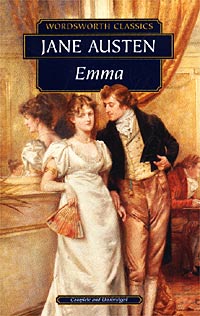
Emma, Jane Austen
Jane Austen was the master of the novel of manners, and Emma may be her masterpiece. Personally, I’m slightly more fond of Pride and Prejudice, but it is a near thing.
Unlike Pride and Prejudice or Sense and Sensibility, the protagonist of Emma, Emma Woodhouse, is often the target of the comedy. We are not reading just her reactions to the hypocritical, pompous or foolish actions of those around her but also seeing her act the same as those around her. She constantly makes mistakes or misreads situations, but still the reader sympathizes with her. None of her mistakes are out of any sort of malice; she merely overestimates her social abilities. Elizabeth Bennet mostly stands apart from the stupidities of those around her, like her mother or Mr. Collins. They may affect her, but she does not partake in their foolishness. Emma, though, is just as capable of foolishness as anyone in her story is. She is a highly entertaining character.
What puts Pride and Prejudice over Emma, for me, is the near complete lack of plot in Emma. Things happen, to be sure, but there isn’t much of a central plot to tie everything together. Also, Emma is half again as long. I have no complaint with long books, but combined with Emma’s lack of plot it is a slight problem. Emma is a classic for a reason and a classic that is still worth a read today simply for the enjoyment of it.
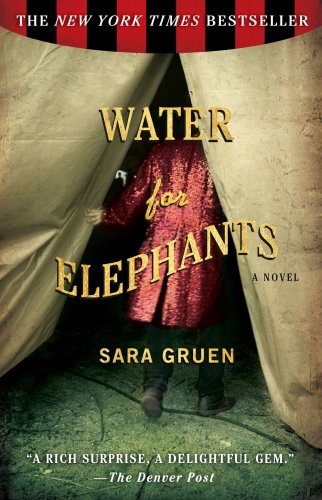
Water for Elephants, Sara Gruen
In not exactly anticipation, more like serendipitous recognition, I read Water for Elephants just before the movie came out. I did not see the movie, and have no plans to, though I wouldn’t avoid the opportunity if is arose, but the book was all right.
The parts that are about the circus are genuinely enjoyable. Gruen does a great job of making the setting real. While circuses are no something I’ve ever really cared for, I can see why running away to join the circus was a thought of young boys for a long time in this book. And I can see even more clearly how dangerous and treacherous circuses were. The setting in this book is an astounding combination of wonder and ruthlessness. The setting alone is a good enough reason to read this book.
That is a good thing, because the love story that makes up the central plot is mostly lifeless and dull. Once the players are on stage anyone who had ever read a love story can tell how it will play out. There are no surprises or twists, just a tale of falling in love centered on the two least interesting characters in the novel. Still, I would give Water for Elephants a tenuous recommendation.
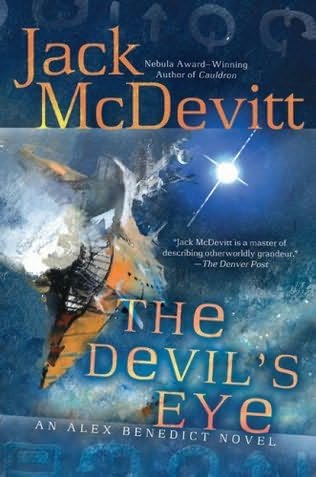
The Devil’s Eye, Jack McDevitt
I am not familiar with the writer of this book at all; I found it on the clearance rack at Books-a-Million and thought it looked interesting. The Devil’s Eye was a surprisingly good read.
The book starts as a Sci-Fi Detective novel, which is great. Chase Colpath and Alex Benedict try to solve a mystery involving the disappearance of a horror writer by following her trail at the last place she was seen. It has a great mix of Sci-Fi action, with alien monsters and space travel, and regular mystery solving. It is obviously not the first story starring the intrepid investigators, but The Devil’s Eye doesn’t skimp on letting the reader get to know these characters. For as long as the mystery was being solved I thought this was going to become a new favorite of mine.
The problem arises when, about two-thirds the way through, they solve the mystery and then must deal with the aftermath. It could be an interesting way to go about ending this book. The protagonists never really consider the implications of rooting out the mystery and whether or not it was right to (it absolutely was) until after it is too late. However, the aftermath part ends up lending an importance to the main characters that rings false. When they are investigating a disappearance and discrepancies about it, they role makes sense. Later they seem to have world changing power. It is as though a police detective started hanging out with the President. It just makes no sense.
All that said The Devil’s Eye is still a fine read. I’ll be looking into McDevitt’s other works, but my enjoyment of this one did take a big it as it floundered to it end.

Pemberley Shades, DA Bonavia-Hunt
A couple of months ago I had the bright idea to read what was basically published Jane Austen fan fiction. I purchased three books (I have to note that I got them for pennies) and the two I read went over about as well as one should expect. I had that third one just sitting there, so I decided to go ahead and read it so I could get rid of it and be done with this disaster of an idea
I wish I had read this one first, because it is actually not bad. For three quarters, it is almost good. Pemberley Shades is another sequel to Pride and Prejudice, though fortunately it reads more like the continuing life of the characters from the book and not new people who happen to share their names. The new characters fit right in to Austen’s milieu as well.
Unfortunately, as the book concludes you begin to realize that while the characters are mostly right, the author did not actually have a story to tell. Things that felt like they were building fizzle unsatisfactorily, motivations change for no reason and then it just sort of ends. I would not recommend this. I am not sure why I read it.

The Bellmaker, Brian Jacques.
This is where my re-read of the Redwall series ends for now. Not because I’m not liking the books, far from it, but because they are all so similar to each other that reading them in rapid succession makes them all run together in my mind.
The Bellmaker is, as far as I can tell, one of the few Redwall books to be a sequel that features the same cast as an earlier book. This one is again about Mariel and her cohorts. Though it is titled The Bellmaker, Joseph the Bellmaker has little to do with it. It has all the hallmarks of the other Redwall book; swashbuckling action, dangerous but cowardly villains and larger than life heroes. It also focused more on seafaring than most of the previous books. It is present in most of them to one degree or another, but it is more prevalent here than in any others. The Bellmaker is not the best book in the series, but neither is it out of line with the general quality.
Related articles
- What’s On My Bookshelf? (swampofboredom.com)
- A Few Words on Darcy and Fitzwilliam by Karen V. Wasylowski (dragonflyy419.wordpress.com)
- Pride and Prejudice and Zombies Goes Interactive Digital on Your iPad (dreadcentral.com)
- #936: Emma – Jane Austen (bridgetsbooks.wordpress.com)
- Where next for the Jane Austen (guardian.co.uk)
- (BOOK GIVEAWAY) Tell Us What Jane Austen Means to You (blogher.com)
- Jane Austen Rankings, Part 2 (bridgetsbooks.wordpress.com)
- 30 Days of Reading: Play by Play (moveshakerepeat.wordpress.com)
- Books I want to read (smalltownrevelations.wordpress.com)
- Lessons From Jane Austen (3quarksdaily.com)
I can’t finish this book
For the better part of the last 2 years, I have been reading The Once and Future King. I blew through the first “book” The Sword in the Stone. As all good people are, I was very familiar with Disney’s animated version and it is mostly the same in the book. Only there is more of it. And Robin Hood. It is exactly what I thought I was getting into. The second part, The Queen of Air and Darkness, sets up Arthur’s goals as king and is largely terrific. But I have not been able to make much progress since I finished the second part, and I have only recently realized why.
I know how King Arthur’s story ends. I’m fairly sure everybody does. Everybody knows about Lancelot, Guinevere, and Mordred. If I read the rest of the book, that stuff happens. As long as the book remains unread, Arthur is still a young, idealistic king. I can still look back fondly on his adventures with Merlin. Once I read it, I’ve condemned him to the failure of his dream. It is like the reverse of “The Monster at the End of this Book,” in which Grover is deathly afraid of the promised monster and appears afraid of letting the reader turn the page.
This sort of thing does not normally bother me; I’m sure I’ll get over before long. I want to read the rest of the book. I feel compelled to see it to the end. However, knowing what is coming has made me put it off as long a possible. I can count the number of books I’ve started but never finished on one hand; aside from The Once and Future King and what I’m currently reading (The Devil’s Eye by Jack McDevitt) the only thing that comes to mind is that monstrous turd Battlefield Earth. There is little fear I will not finish.
Honestly, I wanted to see if I could relate serious literature to The Monster at the End of the Book, and I feel I succeeded. Really, I love that book for introducing young me to the concept of meta-fiction.
Last Month in Reading
It’s time for the monthly review of the books I read last month. Quite the variety in terms of subjects and quality. Still a good month for in terms of number of books read.
Opening Atlantis, Harry Turtledove

The first of Turtledove’s trilogy of Atlantis alternate history novels, Opening Atlantis is an adequate read. It is not mind blowing or anything, but it is sufficiently competent and entertaining to be worth reading. The novel tells the story of an alternate history where a large island, or small continent, (I’ve since realized that it is the East Cost pulled off of America) sits between Europe and America. Dubbed Atlantis by its discoverers, the novel follows it is colonization up through its equivalent of the French-Indian War through the eyes of the original English settler and his descendants.
One problem with it is that it covers too much time and is too much of a history to really develop the characters. This is very much a novel of plot and not character, but the viewpoint is too close to the characters to give a wide, history like view. Another problem is that Atlantis’ history too closely mirrors America’s. What is the point of an alternate history when it sticks so close to actual history? This is more of a mild disappointment than a big problem, though. With all of history to use as a canvas, Turtledove transplants what we already know with some cosmetic changes. I hope the latter books deliver on the promise that Opening Atlantis nearly squanders.
Last Month in Reading
I guess I better get this posted before it more than a month old. This should be a monthly review of or jumbled thoughts on the books I read in the previous month.
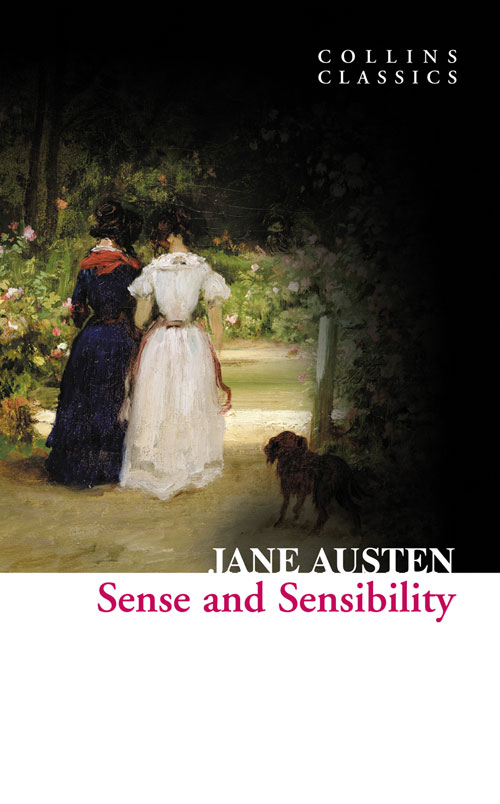
Sense and Sensibility Jane Austen
A Piece of Forgotten Youth
A couple of days ago I found a box of books that belonged to me and my brothers years ago. One from that trove that caught my eye was T. A. Barron’s The Lost Years of Merlin. That book came out in 1996 and I believe my brother bought it not long after, so I assume that it has been near to 15 years since last I read it. I remember enjoying it, but it did not make that big an impression on me, seeing as how I had completely forgotten about it until I found it in that box and I never tracked down any of the other books in the series. Of course, I might not have known it was part of a series with sequels. According to the Wikipedia, The Lost Years of Merlin is the first of 4 Merlin novels by Barron. However, it wraps up in a way that finishes a story but leaves the future open, which I may have assumed to be the tales of Merlin with King Arthur.
I think the reason that the book jumped out at me from a pile of forgotten adolescent reading is the cover by Darrell K. Sweet. I can’t say the cover is great, the scene it depicts only marginally reflects what occurs in the book, but Sweet has done the covers for my favorite series of fantasy novels, the late Robert Jordan’s The Wheel of Time, and his style is distinctive. Whatever prompted me, I decided to read this possible lost gem between volumes of Edmund Morris’ Theodore Roosevelt biographies. (Reviews forthcoming)
The book follows Merlin during his early years. It starts with him and his mother living in a small Welsh village after a frightening sea escape. His mother knows things about Merlin that she doesn’t tell him, and after some revelations bout Merlin’s magical nature and tragedies caused by that nature, he leaves his mother to find his birthplace. He starts his quest and goes takes a raft out on the ocean and lands in the magical land of Fincayra. Here his quest is disturbed by Merlin’s reluctantly joining an attempt to save the magical island from a mad ruler. All in all, its a magical adventure that is sure to please its target audience of teenagers.
The Lost Years of Merlin is clearly a young adult book, aimed at early teenagers. Outside of the mythological and mystical elements, the vocabulary is fairly limited and the story is told simply and straightforward. This is in no way meant to be a bad thing. While the storytelling is simple, the sense of magic and the fantastic imagery is truly great. It beats that most popular of YA book, the Harry Potter series, easily. The magical land of Fincayra is full of the weird and fantastic. And the plot may be simple, but it moves quickly from one place to the next, keeping the rush of the fantasy high so the reader does not long dwell on the narrative shortcomings. The titular protagonist is fairly well developed, but the secondary characters, his mother, the girl he meets and the small giant, get little more development than the various characters and creatures that appear for their little story and then disappear. They may have gotten more fleshed out in later books, but I’ve never read them so I can’t say. Still, no part of this book is very bad, but I can’t recommend it to an adult unless they have nostalgia for it. I am glad to have rediscovered it.
 Skociomatic