I Know that Monkey, His Name is Donkey!

A couple of years ago Nintendo had two big fall releases: Kirby’s Epic Yarn and Donkey Kong Country Returns. I wanted both of them. 2D, and 2.5D, platformers are exactly my thing. Unfortunately, I could only afford one of them. It didn’t take me long to make my choice on which one to purchase. I found the previous Donkey Kong Country games to be serviceable but ultimately frustrating and Donkey Kong 64 was the absolute nadir of collect-a-thons. Kirby, meanwhile, has a bunch of charming and innovative, if a bit easy, games with his name on the cover. I went with Kirby’s Epic Yarn, and I enjoyed it. The lack of Kirby’s usual array of abilities was more than offset utterly charming yarn aesthetic. I was confident that I made the right choice.

For Christmas this year I received Donkey Kong Country Returns. Within two weeks I had beaten it, and realized just how wrong I had been. Epic Yarn is a pretty good game. Donkey Kong Country Returns is an absolute classic. It is not just one of the best games for the Wii, ranking up there with Super Mario Galaxy and Zelda Skyward Sword, but I would say DKCR is among the best games ever. Which is pretty amazing when you consider that I don’t really like the games that this one is trying to evoke nostalgia for.

First, I need to explain why I didn’t like previous Donkey Kong Country games, DKC2 in particular. (Since I played it most recently and it is still fresh in my mind) DKC2 relies heavily on unfair or arbitrary difficulty. It is not that it is hard to beat stages, though it certainly is. I like a challenge. The unfairness is in meta-game roadblocks. DKC2 is a fairly long game, so Rare of course uses a standard save system. But saving is limited to only to Grannie Kong’s School or whatever it is. The problem is that those save spots are not always available. It makes losing your progress, especially after a boss, a very real possibility. That means if you struggle with a boss, it makes it all the more likely that you will have to fight it again. Unless you go back to a previous world and save. But be careful not to shut off the game, since everything takes coins and coins aren’t saved. The very real threat of losing significant chunks of progress hampers the whole game. The difficulty of the actual stages is forgotten. The half-assed save system encourages players to play as conservatively as possible. It is as though Rare thought they were making a quarter-munching arcade game right up until the last minute, when they tossed on their terrible save system.

The crap is gone from Donkey Kong Country Returns. The game saves after every level. The arbitrary treat to the player’s progress is gone. The only difficulty in the game is entirely based on the level design, which is truly wonderful. Retro Studios has crafted a masterpiece of 2D level design. Each stage, like in the best Mario games, has a certain theme of obstacle. For instance let’s say that a pit, a hole to fall in. It you do you die. First, there will be a single pit, then two. Then a double sized pit. Then a combination of long and short ones. That is the simplest possible example, but the escalation is what the game does so very well. It shows an obstacle, then builds on it and expands it. It teaches the player what to do, then challenges the player.
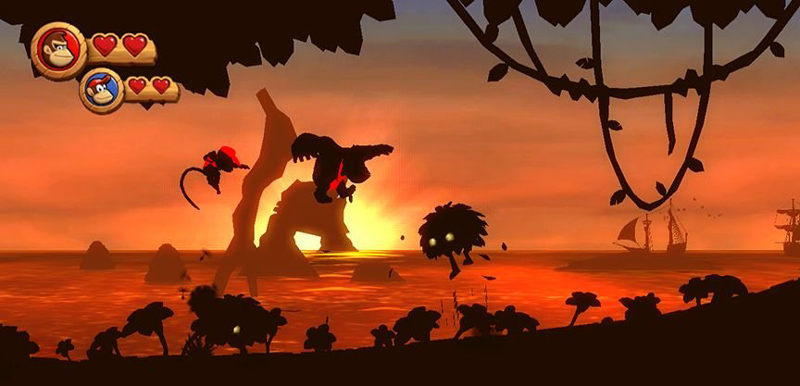
Donkey Kong Country Return also encourages players to search for secrets and a limited number of challenge collectibles. It does this by first have plenty of checkpoints in stages. Stages aren’t that long, but generally they have one or two checkpoints. When you are only losing a few moments progress it is no big deal. There are also plenty of extra men, and extra men giving bananas around. Dying cost the player practically nothing.

Despite how friendly the game is in some respects, it is still satisfyingly difficult. I probably died more in this game than in any game since the NES. Yet every time I died I knew it was my fault. Each death merely served as encouragement to try again. It is also aided by crisp, clear graphics and pitch perfect controls. The only fly in the ointment are the rocket barrel stages. The idea behind them is sound, but in practice the controls are effectively broken.
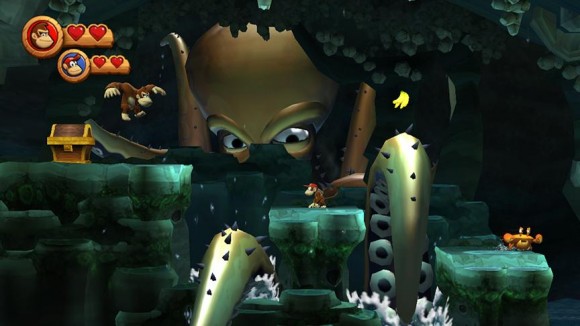
Donkey Kong Country Returns is everything people loved about classic platformers without all the crap that used to get in the way. Instead of arbitrary difficulty designed to make the player replay the game and artificially lengthen the playtime, DKCR is all about prefect level design. It is a perfect evolution of games like Mario and Mega Man and Donkey Kong Country. It is a true classic, worthy of being enshrined with all the greats in Nintendo’s library of games and the second one from Retro Studios.

Top 10 Games of 2011

With 2011 coming to a close, I am looking back on the games that I played this year and like all great minds, I am making a top 10 list of my favorite games. Now, I am limited to only Wii and handheld games, since those are the only systems I own and I only played about 20 new games this year. Most of what I played was several years old at least. So this is a somewhat limited list. Let’s get on with it.

10. The Legend of Zelda: Ocarina of Time 3D
This is still a phenomenal game, even after 15 years. The only reason it isn’t higher on the list is that it is an only barely touched up port of a 15 year old game. Still, it is a good port of a great game. If you haven’t played Ocarina of Time, what is wrong with you?

9. Okamiden
If I had stopped this game halfway through, it would probably have been 4 or 5 spots higher on the list. Okamiden started out a delightful romp, but the longer it went on the less fun it was. It looks and sounds great, but the early simplicity is replaced not with increasingly complex difficulty but with sheer tedium. It is hard not to compare Okamiden to the DS Zelda games and find it lacking. It has a cohesive, explorable over world, but it stumbles nearly everywhere else in comparison. Still, it is a very good game, if not a great one like its predecessor.

8. Pokemon White
It is a new Pokemon game. There are a number of changes on the periphery, but the core gameplay remains unchanged. I plowed through to main game right as I got this, but haven’t felt the need to go back for the post game yet. Still, it’s a Pokemon game, you already know it you like it or not. I do like it.

7. Kirby: Return to Dreamland
This doesn’t quite reach the magical heights of Nintendo’s best games, but it is still a terrific co-op plat former. This is the game Kirby fans have been waiting for since Kirby 64 and it didn’t disappoint.

6. Professor Layton and the Last Spector
More Layton is always good. There is little new in this fourth entry (except for London Life, which I’ve barely touched) but as long as there are new puzzles, I’ll buy new Layton games. Plus, newcomer characters Emmy and Inspector Grosky are some of the best new characters of the year. Good, good stuff.

5. Solatorobo: Red the Hunter
Solatorobo is a game that whatever its faults, of which there are several, it is so earnest and heartfelt that is it hard to hold it against the game. It is a delightful romp through a charming, fantastical world. Sure, the game never really moves beyond picking up things and throwing them at enemies and the plot goes off the rails near the end but the bulk of the game is pure cheerful fun.

4. Kirby: Mass Attack
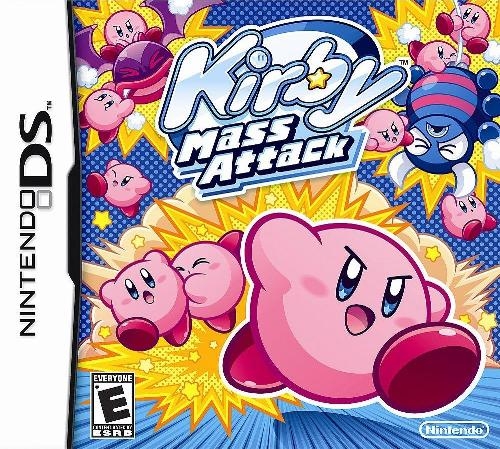
While Return to Dreamland was a classic Kirby platformer, Mass Attack is one of the pink blob’s experimental games. One that worked out better than most. It is a surprisingly intuitive combination of platformer and RTS that is simply a blast to play. If you own any sort of DS you should own this title.

3. Ghost Trick: Phantom Detective
This comes from the makers of Ace Attorney, and obviously so. It has the same wacky yet dark story and some top notch writing. The story is really great and the puzzle-y gameplay is nearly perfect.

2. Tactics Ogre
I love a good TRPG, and this remake of Tactics Ogre may be the best I’ve ever played. It comes from the same stock as the classic Final Fantasy Tactics and it shows. I put more than 60 hours on this thing and didn’t quite beat it. This game is nearly perfect.

1. The Legend of Zelda: Skyward Sword
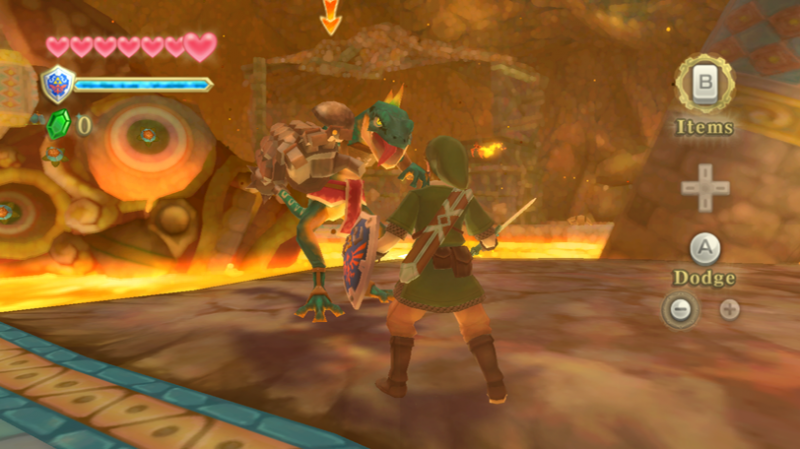
This isn’t even close. I loved Skyward Sword. I loved every part of it. The new run button, the motion controller sword fighting, you name it. Plus, Groose is the best new character of the year. Every part of this game is great.

LoZ Skyward Sword Review

This post was supposed to be more of a well-considered review than the unabashed gushing that was my previous Zelda: Skyward Sword post but now that I’ve beaten the game, I realize that all I want to do is gush about it some more. I absolutely loved The Legend of Zelda: Skyward Sword. There are some flaws, there are with every game, but they are tiny, negligible things barely worth mentioning and only worth noting so that they might be cleaned up in the eventual sequel. Skyward Sword is exactly what I love about video games.

Among the game’s many strengths, perhaps the greatest is that it never forgets that it is a video game. Unlike most of the series 3D entries, Skyward Sword is more closely descended from the original Legend of Zelda, rather than from Ocarina of Time. Ocarina and its ilk, as good as all of those games are, try to make Hyrule seem like a real place. OoT’s Hyrule Field is big and empty, impressive for its time and great hub for that adventure, but ultimately barren. Skyward Sword dispenses with the notion that this is a place that could exist outside of the confines of the game. The areas are no longer one large, connected place, but discreet sections. This may seem a blasphemy to longtime Zelda fans, but what it loses in cohesion, it more than makes up for in playability.

Each of the games 3 main overworld areas feels more like a section of Zelda 1’s world that any other game in the series. It isn’t just a path to lead you to the next dungeon, with the odd puzzle and token enemies to deal with. They are intricately designed gauntlets of puzzles and foes that are nearly as meaty as the dungeons themselves. There is a fine attention to detail apparent when you return to each area later in the game, armed with new items and able to discover new shortcuts and areas previously unavailable. While exploring the worlds of previous Zelda’s was fun, they were always empty, even with the number of secrets hidden about. (While something of an exception for Majora’s Mask, that game too was dense.) In Skyward Sword, any time you are on the overworld it is game time. No more running straight through an area, at least not the first time. This makes each section feel as intense and satisfying as the dungeons themselves.

The dungeons, the most important part of any Zelda game, are satisfying as well. After the first few simple dungeons, they really expand into true meaty obstacles. They also have some of the best, most innovative designs in the series. The dungeons feature effective use of the item found there, but aren’t wholly reliant on them. There are a few straight dungeons, but there is also an old abandoned pirate ship and dilapidated factory. The best dungeon is probably the Ancient Cistern. There are only two floors, but one represents heaven and the other hell, with completely different challenges on both floors. And the boss is one of the best in the series. Which makes it an anomaly in this game. If there is a weakness to Skyward Sword, it is in the boss battles. Several are repeated, several are boring, and one is downright laughable. Many of them are still decent from a gameplay perspective, but their look and how easy it is to beat them make sure they are a disappointment.

On the presentation side of things, Skyward Sword also excels. The graphics are some of the best I have seen, no need for qualifications about that being for a Wii game. Regardless of what it lack in technical power, Zelda looks good. The art design covers any deficiencies it might have. The soft, impressionistic backgrounds are magnificent, popping with life in color as it goes from vague dots to full clarity. I wish all games could look this good. The music is amazing as well, which is no surprise. Every Zelda game since the first has sounded wonderful.

The story and setting are likewise excellent. It is the usual Link must save Zelda stuff, but it is better told than normal. The first hour or two of the game, which are a bit slow, are used to set up an actual relationship between Link and Zelda. It also sets up the people of Skyloft, who are easily the best incidental characters of the series. Each of the townsfolk is well characterized and feels more real than most games, despite Zelda’s lack of voice acting. With just a word or a grunt, Skyward Sword imbues its characters with more life than games with hours of cut scenes, whether it is Peatrice’s bored grunts or the nervous jittery Fledge. The real star is the buffoonish, bombastic Groose. He starts as the school bully, who has a crush on Zelda and is jealous of Link. Over the course of the game, he develops into one of the greatest ally any Link has had. While the town of Skyloft in not especially big, the characters therein fill it with amazing life.

It all comes together into a game, that while not without flaws, is one of the greatest gaming experiences of the year, if not the generation. It shows that Nintendo still is the best at crafting exciting, innovative, lengthy adventures. No one comes close to offering an experience similar to Zelda.

Of Course I’m Playing the New Zelda

It should surprise nobody that knows me to learn that I have been playing a lot of The Legend of Zelda: Skyward Sword. To put it simply, the game is good. Very good. I love it, like I have loved nearly every Zelda game. My opinions might change with some time between me and the game, but right now it is everything I love about video games.

I haven’t finished the game. In fact, I’ve just finished the third dungeon, which seems to be close to the midway point of the game. The most notable aspect of the game, and the part I am most able to speak on with only half of the game behind me is the controls. I’m sure you’ve heard of the game’s intensive swordplay. It is everything you were hoping it could be. Normal enemies are no longer just mooks you bash once or twice and go on about your business. The are actual obstacles, they aren’t exactly difficult but they do require some thought. Or you can usually avoid them. The choice, at least outside of the dungeons, is left to the players. Fighting them can net you items and rupies, but it could also very well get you killed. On the plus side, it is also a lot of fun to smack enemies around with your sword. It just feels so natural and cathartic.

Another plus for the game is that this version of Hyrule, though I do not believe it is yet called that, is possibly the most imaginative Nintendo has come up with. Skyloft is easily my favorite city to run around. Yes, even better than Clock Town from Majora’s Mask. The NPC’s are probably the most likable bunch I’ve seen in a game. Nintendo does more to characterize them with little sound bite when you talk to them than most games do with hours of dialogue. The only disappointment is Fi, Link’s Navi stand-in companion.  But Groose and this version of Zelda are both fantastic.  As are some lesser characters like the eager Pipit.  And the games cuddly in the daytime/ferocious at night cat stand-in Remlits are wonderful.  The whole world just feels so full of life.  It is wonderful.

Right now I can do nothing but gush over the game. It manages to shake up the series with plenty of new stuff; the stamina meter, enemy drops to gather for upgrades, new circle menu’s for items, a limited space pouch, while managing to not change the core feeling of playing a Zelda game. Even more amazingly, nearly all those changes are improvements.

Like We Ever Left Dreamland

Some thoughts on Kirby: Return to Dreamland

As prevalent as Kirby games have been on Nintendo systems since the pink ball first appeared, it is amazing to think that Kirby: Return to Dreamland is his first main series console outing since 2000’s (I think) Kirby 64. Most of his games have been relegated to handhelds and even then were mostly remakes and offshoots. The few home games have been aberrations (Air Ride) or not really Kirby games at all (Epic Yarn, though it is delightful). For his first primetime outing in a decade, Kirby proves that he still has it.

Return to Dreamland is also a return to Kirby’s best game, Super Star on the SNES. Kirby’s trademark power-ups in both games have more than just one or two uses; most of them give Kirby an expansive new move set. It may take some time to learn how to use some of the powers, but for most of them, it is worth it. And the best always has been and always will be fighter, tied with parasol. While sometimes a specific power-up is needed, the game most fun when you simply chose a power you like and wreck the game with that. Another thing Return to Dreamland takes from Super Star, though admittedly it likely also takes it from New Super Mario Bros Wii, is the co-op mode. Four players can play simultaneously. While it is one of the games biggest draws on paper, it is mostly the games greatest failure.

Okay, maybe it’s not quite a failure, but 4 player is not as good as it could and should be. Disappointing is what I’d call it, especially compared to the madcap perfection of NSMBW. There a several problems in playing with more than 2 players. First, the screen is zoomed in too far, crowding the players into a tiny area. There is just not enough room for 4 characters. The second problem is the ability for players to ride on each other’s backs. Not that it is a bad idea, but it is way to easy to accidentally hitch on to one of your buddies, messing up some tricky platforming section. This is compounded by the zoomed in problem. The two together make 4 player a mess.

Kirby: Return to Dreamland falls just short of classics like Kirby Super Star and New Super Mario Bros Wii. It is still very good, and mostly enjoyable, but the aforementioned flaws–and a few others like the shared life pool–make merely a very good game instead of a great one. It does capture that wonderful joy that is inherent to the Kirby series, easy to beat but hard to master and fun for everybody. It just further cements the Wii as the best system for Nintendo games since the SNES.

The Cutest Murderous Mob You’ll Ever See

A new Kirby game has been released and it has become my life. Fortunately, Kirby games are often short affairs, so it is dominion over my free time is sure to be short lived. (note: in the time between typing and posting this, I beat the game.) Kirby Mass Attack is a fitting last Nintendo game for the DS, as it seems like it may be. (I know that Nintendo is publishing Professor Layton 4 next month, but that is a Level 5 game, not a Nintendo one.) It is a platformer that combines the best of SNES era 2D gameplay with controls that are only possible with the DS’s touch screen. Mass Attack is the epitome of what the DS has offered over the last half-decade or so.

The best DS games, the one that aren’t ports or remakes, combine traditional types of gameplay with inventive use of some or all of the DS’s unique functionality. There are gems like Trauma Center, The World Ends with You and Kirby Canvas Curse. Canvas Curse is a great comparison for Mass Attack; they are both nontraditional Kirby games and they are possibly both the first and last great games for the system. While Canvas Curse was the game that announced the arrival of the DS as a full-fledged system and not a gimmicky blip next to the gameboy, Mass Attack is the culmination of five plus years of capitalizing on the potential Canvas Curse revealed.

Not that all uses of the touch screen or the second screen or anything else were good, but even some bad games had at least uniqueness to offer. There were disasters like Lunar Dragon Song but more often, there were interesting failures, like the various attempts to force a RTS on to the system. From Lost Magic (I’ve never played that one) to Heroes of Mana to Final Fantasy XII Revenant Wings, it was tried many times, but never was it wholly successful, though Revenant Wings came close. Mass Attack also attempts to be something of an RTS, but it succeeds by adapting that sort of gameplay to a style of game more suited to the DS: a platformer.

At its heart, Kirby Mass Attack is not too different from Kirby Super Star, right down to the different mini-games. However, the RTS touches add an interesting wrinkle. Many DS games have tried full touch screen controls and as well as they have worked some times — the Zelda games for example — there is an inherent loss of precision. This can be a killer in the intense portions of most action games. Mass Attack’s RTS elements help alleviate that by giving the player direct control of 10 characters rather than one. The lack of precision is made up for by the mass of avatars the player controls. Best of all, the stages are designed with the strengths and weaknesses of the controls and screen size in mind. There are fewer precise jumps, because that is hard to do with no jump button, but more flat line hazards, which are still difficult and less frustrating.

Mass Attack looks and feels like an SNES game, but controls and plays much differently. It manages to be deliciously old school and entirely fresh and innovative at the same time. It is a Kirby game, despite how much it deviates from the norm (which is more and more becoming the norm for Kirby), so it is fairly short and mostly easy. I beat it in less than a week, though my completion percentage is only 74%. Putting this game over the top from very good to great is the slew of outstanding mini games unlocked by finding medals in the stages. There is pinball game, and a fake RPG and a wholly enjoyable shooter and several more I haven’t yet played. This game really seems to be a labor of love, as the best games are. The days of the DS are waning quickly, and titles like Mass Attack are helping the best video game system of the millennium (so far) go out with a bang.

My SNES Experience

As I wrote the other day, though my love of the NES is unaffected, the SNES is my favorite video game system. The NES is certainly a console with some special personal relevance; its release date was within days of my own release date. I have lived my entire like in the Nintendo age of video games. (which of course began with the release of the NES, reviving the video game industry in the USA after the crash of ‘84.) Unfortunately, this means that the heyday of the NES was pretty well over before I was aware. The SNES’s release in August of 1991 occurred at a time when I was 6 years old and beginning to really get into video games.

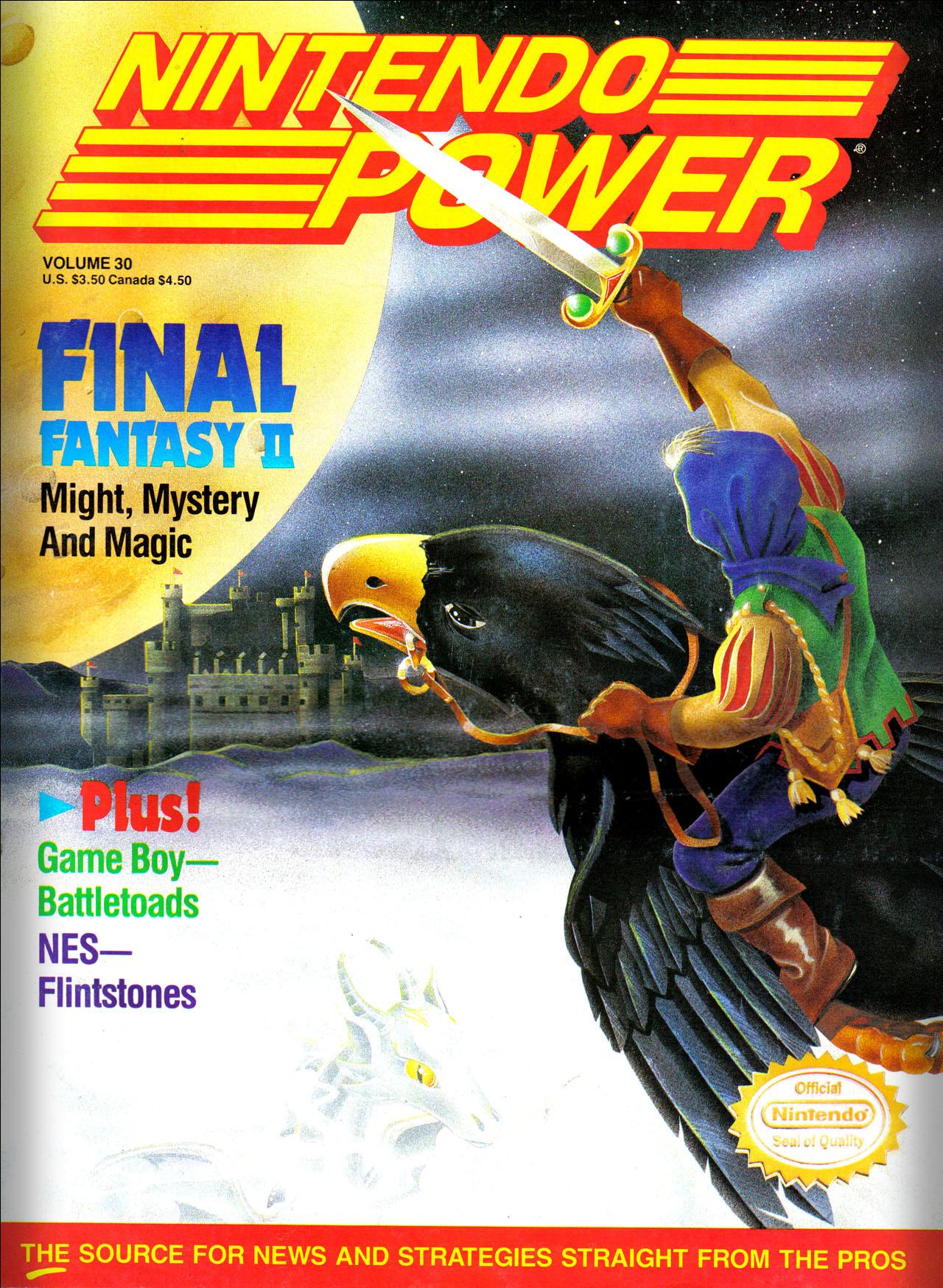
My experience with the SNES did not actually start in 1991. I don’t think I scrounged up the cash to buy one (my parents refused to buy us another video game system) until sometime in 1996. But I was certainly aware of it before then. I had long had a subscription to Nintendo Power, (I think my Dad got it around the time of the Dragon Warrior give-away) so I had seen what the new system had to offer. I absolutely poured over the issue that covered Final Fantasy 2. My only experience with RPGs at the point had been the limited Dragon Warrior and Final Fantasy 2 was a quantum leap above that. When I saw the original Final Fantasy on a clearance list at Wal-Mart, I jumped all over it. I loved Final Fantasy, but it clearly was not on the same level that I dreamed Final Fantasy 2 was on.

All because of this

I remember the first time I actually saw an SNES. It was my cousin’s; he showed it off by ruining his Dad’s A Link to the Past game. Okay, he didn’t really ruin it; he just smacked a chicken around until the flock of them attacked then paused the game, leaving it like a trap for his father to find.

The first time I played one for any amount of time was at my friend’s house in the summer of probably 1995. The reason I didn’t own one was due t a lost battle over a Christmas present with my brother. I wanted the SNES; (did he see those screenshots of FF2?!) he wanted a Sega Genesis. To play Mortal Kombat or sports games or some such nonsense. My friend had an SNES, but he didn’t have the coveted Final Fantasy 2. No, he had Final Fantasy 3! My 10-year-old mind was blown. Paying back years of his coming to my house to play Nintendo, I returned the favor all summer. (My friend also had an older brother somewhat meaner than mine, so it wasn’t all peaches and gravy.) Using Final Fantasy 3’s underrated two-player option, we played through that game together. Then we played Earthbound, then Chrono Trigger and other classics. That summer I became determined to own my own Super Nintendo.

That quest turned out to not be very difficult. Another friend had gotten a second SNES at Christmas and instead of returning it, agreed to sell it to me for a cool $50. From then on most of my money earned mowing lawns and from meager payments for doing household chores, went to buying new SNES games. I have always been nearly a generation behind on gaming, and with the usually cheaply acquired games, I found the latter days of the SNES were a Golden Age. Of course, not all games were cheap. I dropped more than a hundred dollars in one go on Final Fantasy 3 and Chrono Trigger, but they were easily worth it. There was also Super Mario World, Secret of Mana, Sunset Riders, Legend of the Mystical Ninja and many, many others.

The SNES was something of a Holy Grail console for me. For the longest time I searched for one, but could not get it. When I finally did own one, it turned out to be even better than I had imagined. You can make great arguments for so many consoles being the best ever: the sheer number of games for the PS2, the fact that most of the great SNES games are also available for the Wii or the combination of innovative brilliance and classics styles on the DS, but for me the best is and always will be the Super Nintendo.

A Super Friend Turns 20

August 23 marks the 20th anniversary of the release of the Super Nintendo. This is a source of much celebration and rejoicing for right-minded people as the SNES is probably the best video games system ever released. It is also going to be the source of a week’s worth of celebratory posts on this blog.


AS much as I love the NES, I have to say that my favorite video game console is the SNES. As its name suggests, the Super Nintendo is simply a more powerful Nintendo Entertainment System. While there were a few different kinds of games for the system — like the 3D Star Fox and arguably Mode 7 racers like F-Zero, though they had NES precedents — most of the games for the SNES were fundamentally similar to those on the NES. Developers, however, had learned much in the six or so years since the NES first appeared. With the added power, they were ready to perfect the kinds of games popularized on the NES. SNES games looked better, sounded better, and played better. They were just more polished and expansive and just plain better in nearly every way than NES games. Compare Metroid to Super Metroid or The Legend of Zelda to A Link to the Past. (You could also compare Super Mario World to any of the NES Mario games, but that point is debatable.)

Better than Super Mario Bros. 3

Since the SNES was the last popular primarily 2D console (I said popular Saturn fans who only theoretically exist) it was the last time 2D games were the recipients of attention and dollars from publishers. After the SNES, 2D games were primarily throwbacks or fan-games, or the SNES’s second coming as the GBA/DS. This is why the SNES is 2D perfected; there was never anyone to make these games better than they were on the SNES. And while the SNES’s library isn’t particularly large, it is very top heavy. There are a disproportionate number of great games for the system.

Other than the games, the SNES also had maybe the greatest controller ever created. Nintendo has a way with controllers. Even their ugliest monstrosity (N64) works well in practice. The SNES controller is perfect in its simplicity. Instead of 2 face buttons, the SNES has 4, cleverly spaced and half convex, half concave for easy sightless button recognition. It also introduced the now essential shoulder buttons, which now are used as triggers for shooters but then were there to keep from gimping Street Fighter 2. For 2D games, there is nothing better than the SNES pad.

God's controller

The system itself was not as sleek as the controller was. It did fix the NES’s greatest flaw, the easily broken VCR-like sliding deck, but it looked very boxy, like a toy. The look of the system did not do it any favors in its competition with the Sega Genesis. In the battle between these two 16-bit titans, Sega tried to brand itself as the cool video game console. With claims of “Blast Processing,” a noticeably sleeker console and coups like blood in Mortal Kombat this perception was widely cemented. Sega’s success seems to have worked against it in the long run, though. Nowadays the Genesis is mostly remembered for fake “Blast Processing” and Sonic the Hedgehog. It is tempting to say that Nintendo let their games do their talking, Sonic may be facing some harsh critical reevaluations but Mario World is still widely regarded as a classic. But it is easy to remember that Mario did not beat Sonic back then, Donkey Kong Country did, with its “cool” digitized graphics. And Nintendo was hardly sitting quietly, it is just that their attempts to encourage players to Play it Loud were not so successful.

What could be cooler?

In the end, the SNES was not quite the cultural touchstone that the NES was. It faced stiffer competition from the Sega Genesis and mostly just built off the success of its predecessor. But the SNES was released at the perfect time to catch my attention and there are just so many great games that I could never love another console as much. So this week is going to be dedicated to my boxy friend sitting in the cabinet under the TV, growing ever yellower in its old age. This week I think I will Play it Loud, and I hope you will too. Or you could wait until the week that is actually the anniversary, but that doesn’t work with my blogging schedule.