What I Read in January 2017

I made my goal of five books this month, including one that I have been working on for more than four months. I complemented that with a half dozen or so comic collections, but I don’t really have anything to say about them. I am currently reading about four different books, including finally getting starting on my reading project for this year: reading all of Charles Dickens’ novels. I’ve already read quite a few of them, but it has been a long time for most and I might go back to them as a refresher. I am about a quarter of the way through Pickwick Papers. I didn’t read anything nearly so impressive in January, though.

gits

Girl in the Shadows

Gwenda Bond

I read the first book in Bond’s series about the circus, Girl on a Wire, and enjoyed it. Not as much as I enjoyed her Lois Lane books, but it seemed unlikely that I would with no prior affection for it. This sequel changes the focus from high wire acts to a stage magic and also increases the amount of real magic in the series. The first book had a magic coin that gave the person holding it luck; this creates a whole society of real magicians. The central story is along the same lines as the last book, with a young performer out to prove herself on the stage. Moira, the protagonist, runs away from her restrictive father to join a traveling circus as a stage magician. She soon learns that she can do more than just stage magic, as well as a host of family secrets. She is aided by a boy she meets at the circus and a romance is soon kindled. It works, though I found it less engaging than the first volume.

tdbds

The Demon’s Brood

Desmond Seward

I am very conflicted on this book. It is an enthralling read, but it is very selective about the history it portrays. While reading this overview of the Plantaganet Dynasty of England, I couldn’t shake the feeling that Seward was deliberately including the most shocking and graphic stories of the era, even those that as far as I know have largely been discredited by historians. It all becomes clear near the end, when the writer makes a plea that these older Kings to replace the Tudors for dramatic portrayals, possibly to get some of that sweet Game of Thrones money. He’s not wrong, but it does color what does and does make this already stretched thin book. Less appealing are the writer’s reflections on the quality of each king, weighted heavily in favor of their martial prowess over anything else.

While it can be sensational, The Demon’s Brood does give a good overview of a dozen or so Kings. Even those with a passing knowledge of English history, or Shakespeare in my case, will learn a lot from this book and it is a very easy read. It is certainly nowhere near a comprehensive look at any of these figures, and it all but leaves out some rather important people like Eleanor of Aquitaine, but it definitely worth a look.
amosr

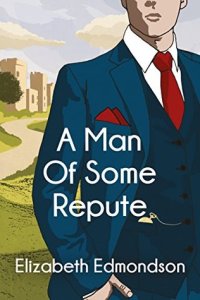
A Man of Some Repute

Elizabeth Edmondson

This is supposedly a mystery, but while Edmondson does a lot of work to set up her fairly enjoyable cast of characters, the mystery part frequently gets lost in the shuffle. The personal problems and post-WWII period details are all fine, the book absolutely doesn’t work as a mystery. I do like the characters, but the book slow plays just about everything about them. It sets up a lot of directions things could go for Hugo, Georgina and Freya, but doesn’t give them a lot to do.

Recently injured and forcibly retired from his intelligence work, Hugo moves to Selchester with his younger sister Georgina. There they meet Freya, the niece of the old Earl who went missing seven years before. Soon after they arrive, the Earl’s body is found on the premises of Selchester castle, kicking off a very relaxed investigation. I didn’t hate the book, I liked it enough to pretty much immediately read its sequel, but I wasn’t overly enthralled.
aqoh

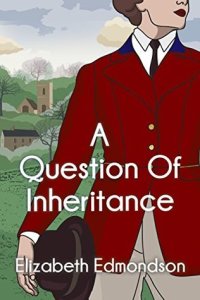
A Question of Inheritance

Elizabeth Edmondson

This is the sequel to A Man of Some Repute. Again, this feels like a slow playing of everything. It does have a stronger mystery, but otherwise is pretty much the same as the previous book. Or what I assume is the previous book, because this one doesn’t exactly pick up where the last left off. This one starts with a new Earl of Selchester moving into the castle with his two daughters. Unfortunately, this unknown American taking the seat is not welcome news to everyone and someone appears to want him dead. When a guest turns up dead at the castle, Hugo and Freya set to work again sorting things out.

This one does feel more like a classic mystery, though that mystery plot still gets sidelined for way too long at certain points. It also delves more deeply into Hugo’s spy past, a turn that could be interesting, but this only barely starts to make it good. It is like a couple of chapters of a spy novel fit into this rather domestic book. I don’t think this series has been very good, but they are still largely pleasant reads.
trot

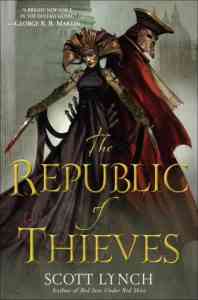
Republic of Thieves

Scott Lynch

I really enjoyed the first two of Lynch’s Locke Lamora books, but it took me a long time to warm up to this one. It doesn’t help that things don’t really get going until more than halfway through the book. It isn’t that the first half is unenjoyable, but it is very low stakes. A lot of it is focused on cleaning up loose ends from the previous book, which left this series’ anti-heroes in somewhat dire straits. After that, Locke and Jean are engaged in a political game between rival wizard factions to throw the results of a coming election. That is the real problem: the stakes feel very small compared to the two previous books. This one is largely a dive into the relationship between Locke and Sabetha, as she is leading the other party in this contest. That stuff works, but it doesn’t really feel like the protagonists have any direction or goals for most of the book. They take the job because that is literally the only choice and they have no skin in the game, as long as they play by the rules.

Lynch has created a great cast of characters. Characters like the Sanza twins, who only appear in the flashbacks but continue to get more and more fleshed out, making their lack in the present chapters strongly felt. Locke and Jean, and Sabetha for that matter, are all great. I am happy to just read more of their adventures, but I hope that going forward they have a little more at stake.
What I Read in January ’14

I got 2014 started with a solid month of reading.  A decent number of books, in a wide variety of subjects.  February is shaping up to be just as good, even is the books themselves aren’t as good.  Still, I hope I can keep this momentum up.

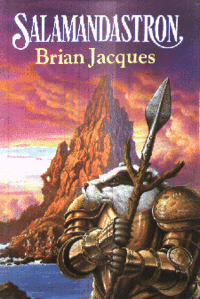
200px-SalamandastronUK

Salamandastron

Brian Jacques

Salamandastron is yet another entry in Brian Jacques Redwall series.  This one focuses on the mountain fortress that the formidable Badger Lords make their home.  It is one of the better entries in the series, shifting focus enough off the abbey to feel fresh, but still keeping somewhat close to the well-loved setting.  While many of the series constant tropes are present, it rearranges them so they don’t feel stagnant.

Salamandastron has two storylines that begin as separate but eventually intertwine.  There is the titular mountain Salamandastron, where its Lord, the badger Urthstripe, tries to balance ruling with raising his adopted daughter, Mara.   Soon, the fortress is assaulted by a horde of vermin and young Mara and her friend Pikkle the hare end up separated from their home.  Meanwhile, at Redwall Abbey, they are throwing a feast, as they often seem to be doing.  Added to the usual assortment of mice, hedgehogs, mole and squirrels are two rats who have escaped from the same vermin horde assaulting Salamandastron.  While at first trying to appear good, the rats soon commit murder, if only accidently, and leave with Martin’s Sword in tow.  A young squirrel and mole chase after them, while the inhabitants of the abbey start to fall ill.  So an otter must travel to a faraway mountain to retrieve the cure.

The two pairs of youngsters eventually meet up and have the usual sort of growing up adventures that happen in this series.  The events at Salamandastron are more epic, but not surprising.  Those sets of stories dovetail nicely, with the young warriors bringing aid to the beleaguered defenders of the mountain.  It’s the otter’s quest for a cure that seems oddly out of place.  It is a fine story on its own, but it is almost wholly disconnected to the rest of the book.

Still, Salamandastron is a fine adventure.  The characters rarely rise above the generic, but they are a suitably diverse and interesting group and the plot is fast moving and exciting.  Salamandastron is one the better Redwall books.

outlander

Outlander

Diana Gabaldon

I listened to part of this book years ago riding with my aunt to a family reunion.  The part I heard was pretty great, a woman being interrogated and threatened by a man before being rescued by her husband.  My aunt tried to explain what was going on to that point, but her version was muddled and disorganized, but she got across that is was a time-travel adventure romance.  While usually just shrug off suggestions of what to read from family members, I made note of this one.

I read it recently, though not for the first time, and it is still highly entertaining.  The romance aspect does take up a large portion (i.e. there is a lot of boning) but the whole thing is more entertaining than it has any right to be.  Outlander follows the adventures of Claire Beauchamp, a woman who, while on vacation with her husband on Scotland, is transported back in time by a Stonehenge-like circle of standing stones to the mid-18th century.  Believed by everyone to be a spy for everyone else, she is taken by the clan Mackenzie to their castle.  Her attempts to get back home lead her all over the highlands and eventually she is forced to choose between her husband in her own time and the love she has found in the past.

It is melodramatic and romancey most of the time, but there is plenty of adventure in there as well.  Claire and Jamie, the two protagonists, really make everything work.  She is a sarcastic “modern” woman whose reaction to many of the past’s sensibilities is hilarious.  It is the intellectual knowledge of that’s how things were meeting her new reality that that is how things are.  He seems to have been designed to be almost the perfect romantic hero, something of a thoughtful barbarian.  Even his flaws seem carefully chosen to appear attractive.  Despite that, he eventually becomes as real as a character as one is likely to find in any sort of genre fiction.

Outlander is ha hefty tome, being more than 800 pages long, but it reads fast.  There are slow parts, but things move relatively quickly.  It meanders a bit and simply explodes with subplots and side characters, but the end result is a full tale that creates its own believable world.

overtime

Over Time: My Life as a Sportswriter

Frank Deford

I wasn’t really familiar with Deford before I read this.  I had seen his name in plenty of articles in Sports Illustrated, but I rarely paid attention to the real articles, wanting more to get to the more current rumors, speculation and stats.  This book kind of makes me wish I had paid more attention, so at least I’d know how much I should care about what is written here.

Over Time is a memoir, as the title suggests a collection of anecdotes about Deford’s sports writing career.  This is split between recollections of athletes and events and his ruminations about other sportswriters.  Much is a glimpse into the work of a handful of writers and editors I’ve never heard of.  His genuine admiration of some people shine through, Arthur Ashe, while so does his disdain for others, Rodney Dangerfield.  Since I am not familiar with Deford or many of the people he was writing about, this book did not have the effect on me it could have.  Still, as a look back and a look into how the sausage of sportswriting is made, it is a good enough read.

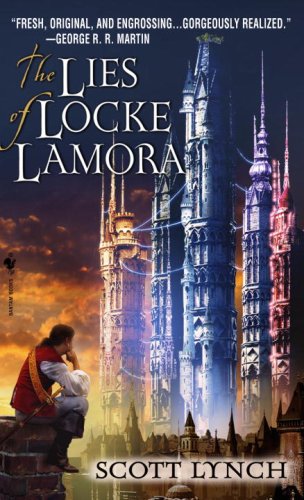
the-lies-of-locke-lamora-US

The Lies of Locke Lamora

Scott Lynch

I have been largely away from the fantast genre for most of the last year.  I did spend a lot of time reading the Wheel of Time series, and many of the books I’ve read would fall into the periphery of the genre, but I’ve been largely avoiding what was once my favorite genre.  So far this year I have been back with a vengeance, and I started with one of the best I’ve read.

The Lies of Locke Lamora is a fantasy done as a heist.  Sanderson’s Mistborn had a similar starting place, but in the end it felt more like a traditional fantasy story.  This manages to keep that heist the feeling all the way through.  The book follows Locke Lamora in both the present as he and his team of thieves plan and execute daring robberies and in the past when he meets his current friends and learns his trade.  The alternating present and past is sometimes a bit clumsy, with Lynch giving back information about characters just before it becomes relevant.

Locke’s past, while important, is not as good as his present.  While his group, the Gentlemen Bastards, perform intricate grifts, they pose as more humble thieves before the thieves’ guild.  The aging leader of the thieves, Capa Barsavi, is facing a challenge to his authority and while Locke has no problem deceiving him, he sides with him in the conflict.  Unfortunately, the Grey King who is threatening Barsavi’s dominance forces Locke to help him.  As often happens with heists, things don’t go quite as planned.

While they are nominally bad guys, being thieves and all, they are remarkable likeable.  Locke has a different set of skills than the usual fantasy hero, which makes him all the more likeable.  His closest ally, Jean, is also an unusual character for the genre.  While a lot of the world building is standard fantasy’s stuff, well done but the same kind of stuff one would expect from a fantasy novel,  the unique characters make is seem all the more different.

Really, this is just and excellent, fresh fantasy adventure.  I am eager to jump on the sequel. It is just really great.

cap30

Capcom’s 30th Anniversary Character Encyclopedia

Casey Lee

It’s not a lot of book, but it counts.  This is just a collection of character biographies from Capcom’s voluminous catalogue of games.  There really isn’t a lot of new information for me here; as far as video game companies go Capcom is second in my heart only to Nintendo.  That’s even with their almost adversarial dealings with their fans over the last couple of years.

This is an excellent primer on the various heroes and villains that populate Capcom’s games.  They do memorable characters better than just about anybody.  The whole cast of Street Fighter 2 are solidly recognizable and Mega Man has two incarnations that are all-time great characters.  This book is not really much of a read, but it is an excellent spotlight on these characters.

mindtomurder

A Mind to Murder

P.D. James

More classic mysteries, though this one did not leave much an impression on me.  It was fine, but I never really took a liking to the main character, which makes the while book from his perspective hard to get really into.

There is nothing overtly wrong with this, it just didn’t grab me.  A woman is murdered in a psychiatrist’s office, and Det. Da;gliesh must work his way through her colleagues to find the one who killed her.