JSA All-Stars

I would say that DC Comics’ output a few years before their big sloppy reboot was largely very good, at least in regards to their mid and small titles. At the time, DC seemed to be going out of their way to sabotage their top of the line titles. Batman had Grant Morrison’s epic run, it was largely spared, but Justice League got caught in crossover hell and Teen Titans was mostly a farm team for crossover cannon fodder. Superman and Wonder Woman were fine until DC sacrificed them to the fumbling hands of J. Michael Straczynski, who turned in some terrible crap until, presumably embarrassed by what he’d done, he slinked away and handed them to competent writers. I can’t even begin to understand what they were trying to do with the Flash for most of this time. Let’s just say that the top of the line from DC was not at its best. But the rest of their books were largely really good. From 2007 to 2011, they put out a ton of good comics, like Power Girl, Secret Six, Booster Gold, Manhunter, Batgirl and JSA All-Stars. Of course, most of these titles really didn’t sell well, so I can’t blame DC for shaking things up, but I really miss quality books like those. JSA All-Stars may be the one I miss the most, since most of its cast were among the babies tossed out with the bathwater.

jsaa2

JSA All-Stars grew out of the Geoff Johns’ Justice Society of America. When the title was re-launched, changing the title from JSA to the spelled out version, Johns took a more expansive view of the title, putting the focus on the Society part of the title and expanding the team. Most of those new recruits also tied into the expansive follow up to Kingdom Come that the title was doing. A few issues after Thy Kingdom Come ended Johns left title, bringing in Bill Willingham and Matthew Sturges, most notable for their work on Fables and Jack of Fables. Shortly thereafter, the massive team split in two, leaving most of the old characters with Willingham in the main book and Sturges taking the new ones over to JSA All-Stars.

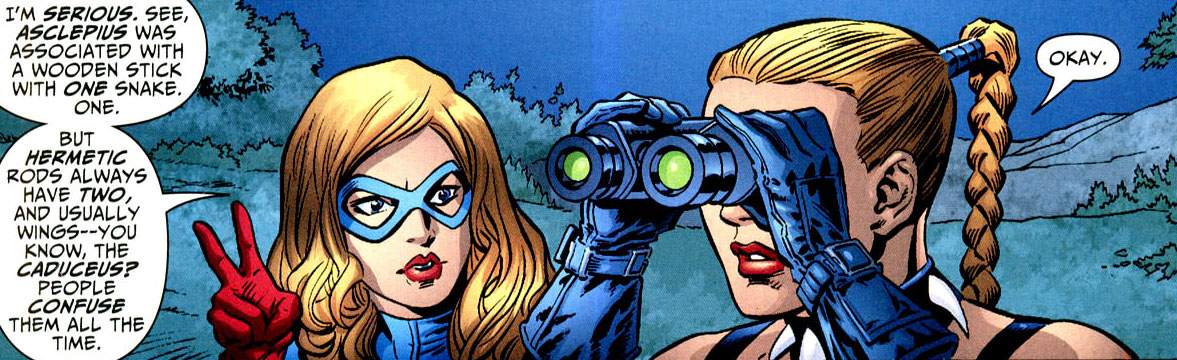
The book only ran 18 issues, all written by Matthew Sturges and, with the exception of two issue bit in the middle, drawn by Freddie Williams II, but they were some excellent issues. The team starts out as a boot camp of sorts, with Power Girl, Magog and Hourman ostensibly training the younger heroes (Stargirl, Damage, Cyclone, Judomaster, King Chimera, Wildcat and Citizen Steel) on how to do their job. That is how it started anyway; the team went through some shake-ups pretty quick. To begin with, though Magog is the Cable that started this title down its X-Force path, he leaves the team after three issues because he is a giant douche bag. He was not missed. It was kind of odd for the character who incited the split was not really a part of the team that formed. For the most part though, JSA All-Stars told big adventure stories that are just a blast to read.

The first page of the series is of a robotic Soviet army marching through New York City. In the first arc the team fights those communist robots, two separate supervillain teams and the King of Tears, a Lovecraftian horror from another reality. It starts on a high note. That first arc also sorts out the team and nails the personal relationships that will develop in the series. There are burgeoning romances between Damage and Judomaster as well as King Chimera and Cyclone. The team adds longtime JSAers Sand and Atom Smasher and couple of new characters. Sarcastic AI Roxy is not exactly original, her general character, that of an annoyed robotic personality that barely tolerates the humans around, has been done before. Still, she is a fun addition. Anna Fortune, a time traveling steampunk wizard, is something new. One of the good thing about working with a lot of new, mostly unknown characters is that the writer has a lot of free reign to do as he pleases with the cast and Sturges takes advantage of it, really building on the limited personalities that a lot of these characters had shown previously.
jsaa

After they defeat the King of Tears, there is a surprisingly touching follow-up to giant crossover Blackest Night, during which Damage is killed. His girlfriend, Judomaster, has to give the eulogy and it has some nice moments for her and King Chimera, who is generally kind of aloof. After that, it moves to the next big arc, which starts with an investigation of some murders in the old stomping grounds of Infinty Inc., the team that several of these characters (Atom Smasher, Power Girl, Hourman) were members of. That leads them to a South American rainforest, where the team fights monkeys riding jaguars and tries to prevent the resurrection of some Incan Gods. They fail, of course, and end up having a big knock down drag out fight in the middle of Los Angeles. This is the best arc of the series, issues 8-11. While most of the JSA is about embracing and celebrating the past, this arc is about learning to let go. The Gods have to let go of the power they once had, and the ex-Infintors have to let go of a team that doesn’t exist anymore and some of the characters just have to put their personal pasts behind them. It is just some really good comic booking.
jsaa4

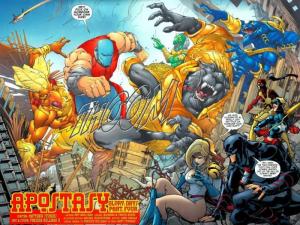
There is a two issue art fill in at this point by Howard Porter. Porter is not my favorite artist, but his work is generally better than what is on display in these two issues. The story here is a lot of fun, though. Cyclone, injured in the last arc, has lost her powers and must stay home while the rest of the team has an adventure in space. Sturges gives the reader just enough of a glimpse into the space adventure to make it seem really cool, while the arc is really about Cyclone figuring out her powers and life. It is kind of a cheat that most of the team has the greatest space adventure ever, at least judging by the brief snippets shown, while the book is about the mundane, at least by supehero standards, problem of Cyclone’s clones. In the next arc they fight the Puzzlemen, indestructible monster that can only be defeated by playing a certain piece of music that Bach composed to destroy them in the 1720s. In the last two issues they deal with The Prince, who may be a superhero from another reality or may be a crazy person.

JSA All-Stars is just an excellent book. It has some really great high adventure stuff and some genuinely excellent character work. The only real downside is that is it only 18 issues, and that two of them had pretty terrible art. But the rest is so good. Maybe its cast is not the best superhero team, though it does have a handful of standouts. The ex-JSAers Power Girl, Stargirl and Atom Smasher at least have a lot of the Johns/Goyer JSA to look back on for other great stories. And though there isn’t enough time to really build up the new characters, what was starting to develop with Cyclone, King Chimera and Anna Fortune was really great. It was simply a fun superhero book. I believe there are two or three collected editions floating around, take a look sometime.
jsaa3

One last thing, through issues 2-11 there is a back-up story by Jen Van Meter and Trevor Moore starring married JSA members Hourman and Liberty Bell. They travel to Europe to find an ancient Greek artifact that may have magical healing powers and end up in a race with Injustice Society members Tigress and Icicle, who are also a couple. It both lets the reader get to know the heroes better and develops the villains into people rather than just bad guys. The whole thing feels very Indiana Jones, with the heroes working with and against the villains and the whole time being kind of unsure of what is really going on. I’m thinking the early parts of The Last Crusade. I also like that Tigress and Icicle, despite being admittedly villains, are actually on the up and up. They are trying to get the same staff as the heroes by the same means, though how they came by the cash they came to pay for it is probably better left uninvestigated. Much like the main story, it is far from essential reading, but it is still a really entertaining story.

 

Big Hero 6

bh6

Disney’s latest animated effort continues their strong trend since Pixar’s John Lasseter too over their animation studio. The studio salvaged what it could out of the messes of Meet the Robinsons and Bolt before starting a string of hits. The last three before Big Hero 6 especially have been really excellent. Big Hero 6 brings continues this strong trend. I don’t know that I liked it quite as much as Wreck it Ralph, but it is still an excellent addition to Disney’s canon.

Big Hero 6 is also the first time Disney has leveraged their purchase of purchase of Marvel as something more than access to the biggest of superheroes. The Big Hero 6 did start as a Marvel comic, though not a particularly successful or memorable one. It was just one more on the pile of, no matter their merit, short lived and largely forgotten superhero teams. It was honestly the perfect thing for Disney to unearth out of their new treasure trove of characters and make their own. It would likely get the attention of Marvel fans that might not be interested in Disney movies without alienating them for changes. It is also a superhero story without being too much of a superhero story. It kind of lets them have the best of both worlds.

That wouldn’t matter if the movie wasn’t good, and it is. Disney’s 3D animation has come a long way from the days of Chicken Little; they are now at least on par with Pixar and Dreamworks. There is a ton of really great animation in this movie, whether it is Hiro and Baymax flying around the stupidly named city of San Fransokyo or the various uses the villains microbots are put to. This movie looks really good.

Big Hero 6 is about Hiro, a young boy struggling with the loss of some family members. He is helped out by a puffy nursing robot invented by his brother, Baymax. Hiro is a genius, and was accepted at a young age into the same robotics program as his older brother. Unfortunately, his brother is killed in a fire at the University; a fire that Hiro learns is not an accident. So he and his brother’s classmates use their research to find out what exactly happened.

While the movie is called Big Hero 6, it is really only about two characters. Hiro and Baymax are very well explored; the rest of the cast is barely fleshed out beyond one or two traits. That is not really a problem. The emotional journey that Hiro and Baymax take is definitely worth the price of admission. However, I can’t help but feel that the other four of the six are underutilized. It is more understandable with the villain, since a big part of the movie is the mystery of exactly who that villain is. I can’t fault the film to much when the central plotline is very well done, but somehow it left me wanting more in a bad way. It felt a little too slight.

In all, Big Hero 6 is an excellent movie. It uses the currently very popular superhero genre to tell a very human story. A story for children that is not necessarily childish. It is just the sort of movie that Pixar made its reputation making, good children movies that are entertaining for everybody.

Interstellar Review

inter

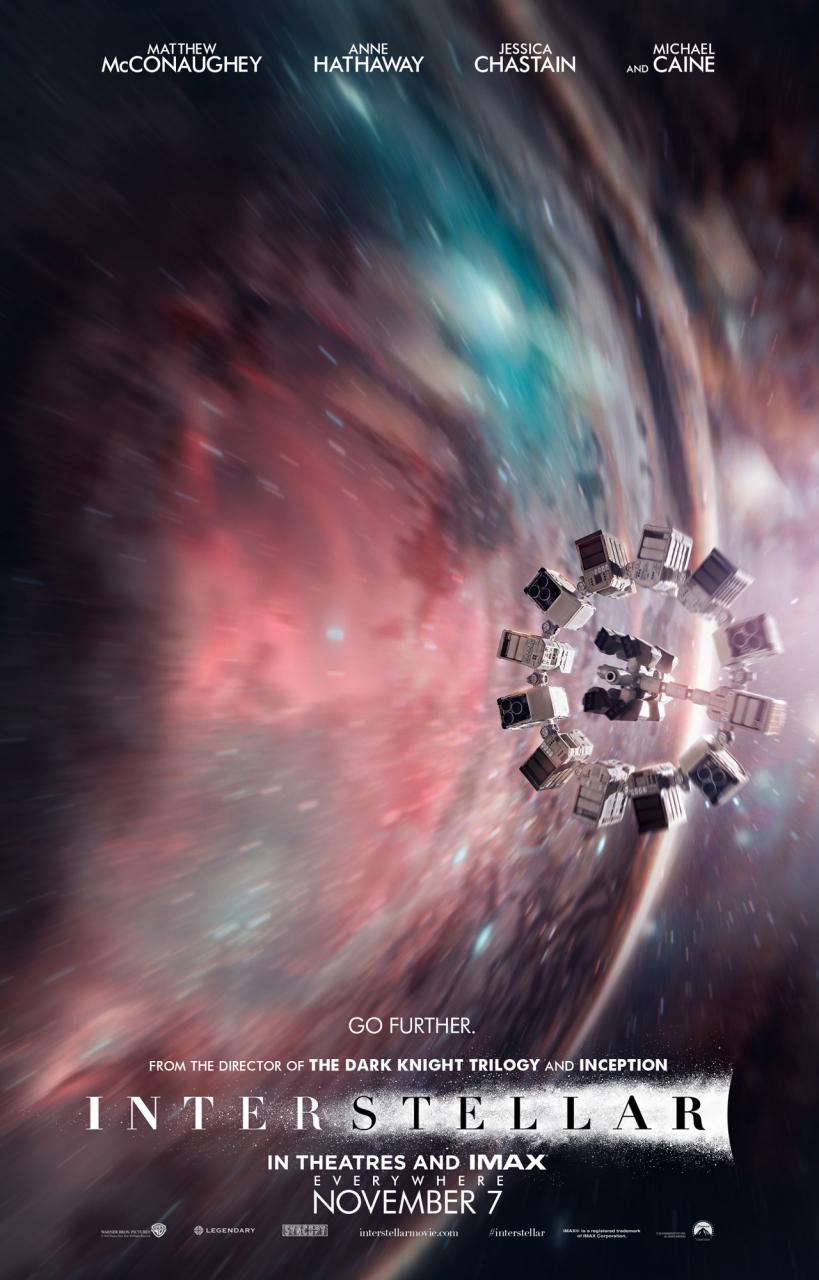
Christopher Nolan excels at making movies that seem to require deeper thought to truly get. Of course, when one take the time to think deeply about the themes in his films, it soon becomes apparent that their depth is mostly illusion. Nolan makes the thinking man’s blockbusters because most blockbusters actively discourage thought. His movies are intricate puzzles boxes that require some work to figure out, but once you figure out the trick they are simple. I don’t mean to sound like I don’t like Nolan’s films, I really like them. His trilogy of Batman movies are the top of the line among the incredibly popular superhero movies. And while it has been a long time since I’ve seen Insomnia or Memento, The Prestige –for my money the best Nolan film – and Inception are both truly excellent. Interstellar is right in line with all of those films. While not without its flaws, it is a truly excellent movie.

Interstellar stars Coop (Matthew McConaghey), a pilot and engineer turned farmer after war and drought kills the majority of the people living on earth, who must decide whether to pilot a NASA mission through a wormhole to another galaxy to find a new planet for humanity to colonize even though that means leaving his two young children on alone for what will assuredly be years. It paints humanity is desperate, barely surviving. Coop has to go on the mission to save his family, and all of humanity, but doing so means abandoning them. It is a compelling motivation.

Interstellar feels like a throwback science fiction movie. Most sci-fi movies since Star Wars have been influenced by that pop culture giant. Look at this summer big hit Guardians of the Galaxy; that movie is Star Wars through a Marvel superhero lens. They may take place in space, but science tends to be pretty far down the list of their concerns. Interstellar, whatever flaws it may have, is about the science of space travel. The wonder on display in its visuals is unforgettable, whether it is skimming the rings of Saturn or exploring the frozen clouds of a faraway planet. The film also spends plenty of time showing explaining the nature of wormholes and black holes, as well as things like relativity and time travel.

The biggest problem with Interstellar is that it just feels overstuffed. The film is long, nearly three hours, and it still manages to feel rushed at times. It jumps from luxuriously slow, beautiful shots of space and alien planets to speeding through the coda like it is caught in a whirlwind. This rushed feeling mostly comes from the scenes back on earth once Coop leaves. It shows enough to be tantalizing while not spending enough time to develop any of the characters, besides Murph, beyond a single note. She has an acquaintance, maybe a boyfriend, maybe just a coworker, that helps her out, but we learn nothing about him. Her brother and his family get only slightly more time. The team in space is much better developed; their motivations are all much clearer. It is easier to understand their stances and the pressures on each of them.

This movie leaves the viewer with a lot to process. It is a big movie. But I honestly can’t think of a better use of three hours than to see Interstellar if you haven’t. It goes a lot of places, and wraps around itself like a Gordian Knot, making for a movie that deserves to be thought about. Interstellar is probably the best movie I’ve seen this year, and even though I think it is more empty than it seems once everything is untangled it is still worth untangling.

Now Playing in November ‘14

I didn’t play a lot of video games last month; my time was spent with NaNoWriMo, and other than that just general wasted. So this will be a short entry.

Beaten

Demon’s Crest – I almost forgot entirely about Demon’s Crest.  It is the final game in a spin off of the Ghosts and Goblins series from Capcom, playing as a red demon of sorts.  It is kind of a Mega Man style game with aesthetics closer to that of Castlevania.  It is an excellent, oft overlooked SNES gem.  It looks great and plays even better.  Though the difficulty curve is kind of out of whack, some stages are all but impossible until you get certain upgrades and other upgrades make the large parts of the game a cakewalk.  Still for the most part it is a really great game.

Ongoing

smashU

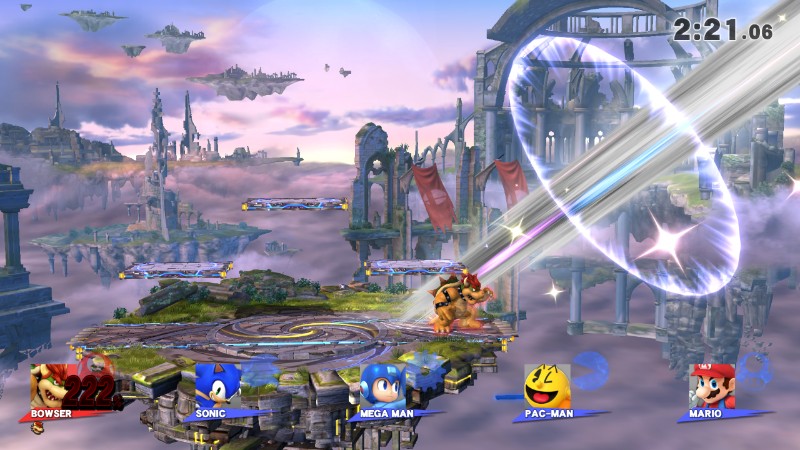
Super Smash Brothers 4 WiiU – It is even better than the 3DS version, which basically stole the month of October from me. It looks amazing, 8-player Smash is mind blowing and Smash Tour is a lot more fun than Smash Run, assuming you have people to play it with. One thing that has stood out about the WiiU version is that the characters I excelled with on the 3DS aren’t the same. I dismissed Dark Pit pretty quickly on 3DS, but I’ve really enjoyed using him on WiiU, while I have fallen to being completely inept with Jigglypuff after loving her the first time out. Rest assured I will have more to say about this game soon.

piersolar

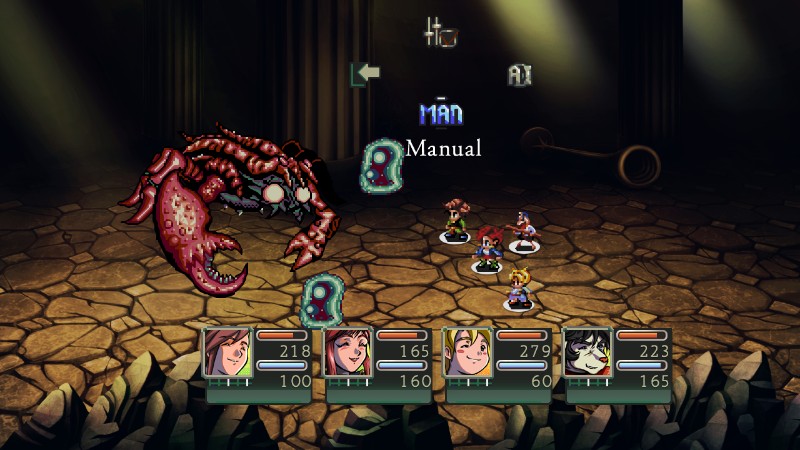
Pier Solar – This game really wants to be a 16-bit RPG and it succeeds, but it doesn’t quite hit the top of the 16-bit RPG pile, landing instead somewhere near the middle. It is occasionally clunky and obtuse, like its inspirations were, but twenty years later that stuff is less acceptable. I still like the game, but through the first few hours it isn’t quite as good as it inspirations, like the Lunar series. Hopefully it gets better and really fulfills the promise it shows.

Mario and Luigi: Dream Team – I have generally enjoyed this series, but they can sometimes be too talky. This game is kind of like the rest of them. It does have a new visual style, and I’ve played enough now that I can say that I really enjoy it. It looks really good in motion. It has some good change ups to the series that aren’t as intrusive as the Bowser stuff from the last game. I would estimate I am about a third of the way through this game, but I will be hard pressed to finish this before the end of the month with Persona Q taking my time away.

Persona Q – This game combines two of my favorite RPG series, and through the first floor of the first dungeon it is everything I hoped it would be, even if it spends way too much time chatting. So far it seamlessly combines the dungeon crawling of the Etrian Odyssey series and the fun stories of Persona. I chose the Persona 4 side of the story, of course, because that game actually had good characters. Hopefully I can get through this before too long.

Yakuza 4 – I only played about 20 minutes of this last month. I will keep plugging away.

Earthbound – miniscule progress, but I’ll keep hacking away at it.

Upcoming

Captain Toad Treasure Tracker – This looks so good, and I loved the Captain Toad stages of SM3DW. I’ll be jumping on this next week.

Legend of Zelda Skyward Sword – This is the last game standing between me and the end of my Zelda replay. I will beat it, I swear this.

Okami HD – I don’t know if I’ll have time to get to it, but I really want to play this again.