What I Read in April ‘13

Again a month shorter than my usual average. Or maybe two books a month is becoming my usual average. I guess I’m just reading less this year. I expect it to average out by the time the year is up, though. A few books that have been holding me up all year have already been finished in May, so I know it will at least have more books than the last few months.

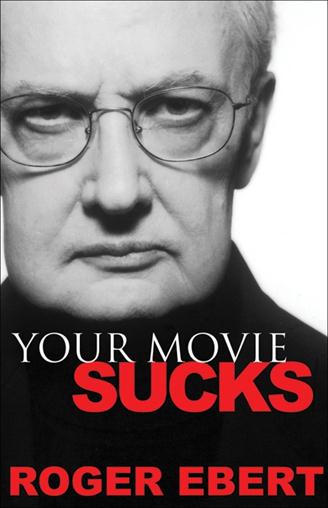
Your Movie Sucks

Roger Ebert

I picked this up after Ebert passed and kind of wished I had gone for one of his books of good movie reviews. It can be fun to read reviews of bad movies, and Ebert often has fun with the reviews when he failed to have any with the movie, but a whole book of bad movies is tiring. I liked the individual reviews just fine, even when they were of movies that I actually liked. (I have some fondness for Joe Dirt. Sue me) As a whole, this collection was not what I wanted despite being exactly what it proposed to be. It is great to see a master reviewer eviscerate dreck that deserves it.

Live and Let Die

Ian Fleming

This second Bond book is exponentially better than the first. Part of it was that I was not intimately familiar with the plot of this one, but more it was that Fleming actually tells the story rather than telling about the story. Bond goes to America then the Caribbean to chase down Mr Big, who is selling old Spanish coins. Bond does more in this book than he did the previous book, actually effecting the villains plot. Really, the only downside is some rather awful racial comments. If the next books improves on this one as much as this one did on Casino Royale then it should be downright good.

What I Read in March ‘13

March was a very busy month for me, and my reading pace suffered. There is only one book I feel is worth writing about that I read last month. It is not, however, the only book I read. I read five or six, but they aren’t at all worth saying anything about. But that won’t stop me from elaborating after I write about the one real book I read.

Casino Royale

Ian Fleming

I bought most of the Bond series in another Kindle sale, but this first book does not fill me with hope that I will enjoy reading them. Because frankly, I did not like this book at all. I thought it was crap, but with the germ of something interesting buried in the crap.

I knew the gist of the story from the fairly accurate, if significantly expanded, movie. That likely did not help my enjoyment, since I knew most of the twists already. Unfortunately, there isn’t much here to grasp on to other than the plot. The writing is terse, with only the barest of description or detail provided. It is simply bad writing. Perhaps it is social change in the intervening 50 years since this book was written, but Bond came off a prejudiced and unlikeable (worse so than even his worst movie portrayal) with no challenge from the book that he might not be right. Not that he is anything like the superspy he is in many of the movies. He is actually quite ineffective. Mostly, the book is watching an asshole do his job poorly.

Others

What else did I read in March? A bunch of crappy, free romance novels I got from the Kindle store. I won’t name any names, but they were uniformly bad. Why did I keep reading them then? Because it was easy. I would download one to my phone before work, then read it when I was supposed to be working. I was working 70 hours a week, and I needed something to do at work. What else was I going to do? My job? Ha! So instead of reading any of the numerous worthwhile things I have for my Kindle, like a load of Chabon, I read crappy romances. Because since I was a working, I was frequently getting interrupted. That really hampers one’s ability to really get into to a book. So I read something I didn’t really care about. That is what I read in March

What I Read in February 2013

Yeah, I missed getting this up in March. So February’s is happening now, and March’s will happen in a day or two. I thought about doing them both at once, since I had about as much time to read in March as I did to write blog posts, but doing so would mess up my monthly format even more.

Dodger

Terry Pratchett

Pratchett is an author that has long been on my to read list, since his stuff sounds like just my thing. However, I have never really managed to do it. When I saw Dodger on sale on Amazon, I figured it would be the best chance I would get to read some Pratchett on the cheap. I’m not sure this was the best place to start with Pratchett, though.

Dodger is the story of a London orphan who helps out a distressed young woman. Early parts read like a love letter to Charles Dickens, with Dodger being obviously inspired by the Artful Dodger from Oliver Twist, and he has a Jewish mentor who is actually totally unlike Fagin. Then Dickens himself shows up, proving that it is just such a love letter. Not just ot Dickens, though, but to Victorian London in general. It doesn’t whitewash the bad parts, the main character is an orphan who makes his living digging things out of the sewer, but the novel is largely upbeat and humorous.

Unfortunately, by about the halfway point the supposed cleverness of the Victorian references and Dodger’s combination of street smarts and ignorance starts to wear thin. Instead of continuing the plot, too much time is spent with Dodger rubbing shoulders with famous people. In the end, it goes from amusing to somewhat tedious.

The Mapping of Love and Death

Jacqueline Winspear

Another Maisie Dobbs book. This one is about the death of an American Cartographer (hence the mapping in the title) in WWI under suspicious circumstances. His family hires Maisie to find out what happened once and for all. Perhaps more importantly, it is also about the deteriorating health of Maisie’s mentor Maurice.

Honestly, I ran out of things to say about this series several books ago. I find Maisie and Co a compelling enough group to read about even if the mysteries don’t blow me away. I do think this is one of the better entries in the series.

The Black Echo

Michael Connelly

I’m not really sure where I stand on this book. It’s not really my sort of thing; I received it as a Christmas gift. I didn’t not like it, but I’m not rushing out to get the next Harry Bosch novel. I simply have trouble taking this noirish sort of detective novel seriously. Especially when you get characters like partners Lewis and Clarke. That stupid sort of name knocked me right out of the story.

I don’t mean to say that The Black Echo is bad; I found it entertaining enough. Det. Harry Bosch gets a case that has ties to his days as a soldier in Vietnam and eventually pits him against the FBI. There are some good twists, some bad twists and an overall good story. It is just not the sort of detective or mystery story I like.

What I Read in January ‘13

I started this year reading a lot of Wheel of Time. I stalled in the second half of my reread for too long and really had to rush to finish before A Memory of Light hit. I did just manage it, but reading four Wheel of Time books doesn’t really leave a lot of time for other reading during the month, as I managed only 2 other books. One of those, Outlining Your Novel by K.M Weiland, I don’t have anything to say about. It is exactly what it sounds like.

Knife of Dreams

Robert Jordan

The Gathering Storm

Robert Jordan and Brandon Sanderson

Towers of Midnight

Robert Jordan and Brandon Sanderson

A Memory of Light

Robert Jordan and Brandon Sanderson

I still plan on writing reread posts on the last few WoT books, but I will have to do that later. I’m kind of taking a break from the series. It has been more than a month since I read A Memory of Light and in large my thoughts haven’t changed. However, the more I think about it, the more I think of the book as Sanderson’s rather than Jordan’s. There are parts that are clearly Jordan, but the tone feels largely Sanderson. A lot of it has to do with how much of it is a battle scene, a detailed campaign. I realize that the series has been building to Tar’mon Gaidon, a literal last battle, so there would be war, but in the Jordan books battle scenes tend to be short, chaotic and horrific. In AMoL, it is more clinical, more a historical recounting than caught in the moment emotion. Not that there isn’t any of that, or that it isn’t well written. It is just different from, say Dumai’s Wells. Still, AMoL is a better ending that we should have been expecting.

The Last Dragonslayer

Jasper Fforde

This is Fforde writing a Young Adult novel and it is exactly what one would expect. This feels a lot like his Thursday Next series, only a touch simpler and with a generally younger focus. This is in no way a bad thing. It is different enough that is doesn’t just feel like Thursday for kids, but it maintains the same wit and imagination. The world of The Last Dragonslayer is interesting in its own right, with it touch of Harry Potter with big magical organization, though here the big problem is magic in recession. I’m not generally a big reader of YA fiction, but as long as Fforde keeps his sense of humor, I’ll keep reading what he writes, no matter how it is classified.

What I Read in November and December ‘12

Yes, I missed a month of my reading update. This is because I didn’t read anything to cover in November. I did read a lot, but it was all Wheel of Time. Reading several doorstop sized tomes really takes some time. The Wheel of Time completely consumed my reading time for more than a month there. I did manage one other book in that time, though.

Original cover of Winter's Heart

Winter’s Heart

Robert Jordan

Original cover of Crossroads of Twilight

Crossroads of Twilight

Robert Jordan

Gaul, Galina, Perrin, Arganda''

Knife of Dreams

Robert Jordan

Cover of "Among the Mad (Maisie Dobbs, Bo...

Cover of Among the Mad (Maisie Dobbs, Book 6)

Among the Mad

Jacqueline Winspear

Another Maisie Dobbs book, and I am running out of things to say about this series. I like the books, as soon as I finish one I buy the next, but they fade pretty quickly out of my consciousness.  In Among the Mad, Maisie works with the Government to find a man who is threatening to unleash chemical weapons in London. Again, this case has its roots in the first World War. Unfortunately, they know nothing of about the person they are looking for other than that he knows Maisie. It also has her dealing with the breakdown of Billy’s wife following the death of their daughter. While the connections between Maisie’s personal life and her case usually seem very coincidental, this time it seems more organic. The combination of the race against time and the unfortunate situation with Billy, Among the Mad comes together as one of the more satisfying entries in the series.

Some Spoiler Free Thoughts on A Memory of Light and Endings

I spent most of the last two days steaming through A Memory of Light, the final book in the Wheel of Time series from Robert Jordan and Brandon Sanderson. To say I was greatly anticipating the book would be a bit of an understatement. As my (soon to be completed) reread shows, I love this series. I am more invested in this story and its world than I have ever been in a fictional world. Which is why it is hard for me to process my reaction to this last book. I have never anticipated an ending like this and had it actually meet my expectations.

A Memory of Light is a nearly perfect ending to this monumental series. It is not the best book in the series, probably not even in the top half of the series, but it ties up nearly everything in a better way than could have been reasonably expected. There are flaws to the book. It often feels scattered and rushed. Part of that is obviously intentional, as the forces of the Light are scattered. Also, many pages are devoted to relatively new characters and threats while storylines that have been building for book or in some cases the whole series are finished off in a few short pages. These flaws do little to detract from the overall experience. A Memory of Light is filled with moments. Moments of incredible heroism and bravery, moments of triumph and moments of bone deep tragedy. If you have any connection to these characters it is a hard book to read, to see their final fates. However, it is also incredibly well worth the bittersweet moments and the tragedy. It is awesome.

As I said, I am having trouble processing actually liking how this concluded. While I am more invested in the Wheel of Time than any other series, I have had several other book and movie series that is was into. I was big into the Harry Potter books, Stephen King’s The Dark Tower, the X-Men and Matrix movies and everything Star Wars. All of those series invariably let me down at their conclusion, to one degree or another. The first Matrix movie was terrific, but the two that followed it up were all but unwatchable. The third X-Men movie failed similar spectacular fashion. Those I didn’t like, but it didn’t affect me much. Harry Potter is a little different from the rest. For one, by the time the last book came out, I had kind of outgrown the series. I was at the target age with the first one, but I was a few steps outside of it by the end. By then it was not a book for me. Also, it didn’t really disappoint me as much as the rest. It abandoned a lot the things I liked about the previous books, most notably the school setting and focus. That had to go for story reasons, but that part of the series was what I liked most about the series. I wouldn’t call the Harry Potter and the Deathly Hallows a disappointment, but I definitely didn’t like it as much as the rest of the series. The Dark Tower, on the other hand, killed any interest I had in reading anything else by Stephen King. Up until the seventh book I greatly enjoyed the series, even the interminable asides into past stories with little relevance and King’s degeneration into laughable self-insertion. But the second half of that last book was insultingly awful. It somehow manages to both pander and deliver nothing that reader wants. King’s in book defense of his ending simply proved that he knew it was junk. Then there is Star Wars. I am actually talking about the Expanded Universe novels, which I know have not ended, but the New Jedi Order series was the ending for me. The original trilogy was already complete before I was born and though RotJ is likely the weakest of the three it is still a fine movie. When they first started publishing post-RotJ novels, I was there to snap them up. Not all of them were great. When a dozen plus writers are all taking shots with the characters the story is not going to be perfectly cohesive and the quality is going to vary. But I liked plenty of them. Then came New Jedi Order. It came with a mandate to shake things up, but to me it seemed to be burning down and salting the earth of my then favorite fictional world. While I don’t have specific criticisms, it did end my interest in reading any more books from then on. What all of these series have in common is that none of the endings lived up to my expectations of what they should be. But A Memory of Light did and I do not know how to react. What do I do when the destination is as good as the journey?

I haven’t touched the Harry Potter books since I finished book 7, I will never read another Stephen King book, and when I come across The Matrix or X-Men on TV, I change the channel. I am completely finished with those series. But I have been reading the Wheel of Time pretty much constantly for the last ten years. My good friend Bob turned me on to the series in high school and since then I have read the first six books in the series at least five times apiece, and the rest aren’t far behind. Now that is it finished, that I am no longer going to be pouring over each tome in search of what is to come, I still think I am going to keep reading the series. A break is coming, as the last two months have been nothing but Wheel of Time for me, but I know I will pick up the series again. The Wheel of Time really got me into reading fantasy, it made me want to be a writer and for that it will always be special to me, but based on my past experience, I expected the ending to kill my desire to relive it again. But it hasn’t.

A Memory of Light is the conclusion to a monumental journey, one that took nearly a quarter of a century and has held readers in suspense that whole time. The series set the bar so high for a satisfying conclusion that I thought getting one would be impossible, but Sanderson and Jordan greatly surpassed my expectations. The Wheel of Time is the greatest work in its genre, and its ending further cements its place as the best fantasy series ever written.

Wheel of Time Reread Part 10

Original cover of Crossroads of Twilight

Original cover of Crossroads of Twilight (Photo credit: Wikipedia)

Crossroads of Twilight

There are neither beginnings or endings to the turning of the Wheel of Time. SO starts each Wheel of Time book and it is never more true than in Crossroads of Twilight. There are no new plot threads started in CoT, and none of the continuing stories end. It is just incremental steps forward. Crossroads of Twilight is easily my least favorite book in the series. It feels both slight on developments and bloated. It takes the flaws of the previous two books and leaves their strengths. It feels in large part like the second half of Winter’s Heart that didn’t make it into the previous book. More than half of the book takes place before Winter’s Heart ends. In all, Crossroads of Twilight is the nadir of the series, where the increasingly unwieldy structure finally collapsed, at least in part.

Crossroads does accomplish a reset of all of the character’s timelines. The cleansing of saidin in Winter’s Heart is a world changing event, as well as one that could be immediately felt all around the world. It provides a spot to sync all of the characters. Since they have split up over the last few books, there is little way to tell when they are in relation to each other. For first half of this book, plus some, it is merely showing where they are and what they were doing when Rand cleansed the taint. While it could have been done with more elegance, having the characters all at the same time is a good thing. It is also notable that the big events of Crossroads of Twilight are not actions, but choices. Characters do come to crossroads, and they must make important decisions.

The most obvious one is Perrin. He is still hunting down his wife in the center of the map. He is forced to make several tough decisions, like asking the Seanchan for help and getting the food from So Harbor, but the big one is his choice of the hammer over the axe. While the central philosophical dilemma still haunts him after this book, here is where he finally throws away his axe and chooses the hammer. He does it after seeing how far he will go to save Faile. He cuts off the hand of a captured Aiel and threatens to do more. Disgusted with himself, he casts the axe aside. It is a philosophical choice, leaving the axe, which only destroys, for the hammer, which can both destroy and create. Perrin is choosing to not be a destructive force, or at least not only that.

The incentive for all this crossroading is Rand cleansing the taint. To do that he used enough of the power that every character who can channel felt it. The overwhelming feeling is whatever it is that they felt was so powerful that it surely changed the world. If they world has changed, they must change too. That is right. The problem with CoT is that seeing everybody react to the giant glowing beacon is just not that interesting. It really just serves to slow everything down. It also hurts that so much time is spent on Perrin and Elayne in this book and their current stories are just not that interesting. Every other character of importance has been stripped from Elayne’s storyline. Aviendha leaves in this book, Nynaeve and Lan are already gone. It is just Elayne, embroiled in a not particularly enthralling political battle. The real problem with it is the disproportionate amount of time spent on her story. And I say this as a big fan of Elayne.

Crossroads of Twilight is almost a necessary book for moving into the end phase of this series, but that doesn’t make it not a slog to work through. The quality of the writing never falters, but the plotting and structure are completely broken here. It feels like unraveling a tangled knot. It’s not pleasant, but it must be done before you can tie another knot.

Winter’s Heart Reread

Winter’s Heart has the opposite problems of Path of Daggers. Instead of having a strong central structure but lacking in memorable scenes and a decent conclusion, Winter’s Heart is just a collection of scenes with little structure to speak of, but fortunately those scenes include some of the greatest moments in the series. For the most part, though, Winter’s Heart is just the continuing stories inching along.

While it started in the last book, Perrin starts looking for the captured Faile in at the start. Despite Perrin being one of my favorite characters in the series, this is one of my least favorite storylines. The biggest problem is that it goes on for four books when it really should have been resolved in two. Perrin spent the last two books collecting relevant characters from the south central area of Randland, now he has to deal with Shaido. This should be a good story. But instead of doing anything interesting, Perrin has to deal with Berelain making it appear that they slept together and everyone else believing despite most of them knowing Perrin personally. We are also treated to Perrin being angsty about his wolf powers, a plot that had been dormant for a couple of books and really needed to be resolved. In this book, Perrin is so grief stricken over Faile that he isn’t much of a leader. I guess I just really don’t like this story much.

Then we get Elayne in Caemlyn. I don’t have much to say for her prologue scene with Aviendha. It is somehow both a neat bit of magical ritual and somewhat offputtingly porny, but maybe that is just me letting my own prejudices shine through. At least what happens is important in what comes later. Like Perrin, she is dealing with a mélange of different peoples and trying to keep them in order. The Kin, some Seafolk, the Aiel, some Sul’dam and damane, not to mention her own problems with both Aes Sedai and trying to win the crown. At least for the start Nynaeve is still around. There are tons of machinations, and while it often gets too close to stories that could, and probably should, have been glossed over, having a handful of characters I like, Nynaeve, Lan, Elayne, Aviendha, push off each other is mostly enjoyable.

Rand reenters the picture about halfway through the book, coming to Caemlyn to ask Nynaeve for help. I like that Nynaeve is the one he still trusts, excluding Elayne and Aviendha not just because he doesn’t trust himself around them. Readers are finally let into what his plans are. He is finally undertaking something that obviously needed doing since Rand started channeling; he is going to cleanse the Source. Rand’s visit to Caemlyn doesn’t quite go as planned, he does recruit Nynaeve but he also is forced to face Aviendha and Elayne. They put what they learned in their sister bonding ritual to good use to devise a three person warder bond. While it literalizes the women’s bond with Rand, it also shows their audacity. In a world where so much of the magic is tied up in customs and rules, they all pretty much ignore them and do what they want. And it’s awesome. Jordan has made it perfectly clear that the White Tower is thoroughly corrupt, due mostly to centuries of secret, subtle undermining, and anything that helps to break from that brokenness is a good thing. It also features the closest thing to an explicit sex scene in the series. Elayne does have one more bit of awesomeness in this book, meeting with the Borderland rulers and sending them closer to Rand while also having them serve her needs.

Then there is the best sequence in the book and one of best in the whole series. I am of course talking about Mat’s escape from the Seanchan controlled Tarasin Palace. His escape is actually more of a heist, with him, along with some Aes Sedai being what is stolen. He has got so much to worry about and few of his conspirators, or watchers, take him seriously. Also, Tuon, whom readers know is the Daughter of the Nine Moons but Nat doesn’t yet, arrives and watches Mat closely. At first, Mat is just trying to escape with his friends; the remaining Redarms, Thom and Juilin. But while looking for a way out, he ends up agreeing to help free Joline. Since he agreed to help her, he also decides to help Teslyn, since she helped him. Meanwhile, the Gholam is back and is searching for him. And Tuon is watching him. And Juilin has a slave girlfriend he wants to rescue. And Tylin is becoming more and more Seanchan. Then there the crazy scheme imagined by one of the Seanchan Listeners that tie Egeanin and Domon to Mat, plus a handful of sul’dam. His plan keeps getting more complex and elaborate and Mat just keeps on fighting through it. It is Mat at his best, sliding through troubles that would bog Perrin or Rand down, never giving up on his goal of being free. As always, Mat just wants to get away.

Then you have the same events from Tuon’s eyes. She has had a prophecy similar to Mat’s, and knows Mat is whom she will marry. Knows or suspects. So she follows him, watches him. She knows him only as Tylin’s Toy, but she catches him sneaking around the palace doing strange things. While readers get it only from Mat’s perspective, it is still fun. Finally, the plan comes together and Mat makes his escape with only a few unforeseen changes. The first is the addition of Noal, who saved Mat from the Gholam earlier, and the other is Tuon, who catches Mat in his escape and Mat finds out who she is. So he takes her. It is one of the best Mat sequences in the series, up there with his raid on the Stone of Tear.

The big story in Winter’s Heart is Rand’s, though. First, he lures to renegade Asha’man to Far Madding. He knows that cut off from the Source he can take them all, since they have shown disdain for armed combat and he is one of the best in the world. While he eventually accomplishes his goals, more or less, there is a lot to learn about how it happens. First, he is forced to ally with Cadsuane, who continues to be unbearable. The second is that Padan Fain finally returns to the action, actually accomplishing part of Rand’s goal and almost killing him. We also see that Rand is not so far gone to abandon his friends. He could have escaped being captured, but he stays to try to save Lan.

And finally we have the end, the great conclusion. Without Cadsuane and the rest of the Aes Sedai, this would have been a disaster, but they are there. And so are all of the living Forsaken. We see the Forsaken at their worst here. They are not soldier, not fighters. They travel in and walk straight at Rand, with no communication amongst themselves and little strategy. They are out of their element, but they are still powerful. And the small circles of mostly good guy channellers fight them off. The way this scene is written is great, with glimpses in on each little group, with some knowledge of the overall battle. Meanwhile, Rand and Nynaeve are striking one of the most important blows for the good guys in the series. It is as awesome as Dumai’s Wells, but without the knowledge that the battle has already been lost.

Winter’s Heart is a shining diamond in the coal that is the surrounding books. The logical conclusion is to eliminate one of those two to fix the pacing problems, but there is no easy way to do that. Still, the overall quality of the writing doesn’t dip, only the plotting. And Winter’s Heart is really good.

What I Read in October

I was still below my four book average this month, but I did read most of Winter’s Heart this month. Still, October’s reading didn’t branch out much from what I’ve been reading this year.

An Incomplete Revenge

Jacqueline Winspear

An Incomplete Revenge is a continuation of the Maisie Dobbs series, and maybe it is just because I’ve been reading them one after the other but I am having trouble differentiating them, other than remembering the core mysteries of each. I guess this is something of a testament to the general high quality of the series, because I like them all. This one is notable in that Maisie and Billy get out of London for the bulk of the book, solving a mystery involving the biggest douche of a nobleman imaginable. That is the biggest weakness of an otherwise enjoyable book: a cartoon villain in a series that usually has more sympathetic bad guys. Otherwise, it is a fine addition to a fine series.

The Emperor’s Soul

Brandon Sanderson

I didn’t really believe that Sanderson could tell a complete story in this small amount of space. The Alloy of Law, which I liked a whole lot, was not a complete story but an opening chapter. The Emperor’s Soul is not even half the length of that book, but it is just as enjoyable and more complete. Sanderson lays out an intriguing magic system, giving the reader a crash course in its mechanics over the one hundred or so pages. At the same time he tells a tale around three principle characters: Shai, an artist in the story’s magic system, Gaotona, one of her captors who needs her skills and the Emperor whose soul must be repaired after a failed assassination attempt. While there isn’t space to give them more than the illusion of depth, those three characters are all very human. The Emperor’s Soul is as complex and enjoyable as its space allows.

Mansfield Park

Jane Austen

This is the last of Austen’s works for me to read, and it is easily the least. It fails largely because its protagonist, Fanny, is a passive, wet-blanket. She doesn’t really do anything. She watches and judges her friends and companions, but doesn’t try to curb their sometime excessive behavior. She gains the affections of the trifling Henry due to her pliable disdain for him. She is too timid to just tell him what she thinks and knows about him. He, of course, won’t take a hint since he believes her hesitation is due to timidity. While there are glimmers of what makes Austen’s other novels so enjoyable, Mansfield Park is largely as dull as its protagonist. There is no reason to read this when one could read, or reread, Pride and Prejudice or Emma instead. They are both multiple times more enjoyable.

That is all for this month. I think I am still going to hit my goal of fifty for the year, especially if I include all the crappy ebooks I read that I didn’t cover here.

Wheel of Time Reread Part 8

Original cover of The Path of Daggers

Original cover of The Path of Daggers (Photo credit: Wikipedia)

Path of Daggers

While I didn’t note this in my reread of Crown of Swords, I do intend to finish all of these rereads before A Memory of Light comes out. It will be tough, I kind of messed around and didn’t get it done this summer, but I’ve just finished reading Winter’s Heart and I’ve moved on to Crossroads of Twilight. I’ll be pushing it, but I can get it done. I kind of lost steam when I hit this rough patch in the series, and thought I had more time to pace myself getting it finished.

Path of Daggers is among my least favorite entries in the Wheel of Time series. Part of that is due to unavoidable story reasons, like Rand going full asshole, which is just a natural consequence of his character arc. The bigger part is that it is a short book that focuses on some of my least favorite storylines and ends with an anticlimactic whimper. In rereading it, I didn’t really like Path of Daggers any better. I did come to a greater appreciation of its structure, though. Of any of the books past The Dragon Reborn, Path of Daggers is in some ways to most complete in itself.

This volume is all about the Bowl of the Winds, and the effects of its use. It starts with Elayne, Nynaeve and Aviendha around Ebou Dar, herding the various groups of channeling women out of the city to a place where they can use the bowl. This whole sequence reads as chaotically as the scene is supposed to be. Theirs is Avi’s problems with the gateway, Elayne’s fiddling with the massive number of ter’angreal they just found and Nynaeve’s chasing after Lan rather than leading the party. There are the Windfinders refusing to take orders, the Aes Sedai doing their own thing and the many women of the Kin trying to figure out where they belong with their world seemingly crashing in around them. The authority that Nynaeve and Elayne gained in the last book is slowly eroded here, as their inexperience and preoccupation leading everyone to try and take matters into their own hands. It is easy to forget how young Elayne and Aviendha are, but these early chapters really show it. Especially with the attempted interrogation of the Black sister Ispan. Eventually all the cats are herded to the top of a hill, and the bowl is used. AS far as big magical scenes in WoT, the use of the Bowl of the Winds is kind of disappointing. Usually, Jordan does a wonderful job with these, like the scene in Rhuidean. While this is of great importance, it breaks the Dark One’s eternal world burning summer and fixes the weather; it doesn’t quite match up to other similar scenes. Still, the vast importance can’t be missed.

As soon as they are done they sense channeling in Ebou Dar. To her credit, Nynaeve immediately wants to go back for Mat. Their relationship continues to be the best. But Elayne recognizes a raken and immediately orders that everyone who can channel is traveling with them right then. A wise move, even if it does leave Mat to fend for himself. The women of the Kin’s farm are rounded up and they travel just as the Seanchan reach there. While it is a convenient bit of writing that Aviendha just happened to unravel a weave earlier, something not mentioned before, and now Elayne needs to do the same to keep the Seanchan from following them. This is one of the very good action scenes in the series, with Avi and Birgitte fending off Seanchan while Elayne tries to untie the gateway. It has a sort of mythic bravery to it, more apparent when attempting to summarize the scene than when actually reading it, like Rand pulling the sword from the stone in TDR. When the weave eventually collapses, the Aes Sedai are finally proved right about something, since it blows up like an atom bomb. This scene is the highlight of the book. Really, this whole first section, while meandering at times, is pretty solid. Most important, though, is that the Bowl has been used.

The book then switches to Perrin, who is collecting the west central area for Rand. I had forgotten how much the plot actually moves here. In a few short chapters, Perrin connects with Morgase, though he doesn’t know it, gains an ally in Alliandre, Queen of Ghealdon, and strikes the first blow in his eventual battle with the Prophet. While all of this is happening, the ever infuriating love triangle between Perrin, Faile and Berelain continues. I do like Elyas showing up and much like teaching Perrin about the Wolves he also teaches him a bit about Saldea. Also, the weather is starting to change here. There are more threads in play here than I remembered. Between the Seanchan, the Whitecloaks, the Dragonsworn and the Aiel, there are tons of parties active in the area. And Perrin is trying to navigate through all of them. I had placed this mission at the bottom of what was necessary, but now I think it was more important that I realized, even if the good guys don’t gain anything out of the Prophet’s men.

The weather continues to change through a villain checkup, with the introduction of Cyndane, who is Lanfear reborn. I’m not sure what her role will be down the stretch, but she is back. And Cadsuane continues to be infuriating and maybe awesome, but more infuriating. Finally, we come to Rand. Rand is a complete, unlikeable jerk in this book. The fall that started with the end of Lord of Chaos and was only briefly turned in Crown of Swords is back. He is arrogant, and unable to trust anybody. Rand has his first contact with the Black Tower in a while, and it is obvious that bad things are going on. But Rand has supposedly more important things on his mind. Like the return of the Seanchan.

By the time the book reaches Egwene, winter is in full swing. She even has her big meeting on a frozen pond. Egwene, after a book and a half of playing the lapdog Amyrlin Seat, makes her power play and succeeds. The whole sequence is pretty awesome, a plan coming together flawlessly. Given what we now know about Black ajah members, sections of Egwene’s story read quite differently. There isn’t a whole to say about Egwene’s story here; she and Siuan are awesome and this is a cool sequence. That is all.

Now little Rand goes to war, with one of the most brilliant hare-brained schemes ever. Instead of taking his trusted followers, he takes all the people he is sure are would like nothing more than to see him dead. Because he’d rather risk the lives of people he doesn’t like rather than ones he does. In all he seems off-balance. The whole war with the Seanchan is ugly. It is not enjoyable to read, Rand is a jerk, and the weather is bad. It is war. Rand’s initial plans are successful, and despite misgivings on all sides and strangeness in the power caused by the Bowl, he pushes on to try and push the Seanchan out of Ebou Dar. So he pulls Callandor, and on top of being a jerk goes full crazy, killing as many of his own men as enemies. It all comes together terrible perfection. The Bowl that helped save the world also helped add to the confusion of a grisly battle. Were it not for the strangeness, maybe Rand would have pushed them into the see. Or maybe they would have beaten him soundly. In the end, both sides feel that they lost. It should have been the end of the book. It is the end of the immediate effects of the Bowl, and it would have made a fitting conclusion to a downer of a volume, but it goes on.

So Rand returns to the Palace, where some of the obviously evil Asha’man, upset with how the battle turned out, try to kill him. It is short, confusing and anticlimactic. It is the end of him forcing people he doesn’t trust to fight for him, but other than them blowing up a big chunk of the Palace in Cairhien, nothing really happens. The beg event at the end is Fedwin Morr losing his mind. That scene is why this should have been the start of Winter’s Heart rather than the end here. Once Rand sees firsthand what awaits all make channelers, he knows he must fix it, and that is what Winter’s Heart is about. The other big ending is the kidnapping of Faile, plus Morgase and Alliandre. That whole storyline is too drug out and unsatisfying for the most part, but it barely starts here.

I still don’t like Path of Daggers. I think it would work better if most of it was the second half of Crown of Swords and the rest was the first half of Winter’s Heart. But the whole thread of the effects of the Bowl of the Wind that runs through this book is effective. It gives it a nice hook that could have been better emphasized or even alluded to in the title. Like all of this weakest part of the series, books 7-10, the events are vital even if the books itself doesn’t feel so.