Wheel of Time Reread: Crown of Swords

Original cover of A Crown of Swords

Original cover of A Crown of Swords (Photo credit: Wikipedia)

Crown of Swords seems to be one of the not very well thought of books in the Wheel of Time series. If this is true and not a misperception on my part, it is a great disservice to one of the better books in the series. It does have a tighter focus than most of the rest of the series, taking place over the course of something like ten days. It is also the start of a few of the seemingly endless plotlines in that bog down the later part of this series. This is added to the fact that the momentum of the central storyline of Rand’s battle, has been completely sundered by the events of the ending of Lord of Chaos. While the future of plotlines introduced here are not among the series best, their start is well done. The failures of later books, specifically Path of Daggers and Crossroads of Twilight, should not reflect poorly on Crown of Swords.

The book starts with some fallout from the last book. Elaida is still imaging her victory in a plan that nearly doomed the world. She is the perfect impediment villain, a person who genuinely believes she is doing the right thing even when she is massively screwing everything up. It also makes her perfectly frustrating to read. Alviarin also plots, though her victory is more genuine since she is playing for the other side. There are also check ins with some of the other losers in the battle at Dumai’s Wells, the Shaido and Gawyn’s Younglings. Both have all that they fought for completely rearranged. The big scene of the prologue is the death of Pedron Niall, Lord Captain Commander of the Children of the Light. While he was at best just a male equivalent of Elaida, Eamon Valda is just what most Whitecloaks seem like, a zealous thug. His taking over the Children is the worst possible thing. Not that is matters much for what he manages to accomplish, but he is one of the most thoroughly awful non-darkfriends in the series.

The early chapters here are suitably gruesome. Rand’s fragile coalition that won the pyrrhic victory at Dumai’s Wells sit in the unnatural heat of an endless summers while Rand tromps through piles of corpses. It is an ugly sight. None of the various groups quite trust each other, and all fear that Rand has gone crazy. They are not far wrong. The madness that must eventually consume him has begun to do so. Up until this point Rand has been constantly moving forward to his goals. He has had failures and trials, but nothing has long put him off his goals of uniting the world to face the last battle. After Dumai’s Wells, he is in retreat. It doesn’t help that he has sent off most of his trusted allies.

We are also introduced to the interminable plotline for Perrin. He flat out says that the only thing that matters to him is Faile, not Tarmon Gaidon. While this is romantic, it is also terrible. He has to learn the there are things that are more important. There are also his constant attempts to protect her that end up seeming to ignore her contributions while also emphasizing Berelain’s, which enrages Faile even though Perrin is nearly oblivious to their rivalry over him. Perrin’s trials with Faile happen while Rand tries to split the Gordian knot that is the situation with Colavaere, who has proclaimed herself Queen in his absence. He cannot let himself kill her due to his personal hang-ups, but according to the law she must be killed. He finds a way that should be satisfactory, and send the appropriate message to the scheming nobles of Cairhien. Too bad she takes the easy way out.

Then there is Egwene’s struggle to become the Amyrlin Seat they named her in the last book. The Aes Sedai refuse to be anything but incompetent, though later revelations make some of their actions make more sense. Still, Egwene is building strength, while also generally doing things right. Interestingly, none of her allies are traditional Aes Sedai. Siuan and Leane were, then weren’t and now are again while Faolain and Theodrin are not quite. Aes Sedai have a blind spot when it comes to anyone that falls out of the usual Aes Sedai power structure, even when they only barely do so. She is able to use their slight knowledge of her supposed allies various schemes to make them her actual allies, even if she coerce and blackmail them into it.

The last story introduced is also the best, defining plotline of Crown of Swords, that of the dueling search for the Bowl of the Winds. Mat is there to help, but they do their best to ignore him, all while dealing with the numerous dangers of Ebou Dar. The success of this story is largely due to the number of “fun” characters there. Nynaeve and Mat are easily the two most entertaining characters in the series, and Thom is always fun. The rest of the crew there just makes it more fun. I especially like Elayne finding out just why Rand keeps a supposed lout like Mat around. For the first half of the book, it is just the girls failed search attempts and their successful attempts to ignore Mat, while he tries to stay busy/not stabbed.

Perrin’s story in this volume is cut short, as he is soon sent away to gather the Prophet and Ghealdon for Rand, and just to keep it infuriating, he sends Berelain along as well. Rand also finally consummates his relationship with Min, though he feels guilty about it. Those two things combined put Rand in a funk, that is pretty much his problem. His mind is not right after his capture, and he is both less trusting than he was before and more eager to send his friends away to keep them safe. After hashing things out with Min, he goes far the opposite way, becoming almost giddy. His quick change from one mood to another is not normal. But is it useful, as he gets the important parts of a bargain with the Seafolk done that will be of use to him. He then pushes his luck by going after the rebels in the countryside. This works out well at first, gaining him tenous allies in two of the three leaders, but also out there is Padan Fain and eventually a bubble of evil. Rand is saved only by the timely intervention of Cadsuane and her crew of Aes Sedai.

Cadsuane is an interesting mid-series addition. She is infuriating and almost always pushes the wrong buttons when it comes to Rand, but she is also one of the few Aes Sedai that is actually trying to help his cause and not furthering some other goal. While she does help out some, her help towards Rands goals is grudging and her supposedly helpful attempts rarely seem to do any good. She is Moiraine without the trust Rand had in her.

In Ebou Dar, the girls realize they need Mat’s help, and he is forcibly moved into the Palace. They also find the Kin, the secret group of Tower failures that the Aes Sedai use to catch runaways. Mat has encounters with Queen Tylin that reverse gender dynamics of the usual ruler and consort story. Despite the usual attempts of the Black Ajah and forsaken, they find the Bowl and most escape the city just before the Seanchan come back.

What Crown of Swords most has going for it are big exciting scenes. The stories are small and the focus is tight, but a lot of cool things happen in this book. There is Mat realizing who Birgitte is, Mat fighting the Gholam over the wounded Elayne, Rand swordfighting Toram Riatin, Lan saving Nynaeve just before she drowns, the foggy bubble of evil. This book is just packed with cool scenes. And it ends with Rand fighting Sammael in the ruins of Shadar Logoth.

Also, for a book that covers little time, many big events are covered. Niall is killed. Elaida loses her power. Morgase formally gives up the crown of Andor, and the Shaido are scattered across the West. It is a world changing book, with status quos changing all the time. The world of the first half of the series is gone, and the new reality must be dealt with. Crown of Swords may not be the biggest book or have the most important scenes in the series, but it has a large number of events of medium importance. This books serves as the set up for the next four or so books, for better or worse. The loss of Rand’s leaping forward progress makes many of the later books, starting with this one, seem aimless. That criticism isn’t wrong, but it misses the point. Rand’s quest feels like it has been derailed because it has been. Like the author, Rand is getting bogged down in the nitty gritty. Still, Crown of Swords is a fine entry in the series.

What I Read in September 2012

The number of books I have read fell this month, down from my average of four to just two. I guess I did read several terrible eBooks that I will not be writing about, but as far as real, worth thinking about books go, I only managed two. Anyone who has been following my monthly posts won’t be surprised by what book they are, since both are from authors I have been reading a lot this year. One was another Maisie Dobbs books, Messenger of Truth and the other was a Japser Fforde book, The Big Over Easy, the first of his Nursery Crimes series. Next month is not going to be much better, as it was more crap with again only a few real worthwhile titles in the mix. Still, I think I will easily make my goal of fifty for the year.

Messenger of Truth

Jacqueline Winspear

The fourth Maisie Dobbs book has her investigating the apparently accidental death of an artist. While I am still enjoying the setting of this series, I am starting to care less for the characters. It feels like there is desire for forward movement with the characters, but that gets in the way of the mystery and not enough time is devoted to them for there to be any progress, but too much is spent of them for me to feel satisfied with how little there is. I still like the mysteries, though. Also, I am willing to concede that some of my frustration my come from reading the first books at such a rapid pace. Maybe they are better with a little time in between.

The mystery in this one is about art and family, and it all of the eventual dead ends feel like possible solutions instead of space fillers until it is time for the mystery to be solved. Despite my complaints about the unsatisfactory state of the character development, there are several big things that happen to Maisie and Billy in this volume. Billy especially get his family more fleshed out. This series continues to be good enough that I intend to keep reading it, but I am still not going to be shouting many praises

The Big Over Easy

Jasper Fforde

This is the first of the Nursery Crimes series, where the denizens of nursery rhymes populate the world of crime noir. It is an interesting set up, and Fforde infuses it with the same wit that is the hallmark of his Thursday Next series. Still, I found myself not enjoying this one as much. I think it comes down to the fact that I have more affection for the classic literature that makes up the in jokes of Thursday Next than I do for nursery rhymes. That being said, I expect this book is more accessible for others since the nursery rhymes are better known.

The Big Over Easy follows Detective Jack Spratt as he investigates the death of Humpty Dumpty. Once he is put back together again, it is apparent that he did not die from the fall, but was shot. So Jack must unravel a plot that involves nearly the entire town and most of your favorite nursery rhymes. I found it slow to get going, but it really picked up steam in near the end as the pieces start falling into place. I do love how Fforde has woven the simple rhymes together to make a somewhat believable world for them to occupy. This book does not rate quite as high as the Thursday Next series, but it has done nothing to diminish my faith in Fforde as a writer.

What I Read in August

I read what is basically my monthly average this month, four. Three of them are from the same series, Jacqueline Winspear’s Maisie Dobbs series of mysteries. While I did read three of them in a month, I’m not sure I really liked them all that much. They are easy reading on my Kindle at work, and I didn’t not like them, but I’m not going to be gushing about them like I did about Japser Fforde’s Thursday Next books for example. Also, I’m having a hard time separating some parts of each of the Maisie books since I read them so close together.

Maisie Dobbs

Jacqueline Winspear

This is the first Maisie Dobbs book and it reads like it. It is very much like a comic book origin story, with only a halfhearted attempt at a mystery. That being said, I did enjoy it quite a bit. Maisie is an interesting character, and this exploration of her was a good read. It just wasn’t the mystery I was expecting. It helps that I am a sucker for that time period. I love to read about Pre-WWII 20th century.

The novel moves back and forth from the life of young Maisie, from when she goes to work as a maid for the Comptons, to when she opens her own private investigators business. She is solving the mystery of what happens in a commune filled with WWI vets disfigured by the war. The emphasis is greatly on the life of young Maisie, with the mystery being little more than an afterthought. Maisie’s personal history is a good read, though the ultimate outcome is predictable. There isn’t a lot of investigation to be done as far as the case goes.

Birds of a Feather

Jacqueline Winspear

This one is about a runaway heiress which turns into a murder investigation, which also is heavily reliant on aftermath of WWI. This one is actually a mystery. The woman who Maisie is searching for, who may be a potential victim or the criminal herself, is not a very likable person neither for the reader nor Maisie. Maisie has to solve the mystery, though. This one is much more interesting as a mystery than the first book.

Pardonable Lies

Jacqueline Winspear

Another missing persons case, actually a few of them, where all the missing persons supposedly died during WWI. She is hired by a father to look for his son, the last request of his recently dead wife. She also agrees to look for the final resting place of the brother of one of her friends. She also has to deal with her own recollections of the war. I was a little less enthused with this one than the previous ones.

I read these three books really close together, so some of the details run together. I’m not quite sure one book ends and the other begins. But the overall they paint a consistent portrait of Maisie as a character. She is independent, to the point of fault. She is thankful for the help of her friends, but no longer wants to except that help. Maisie exists at a place between classes in a time when long held prejudices are eroding. She has to square her loving, dependable lower class father with the upper class education she has received. It makes for some compelling reading besides the mysteries, which were the real draw for me.

First Among Sequels

Jasper Fforde

The title here is not just a marginally amusing pun, it is also accurate. While this is the fifth Thursday Next book, it is definitely a break from the previous four. The last book, Something Rotten, effectively tied up most of the series loose ends. First Among Sequels picks things up 15 years later. The amusing wit has not changed one bit. It is still a lot of fun. However, it seems that the longer we spend in Thursday’s world, the more it loses its magic. Of course, the more time we spend in the world, the more we grow to know it and therefore formerly strange things become normal. That is not what I am feeling here. With the events in this book, Fforde has drained much of the weird out of his universe. It is not the strange becoming familiar, the strange is being syphoned right off the pages. Despite my misgivings, First Among Sequels is still a lot of fun. Plus, all the next Next book has to do is a small infusion of weird to right the ship.

The mystery this time involves a reinvigorated Goliath Corp conspiring with the council of genre’s to take over fiction, as well as the plot that goes right to the heart of the Chronoguard. It is much like the previous books in the series, with a very tongue in cheek look at the conventions of fiction mixed with a satisfying in its own right story. As long as Fforde can keep up the this love letter to literature, I will probably to continue to enjoy it. Thursday is an appealing character, and the addition of Thursday Next (fictional) to the cast is a good one.

Wheel of Time Reread Part 6: Lord of Chaos

Lord of Chaos is the volume when things fall apart for Rand.  Before this things have been going pretty well.  Sure, the odds are stacked against them, but each book seemed to end with Rand taking another step forward on his quest to save the world.  Lord of Chaos at first appears to end in a similar way, but when one really looks at it, it really doesn’t.  Rand’s victory at Dumai’s Wells is as pyrrhic as they come.

Lord of Chaos is also the last great WoT book, at least for a while.  Crown of Swords is really good, but not quite on the level of the four books previous, and the three after that are troubled to say the least.  LoC is the end of what I like to think of as the second trilogy of the series.  The first three books work well together, and the next three, Shadow, Fires and Lord of Chaos, aren’t quite as well tied but still work.  They cover the rise of Rand as a leader, up to the point where the wheels fall off the wagon.  It is also the last book, until maybe one of the last two, to have all the major characters active in the story.

Rand has two big problems at the start of this book, and together they are making each other worse.  The first problem is in his head.  After seeing many of his friends nearly killed, and some actually killed, at the climax of the last book, he wants to send everyone away from him because it is too dangerous.  The other is that too many of his friends have already left him.  His rise to power has been sudden and there are few people he can trust.  More and more of his close allies are being taken away from him.  He is aware of this problem, but since he knows that being around him brings trouble he is still eager to distance himself from them.

This forces him to do things that are pretty obviously stupid.  Like putting Marzim Taim in charge of his goal to bring in male channelers.  The idea of finding other men who can channel and training them is a good one.  He needs help, and he needs help he can trust.  One thing Aes Sedai have proved themselves so far is untrustworthy.  So a cadre of male channelers loyal to would be a definite plus.  But Taim is obviously bad news.  Jordan could not have made that more clear outside of having him just state it.  Rand, unfortunately, doesn’t have the time to do it himself nor anyone else to turn to.  He uses the tools he has and hopes for the best.  It is the same with his ruling of Cairhien and Andor.  He has truly conquered Cairhien, but he hold little more than Caemlyn in Andor.  He has only the Aiel to rule them, and the society difference and racial animosity between them and everyone else makes that difficult.  Especially since everyone would love to see him gone.

The only friends from Emond’s Field he has left are Egwene and Mat.  Mat he sends away as part of his strategy in his fight with Sammael in Illian and then sends him away again when he finds the Rebel Aes Sedai in Salidar.  Egwene has made herself doubly suspicious to him.  While until this point has always been on his side, she is now both Aes Sedai and Aiel.  While he trust her, he can’t really afford to use her in his planning.  Mat has probably the least going on of a major character in this book.  Rand sends him south, and he goes south.  He does find Olver on the road south, an important wrinkle in Mat’s growth as a character.  Then Rand sends him to Salidar, and he goes.  Mat is always entertaining, but he doesn’t have a big effect on the plot.

Egwene’s story takes a big turn in this volume, though.  In the first half, while recovering from her assault at the hands of Lanfear at the end of the last book, she finally starts her romance with Gawyn.  Midway through the book, though, she is summoned to Salidar to be the Rebel Amyrlin.  This is also a big change for Siuan.  Siuan is fighting to remain relevant without the ability to channel, and influencing the ruling council in Salidar to choose an Amyrlin.  Egwene is the one they choose as an agreeable alternative to giving someone else power or putting their own head on the block.  Egwene accepts, but is determined not to be a puppet, at least not longer than she must.  Siuan soon realizes this and, too her credit, is immediately on board.  Especially since Egwene doesn’t treat her like an invalid.  Even from the start, Egwene fights to show her independence, if just in small ways. The pomp and ritual of the ceremony is something that Jordan does especially well.  It is strange and alien and still somehow familiar and understandable.

After Rand sends Mat away, he does get the bonus of having Perrin return.  Perrin missed the entire last volume, and has little to do for the first two thirds of this one.  I do love the family drama of Perrin meeting his in-laws, as well as Faile being jealous of Min.

Min’s arrival in Caemlyn is part of the biggest plot thread of Lord of Chaos, Rand’s struggles to deal with Aes Sedai.  First, there is his meeting with the girls who came from the Two Rivers along with Verin and Alanna.  Alanna bonds him without permission, something that is akin to rape in the Wheel of Time world.  This is nearly a sundering of Rands trust of any kind in Aes Sedai.  Then he meets with the ambassadors from the rebels in Salidar.  Things with them are going largely well until one of those sisters is assaulted by what she thinks is an Aiel, and therefore at Rand’s order.  In truth, it is one of the remnants of Padan Fains Whitecloaks.  Their retaliation really rubs Rand wrong.  Which is unfortunate, because until that point it had been the most honest the Aes Sedai have been.  Rand retreats to Cairhien, along with Perrin.

In Cairhien he had been meeting with Aes Sedai from the Tower.  They have been treating him with absolutely no respect, as though he his is a stupid country bumpkin.  Rand does not have much more than that for them, stringing them along and playing to their preconceptions.  They aren’t stupid, though, so they eventually grow tired of his games and that leads to disaster.

I almost forgot to go over Elayne and Nynaeve.  Their story is one of the best parts of Lord of Chaos.  They are back with the Aes Sedai in Salidar and are having trouble dealing with no longer being in charge of themselves.  This is offset by their use of the captures Moghedien to help them find lost weaves from the Age of Legends.  Of course, they also have some new ones of their own.  If Nynaeve’s awesomeness was still in question, her discovering how to heal stilling is amazing. It is one of the best segments in the book.  Especially when she heals Siuan and Leane.  That is as genuine emotion as you get in fantasy novels.  By the end they have convinced Egwene to send them away again on what they hope is an important mission.  It seems to me that it is mostly to escape the strictures of the other Aes Sedai.

That leaves us with the big climax of the book, Dumai’s Wells.  The Tower Aes Sedai kidnap Rand, as well as Min, and escape the city.  Once Perrin and Aiel catch wind of this, they gather what loyal troops they can find and go to rescue them.  Along the way they meet the Rebel Aes Sedai, along with the rest of Perrin’s men, and join up.  Meanwhile, the remnants of last books bad guys, the Shaido Aiel, have betrayed their Tower allies and make an attempt to take Rand for themselves. It all culminates in a terrible three way battle.  First of all, how the kidnappers treat Rand is reprehensible.  The fact that several of them are Black Ajah is not surprising.  With the Shaido attacking, Rand is able to escape, but he remains trapped between two groups of awful people.  Also, his captivity was obviously damaging to his psyche.

That last battle has everything going on.  Aiel Wise Ones joining the battle, irrevocably changing their culture.  Perrin and the hodge podge army he leads wading into the already started conflict on a desperate attempt to save Rand with little hope of coming out alive.  Rand running free within the enemy camp, more after revenge that escape.  Gawyn having to weigh his two sets of ideals against each other.  And it ends with the arrival of Taim and the Asha’man.  I said putting him in charge was a bad idea, but it pays off here.  The mechanical precision of how they take apart their enemies is scary, doubly so since you know they are fated to go crazy.  The final image of the novel is Rand forcing what should have been his ally Aes Sedai to kneel before him.  While Rand is saved and complete disaster is avoided, he is damaged, as is the image of his power.  Rand is measurably worse off than he starts and his true enemies, the shadow, have lost nothing.

This is an amazing book.  It is the fall of Rand.  I would liken it to Empire Strikes Back, with it being a near complete loss for the good guys but still awesome.  This volume has some of the biggest changes to the cast since the first book.  While Rand has assumed his power, this book has Egwene’s rise, as well a more ascent from Nyneave, Elayne and Perrin.  While it is bad for Rand to be without allies, it is important for his allies to get away from and grow so they can truly help him.  The fall in quality after this book is inevitable, since the cast is now so spread out.  The first six volumes of this saga is the best such segment in any books series.

What I Read in July

Another light month. I spent a lot of time on Path of Daggers, but the other books I finished this all took some time too. More variety this month than usual, with a collection of newspaper comics and a collection of essays to go along with the usual fantasy fare I read.

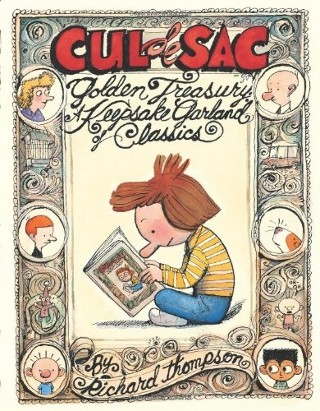
Cul de Sac Golden Treasury

Richard Thompson

This is a digital combination of the first two collections of Thompson’s excellent Cul de Sac newspaper comic. Cul de Sac is about a family, a neurotic son, a bratty daughter and their parents. It reads like a marvelous combination of Peanuts and Calvin and Hobbes. 4 year-old Alice is the star. She is a force of nature, full of wonder for the world and a determination to push her boundaries. Alice steamrolls most of her classmates and is generally a nuisance in the way only a 4 year old can be. Older brother Petey is a weird, closed boy who is also relatable. He may have his quirks, but he also gets the usual older brother joy from picking on his younger sibling and angst from his parents. The parents are just as odd as their children, taking some joy in making things difficult for the kids. The Peanuts like gang from Alice’s preschool are also fun.

This is a fine collection of some excellent comics. There is some enlightening commentary from the artist, but mostly the focus is on the comics themselves. And these are some especially good ones. I really like this comic.

Path of Daggers

Robert Jordan

Reread post forthcoming.

Curse of Chalion

Lois McMaster Bujold

I read this for the first time roughly a year ago, and my review here is still spot on. This is a great fantasy novel, one that stands alone but leaves room for more stories to be told in the same world. It also avoids the world ending escalation of most of the genre. This is one of my absolute favorite novels.

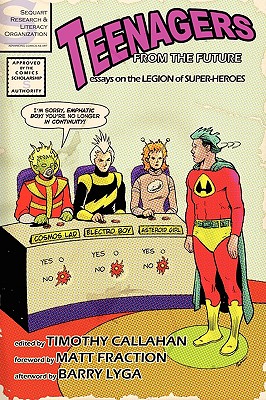
Teenagers from the Future

Ed Tim Callahan

This is a collection of essays about DC Comics Legion of Superheroes, covering the future superteam from their origins to the present, looking at them from many different angles. As with any collection, some of the essays are better than others, but on the whole this is a good bunch. What I really like is getting serious writing about comic books, something that is somewhat hard to find. Even though the Legion of Superheroes is not one of my favorite, I did love a serious look at their impact and influences. I can’t recommend this to anyone who doesn’t either like the Legion or somewhat scholarly writing, but if you fall into either of those categories, it is worth picking up.

What I Read in June

June was a slow month, both because I finished a few books just at the end of May and because I spent a lot of time reading really long Wheel of Time books. I did manage to finish one non-WoT book in the month, though, so it gets a small entry.

Lord of Chaos

Robert Jordan

Reread post forthcoming.

The New World

Michael Stackpole

I read the first two volumes of this trilogy when they were brand new, but due to lack of funds I passed on the final volume. Now I went back to finish the series, but my memories of the first two have faded somewhat since I read them five or so years ago. Still, most of the frustrations and strengths came back to me as I read this.

Stackpole must be credited for creating a genuinely interesting world. In the world of this series, if one does something with enough skill and training it can become magic (more or less). Magic in any cases comes from an intense focus and can greatly affect the surrounding world. There is less a focus on the usual medieval time period of fantasy, instead taking place in something more akin to the times of Columbus, with characters off discovering and mapping new continents.

The writing, in this volume at least, is somewhat mechanical. It gets the job done, but there is little personality in the writing. There are also some plot oddities that didn’t agree with me. It seems too neat at times. The paths that some of the characters must walk seemed arbitrary to me, though that might have had something to do with my vague memories of parts one and two.

It is a good enough conclusion to a highly original series that differentiates itself from the fantasy standards, but not always in good ways. The New World is a flawed, sometimes clunky epic that delivers action and invention on a scale greater than most.

Crown of Swords

Robert Jordan

Reread post forthcoming.

What I Read in May


I know I’m way behind on these. I’ve been writing at them on an off, but I just wasn’t able to get any finished. The same goes for just about anything I’ve tried to post lately. I have a hard drive rapidly accumulating half-finished blog posts and various reviews. But with some time off work, I decided to hunker down and acutally get some work done. Luckily, or not depending, the change in work schedule that left me with less time to write also left with less time to read, so I don’t have as many books to review as usual after May.

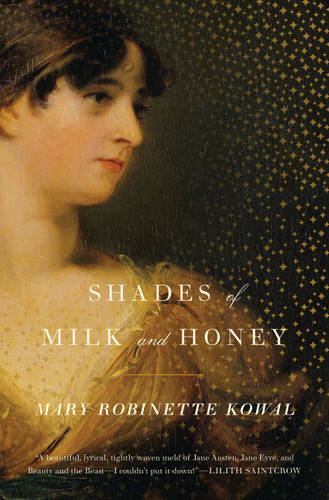
Shades of Milk and Honey

Mary Robinette Kowal

Shades is a fantasy version of Jane Austen, which sounds like a great thing to me, at least. Unfortunately, when adding magic Kowal somehow managed to lose all the wit and vitally that Austen characters generally possess. What is left is the unremarkable romantic plotting and a fairly interesting magic system.

Protagonist Jane has a talent for glamour, the magic of this series, but doesn’t really possess any real vitality one the page. She faints through the plot until it comes to a somewhat unsatisfying conclusion. Her sister Melody never rises higher than being a nuisance. Jane’s biggest dilemma stems from her needing to choose between the largely decent Mr. Dunkirk and the ill-mannered artist Mr. Vincent.

The plot plays out with a readable slowness that Austen got away with due to her wit. Kowal focuses on the magic, and it is a well-thought out, interesting magic system, but there is no life in the narrative. Shades of Milk and Honey isn’t precisely bad, but it does show the dangers of hewing too close to a classic source.

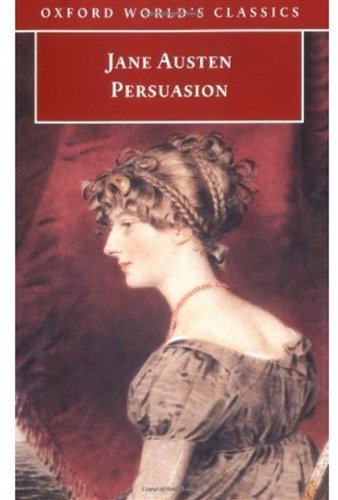
Persuasion

Jane Austen

Reading this just after Shades of Milk and Honey made me more aware of Shades’ flaws. Persuasion isn’t Austen’s best, but there is certainly more going on here than in that read alike.

This feels like a novel that Jane Austen wrote for herself, where a somewhat older woman, by those times’ standard, ends up writing the wrongs of her life and living happily ever after. Plus, the supporting characters spring right off the page, with amusing faults and larger than life personalities.

Persuasion is a little more straightforward in the plot department than most of Austen’s other novels, with no big surprises along the way. It really shines on the strength of the incidents it contains. Weak Austen is still better than the best facsimile.

Something Rotten

Jasper Fforde

This is the big final to the first section of Fforde’s Thusrday Next novels, tying up all the loose ends from the previous three books. I loved those books, and I love this one.

It really does tie the whole series together, even the sections that seemed entirely superfluous on my first reading. It is still kind of messy, but that is where the charm to this series is. The rules, for better or worse, are pretty well established by this point, but Something Rotten still manages to have some fun. Hamlet is great, as are the book visits. I don’t know what to say other than I like this books a lot and want to keep reading them forever. The Thursday Next series are books for people who love books, and I am one of those people.

The Thin Woman

Dorothy Cannell

This is a book I have some history with. My mother had a beaten to death old copy of this and I happened to pick it up and start reading. Unfortunately, it was beaten up enough that it was consigned to the garbage, and I was unable to finish it. So with my new Kindle in hand, I used the internet to find the title, my mom’s copy was short a cover, and found the book. While it isn’t one of my favorites, it was pretty good and finally being able to know how it ends was worth seeking out.

Hefty Ellie hires an escort to go pose as her fiancé at a family get together and in an absurd turn of events must play out the ruse, as well as lose weight, in order to get an inheritance. She also must solve a mystery involving the house left to her. Once past the ridiculousness of the premise The Thin Woman is a good mystery.

What I Read in April ’12

April was not really a banner month in reading for me, but the arrival of my new Kindle at the end of the month should turn things around.  I only managed three books last month, once you exclude the one book that was a reread.  AS of writing this, though, I have already surpassed that number in May.


Arsene Lupin

Maurice LeBlanc and Edgar Jepson

I have found out that this is a novelization of a play written by Maurice LeBlanc and not actually part of his series of Lupin mysteries.  This makes perfect sense after I learned it, because this book doesn’t quite fit with the other Lupin I’ve read.  I had already realized something was up when Lupin gave up crime at the end; also nearly all the action, which would be shard to stage, takes place off the page.  Still, its not all bad, though it is rather obvious.  There is no mystery here.  The story goes through the motions with little life or charm, like a play that is expecting its performers to carry the show.

Fires of Heaven

Robert Jordan


The Well of Lost Plots

Jasper Fforde

The third Thursday Next novel takes place entirely in “bookworld,” as Thursday solves book crimes and Fforde plays with his metafictional world.  There is a plot to take over the bookworld, and someone is killing Jurisfiction agents and it is up to Thursday to get to the bottom of it.

It has all of Fforde’s trademark profound silliness.  There are stock characters learning to be more believable, a mind reader erasing Thursday’s memories and counseling for the cast ofWutheringHeights.  The plot is a still a standard detective story, but it wrapped in such a fun interesting world that that is hardly a concern.  The best part of this series has always been just how much Fforde’s love of literature comes across.  There is some gentle ribbing of popular classic novels and threads drawn from so many that it can be hard to unravel, but it is always worth it.  The Thursday Next books satisfy on at least two levels, and I defy any fan of literature to not have a near constant grin from all the in jokes.

Midwinter

Matthew Sturges

I knew Sturges from his comic book work, which I liked well enough to make a point of tracking down his novels.  Midwinter, as the back flap says (though since I read this on my Kindle there is no backflap) is a fantasy Dirty Dozen.  As long as it stick to that set up it was really enjoyable.  Unfortunately, as the book goes on it gets further away from that set-up and much less enjoyable.

Midwinter struggles with tone.  Sometimes it tries for deadly serious drama, others it skews toward jokey.  All of the element here could have gelled into a compelling world, but it falls just short.  Sturges does succeed in putting some genuinely compelling characters on the page.  Mauritane is the stereotypical stoic badass, but he is a well done rendition of that sort of character.  Raieve and Silverdun are also entertaining.  While the plot is nothing special, there are several great scenes as Mauritane and his crew try to complete their mission.  My biggest problem with Midwinter is some half baked subplots.  Outside of the mission itself there is little resolution. Worst of all is the storyline of Mauritane’s wife, which gets just enough time to be insulting but not enough time to seem at all real.  I found it hard to believe that anyone involved there even knew each other. 

I wish I could give Midwinter a glowing review, and when it is good its really good, but the book is very uneven.  Still, I have already purchased the sequel and will likely have it finished in the next month or two.

To Dance with Jak O’the Shadows

Wheel of Time Reread Part 5: The Fires of Heaven

Original cover of The Fires of Heaven

Original cover of The Fires of Heaven (Photo credit: Wikipedia)

The Fires of Heaven is about Rand ascendant.  The first three books of the Wheel of Time was about Rand finding his place in the world.  The Shadow Rising was Rand taking control.  Fires of Heaven sees Rand actively and effectively pursuing his goals.  He is know wise enough to see his enemies goads for what they are and strong enough to not play directly into their hands.  Unfortunately, Rand is also losing something of himself in this.  He now finds that he must use people, even his friends, to accomplish his goals.  All that being said, the true star of this book is Nynaeve.  Every book is about a further step in Rand’s journey, he is a constant presence, but other characters come and go.  The Shadow Rising was as much about Perrin or even Elayne as it was Rand.  Perrin doesn’t appear in Fires, and Elayne is mostly there to play off Nynaeve, who is finally forced through changes that her younger companions have been facing since the first book.

Fires of Heaven has a lot going on.  It is easily the most expansive book in the series so far.  The continued splintering of the the central characters is upped by POVs from new characters and more running subplots.  There is Rand and the Aiel and all of the attendant characters: Aviendha, Egwene, Mat, Moiraine, Lan.  Then there is Nynaeve and Elayne in the east.  And Suian, Min and Leane traveling south.  And finally, new to this book, Morgase plays a significant role.  Each of these stories could have carried a book on its own, but they are all crammed in here.  The structure of the book is such that Rand’s part of the story doesn’t really get going until about the halfway mark and by then Siuan’s and Morgase’s are mostly finished.

Siuan must deal with the radical change in standing that has happened to her.  Before she was arguably the most powerful member of the world’s most powerful group, now she has not only lost her position, but also the very skill that made her part of that group.  What is amazing about Siuan is that she doesn’t blink.  Her life has been shattered?  Well, she’ll salvage the pieces she can and keep moving forward.  She has lost everything that defined her as a person, but manages to keep going on sheer anger.  Characters think of stilling in WoT as fatal, but this seems to be primarily because most Aes Sedai define themselves by that ability.  It is as though crack addicts were lauded for their drug use, but then when it’s taken away must deal with both the withdrawal and the loss of prestige.  Siuan takes to her quest to unseat Elaida not for revenge, or at least primarily not, but because she needs that to keep her from becoming despondent over her stilling.  She doesn’t need any help to realize this, she knows it and will do what she must to survive.  It also gives her a reason to push past the indignities that she must suffer as a part of her loss of prestige. No one would deliberately embarrass the Amyrlin Seat, but plain old Siuan is fair game. Leane is not quite as strong as Siuan, but she realizes the closest thing to an advantage that her situation provides.  Losing her old life means she can create an entirely new one; that she can become the person she wishes she had been all along.  It seems kind of odd that someone as successful as Leane could have such great regret for her life choices, but it is not as though her change comes out of left field. Ever since Leane showed up in The Great Hunt she made no secret of her appreciation of men, commenting on Perrin’s shoulders and the like.  The strength of The Wheel of Time is that comparatively minor characters, like Siuan and Leane, can carry large parts of a volume or two.  Min, a more important character to the narrative than either of the two former Aes Sedai, doesn’t have anything to do until the next book.  Her being with the others is only a way for her to get from where she was to where she needs to be.

Morgase has an even rougher time than Siuan, I would say.  Readers have known since the third book that she was a thrall to Rahvin, but no one was really in a situation to help her.  The Forsaken are everywhere and Rand hasn’t really been in a situation to confront them directly.  Still, Morgase’s story is a tough one to deal with because she has essentially been raped.  Raped and brainwashed.  Nobody in the books seem to notice.  Of course, as far as most of them know, at least in this book, she was merely in love with a douche bag; they do not know that she was compelled by one of the Forsaken.  Rahvin goes almost out of his way to humiliate her in his path of taking the throne.  He methodically erodes her support among the nobility and the army, moreso than he probably needed to since he is one of the Forsaken. We know he must get rid of her because he comments on how hard she is to control, even with compulsion, but I am not sure there is a character in this series that is more thoroughly degraded than Morgase.

Which brings us to Nynaeve, and Elayne I guess.  Nynaeve gets crapped on in Fires of Heaven.  By everybody.  Some, much even, of it is necessary.  Of all the people that came out of the Two Rivers, she had changed the least.  But she had to learn that she was Wisdom no longer.  She needed to admit she had much to learn so she could begin learning it.  At the end of The Shadow Rising she bested Moghedien, but that was mostly a combination of luck and surprise.  Now Moghedien knows to be on the lookout for her.  The best part about Nynaeve in this book is her complete lack of self-awareness, despite be pretty good at deciphering what other people’s problems are. She gets all of her preconceptions about herself broken down from the start.  Nynaeve thinks she knows everything about herbs and healing without the power, but early on she is shown just how incomplete that knowledge is when she and Elayne are doused with forkroot.  She also realizes that she does need Thom and Juilin around to watch her back.  Then she has to let Elayne take charge, due to their masquerading as Lady and maid.  Then there is the big shift in power between Egwene and Nynaeve.  Before, Nynaeve had been a teacher to Egwene, a friend, but a friend in charge.  Now with her newfound World of Dreams skills, Egwene turns the tables on her. She forces Nynaeve to face some the punishment’s she doled out as wisdom. Yes, Nynaeve ceded her authority by lying to Egwene, but Egwene only presses her advantage to cover her own lies.  Nynaeve’s comeuppance was overdue, but Egwene was not is a position to deliver it.  I know this is just another step on her path to becoming Amyrlin, but Egwene comes off as seriously childish and petty in that scene. It’s this big pivotal, necessary scene and instead of showing her growth as a character, Egwene comes off as a heel.  After their forays into the World of Dreams, Nynaeve and Elayne meet the now Whitecloaked Galad.  I think Elayne serious underestimates how Galad feels towards his family here.  He does always try to what’s right, but I think for family makes it a big right for him, given his family history.

So they run away and join the circus.  And again Nynaeve has a hard time.  She inadvertently flirts with Valan Luca, another example of her complete lack of self awareness.  She fights with Seanchan Elephant trainer Cerandin, and with the bear tamer.  To cap it all off, she gets in an altercation with Moghedien in Tel’aran’rhiod, nearly getting herself killed and causing Birgette to be ripped out of there.  Then she has to be the fake target for Birgette’s archery show.  For 90% of this book Nynaeve is having bad things happen to her.  Which makes her eventual triumph over Moghedien all the sweeter.  Nynaeve gets broken down over the course of The Fires of Heaven, then builds herself back up better than before.  Though she gets little training at the tower, this is Nynaeve learning how to be an Aes Sedai.

Now we have Rand and friends, whose story is actually pretty straightforward in this book.  For most of the book it is Rand and company chasing the Shaido into the ‘wetlands.’  Rand and Aviendha consummate their ‘romance,’ but everyone knew that was coming.  Mat becomes a General, with was a great twist.  I love how he tries to aviod it, but can’t help spilling out his knowledge at the slightest provocation.  He tries to run, but the battle for Cairhien won’t let him.  Despite his every effort, Mat becomes a hero.  There is Moiraine, who makes tons of cryptic comments about her future, but I was still surprised the first time I read Fires of Heaven.  This book does more the cement her as a hero than any of the previous ones, despite all the good she’s done.  She finally stops trying to order and lead Rand and starts advising him.  And then she has more pull than she ever had before.

After Couladin and the Shaido are defeated it seems like everything is winding down to the lowest key ending the series has seen.  Then some of the various story lines intertwine.  Morgase escaping Rahvin forces him to proclaim himself King of Andor, which causes Rand to assume that he’s killed Morgase.  Rahvin had no way of knowing how Rand would react to that.  So Rand uses his newly discovered traveling method to launch a raid on Rahvin, but is interrupted by Lanfear attacking.  She is not just a crazy ex-girlfriend, she is the craziest ex-girlfriend.  Rand, who had been teetering but ultimately successful thus far absolutely fails against Lanfear.  Which means it is time for Moiraine’s crowning moment of awesome, taking out the much more powerful Lanfear.  It is an amazing and terrifying segment.  Which makes the deaths of everyone else in Rand’s inner circle in Caemlyn about 20 pages later all the more numbing.  At this point I could believe that anything was possible.  Fortunately, Rand defeats Rahvin, with help from Nynaeve, with Balefire, restoring all those he recently killed.  Robert Jordan absolutely knew how to write an ending.  Even though I still don’t quite understand how the battle with Rahvin went, the whole last few chapters of Fires of Heaven are amazing.

Despite the lack of Perrin, Fires of Heaven is one of the best books in the series.  This is the last glimpse of hope for quite some time.  After this book things get progressively darker.  At one point Min (or Elayne, I’m not sure) comments that they are winning and the other replies “Are you sure?” For the longest time I was with the thought that the good guys were winning.  With this reread I am not so sure.

What I Read in March

Another month with four new books read, which I guess is the fastest pace I can manage when I am rereading the Wheel of Time. Usually my WoT rereads are fast, slapdash things where I read only the parts I want, the Perrin parts early and the Mat parts late, while skipping the storylines that I don’t like quite as much, surprisingly Rand’s part. This time I am giving as close a read as I have since I first read them, which means each one is taking me about twice as long as it usually does. So four other books a month is about all I can manage.

The Blonde Lady
Maurice LeBlanc

This is apparently the second of LeBlanc’s Arsene Lupin detective-ish stories. Lupin is something like Robin Hood mixed with Sherlock Holmes. What Holmes is to solving crimes, Lupin is to committing them. There are two stories in this volume, which is all about Holmes, called Holmlock Shears, matching wits with Lupin. There are some what I am going to guess are translation issues, where words don’t mean quite what the characters seem to think they mean, but otherwise it is solidly entertaining. I don’t want to get in depth on the plot since this is a mystery. Lupin is wisely kept on the sidelines for most of the book, letting most of the story come from the detectives trying to stop his announced robberies. Lupin is a great character, dashing and dangerous but he has enough of that Robin Hood noble thief in him that readers can still root for him.

The Alloy of Law
Brandon Sanderson

Since I first discovered him a few years ago, or more appropriately when I was forced to discover him because it was announced that he would finish Robert Jordan’s The Wheel of Time series, Brandon Sanderson quickly became one of my favorite fantasy authors. Even though Mistborn is not my favorite thing he has written, I really like the first book but I think books 2 and 3 are flawed, when I heard that he was writing a follow up with a Western setting I was excited. The magic system in Mistborn is one of the most original I’ve encountered, especially when you weed out the ones that come off as weird for weird’s sake. Putting that in a Western, a genre that I unabashedly love, sounded perfect. Too much fantasy takes place in the same sort of faux medieval time period. It is always good to get out of that. Fortunately, Sanderson did not disappoint.

Alloy of Law is short for a fantasy novel, running just around 300 pages, but it accomplishes a lot in its short time. Since the world was not new, much of the usual world building could be eliminated, allowing for a greater focus on character and plot. Both of which delivered. Wax is a pretty great character, competent and brave but not with the sort of Godlike powers that many fantasy protagonists have. Wayne is perfect to complete a buddy cop routine with Wax. And Marasi doesn’t get quite enough time, but she is an interesting catalyst. The story follows Wax trying to solve some mysterious train robberies and kidnappings that seem to be impossible, which leads to him uncovering a plot involving corrupt cops and even more corrupt noblemen. Plus, Snaderson avoids spending too much time on the mechanics of his magic system, as he sometimes does.

Alloy is an adventure about magic cowboys trying to stop ghost trains. Conceptually, it is perfect. Even with its short length, t manages to be a meaty, enjoyable adventure. Its only real flaw is that it leaves the reader really wanting more, and the internet seems to be telling me that this is a stand alone entry in the series. Stand alone books should not have cliffhangers! More, I want more.

The Shadow Rising

Robert Jordan

The Eyre Affair
Jasper Fforde

You know how sometimes something just really clicks with you immediately. To experience a piece of media that seems almost perfectly tailored to your specific interests. Jasper Fforde’s Thursday Next series, of which The Eyre Affair is the first entry, has so far been one of those special experiences for me.

The Eyre Affair is a smart, inventive and often silly detective novel set in an alternate reality. A reality with time travel and cloning and a much greater appreciation for literature. Once all the fun sci-fi/fantasy fluff is stripped away The Eyre Affair is a rather standard-ish noir tinged detective story. But the fluff is the substance. The plot is clearly secondary to the fluff. The plot is merely an excuse for Thursday to keep moving through the world. More important than the over arching story is a side-story where Thursday helps hunt down a vampire.

Fforde throws tons of concepts against the wall, but the parts that resonate best are when he’s playing with literature. Perhaps it is just that the works he references are some of my favorites, Jane Eyre and Dickens. I simply loved the Eyre Affair.

Lost in a Good Book
Jasper Fforde

With the second Thursday Next book, Fforde focuses more on the book jumping skills that were key to the last books finale. It is also less of a stand alone book than the previous one. The Eyre Affair told its story and ended, Lost in a Good Book is clearly the start of a larger story. Numerous plots are started and very few of them are finished.

Despite that Lost feels more focused than Eyre. The first one was about throwing stuff against the wall, this one is just playing with the stuff that stuck. I didn’t like it quite as much as the previous one, but it was still pretty good. Especially the greater use of other fictional characters as living characters in this series. They are clearly different than the “real” versions of those characters, but they are reminiscent enough to be fun. Another really good novel.