Go Trickster, Go Gambler Go!

Cover of "The Shadow Rising (The Wheel of...

Cover via Amazon


Time for more Wheel of Time reread. I’m now on to The Shadow Rising, which is really the point when the Wheel of Time goes from a traditional Hero’s Quest to something more. There were hint’s of the change from as early as the start of The Great Hunt, but here is where it takes full effect. Rand is still the main character, this is still primarily his story, but there is much more time devoted to side characters and the world in general.

That switch is what I think makes people complain about how slow the start of this book is. Because the start of The Shadow Rising isn’t really that slow. Sure, they don’t get out of Tear for more than 300 pages, but a lot happens in that 300 pages. Plus, for the last time in the series, at least until A Memory of Light, the group from Emond’s Field are all in the same place. That 300 pages in Tear set up at least the next three books for each of the major characters, as well as containing quite a bit of action on its own.

There is the prologue in all but name in chapter 1. Nearly every book in the series starts with a chapter similar, with tertiary characters and storylines getting brief spotlights. We see Min with Siuan and Leane, who are a book away from getting promoted to genuine supporting characters. There are also brief snippets of Elaida, White Cloaks and Seanchan being awful. All of there things are disconnected from the story of the rest of this book, except for the Whitecloaks, but are important to the overall story.

In Tear we start with a “bubble of evil” attack, which is interesting but never satisfactorily explained. The problems Rand, Mat and Perrin deal with are symbolic of their overall struggle, though less so with Mat. Perrin is attacked by his ax, part of his ongoing struggle in choosing between the hammer and the ax as well a being symbolic of his fear of losing control of his savage wolf nature. Mat is attacked by playing cards, which I guess could be commentary on his love of gambling, but it is mostly just seems like the reason is living playing cards are neat. And Rand has to literally fight himself, which drives much of his actions, his fear of losing control of himself. We also meet Berelain, who despite never being anything other than a good guy manages to spend most of her time messing with the other heroes. She is a character whose name tells the reader just about all they need to know. Just like Thom Merrilin is Merlin, Berelain has lain bare. Then there is the Trolloc attack, along with Rand’s struggles with Lanfear. We get our first real glimpse how some of the Forsaken work. Lanfear, unfortunately, looses something when you realize that she is just Rand’s crazy ex-girlfriend, albeit one with magic powers. You also see the Forsaken undercutting each others plans just to keep one of them from gaining an advantage.

Rand spends his time in Tear ruling and trying to learn as much as he can about his fate. Moiraine’s biggest failing is her inability to share information with Rand. Even Lan realizes this. Because she wants to be in charge she never really lets Rand in, so he doesn’t let her in on his plans. The most believable part of Rand and Elayne’s romance is her helping him with how to rule.

Perrin, in his ill-fated attempts to send Faile away to safety, finds out about Whitecloaks in the Two Rivers and decides to go home. The struggle between he and Faile is as painful to read as it is inevitable. Their characters could not have acted any differently, but it is still very obvious that they are both being stupid. Faile’s defense is that she is 16, I don’t know what Perrin’s is. His whole plot in this book is one of the best storyline’s in the whole series. It has the hero returning home to find nothing as he left it, as well as one of the most true victories anyone in the series has. It is a story that could have been a book on its own as just one part of the larger story. It really is great.

Then there is the girls. Though Egwene ends up going with Rand to see the Wise Ones, Elayne and Nynaeve go to Tanchico, keeping up their hunt for the Black Ajah. Their storyline is not quite as satisfying as Perrin’s, but it is also much shorter. We also see another group of channelers besides Aes Sedai, all of which seem to be more well thought of than the actual Aes Sedai. One thing that becomes more and more apparent as the series goes along is that the Aes Sedai are really bad at their jobs. The girls in Tanchico works because Nynaeve and Elayne are a great team, both humorous and effective. Plus, they get to team up with Bayle Domon, Thom and Juilin. They really just do not get enough time to work. (in this book, they get all too much time later on.)

Rand, meanwhile, decides to surprise everybody and go into the Aiel Waste. He travels for I think the last time by Portal Stone. He actually thought this plan through very well, despite Moiraine’s misgivings. Other than his desire to find out where he came from, he needs people behind him that he can trust, and that is the Aiel. If he can get them behind him. Once their incredibly short trip is over, they all go to Rhuidean, except for Egwene. Rand’s trip trough time in Rhuidean is one of the greatest segments in fantasy fictions. It is perfect. Two chapters that perfectly encapsulate all that is great about the genre. Once Rand returns, the intricacies of Aiel society are slowly revealed, as is a plot between one clan, the Shaido and a group of obvious Darkfriend peddlers. No matter what Rand does, the bad guys always seem to be able to force him to rush. It is the same here, with Shaido leader Couladin also declaring himself Car’a’carn, the Aiel equivalent of the Dragon. It forces Rand to reveal the Aiel’s big secret, that they were once the same as Tinkers.

The book still ends as the others do, with a fight with several Forsaken. Although this time they are not at the same place. Rand fights with Asmodean in Rhuidean in one of the less memorable book ending conflicts he has. It really is kind of an anticlimax. But there is also Nynaeve getting in on the Forsaken fighting by besting Moghedien. It is really her starting to cash in on the potential she supposedly has. Her fight is much more memorable than Rand’s, if only because there are fewer to compare it to.

This is book that is somewhat light on plot, but it is big on fleshing out the world. Ideas like the World of Dreams. It was around in previous books, but in The Shadow Rising it is really fleshed out and explained. There is the first glimpse of the Aelfinn and the Eelfinn, though they aren’t completely explained. There is also the introduction of Slayer, the strange combination of Luc, Rand’s uncle, and Isam, Lan’s cousin. I’m still not sure what is up him. Also, Birgitte starts to show up and give advice. Another big change is the fleshing out of various characters love lives. Sure, there was plenty of Rand and Egwene in the early books, as well as Nynaeve and Lan. But in The Shadow Rising there is Rand and Elayne, Perrin and Faile, a hint of Moiraine and Thom. In all there is a greater focus on character in this volume, a greater fleshing out of characters outside of Rand, Perrin, Mat and Egwene. This is the book where events have grown past just rand and his immediate surroundings, and Jordan takes the time to introduce his players.
What I Read in February

February was a short month, but I still managed to read five books, though two of them were part of my Wheel of Time Reread, so I’ve only got three books to discuss today. Still, that puts me at 9 new books for the year so far, slightly ahead of the pace I need to set to reach 50 for the year. On with reviews.

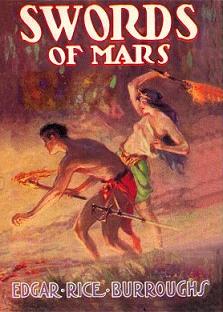
Swords of Mars
Edgar Rice Burroughs

I’ve nearly finished making my way through Burrough’s Barsoom books. Here he returns to his original hero, though he again shakes up the plot a little from the usual formula. The first half of Swords of Mars tries to be a spy thriller, with some success. It works at first, with John Carter rather easily infiltrating into criminal society in Zodanga, the city he helped destroy in A Princess of Mars. There he tries to investigate a group of assassins that are troubling Helium. But before he has to actually make any tough choices to keep he his cover, at all times he manages to hold to his morals despite the situation, Carter hears of a plot to kidnap Deja Thoris and rushes to save her. To do so he steals the mind controlled space ship of mad scientist Fal Silvas and even though he is too late to keep them from stealing Deja, he chases them to the moon called Thuria. Where he meets a few moon races and saves the day.

The two halves of this book do not fit together particularly well, but neither is bad per se. I think the imaginative sci-fi at the end is more fitting that the toothless spy at the start, but in all it is another solid entry in the Barsoom series.

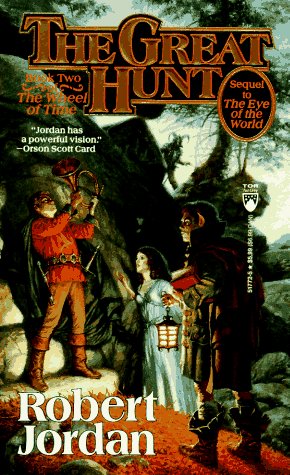
The Great Hunt
Robert Jordan

The Girl with the Dragon Tattoo
Stieg Larsson

I’m not really sure I get the phenomenon this book is causing. I guess its not the first time the public has went nuts over a mediocre or bad book, I remember the love for The Da Vinci Code, let alone pure garbage like Twilight. Not that The Girl with the Dragon Tattoo is on that level, it is better than those books. However, it sits more in the good line rather than the great.

I see no reason to go over the plot, I’m sure everyone who cares knows it. The only thing I took away from this, other than a decent mystery thriller, is that the most everyone who populates this novel is almost completely emotionally dead. They do things not because they enjoy them, but because they half always done them. Blomkvist and his partner have sex no because they have any passion, but relationship or not, they have been having sex since college. I am always conscious of the fact that this is a translated work, and some of the specific word choices are subject to the whims of someone other than the writer, but a lot of the characterization falls flat for me. Luckily the pace is snappy enough that it doesn’t really linger on any of the misses or too easy moments. This is a good read, but it is far from mind blowing.

The Dragon Reborn
Robert Jordan

Quiet: The Power of Introverts in a World that Can’t Stop Talking
Susan Cain

Quiet is an exploration of the perceptions of introversion and extroversion in our society, as well as how that compares to other cultures in other parts of the world. The main thrust of the book is that in America we tend to favor the loud over the smart, often to our detriment. Not that being loud is necessarily bad, but that it isn’t actually indicative of being right. Also, that such an emphasis on talking often makes quieter people feel like they are somehow broken and that really shouldn’t be the case.

While some of the research, or lack thereof since there are a few spots were the author admits that no one has studied the basis for a point she is making, makes some of Cain’s points seem a little dubious, as someone who is pretty solidly in the introvert camp this is a very freeing book. If anything just knowing that preferring to be alone isn’t indicative of some sort disorder is a relief. The most important thing to take away from this book is that introvert/extrovert is not a good/bad dichotomy. Being an introvert should not make one feel inferior to their louder, more gregarious compatriots. What is important is knowing who you are and making that work for you. Quiet is an interesting, thought provoking read that I would recommend to anyone.

That is all for this month, I should have more than this next month, since as of right now I’ve already read five books in March, though another one or two will probably be Wheel of Time books.

The Sword in the Stone

Wheel of Time Book 3: The Dragon Reborn.

Before I start going over The Dragon Reborn, I have to be upfront about something. This book is my absolute favorite book. Not just in the series, but period, out of all the books I like this one the best. So if I get to gushing outrageously, you know the reason why.

The first thing that jumps out at me is that for a book titled The Dragon Reborn, the character that the title refers to appears very little. Rand dominated the first two books of the series, clearly establishing himself as the series true protagonist. However, that put his growth as a character pretty far ahead of most of the cast. At the end of the last book, he accepted his role, he now only needs to actualize it. So that leaves page time for the rest of cast to grow and develop, especially Perrin and Mat.

Mat is the breakout character of this book. In the first two volumes, Mat has been little more than a nuisance. An amusing nuisance, but as much a hindrance as a help. Yes, it was mostly due to the Shadar Logoth dagger he picked up, but picking up daggers from Shadar Logoth is just the kind of problem he causes. Elayne, Nynaeve and Egwene, affectionately or derivatively referred to as the Supergirls, also get much more than their brief chapters from The Great Hunt, getting out and getting involved as much as the guys. Lastly, Perrin takes over as the primary star of the this book, and his personal difficulties that will rage for the rest of the series are clearly outlined. So basically everybody but Rand gets some significant page time.

We start with Rand and his allies hiding in the mountains, waiting. Rand is impatient, but he doesn’t really know where to go and he doesn’t want to leave his friends. Moiraine is waiting to try to turn the situation in Almoth to hers, and Rand’s, favor. As well and Moiraine and Suian played Rand at the start of the last book, she fails pretty herd here. Moiraine still thinks she is in control. And if she would have just shared her plan with Rand, let Rand think it was at least partly his decision, then he would have likely followed her. The Aes Sedai’s habit of secrecy really hinders her plan. So after some Trollocs attack, and Rand almost loses control he leaves, sneaking away in the night to what he believes he must to become the Dragon Reborn. After the first five or so chapters, it is exit Rand for the bulk of the book. From here on there are just a few fireside snippets and the last chapters.

So Perrin, Loial, Lan and Moiraine chase after him. Perrin takes center stage. He is much more laid back than Rand, but no more eager to be under Moiraine’s control the he was. But he knows the she knows more than he does, that he can use her help. Especially due to his wolfbrother nature. His worries over that are exacerbated when they encounter a man with similar powers who has given in entirely to the wolves. That is Perrin’s struggle for most of the rest of the series, his fear that if he uses his wolf powers he will lose his humanity. We also see the effects of a Ta’veren on the world, with chance skewing wildly in the towns that Rand has visited. Soon, they stop in a town that has seen plenty of excitement, what with hunters of the horn and Aiel. The Aiel War, which took place almost 20 years before the series, is the inciting incident for many events of the series. And things such as the hatred the general WoT populace has for the Aiel. Which is why they put a captured Aiel in a cage. Perrin saves him because Perrin isn’t a horrible human being, and cares more for what is right than what people will think of him. Saving Gaul, the Aiel, also catches the eye of Faile, a hunter for the horn. Pretty quickly she worms her way into the group and into Perrin’s thoughts. Their tumultuous relationship is the other side of Perrin’s future worries. Now that Perrin is set, the book moves to the other half of the group from Emond’s Field.

The girls and Mat are headed back to Tar Valon for learning and healing respectively. The girls are simultaneously punished and elevated. They are thrust right into the web of mistrust and deceit that is Aes Sedai politics. Their plight also shows just how precarious the plans of Suian and Moiraine, the only confirmed good guy Aes Sedai, are. Whitecloaks are at the gates, the Black Ajah has revealed themselves and Suian can only trust three half-trained girls. It seems like a really dumb idea, but laid out like Suian lays it out it makes sense, if only because no Aes Sedai would willing give up information for nothing. The only people that Suian can be absolutely sure aren’t Darkfriends are the ones that were almost killed by them. So now, Elayne, Nynaeve and Egwene play Nancy Drew to try to figure out where the Black Sisters went and what they are up to.

While the girls are ostensibly being taught, it has never been clear to me exactly what the Aes Sedai know how to do. I would guess there is a significantly longer list of weaves that they no longer know than ones they are shown still knowing. Of course, we don’t see the girls doing much learning, because that would be boring, so instead we only see the aftermath of lessons and important meetings. I like how they take the Amyrlin’s lack of direction as license to do whatever they want in tracking down the Black Ajah. Despite already being caught unawares once, they are jumping headlong in once again. Also, as the book goes on the power dynamics of the trio start to shift. Nynaeve is no longer above the other two, and they start to realize that. Plus, Nynaeve is far from the best leader.

Mat, meanwhile, gets his first POV chapters. And finally, readers can find out exactly what he is up to. From the first moment we are in Mat’s head the book becomes about twice as entertaining. Jordan outdoes himself with Mat. He is the perfect rascal. He hates boundaries, hates being confined. As soon as he thinks someone is trapping him in, he starts looking for ways to get around it. Which gets him into trouble, like how he is more susceptible to Lanfear’s promises of power than Rand or Perrin. Though to Mat’s credit, he knows enough not to out and out trust her. But it also earns him some respect from the Amyrlin. She knows she can’t get far bullshitting Mat, so she is honest with him, at least as honest as an Aes Sedai can be. I would be remiss if I didn’t mention Mat’s duel with Galad and Gawyn, which is one of the truly great moments in the series, moments that this book has more than its fair share of.

Poor Suian, her carefully laid plots go awry because she was forced to rely mostly on Two Rivers folk, and they help each other out. She needed, or thought she needed, Mat kept in the tower, but in order for the girls to accomplish much they had to have her notes of authority. How could she have foreseen them giving one to Mat, allowing him to escape Tar Valon? In a truly unfortunate way, the Two Rivers folk are largely responsible for her fall from being Amyrlin.

We get a few chapters of the great Mat/Thom duo. Thom playing straight man to Mat’s foolish antics is just about the perfect pairing. I think Thom sees a young version of himself in Mat, and can’t help but be caught up with the exuberant youngster. We also start to get an idea of just how much trouble the world is in, with every country seemingly controlled by a member of the now freed Forsaken. There is Rahvin in Caemlyn and Sammael in Illian and Be’lal in Tear. In just the first couple of books, the world got a whole lot more dangerous, and they were running for their lives to start with.

So with Rand sidelined, we see the rest of the cast evolve or at least learn more about them. Mat absolutely will not be forced, but given the choice he will usually do the right thing and he sticks by his friends. He rushes after the girls once he finds out they are in trouble, no matter who or what else might be after them. Perrin, always careful for fear of hurting someone, is greatly troubled by his powers and hesitant to use them, even to the point of endangering everything. And the girls are prodigies, but reckless. They know no fear, but need to learn caution. No of their obstacles are as dangerous or as life shattering as Rand’s, but in The Dragon Reborn they all truly begin the road to facing them.

One last note on Moiraine. Though she bungles handling Rand at the start of the book, it is clear that while she was gone in The Great Hunt she upped her game. Coming face to face with the Forsaken and realizing she was not up to that challenge I think forced her to reevaluate her plans. But being gone from the group allowed them to assert their independence from her, meaning that she still loses. At least until she can reassess again.

In the end, all roads lead to Tear, to the Stone of Tear specifically. That is where the girls are lured, that is where Perrin and Moiraine follow Rand. That is where the Aiel were headed. Amazing that the fortress had stood untaken for centuries, only to be breached about a dozen times on one night. Also, because I am apparently incredibly dense, I read this book about 4 times before I realized the Callandor is the Sword in the Stone from King Arthur. The last few scenes in Tear are truly great because so much is happening at once. The Aiel are attacking, Rand is having a showdown with Ishamael, Moiraine takes out Be’lal, Mat and Juilin are freeing Egwene and the rest and Perrin is fighting to save Faile from the Black Ajah’s trap. It is a breathtaking finish that puts quite an exclamation point on the end of the first part of the Wheel of Time. After this book, Rand is the Dragon Reborn, mo more hiding or doubts. In some ways it is the point where the series really gets going.

Despite or even because of Rand’s absence from the bulk of this book it is one of the best. While the scope of this series was large from the start, by leaving Rand out for a book, Jordan really emphasizes the importance of the supporting cast. When friends of mine pick up the Wheel of Time for the first time, I always tell them that the need to at least read through the Dragon Reborn. If they don’t care for it then they should stop. I’ve had a few only decide to stick with the series because they went ahead and read the third volume. It is not only incredibly good, but it also really brings the world to life more than the previous two books. I absolutely love it.

What I Read in January

January was a good month of reading for me.  My goal for this year is 50 new books, which means a little over 4 a month and I’m already ahead of pace.

The Master Mind of Mars

E.R. Burroughs

After five books, Burroughs Barsoom stuff was starting to feel a bit stale. He had been telling the same basic story over and over. With Master Mind, Burroughs does something completely different. Instead of a straightforward adventure story, this is a combination of that and of social satire. Ulysses Paxton is transported to Mars, just like John Carter was, and ends up helping out Ras Thavas, a mad scientist who is experimenting with brain transplants. The story balances critiques of the anti-religious city-state that Thavas calls home and their rival religious fundamentalist city. Though there is some token mocking of Thavas’ compatriots, it is mostly a take down of the fundamentalists. Though there is plenty of adventure and mad science, the memorable part of the Master Mind of Mars is the satire. It is plenty entertaining. It isn’t a mean critique, but it is an accurate one. While I prefer the first few books for their novelty and sense of adventure, at least this story has its own identity. Good stuff.

The Fighting Man of Mars

E.R. Burroughs

This is back to the straight adventure, but with the same energy that the first few books had. It helps that the protagonist is a normal Martian and not the superhero like John Carter. Tad Hadron is just a guy. Plus, there are several twists on the original formula. There is Tavia, a slave girl that Hadron saves who, unlike most of the rest of the female characters in the series, as competent a fighter as most of the men. Then there is the kidnapped girl, Sonoma Tora, who turns out to not be worthy of Hadron’s devotion. In all it is a worthy addition to the series, if not quite as interesting as Master Mind is.

The Eye of the World

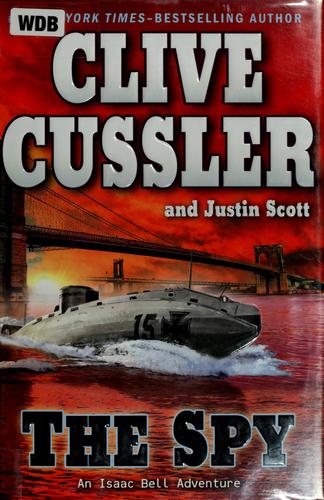
The Spy

Clive Cussler and Justin Scott

This is the third of Justin Scott and Clive Cussler’s Isaac Bell adventures. They take place in the early 20th century, with a focus on then cutting edge technology. Instead of taking place primarily in the west and dealing with train and railroad policing, The Spy is set on the east coast and is features a mystery about a saboteur trying to disrupt the makers of brand new battleship technologies.

These are very much guilty pleasures for me. The setting, in the time of Teddy Roosevelt, is one of my favorite time periods. Isaac Bell is the prototypical hero, perfect if not particularly interesting. This is just a fun book. The supporting cast isn’t quite as vibrant as it was in the previous two books. The villain is good though. He is a bit obvious, as there really isn’t much mystery as to who is behind it. The Spy is a fun little adventure, but nothing remarkable.

Assassin’s Apprentice

Robin Hobb

This is the first book in the Assassin’s trilogy, which is the beginning of a series of books taking place inside the same world. This came highly recommended and though I liked it, Assassin’s Apprentice didn’t really blow me away.

The plot follows the early life of young FitzChivalry Farseer, the bastard son of a prince who is trained to be an assassin for the King. It is a very slow building book, leisurely setting introducing all the players in the royal court and Fitz’s other friends. Also, it lays the seeds for a conflict that I assume is going to run through the trilogy. Other than his training, the novel mostly focuses on a growing conflict with pirates who kidnap villages only to return them as lifeless zombies.

That storyline is put off for the next book, while the climax of this one deals with a somewhat rushed plot to usurp the throne. This is one of my complaints with Assassin’s Apprentice. The other problem is some funny POV stuff near the beginning, where the prose shifts from past to present tense for a bit an annoys the crap out of me.

Still, I see why this series has the reputation it does. It didn’t love this particular book, but I did like it quite a bit. If the next two parts of the trilogy can payoff this one’s set up it will make for a wonderful series.

Calvin and Hobbes 10th Anniversary Book

Bill Watterson

You should like Calvin and Hobbes, this is an essential part of any healthy person’s life. This is a small collection of the comic’s strips, a mere taste of what C&H has to offer, but it does have the added benefit of commentary from Bill Watterson. I find that sometimes with commentary like this it is possible to learn too much about the creator of something, that they are not quite as brilliant as their work would suggest. That is not the case here. Though I do not agree with everything Watterson writes, especially about the effects of merchandising his comic, I definitely respect his opinions. This is a definite must for fans of Calvin and Hobbes.

Sheepfarmer’s Daughter

Elizabeth Moon

Another first volume, this one obtained from the Baen Free Library, this is the first part of the Deed of Paksenarrion. Sheepfarmer’s Daughter is somewhat dry, almost like a historical recounting of an actual military campaign. It is a very heavily military and D&D flavored fantasy, one that focuses on the daily lives of low rank soldiers.

Paks is the large daughter of a farmer, who runs away to join a mercenary company rather than marry the man to which her father has betrothed her. This book covers her early training and seasoning, ending with her starting to realize her potential as a paladin. The world is not especially interesting, it is simply a boilerplate fantasy setting. All the stock fantasy trappings are here, with nothing to make is stand out at all. That in itself is not a deal breaker, but there are other problems. Like the flat characters. Other than Paks, nearly everyone else is just one or two character ticks around a name. The only somewhat interesting part is the battles themselves. They are well written, but it is not enough to overcome the tedium of the rest of it.

The Lure of the Mask

Harold MacGrath

This is an old adventure/romance novel that is somewhat light on both adventure and romance. While there is a thread of something truly interesting here, with the mystery of the anonymous singing woman and her masked identity, the plot is too reliant on coincidence. Events happen, but the characters do little to shape or even participate them. And there is a startling lack of payoff. Everything works out because that’s how novel’s end, not because the character’s actions came naturally to this conclusion. There is little reason to revisit this 100 years after it was published, there are better examples of the genre and from the time period. However, I can’t say there wasn’t a kind of inconsequential charm to

The Grave is No Bar to My Call

Wheel of Time Reread Part 2: The Great Hunt

Before I get started with The Great Hunt, I’d like to remind everyone that there is now a firm-ish release date for A Memory of Light, the last book in the Wheel of Time series. January 8, 2013. That is a little later than I was expecting, but I am much in favor of taking the time to get it right rather than getting it out as fast as possible. No matter how long it takes, I’ll still think it was too long a wait anyway, because I want to be reading it now.

On with the hunt. We start with Rand practicing his sword fighting with Lan. Even an oblique a compliment as Lan telling Rand he is good enough not to stab himself in the foot is, from Lan at least, an indication that Rand is pretty damn good with a blade already. Despite the mistakes she makes leading the boys, Moiraine plays Rand perfectly here. Rand would likely do the opposite of what Moiraine wanted him to do, but at the very least he wants to know where she intends to lead him before he follows. By ignoring him, she gets him to delay his decision. If he doesn’t know what she wants him to do, how can he avoid doing that? In addition, he is so far from home and has just had him world ripped from him completely. Where would he go? Continue reading

Neither Beginnings nor Endings

Wheel of Time Reread Part 1:  The Eye of the World

Original cover of The Eye of the World

Image via Wikipedia

Sometime later this year, not sure yet as the release date isn’t final but almost certainly sometime in 2012, A Memory of Light will be released, bringing The Wheel of Time series to a close after more than 20 years and 14 books. Robert Jordan’s (with Brandon Sanderson at the end) epic is easily among the best of the genre. To celebrate the conclusion of this monumental epic, I have decided to reread the entire series and post my thoughts here.

I’ll start each book’s review with some general thoughts on the series. To start with, I want to discuss the setting. While at first, the world of the Wheel of Time seems like the same as most generic fantasy worlds. However, while the weaponry might be medieval, the rest of setting is less middle ages and more colonial. The setting is really just late renaissance minus the guns. The lack of guns is what makes the world seem similar to fantasy that takes it inspiration straight from Lord of the Rings. WoT is a world with civilization receding. So society is currently the equivalent of renaissance era, but it is headed towards the medieval. At least until the Two Rivers folks are loosed upon the world, and progress starts going forward.

As for The Eye of the World, it is not one of the better Wheel of Time books. It is a good introduction to the series, being the first book and all, but it is very different from much of the rest of the series. Much of that is on the experience of the protagonists. They are all fresh off the farm here. They can’t defend themselves; they are powerless. Through the whole volume, the protagonists are on the run. Everything is as new to them as it is new to us and it is dangerous. Jordan tries to play coy with who exactly the big hero is supposed to be among Rand, Mat and Perrin, but the first 300 pages or so are all from Rand’s POV, making any sort of mystery all but moot. It is Rand. But on the whole, there is less here to come back to than many of the other books. There are a lot of prophesies and foreshadowing, but the focus is almost wholly on the Two Rivers gang, plus Moiraine and Lan. The main plot is being established for all the primary characters, there is little time for sub-plots. There needs to be introductions before there can be reveals. Still, this is an all but perfect set up for the series.

Notable for The Eye of the World are the parts that faded away soon after this volume. Like talking Trollocs. I can’t remember another time that Trollocs talked, except for maybe one scene in The Great Hunt. Or Trolloc clans. Lan makes a big deal over several Trolloc clans working together, but it isn’t mentioned again. There is Moiraine using a staff as a focus for her channeling. As far as writing goes, all of the dream stuff is more dreamlike than it will be later, more metaphorical and vague. The same goes for Rand channeling. It might just be the fact that Rand doesn’t know what he is doing, but I think it is Jordan not quite being sure how he was going to represent stuff.

Now on to the plot. I had forgotten how much the start of this is playing off LotR. It begins with a celebration; the biggest news in town is that there will be fireworks. Moiraine is one of my favorite characters. She fills the Gandalf archetype (the Wise Old Man) in the Wheel of Time, but she is very different from him. Moiraine is a Wise Old Man that our heroes are never sure they can trust. It is ambiguous as to which side she is on. Moiraine is also not as competent as Gandalf. When Gandalf is with the Fellowship, they are sure of their victory. There is no foe he can’t face. Moiraine can barely keep the gang under control. Though it is not obvious upon first reading The Eye of the World, subsequent readings make it clear that she is in over her head. She is the last line against the Shadow and she can barely handle it.

For the first half of the book it is watch the bumpkins let loose in the world, up until they split at Shadar Logoth. The book really takes off after they split up. Jordan does an excellent job establishing and differentiating his pretty big cast. Rand and Egwene still seem somewhat flat, but the rest get fully developed personalities almost immediately. Mat becomes awesome by the end of book 3, but here he is an immature jerk. I know later it is due to the ruby dagger, but early on it is all Mat. Nynaeve is stubborn and competent. Perrin is quiet and thoughtful. Lan is a complete badass.

Perrin learning about his wolf powers is cool. Egwene is an interesting counterpoint to him. There seems to be almost some sexual tension between him and her, but that never goes anywhere. They also meet the Tinkers, who I’m not a fan of. It like their existence, but as a group I find them tiresome. “Pacifism for the sake of pacifism is the height of arrogance” is something I heard somewhere that fits them to a T. In a world, that has monsters like Trollocs and Myrddral, pacifism makes no sense. I also like Perrin’s sick burn of Aram (“I bet you get to run away a lot”). Then there are the just as troublesome White Cloaks. I like how Jordan showed what Perrin is going to have to deal with in the series going forward, White Cloaks and Tinkers.

Nynaeve with Moiraine and Lan is another interesting pairing. I somehow did not realize that Nynaeve had a thing for Lan the first time I read this. Her feud with the Aes Sedai drives her for several books, but I find it a very shallow motivation.

The bulk of that center portion is Rand and the increasingly deranged Mat. I bought Tom’s death the first time, but I shouldn’t have. Mat, despite growing incredibly paranoid, never seems to consider turning on Rand. There is also that ever-confusing flashback inside a flashback scene. I get it, but I don’t get why it is there.

And at the end, we get the only trip into the blight so far in the series. The Blight is my favorite nightmare wasteland in fiction. That place is straight up scary. Anything and everything can and will kill you. The fact that they went in with a bunch of useless kids is terrifying. I think not returning to it in subsequent books has been a mistake, but I think the place would lose its power with more awareness of it.

The Eye of the World is the foundational work. The rest of the series builds off this one. But the circumstances of the characters make it a hard one to reread. They are all so weak, both compared to their enemies and to what they will later become. The lack of power translates into a lack of options, giving The Eye of the World a more urgent tone than the rest of the series, but also a less expansive one. It is amazing just how much is set up in this first book, though. Even things that won’t pay off for ten books are set up here. It is a good start.

What I Read in December ’11

December was another light reading month for me. What with the holidays and Zelda Skyward Sword I just didn’t make much time for reading. Still, I had a pretty good year, reading more than the 45 books that was my goal. This year my goal is 50 books, and halfway through January I’m already on track.

The Old Man in the Corner
Baroness Emma Orczy

Orczy is an author most famous the Scarlet Pimpernel, which I’ve never read. I had no real idea what this was when I downloaded it to my phone, but I was looking for mysteries and this was there. The Old Man in the Corner was pretty much perfect for reading in down moments at work. It is not one mystery, but a collection of several short ones. It is pretty standard detective stuff, with only one really notable thing, that this “detective” only solves the cases for himself. No criminals are brought to justice, no cops are involved in the solving. It is just a woman talking with an old man over tea. The Old Man is generally much more sympathetic with the criminals rather than the police or even the victims.

What I Read in November

I’m limping to the finale this year, but since I’ve already hit my goal for number of books read this year so I am fine with this. Since I was participating in NaNoWriMo last month, even though I petered out with about 20,000 words shy of the goal, I didn’t have time for much reading. I did manage read parts of several books, but I only managed to finish one.

The Mysterious Affair at Styles
Agatha Christie

This is my first encounter with both Hercule Poirot and with Christie. I have to say that I enjoyed it. I don’t have much to say about it, especially since I don’t have a firm footing on either the author or the genre.

Arthur Hastings stays with a friend of his at Styles, his friends step-mother’s home. While staying there he encounters his friend Poirot and just so happens to witness the mysterious death of the step-mother, despite her being in a locked room. With the help of Poirot, though, the case is solved.

My only problem with it is that it is not the facts of the case that are misleading so much as it is Poirot actively lying to his supposed friend the narrator, as well as hiding facts from everyone for spurious reasons. I know that there is a certain amount of deception inherent to the genre, but Poirot hampers his own case by lying to everyone. Mostly it seems because the book would have been only half the length if he just solved the case, he also had to throw in some meddling. Maybe that is Poirot’s thing, but in this one example it was a touch annoying. Still, I did like the book quite a bit.

And that is it for the month. Hopefully next month is a little more productive on this front, but we’ll see.

What I Read in October

October was not a good month of reading for me. I was stuck on a book that I’m not sure I like, though I’m not far enough in to make a judgement. (Acacia by David Anthony Durham) I did read three books on my phone, though. Sorry for how quick these reviews are, I’m writing this while taking a short break from NaNoWriMo to do this.

The Beasts of Tarzan.
Edgar Rice Burroughs.

This book is one long chase scene, with Tarzan trying to rescue Jane and their child from some angry Russians. It doesn’t have the same pop of the some of Burroughs best work. It feels contrived and ridiculous. The only interesting part is the introduction of Tarzan’s pet leopard, Sheeta. I have largely been a fan of the Burroughs books that I’ve read, but this is easily the weakest of his I’ve read.

The Prisoner of Zenda
Anthony Hope.

This is a damn fine adventure novel. Rudolf Rassendyll visit’s a country ruled by his supposed cousins (due to illegitimacy long ago.), only to get involved in a conspiracy dealing with that ruling family. Since Rudolf looks exactly like he cousin Rudolf, he impersonates him to try to foil the evil Black Michael’s plot to steal the throne.

Rudolf, along with some of his cousin’s closest friends, manage to fool the people and fight Black Michael at every turn. Along the way, he falls in love with Flavia, the King’s fiance.

The Prisoner of Zenda is a short, brisk read. The action never lets up and while it occasionally melodramatic, it constantly entertaining.

Rupert of Hentzau
Anthony Hope

This is the sequel to Zenda, and Rudolf returns to Ruritania to defend his love against the villainous Rupert of Hentzau and the jealousy of the King.

It ends up with all the old faces playing the old games. Rudolf loves the Queen, but even after (spoilers!) the King dies he can’t bring himself to take his place, even though everyone wants him to.

It is as fine a sequel as possible, and they are both short enough to read together. I’ve seen these two books referred to as minor classics, and I think that is a good way to refer to them. Zenda and Hentzau are fine romantic adventures, but they definitely tend toward melodrama.

What I read in September.

September was another month when I put away a ton of books with the help of the book readers on my new smart phone. The quality of what I read doesn’t quite match up with most of the rest of the year, but I can’t really say I’m sorry I read any of the books that I read this month. And in the case of the last book on the list, I am glad to be done with what was a more than 6-year long ordeal.

Long Live the King!
Mary Roberts Rinehart.

This was a strange book. I found it on Aldiko’s list of public domain books and it sounded interesting, so I read it. Rinehart is apparently a famous mystery writer, but this isn’t a mystery. It is an adventure with very little adventuring or a romance without much romance. This is the story of a fictional European Kingdom that is trying to fend off a communist revolution and survive the death of an elderly king when the heir is still a small child.

What makes this book even slightly interesting is that it is written from a decidedly American point of view. The revolutionaries are very clearly bad guys, if they were to gain control of the country it would be a disaster. The monarchy, however, is portrayed as mostly corrupt and incompetent. It doesn’t really get the reader to root for them. There is constant talk of America and the great Abraham Lincoln that never stops reminding the reader that this monarchy business is all nonsense. There are plots within plots and several different factions vying for power, but by the end of the novel, nothing really comes from it.

Long Live the King! is a slog. The elements for a quality adventure or romance story are here, but they never build to any sort of satisfactory climax. It is long and too unfocused to be worth reading.

Pagan Passions
Randall Garrett and Laurence M. Janifer

This is the second of my forays into unknown old stuff on my phone. Pagan Passions is a sci-fi story about what the world would be like is the Greek Gods showed back up after being away for 2000 years. And apparently, what would happen are orgies. Big, oddly sexless orgies.

The protagonist (whose name escapes me) is a college professor and disciple of Athena who is suddenly called upon to become the new stand in for Bacchus. Because Bacchus is dead. Since no one says no to the Gods, he does it. Though he does start to wonder how a God died. During an orgiastic festival in his honor, he sleeps with Aphrodite and pisses off Ares. So as he fights Ares, he finally learns what is up with the Gods.

I’ll just spoil it, since this book is kind of trash. The Greek Gods were actually immortal space criminals. Except for a few who had to be replaced. So the new Bacchus turns them in to the space authorities and frees Earth from their influence. The premise of this book is interesting, but what it actually is is garbage.

Tarzan of the Apes.
Edgar Rice Burroughs

There is a damn good reason that Tarzan has remained a part of pop culture for the more than 80 years since this book was written. This is one fine adventure. It draws heavily on Kipling and is full of pure nonsense, but it hit with the force and energy of a train. The whole thing is rarely, if ever believable. Still, it is hard not to get caught up in it anyway.

Tarzan’s story is the one that everyone knows. A family is marooned in Africa and after his mother as die; a tribe of apes adopts Tarzan. His life with them trains him to be superhumanly strong. After reaching adulthood, he chafes at the primitive society of the animals and luckily encounters another set of castaways, including his famous love Jane. This sets of a series of events that lead to Tarzan rejoining human society.

There is no excuse to have not read Tarzan. It is a short, quick read and is easily available since it is in the public domain. It is a thoroughly pleasant diversion.

The Return of Tarzan.
Edgar Rice Burroughs.

This is just more Tarzan. The first Tarzan was about a sadly abandoned boy growing up in the jungle and eventually returning to civilization. This second book simply contains his further adventures.

After he saw Jane betrothed to another man at the end of the first book, Tarzan returns to his friend in France, who sets him up with a job as a counter-spy for the French government. So Tarzan goes to Morocco and wrestles lions while pissing off some Russian spies. What follows is a series of betrayals, shipwrecks and lion wrestling that strains credulity. Even more so than the first book about a boy being raised by gorillas and teaching himself to read.

It is tough to ignore how much of the plot relies on absurd coincidence, but there is still some entertaining pulp adventure to be found here.

The Princess Bride
William Goldman

This is a re-read and the Princess Bride is one of my favorite novels. Also, I want to write a full post about this book and movie. So I am only going to give the merest review here. The Princess Bride novel has everything you love about the movie (and you love the movie because you aren’t a soulless monster, right?) plus more. It is simply slightly better than the movie in every way. And the movie is a classic. Read this.

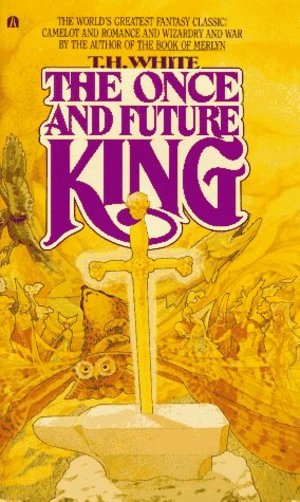
The Once and Future King
T.H. White

This should be the centerpiece of this month’s book reviews but I can’t write it. Part of it has to do with the troubles I’ve had reading this book. (see here) I have been reading The Once and Future King off and on for nearly 6 years. So yes, the early parts are somewhat foggy in my memory. If any of it managed to sink in past the thoughts of the Disney version of the first book. The fogginess of the early parts makes it hard to say exactly how the themes fit together. And this book is all symbolism, theme and anachronism.

It assumes the reader knows the story of King Arthur and Camelot and its fall. Which everyone does. Right? At least the gist of the story, about the triangle of Arthur, Lancelot and Guinevere. And of Mordred’s treachery. People should know it and if they don’t they should follow the advice of White and read Mallory. Instead of doing much in the way of recounting what happened. The Once and Future King tries to explain why the events were inevitable. So the first half of the book is about young Arthur and his education at the hands of Merlin. As well as about the early life of the Orkney clan, Gawaine, Gareth, Gaheris, Agrivaine and eventually Mordred. Then the second half is about Lancelot and his triumphs and failings. Then finally about the fall of Camelot.

Arthur’s problem is his inability to reconcile the concepts of ‘might’ and ‘right.’ He starts off fighting the idea that might makes right, but that eventually fails because he fights might with might. In the end, might must win. He tries other approaches of enforcing right and channeling might, but while he has a vision of how civilization is supposed to work, Arthur lacks the ability to realize this vision.

Knowing how this story ends makes it all the more tragic. Everyone, with the possible exceptions of Agrivaine and Mordred, tries to do what is right, but each and every one of them fails in some way. It ends with Arthur dying and/or heading for Avalon, but not before bestowing his vision on a young Thomas Malory and tasking future generations with trying to realize it. There is so much in this dense, dense work that I feel it needs greater focus than I can give it here. It is enough to say that everyone should read this.