What I Read February 2016

I got a lot of reading done in February, but I doubt I’ll manage a similar feat in March. It was mostly fantasy, a genre I’ve always loved but have drifted away from somewhat in the last few years. Drifted away from reading, but not so much from acquiring. I’ve ended up with quite the stack of unread fantasy doorstops, so I’ve started wading through them. Actually, most of those I read this month were either recent purchases or digital books. Still, I cut down my reading list quite a bit.

gig

Glamour in Glass

Mary Robinette Kowall

I read the first book in this series a couple of years ago and found I liked it better in theory than in practice. I liked the concept of a fantasy novel that is set up like a classical romance. Really, I like everything about it but that romance. Something about it didn’t ring true to me; I’m having trouble recalling at this point. I liked this sequel a lot more. It continues the story, but here I can just accept the central couple.

This is set in the 18th century (maybe early 19th) and Jane and Vincent take a trip to Europe to study Glamour, their shared passion. While there they make some progress with research about how to trap the illusion of Glamour so it can be moved. However, they are stopped when Jane becomes pregnant and can’t do Glamour any more. While that strains her relationship with Vincent, it is nothing on the encroaching return of Napoleon to France. This is not a particularly long book, but its two central characters are very well drawn. And it feels to come more naturally from the characters than the first book did. It also sets up more for the series going forward than the largely stand-alone first book did. This was a very good read.
tgm

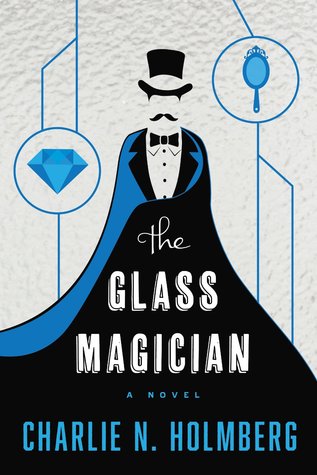
The Glass Magician

Charlie N Holmberg

The problem I had with the first book in this series, The Paper Magician, was that it seemed to move a little too fast to its climax. It didn’t give the reader enough time to get to know its central characters before expecting an emotional connection for the big finale. Basically, my problem was that the book was too short, which isn’t the worst problem to have. I enjoyed reading it very much even if it didn’t leave me fully satisfied. The sequel mostly fixes the first book’s problem by not having to introduce all the characters. I ended up liking this one quite a bit more than the first and I’m eager to get to the third one.

In this one, Ceony and Emery have to deal with an even greater threat than last time, this time focused on Ceony instead of Emery. While the elder magicians work to keep her safe, Ceony blunders into trouble that makes things worse. You know, basically how every Harry Potter book goes. Not that this book owes much more to that series other than the concept of a magic school, it certainly does its own thing. Ceony ends up uncovering information that could change everything people understand about magic. The Glass Magician is an improvement on its predecessor, though I would still like a bit more.

tbm

The Bands of Mourning

Brandon Sanderson

There is a lot about this book that I like. I like how it gets out of Elendel and how it expands the Mistborn world. Unfortunately, those things happen in a book with some incredibly obvious plotting and one of the most painful supposedly comedic scenes I’ve ever encountered.

The plotting is the bigger problem. Every twist in this book isn’t so much foreshadowed as they are immediately obvious. It plays out exactly how you’d expect. I expect more from Sanderson, this book is just limp. The bad comedy scene is a bad comedy scene. It was reminiscent of his attempts to write Mat in his first book of the Wheel of Time series. That was a character known for being funny and Sanderson failed completely to get that across. Most of the character work in this book is good, but it still left me pretty disappointed. That said, I am still eager to get the final part of this trilogy. This is the first book by Sanderson that I would call a miss, but it wasn’t a bad miss.

sf

Striding Folly

Dorothy Sayers

This short story collection contains the last of Dorothy Sayer’s Peter Wimsey stories. There are still plenty that I haven’t read, but these are chronologically the last ones. It’s just three short stories, but they are interesting ones. The first is just the usual murder mystery, starting with the set-up and a brief investigation before Wimsey wanders in and solves the mystery. The next one is more involved, with Lord Peter leaving the hospital after the birth of his first child and he happens across a bemused police officer. He has witnessed what he thought was a murder. The two of them get drunk and he explains what he saw, which is enough information for Lord Peter to get to the bottom of things. The last story is only barely a mystery, being set several years later and it deals mostly with Lord Peter and his oldest child. There is a mystery, but it is about as low stakes as possible. Still it is an entertaining read.

The most interesting thing about this collection is that two of the three stories don’t have crimes at the center of them. This is going to spoil both stories, by the way. The first is more a prank than anything else, though a convincing one that gets a hapless police officer in trouble. The second is mostly about how Lord Peter disciplines his children.

rsurs

Red Seas Under Red Skies

Scott Lynch

I really enjoyed the first book in this series, but this one does not quite live up to it. It is two different books mashed together, with the connecting tissue between them not being exactly strong. It starts well, picking up some time after the first book, The Lies of Locke Lamora, with Locke and Jean in a new city running a new con. As they painstakingly set up their heist, their past catches up with them and they are forced to work for the cities Archon against his enemies. It sets up a good struggle, with the protagonists trying to free themselves from his control while not messing up their other scheme. Then the Archon decides that he needs to send the two of them out to be pirates, despite them not being trained as seamen. What follows is a sequence with them acting as pirates. It’s not bad, but it does take Locke and Jean far away from their more interesting other plots. It all comes together for an ending that doesn’t serve either side particularly well.

I still enjoyed the book quite a bit. While it strays from the books strengths, the best new characters appear in that pirate portion. At times it is a lot of fun even if it feels pointless. And Locke and Jean remain an excellent pair of rogues. I received both this book and its sequel for Christmas and I will be getting to that sequel sooner rather than later.

tcpv3

The Complete Peanuts Volume 3

Charles Schulz

This was part of a Christmas gift, where I got volumes 3 through 6. This is still early Peanuts, but it is just about perfect. It nails that Peanuts tone of somewhat mopey nostalgia; combining silly animal jokes with some dark existential fretting. It’s really good, but you know that. I don’t know how much else I have to add. I guess it’s worth noting that these collections from Fantagraphics are really nice. The books feel good and they come in nice slipcases. The outsides are as nice as the insides.

What I Read January 2016

I read a handful of books in January. It was a good start to the year. I should also have another handful for next month, mostly fantasy and mostly Christmas presents. I still have a backlog of fantasy books from years ago that I hope to get too before too long. This month was odd because I really didn’t like most of the books that I read. All of them fit into genres and styles that I usually enjoy, but a relatively high percentage of them did more to annoy that entertain me. So in the sense of reading books I like it was not that great a start to the year, though it was in terms of the amount of books I read.

tbccjs

The Bootlegger

Clive Cussler & Justin Scott

Another solid adventure in the Isaac Bell series. I really like this series of mystery/thrillers set in the early twentieth century. The main character tends toward the too adept, the too perfect, but the adventures are a lot of fun. This one moves things forward a little, taking place in the early twenties and the Van Dorns, the fictional detective agency for which Isaac Bell works, having to deal with trying to enforce Prohibition, even if many of them don’t really agree with it. It weaves in with Prohibition with the Bolshevik Revolution and a Russian instigator operating in the United States. It all works together reasonably well, though I am left with my eternal complaint about this series that it doesn’t go quite far enough. The combination of the two threads in this one gets as close as the series has before to actually having something to say, but the agent doesn’t end up being as true to his cause as would be interesting. Still, it is a decently enjoyable romp.

abif

Atari: Business is Fun

Curt Vendel & Marty Goldberg

I have some very big problems with this book, mostly to do with the editing and formatting. I would call a lot of Atari: Business is Fun’s construction haphazard. Grammatical and spelling errors abound. It actively hampers getting at the genuinely interesting information in this book. Despite the many flaws in the writing of this book, I was genuinely surprised at how well researched it was. It doesn’t attempt to paint any one as a villain or a saint, only people that frequently have differences of opinion. Nolan Bushnell, the main player for most of this book, comes off as half genius and half huckster. He is painted as a man with talent and ambition and a somewhat inflated sense of himself. It paints a picture of a company that simply grew too fast for itself. It played a big part in creating two separate markets, the arcade video game market and the home console market, but was unable to manage at least one side of that. Still there is a lot of insight into the origins not just of Atari the company of also of the many of the games that they made. Despite its somewhat lacking editing, I would heartily recommend this to anyone who wants to learn more about the early days of video games.

tmlg

The Magicians

Lev Grossman

This book came highly recommended to me, but I abandoned it early last year about forty pages in. Hearing about the upcoming TV adaptation gave me the push I needed to get back to it and finish it up. I maybe shouldn’t have, because I kind of hated The Magicians.

The Magicians stars Quentin Coldwater, a surly youth given to fits of depression. He is moody and unlikeable. It starts with something of a Harry Potter pastiche with Quentin being accepting into Brakebills magic school. Even there he is moody and unhappy, which I understand is the point, but it compresses everything about the school down so much that it is hard to get the sense of exactly what Quentin is learning or how people other than him are taking things. The only other students to get any real sort of character are his eventual lover Alice and his friend Eliot. The rest are at best rough sketches of characters. After graduating magic school, the books moves on to something of a Narnia pastiche, with the characters discovering and then traveling to the magical land of Filory. That at least builds to a memorable climax before a new character comes in to explain to Quentin, and the reader, what has been going on just before the book ends.

My biggest problem is that the book is locked into the point of view of a thoroughly unlikeable character. His depression can make even the most magical of encounters seem terrible. I understand the point of things being the way they are, but it doesn’t actually make the book any more pleasant to read. In the end, it is a book that takes two young adult series and saps all the life out of them in the name of making them adult. The Magicians is abrasively not for me.

hpac

Hallowe’en Party

Agatha Christie

A later Hercule Poirot mystery that is among the meanest Christie I’ve encountered. It doesn’t stray far from the form of her detective novels, but it is the victim, and very nearly victims, that is troubling. The victim in this story is a young girl. A young girl that everyone goes out of their way to speak poorly of after she turns up dead. Ariadne Oliver, Poirot’s mystery writer friend just happened to be in attendance and she tells him about what happened, so he agrees to investigate. The book just kind of meanders after that, never really picking up any momentum. It simply goes through the motions, doing exactly as it should and nothing more. The only really interesting part is that it deals with the death of a child and has someone threaten the death of another. There is a certain baseline of quality that Christie doesn’t drop below, but she has so many legitimately good books that only the completist need to bother with this one.

adpjw

A Dangerous Place

Jacqueline Winspear

I was a pretty big fan of the first nine novels in this series (I never ended up reading the one previous to this) and this book comes as something of a punch to the gut. Beware; I will be spoiling the opening chapters of this book. At more than ten books in, I am more the ready for this series to be drawn to a close. Maisie’s struggle in the last few books, between maintaining her freedom and her business and agreeing to marry was compelling. She had good reasons to want both things and if she had chosen to remain single it would have been an interesting choice. But she chose the other way, which was all well and good. At least until the start of the book details just how her husband died within a few years of marrying her and she descends into grief. Maisie was always a character prone to wallowing in misery, and this book heaps it on her. The mystery contained within is nowhere near strong enough to overwhelm the complete pointlessness of coming back to this series. That mystery did hold some promise, with Maisie staying on Gibraltar as WWII draws near and having to deal with the various rising powers of facism and communism and Britain’s desperate attempts to stay neutral, but other than the setting there isn’t a lot to hold onto. After reading this, I really wish I, at least, would have stopped at ten. The mystery is limp and reading about Maisie being miserable is no longer interesting.

What I read in December 2015

December was a slow month; the holidays did not leave a lot of time for reading.  Still, I got through a couple.  I refuse to go a whole month without reading something.  In December, I read two books, though one of them was very short.  I am really happy with what  I read in 2015.  By my Goodreads count, I read 71 books.  Some were good, some were not.  I’m not sure I’ll hit that number again this year, but I hope to at least read fifty new books.

aatw

Arms and the Woman

Harold McGrath

Arms and the Woman is a delightful, if not particularly good, Ruritanian Adventure from an all but forgotten author writing around the turn of the century.  I stumbled onto some of his books after reading The Prisoner of Zenda a few years ago and I have been reading them occasionally ever since.  It takes Zenda’s basic plot points, like the fictional European country and royal look alike, and does things just slightly differently.  What I really liked about it was how proactive, at times, the heroine was.  The protagonist leaves America because his love tells him up front that she doesn’t love him.  So he goes to Europe, as a reporter, and happens upon an inn with a barmaid that looks much like his love from America. He spends time there, only to discover that she is a princess in hiding.  He vows to protect her, but when he is forced to accept a duel with swords, which he is not particularly adept with, she ties him up and takes his place.  Not only is she a secret princess, she is also a master duelist.  He falls in love with her, but she thinks he still loves the girl from America.  After some adventures with her evil suitor, some misunderstandings and secret family members, they live happily ever after.  It is not particularly good, but it was a lot of fun.  The absurdity inherent in this sort of story just keeps snowballing here until it reaches truly terrific proportion. Considering how short it is I have no problem recommending it.

dotf

Daughter of the Forest

Juliet Marillier

Oddly enough, I read this one the recommendation of my mother.  She is not usually one to read fantasy and if I’m being honest her recommendations tend to not be all that great.  A book about gladiators she recommended to me a couple of years ago turned out to be one of the most mean spirited things I’ve ever read.  But she read this for her book club and thought it would be something I would like as well. This time, she was right.

Daughter of the Forest is set up like a fairy tale; drawing upon and playing out like folklore. In it, protagonist Sorcha, the seventh child and first daughter of Lord Colum of Sevenwaters, must save her family from a curse.  Her father is distant with the children after the death of their mother, and they grow up largely untended.  When he remarries, his new wife turns out to be a witch.  While trying to free their home from her dark influence, they end up cursed.  Sorcha’s six brothers are turned into swans and she must sew them each a shirt to free them without ever speaking lest the curse becomes permanent.

At times the structure of the book doesn’t quite work. For instance, the book spends the first couple hundred pages introducing the brothers, but they don’t play much of a role during the rest of the book. Their connection to Sorcha is vital to how things play out, but a lot of the early parts of the book don’t really establish that connection. Also, it leaves parts of the end of the book feeling a little rushed. That is my biggest problem with this book: it left me wanting more. I wanted to know more about Red, the man that Sorcha falls in love with, and more about Lady Oonagh, the woman who curses Sorcha and her brothers. While the book does build to a conflict, it doesn’t really build to the same conflict it starts with. Still, I liked this quite a bit. It is a fast read that is much less reliant on violent struggles than most fantasy.

What I Read in November 2015

I read a solid four books in November, my average.  I have already passed my yearly goal of fifty, settling in somewhere in the high sixties.  It has been a good year, even if I don’t do much reading in December.

mooenov15

Murder on the Orient Express
Agatha Christie

This is often on lists of best Christie stories and after reading it I would say it deserves it.  It is hard to review a mystery without spoiling it.  Here, Poirot is on a train when someone is killed.  The murderer must be one of the dozen other people on that train car and it is up to him to ferret out just who is responsible. One thing this story does deal with the justification of a murder.  Murder on the Orient Express makes it very clear early on that if someone could deserve to be murdered; it was the victim of this story.  He is truly reprehensible. That gives a clear cut motive for the murder, revenge, but it is up to Poirot to find out who is seeking revenge on this man.  He must also determine whether it is justice to find the killer.  Really, it is easily one of the best of Christie’s that I’ve read so far. It is excellent.

owmnov15

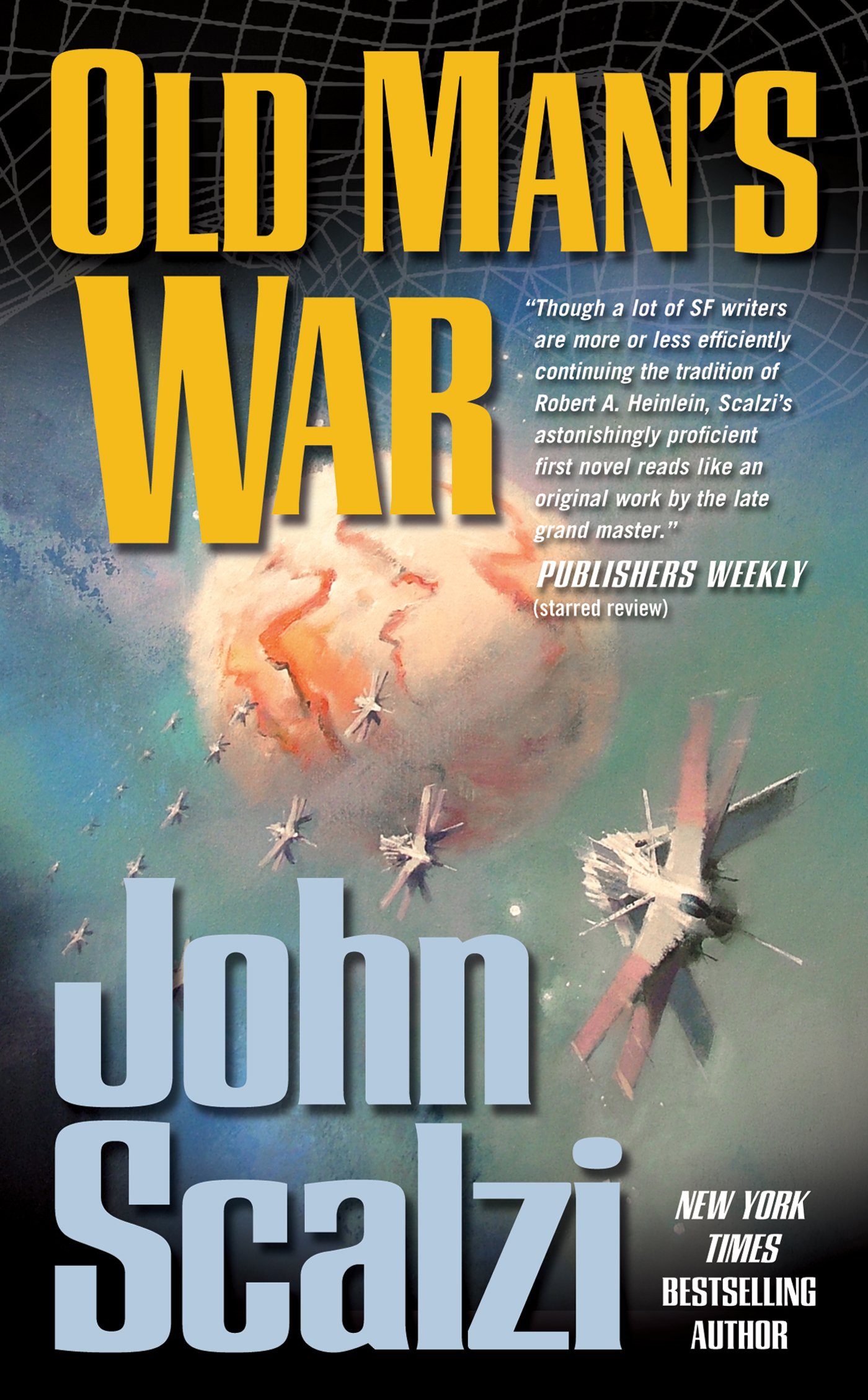
Old Man’s War
John Scalzi

This came highly recommended and it didn’t disappoint. Old Man’s War is a science fiction war story, along similar lines to Starship Troopers and its ilk.  In it, elderly people can sign up with the Colonial Defence Forces to extend their life. John Perry is one such person; Old Man’s War is his account of joining the CDF and his time serving in it.

There is nothing truly new or groundbreaking here, it is just a very well executed rendition of its genre.  Perry first learns to deal with his new body, since the CDF is not sending the elderly out to fight aliens, and his new neural implant that allows him to communicate with this squad mates.  He makes some friends in boot camp, the get sent separate ways, some of them die.  There are various alien races to fight with, notably the Rraey who like to eat people and the mysterious Ghost Brigade, who are sent on the most dangerous missions.

It ends up feeling a little insubstantial.  It spends a lot of time introducing characters in boot camp who then all but disappear and it becomes all about the battle and aliens.  Still, what is here is very enjoyable.  Its greatest sin is leaving the reader wanting more, which isn’t much of a sin at all.

aiwnov15

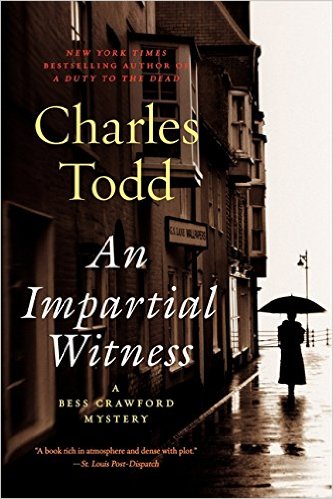
An Impartial Witness
Charles Todd

I wanted to like this a whole lot more than I did.  It has some compelling characters and a decent mystery.  It just feels very labored in telling the story.  Characters do things that they would clearly not be inclined to do. They keep talking with Bess Crawford, the detective, even though they have no Earthly reason to do so. While it is necessary for the story, the book fails to justify its central character’s place in the proceedings.  Her motives are clear, and she follows through, but nearly everyone else does things just so the plot keeps moving along.  It is really noticeable at only a few points, but once I started seeing it, it really stuck out. Still, it wasn’t an unenjoyable book, but for all that the setting and central characters grabbed me, the rest of the book just wasn’t strong.

ttssnov15

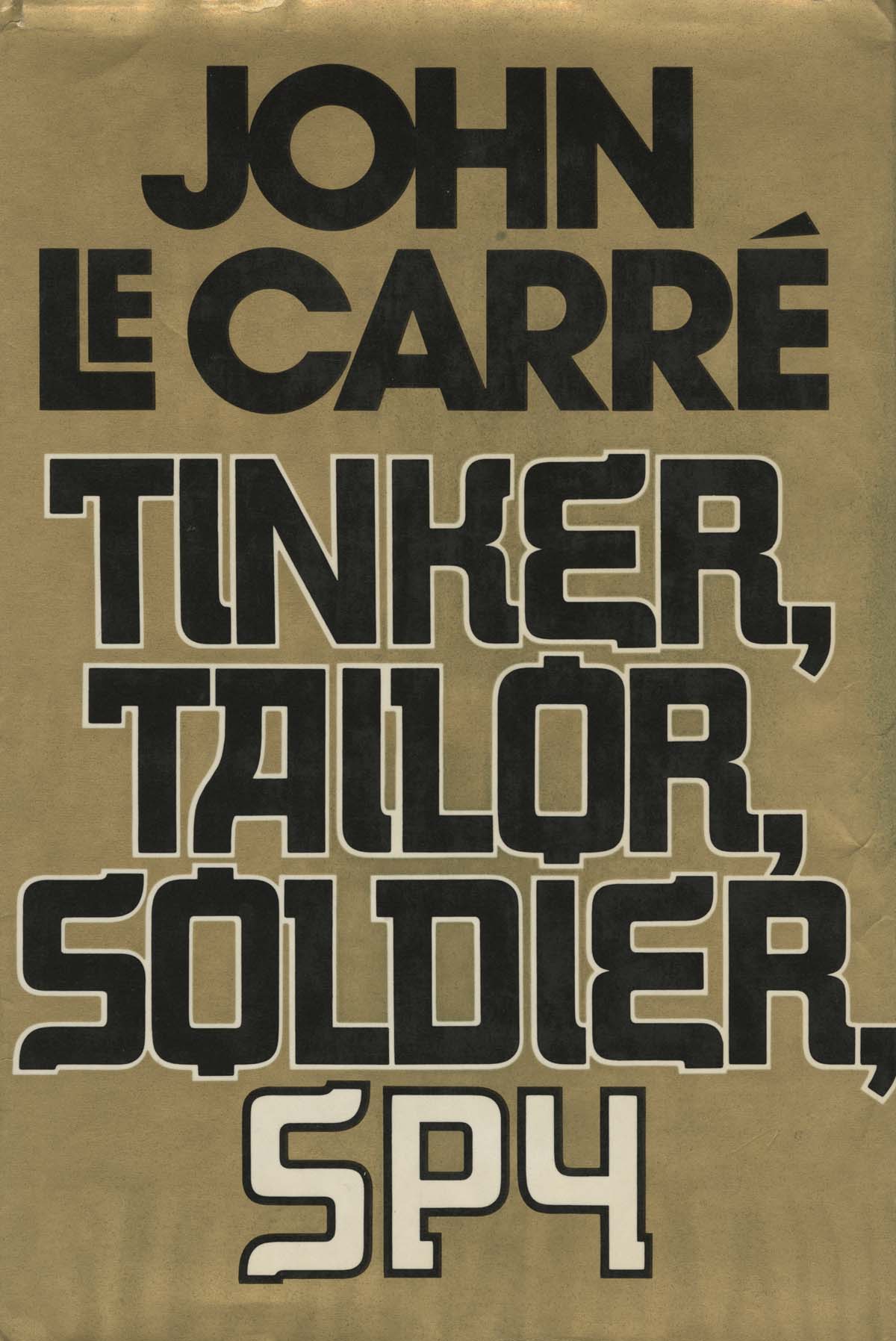
Tinker Tailor Soldier Spy
John LeCarre

LeCarre is a master of keeping the reader from knowing exactly what is going on.  Each scene is clear, but there is clearly information that all of the characters have but the reader doesn’t.  It makes for a disorienting read. It not being clear doesn’t stop it from being compelling.  Still, it is nice to read a spy book that is not about Bond like action, but instead about ferreting out information to solve the mystery.  There is a mole at the top of the British Spy organization, and George Smiley, who was forcibly retired in a takeover, comes out of retirement to find out who it is.  Outside of knowing that, there is little that the reader does know.  Information, both relevant and not, is doled out in small doses as Smiley and his compatriots get to the bottom of things. Smiley is singularly unexciting spy, being an old man that only talks to people, but his is still a rich character.  

Collected Comics

Batman and Robin Vol 1-3

I picked these up in a recent comixology sale of Grant Morrison comics a month or so back.  I had read them when they first came out, but hadn’t really touched them since.  It is a great series, but it might be the weak link in Morrison’s epic Batman run.  Being sandwiched in between Batman RIP (and Final Crisis) and Batman Inc is some tough luck. Still, these are some excellent comics, though the rotating art team makes the quality pretty variable.  Nowhere is that more evident than in the first collection, which goes from a story with Frank Quitely on art, which is wonderful, to Philip Tan stuff that is nigh unreadable.  It is by far the worst in any of the three volumes, but the variable quality of the art pervades the series.  The story, though, is solid all the way through.  It has Dick Grayson taking over as Batman in Bruce’s absence and Damian takes over as his Robin.  It has great character work for both Dick and Damian, as well as a ton of fun Joker moments. The best part may be the way this team reverses the usual Batman & Robin dynamic, with Damian playing bad cop to Dick’s good cop.  It is just a great series.

JLA Vol 1

The other purchase I made in that same sale. The first story in this series is one of the best Justice League stories of all time and the second is also good. This collection shouldn’t take much to sell it.  It is the big seven JL fighting bad guys that are worthy of bringing seven of the most powerful heroes into the world to combat them.  It doesn’t do a lot with the interpersonal side of superhero stories and is instead just the biggest action scenes possible.  Morrison really makes things work and Howard Porter is fine. Seeing the Justice League fight doppelgangers designed to beat them is a ton of fun and it is followed up by having them fight an army of renegade angels.  This book is simply amazing.  

What I Read in October ‘15

I finished four books in October, and made some good progress on another pair.  I also read about a half dozen comic collections, enough that I’ve decided to do them as their own post this month.  I really wasn’t a fan of most of the books I read this month.  One was just not my thing, another kind of annoyed me and the last was simply not very good. Luckily, I had a new Mistborn book to make sure I was satisfied with at least one of them.

sos

Shadows of Self
Brandon Sanderson

This is the second Mistborn book set after the initial trilogy, starring the Wax and Wayne, who are essentially cowboys and Marasi as they try to stop a madman from throwing the city into chaos. The first book with these characters, The Alloy of Law, felt like a stand-alone tale just to see if this setting was viable.  This one feels like the start of a trilogy.  While there were certainly a few loose ends leftover in the first book, but this seems to put a lot of balls in the air.

This one has a really strong mystery angle, and spends a lot more time exploring elements of the Mistborn world that were left out of the last volume.  The three central characters are more strongly developed as well. Marasi feels like a character with a greater purpose and Wayne actually gets some development outside of being Wax’s sidekick.  Wax, though, grows more conflicted as the novel goes on. He deals directly with the world’s deity and faces a crisis that will make how he reacts in the next book very interesting.  While the methods of the book’s villain are monstrous, the longer the book goes on the better the motive’s for those actions seem.  It seems more and more that Wax and crew are fighting for a status quo that doesn’t really deserve defending.  Marasi seems like one of the few people to realize how messed up things are and have some ideas on how to effect change.

Shadows of Self ends up feeling kind of rushed compared to Sanderson’s more sprawling works, but it is still a wholly satisfying read that will be followed up on in just a few months.

dotn

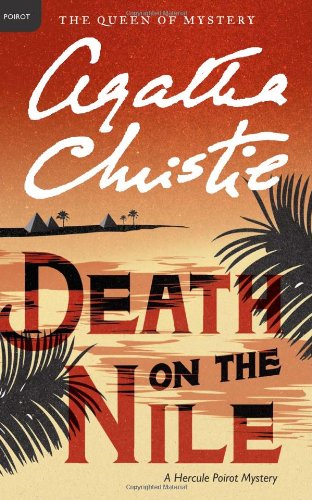
Death on the Nile
Agatha Christie

Another Hercule Poirot mystery.  For the first half of this book it was one of my favorite of Christie’s, just short of And Then There Were None.  Unfortunately, the further it goes along the less enjoyable it becomes.  It starts with a mostly sympathetic victim.  She had done something bad, but she is still appealing enough that her inevitable murder is tragic.  Set up on the same Nile tour as the victim are a handful of characters that are interesting in their own right and all have possible motives for murder.  When the veil is finally pulled away at the end, it is more disappointing than anything I can remember.  

It is just so obvious.  The only reason the reader might not guess the conclusion is that so much of the middle portion is deliberately misleading on the writer’s part.  There are parts that read like one continuous scene where later it is revealed that there are cuts.  As the book goes on the culprit seems clear, other than the fact that the person is on the list of people for whom committing the murder would be impossible.  As enjoyable as the rest of the book is how this book ends just wasn’t enjoyable.  

atmom

At the Mountains of Madness
HP Lovecraft

Anyone who knows me knows that I am not a horror guy. The closest I get to engaging with anything related to horror is playing the occasional video game or watching Ghostbusters or The Addams Family.  With those games, even something as tame as Resident Evil 4 has been known to force me to put down the controller and leave the room for a few minutes.  Despite this, when a book club I’m in decided to read some Lovecraft for our October book, I joined in.

It’s not scary.  There are some horrifying things happening in this book, but the view point is so remote that it has little effect.  His descriptions of the ancient cities with non-Euclidian architecture and unknown horrors create a sense of wonder, not dread.  There are plenty of terrible things that happen, but they mostly happen off the page.  The reader only really sees the results.  The reader is held as such a distance that the big events don’t have as big of an impact as they could.

tpm

The Paper Magician
Charlie N Holmberg

The Paper Magician is a good set up in search of a story to make use of it.  It starts very strong, with young Ceony graduating from magic school and being forced into a field of magic in which she has no interest.  It does okay work setting up who Ceony is and starting to fill in how magic works in this series.  Her teacher, Emery Thane, is likewise an interesting guy.  Before the book can start doing developing anything other than Ceony starting to learn paper magic, a woman bursts into the house and rips Thane’s heart out of his chest.  


The bulk of the rest of the book has Ceony trying to retrieve his heart, having fashioned as short term replacement out of paper.  It ends up in an interesting section with her stuck in his real heart, trying to get out and having showdowns with an evil magician.  Her competence, though, comes almost out of nowhere.  She had just started training, how is she able to evade this very dangerous person.  She also decides she loves, which comes out of nowhere and raises a few alarms since he is supposed to be teaching her and is roughly twice her age.  It isn’t a bad book; I would consider picking up the rest of the series for the right price.  It just needs something more to the plot, developments that actually develop and don’t just happen out of nowhere.

What I Read in September 2015

This month I’ve decided to include any comic collections I’d read in the month in their own special section at the end.  If every month is as full as this one, they might get splintered off into their own monthly comic roundup.  I still kept up with my usual reading this month.  I finished a book about Paris I had been reading for more than two months, and read a couple of other things.  It was a good month all together.

ldc

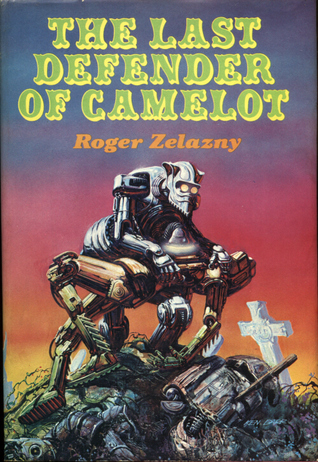
The Last Defender of Camelot
Roger Zelazny

Zelazny was a name that I was familiar with, but I have never had the opportunity to read anything he had written.  I picked up a cheap old copy of this short story collection from a used book store a couple of months ago and just now got around to reading it.  It was great.

Not every story was a winner, of course, but the vast majority of them are excellent.  The title story is great.  It features Lancelot, who has been alive for over a thousand thanks to Merlin, teaming up with Morgana le Fey to stop Merlin from waking up and trying to recreate Camelot in the modern world.  Also amazing is Auto-de-fe, a story about a “mechador”, a matador that fights not bulls but cars.  There is also one about a robot vampire.  The stories run the gamut from interesting and thought provoking to just silly little asides.  After reading this, I am very interested in tracking down some more of Zelazny’s work.  This was just a lot of fun.
hpb

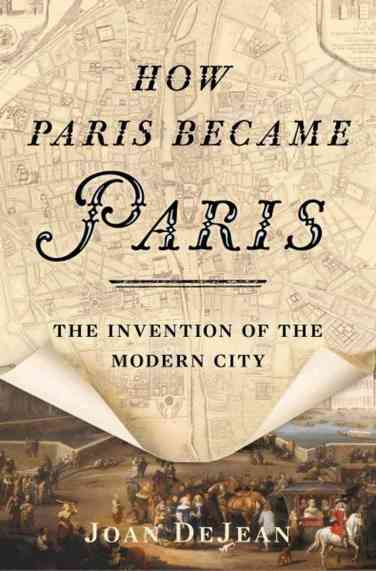
How Paris Became Paris: The Invention of the Modern City
Joan DeJean

One of the great things about non-fiction is how descriptive the titles can be.  This is a book about how Paris became the first modern city.  It details the social and structural changes to the city that turned it into something special.  Using Paris as the example, it shows how the world changed during the 17th century.  It starts with something as simple as a new bridge and builds from there as Paris becomes a recognizable metropolis.  This is not the most engagingly written book, nor the most exciting subject, but it was still very interesting.

mim

Murder in Mesopotamia
Agatha Christie

Another Poirot mystery. This one deals with a group of archaeologists in the Middle East and one of the my ludicrous twists I can recall.  A Dr. Leidner hires a nurse, Amy Leatheran, to watch over his wife who is acting strangely while they are the site of his dig.  She narrates as she joins the dig company and gets to know all of the members.  When the Doctor’s wife ends up dead, she assists the conveniently nearby Poirot in tracking down the killer.

I love the central thread of this mystery, that Poirot is trying to figure out who Mrs. Leidner was to determine who would want to murder her and everybody on the dig team has a different take.  Since the narrator gives one of these takes, it makes it hard to trust her at times.  Not that it is possible that she was the murderer, but maybe her observations were not quite accurate.  None of the people around appear to have much reason to kill her, though many have their problems and reasons to dislike her.  The revelation of the culprit is a black mark, though, since the reasoning behind it makes no sense.

talol

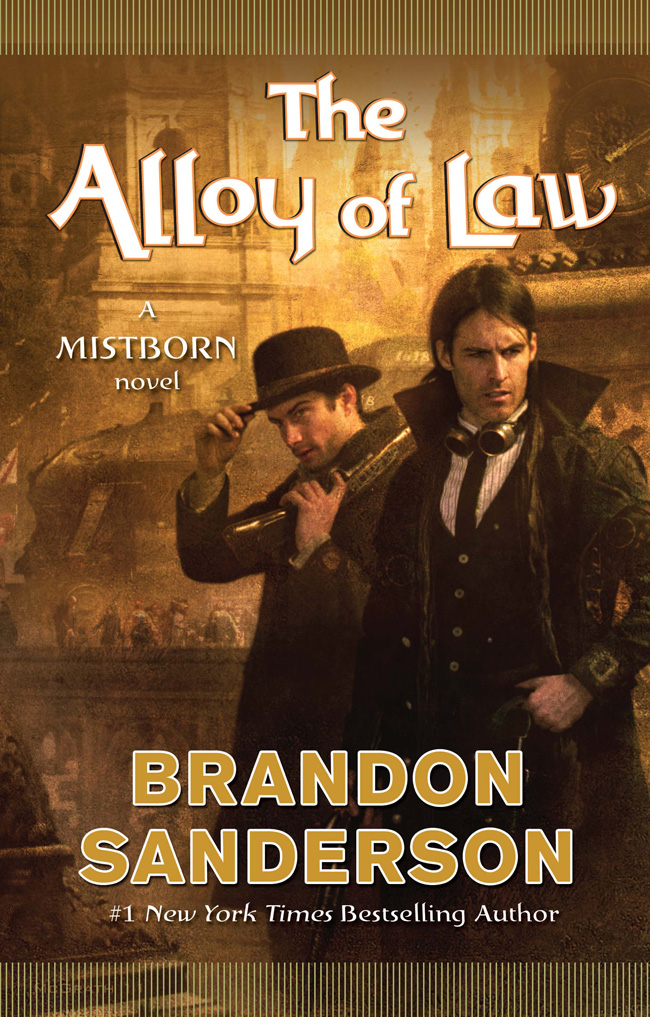
The Alloy of Law
Brandon Sanderson

I’ve read this before, and probably wrote about it here, but I felt the need to read it again with its sequel coming in the next week or so.  I positively love the setting, mixing the Wild West with some more usual fantasy tropes.  Sanderson clearly spends a lot of time thinking out how magic in his world works, and it shows here with how the presence of guns changes how people use their powers.  He also set up a trio of really interesting characters in Wax, Wayne and Marasi, though Waxillium might be the most ridiculous name I have ever encountered.  It does end up feeling a but slight, as though it winds down just as it gets going, but it is a charming enough tale anyway.  I can’t wait for the follow up.

tstrike

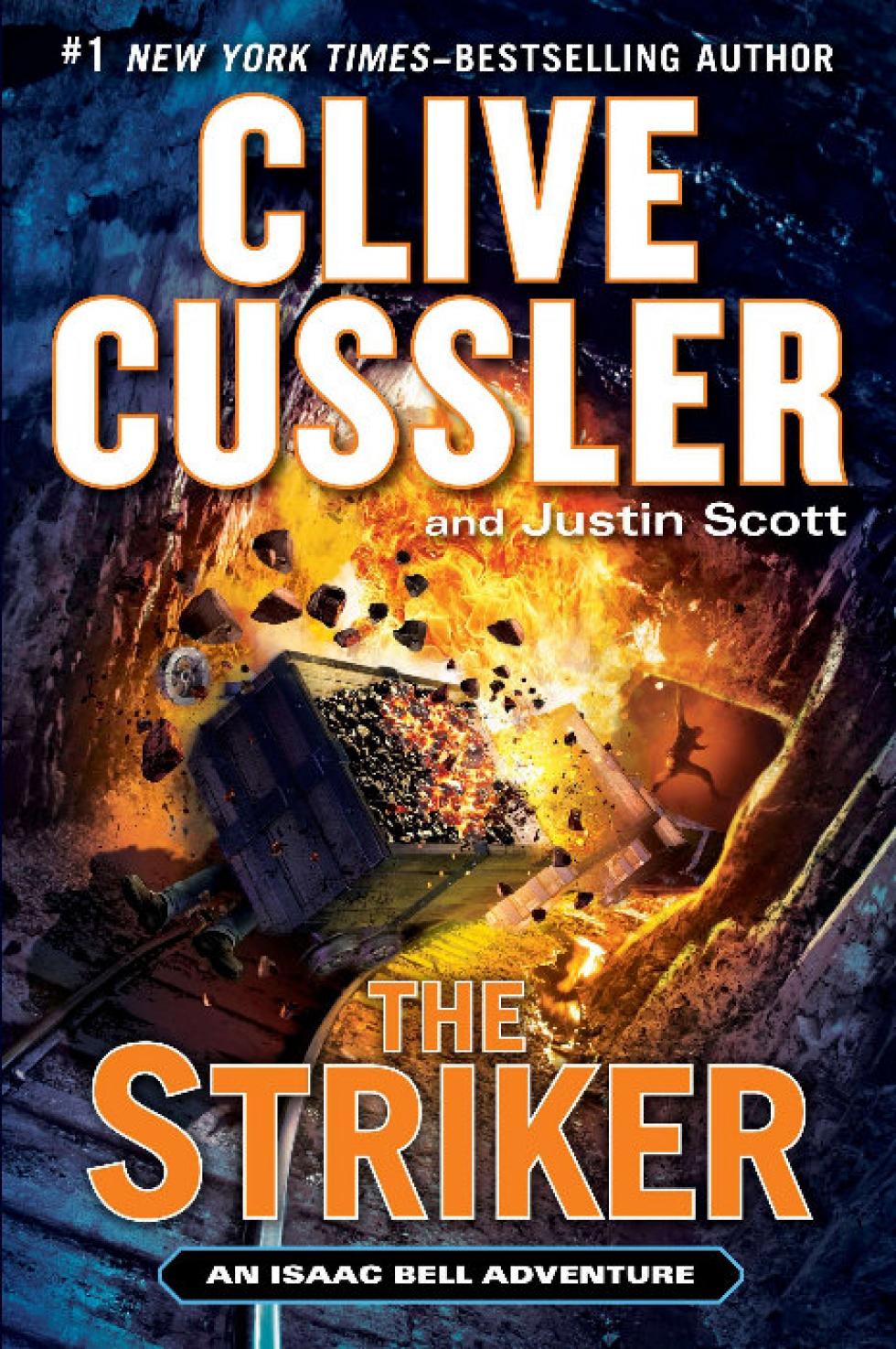
The Striker
Clive Cussler & Justin Scott

Sometimes you just want to read an adventure.  That is what Cussler and Scott’s Isaac Bell stories are, adventures.  Nothing more, nothing less.  They leverage an interesting setting, the start of the 20th century, and some fun characters into fast moving romps.  There is nothing new or groundbreaking or even especially good here, but it is certainly entertaining.

This time, the story moves back the the early days of Bell’s career as a detective for Van Dorn.  He is looking into someone trying to turn the coal strikes violent, and gets tied up with a beautiful woman and a former protege of his mentor.  This is a clearly younger Bell, a little less sure of himself and less adept at his business, but he is no less interesting.

I do have to wonder about doing this early days take the next book after Bell got married.  His long running romance with Marion reached that milestone in the previous book, but this time it jumps back to before they met and Bell falls for a different girl.  There is no drama there, since readers know she won’t be in the picture for long, so it feels like a wasted note. While this book is not the best of this series, it is still plenty good.

Collected Comic Reading:

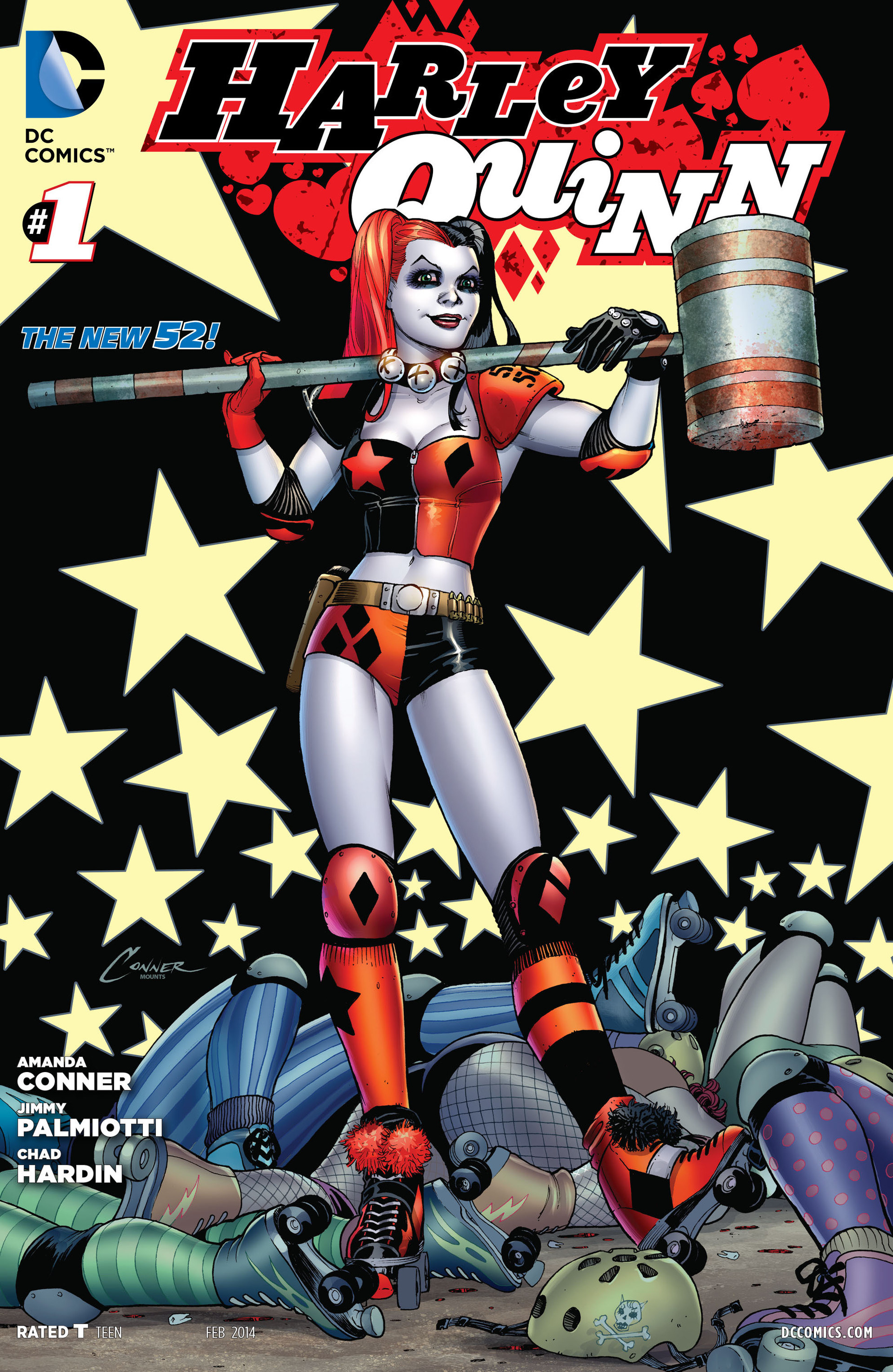
Harley Quinn Volume 1

hqv

I am a big fan of the writers on this. I have long enjoyed Jimmy Palmiotti’s stuff, usually co-written by Justin Gray, and Amanda Conner is an excellent artist.  This is exactly what a Harley Quinn solo book should be.  I know people are not fans of the Nu52 Harley costume, which is terrible, but classic Harley shines through in this collection. That being said, I don’t know how much I actually like it.  Harley Quinn’s unique brand of delightful insanity doesn’t lend itself well to a continuing narrative.  This book does its best to force her into something that resembles a plot, but it is mostly stops and starts before the book arrives at its culmination.

It is set up as a mystery, with someone sending hitmen after Harley as she takes over an apartment building full of circus performers.  She gets a pair of jobs to help pay for the upkeep, one as a therapist and one playing roller derby.  Other than an issue or two of fun, those threads don’t really go anywhere.  The eventual conclusion of the mystery is goofy, but not unexpected.  The book does manage to be fun, but it is the attempts at ongoing plot seemed forced.  It just feels stuck in between being a joke book and being serious.

Superman Doomed

sdoom

The fact that this story is readable at all is a tribute to the skills of Charles Soule and Greg Pak, as well as Aaron Kuder and the rest of the artists.  THe story starts out as a mess, with a scattered and moronic set up with Superman becoming Doomsday.  Doomsday is the among the least interesting villains in comics.  He is terrible but for some reason people keep bringing him back and trying to make him important. Just because he has an important part in the colossally overblown Death of Superman cash grab does not mean that he is in any way important to the Superman mythos.  Here, Superman is infected with a Doomsday virus that is part of a plot by Braniac to take over the world.

It is dumb.  The story is scattered and borderline nonsensical.  Occasionally some bright moments leak through, but it is barely coherent at its best.  There are some good character beats, like Steel and Lana forming something of a relationship.  But overall Superman Doomed is a mess, a lot of good creators slogging through some bad work.

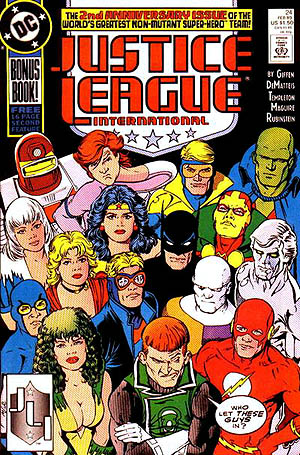
Justice League International Volume 4

JLI

JLI is one of the best superhero comics ever.  That is just a fact.  This is maybe not the most focused collection of the title, but it is still a really great collection.  It starts with the coda to another story, with a break for a story that’s in another collection, then comes back with a backdoor pilot for the spin-off before ending with a some actual good issues.  

Those first few issues are a mess in term of telling an ongoing story, they are fin comics in an of themselves.  The rest are some classics.  There is the issue that has Guy and Ice go out on their first date, which ends exactly as badly as one could expect, and also has a story where Barda’s car gets stolen and some gangbanger gets ahold of her Mega Rod.  While the book never loses its comedic touch, that story with Barda is actually kind of tragic, with our heroes, in this case Huntress Barda, Mr. Miracle and Fire, trying to get the Mega Rod back from him before he hurts too many people, including himself and failing to save him.  While this book does set most of the league up as a bunch of jokers, they actually tend to be pretty good at the superheroing stuff when the time comes.  The humor ismostly in their downtime.  

JLI is great, and the fact that the collections only get a little more than halfway through the good part of the series is downright tragic.  Some of that is on the publisher, though.  I really want this stuff and even I didn’t realize that there were two more collections after this one.

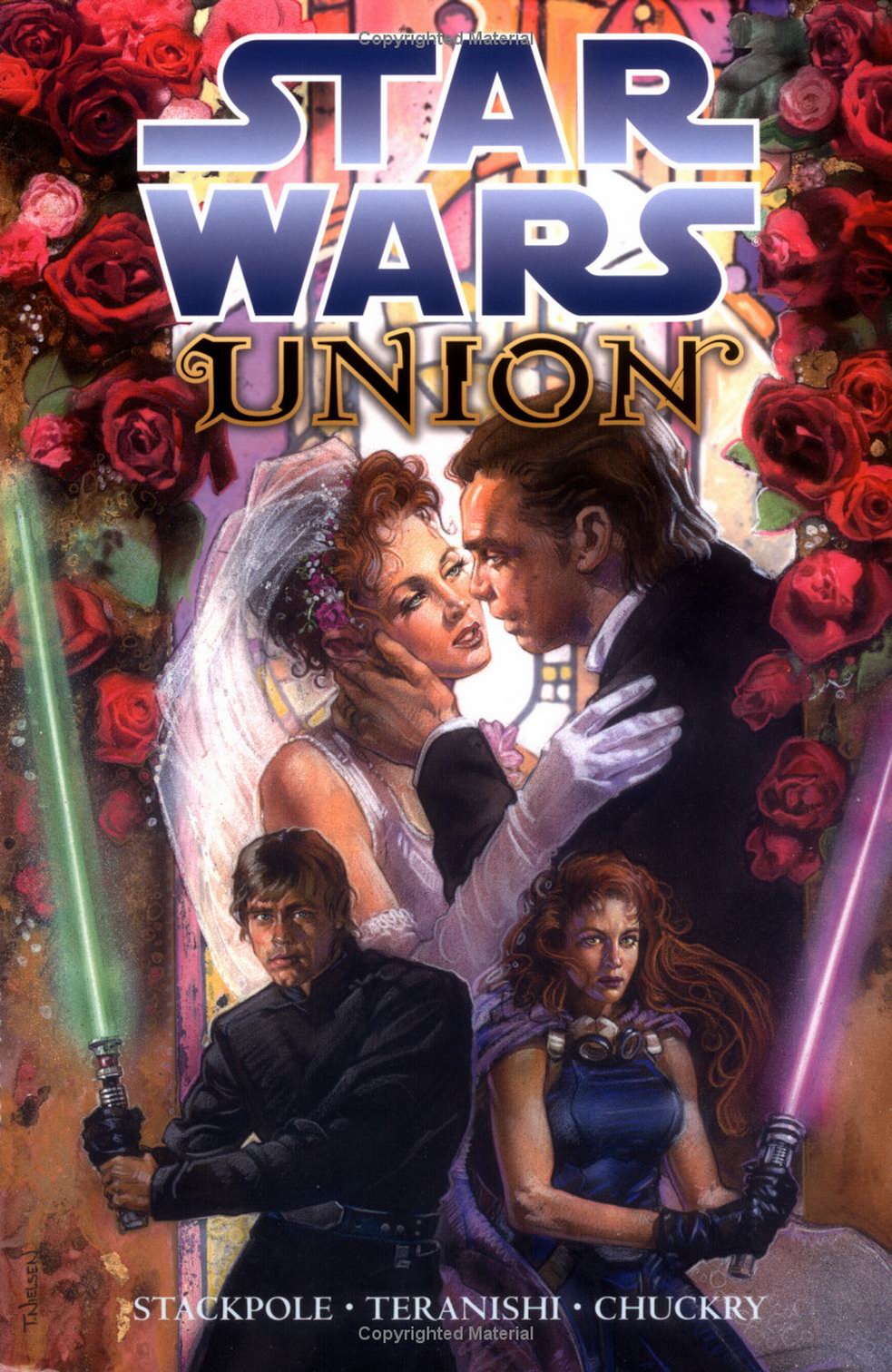
Star Wars Union

swu

One’s enjoyment of this book is likely strongly connected to a person’s investment in the Star Wars Expanded Universe that was. Without not just a strong connection to the Star Wars movies, but also the numerous books and comics that have come since this is not a particularly compelling work.  As a celebration of a decade or so’s worth of stories, it is a very nice comic.  It brings back a lot of characters for at least a cameo and tells a fairly simple story. Luke Skywalker and Mara Jade get married.  It goes through the usual sort of pre-wedding hijinks and adds a plot by former Imperials to disrupt things.  There is nothing especially exciting or unexpected here, but it is rather charming.  If you want a fun, low key adventure with Star Wars characters, this is not a bad pick up.

What I Read in August 2015

Another not quite banner month for me. The quality of the titles I read made up for how few of them there were. I can guarantee that I will have read more books next month, if only because I am already at three right now. Also, starting next month I am going to include comic collections I read in this write up. This likely means that these posts will be lengthened by one or two entries every month, since I tend to go through at least that many every month. Often I nab them on sale on Amazon for a 3 or 4 dollars and watch them crash my Kindle.

psych

Pysch’s Guide to Crime Fighting for the Completely Unqualified
Shawn Spencer and Burton Guster

Chad Gervich

This is a fine companion piece to the series.  It is written in character by Shawn, with both willing and unwilling help from the rest of the cast, as the series goes along. Each chapter seems to be written a little past when the previous ones were.  If the show works for you, then the book will as well. This book is pointless, but it perfectly captures the tone and feel of the show.  If Shawn were to have written a book, this is what it would be.  Part self-aggrandizement, part nonsense and wholly unable to stay on track. It is just a ton of fun.

summerland

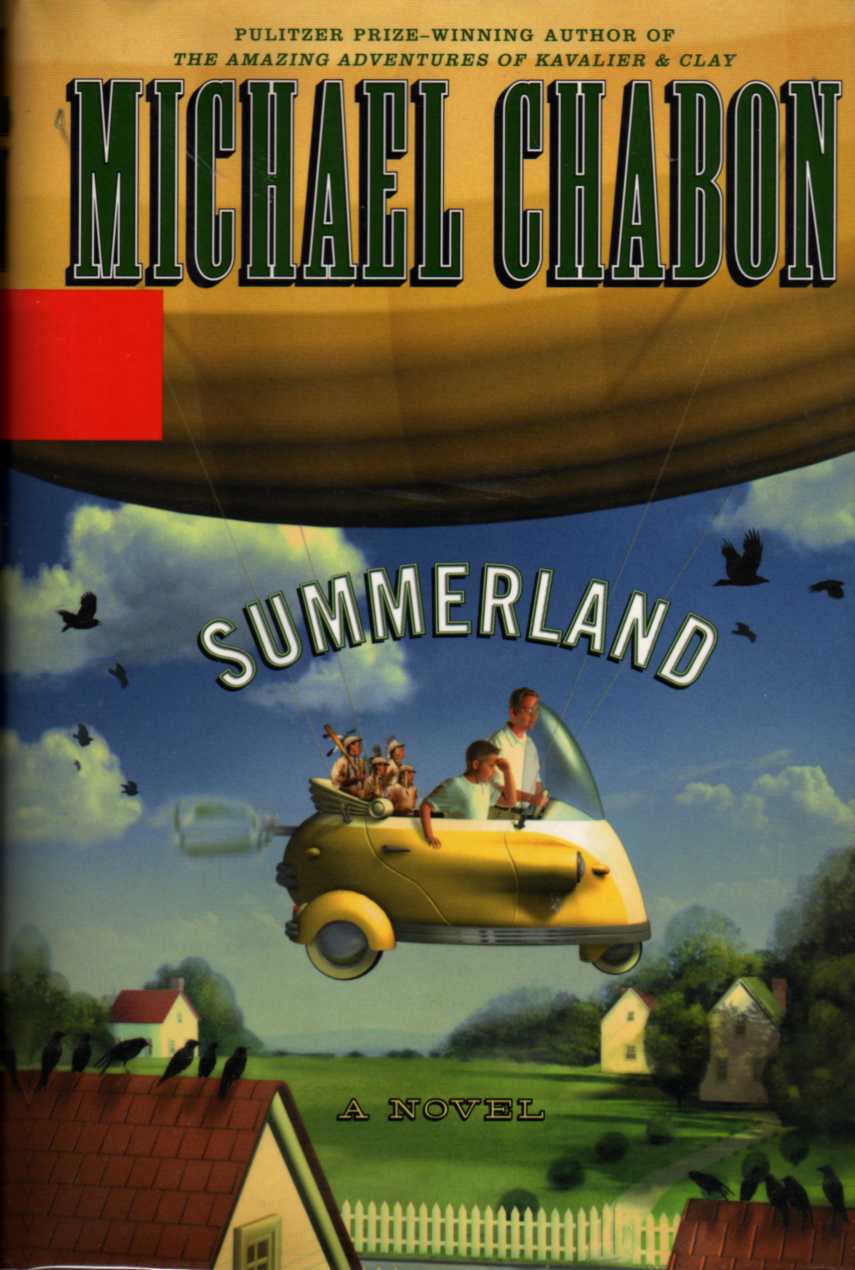
Summerland

Michael Chabon

Reading a new Chabon is always a delight.  Even going in expecting something a little watered down, thanks to Summerland being a YA book, I was still excited to get to it.  In some ways, it is a little watered down.  This is a book intended for a younger audience and its subjects are aimed at them, but that does not stop it from also being rich and fulfilling.

Summerland takes a kind of hero’s journey and filters it through several kinds of myths and the great American pastime, baseball.  It works better than it should.  Ethan Feld is terrible at baseball, but he is scouted by a “hero recruiter” anyway.  When the mischievous and downright villainous Coyote tries to destroy the lodgepole, the great ash tree that ties all the worlds together, he joins up with his friends Jennifer T Rideout and Thor Wingnutt to stop him.

It eases the reader into it fairly complex and somewhat whimsical fantasy world easily and effectively sets the heroes on their path, but the back end rushes through their adventures so fast that it feels like it is falling apart.  It reads like a book that was originally going to be a trilogy, but the writer decided last minute to do it in one volume and jammed two books worth of plot into the back half.  The events and developments still feel right, but they don’t get enough time to settle.  

Despite the rushed ending, Summerland is still an excellent novel.  The writing is better than the typical YA book, and the margin between it and the median is significant.  

tea

The Eyre Affair

Jasper Fforde

It hadn’t read any Fforde all year, and a book club I’m in decided to read this, so I thought it was worth another run through.  Thursday Next remains one of my absolutely favorite characters and this book remains a perfect mashup of classic literature, mystery and weird alternate reality scifi.  The plot stays fairly simple if only to allow the readers to absorb the strangeness of this world as they go and still follow along.  That doesn’t mean it is an easy book the read, you will be absolutely lost if you don’t have at least a passing knowledge of classic lit, specifically and obviously Jane Eyre, and British history.  As much as I think Fforde has improved as a writer since this book’s publication, it is hard to match the sheer originality of this first entry to this series.

What I Read in July 2015

I didn’t get a lot of reading done last month. Again, I was working too much too much to get a lot of reading done. I did finish the last of the Star Wars books I was reading and I devoured the Harper Lee’s new book, despite having some serious misgivings about how it came to be published. Honestly, I had read into that situation more closely before the book was released I likely would not have bought it. In the end, as distasteful as its release may be, it is being released and it does no one any good for me not to read it. Next month I hope to get back on track with my reading.

XWIsardsRevenge

X-Wing: Isard’s Revenge

Michael Stackpole

I had never read this book before. I wasn’t aware of its existence for the longest time.  Despite only coming out and being set 2 years after The Bacta War, Isard’s Revenge feels like a much later edition. It feels like Stackpole taking one last trip with the characters he created.  Despite being fairly action packed, it never feels that high stakes. This is a villain the team has not only already beaten; they completely dismantled her from a seat of power.  The specter of her that returns here doesn’t feel all that threatening.  Still, it is a fun romp with these characters.  Nearly every dangling plot thread from the first four books is dealt with in largely satisfying ways.  One in particular, though, feels like it is forced to set up some that is coming later. That is Asyr letting everyone else think she is dead to get her out of the life of hero that she is being forced into by eternal pain in the ass Borsk Fey’lya feels forced. It isn’t completely out of character, but it really feels like a choice made because her relationship with Gavin was going to be allowed to continue.  That is the one discordant note in an otherwise enjoyable but lightweight affair.

gsaw

Go Set a Watchman

Harper Lee

(I am not going into the rancid background for how this book came to be published.  The story is out there, if you want to look it up.  It is gross, but it doesn’t really factor into the book itself.) This is a complex, conflicted work.  It certainly feels like the unedited draft that it is, muddled and formless. That’s what happens when you dig up a half century draft that became another novel completely and publish it with minimal editing. It also has a close, but unclear, relationship to To Kill a Mockingbird. It takes place later than that book, and features many of the same characters, but they aren’t quite the same characters. The differences between those versions of the characters have been the source of much consternation among readers. A lot of that comes from Go Set a Watchman being in many ways a more complex work.

To Kill a Mockingbird has Scout regard her father, Atticus, as almost superhuman. He is the epitome of good in her mind.  At no point in the book is that belief questioned. He is all that in To Kill a Mockingbird.  In Go Set a Watchman, the adult Scout must grapple with the fact that her father is not perfect, but a flawed and fallible person like everyone else.  Not only must she confront this, but so must readers who grew up reading Mockingbird also have to face it.  It is a hard truth to face, but it is also a more mature situation than the childish take in the previous book.  If only the rest of Go Set a Watchman was as mature and well-realized.  It is largely a collection of anecdotes that doesn’t really build to anything.  They are just there.  It is not unlike To Kill a Mockingbird, but everything comes together more satisfactorily there than it does here, where things happen and the book ends. There is no arc or conclusion, just a collection of loosely connected events. It isn’t a masterpiece, but it is well worth reading.

What I Read in June 2015

I didn’t do quite as much branching out as I had hoped to do in June.  Instead, the only books I finished were a collection of Agatha Christie’s Miss Marple mysteries.  They were good, but it wasn’t exactly a wide variety.  I did read on some other books, but I didn’t finish either of them. Hopefully by the end of next month I’ll have finished a couple of those.

tmcfsts

The Mirror Crack’d

Agatha Christie

This is a straightforward mystery for Ms Marple.  Here is at her oldest and frailest, yet also at her most engaged.  For once she is a genuine part of the story, investigating and not just coming in having solved the mystery off page.  The mystery here deals with a subject that is still very much in a big deal: celebrity.  Ire is directed not so much at the famous actress at the center of this story and her unusual life, but on the people obsessed with her fame.  A woman falls dead at a party thrown by an aging star and people assume that the star was the target, with the hardest scrutiny falling on the members of her household.  The subject matter feels fairly fresh for being more than fifty years old.  Obsession with celebrity is still a cancer that affects our society.

apfor

A Pocketful of Rye

Agatha Christie

This was easily my least favorite of the bunch.  It is another straightforward mystery, but this one doesn’t really play fair.  There are no actual cheats, but it is misleading in a way that doesn’t just feel like a mystery story.  That would not be such a problem if the eventual outcome was satisfactory.  That is not the case here.  The victim is an older man and the suspects are his spouse and children, with some suspicion falling on the household staff.  The murder, eventually murders, is done to match an old nursery rhyme, which is also the source of the title, but there is no good connection to that nursery rhyme in the story. It’s use is arbitrary and doesn’t really seem to fit.  Arbitrary seems to be the mode of the this whole outing. Surrounded by better or at least more interesting stories in this collection, the feebleness of this story stands out.

abh

At Bertram’s Hotel

Agatha Christie

This is an odd one, a mystery with no crime to investigate for the first three quarters of the book.  Marple is actually around the whole time, but while there are various mysteries around, other than some vague talk of robberies nothing is presented as anything worthy of investigation.  The one small crime is some shoplifting by a teenage girl, and she returns the stolen property soon enough.  Marple is on vacation at the hotel, and there is some connection to the hotel and a series of daring robberies. The mystery unfolds about a young girl looking to possibly arrange a marriage with her paramour.  It turns out the girl’s mother, who abandoned her for what she thought was the girl’s own good years ago, is also staying at the hotel and possibly involved in the shady goings on.  When the murder does occur near the end, it is solved almost immediately, though not strictly satisfactorily. The inversion of the usual formula works to excellent effect here.  At Bertram’s Hotel keeps readers on their toes waiting to see exactly what the mystery is.

tmf

The Moving Finger

Agatha Christie

This is another one of those Marple mysteries where the detective herself is little more than a deus ex machina that shows up at the end of the story to wrap things up.  The Moving Finger is as much of a pastoral romance as it is a mystery.   Siblings Jerry and Joanna Burton move out to a small village in the country while he recovers from injuries sustained in an airplane crash.  While there they encounter a rash of “poison pen” letters, detailing supposed sins of the residents, though all of the letters are clearly false, before one of the recipients apparently commits suicide.  From there, Jerry helps some of the townsfolk figure out exactly who is responsible, while growing closer to the strange daughter of the dead woman.  Interesting characters parade themselves in front of Jerry until Marple shows up to explain what has been going on.  It is reasonably enjoyable, but nothing too exciting.

What I Read in May 2015

May was another eight book month for me, propped up by a quick run through of the rest of the good Star Wars books. I might read some more next month, I have never read Zahn’s later Star Wars books, but I think I am about done with those for now. I really don’t have a lot to say about them, they are largely simple books. I also finished with Gail Carriger’s Parasol Protectorate series and with Edding’s Mallorean, which frees me up next month to move on to some different authors.

May158

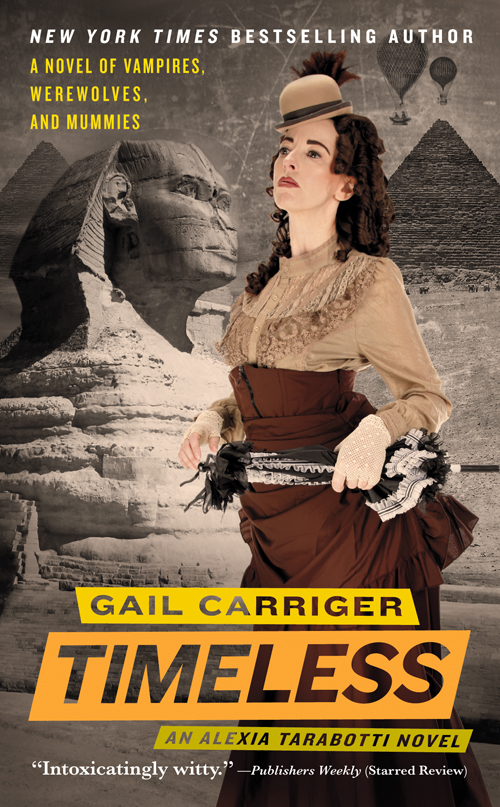
Timeless

Gail Carriger

This is the last of the Parasol Protectorate series, and it does a great job of trying everything up. It doesn’t do anything to move beyond the designation of “bon bon book”, but that doesn’t make it any less entertaining. This time Alexia and her compatriots make a trip to Egypt to meet an ancient vampire that lives there, as well as to get to the bottom of the so-called God Breaker Plague. It doesn’t quite add mummies to the combination of vampires and werewolves, but it does enough with that third of the monster triumvirate. Without spoiling the twist, there are varying motives for the call to have Lady Maccon and her unique family visit this vampire hive. And for once, things don’t appear certain to work out perfectly happily.

I greatly enjoyed this series. They aren’t the deepest books, but they are charmingly written and plotted. They are just pure fun. I look forward to picking up the books in the sequel series, as well as the forthcoming conclusion to her Finishing School books.

May154

The Krytos Trap

Michael Stackpole

The third X-Wing book is my least favorite of the series. This one gets even further away from pilots flying X-Wings than Wedge’s Gamble did. Protagonist Corran Horn is captured by Isard and held in her inescapable prison, while his completely innocent wingman Tycho is on trial for his apparent murder. Meanwhile, Isard has released a plague on the newly freed Coruscant that is bankrupting the alliance in their attempts to cure it. The Krytos Trap is still an enjoyable book, but it gets kind of ridiculous as it goes on, with copious deceptions and bluffs and double bluffs and misdirections all over the place. It isn’t truly hard to follow, everything is laid out rather clearly, but many of the plans are needlessly complex. Corran, stuck in prison, isn’t able to do anything and what the rest of the team spends most of their time doing, defending Tycho, turns out to be useless as well. Still, it does set the stage for Stackpole’s excellent final book, at least for a while.

May155

The Bacta War

Michael Stackpole

This one gets back to the good stuff. Rogue Squadron goes rogue, leaving the Alliance to chase down Isard to where she fled to at the end of the last book. Of course, one squadron of X-Wings is no match for a Super Star Destroyer, so they must find help. This book closes up most of the plot threads that Stackpole has been working with since the first book and it provides some of the best action in the series so far. The team wages a guerrilla war on Isard, systematically dismantling her small fleet that holds her monopoly on bacta, the Star Wars miracle dug. The only real problem I have with this book is that by this point Stackpole has established most of the squadron with fully realized characters and does little to make them seem in danger. And that is held true with how few casualties they have. I really do like the conclusion of Corran and Mirax’s romance, which is one of the most fun parts of this series.

May152

Heir to the Empire

Timothy Zahn

Zahn’s Star Wars books, though they are contradicted in many ways by the wholly inferior prequel movies, are the best that the Star Wars EU has to offer. With this first book, he does a great job of nailing the voices of the main trio, Luke, Leia and Han, and adds in a handful of compelling new characters. The most compelling of those is the new villain, Grand Admiral Thrawn. He has a great visual, with the blue skin and glowing red eyes, as well a more considered approach than Vader’s murderous one, though he is no less dangerous. Like any great start to any multi part saga, Heir to the Empire tells a great small story while also setting up the conflicts that will come up in the later books. This book has the remnant of the Empire, now under the control of Thrawn, starting some kind of big new plan. The heroes are beset by alien assassins trying to kill the pregnant Leia while they turn to Lando and new character Talon Karrde to help them with secure some former smugglers to help with shipping.

May153

Dark Force Rising

Timothy Zahn

Things continue here, with Luke meeting with supposed Jedi Master Joruus C’Baoth while Lando and Han look for the lost Katana fleet and Leia goes to the home of the Noghri to learn how Vader supposedly helped them. Meanwhile, there are power plays going on in the new Alliance Capitol that could disrupt the war effort. Aside from Thrawn, Zahn also introduced a few other highly memorable characters to Star Wars. Talon Karrde is the secretive leader of a smuggling ring. He is not Han Solo, the rogue with a heart of gold, he is a more pragmatic opportunist. Unfortunately, his attempts to stay neutral in the galactic Civil War and his access to some choice knowledge eventually force him onto the side of the angels. While he isn’t one to do the right thing because it is right, he does have a certain sense of honor, including repaying his debts. The other is the first in the fairly long line of women introduced to be Luke’s love interest. Luke’s love life is fertile ground that was largely left untouched in the movies, and Mara Jade is easily the best character introduced as a potential love interest. She is a sort of apprentice of the Emperor, trained with some rudimentary force knowledge to be his assassin. She doesn’t have any conscious use of the force, but enough of certain skills to be useful to the Emperor. Her connection to him allowed him to give her one last order before he died, to kill Luke. Her gradual shift from hating Luke to realizing his innate goodness is some great character development over the course of this series. Again, this book does a great job of maintaining the feel of Star Wars, giving all of the main characters plenty to do but never running short of new ideas and situations.

May151

The Last Command

Timothy Zahn

The conclusion has everyone meeting up at a backwater planet that houses some preserved cloning facilities. This plot thread about the Clone Wars is where this book is completely different from what the prequels established, but I have to say that this series version of the Clone Wars far excels that of the movies. Thrawn made a deal with the devil to recruit the services of the mad Jedi clone Joruus C’Baoth and now the clone tries to take over. He used the clones Force powers to help control his troops, especially the mentally weak ones he is churning out of the cloning facilities. And while Thrawn has measures in place to deal with him, it is a distraction. Luke also battles C’Baoth, as well as a clone made from the hand he lost on Bespin. His only ally is Mara Jade, who is just as likely to want to kill him. Han and Lando are there, but they are distracted by trying to take out the cloning facility and Leia has to deal with problems on the effectively blockaded Capitol. This book is just as good as the previous two, though I don’t know how well the final showdown between Luke Luuke and C’Baoth works. It is also disappointing that Thrawn gets dispatched. His end is fitting and deserved, but it would have been nice to keep such an effective threat around for later books.

May157

The Seeress of Kell

David Eddings

I never really warmed to this series. It ends just as strangely as it started. It is anticlimactic and sees the main character sidelined for a big part of its climax. The ever growing gang finally reaches their destination and they actually use their powers, some. I don’t really want to tear this series down, I didn’t like it but I don’t feel the need to hate it. It wasn’t awful or offensive, I just didn’t like it. I will not seek out other books by Eddings. I’m done.

May156

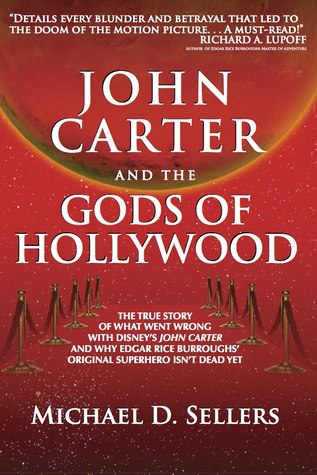
John Carter and the Gods of Hollywood

Michael D Sellers

This is an interesting look at just what went wrong with Disney’s John Carter movie. While I would argue that the film itself is excellent, there is no denying that it was a significant flop for the company. It is written by a fan of Burroughs’ Sword and Planet series who not only watched as the film was left to die as it was released, but who actually cut some fan trailers and contacted Disney about helping with marketing. So he definitely has an agenda. This book is far from perfect, a lot of page space is spent expounding on numbers of social media posts instead of drawing conclusions about why the numbers were what they were and what those numbers meant. It does set a pretty clear series of events that led to Disney’s disinterested marketing of their very expensive movie.

It is really a stunning tale of incompetent and lack of interest. It was the last movie greenlit by a leaving studio head, working from a mandate that was no longer necessary, with marketing lead without any strategy by another employee that was leaving the company. When work on John Carter was starting, Disney was desperate to get into the teenage boy market, but the time it was to be released they had bought Marvel Comics (and were working on buying Star Wars), which pretty well secured that market, making John Carter redundant. Without anyone passionate for the project left at the Disney office, they simply left it to die, seemingly hoping that the name of the Pixar veteran director to sell the movie. Then they threw it under the buss as a massive flop just as it was released. It is a sad tale, since John Carter is a damn good movie based on some very entertaining books.