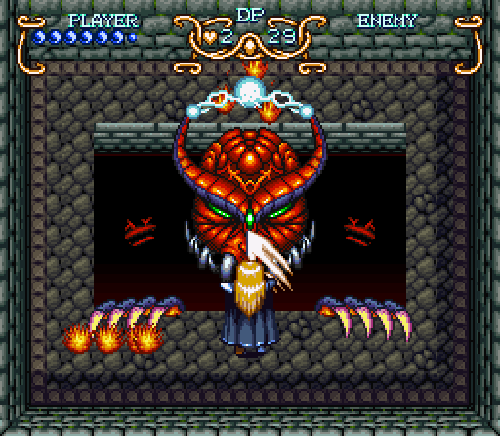
25 Year 25 Games 16: Super Mario RPG

I long thought that Super Mario RPG was a game that passed me by. It is exactly the sort of game I like, but somehow I never managed to play. I love Mario games, I love JRPGs, I love SNES games, I love Nintendo and Squaresoft; it was perfect confluence of my interests in 16-bit gaming. The commercial for this game, as terrible as it may be, was one of the first I remember that really got me excited to play a game. Despite spending all of my time, and money, on SNES JRPGs, though, I never ended up playing Super Mario RPG at the time. I had a few chances to play it over the years. It was one of a handful of SNES game’s at my aunt’s house, but my only chance to play them involved staying at her place in the summer, doing farm chores and eating stale cheerios with weevils in them for breakfast. So that didn’t really work out. Neither did when it first came to the Virtual Console or any of the many chances I’ve had to emulate it. It was just a game I missed out on. Until this year.
smariorpg-34

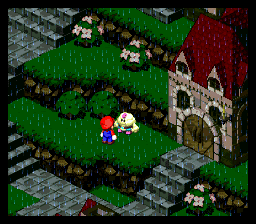
Super Mario RPG: Legend of the Seven Stars is a great example of a Squaresoft SNES JRPG and a Mario game, but it doesn’t really meld them. It does a good job of turning Mario mechanics into RPG mechanics, but there is a fairly clear delineation between the Squaresoft stuff and the Mario stuff. I think that has a lot to do with why characters like Geno and Mallow have rarely appeared after this game. There are likely some rights problems, but the bigger problem is that they just don’t fit in with Mario crew. They stand out as something clearly different. That is not to say they don’t work in this game, this game itself is something different. And something great.

smariorpg-47

Squaresoft did a great job of making Mario into an RPG. They kept the heart of the character by focusing on platforming like challenges and a timing based attack system. It manages to feel like a Mario game despite the awkward perspective. Really, the games it great but it biggest flaw is that isometric perspective, which makes a lot of jumps harder to judge than they should be. It is clearly a Mario world, inhabited by Mario characters. Honestly, though I am coming to it late, it is clear that it helped set some of the details of Mario’s Universe. Those details were further codified in Paper Mario and Mario & Luigi, as well as the sports games, but this one did some work as well.

smariorpg-52

Despite having a lot of Mario touches, though, this more accurately captures the feel of a 16-bit Squaresoft game. The Mario stuff is window dressing; this is the guys behind Chrono Trigger and Final Fantasy VI at it again. (I know it is not literally the same guys) No one was better at making SNES JRPGs than Squaresoft. Those two games I mentioned are among my favorites of all time. I’ve played a lot of mediocre 16-bit games chasing the experience of playing those games for the first time. Some get close, like Breath of Fire 2, but most just feel like games. There is something indescribable about Squaresoft’s best games at the time; they felt like they were taking full and perfect advantage of the system. Great music, well balanced battle systems and stories that were just deep enough. While I wouldn’t put it quite with Chrono Trigger or Final Fantasy VI, once Super Mario RPG gets going it is right there on the next rung down.

smariorpg-85

I really wish I had played this game back in the day. It would likely be among that select group of games that I try to replay every couple of years: CT, FF6, Earthbound and Suikoden 2. As it is, I finally understand why so many people consider it one of the best games on the system. It was the first full collaboration between Squaresoft and Nintendo one of the last games Squaresoft released for a Nintendo system for nearly a decade. At least they split on top.

Now Playing in September 2016

Beaten

Fire Emblem Fates: Revelation – see post here.

Space Megaforce – see post here.

Super Mario RPG – post coming soon.

Tokyo Mirage Sessions #FE – see post here.

Ongoing

Secret of Evermore – I’ve put some significant time into this game and it is surprisingly good considering its reputation. Thinking about what I am going to write about this game reminded me that somehow Seiken Densetsu 3 didn’t make it on my 25 SNES games list, even though I’ve never played it. Secret of Evermore may not be as good as that game, but it is much better than it’s somewhat reviled reputation might lead one to believe. It plays like a classic 16-bit action RPG, but with a story that isn’t filtered through tight space restrictions and cultural differences, at least not as strongly as most.

Dragon Quest VII – I should be finishing this game before too much longer. It isn’t really a game to rush through, its episodic nature doesn’t really suit marathon play sessions. It is a near perfect portable RPG. Each island takes only an hour or so, which makes this ideal to play in short bursts. This is a game designed to keep the player involved for an hour a day for three or four months. At about 20 hours in the main plot is still at best simmering in the background, but each and every island has had an internally satisfying story that keeps the player moving along. The job system just unlocked, which is sure to give the gameplay as much to keep the player interested as the story and characters. So far, this game is great.

Ace Attorney: Spirit of Justice – I only managed to complete the first case and the first half of the second before Dragon Quest VII hit and distracted me. I’ve loved what I’ve played so far. The first case felt more involved that first cases usually are; it wasn’t especially long, but it did an excellent job of setting up the troubles that Phoenix and company will be dealing with for the rest of the game. I don’t have a clue how that will play out, but so far this is a pretty strong entry in the series.

Upcoming

Shin Megami Tensei 4: Apocalypse – I really like the original SMT4 and it has been a while since I’ve played a game in the series. I already bought the game, even though I knew that I’d be tied up with Dragon Quest VII and Ace Attorney for the next couple of weeks. Still, this looks really good. I might have to take a break from Dragon Quest VII to get some of this in, but it is hard to put that game aside. Still, as soon as I’m done with that I’ll be popping this game in.

Jotun – This piqued my interest, so I grabbed it during its introductory sale. That purchase made extra sure I wouldn’t be able to afford River City Tokyo Rumble. I expected to get into this already, but between finishing Tokyo Mirage Sessions and Super Mario RPG, I just didn’t end up with a lot of time to play this. I’ll likely get to it in the coming month.

Legend of the Mystical Ninja – This is the next game up after Secret of Evermore. I’m less and less sure about actually finishing 25 SNES games this year, but I am not going to give up.

Skyblazer – After Mystical Ninja. Or maybe before, since I am emulating this one.

Robotrek – See above. I am going to try to make up some ground on this project in October.

Tokyo Mirage Sessions

When Nintendo announced that they were partnering with Atlus to create a crossover between Fire Emblem and Shin Megami Tensei I don’t think anyone expected it turn out like Tokyo Mirage Sessions #FE. Maybe some of the details were easy to guess; I wasn’t surprised that it essentially plays like a Persona game, but the end result is something that has little in common with either of its inspirations. There are certainly elements of both that remain, but Tokyo Mirage Sessions is very much its own game. TMS is a game that takes it theme and commits to it whole heartedly.

tms5

This is a game about idols, there is no getting away from that. There are numerous musical numbers that pop up as party members put out singles and perform in concerts. The whole game is awash in pastels, all sky blue and pink. The character’s home lives are never even mentioned, they all work for a talent agency that doubles as a cover for their monster fighting, and spend their time training for various artistic endeavors. It is as far away as possible from SMT’s post-apocalypse or Fire Emblem’s fantasy medieval battlefields. Yet, despite being nothing like them, it does feel a bit like the progeny of both series.

tms3

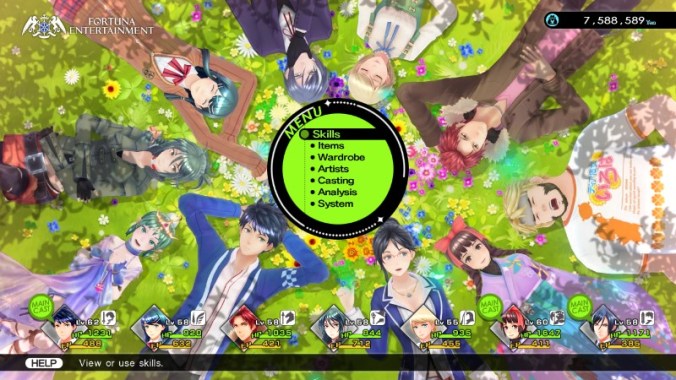
The party in TMS is made up of aspiring or active performers. Some are pop star-esque idols, others are actors on teen TV shows and some do it all. Their artistic abilities and aspirations also give them the power to be Mirage Masters, people able to harness the powers of martial spirits from another realm to fight back against the mysterious entities that are stealing people’s “performa,” the essence of their talent and artistry. It is nonsense, but Tokyo Mirage Sessions commits to this conceit with an admirable completeness. Everything revolves around it. As the characters grow stronger in battle their musical skills grow stronger, which in turn makes them stronger in battle. It is a cycle, everything feeds into everything else. Crazily enough, if one is willing to buy into this central conceit, then everything kind of works.

tms2

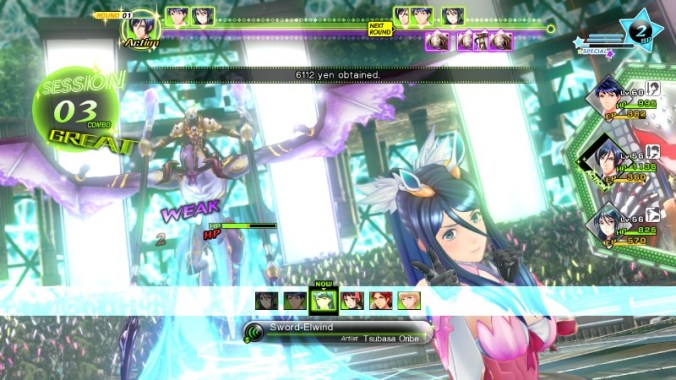
Battles, which take place in an arena and are themed to look like performances, play out much like the PS2 Persona games. Four characters in the party each have an array of skills that are mostly from the SMT series, with a few Fire Emblem themed ones tossed in. Like the Persona games, there is a great emphasis on hitting enemies’ weaknesses. In this game, doing so trigger a session attack, where the other party members take turns jumping in to continue the assault. Eventually even inactive party members start to join in the fray, creating cascading sessions of 6 or even more attacks every time a weakness is hit. Each party member has certain skills that can be powered up with random “ad-lib” performances, which turn the games many musical numbers into more powerful attacks. Soon multiple characters work together in duets that combine two characters for an attack that extends the session. It eventually makes hitting those weaknesses almost essential to effectively fighting through the dungeons.

Those dungeons are right out of SMT games. They are some effective and sprawling puzzle dungeons. Each one has a trick. One had the player avoid camera’s that snap a photo and send the player back to the start, another is set on the back lot of a movie shoot. Each has its own tricks and themes and none are a pushover. Since the bulk of the player’s time is spent in the dungeons, they needed to be good and they are.

tms1

Going into the game, I was afraid that the theme and cast would be suffocating, but Atlus, who did the heavy lifting on this game, and the localization team did a wonderful job creating a group that is largely enjoyable. They don’t break far from anime tropes for characters: there’s a taciturn loner, an earnest yet slightly inept romantic interest, and a boozy female authority figure, but they are portrayed in such a way as to make them charming instead of grating. Touma, the player character’s best friend, really wants to be a Power Rangers like hero. He tries to live up to a heroic ideal in his real life. There isn’t much complicated about him, but he is generally positive and enjoyable. Other than protagonist Itsuki, the bland everyman that rallies the others around him, Tsubasa is the center of the game. It is her quest to become an Idol, despite her nervousness and fear of the spotlight that continually pushes things forward. It is what gets her and Itsuki drawn into this drama and her rise and success keeps bringing the team in conflict with the dark forces working behind the scenes. If he character didn’t work the whole thing would fall apart. Luckily, she is one of the games strength. TMS does a great job of building that character throughout, as she conceivably grows as a performer and a character. I don’t even have time to get into Barry Goodman, who might be the most scathing take on a Western anime fan I’ve ever seen.

tms4

Spending so much time with the characters helps disguise how small this game actually is. It is only six dungeons and one hub area. There are a handful of other areas, one screen each, but outside of the dungeons the game is actually tiny. It is like the game wants to pass itself off as a sprawling JRPG experience, but to do so it has to patch over its budget roots. It doesn’t make much of a difference while playing, but thinking back on it makes it clear how limited the game is. Maybe limited is the wrong word; focused us more appropriate.

If the battle system comes out of SMT, where does Fire Emblem fit in? In the Mirages, the spirits that help the party fight their evil counterparts. The Mirages are all slightly reimagined Fire Emblem characters, mostly from the first game or Awakening. They act like the Personas out of that series. The main plot is about the Fire Emblem characters getting stuck in the real world. It is nonsense, but it kind of works.

tms6

There are some problems with this game. By the end battles can become tedious as the increasingly complex attack sessions take longer and longer to play out. It feels like it goes on about one dungeon too long. Outside of each character’s trio of sidequests, there isn’t much else to do but fight through the dungeons. Still, I think I love this game. It is not subject matter I tend to like, but Tokyo Mirage Sessions makes it all feel refreshing. It is probably the best console JRPG since Persona 4. It is light, a piece of fluff, but also a fully realized experience that doesn’t get made all the often anymore.

25 Years 25 Games 15: Space Megaforce

smfc

The SNES was not the go to system for shoot ’em ups. It had its fair share, UN Squadron is a personal favorite, but the system wasn’t really known for blazing fast action games. The lack is mostly due to the SNES’s tendency to bog down when more than five or six sprites appeared on the screen. See Gradius III for a prime example. The other shoot ’em ups on the system are what makes Space Megaforce so astounding.

smf3

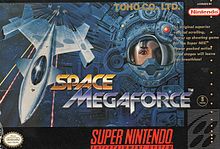
I don’t know that Space Megaforce is a great game. It is too hard for me, which isn’t really a point against it considering my limited shmup skills, but it is a barrier to my ability to enjoy and judge the game. It is, however, quite an achievement, running as fast and as smooth as it does on the SNES. Space Megaforce, which is the terrible American title of Super Aleste, is an SNES shmup with no, or little, slowdown. It is hectic and challenging and most of all fast. It is unlike any other game on the system. Space Megaforce was made by Compile, a company known for its excellent shooters and Puyo Puyo before it died and was reborn as Compile Heart, which is known for churning out terrible JRPGs. Whatever wizardry Compile employed to get Space Megaforce to run as smoothly as it does has, as far as I know, never been replicated.

smf2

Its power up system manages to be robust without being as punishing as something like Gradius. In Gradius, your ship eventually becomes a tornado of destruction filling the screen with projectiles, but when you die it takes forever to build that power back up. It is almost easier to just restart and build up you power during the easier first level than to try to rebuild in the middle of a more difficult section. Space Megaforce does not give the player the same breadth of options as that game, but it is easier to keep going after a death. There are 8 or so weapons, all of which can be powered up by grabbing more of the same power ups. All of them have multiple fire patterns as well. Getting killed sucks, it always does, but you can grab on power up and be back in some form of business.

There are flaws, the biggest I encountered being the uneven length of the stages. Some stages seem endless, just super long and repetitive. The challenge is as much in endurance as it is in skill. Some are short, ephemeral bursts. I don’t know that either choice is wrong, though those long stages are not to my preference, but a middle ground would have worked better. The more I think about it the less sure I am that the stages were excessively long, but they certainly felt that way, which is as big of a problem.

smf1

Space Megaforce is pretty great. It is a stellar example of a genre that wasn’t really the SNES’s forte that somehow just ignores the weaknesses of the system to give a fast, twitchy experience.

Fire Emblem Fates: Revelation

I’ve written about Fire Emblem Fates’ other two paths already and felt like now, before the fall 3DS rush starts – Ace Attorney 6, Dragon Quest VII, River City Tokyo Rumble and Shin Megami Tensei IV: Apocalypse are all due before the end of September – was the best time to finally get to the third and final FE Fates path, Revelation. I sped through it only about a week or so. It does everything the middle path of Fates’ side choosing main game should do, yet I don’t know that I like it very much.

fefr2

How Nintendo and Intelligent Systems differentiated the Birthright and Conquest paths was effective from a gameplay standpoint. The classes and weapons were all different and with a few exceptions so were all of the characters. They aren’t quite separate games, even ignoring the identical first five chapters, but they are very different experiences. Revelation takes those two sets and mashes them together. It doesn’t pare them down to an interesting mix of both casts; it is the entirety of both casts made available. That means that no one’s favorite character is left out, but it also means that you get more than twice as many characters as you could possibly use. It really compounds a problem that both of the first two paths had: the glut of royal characters. When each half of the cast gives you four royal siblings and map tend to allow 10-14 characters to be deployed, that only leaves up to five other characters to be deployed, assuming that you are using all of both of your families. Which is tempting to do, since those siblings tend to be some of your best characters. And that’s without even getting into the second generation.

fefr1

Actually, let’s get into that second generation of characters. In Fire Emblem Awakening, the children of you characters coming back in time to stop a dreadful event was the entire conceit of the game. It gave an end goal to the supports, which had been a big draw in the GBA games and were gutted in the GC/Wii ones, with each pairing producing an offspring that could join your army. It worked in that game because that game was designed for it. They kept the mechanic in Fates, but it lacks the conceit. They come up with some half explained reason for the children, who haven’t been born yet, to grow up somewhere where time passes differently and they grow to adulthood in no time, but it is unsatisfying. It feels like it was kept because it was a popular feature and not because it has any place in the game. It feels like an afterthought; the child characters, as fun as some of them are, do not have a role to play in this story.

The cast is a big reason why Revelation only works as a second or third path. There are so many characters that few have a chance to make much of an impression. But holdover feelings from the first time through game give the player a reason to try and use them.

fefr3

My hope was that the big cast would give reason for big maps. Let the player deploy twenty or more characters and fill the screen with enemies on a truly massive battle. That is not the path that Revelation takes. Instead, each and every single map is a gimmick map. I don’t mind gimmick maps, they can be a fun alternative to the normal ones. Elements like environmental hazards, fog of war or shifting terrain make for a good change of pace. In Revelation, they are the pace. There are no normal maps, except maybe the last one; every last one has some sort of twist. It isn’t fun, it is exhausting. I eventually had to switch over to classic mode, since there were too many variables for me to keep track of.

They are actually pretty finely crafted stages, for the most part. It is just that the rules continually change. Classic Mode, which I am glad exists for people who don’t want the same Fire Emblem experience that I want, feels like a cheat to me, but I also found it necessary. Losing the penalty for a character dying fundamentally changes how I play the game, shifting from my usual cautiously aggressive tactics to ones that are downright reckless.

The story is the story that both of the previous paths made obvious was out there. Both of those games danced around a central problem while solving ones that seemed much less pressing. This one has the player’s avatar deal directly with the mysterious entity that has been manipulating both countries. It doesn’t flesh out the conflict that greatly, keeping things more personal than political, but it works.

fefr4

Fire Emblem Fates Revelation is a mixed bag. It is altogether too much of a good thing. Its solution to every problem is more. More characters, more stuff going on in the maps, more supports. Like eating too much candy, you kind of love it even as it makes you queasy. Fire Emblem Fates is a monumental trilogy that I loved even while I wished that they pared it down somewhat.

Now Playing August 2016

Beaten

Illusion of Gaia – see post here

Shin Nekketsu Kouha – see post here.

Bravely Second – see post here.

Ninja Smasher – This is a neat little metroidvania game for the 3DS I picked up last month. The central mechanic of the game is that every time you hit an enemy with your attack it allows you to jump again, meaning that you can fly through areas slashing enemies and leaping to the next one. It is fun, for a while. The game takes about three hours to complete, but it starts to lose its luster about an hour in. The levels aren’t that interesting and the bosses are just damage sponges. You get your four bucks worth, but that’s about it.

Pokémon Alpha Sapphire – I am on the record as loving the Pokémon series. Black & White, Black & White 2, X & Y: the three previous versions of Pokémon were all a ton of fun. The only generation of Pokémon that didn’t really do it for me was the third, Ruby, Sapphire and Emerald. I played them, but I usually gave up about halfway or so through the game. When the inevitable remake happened, I was eager to fully experience the game. But that just didn’t happen. I ended up skipping the games when they were first released, only getting it a half a year later during a surprise sale on the game. Then I played it. Pokémon Alpha Sapphire is likely the best rendition of the Pokémon formula. It does nearly everything well. Still, I found myself utterly disinterested in the experience. Part of it was the lack of newness; there are no new Pokémon in Alpha Sapphire, nothing this game does that other Pokémon games don’t also do. The bigger part is that I have never really enjoyed this setting. The routes are laid out in unintuitive and frustrating ways, there is too much surfing and an overreliance on field HM’s altogether. I know a lot of people that love this game, both the original and the remake. No matter how many times I try, I just can’t get into this particular version of a series that I like. Now that I’ve beaten the game, I don’t feel a particular need to do so.

Ongoing

Space MegaForce – I’ve played a couple of stages of this SNES shooter and it is fast. I haven’t played enough to form much more of an impression than that, but that is impressive enough so far.

Super Mario RPG – please understand.

Fire Emblem Fates Revelations – I’m pressing through this third path of Nintendo and Intelligent System’s excellent strategy game, but it isn’t really doing it for me early on. There are just too many gimmick maps. There is a teleporter map, a windy and a map filled with ice all to start things off. Those gimmick maps are fine, but they are best when they are used to offset regular stages. I hope there is more to this than just these bullshit stages because I really want a solid wrap up to this game’s story.

Monster Hunter Generations

mhg2

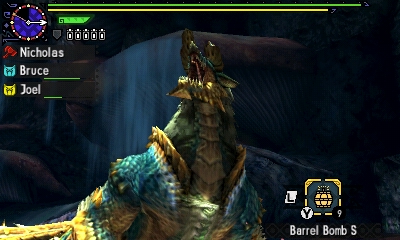
Maybe it is just that I had my fill of MH4U and wasn’t ready for more Monster Hunter, but so far I have been unable to really get into this game. There is a lot I like about it in theory, from its monster list to some quality of life changes made to this version from MH4U, but none of that has really helped me find the desire to sink my teeth into it and really play. Of course, my problems might all stem from forcing myself to change my weapon. In previous MH games I have used the hammer. I’d try out others; I tended to use a light bowgun quite a bit online, but primarily I stuck with the slow but powerful hammer. This time I wanted a different experience, so I’ve used the lance, gunlance, and sword & shield. None of those weapons feel as natural to me as the hammer does though. When I get back to this, likely after I finish Fire Emblem, I think I’ll switch back to my trusty favorite.

Tokyo Mirage Sessions –

tms2

I am still pushing through this game and still greatly enjoying it. It is a long game and I haven’t had the time I’ve wanted to get this game beaten. TMS is pretty perfectly paced throughout the first two thirds. Each new dungeon adds a new character or concept, but it doesn’t feel like those things were artificially kept from the player but that the abilities of the party are growing. That is one of Tokyo Mirage Sessions overriding themes; it is about growth. Each of you party member’s grows individually as an entertainer and they grow as a team. That growth is reflected in their ever increasing combat abilities. I hope the game is able to stick the landing.

Upcoming

Secret of Evermore – As soon as I clear out Super Mario RPG and Space Megaforce I am on to this.

Legend of the Mystical Ninja – I’ve got this downloaded to my WiiU, ready to go as soon I have time. This is a game I have played before, but only enough to know that I want the full experience.

Skyblazer – This is more wishful thinking that anything else, but if I get done with the four other SNES games on this list, Skyblazer is up next.

Ace Attorney: Spirit of Justice – We appear to be missing out on anther Ace Attorney spin-off, but I am not going to complain about the Ace Attorney games we are getting. I can’t resist this series.

Dragon Quest VII – I got the PS1 version of this game three or four years ago, shortly before the 3DS remake was announced. I held off playing it, thinking this would come over. Then it didn’t. I held off until close to a year ago, but soon after I started it was announced that the 3DS game was getting an American release. I am so ready to play this damn game.

25 Years 25 Games 14: Shin Nekketsu Kouha

The next game in my yearlong celebration of the SNES is not one that was on the list when I posted it at the start of the year. This youtube video reminded me that this game exists, which was all the push I needed to actually play it. This game is Shin Nekketsu Kouha Kunio-tachi No Banka, which means something in Japanese; the game is a sequel of sorts to one of my favorite games of all time, River City Ransom, that never came to the USA and is virtually unknown.

Snk1

It isn’t a long game, taking no more than 3 or 4 hours the first time through, but that was enough for me to be really disappointed in some parts of the game. Not the music, which is pretty dang awesome. It is clearly along the same lines as the NES Kunio games (River City Ransom, Renegade, World Cup Soccer, Super Dodge-ball, Crash and the Boys Street Challenge) but done in that distinctive and or so enjoyable SNES style. The graphics are sharp as well. The problem is in the very structure of the game.

snk3

Shin Nekketsu Kouha loses me because it really isn’t the game I want it to be. That really isn’t the game’s fault; it isn’t trying to be that game. I wanted a follow up to River City Ransom, but this game is actually a follow up to Renegade. They are both parts of the same diverse, inconsistently localized series, but they are very different games. Renegade is an earlier, much simpler game than RCR was, and Shin Nekketsu Koha mostly sticks to that simpler format. There is no exploration or rpg elements, it is just a straight forward brawler. Really, it is simple even for a brawler. There are barely levels, only small room where you fight 3 or 4 enemies, then go through a door to the next area. Repeat that about three times before you fight a boss. The only things in the game to change things up are some Outrun-esque motorcycle stages. They are fine, if lacking in checkpoints, but aren’t really a draw. And while the combat itself is fine, it does lack variety. There are four playable characters: Kunio, Riki and their respective girlfriends, but their movesets are all similar. They have different special moves, and those are almost all you want to use. It gets repetitive.

snk2

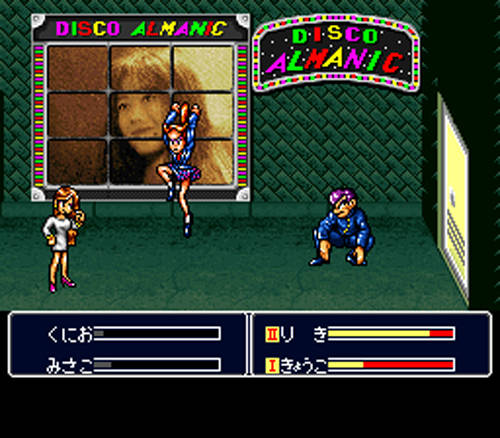
Those areas can be interesting. Kunio and Riki’s quest takes them all over Tokyo. They start in jail, framed for a hit and run they didn’t commit, only to break out and search for answers at their schools, an amusement park, and a nightclub, among other places. The amusement park at least makes an attempt to break up the super simplistic level design, with one area having Kunio fighting on top of an in use Ferris Wheel and another having a Roller Coaster to ride that is nothing more than a novelty, a neat but unnecessary inclusion.

I did like how story based it was. Not that the story was anything great, just the two heroes on a quest to clear their names. It is the sort of thing that would have worked in an 80’s action movie. The twists are largely predictable, but it is enjoyable to watch things play out.

snk4

I don’t have Shin Nekketsu Kouha, it just isn’t the game I want it to be. It is a thoroughly competent brawler, though one that came pretty late to the brawler scene. I think there is a reason that this game has languished in obscurity. It just isn’t great. It hit years too late and followed up a rough draft of a game that was never that good in the first place. I am always eager to see more of Kunio, but that group of characters starred in a wide variety of games with just a wide range of quality. Still, I’ll always have River City Ransom.

Bravely Second: End Layer

A couple of years ago, I was wowed by Bravely Default, at least at the start. By the end I was pretty darn sick of it. The problems I pointed to in my review were pacing and balance, but I had others. The characters varied from grating to nonexistent and the plot ran about 2 chapters too far. Bravely Second, a game built on the bones of its predecessor, manages to fix all of those problems. I started out being somewhat underwhelmed with it, mostly due to how sick I still was of the end of Bravely Default, but by the time I finished it up I would rank it as one of the best RPGs on the 3DS. Bravely Second is a complete delight.

bravs1

There are so many small ways this game improves on its predecessor, starting with the characters. The party in BD consisted of Agnes, a completely generic female JRPG lead. She wasn’t bad, but she was exactly in the mold that has been used for that character since Rosa in FFIV. It had Tiz, a blank slate protagonist, and Edea, a hot headed defector the party’s team. Finally, there was Ringabel, a loveable rapscallion with a mysterious past. By the end of the game, Ringabel’s increasingly unfunny antics started to dominate the moments of levity. In Bravely Second, only Tiz and Edea return to the main party. Edea hasn’t changed, and didn’t need to. Tiz’s lack of personality has transformed with his demotion from protagonist to something of a laconic cool. He is now as close as this game gets to a silent badass. Joining the party are Yew, a wide eyed optimist suffused with bland enthusiasm, and Magnolia, who starts the same as Agnes as a sort of generic JRPG leading lady, but her quest is for revenge not activating mystical doohickeys. Agnes still has a prominent role as support, and it is a role that suits her well. Ringabel is held to a thankfully brief – and optional – cameo. The group in Bravely Second is more interesting and has a better rapport. The comic relief is split more evenly around the four party members and everyone comes off as fun instead of grating.

bravs2

The other characters, generally some sort of twisted embodiment of their class (inherited through an asterisk that bestows that class and its abilities on the player), were often interesting if underutilized. Except for Yulyana, who was neither interesting nor underutilized. In Bravely Second, the returning original asterisk holders have been given a slightly softened outlook. They are still kind of awful, but usually in a more comical than diabolical way. The new ones are split between plot centric ones with full characters and new toss off characters. Still, they managed to keep most of the good ones from the previous game and took a crack replacing the ones that didn’t work with new attempts, with some success. Like most of the game, BS’s characters are an improved revision of the first’s.

bravs3

The pacing and balance are much improved as well. No longer can you pick a strategy in the first 10 hours and use it for the rest of the game with total success. While I did attempt to experiment in the first game, it didn’t often feel rewarding. It was just as effective to stick with one or two strategies. Bravely Second’s classes dole out their effective skills a little slower, making it harder to find the perfect strategy and stick with it. Plus, the bosses do a better job of changing tactic to force the player to do the same. The game also moves at a snappier pace, with fewer bosses in each area. It is a revisit of all of Bravely Defaults haunts, but with new sights and new missions. Then there is the central conceit of the game, with the New Game+ being necessary to get the true ending. BD forced the player to run through the game several times to get to the real ending. BS has a one time trick that opens up two fully new chapters. The last half of BD was a slog, because the game was fully explored and you just had to keep doing it. BS wisely held some stuff back for the second run through.

bravs4

Bravely Second takes a good game and fixes almost all of its faults, turning a flawed yet fun experience into what should be regarded as a classic.

7th Dragon III: Gibberish Subtitle

As I’ve said before, I was interested in 7th Dragon because of its connections, as loose as they may be, to Etrian Odyssey. It didn’t turn out to be a terribly choice, though in the end it really reinforced how great the Etrian Odyssey series is. 7th Dragon III: Code VFD doesn’t stand up to the quality of any of the Etrian Odyssey games on the 3DS, but it is a fairly entertaining game in its own right. While it has plenty of new things to offer, it feels in some ways like a glorious throwback to the low-poly days of the PS1. That is admittedly a flavor that is pretty common on the 3DS, but as someone who was 12-16 in the glory days of the PS1 it is just my sort of flavor.

7d1

Really, the game is different enough from the EO series that the comparison really isn’t fair. Outside of some larger similarities, they are really two very different kinds of games. They do both feature a player generated party and things like strong monster visible on the field, but the focus of the games is very different. Etrian Odyssey games are highly focused experiences. They are about the player’s specific party and confounding labyrinthine dungeons. There is a reason that mapping the floor is a vital aspect of the series. Exploring and knowing the terrain is a significant portion of the experience. While you do build your own party in 7th Dragon, the dungeons tend to be afterthoughts. They are mostly just corridors connecting one set of cutscenes to another. They look nice enough, but there is little interesting about the dungeons themselves.

The party building is robust, but thanks to it refreshing array of interesting and unique classes, wrapping your brain around how each class works and interacts takes a long time. Honestly, the classes are individually powerful enough and the bulk of the game easy enough that mastering the party building isn’t remotely necessary. There are a few “normal” classes, like the Samurai and the Mage, but most of them fall into fairly interesting new territory, even if the game doesn’t always do a great job of exploring that new territory. Take the God Hand class, for example. The God Hand is essentially a Monk, with a combination of healing skills and fist based attacks, but in 7th Dragon they added a twist. Using the class’s punch skills inflicts God Depth on an enemy, the higher the rank of God Depth the more powerful attacks you can use, which in turn raises the God Depth more until it resets or you use the powerful finishing blow that resets it. It is a neat mechanic and God Hands, in my experience, are one of the most powerful classes in the game. Also, their default look is Maids and Butlers, which is amusing to me. However, no other class interacts with the God Depth mechanic. It exists just for that class, just like hacking exists for the hackers. The game piles on unique and fiddly mechanics to go with its unique and fiddly classes. There is a lot good and interesting there, but it feels like a rough draft of what could have been a great set of classes.

7d2

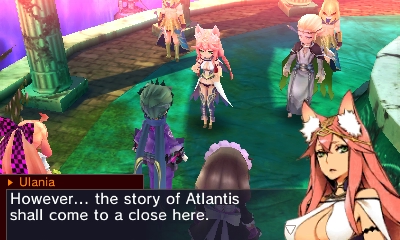
Much of the enjoyment of 7th Dragon III is in its delightfully bonkers story. You start as a character playing a VR video game about killing dragons, but you are so good at it that the mystery corporation that makes the game recruits you to time travel to several spots in history and fight dragons. You are not, however, doing so to rewrite history and save people from dragons, though you end up doing that, but merely to kill the dragons and get DNA samples. That is to be uses, somehow, to compile a compendium of dragons to better fight the coming 7th True Dragon. Each of the 3 time periods have its own attractions, from ancient Atlantis to a future Medieval Age that somehow exists even though the end of time is fast approaching the ravaged current Tokyo. There are strange delights everywhere, much of it originating with the player’s party. When confronted with the destruction of Atlantis, the protagonist just calmly forces shady corporation Nodens to relocate all the Atlanteans through the time portal to the current day. One sidequest has the player building a cat sanctuary; another has you tracking down a real life power ranger. It is all nonsense, held together by spurious logic and borderline nonsensical twists that quickly twist again before you unravel exactly what the twist is supposed to mean.

7d3

7th Dragon III: Code VFD is kind of a mess, but it is a completely enjoyable mess. There is enough good that comes from the team and character building, as well as the story and battle system that it is easy to just keep playing until the game ends. But once you put it down and look at it critically, all the flaws are glaringly apparent. This is not a great game, but it is a game whose flaws are never deal breakers. It is just delightfully messy, the perfect sort of RPG for a breezy summer playthrough; fun while it lasts but soon forgotten.

25 Years 25 Games 13: Illusion of Gaia

This is exactly the sort of game I was hoping to come across in my deep dive into the SNES library. This is the sort of game that made the SNES’s reputation. From the big colorful graphics and distinctive sound to the sprawling yet abrupt plotline, this game is vintage SNES. And I loved every second of it. I don’t know that it ranks up in the upper echelon of SNES games, next to A Link to the Past or Chrono Trigger, but at worst it goes on that next step down. Illusion of Gaia is a game that wears its heart on its sleeve, one that aches to instill strong emotions into the player. It occasionally achieves that in its own melodramatic way.

Gaia_Gensouki

Essentially, Illusion of Gaia is a Zelda game with all the exploration removed. And all of the tools. It is very simplified compared to A Link to the Past. You play as Will, a young boy with slight psychic abilities and a flute. He can hit things with the flute and spin it around to pull certain objects toward him. He eventually gains other abilities, like a slide and dash attack, but his repertoire stays pretty limited. The other big skill is his ability, at save points, to turn into Freedan, a dark knight who is stronger and tougher than Will. He too gets a few abilities, like a ranged attack, but they play mostly the same. At the very end you get a third form that hits very hard and you get too late to really do anything with. Most of the game is spent switching from Will to Freedan whenever appropriate. Luckily, the dungeons themselves shine. They get to be sprawling mazes that don’t so much have puzzles as just navigation difficulties. It is supremely satisfying, especially combined with the game’s progression mechanic.

In Illusion of Gaia, the player gets stronger, for the most part as there are a few other stat upgrades to be found, by defeating every enemy in a room. That gives a bump to the player’s HP, Attack or Defense. Since enemies don’t respawn, each dungeon sees the player slowly but surely eradicating every enemy to get all of the possible stat increases. It is an addictive, though occasionally tedious, system. As good as the gameplay is, this game would still be something of an also ran if it wasn’t for the real heart of the game, and that is its world spanning story.

iog1

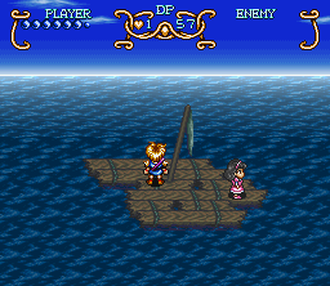
Illusion of Gaia doesn’t have the greatest or most nuanced plot of all time, but its sheer abrupt melodrama is hard to match. It opens with Will meeting a Princess and soon a globe-trotting adventure unfurls. Will is the player character, but he is joined for most of the quest by Kara the Princess, a trio of his school friends named Lance, Eric and Seth, fairy-ish girl Lilly and Will’s cousin Neil. That is quite the big troupe, especially considering that Will does all the work. Still, each town and area allows each of these character’s story to develop a little further. Kara starts out spoiled and impulsive, but by the end of the game she is slightly less spoiled and impulsive. Lilly helps the most early on, using her magic powers to turn into a dandelion and help Will out. When the team is separated by a shipwreck, she tends to Lance, who develops amnesia. Eric, the youngest member of the group tends to stumble into trouble frequently. And Neil makes tools of various efficacy. Sometimes he his plane flies you to your destination, sometimes it crashes into the ocean. The game constantly throws unspeakable tragedies at the player, and the team just bucks up and keeps going, for the most part.

iig2

The only thing really holding the story back is the localization, which if I was feeling generous I would call passable. It is hard for story beats to have the proper impact when they aren’t incomprehensible. I would Seth as an example, if I had a clue about what happened to him. When the team is shipwrecked, he is eaten by the leviathan named Riverson. Only he then becomes Riverson? And later he is dead so his spirit helps the team out? I really don’t know what happened to him. Still enough of it comes through to give the game an overwhelmingly melancholic feel. You find a golden Incan ship, with the skeletons of the Incans trapped inside waiting for their king to return. There is a constant thread of people from everywhere you visit being forced into slavery (but your cousin Neil’s parents apparently). At one point you need to get some animals to travel through the desert, so you play a game like Russian roulette in order to get them. Only it turns out your opponent needed the money to make a new life for him and his pregnant wife. The whole game is full of stuff like that.

iog3

The main plot has to do with a comet possessed by a dark force that is making everyone act strange. It is getting closer to Earth, and only Will can help repel this evil force. It is more weird than interesting. But there is an air of hope throughout all the tragedy. It makes the game something of delight to play. There is nothing to do but keep forging forward. This is exactly the kind of game that I hoped to find playing all these old SNES games. What is sad is that I bought this game at a garage sale more than a decade ago. I should have played this game years ago. Now that I beat it I am very disappointed in myself for not having done so.