Video Game Archaeology 7: Shadow of the Ninja

After an unfortunate hiatus, Video Game Archaeology returns!  Video Game Archaeology is my monthly exploration of an artifact video game found during my excavations of various bargain bins and yard sales; an examination of a game cast off and long forgotten.

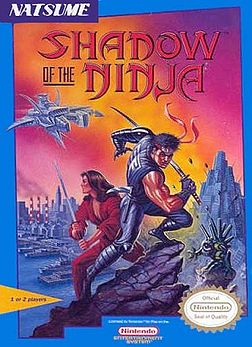
Natsume today is known mostly for the Harvest Moon series, but that wasn’t always the case. While they were never quite on the level of Capcom or Konami, Natsume published quite a few quality games over a variety of genres for various systems until basically the PS1/N64 era. Like any Japanese game company worth its salt, Natsume published some fine NES games. None of them seem to have been very popular, but the ones I’ve played are solid games. I’ve played a bit of Shatterhand and poured over an issue of Nintendo Power about the unfortunately named S.C.A.T, though I never actually played it. After reading this Hardcore Gaming 101 article, I decided to rectify that and downloaded Shadow of the Ninja off Virtual Console. Continue reading

I Know that Monkey, His Name is Donkey!

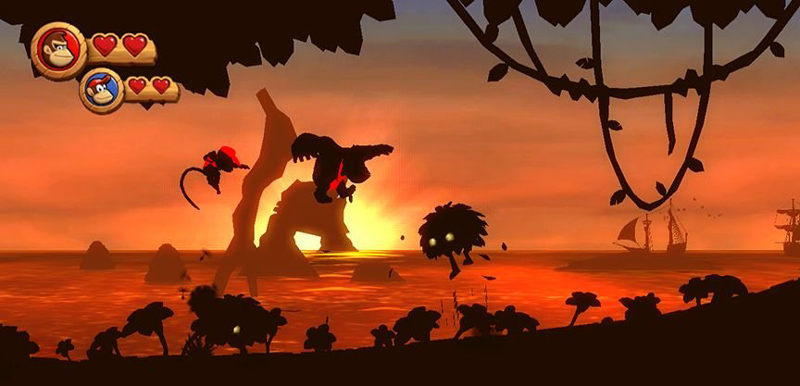
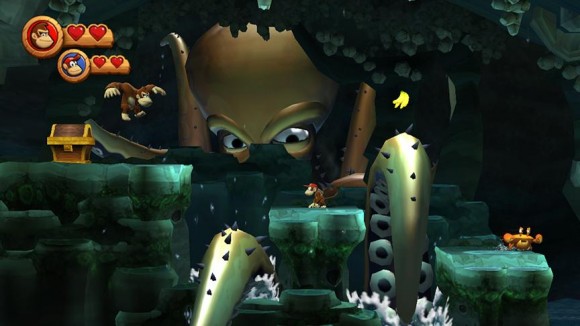
A couple of years ago Nintendo had two big fall releases: Kirby’s Epic Yarn and Donkey Kong Country Returns. I wanted both of them. 2D, and 2.5D, platformers are exactly my thing. Unfortunately, I could only afford one of them. It didn’t take me long to make my choice on which one to purchase. I found the previous Donkey Kong Country games to be serviceable but ultimately frustrating and Donkey Kong 64 was the absolute nadir of collect-a-thons. Kirby, meanwhile, has a bunch of charming and innovative, if a bit easy, games with his name on the cover. I went with Kirby’s Epic Yarn, and I enjoyed it. The lack of Kirby’s usual array of abilities was more than offset utterly charming yarn aesthetic. I was confident that I made the right choice.

For Christmas this year I received Donkey Kong Country Returns. Within two weeks I had beaten it, and realized just how wrong I had been. Epic Yarn is a pretty good game. Donkey Kong Country Returns is an absolute classic. It is not just one of the best games for the Wii, ranking up there with Super Mario Galaxy and Zelda Skyward Sword, but I would say DKCR is among the best games ever. Which is pretty amazing when you consider that I don’t really like the games that this one is trying to evoke nostalgia for.

First, I need to explain why I didn’t like previous Donkey Kong Country games, DKC2 in particular. (Since I played it most recently and it is still fresh in my mind) DKC2 relies heavily on unfair or arbitrary difficulty. It is not that it is hard to beat stages, though it certainly is. I like a challenge. The unfairness is in meta-game roadblocks. DKC2 is a fairly long game, so Rare of course uses a standard save system. But saving is limited to only to Grannie Kong’s School or whatever it is. The problem is that those save spots are not always available. It makes losing your progress, especially after a boss, a very real possibility. That means if you struggle with a boss, it makes it all the more likely that you will have to fight it again. Unless you go back to a previous world and save. But be careful not to shut off the game, since everything takes coins and coins aren’t saved. The very real threat of losing significant chunks of progress hampers the whole game. The difficulty of the actual stages is forgotten. The half-assed save system encourages players to play as conservatively as possible. It is as though Rare thought they were making a quarter-munching arcade game right up until the last minute, when they tossed on their terrible save system.

The crap is gone from Donkey Kong Country Returns. The game saves after every level. The arbitrary treat to the player’s progress is gone. The only difficulty in the game is entirely based on the level design, which is truly wonderful. Retro Studios has crafted a masterpiece of 2D level design. Each stage, like in the best Mario games, has a certain theme of obstacle. For instance let’s say that a pit, a hole to fall in. It you do you die. First, there will be a single pit, then two. Then a double sized pit. Then a combination of long and short ones. That is the simplest possible example, but the escalation is what the game does so very well. It shows an obstacle, then builds on it and expands it. It teaches the player what to do, then challenges the player.

Donkey Kong Country Return also encourages players to search for secrets and a limited number of challenge collectibles. It does this by first have plenty of checkpoints in stages. Stages aren’t that long, but generally they have one or two checkpoints. When you are only losing a few moments progress it is no big deal. There are also plenty of extra men, and extra men giving bananas around. Dying cost the player practically nothing.

Despite how friendly the game is in some respects, it is still satisfyingly difficult. I probably died more in this game than in any game since the NES. Yet every time I died I knew it was my fault. Each death merely served as encouragement to try again. It is also aided by crisp, clear graphics and pitch perfect controls. The only fly in the ointment are the rocket barrel stages. The idea behind them is sound, but in practice the controls are effectively broken.

Donkey Kong Country Returns is everything people loved about classic platformers without all the crap that used to get in the way. Instead of arbitrary difficulty designed to make the player replay the game and artificially lengthen the playtime, DKCR is all about prefect level design. It is a perfect evolution of games like Mario and Mega Man and Donkey Kong Country. It is a true classic, worthy of being enshrined with all the greats in Nintendo’s library of games and the second one from Retro Studios.

Second Quest Part 1: Legend of Zelda

Playing the Legend of Zelda Skyward Sword (see here and here) and hearing the wildly varying impressions of it and the rest of the Zelda series made me want to go back and play all the games. It seems that while most people think that Zelda is going wrong or has gone wrong at some point, but no one can agree how or when. I am of the opinion that the Legend of Zelda is one of the few series that has no real missteps. To see if I am right I plan to replay, or in a few cases play for the first time, the entire Zelda series to see how it holds up. So let me begin the Second Quest, starting of course, with the original Legend of Zelda.

I wrote a thing about Zelda as a part of my 25 Years of NES, but I didn’t play it much before I wrote that. I think the last time I played it back in 2004 or a year or two earlier, on the GBA. I stand by the complaints I made about the game in my previous post, but replaying it recently has given me a greater appreciation of just how good Zelda 1 is, even now.

The Legend of Zelda is deceptively simple. No jumping, no scrolling, slow action. However, the wealth of sub weapon options is staggering for an NES game. It is a thinking man’s action game. The question is not “can I?” but “how can I?” There is combat, hard combat sometimes (screw you blue darknuts!) but it is rarely a question of whether or not the player can defeat the enemies. It is about whether the player can figure out which enemies need to be killed, which walls need to be bombed or which blocks need to be pushed.

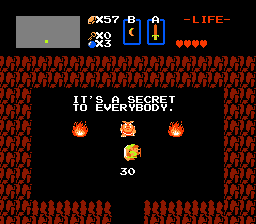
Playing it again after so long was like coming home. Everything is smaller and a bit shabbier than I remembered, but after a few minutes it all came rushing back. I knew where to find most of my hearts, though I sometimes forgot which bushes hid secrets from everybody and which hid door repairs. I didn’t have to search for the dungeons, except for dungeon 2, which I can never find. It is still often obtuse, still somewhat primitive, but Zelda 1 is a lot more fun to go back an play than I remembered.

The single best thing about it is how it encouraged players to explore. In a time when most games were reliant on limited lives and limited continues to artificially pump up the difficulty and playtime, Zelda instead used a relatively large and complex game world to keep players in front of the screen. Instead of a ‘Game Over’ screen upon death, players were allowed to restart with all hearts, rupees and items as many times as they wanted. There was effectively no penalty for death, encouraging players to push the boundaries. Since simply reaching a destination was rarely the goal, letting the players get back there easily did not lesson the challenge.

Even now I’d say Zelda 1 is a very good game. It hasn’t aged perfectly, but the core of the game is still as fun and addictive as it ever was. It is actually very similar to Skyward Sword. In both games you are constantly going through a dense, maze-like over world. It is also more combat focused than most games in the series. Despite that, it is still very much a game about the puzzles. Zelda 1’s puzzles are simpler than in the later games, but are still hard by being more vague. Considering that it is more than 25 years old, the Legend of Zelda is absolutely deserving of its classic status.

all pics from vgmuseum


It’s a G-g-g-ghost!

While my relationship with the traditional, PC style adventure game genre is contentious at best, there have been a sizably number of adventure games that don’t quite fit that mold, but that do definitely scratch an itch for me. Most of them are for the DS. Ghost Trick: Phantom Detective may be the best of the lot.

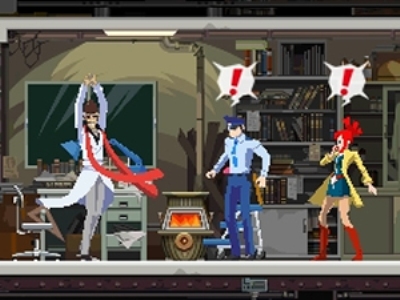
Ghost Trick is very obviously made by the same people behind the Ace Attorney series. They share a dark yet whacky tone, flitting seamlessly from slapstick to grimness. While Ghost Trick is about people being murdered and trying to unravel a conspiracy that has ended the life of numerous people, the characters spend a lot of time joking around. It can be jarring at first, but after a few minutes the tone becomes easier to read. It is certainly helped by some of the best writing in the video game industry.

Most adventure games lose me because I’m never quite sure of my goals. Oftentimes being able to sole a problem requires knowing well in advance that problem exists. Ghost Trick’s unique play systems avoid this problem. While the sorts of puzzles the player faces are largely the same, Ghost Trick presents players with a focused, limited set of options and leaves the player to solve it from there. It is probably easier, but it doesn’t necessarily feel easier. It does a great job of making the player feel like they’ve passed a humongous, difficult trial, whether they have or not.

The closest thing to a problem I can point to is something entirely subjective. I do not like the cast of Ghost Trick as much as the cast of Ace Attorney. I only bring it up because many of the characters have direct analogs. Sissel is not much different from Phoenix, Lynne is much like Maya, etc. It really isn’t a problem, just one way that I liked another, similar game better.

Ghost Trick is a great game. Plain and simple. This is the kind of game that made the DS the best video game system. It is a mostly unique, wonderful experience. Play it.

Ratchet & Clank

After beating Skyward Sword, I dug out my PS2 and plugged it up (as we say around my house) to my TV. I still have a list of PS2 games I want to play, the top game on it being Ratchet & Clank. I beat it rather quickly. Ratchet & Clank is doubly unfortunate for my timing in playing it, coming right after playing my game of the year by a wide margin and also after I’ve already played two of its superior sequels. Ratchet & Clank is still a good game, but it lacks some of the conveniences, like strafing, and flair of the later games in the series. It is hard to judge it too harshly for not including its sequels improvements, especially since Going Commando and Up Your Arsenal are two of the very best games on the PS2. Despite its shortcomings, Ratchet & Clank is still a very good game.

The series didn’t change greatly in either of its next two sequels. You still play as furry alien Ratchet and his robotic backpack/sidekick Clank. You still fly around the galaxy doing good. And you still collect a variety of inventive and destructive weapons with which to blow up everything. While the focus shifts from platforming in the early games to shooting later on, the fundamentals have remained largely the same. The biggest change is the addition of strafing, which any part of this game that requires shooting sorely lacks.

The weapon selection is sadly rudimentary. There are some interesting toys, like the attack drones, for the most part the weapon selection is bland. Had I played R&C before its sequels, I doubt I would have been disappointed in the selection but it pales in comparison to the later games.

That is the big problem with R&C. Playing it now, nearly ten years after its release, it suffers from being improved upon by its subsequent games in the series. Much like Mega Man 1, the first Ratchet & Clank provided a solid foundation for future great games. The R&C series is probably the closest thing in 3D to the original series Mega Man games (I love Legends, but its something else entirely) so it is an apt comparison. Though I would say R&C is much closer in quality to its sequels than MM1 was. If you’ve already played the later games, then there isn’t any real reason to go back, but if you are new to the series you might as well start here.

Top 10 Games of 2011

With 2011 coming to a close, I am looking back on the games that I played this year and like all great minds, I am making a top 10 list of my favorite games. Now, I am limited to only Wii and handheld games, since those are the only systems I own and I only played about 20 new games this year. Most of what I played was several years old at least. So this is a somewhat limited list. Let’s get on with it.

10. The Legend of Zelda: Ocarina of Time 3D
This is still a phenomenal game, even after 15 years. The only reason it isn’t higher on the list is that it is an only barely touched up port of a 15 year old game. Still, it is a good port of a great game. If you haven’t played Ocarina of Time, what is wrong with you?

9. Okamiden
If I had stopped this game halfway through, it would probably have been 4 or 5 spots higher on the list. Okamiden started out a delightful romp, but the longer it went on the less fun it was. It looks and sounds great, but the early simplicity is replaced not with increasingly complex difficulty but with sheer tedium. It is hard not to compare Okamiden to the DS Zelda games and find it lacking. It has a cohesive, explorable over world, but it stumbles nearly everywhere else in comparison. Still, it is a very good game, if not a great one like its predecessor.

8. Pokemon White
It is a new Pokemon game. There are a number of changes on the periphery, but the core gameplay remains unchanged. I plowed through to main game right as I got this, but haven’t felt the need to go back for the post game yet. Still, it’s a Pokemon game, you already know it you like it or not. I do like it.

7. Kirby: Return to Dreamland
This doesn’t quite reach the magical heights of Nintendo’s best games, but it is still a terrific co-op plat former. This is the game Kirby fans have been waiting for since Kirby 64 and it didn’t disappoint.

6. Professor Layton and the Last Spector
More Layton is always good. There is little new in this fourth entry (except for London Life, which I’ve barely touched) but as long as there are new puzzles, I’ll buy new Layton games. Plus, newcomer characters Emmy and Inspector Grosky are some of the best new characters of the year. Good, good stuff.

5. Solatorobo: Red the Hunter
Solatorobo is a game that whatever its faults, of which there are several, it is so earnest and heartfelt that is it hard to hold it against the game. It is a delightful romp through a charming, fantastical world. Sure, the game never really moves beyond picking up things and throwing them at enemies and the plot goes off the rails near the end but the bulk of the game is pure cheerful fun.

4. Kirby: Mass Attack
While Return to Dreamland was a classic Kirby platformer, Mass Attack is one of the pink blob’s experimental games. One that worked out better than most. It is a surprisingly intuitive combination of platformer and RTS that is simply a blast to play. If you own any sort of DS you should own this title.

3. Ghost Trick: Phantom Detective
This comes from the makers of Ace Attorney, and obviously so. It has the same wacky yet dark story and some top notch writing. The story is really great and the puzzle-y gameplay is nearly perfect.

2. Tactics Ogre
I love a good TRPG, and this remake of Tactics Ogre may be the best I’ve ever played. It comes from the same stock as the classic Final Fantasy Tactics and it shows. I put more than 60 hours on this thing and didn’t quite beat it. This game is nearly perfect.

1. The Legend of Zelda: Skyward Sword
This isn’t even close. I loved Skyward Sword. I loved every part of it. The new run button, the motion controller sword fighting, you name it. Plus, Groose is the best new character of the year. Every part of this game is great.

LoZ Skyward Sword Review

This post was supposed to be more of a well-considered review than the unabashed gushing that was my previous Zelda: Skyward Sword post but now that I’ve beaten the game, I realize that all I want to do is gush about it some more. I absolutely loved The Legend of Zelda: Skyward Sword. There are some flaws, there are with every game, but they are tiny, negligible things barely worth mentioning and only worth noting so that they might be cleaned up in the eventual sequel. Skyward Sword is exactly what I love about video games.
Among the game’s many strengths, perhaps the greatest is that it never forgets that it is a video game. Unlike most of the series 3D entries, Skyward Sword is more closely descended from the original Legend of Zelda, rather than from Ocarina of Time. Ocarina and its ilk, as good as all of those games are, try to make Hyrule seem like a real place. OoT’s Hyrule Field is big and empty, impressive for its time and great hub for that adventure, but ultimately barren. Skyward Sword dispenses with the notion that this is a place that could exist outside of the confines of the game. The areas are no longer one large, connected place, but discreet sections. This may seem a blasphemy to longtime Zelda fans, but what it loses in cohesion, it more than makes up for in playability.

Each of the games 3 main overworld areas feels more like a section of Zelda 1’s world that any other game in the series. It isn’t just a path to lead you to the next dungeon, with the odd puzzle and token enemies to deal with. They are intricately designed gauntlets of puzzles and foes that are nearly as meaty as the dungeons themselves. There is a fine attention to detail apparent when you return to each area later in the game, armed with new items and able to discover new shortcuts and areas previously unavailable. While exploring the worlds of previous Zelda’s was fun, they were always empty, even with the number of secrets hidden about. (While something of an exception for Majora’s Mask, that game too was dense.) In Skyward Sword, any time you are on the overworld it is game time. No more running straight through an area, at least not the first time. This makes each section feel as intense and satisfying as the dungeons themselves.

The dungeons, the most important part of any Zelda game, are satisfying as well. After the first few simple dungeons, they really expand into true meaty obstacles. They also have some of the best, most innovative designs in the series. The dungeons feature effective use of the item found there, but aren’t wholly reliant on them. There are a few straight dungeons, but there is also an old abandoned pirate ship and dilapidated factory. The best dungeon is probably the Ancient Cistern. There are only two floors, but one represents heaven and the other hell, with completely different challenges on both floors. And the boss is one of the best in the series. Which makes it an anomaly in this game. If there is a weakness to Skyward Sword, it is in the boss battles. Several are repeated, several are boring, and one is downright laughable. Many of them are still decent from a gameplay perspective, but their look and how easy it is to beat them make sure they are a disappointment.

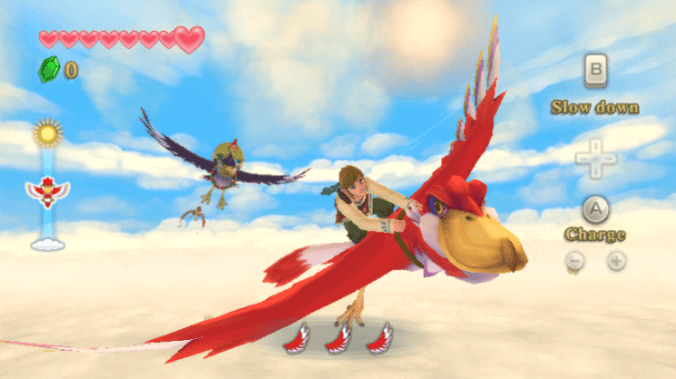
On the presentation side of things, Skyward Sword also excels. The graphics are some of the best I have seen, no need for qualifications about that being for a Wii game. Regardless of what it lack in technical power, Zelda looks good. The art design covers any deficiencies it might have. The soft, impressionistic backgrounds are magnificent, popping with life in color as it goes from vague dots to full clarity. I wish all games could look this good. The music is amazing as well, which is no surprise. Every Zelda game since the first has sounded wonderful.

The story and setting are likewise excellent. It is the usual Link must save Zelda stuff, but it is better told than normal. The first hour or two of the game, which are a bit slow, are used to set up an actual relationship between Link and Zelda. It also sets up the people of Skyloft, who are easily the best incidental characters of the series. Each of the townsfolk is well characterized and feels more real than most games, despite Zelda’s lack of voice acting. With just a word or a grunt, Skyward Sword imbues its characters with more life than games with hours of cut scenes, whether it is Peatrice’s bored grunts or the nervous jittery Fledge. The real star is the buffoonish, bombastic Groose. He starts as the school bully, who has a crush on Zelda and is jealous of Link. Over the course of the game, he develops into one of the greatest ally any Link has had. While the town of Skyloft in not especially big, the characters therein fill it with amazing life.

It all comes together into a game, that while not without flaws, is one of the greatest gaming experiences of the year, if not the generation. It shows that Nintendo still is the best at crafting exciting, innovative, lengthy adventures. No one comes close to offering an experience similar to Zelda.
Not So Glorious

For some reason I am having a hard time hating Glory of Heracles, an RPG for the DS, even though it is giving me numerous reasons why I should. The game looks ugly, the game systems are bland, standard JRPG fare and every other part of it is obtuse and unintuitive. Yet somehow, I am managing to eke a modicum of enjoyment out of it, though I am having trouble pinpointing just why that is.

Glory of Heracles is a special kind of hideous. It is ugly despite looking exactly how it is intended to, like a ghoulish Wind Waker. Much like the DS Fire Emblem, it uses what appear to be 3D models shaded to look like 2D sprites, which results in nicely animated monstrosities that manage to have all of the drawbacks of both 3D and 2D but almost none of the strengths. It is evident that a lot of care and effort went into making the game look exactly as it does, though I can’t imagine why. Even the DS Dragon Quest games, with their tiny sprites on top of PS1 quality 3D backgrounds look leagues better than this.

Speaking of Dragon Quest, if you’ve played any entry in that series then you are about 85% of the way to mastering Glory of Heracles’ battle system. Dragon Quest gets something of a pass for being very vanilla in its battle system because it was first and it generally does something else interesting, like a job system or monster recruiting. Glory of Heracles, though, does nothing interesting. Its only deviations from the generic are tedious. It puts the enemies in rows, but the only purpose for this appears to be to make random battles last twice as long, with the back row inaccessible to attacks until the front row is defeated. There is also some sort of field element system, but it has affected me exactly one time in 15 hours of play, so I’m not exactly sure how it works. Overall, the battle system is a blander, emptier version of Dragon Quest’s.

Then there are the simple things like exploring towns, which the game also manages to muck up. Take opening doors, for instance. When you walk up to a door, you push the ‘A’ button to open it. Not just run into to it, like most games, or push a button to enter. You push a button to open the door, but it doesn’t take you through it. There has yet to be an instance where I would want to open a door, but not to enter it. It is a small thing, but that extra step of tedium is indicative of my entire experience with this game.

Despite its demonstrable ineptitude, I am somewhat enjoying Glory of Heracles. I have a history of enjoying mediocre (Magical Starsign) or even terrible (The Legend of Dragoon) RPGs, but right now I have a backlog of supposedly very good DS RPGs to play, like Radiant Historia and SMT Strange Journey, that I should be playing instead. But I keep coming back to this piece. The story is bland and the Greek setting is squandered. I guess I keep playing because in a lot of ways Glory of Heracles reminds me of second tier 16-bit RPGs that I never got to play. It has that same sort of copycat with a touch or originality that those games seemed to have. Maybe this is my way of showing myself that I do not need to play Lufia or Breath of Fire. Or maybe I should, I doubt they are worse than this.

I got me a 3DS

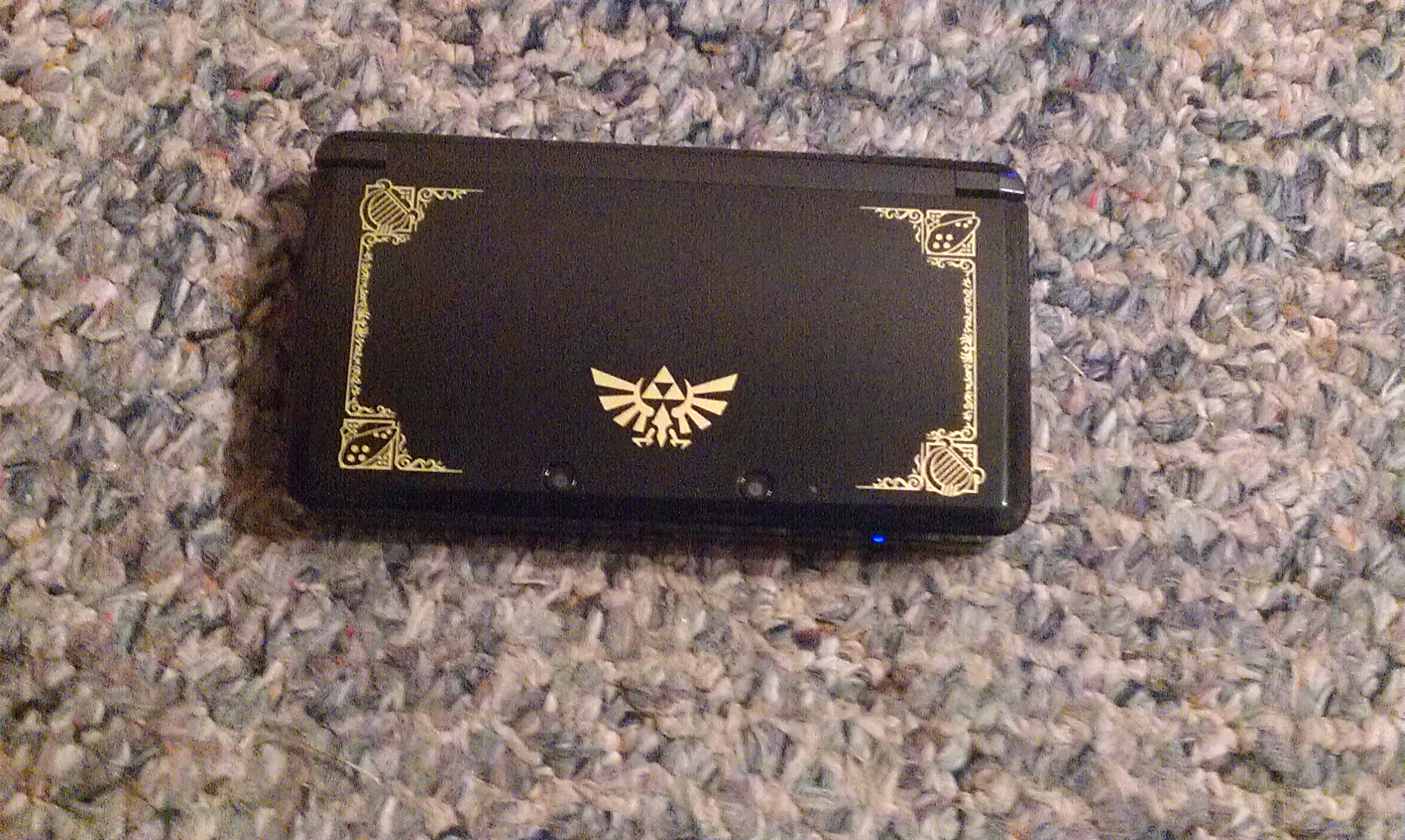
Last week I began to learn the joys of 3DS ownership. In my Skyward Sword induced frenzy, the sight of the Ocarina of Time 3DS bundle pushed me over the edge and I splurged. I mean look at this thing:

I was powerless, I had to buy it. I still regret not getting the Zelda DS lite bundle.

It helped that there are now enough games for the system to make owning not a waste of time and money. The 3DS actually had a pretty decent launch line-up, with several good games if no great ones. Since then the trickle of games, the worthwhile ones at least, released have almost exclusively come from Nintendo themselves. Which is not unusual for a Nintendo system. Right now Mario Kart 7 and Super Mario Land 3D lead my list, with Pilot Wings Resort and Star Fox 64 3D just behind. Plus, there are several worthwhile downloadable games between DSiWare and 3DSWare. And the addition of Gameboy Virtual Console, which I’ve already bought Link’s Awakening DX from. Last but not least, my DS backlog can transfer right over.

Honestly, while the 3D effect is truly awesome, I can’t really play with it on for more than about 45 min. It isn’t really a strain, but it is a bit disconcerting. So far I’ve been using to regulate my playtime on Ocarina, keeping me from plowing through the game in one sitting.

I’ve also tried it out for playing DS games. It isn’t perfect. You can either stretch the game to fit the screen, or shrink it to it’s natural resolution. Neither option is as good as playing it on a regular DS, but it is definitely playable. Some of the games actually look pretty good.

There are certainly flaws that will become apparent to me with time, but right now, flush with new ownership, I am very pleased with this machine.

Of Course I’m Playing the New Zelda

It should surprise nobody that knows me to learn that I have been playing a lot of The Legend of Zelda: Skyward Sword. To put it simply, the game is good. Very good. I love it, like I have loved nearly every Zelda game. My opinions might change with some time between me and the game, but right now it is everything I love about video games.

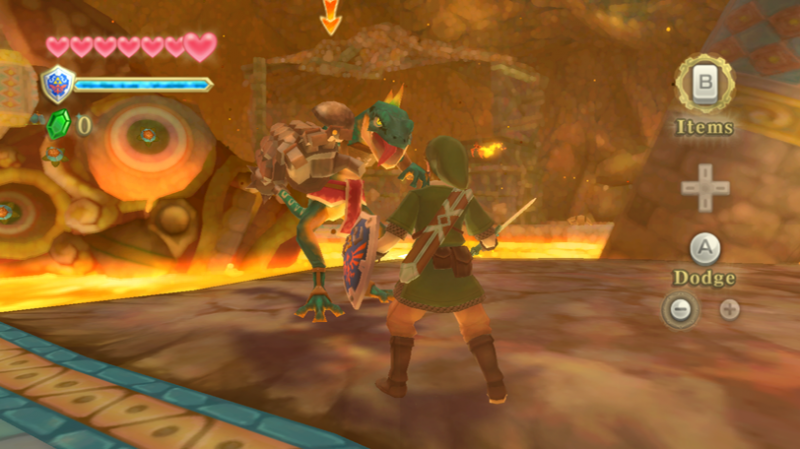
I haven’t finished the game. In fact, I’ve just finished the third dungeon, which seems to be close to the midway point of the game. The most notable aspect of the game, and the part I am most able to speak on with only half of the game behind me is the controls. I’m sure you’ve heard of the game’s intensive swordplay. It is everything you were hoping it could be. Normal enemies are no longer just mooks you bash once or twice and go on about your business. The are actual obstacles, they aren’t exactly difficult but they do require some thought. Or you can usually avoid them. The choice, at least outside of the dungeons, is left to the players. Fighting them can net you items and rupies, but it could also very well get you killed. On the plus side, it is also a lot of fun to smack enemies around with your sword. It just feels so natural and cathartic.

Another plus for the game is that this version of Hyrule, though I do not believe it is yet called that, is possibly the most imaginative Nintendo has come up with. Skyloft is easily my favorite city to run around. Yes, even better than Clock Town from Majora’s Mask. The NPC’s are probably the most likable bunch I’ve seen in a game. Nintendo does more to characterize them with little sound bite when you talk to them than most games do with hours of dialogue. The only disappointment is Fi, Link’s Navi stand-in companion.  But Groose and this version of Zelda are both fantastic.  As are some lesser characters like the eager Pipit.  And the games cuddly in the daytime/ferocious at night cat stand-in Remlits are wonderful.  The whole world just feels so full of life.  It is wonderful.

Right now I can do nothing but gush over the game. It manages to shake up the series with plenty of new stuff; the stamina meter, enemy drops to gather for upgrades, new circle menu’s for items, a limited space pouch, while managing to not change the core feeling of playing a Zelda game. Even more amazingly, nearly all those changes are improvements.