Like We Ever Left Dreamland

Some thoughts on Kirby: Return to Dreamland

As prevalent as Kirby games have been on Nintendo systems since the pink ball first appeared, it is amazing to think that Kirby: Return to Dreamland is his first main series console outing since 2000’s (I think) Kirby 64. Most of his games have been relegated to handhelds and even then were mostly remakes and offshoots. The few home games have been aberrations (Air Ride) or not really Kirby games at all (Epic Yarn, though it is delightful). For his first primetime outing in a decade, Kirby proves that he still has it.

Return to Dreamland is also a return to Kirby’s best game, Super Star on the SNES. Kirby’s trademark power-ups in both games have more than just one or two uses; most of them give Kirby an expansive new move set. It may take some time to learn how to use some of the powers, but for most of them, it is worth it. And the best always has been and always will be fighter, tied with parasol. While sometimes a specific power-up is needed, the game most fun when you simply chose a power you like and wreck the game with that. Another thing Return to Dreamland takes from Super Star, though admittedly it likely also takes it from New Super Mario Bros Wii, is the co-op mode. Four players can play simultaneously. While it is one of the games biggest draws on paper, it is mostly the games greatest failure.

Okay, maybe it’s not quite a failure, but 4 player is not as good as it could and should be. Disappointing is what I’d call it, especially compared to the madcap perfection of NSMBW. There a several problems in playing with more than 2 players. First, the screen is zoomed in too far, crowding the players into a tiny area. There is just not enough room for 4 characters. The second problem is the ability for players to ride on each other’s backs. Not that it is a bad idea, but it is way to easy to accidentally hitch on to one of your buddies, messing up some tricky platforming section. This is compounded by the zoomed in problem. The two together make 4 player a mess.

Kirby: Return to Dreamland falls just short of classics like Kirby Super Star and New Super Mario Bros Wii. It is still very good, and mostly enjoyable, but the aforementioned flaws–and a few others like the shared life pool–make merely a very good game instead of a great one. It does capture that wonderful joy that is inherent to the Kirby series, easy to beat but hard to master and fun for everybody. It just further cements the Wii as the best system for Nintendo games since the SNES.

Video Game Archaeology 6: Indiana Jones’ Greatest Adventures

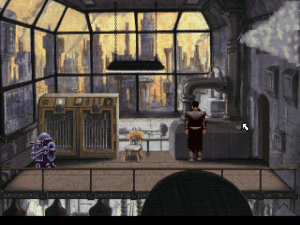
It is time for more Video Game Archaeology! Video Game Archaeology is my monthly exploration of an artifact video game found during my excavations of various bargain bins and yard sales; an examination of a game cast off and long forgotten. This month’s Video Game Archaeology entry is significantly less obscure than any of the previous ones. Indiana Jones’ Greatest Adventures is not exactly an unknown SNES game, though it is definitely not one of the systems most famous games. Still, it is a game based on one of the most popular film franchises ever. I, however, was wholly unaware of the game until it was released for Virtual Console a couple of years ago. I wasn’t shocked to discover that there had been an Indiana Jones SNES game, but it did stun me that I had managed to remain unfamiliar with it for all that time. At first this lead me to conclude that the game simply wasn’t very good. If was worth playing I would have heard about it. That changed when I noticed that nearly everyone who played had only good things to say about it. When I started doing my Indiana Jones movie reviews earlier this month, I finally decided to drop the 8 space dollars needed to download this and see for myself how good it was.

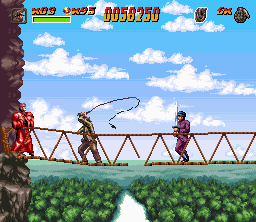
Boxart for Indiana Jones’ Greatest Adventures

Image via Wikipedia

Like Big Sky Trooper last month, Indiana Jones’ Greatest Adventures was from LucasArts and published, at least on the SNES, but JVC Musical Industries in 1994, though this was developed by Factor 5. Factor 5 is famous for the Star Wars Rogue Squadron games, though at the time they may have been famous for the Turrican series. Factor 5 and LucasArts had a long successful relationship, but Factor 5 disappeared a few years ago after the failure of Lair for the PS3.

Indy is a standard SNES action game, much like LucasArts’ Super Star Wars series, also for the SNES or Super Castlevania IV. The Castlevania comparison is an easy one, but they are not particularly similar. At least not more than any two SNES action games. They use the standard level progression and utilize passwords instead of saves, both those are just conventions of the genre. They do both share a primary weapon, the whip. In Castlevania it is a vital, versatile tool. In Indy the whip is much more limited. Especially when it comes to using the whip to swing around the stage. It is more fluid and more precise in Castlevania, while in Indy it feels sloppy and somewhat tacked on. Which is strange, because for the most part Indy controls much more fluidly than the arthritic Belmont.

Graphically, Indy is a nice looking game. Not mind-blowing, but a solid, competent SNES game. Apparently in a nice nod to the fact that Harrison Ford played both, Indy’s sprite is largely identical to the Hon Solo sprite from Super Return of the Jedi, though I haven’t played so I cannot confirm this. The music is a bit iffy. Sometimes it is spot on renditions of classic Indy music, sometimes it is kind of crappy renditions of classic Indy music.

As the name suggests, Indiana Jones’ Greatest Adventures provides playable versions of famous scenes from all three original Indy movies. Starting with the temple and boulder chase from Raiders of the Lost Arc. Each game has about 10 levels, give or take a few for a total of 28. I managed to play most of them thanks to my looking the passwords up online manly perseverance. It is about as accurate as a 2D action game version of a movie could hope to be. Sure there are some strange changes, like Walter Donovan’s skeleton after he chooses poorly being the final boss, but most of the stages are somewhat close to how you remember the scenes from the movies. There are a few Mode 7 stages, but I was not impressed.

Indiana Jones’ Greatest Adventures is a very good game, but it is hardly essential. The fact that so few good games have been made based on these film is baffling, since they are perfect for it. This SNES one is a game worth playing. Maybe not worth tracking down 20 years later, but since it is readily available on Virtual Console I recommend Indy fans give it a whirl, as well as those who appreciate a quality 2D action game.

Laaayyytooonnn!!!

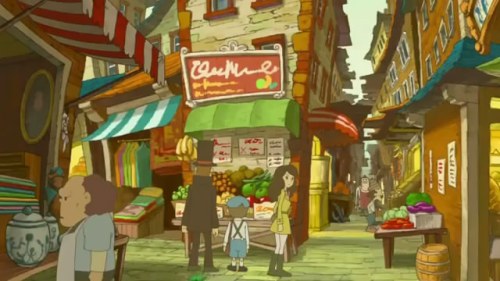
Professor Layton has ruined me for adventure games. I know that Layton’s games aren’t quite classic adventure games, but the differences are why I love Layton and why I am indifferent to most of the genre.

In most adventure games, the developers have to go to extreme lengths to incorporate the puzzles into the game world. The games are intricately designed to give the player the tools needed to solve their problems and to make sure that each of those tools has a believable reason to be there. In the end, I find that it generally hamstrings both the puzzles and the stories the puzzles are propping up. The story is forced into situations that allow the player to solve puzzles and the puzzles are forced to fit into the general milieu. No puzzles involving ray guns, because ray guns don’t make sense. The story needs you to go in this storage closet because you have to have a screwdriver later. It may only be a problem to me, but the delicate blending of story and puzzle usually leaves both unsatisfying.

The Professor Layton series gets around this problem by flatly ignoring it. You solve puzzles because that is what the game is about. Brainteasers and the like. The story of is there because it is the most entertaining method of delivering those puzzles. The good Professor’s cases are always charming, at least somewhat due to his world’s fascination with puzzles. Instead of building the puzzles into the story, though the fourth game has done this a couple of times by the halfway point, Layton merely has characters offer them to the player as challenges. Sure, this crazy old bat has the information you need, but she’ll only give it to you if you solve her puzzle. What the puzzle is doesn’t matter at all to the story. The stories in Layton games are always charming pieces of fluff. They occasionally hit a strong, moving character moment, but rarely is there anything exceptional.

But the puzzles are invariably better than those I’ve encountered in actual adventure games. Solving a Layton puzzle is so satisfying. The game presented you with a challenge and you overcame it. In regular adventure games, when I finally stumble upon the solution, my reaction is usually vague anger. It is either so ridiculously circuitous a solution that I hate the game for thinking it up or stupidly easy, but frustratingly obtuse. Either way it is no fun.

I’ve played enough Layton games now that I know I can never go back to the old games. I’m sure I’ll try them out occasionally, because I can never leave well enough alone. I’m sure adventure game purists will scoff at my missing the point for hating adventure games for what makes them great. The only thing I’m not sure of is my continued access to future Layton games. I can only hope that unlike every other game I like, Professor Layton has been financially successful here in the states and they keep being made. But that is just me being grouchy and pessimistic. At least the Layton movie is being released here next month. I’ll have to buy that.

Its Secret is Sincerity

The game I’ve been playing for the last 2 weeks, Solatorobo, is a late gem for the slowly fading DS. I’m just having some trouble articulating why I like it so much. In many ways, it is exactly the kind of game I don’t tend to like. It is very shallow. All fights play out basically the same, with in the way of difficulty or design. At the same time, it goes out of its way to hold the players hand. Everything gets a tutorial or an explanation from the characters. The game doesn’t allow, let alone expect, the players to figure out anything on their own. This ties into the last big problem, that the game is terribly talky. Characters won’t shut up. The players every action prompt more dialogue from somebody. Despite these problems, and more, I still really like the game, though. Somehow, a piece of quality shines through the crap that might have drowned this game.


One area is shines is in the graphics. This is a fine looking DS game, especially for one with 3D graphics. It honestly gives Final Fantasy: 4 Heroes of Light a run for best on the system. The sound is likewise excellent. There are still some problems, though. For all that there is a beautiful world to explore, the game denies the player that exploration. The areas available to venture into are usually cramped walkways, sewers and caves and the like. It tantalizes with beauty, but hides it.

As I said before, Solatorobo is quite shallow. All fighting generally boils down to dodging the opponent’s one attack, running behind it, picking it up and throwing it. Ad naseum. There are some flying areas, both sort of explore-y spots and races, but neither of those adds much. Playing the game becomes somewhat rote after a very short period.

If I have all these complaint about the game, how can I saw I like it so much? I think it comes down to the games attitude. This is a bright, optimistic game. Its outlook is more like Skies of Arcadia than Final Fantasy 7. Sure, many of the elements that make up the game world are perfectly designed to appeal to me. I love airships and floating continents. And the fighting robots look like they came straight out of Miyazaki. Much work has clearly gone into the world on which this game takes place. It feels less like the usual checkpoints of places to go in a game, here is a snow town and there a tropical island, and more a cohesive world. There is a history and sense of place that most games miss.

However, that alone would not be enough to buoy a lackluster game. Somehow, Solatorobo is more than the sum of its parts. It is talky, but the story is much better than the usual fare. It is not great by any means, but its tone is so different, so optimistic and bright, that it distinguishes itself. Many times, I sit grinding my teeth every time a game interrupts my play to let some douche-y characters jabber on. (I’m looking at you every Tales game ever!) In Solatorobo, the dialogue, while rarely essential, is usually worth hearing. The picking up mechanic has some life to it, though it is too simple to really power a whole game, but combat is infrequent enough that it is rarely a problem. The game is relaxing. It is a stress free, frustration free romp through a colorful world. Solatorobo is not a great game. It is not a game that will go down as one of its systems best or something essential. What it is is an easy, cheerful diversion. It has its problems, but it is hard to hold those problems against a game that so firmly has its heart in the right place.

Tap, Tap, Tapping away!

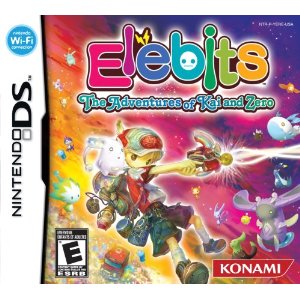
Still playing my DS all the time? Damn straight. After I positively devoured Kirby Mass Attack, I expected to get to jump right into the second of the three DS games I am anticipating this fall, Solatorobo. Unfortunately, for some reason Amazon did not ship the game until Thursday, though it was released on Tuesday. No big deal, but I don’t pay for Amazon Prime to get my pre-ordered games a week after they come out. (Actually, I don’t pay for Amazon Prime at all, but that is beside the point) During the interminable wait, I had to play something, so I broke out Elebits: The Adventures of Kai and Zero, a game I picked up out of a bargain bin, probably during one of GameStop’s “Buy 2, Get 1 Free” sales.

I am enjoying it much more than I expected. There is no escaping the fact that this is primarily a kid’s game, what with the childish graphics — by which I do not mean 2D, but that the sprites are large, simple and big headed — and complete lack of difficulty, but there is enough substance under the candy coated exterior to keep me playing. Elebits is a rather clever mix of Pokemon and The Legend of Zelda tied around an annoying central mechanic. I cannot fathom why the game is built around tapping the DS’s bottom screen constantly, over and over and over. In order to power special skills and various contraptions around the game world, the player must collect charge. This is done by tapping on little creatures, the titular Elebits, which pop out from under rocks and out of trees. It isn’t hard, but it is tedious. It is like a Zelda game that is half collecting Rupees that try to run away from you. This stupidity drags the first hour or two of the game to an anti-fun halt.

The rest of the game has been fun. Easy but enjoyable nonetheless. Despite not having actual dungeons, Elebits plays like a Zelda game. That is a huge compliment. The biggest difference is that instead of finding new tools and magical items, the player finds Omega Elebits. These Omegas function identically to Zelda’s tools, with each one having a unique puzzle-solving ability. The Fire Omega, for instance, can spew fire clearing away path-blocking brush and the Ice Omega can create ice platform to let the player cross rivers. To further add to the Pokemon-ness is the fact that the player can evolve most of the Omegas, provided you feed them enough charge, that is.

You will be constantly interrupted from your pleasantly easy Zelda-clone to poke at the little Elebits on the bottom screen. The emphasis on charging does lessen as the game goes on. Your collection tank gets bigger, evolved Omegas cost less to use and the game start providing you with more high charge creatures to capture. Still, front-loading tedium is never a way to hook players. I put Elebits down when Solatorobo arrived in the mail, but one I finish that, and probably Professor Layton 4, I will be back to take on the last third of Elebits.

Video Game Archaeology: Big Sky Trooper

It is time for more Video Game Archaeology! Video Game Archaeology is my monthly exploration of an artifact video game found during my excavations of various bargain bins and yard sales; an examination of a game cast off and long forgotten. This month’s game is Big Sky Trooper, an adventure/RPG from Lucasarts through JVC.

Honestly, I did not play this game as much as I did the previous entries; I probably did not play it enough for a fair assessment. The cause of this is twofold. First, my used cartridge is defective or just old and no longer holds a save. So any sort of sustained play is nearly impossible. Unfortunately, Big Sky Trooper is a big game, so I wasn’t able to see very much of it at all. I could have left my SNES on day and night to try to make progress, but that is not good on the machine. Or I could have downloaded a ROM and emulated the game on my computer (I strive to play these games in their natural habitat) but I didn’t. Which brings me to my second reason for not playing the game enough: I do not like Big Sky Trooper at all. Me and this game just did not click. Maybe if I had made more progress I would have come around, but the first hour or so put me off pretty thoroughly. I quit after an hour wholly bored with the experience. When I turned it on later to find no save waiting for me, I gritted my teeth and played that first hour again. I could not force myself to play it a third time. I started this feature to find obscure gems and “secret classics” (which are a thing I just made up). I know I would more than likely play many bad games looking for one that was legitimately good, but I take no pleasure in trashing a game, especially when in all reality I’ve barely played it. I did play it enough to get a general idea of what he game entails, though.

The fact that the game is from Lucasarts gave me hope that it would be good. Though they were best known for their PC games, in the early 90’s Lucasarts put out some phenomenal games. It was published by JVC, the company behind VHS tapes. They seem to have mostly published Lucasarts’ console games of the time, like Defenders of Dynatron City and the Super Star Wars games. Though it came out in the tail end of 1995, one would be forgiven for thinking this was an SNES launch title. The graphic do little to push the hardware. The game looks simple and cartoony, but not at all attractive. It’s just sort of charm-less kiddy looking fare.

After choosing a gender, the player is given a series of “tests” by a larger than life military commander who literally bursts out of the TV set on screen. The game seems to be striving for a Starship Troopers like tone, a satire, but the whole thing falls flat. Slugs are taking over the universe and the player, randomly drafted by the apparently incompetent military to lead the charge. The player is given control of a dog shaped ship called the Dire Wolf and controlled by a dog like AI. You are given a mission to reach a planet, seen on a map that shows several dots for planets, but you can’t just move straight to your goal. You must stop at each planet in between and eradicate the slugs. And before you can land on the planet, you mist play a crappy version of Asteroids to clear the path to the surface. The Asteroids clone is baffling. It is not a bad idea, but it is a really bad version of Asteroids. Your ship is huge on the screen and moves ponderously. I never failed to destroy the enemy ships, but that didn’t make those sections anything but annoying.

On the surface you shoot slugs with what appears to be a taser and ostensibly solve puzzles, though the only one I solved was simply standing on a switch to open a door. I assume the game becomes more complicated, but the first hour is dull and tedious. When you meet your contact, she tells you to go look for something else, again several planets away. So you must repeat the same tedium. I see from a map of the game world off Gamefaqs that the map eventually gets bigger, but that only implies increased tedium to me.

The world, the toothless attempts at satire and the graphics and the attempts at what I am guessing is humor, all fall flat. The gameplay is neither complex nor satisfying. It could easily get better after the first couple of hours. Maybe the gameplay options open up, maybe there are puzzles worthy of Zelda, maybe the writing hits is stride, but I have neither the time nor the inclination to stay to find out. The SNES has a library of great games, even some classics that I have not yet played (Super Star Wars for instance), I cannot justify spending any more time with a game that provides so little entertainment.

The Cutest Murderous Mob You’ll Ever See

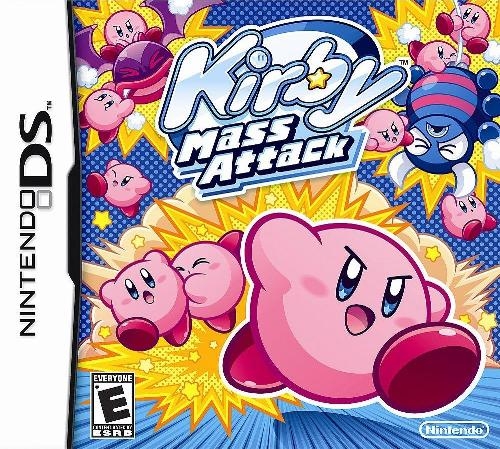
A new Kirby game has been released and it has become my life. Fortunately, Kirby games are often short affairs, so it is dominion over my free time is sure to be short lived. (note: in the time between typing and posting this, I beat the game.) Kirby Mass Attack is a fitting last Nintendo game for the DS, as it seems like it may be. (I know that Nintendo is publishing Professor Layton 4 next month, but that is a Level 5 game, not a Nintendo one.) It is a platformer that combines the best of SNES era 2D gameplay with controls that are only possible with the DS’s touch screen. Mass Attack is the epitome of what the DS has offered over the last half-decade or so.

The best DS games, the one that aren’t ports or remakes, combine traditional types of gameplay with inventive use of some or all of the DS’s unique functionality. There are gems like Trauma Center, The World Ends with You and Kirby Canvas Curse. Canvas Curse is a great comparison for Mass Attack; they are both nontraditional Kirby games and they are possibly both the first and last great games for the system. While Canvas Curse was the game that announced the arrival of the DS as a full-fledged system and not a gimmicky blip next to the gameboy, Mass Attack is the culmination of five plus years of capitalizing on the potential Canvas Curse revealed.

Not that all uses of the touch screen or the second screen or anything else were good, but even some bad games had at least uniqueness to offer. There were disasters like Lunar Dragon Song but more often, there were interesting failures, like the various attempts to force a RTS on to the system. From Lost Magic (I’ve never played that one) to Heroes of Mana to Final Fantasy XII Revenant Wings, it was tried many times, but never was it wholly successful, though Revenant Wings came close. Mass Attack also attempts to be something of an RTS, but it succeeds by adapting that sort of gameplay to a style of game more suited to the DS: a platformer.

At its heart, Kirby Mass Attack is not too different from Kirby Super Star, right down to the different mini-games. However, the RTS touches add an interesting wrinkle. Many DS games have tried full touch screen controls and as well as they have worked some times — the Zelda games for example — there is an inherent loss of precision. This can be a killer in the intense portions of most action games. Mass Attack’s RTS elements help alleviate that by giving the player direct control of 10 characters rather than one. The lack of precision is made up for by the mass of avatars the player controls. Best of all, the stages are designed with the strengths and weaknesses of the controls and screen size in mind. There are fewer precise jumps, because that is hard to do with no jump button, but more flat line hazards, which are still difficult and less frustrating.

Mass Attack looks and feels like an SNES game, but controls and plays much differently. It manages to be deliciously old school and entirely fresh and innovative at the same time. It is a Kirby game, despite how much it deviates from the norm (which is more and more becoming the norm for Kirby), so it is fairly short and mostly easy. I beat it in less than a week, though my completion percentage is only 74%. Putting this game over the top from very good to great is the slew of outstanding mini games unlocked by finding medals in the stages. There is pinball game, and a fake RPG and a wholly enjoyable shooter and several more I haven’t yet played. This game really seems to be a labor of love, as the best games are. The days of the DS are waning quickly, and titles like Mass Attack are helping the best video game system of the millennium (so far) go out with a bang.

The Adventure is Over (for now)

Playing a pair of games last week, 9 Hours 9 Persons 9 Doors and Touch Detective, made me finally realize that I don’t like adventure games at all. It took me a long time to come to this realization because point-and-click adventure games seem like something I would really like. They are a combination of reading, which I greatly enjoy, and puzzles, which I also greatly enjoy. Combined like they are in most adventure games, though, somehow makes them both less appealing.
At first I thought I just needed to learn the methods, the syntax, of the genre to enjoy it. Listening to the terrific episode of Retronauts about adventure games led me to believe this was likely the case. So I fought through games like Syberia, Beneath a Steel Sky and Lure of the Temptress. While I found the stories enjoyable for the most part, I thought the solving arcane and baffling.

I did play some adventure games that I likes, but they were all somewhat different than the traditional genre entry. The Phoenix Wright games, while they have enjoyable characters and plots, have much simpler and straightforward puzzles. Never are you presented with a problem that you can’t solve at the time you encounter it. The series goes out of its way to make sure you have the tools to solve all of its problems. Then there are the Professor Layton games, which divides the puzzles entirely from the adventure game parts. The puzzles are also more brain teasers more than environmental hurdles. Zack and Wiki have more traditional styled gameplay, but broken up into easier to digest discrete stages.

My first problem with “real” adventure games is that the puzzles are so sprawling that I have trouble identifying the puzzle. I know that is part of the solving of an adventure game, but I often find it needlessly obtuse. Such is the case for much of Touch Detective. I feels less like I am solving problems and more like stabbing wildly at crazed leaps of non-logic.

My other big problem is that they don’t let you skip steps. (I know this one is all on me.) Once I figure out the solution, the games don’t just let me put in my answer and go. I still have to go through the motions of solving it. This is what is supposed to be fun about these games and it annoys me. When I know the answer I don’t want to do the problem anymore. Noting this has helped me realize that adventure games are just not for me. And that’s okay. The genre shouldn’t change so that I (and people who feel the same as me.) can enjoy it. That would ruin what the fans of the genre like. There are certainly things that could be improved, but I’m more than content to just accept that this is a genre I don’t enjoy.

Thoughts on Lost in Shadow

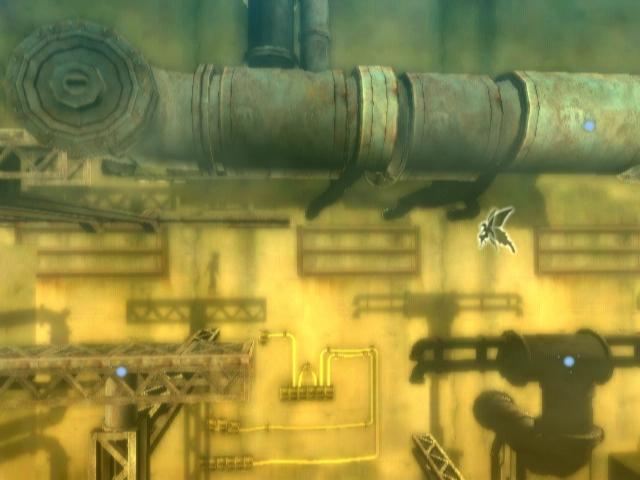
After beating Sin & Punishment — on easy, if you must know — I started up several Wii games to see what would grab me. After trying out Epic Mickey, Muramasa and Cursed Mountain, all games I plan to return to, I finally decided to stick with Lost in Shadow.

Lost in Shadow is a 2D platformer from Hudson. It is hard not to compare it to the likes of Ico, if only due to the aural and visual similarities, but they have wholly different gameplay goals. It tries very, very hard to capture the ethereal moodiness of Ico and it succeeds fairly well. It is certainly more “gamey” than Ico is, being split into levels and tracking experience points, but what is loses in cohesion it makes up for in mechanics. Ico is a singular experience that eschews many video game conventions, like HUDs and separated levels. It is in many ways a more direct adventure game. Lost in Shadow takes the look and feel of Ico, but marries it to a more traditional video game set up. It actually plays very much like a 16-bit action/platformer. Which is absolutely a good thing.

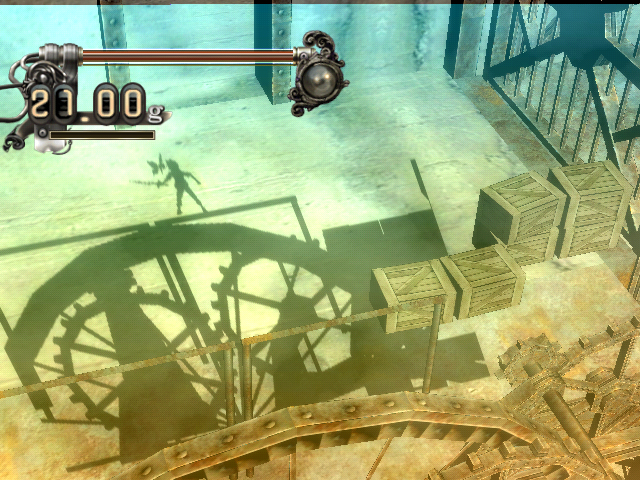
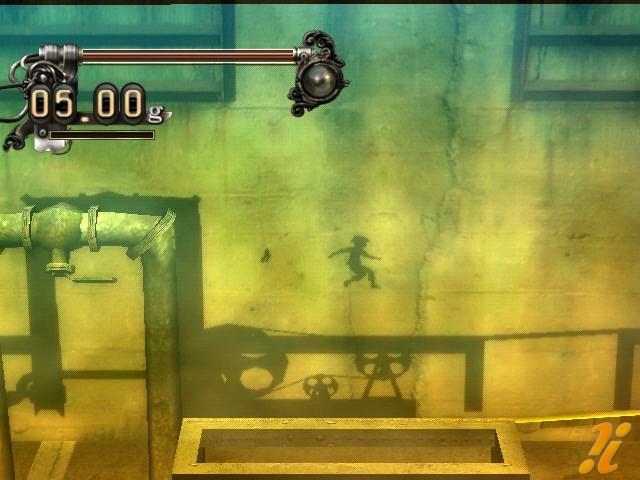
You play as a shadow separated from its body, a la Peter Pan, and must traverse a castle to reunite with it. Being a shadow, your avatar can only travel along other shadows. So you must manipulate objects in the physical foreground to make paths in the shadowy background. It makes for some ingenious fun. The levels tend, at least in the early going, to be short, but they all have a satisfying puzzle at their heart.

One gameplay area Lost in Shadow does seem to take its cues from Ico is in the combat. Though how fun it was is debatable, when you fought in Ico it got across the feeling of being a small boy fighting with a stick. The shadow also swings his sword with little skill. It is hard to judge and ungainly, but perfectly responsive. The combat is slow and nowhere near as interesting as the puzzles are. Hopefully it stays a secondary concern ans doesn’t overwhelm the good parts of the game.

I am only about 35% through Lost in Shadow, and I have enjoyed it thoroughly so far. There is still plenty of time for it to screw up, but as long as it doesn’t go meat circus* stupid it should still be a pretty good game.

*The Meat Circus is the final stage in the seminal Psychonauts and is damn near unplayable. It is both stupidly hard and seemingly designed for a moveset the player doesn’t have. It nearly ruins one of the best games of the PS2 generation.

Punishment Indeed

I want to love Sin & Punishment Star Successor. I liked the first game a lot; it was one of the first games I downloaded from the Wii’s Virtual Console. I loved its mix of traditional shmup gameplay with Star Fox’s 3D on-rails style, with just a dash of action game thrown in for good measure. I do love Sin & Punishment Star Successor, except for when it fails utterly at hitting a good ratio of levels to bosses, something even the worst video games seem to be able to do better than S&P.

Star Successor is sublime. It is a perfectly tuned shooter that is ideally to the system it is on. However, there is that major flaw. The game simply has way, way too many bosses.

Bosses are a staple of video games, for good reason. There is nothing quite as cathartic as taking down a towering monstrosity to cap off an arduous stage. S&P ruins this by throwing boss after boss after boss at the player. Even ignoring the mini-bosses that really barely count, most stages in this game have at least 3 full fledged bosses.

It is not that the bosses aren’t fun, many of them are. It is not that they are too hard, though I am having trouble but it is well known that I kind of suck. It is that having so many bosses ruins the flow of the games and demolishes their effect. An amazing boss in a stage is memorable, three in quick succession is numbing. It stops being “Whoa, another boss!” and becomes “Whoa, another boss?” It makes the epic encounters with gigantic foes rote rather than thrilling.

The preponderance of bosses makes me crave more of the actual stages. I know, from years and years of playing video games, that the closer I get to the end of the game — I just finished stage 4 of 7 — the amount of bosses is going to increase. I know an actual boss rush is coming. I just wish that the boss rush wasn’t a continuation of the rest of the game.