Video Game Archaeology: Rocket: Robot on Wheels

It is time for more Video Game Archaeology! Video Game Archaeology is my monthly exploration of an artifact video game found during my excavations of various bargain bins and yard sales; an examination of a game cast off and long forgotten. Featured this month is the Nintendo 64 game Rocket: Robot on Wheels.

Rocket: Robot on Wheels is the story of a robot that must save his owners theme park by defeating the devious raccoon mascot (actually mascot’s sidekick) and retrieving all of the tickets he had stolen. Yes, Rocket is that specialty of the N64: the collect-a-thon platformer. Here is have to be completely honest, while I recognize that that they are wholly out of favor I never really soured on collect-a-thons. I don’t necessarily love all the games in the genre, but I still like many of them. I played Banjo-Kazooie in the last year and still loved it. And I really liked Rocket as well.

A collect-a-thon, for those to whom God was merciful and were spared the eye-searing N64/PS1 days, is a game that focuses primarily on collecting various doodads and baubles. In older games, the goal was usually to reach the end of a stage or to defeat a boss, but in a collect-a-thon the levels are generally large playgrounds and the goal is to find all the crap hidden in a level. While you can trace the roots of this nonsense back to the 16-bit era (see: all the crap to collect in DC2), collect-a-thons really got their start with Mario 64.
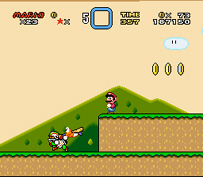
Mario 64 set the tone for N64 platformers. Instead of linear levels like the 2D games, Mario 64 gives the player large, relatively open levels with 5 or so stars to find in each of them. Other than coins, that is all there really is to collect. Other developers saw Mario 64 and thought, “if kids like collecting stars so much we’ll give them 500 things to collect.” Then they did so.

Pocket is a perfect example of the collect-a-thon. In each of the 8 stages, which are somewhat cleverly attractions at an actual theme park, the player must collect 15 tickets. While most of the tickets are cleverly hidden or earned from completing actual tasks, there are at least 2 in each stage that you receive as rewards for collecting other things. In each stage, there are 200 gears, which are used to upgrade some of Rocket’s skills but mostly just there, so one of the tickets can be a reward for finding all 200. Also in each stage is a machine that must be repaired. To repair it you need to find the 6 pieces of it scattered about the stage. Doing so opens up some previously unavailable sections of the stage and nets you the immediate reward of a ticket. The extra collectables are mostly unnecessary. They pad a game that is already plenty long and is otherwise really fun.

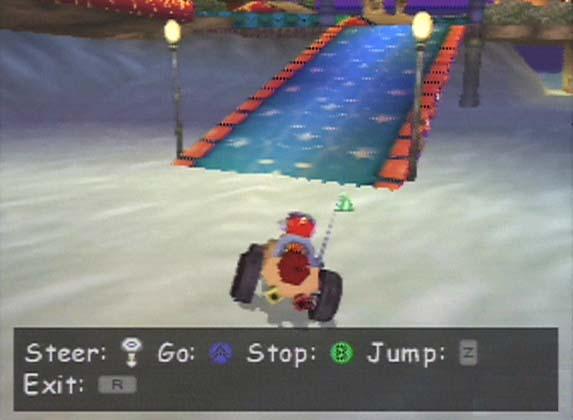
Collect-a-thons do not hinge on the collecting but on the obstacles between the player and the doodad. In this area, Rocket is quite good. While not all the challenges are particularly fun, one that is not is an annoying dolphin ride, most of them are well done. At least through the first 3 or 4 stages, which is all the further I got. Rocket’s most effective tool is his electric tether. It is used, thanks to his stylish lack of arms, to grab and throw objects. It is also used as a grappling hook, a la Bionic Commando or Metroid. Unfortunately, it is severely underutilized in that capacity.


There are some flaws. One is the camera, the bane of nearly every N64 game. The camera is quite simply terrible. It seems to purposefully plant itself at the worst possible angle and fights strenuously to keep you from positioning it somewhere useful. Half of the challenge in this game is getting the camera to a place where you can see what you are doing.

Another problem, I wouldn’t quite call it a flaw because it is clearly supposed to be integral to the game’s identity, is the curios momentum and physics in the game. The world of Rocket feels somewhat like the ice stage from every game ever. Rocket is called the “Robot on Wheels,” so having him roll around seems right even if it takes quite a bit of getting used to at the beginning. It works with the physics of his tether. When your primary weapon is tossing things, how they move is an important part of the game. In Rocket things just seem to not stop when they should. If you throw something, it will bounce around for an improbable amount of time. It is different from other games and in this case, I say that is a bad thing. The physics in Rocket make me want to play a different game.

Rocket is impressive as the maiden effort of developer Sucker Punch, the company that would go on to make the Sly Cooper series and the Infamous series. There is a lot that feels like rough draft Sly Cooper in this game. It has a similar style and a very familiar raccoon character. I would say that the first Sly Cooper game is notably less ambitious than Rocket, though it is the better game. Sucker Punch displays a tendency to cram a wide variety of gameplay styles in their games, like various vehicles and the like, but keeping most of them true to the general feel of the game.
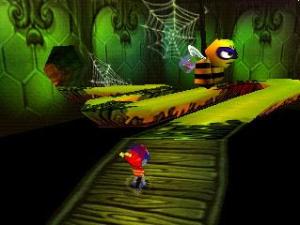
One more interesting tidbit is the fact that right up until just before its release this game was titled Sprocket, but they had to change the name due to legal threats from Hanna Barbara, the owners of The Jetsons and apparently the word sprocket.

For those with fond memories of the N64, Rocket: Robot on Wheels is definitely worth a look. While I’m not about to put it up there with the best of N64’s titles, it definitely belongs in that second rung. Would say it is just a small notch below Banjo-Kazooie, the second best platformer on the system. This is exactly the sort of hidden gem I hope to uncover in these excursions.

Once More I Walk this Dangerous Path

Arrgh! Etrian Odyssey! Again!

Don’t get me wrong, I love Etrian Odyssey. However, I would guess that even the series’ most ardent fans (a group I generally consider myself a part of) would agree that frustration is a large part of the series’ charm. Etrian Odyssey is never easy but it is rarely unfair. It gives the player a set of tools, a goal and an obstacle then leaves them alone. Continue reading

The 20 Best SNES Games

For the last of this week’s celebration of SNES’s 20th year of existence, I have resorted to best and laziest of ideas: a best games list. Since this is the 20th anniversary, I am picking my 20 favorite Super Nintendo games. As this is a list spun entirely from my own mind, I’m sure you disagree with some parts of it. To preemptively reply to any such complaints I say “neener neener neener.” Also “maybe you should go make your own list, with blackjack and hookers.”

Let us begin.

20) Actraiser

In what will be a theme for these early entries, I haven’t played Actraiser quite enough, so it might either deserve to be higher or not on the list at all. Based on its reputation and limited time playing it, I say it is the systems 20th best game.

19) Donkey Kong Country

Though DKC is one of the most successful games of the generation, I have barely played it. I liked it, but I have since played its reputedly better sequel and found it perfectly frustrating. I’ll give DKC the benefit of the doubt of being the better game and therefore being worthy of this list.

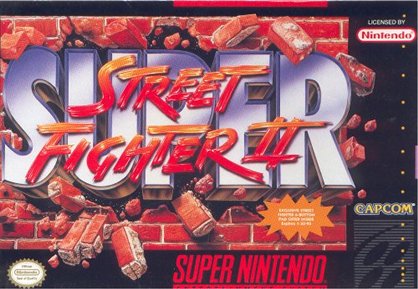
18) Super Street Fighter 2

I don’t know which version of Street Fighter 2 for the SNES is the best, I’ll leave that to the Street Fighter scientists. I do know that any discussion of 16-bit gaming must include talk of Street Fighter 2. Super Street Fighter 2 is the game I played as a kid, so that is the version I chose.

17) The Lost Vikings

This is a great little puzzle platformer from those who would be Blizzard. It is on par with the quality of their later games. I never beat this game, but I had a lot of fun.

16) Super Mario World 2: Yoshi’s Island

Another game I have not played near enough. The graphics alone make it worthy of this slot, though.

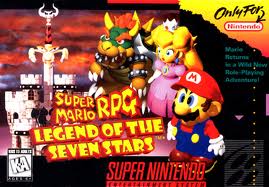
15) Super Mario RPG

I hate jumping in this game. Other than that, it is great. The mix of Mario and Square works better than Disney and Square.

14) F-Zero

The original futuristic racer is no longer the best (F-Zero 64 is better) but this is part one of the proof of mode 7 in action.

13) U.N. Squadron

There are tons of shooters on the SNES, but I say U.N. Squadron is the best. Keep your R-Types, Axelayes and Gradiuses, I’ll take U.N. Squadron. Actually, I’ll take those others, too. But U.N. Squadron first.

12) Secret of Mana

I may not be this games biggest fan, but it looks nice and sounds terrific. I get annoyed with the gameplay at times, but even I won’t say it’s anything but great.

11) Super Mario Kart

The other proof for mode 7. This is the original ingenious use of the Mario franchise, and it is still one of the best. Really, do you need me to tell you that Mario Kart is fuck awesome?

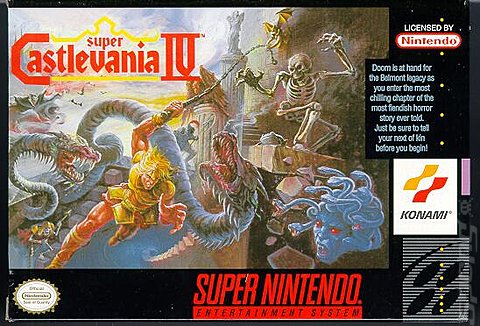
10) Super Castlevania 4

I bow before this games mastery of a gameplay style that I don’t really like that much. Super Castlevania 4 does just about everything right. Despite its intentionally stiff controls, it is loads of fun.

9) Final Fantasy 2

The immortal adventures of Cecil, Rosa and Kain. Like some other games in this series, FF2 is one of the most influential games in the genre. The story may revel in the melodramatic, but it is still riveting.

8) Kirby Super Star

The best Kirby game? I think so. This not quite mini-game collection was a near perfect platformer.

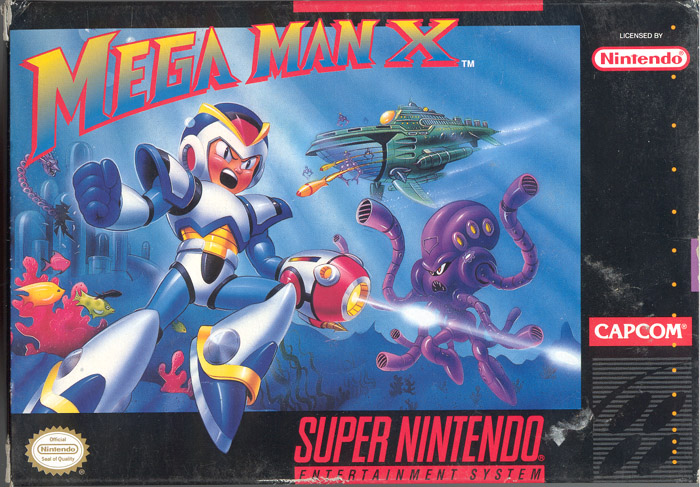
7) Mega Man X

The Mega Man series needed a shot in the arm after 6 quick NES installments, and Mega Man X was it. Too bad its energy did not quite carry on to its sequels.

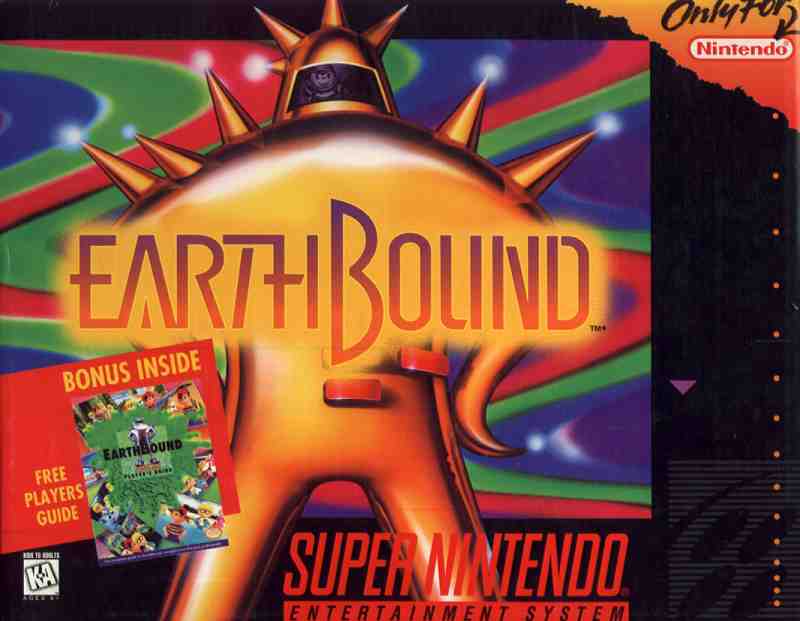
6) Earthbound

Quirky, weird and under appreciated, except but its consistently rabid fans, Earthbound is a tragically unique game. I wish there were more like it.

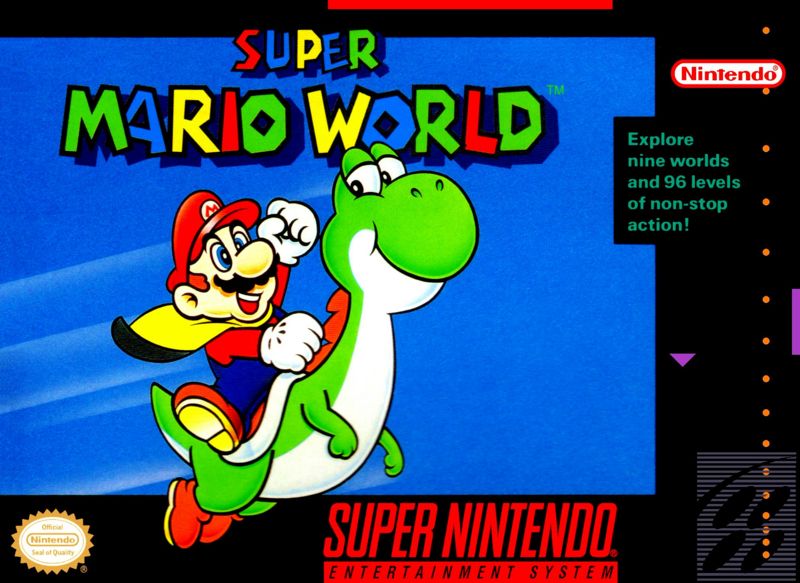
5) Super Mario World

Mario, still the best after all these years. Every single mainline entry in this series has been wonderful. Super Mario World may be the most wonderful.

4) Super Metroid

This is a constant atop best ever lists. Many believe it to be the perfect game. I don’t necessarily disagree, but I like the games above it slightly more.

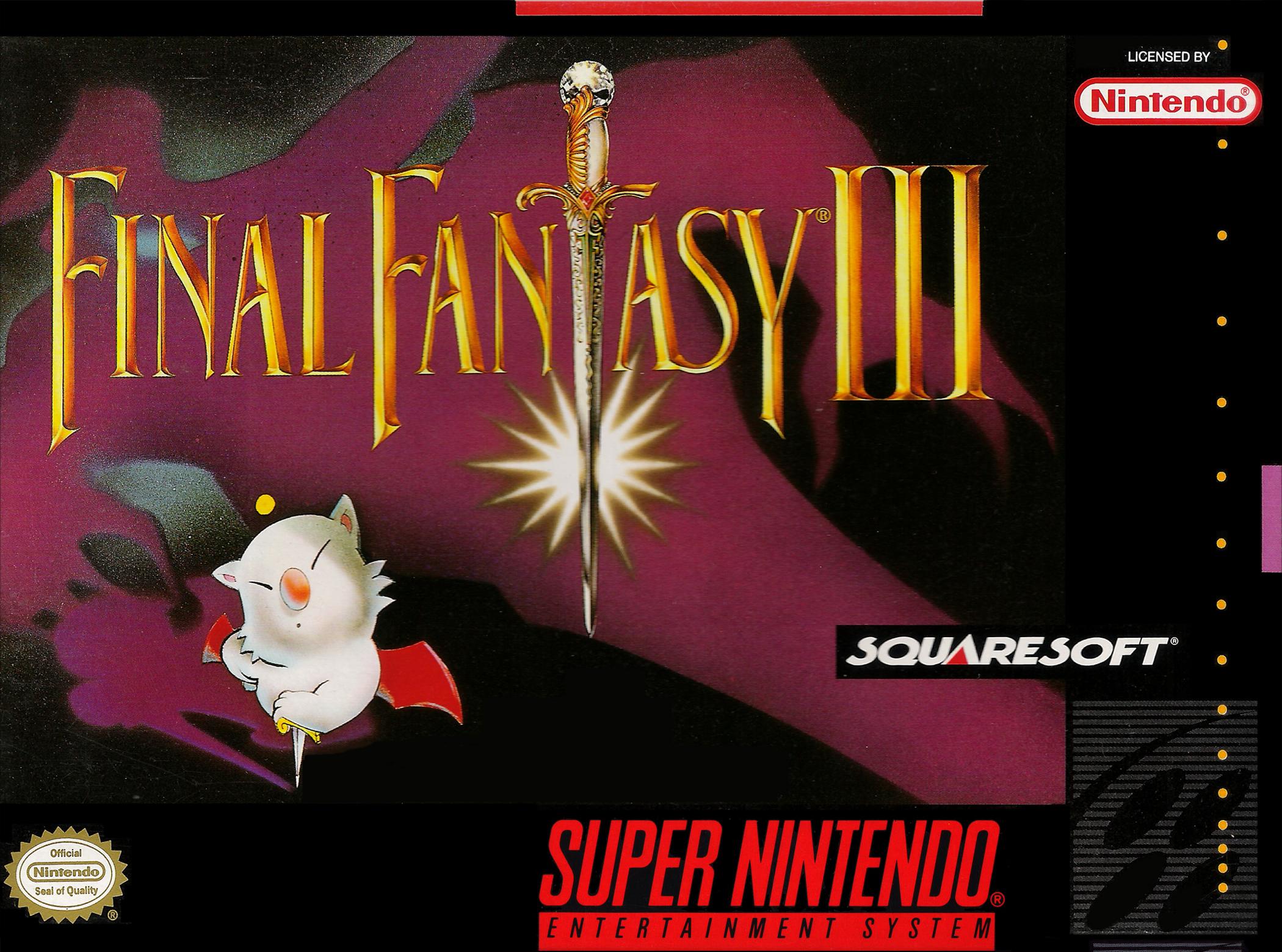
3) Final Fantasy 3

The cast is arguably too large, the style change at the halfway point may be too great, but all of this game’s parts fit together perfectly. All the best Final Fantasies are multiples of 3.

2) The Legend of Zelda: A Link to the Past

This is not my favorite Zelda game. But even my least favorite Zelda game is still among my favorite games. Not that is my least favorite either. More than even the original, A Link to the Past established what a Zelda game should be.

1) Chrono Trigger

My personal favorite game ever. I love every part of Chrono Trigger. There is nothing this game does that isn’t great. The closest thing I have to a complaint about it is that for a long time I had an irrational hatred for Lucca. No reason, just screw that bitch. She ain’t so smart.

The RPG Machine

Anyone who reads this blog should know that I am a pretty big fan of RPGs. A large part of my love of the SNES is due to it being probably the best RPG console to ever exist. The SNES library is glutted with great–and not so great–RPGs. More so than anything else, the SNES is great for RPGs.

That is not to say that subsequent consoles haven’t also had great RPGs. With the exception of the N64 they all have and I guess even the N64 had Paper Mario and Ogre Battle if you squint to make it count. The SNES, though, has an overabundance of all-time great games from the genre.

By my reckoning, there are 4 categories of SNES RPGs. The first are the “disputed” ones. These are the games that aren’t widely considered classics, but so have supporters, often vocal ones. This group covers most of the SNES’s RPGs. Games like the Breath of Fire or Lufia series. These are the games that you know one person who swears they are amazing, but most everyone else could take them or leave them. Some have tried to tell me that Breath of Fire II is a classic on par with the systems greats, but this is just not true. BoF II is too grindy and the translation it too mangled for the game to be anything but mediocre. My personal hobbyhorse in this category is Secret of Evermore. Despite longstanding hatred for not being Secret of Mana 2, I’d say that Secret of Evermore is a damn fine game. In fact, I like it more than Secret of Mana. I realize, though, that I can’t change the established narrative that they are the classic Secret of Mana and Secret of Evermore is its bad, or at the very least misguided, semi follow-up. That is how the disputed group works. History has already judged these games and found them wanting, but there will always be those that claim Final Fantasy Mystic Quest is the “secret best” SNES Final Fantasy game. It makes all the games I’ve mentioned, and many more, worth a look, though you most likely find many of them to be not to your taste. However, there is the chance that you might find one of them to be a hidden classic.

The next group are the “great, but” games. This is a much smaller group than the one before it. These are the games that would be truly great, save for one flaw (or several small flaws). Like Secret of Mana and the fact that you can almost see the seams where large parts of the game were removed and the surrounding part sewn together. Or Super Mario RPG and its goddamn infuriating isometric platforming sections. Or Final Fantasy 2 and the fact that it is not Final Fantasy 3. My experience with FF2 really is a tragedy. After spending years wanting to play that game, I didn’t end up getting the chance to until after I had played FF3 and Chrono Trigger and next to them, it felt primitive and shallow. All of these games are definitely worth playing, though.

The third group is the “unimpeachable classics.” I say there are only three games in this group: Chrono Trigger, Earthbound and Final Fantasy III. Not only are these the three best RPGs on the SNES, I would say they are the three best RPGs, period. There are plenty of games on a similar level, but none that are genuinely better. Chrono Trigger is elegant. It is graphically stunning with a straightforward story and a deceptively complex battle system. Earthbound is truly unique (other than its Japan only sequel) with its modern setting and often absurd sense of humor. Final Fantasy 3 is simply bursting at the seams with game. The party has more than 12 members but never feels bloated, each with unique skills, as if they split each of the jobs from the previous game into its own character. There is a 20-hour game that climaxes before opening before another 20-hour game. All three of the games have terrific music. Everyone should play these three games, as often as possible. I make a point of playing 2 of the 3 every year.

The last group is the “not available” group. There are the numerous, numerous games that never made the trek across the ocean. It is lead by Final Fantasy 5, Dragon Warriors 5 & 6 and Seiken Densetsu 3 (Secret of Mana 2). Many of these games have since made it to America, but they will never be truly part of the SNES experience here. Many of them are great games; some have inflated reputations due to their inaccessibility. No matter the quality, the sheer number of games that we didn’t get–RPGs for the sake of this post, but there are many other games as well–is a tragedy.

Overall, there are so many great or nearly great RPGs for the SNES. I am not one to say that the genre has not evolved since the SNES days, but the games on this system were such a large part of shaping my tastes in video games that I cannot but consider it the best RPG console.

My SNES Experience

As I wrote the other day, though my love of the NES is unaffected, the SNES is my favorite video game system. The NES is certainly a console with some special personal relevance; its release date was within days of my own release date. I have lived my entire like in the Nintendo age of video games. (which of course began with the release of the NES, reviving the video game industry in the USA after the crash of ‘84.) Unfortunately, this means that the heyday of the NES was pretty well over before I was aware. The SNES’s release in August of 1991 occurred at a time when I was 6 years old and beginning to really get into video games.

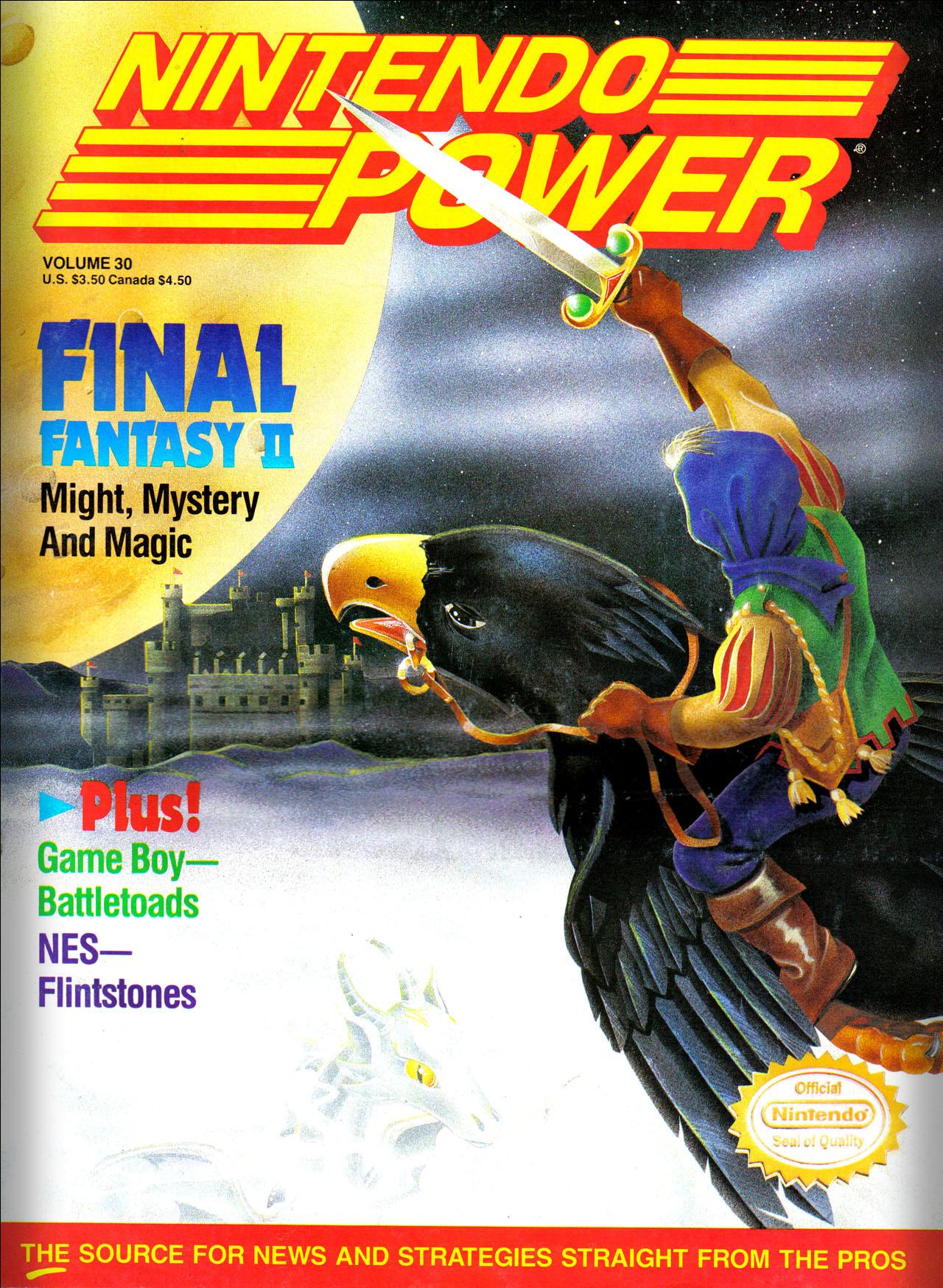
My experience with the SNES did not actually start in 1991. I don’t think I scrounged up the cash to buy one (my parents refused to buy us another video game system) until sometime in 1996. But I was certainly aware of it before then. I had long had a subscription to Nintendo Power, (I think my Dad got it around the time of the Dragon Warrior give-away) so I had seen what the new system had to offer. I absolutely poured over the issue that covered Final Fantasy 2. My only experience with RPGs at the point had been the limited Dragon Warrior and Final Fantasy 2 was a quantum leap above that. When I saw the original Final Fantasy on a clearance list at Wal-Mart, I jumped all over it. I loved Final Fantasy, but it clearly was not on the same level that I dreamed Final Fantasy 2 was on.

All because of this

I remember the first time I actually saw an SNES. It was my cousin’s; he showed it off by ruining his Dad’s A Link to the Past game. Okay, he didn’t really ruin it; he just smacked a chicken around until the flock of them attacked then paused the game, leaving it like a trap for his father to find.

The first time I played one for any amount of time was at my friend’s house in the summer of probably 1995. The reason I didn’t own one was due t a lost battle over a Christmas present with my brother. I wanted the SNES; (did he see those screenshots of FF2?!) he wanted a Sega Genesis. To play Mortal Kombat or sports games or some such nonsense. My friend had an SNES, but he didn’t have the coveted Final Fantasy 2. No, he had Final Fantasy 3! My 10-year-old mind was blown. Paying back years of his coming to my house to play Nintendo, I returned the favor all summer. (My friend also had an older brother somewhat meaner than mine, so it wasn’t all peaches and gravy.) Using Final Fantasy 3’s underrated two-player option, we played through that game together. Then we played Earthbound, then Chrono Trigger and other classics. That summer I became determined to own my own Super Nintendo.

That quest turned out to not be very difficult. Another friend had gotten a second SNES at Christmas and instead of returning it, agreed to sell it to me for a cool $50. From then on most of my money earned mowing lawns and from meager payments for doing household chores, went to buying new SNES games. I have always been nearly a generation behind on gaming, and with the usually cheaply acquired games, I found the latter days of the SNES were a Golden Age. Of course, not all games were cheap. I dropped more than a hundred dollars in one go on Final Fantasy 3 and Chrono Trigger, but they were easily worth it. There was also Super Mario World, Secret of Mana, Sunset Riders, Legend of the Mystical Ninja and many, many others.

The SNES was something of a Holy Grail console for me. For the longest time I searched for one, but could not get it. When I finally did own one, it turned out to be even better than I had imagined. You can make great arguments for so many consoles being the best ever: the sheer number of games for the PS2, the fact that most of the great SNES games are also available for the Wii or the combination of innovative brilliance and classics styles on the DS, but for me the best is and always will be the Super Nintendo.

Top 20 SNES Songs

My week long celebration of the SNES’s 20th needs more than just three short posts, so I am going to supplement that with a pair of quick, but well considered, Top 20 lists.

This first one is a list of my 20 favorite pieces of music from SNES games. I have limited it to no more than 2 from any one game and no more than 3 from any one series to keep me from filling it with just Zelda and Chrono Trigger tracks. I am sure there are plenty of songs that I’m forgetting, and you can yell at me about them in the comments section, but here are the ones I didn’t forget:


20:  Stickerbrush Symphony – Donkey Kong Country 2.  I may not like the game that much, but the music is tits.

19:  Dedede’s Theme – Kirby Super Star.  I had to have Kirby on here, and Green Greens is too easy

18:  Fillmore – ActRaiser.  I haven’t played the game enough, but it sounds great.

17:  Dark World – Legend of Zelda:  A Link to the Past.  Why did I put this so low?  Because I forgot it until just before I was finished.

16: Brinstar (red soil) – Super Metriod.  Too goddamn great.  Perfectly moody.

15:  Big Blue – F-Zero.  Listen to it, I don’t need to add anything.

14: Storm Eagle – Mega Man X.  Mega Man always had great music, the SNES changed nothing about that.

13: Red Wings – Final Fantasy 2.  Take that Imperial March.

12: Leave Time for Love – Secret of Mana.  Secret of Mana is obligatory.  I like this one.

11: Memories of Green – Chrono Trigger.  You could replace this with any other song on the Chrono Trigger Soundtrack, save one.

10:  Buy Something Will Ya! – Earthbound.  Earthbound’s music is as idiosyncratic as the rest of the game.

9: Title Theme – Super Mario World.  I love it all, let’s just start with this one.

8: Lower Norfair – Super Metriod.  Even if the game wasn’t nearly perfect, this would make it worth playing.

7: Celes – Final Fantasy 3.  I recognize their cheesiness, but I love the opera scene and Celes suicide a lot.

6: Simon’s Theme – Super Castlevania 4.  There is no more perfect fit of game and music.

5:  Spark Mandrill – Mega Man X.  Best 16-bit butt rock? I think so.

4: Boy Meets Girl – Earthbound.  Simply perfect.

3: Hyrule Field – Legend of Zelda: A Link to the Past.

2: Clash on the Big Bridge – Final Fantasy 5.

1: Frog’s Theme – Chrono Trigger.

Yeah, that’s it.  This list already turned into much more work than I expected.  Tomorrow I should have something more substantial.

A Super Friend Turns 20

August 23 marks the 20th anniversary of the release of the Super Nintendo. This is a source of much celebration and rejoicing for right-minded people as the SNES is probably the best video games system ever released. It is also going to be the source of a week’s worth of celebratory posts on this blog.


AS much as I love the NES, I have to say that my favorite video game console is the SNES. As its name suggests, the Super Nintendo is simply a more powerful Nintendo Entertainment System. While there were a few different kinds of games for the system — like the 3D Star Fox and arguably Mode 7 racers like F-Zero, though they had NES precedents — most of the games for the SNES were fundamentally similar to those on the NES. Developers, however, had learned much in the six or so years since the NES first appeared. With the added power, they were ready to perfect the kinds of games popularized on the NES. SNES games looked better, sounded better, and played better. They were just more polished and expansive and just plain better in nearly every way than NES games. Compare Metroid to Super Metroid or The Legend of Zelda to A Link to the Past. (You could also compare Super Mario World to any of the NES Mario games, but that point is debatable.)

Better than Super Mario Bros. 3

Since the SNES was the last popular primarily 2D console (I said popular Saturn fans who only theoretically exist) it was the last time 2D games were the recipients of attention and dollars from publishers. After the SNES, 2D games were primarily throwbacks or fan-games, or the SNES’s second coming as the GBA/DS. This is why the SNES is 2D perfected; there was never anyone to make these games better than they were on the SNES. And while the SNES’s library isn’t particularly large, it is very top heavy. There are a disproportionate number of great games for the system.

Other than the games, the SNES also had maybe the greatest controller ever created. Nintendo has a way with controllers. Even their ugliest monstrosity (N64) works well in practice. The SNES controller is perfect in its simplicity. Instead of 2 face buttons, the SNES has 4, cleverly spaced and half convex, half concave for easy sightless button recognition. It also introduced the now essential shoulder buttons, which now are used as triggers for shooters but then were there to keep from gimping Street Fighter 2. For 2D games, there is nothing better than the SNES pad.

God's controller

The system itself was not as sleek as the controller was. It did fix the NES’s greatest flaw, the easily broken VCR-like sliding deck, but it looked very boxy, like a toy. The look of the system did not do it any favors in its competition with the Sega Genesis. In the battle between these two 16-bit titans, Sega tried to brand itself as the cool video game console. With claims of “Blast Processing,” a noticeably sleeker console and coups like blood in Mortal Kombat this perception was widely cemented. Sega’s success seems to have worked against it in the long run, though. Nowadays the Genesis is mostly remembered for fake “Blast Processing” and Sonic the Hedgehog. It is tempting to say that Nintendo let their games do their talking, Sonic may be facing some harsh critical reevaluations but Mario World is still widely regarded as a classic. But it is easy to remember that Mario did not beat Sonic back then, Donkey Kong Country did, with its “cool” digitized graphics. And Nintendo was hardly sitting quietly, it is just that their attempts to encourage players to Play it Loud were not so successful.

What could be cooler?

In the end, the SNES was not quite the cultural touchstone that the NES was. It faced stiffer competition from the Sega Genesis and mostly just built off the success of its predecessor. But the SNES was released at the perfect time to catch my attention and there are just so many great games that I could never love another console as much. So this week is going to be dedicated to my boxy friend sitting in the cabinet under the TV, growing ever yellower in its old age. This week I think I will Play it Loud, and I hope you will too. Or you could wait until the week that is actually the anniversary, but that doesn’t work with my blogging schedule.

Comfort Games

Everyone knows about comfort foods; the foods you love for the nostalgia or convenience, for their just downright comforting nature. While there are definitely cultural indicators about exactly what food an individual considers comfort food; what your mother (or whoever did the cooking in you childhood home) cooked most often or best is likely to be one of them. My mom makes some great chili, but that is beside the point of this post. My thoughts are about comfort games.

I have found that, like food, there are games that have certain emotional effects. It is not all nostalgia, but that is a certainly a major influence. This is the case for the NES Mega Man games and River City Ransom. However, there are quite a few games that I never played as a child that I would call a comfort game. Games like Harvest Moon or the Dragon Quest series.

Comfort games don’t necessarily overlap with ones favorite games, at least not entirely. Liking the game is definitely essential. I do like all the games I’ve previously mentioned, but they are not necessarily my favorites. But I find comfort games to be relaxing, or … comforting, and that is not necessarily true for some of my favorite games. I love the Persona games and Etrian Odyssey, but I don’t consider them comfort games. They are too challenging, too hostile. They are actively trying to defeat the player, while most of the games I put in this entirely-made-up-by-me-just-now category tend to fall more in the sandbox style, giving the player a world to explore but letting them choose their own pace.

The games that I most often use as comfort games are Mega Man 2 and 3. While they definitely fall into the category of challenging, though I would say not quite hostile, I have played them so many times at this point that I know the games back to front. The stage choosing options always give the option for some kind of challenge, but these are games that I know. This is definitely a nostalgia pick, Mega Man was my childhood. When I think of how a 2D action game should play, I think of Mega Man. No game quite makes me feel at home like Mega Man 3.

One that I did not play until later that fits is Harvest Moon. Specifically Harvest Moon 64, which I played long after I had a Gamecube. It is a nostalgic throwback to a way of life I have never known, but the rote completion of daily tasks I find to be perfectly relaxing. Harvest Moon gets away with subverting something nearly every other game does. Most games let you do something you couldn’t in real life, like fight aliens or play professional football, but that given the option you most likely would. Harvest Moon has player do task that they would most likely balk at in real life. Harvest Moon is just perfectly “homey.”

Last but not least is Mr. Driller. Though it plays like an old-school arcade game, Mr. Driller is not actually that old. But I find it to be very relaxing. There is a certain element of repetition in comfort games. They don’t require perfect concentration, just a vague, relaxed awareness. If I was expecting to get high scores in Mr. Driller I would need to focus, but just playing the game is good enough. I can zone out and just relax.

Those are 3 (okay, really 4) games that I would call comfort games. Does anyone else have any? Any games that are purely relaxing or remind you of home? Has anyone else thought about this in a more considered or articulate fashion? Tell me what games are comfort games for you.

Doctor, We have to Operate!

I’m seeing a trend in gaming of fewer and fewer games being released that I actually care about. The does not mean I don’t still play video games, though, because I totally do. Lately I’ve been playing Trauma Team, the latest and perhaps last entry in Atlus’s Trauma Center series. So far, I’ve cleared what feels like about half of the game. I like it. It is very “anime” in a not terribly good way, but it’s largely enjoyable

The Trauma Center games were part of that all too brief time period when the new control options provided by the DS and Wii resulted in a flood of new kinds of games and new takes on old kinds of games. The Trauma Center games were similar in some ways to the mini-game collections that have clogged up the Wii’s library, but filtered through old arcade sensibilities. You play as a doctor and each medical procedure is a simple action using the DS stylus or the Wii remote. The presentation of the small, bite-sized actions is what set Trauma Center apart, with numerous small parts connected in one large operation. It did a great job of approximating the feeling of actually operating. (I assume, since I’m no doctor.)

Despite some mechanical similarities to mini-game fests, Trauma Center played more like an old-school arcade game. The games emphasized playing for score and they were hard, brutally so in the way that quarter hungry from the 80’s were. It really gets that one more try mentality down. You always want to try the next operation or retry the last one for a better score.

Thinking about it now, it greatly resembles Guitar Hero. They both have non-traditional controls, prominent scoring and essential non-violent game play. Sadly, Guitar Hero was a phenomenon and Trauma Center barely a blip. Maybe that just proves that Rock stars are inherently cooler than Doctors are. Of course, even Guitar Hero seems to have run its course now. The all too brief days of non-violent games has already ended, if it ever existed. Now it is back to all violence all the time.

Trauma Team feels like the last gasp of the series. The previous games’ uber-difficulty has been neutered, hidden away in bonus difficulties safe from casual eyes. I can’t fault them for that, the earlier games bordered on sadistic. There are new diagnosis and forensics modes have no pressure and no score, playing like somewhat less charming Phoenix Wright cases. A worthy evolution of the hospital milieu or a betrayal of the arcade-ish roots? I side with the former but there is a certain case for the latter, slim though it is.

The story side has always been where the games shined or faltered. Trauma Team claims to turn the focus away from the sci-fi super viruses of previous games, but I’m not sure it fulfills this even in the time I’ve been playing. The cast includes a superhero doctor, ninja doctor and Vader-masked convict doctor, as well as an annoying robot buddy for the grizzled Dr. House stand-in. It doesn’t border on ridiculous, it choke slams ridiculous off a skyscraper. But I like it and I’m scared I won’t get to play any more games like this for a long time.

Video Game Archaeology 3: Tsugunai: Atonement

Tsugunai: Atonement is probably one of newest games that will be covered here on Video Game Archaeology. The goal here is to explore forgotten, old games and Tsugunai only barely qualifies as old. Ten years was my intended cut off point and Tsugunai is not quite there. However, Tsugunai meets the other criteria, that the game be forgotten or at least not well known, no question. Even though it is only from the last console generation, Tsugunai: Atonement seems to have been well and truly forgotten.
Continue reading