What I Watched September 2016

Movies

How to Train Your Dragon 2 – It’s not bad. I never went as crazy over the first How to Train Your Dragon as some people did, but this follow up is adequate but definitely lesser. There is nothing really wrong with it, but it just feels kind of unnecessary. ***

Saving Private Ryan – This isn’t quite one of Spielberg’s absolute best, but it is very good. The war scenes are to this day amazing to watch. Other parts of it drag on just a bit too long; I could do without the framing scenes, which I don’t think are effective or add anything to the film. Overall, though, it is just great. ****1/2

The Big Short – This is a great movie. It starkly and humorously lays out the circumstances that lead to the recent financial collapse. It manages to combine a very important history/economics lesson with a funny, entertaining movie. It is just really, really good. *****

Bonnie & Clyde – There is a lot of great moments and performances in this movie, but I don’t know how well I like how it came together. It is certainly very watchable, with a lot of great scenes. I really like the brief appearance by the late Gene Wilder. ****

Joe Dirt 2 – I liked Joe Dirt. Maybe I was just young and stupid, but I found it largely entertaining. This is just stupid and mean spirited; it is certainly not funny. A more unnecessary or unwanted sequel I couldn’t imagine. 1/2

The Last Samurai – I think I like this movie a lot more than I should. There are some real problems, like the white savior stuff this movie indulges in and the historical inaccuracies, but I still find it to be a very entertaining film. Tom Cruise is usually good and Ken Wantanabe is great. ****

Chasing Amy – Kevin Smith writes some good dialogue, but unless you are as fascinated with the idea of lesbians as he is this movie hasn’t aged particularly well. There are some fun scenes and some good ideas, but it feels a little flat to me. ***1/2

The November Man – Pierce Brosnan plays a spy that is more like Daniel Craig’s Bond than his own. It isn’t terrible, but there really isn’t much here to recommend. **

Always – One of Spielberg’s lesser known movies, this romantic comedy/drama about the ghost of Richard Dreyfuss helping his ex-girlfriend move on almost works. I love nothing more than movies about planes, and this is one such movie, but it struggles with tone for most of the runtime. It does some slapstick and some tear jerking, but mostly it just meanders around trying to sell a romance that only intermittently works. It is still largely entertaining, but it is easily among the director’s lesser works. ***

Elizabeth: The Golden Age – This is a gorgeous movie, but it is also kind of melodramatic and overblown. The production design alone makes it worth watching, but I wouldn’t say it is especially good. **1/2

Sully – see review here. ****

The Usual Suspects – The whole movie is its twist, which makes me want to keep lowering my score the more I think about it. This a plain story told in an interesting way. That first time through it is amazing, but there isn’t much there for repeat viewings. ****

The Finest Hours – A perfectly fine disaster/ shipwreck movie. Chris Pine is good, but the actual rescue is dwarfed by some numbing search scenes. It just lacks the necessary spark to be at all memorable. ***

Bill & Ted’s Bogus Journey – Still great. It takes the same characters and set up of the first movie and does something completely different with it. It is just a lot of fun. ****

Ip Man 2 – This is like two different movies mashed together. It starts with Master Ip building up a new martial arts school after relocating in the last movie, but about halfway through it turns into Rocky IV with a less likeable villain. It is decently entertaining, but that split in the middle is hard to reconcile. ***

Ip Man 3 – This starts much like the previous movie, but this time the split in the middle makes for a better story instead of an inexplicable one. It starts with Ip fighting off some gangsters who want to demolish the school his son attends and builds into a rivalry between Master Ip and another Wing-chun master. I really like how that rivalry was dealt with; it is not what would normally be expected. ***1/2

The Good Dinosaur – This is one of the few Pixar films I missed in the theaters and I don’t feel like I’ve missed much. It has an interesting look; with nearly photorealistic backgrounds mixed with very cartoony looking characters. The story is simple, with shockingly little going on for a Pixar movie. There is a base level quality that it doesn’t drop below, but it doesn’t really rise above a certain ceiling either. ***1/2

Underworld & Underworld Evolution – How do you make werewolves fighting vampires movie and make it this completely boring? These movies are unspeakably dull; the only thing of interest is Kate Beckinsale in skintight clothes. *1/2

DEBS – I watched this after happening upon Roger Ebert’s scathing review. I don’t really agree with him, but that doesn’t make it good. It is a kind of flabby comedy spy spoof. There are some good moments, but it mostly just looks cheap and not especially well constructed. **1/2

Coffee Town – It has a fun cast in Glen Howerton and Ben Schwartz, but it doesn’t really feel like it has a purpose. It is at its best when it is embracing that lack of purpose. Until its main plot comes into focus, it is a lot of fun watching this goofballs mess around a coffee shop. ***1/2

The Boxtrolls – I loved Kubo, but this was more like the Laika films that I more admire than enjoy. I can’t deny the craftsmanship that is apparent on screen in this movie, but I don’t much care for the aesthetic or characters. It is perfectly good for what it is, it just really isn’t for me. ***1/2

Big Trouble in Little China – I feel like I don’t have the words to talk about how much I like this movie. I really wish I had watched this as a kid. It is everything you could want out of a mystical kung fu movie starring Kurt Russell from the 80’s. It is amazing. ****1/2

13 Assassins – I wanted something Seven Samurai like before seeing Magnificent 7 and this was the closest I could find on short notice. It starts with the usual gathering the team scenes, along with some to establish just how awful the villain of this movie are. But about an hour in it gets to the big fight scene and that doesn’t disappoint. It is a nearly hour long fight scene that just keeps shifting and growing. It is great. ****1/2

Tomorrowland – This is a weird movie. One of its central plot’s is a love story between George Clooney and a tiny girl. She is a robot, but it is still awkward. It is called Tomorrowland, but only the last act gets to that place. Also, it is a rather pessimistic movie about optimism. Still, Brad Bird can make a fine movie. ***

Aloha – This is in a lot of ways wrongheaded and ill conceived, but it is also well acted and intermittently entertaining. **

Magnificent 7 – See review here. ***

TV

Galavant – I gushed about this show when the second season aired, but I will do so again now that the entire series has been added to Netflix. Galavant is only 18 half hour episodes long. Each episode has at least two songs. It ends up being about a 6 and a half hour long fantasy musical. It has some great characters and great songs. The second season is especially good. Timothy Omundson is particularly good as the inept King Richard. This is a show everyone should take a look at.

Psych – I know I’ve written about Psych before, but I felt the need to do so again. I watched as much as I could of this before it left Netflix. As this is one of my background noise staples, I hope it returns sooner rather than later. The more I watch this, the more I feel comfortable saying that this is a great TV show. It starts as a straight formula, but as it gets more comfortable with its characters it grows in some interesting ways. Psych’s loving homages to all kinds of classic movies and TV shows are mostly very well done, and honestly more true to their inspirations than I initially realized. It does falter in the last season or two, as the show loses sight of its mysteries and kind of falls apart, but other than that it is great.
Now Playing in September 2016

Beaten

Fire Emblem Fates: Revelation – see post here.

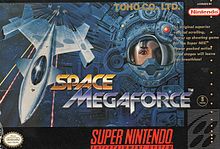
Space Megaforce – see post here.

Super Mario RPG – post coming soon.

Tokyo Mirage Sessions #FE – see post here.

Ongoing

Secret of Evermore – I’ve put some significant time into this game and it is surprisingly good considering its reputation. Thinking about what I am going to write about this game reminded me that somehow Seiken Densetsu 3 didn’t make it on my 25 SNES games list, even though I’ve never played it. Secret of Evermore may not be as good as that game, but it is much better than it’s somewhat reviled reputation might lead one to believe. It plays like a classic 16-bit action RPG, but with a story that isn’t filtered through tight space restrictions and cultural differences, at least not as strongly as most.

Dragon Quest VII – I should be finishing this game before too much longer. It isn’t really a game to rush through, its episodic nature doesn’t really suit marathon play sessions. It is a near perfect portable RPG. Each island takes only an hour or so, which makes this ideal to play in short bursts. This is a game designed to keep the player involved for an hour a day for three or four months. At about 20 hours in the main plot is still at best simmering in the background, but each and every island has had an internally satisfying story that keeps the player moving along. The job system just unlocked, which is sure to give the gameplay as much to keep the player interested as the story and characters. So far, this game is great.

Ace Attorney: Spirit of Justice – I only managed to complete the first case and the first half of the second before Dragon Quest VII hit and distracted me. I’ve loved what I’ve played so far. The first case felt more involved that first cases usually are; it wasn’t especially long, but it did an excellent job of setting up the troubles that Phoenix and company will be dealing with for the rest of the game. I don’t have a clue how that will play out, but so far this is a pretty strong entry in the series.

Upcoming

Shin Megami Tensei 4: Apocalypse – I really like the original SMT4 and it has been a while since I’ve played a game in the series. I already bought the game, even though I knew that I’d be tied up with Dragon Quest VII and Ace Attorney for the next couple of weeks. Still, this looks really good. I might have to take a break from Dragon Quest VII to get some of this in, but it is hard to put that game aside. Still, as soon as I’m done with that I’ll be popping this game in.

Jotun – This piqued my interest, so I grabbed it during its introductory sale. That purchase made extra sure I wouldn’t be able to afford River City Tokyo Rumble. I expected to get into this already, but between finishing Tokyo Mirage Sessions and Super Mario RPG, I just didn’t end up with a lot of time to play this. I’ll likely get to it in the coming month.

Legend of the Mystical Ninja – This is the next game up after Secret of Evermore. I’m less and less sure about actually finishing 25 SNES games this year, but I am not going to give up.

Skyblazer – After Mystical Ninja. Or maybe before, since I am emulating this one.

Robotrek – See above. I am going to try to make up some ground on this project in October.

The Films of Hayao Miyzaki, Ranked

This was originally supposed to be posted when I was doing my rankings of all of Disney’s animated features, but I put it aside for reasons I can’t remember. I honestly remembered posting it, but it seems that I didn’t. I had two versions of this list on my harddrive, one that covered just the films directed by Hayao Miyazaki and one that was all of Studio Ghibli’s output. Since I have seen all of Miyazaki’s films but still have a couple other Ghibli movies to see, I’ve decided to just post this Miyazaki list. It was a hard list to make since there isn’t a Miyazaki movie I don’t like. So here they are, all of Hayao Miyazaki’s movies ranked from least best to most best.

miya1

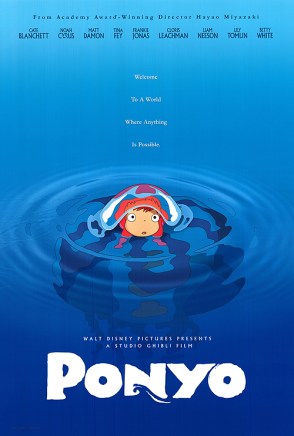
11) Ponyo – It feels odd to call Ponyo the worst anything. This is a fine movie, I just think Miyazaki has done a lot of the stuff he did in this movie better in other films, like Spirited Away or My Neighbor Totoro.

miya3

10) Howl’s Moving Castle – This may have the lest compelling central plot of any of his films, but it also has some very well realized characters and some truly astounding sequences, but it doesn’t come together with quite the force of some of the other films on this list.

miya10

9) Nausicaa – This is an amazing film in terms of scope and imagination, but it feels like there are big chunks of story hacked out of it. It is a movie that feels like it is trying to do a little too much.

miya6

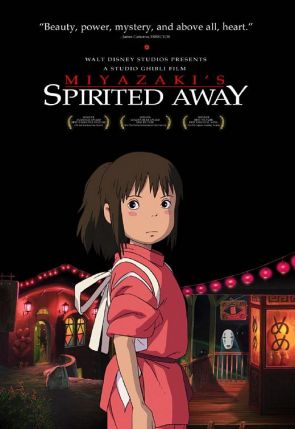
8) Spirited Away – Endlessly charming and visually amazing; I don’t know that I have anything else to say. Spirited Away is great.

miya7

7) My Neighbor Totoro – A low key, heartfelt film that is just perfect at being what it sets out to be.

miya2

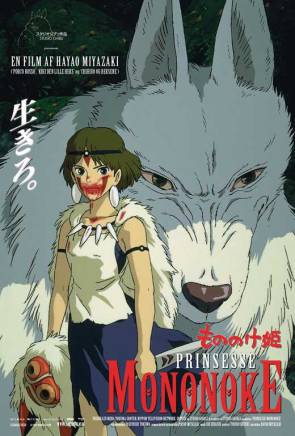
6) Princess Mononoke – Easily his most epic, this is also Miyazaki’s most labored. It is epic and amazing at times, but can also be heavy handed.

miya11

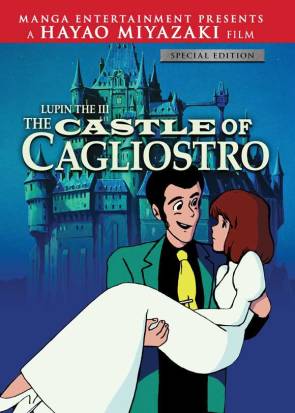
5) Castle of Cagliostro – This is likely to be the shocker, a personal favorite of mine that is objectively one of Miyazaki’s weaker films. Still, for just sheer fun and excitement I don’t know that there is a movie on this list that surpasses it. It is a delightful, if slight, romp.

miya9

4) The Wind Rises – While this is based on a historical figure, it also feels like one of Miyazaki’s most personal films. It still has many of his prominent themes, like an anti-war message and inventive flying machines, but it also feels like an artist looking back on his work and wondering about his legacy. Just excellent.

miya5

3) Kiki’s Delivery Service – My favorite of his young girl comes of age movies. It is just so charming.

miya4

2) Laputa: Castle in the Sky – This feels like a refinement of Nausicaa. It is the last and best of Miyazaki’s early action movies and is just an endlessly rewatchable delight. It is also directly or indirectly the inspiration of nearly all of my favorite video games, which I guess means something.

miya8

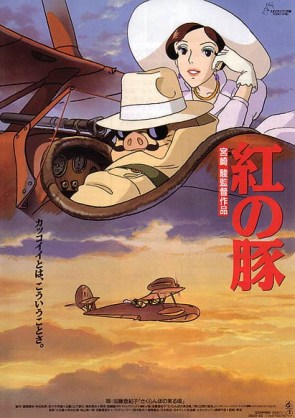
1) Porco Rosso – This movie is it. It has a perfect melancholic story, with Porco’s survivor’s guilt keeping him from moving on with this life and dealing with the rise of fascism in Europe. It has some gorgeous flying sequences and vistas. Every character manages to feel bully formed and like the movie is holding something back about them. I really just love every part of this movie

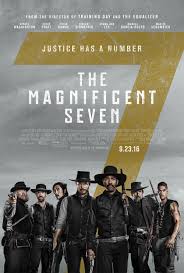
The Magnificent Seven

mag7

This remake of a great movie that itself was a remake of an all-time great movie is not in the same league as its predecessors. It doesn’t seem likely to be remembered this time next year, let alone in a decade or two. Still, it delivers enough on its premise and its stars are charismatic enough to carry it through.

The plot of this film is likely known to everyone considering heading to the cinema to see it. An impoverished town is menaced by a bandit, so they take all that they have to hire some fighters to save them from this menace. This changes some things up from the original Magnificent Seven, such as the bandit actually being an unscrupulous robber baron. Other than that, though, it plays out just as you’d expect.

There have been changes to the make-up of the heroes. This Magnificent Seven unobtrusively features a diverse cast of gunslingers. Denzel Washington plays Sam Chisolm, the first of the gunmen recruited by Emma Cullen (Haley Bennett). He is soon joined by Chris Pratt’s Faraday, a gambling, drunken trickster, as well as duo played by Ethan Hawke and Byung-hun Lee. They are soon joined by a Mexican outlaw, an mountain man and a lone Comanche. Each gun fighters has their role and quirks and while none are particularly well-developed as characters they do work as delivery methods for the shoot outs. While Denzel is Denzel, Chris Pratt does his “Harrison Ford, but goofier” thing and Ethan Hawke creates as tortured soul in his character, the most entertaining is Vincent D’Onofrio as the mountain man Jack Horne. He rumbles around scenes, using his size and power in a fight while reciting Bible verses in his high pitched wheeze of a voice. It is always unexpected and amusing.

The Magnificent Seven nails a tone that is serious without being too heavy and humorous without being too light. That is apparent in its two leads, Washington and Pratt. Pratt brings the same energy he had in Jurassic World and Guardians and the Galaxy. That contrasts but doesn’t clash with the more somber Washington who is a deadly serious man on a mission. The rest fit in somewhere between those two, often managing to do a little of both. The villain, played by Peter Sarsgaard, is given too much time for it to be okay for him to be as vague as he is. He believes he has the God given right to take what he wants, but he is given no real motivation.

There are some great shots of western scenery, and the shoot outs are largely intelligible if not especially impressive. It is a movie that is competently made, but not flashy or especially memorable.

The Magnificent Seven is an unusual specimen these days, a straight western. There is no twist to it; it is just a shoot up between obvious bad guys and obvious good guys. That simplicity is one of the films greatest strengths. It is a simple tale told well, with a cast that is worth coming to see. It will likely be little remembered, though it will be remembered fondly.

***

Top 10 Superheroes

Thanks to a persistent request and enough desire to do it anyway, here are my Top 10 Favorite Superheroes. It is an eclectic group, split pretty evenly between Marvel and DC as well as between men and women. I think it’s a good list, and if you disagree you are objectively wrong.

10: Wolverine –

ttsupw

I got into comics though the 90’s X-Men cartoon and I think it is impossible to come out of that show not loving Wolverine.  It also helped that he was short like me. Most of his solo comics have not been especially good, but his time with X-Men has featured quite a few memorable stories. He is kind of the prototype for all the crappy 90’s anti-heroes, but none of them ever did it as well as it was done with Wolverine.

9: Wildcat –

ttsupwi

He is almost as much of a joke character as a real superhero, but Wildcat is still one of my favorites. He is in some ways the JSA’s Wolverine, except not as useful. He has no powers, other than sometimes having 9 cat lives, he’s just an old boxer who dresses like a cat and beats up crooks. He is also the heart and soul of the team. In most DC continuities, he’s also responsible for training many other heroes. He’s taught Batman, Black Canary and Catwoman how to box. He did something similar in his sporadic appearances an Arrow. When the JSA’s adventures get big, I always like seeing how the largely normal Wildcat deals with things.

8: She-Hulk –

ttsupsh

I’m not sure what She-Hulk has been up to lately, but I really fell in love with this character during Dan Slott’s run with her in the early 00’s. She is one of the fun Marvel characters, like a version of Deadpool that isn’t completely obnoxious. She is capable of 4th wall breaking hijinks as well as more serious superhero stuff. She is just a lot of fun.

7: Superman – The original and still best. There is something more pure about the best Superman stories than with most other superheroes. I don’t think this pick needs any justification, other than that every year I think I like him more.

6: Captain Marvel Carol Danvers –

ttsupcm

I have less of a reason for liking this character than most. I read her last mediocre run as Ms Marvel in the middle 00s and it was fine. The more recent stuff with her as Captain Marvel was simply great. There is something about brash, no-nonsense superheroines that really appeals to me.

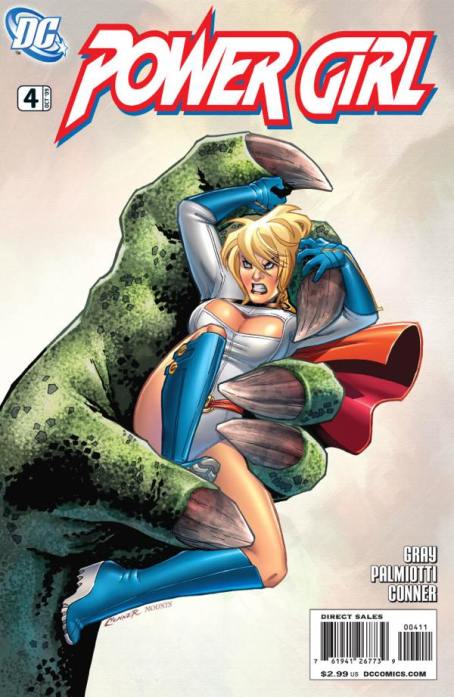
5: Power Girl –

PGL Cv4 ds

See above about this sort of superheroine. The stuff starring her by Palmiotti, Gray & Conner, her own series and her Harley Quinn mini, has been inspired stuff. She is DC’s answer in a lot of ways to both She-Hulk and Captain Marvel.

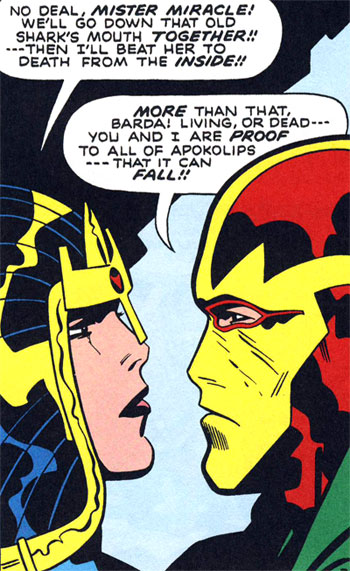
4: Mr. Miracle & Big Barda –

ttsupmmbb

I am cheating a bit here, but this pair almost always operates as a pair and they are really only interesting to me as a pair.  I’ve written about them before, but these two are great. They make a great couple that is physically an inversion of the usual gender roles, but they spend a lot of their time trying to conform to those roles anyway. It also helps that most of the appearances I’ve read of them, the original Jack Kirby stuff and their appearance in the JLI, have all been very good comics. Also, it is great that Mr. Miracle’s power set is largely non-combative.

3: Stargirl –

ttsupsg

From her own short lived series to her appearances in JSA, Stargirl has long been a favorite of mine. She is that teenage superhero Spider-Man riff, but with some of DC’s special legacy baggage. Being the young hero who ended up with the old guys instead of the Teen Titans made her seem special. Plus, she has the added benefit of just being a lot of fun.

2: Hercules –

ttsupherc

There is something really enjoyable to me about a hero that treats superheroing like fun. That is Marvel’s Hercules. He is a big goofy Thor. Every adventure with him feels like half a party, but his best stories also have strong character moments.

1: Green Lantern Guy Gardner –

Green Lantern Corps Recharge #1

Green Lantern Corps Recharge #1

The one requirement to be a Green Lantern is to have no fear. Guy lives up to that by being kind of a douche. He is also a surprisingly complex character, a hero who has to put up this brash front rather than admit he feels inadequate.

Tokyo Mirage Sessions

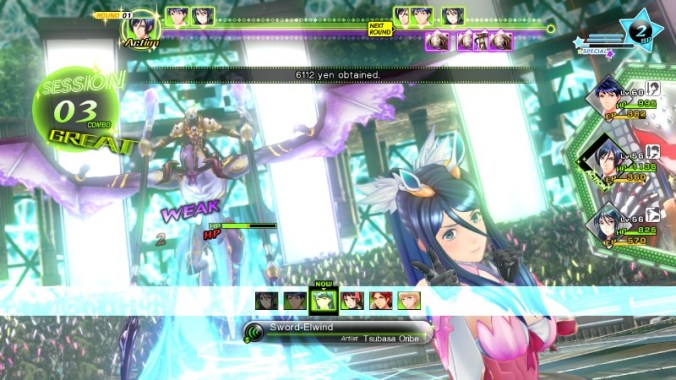
When Nintendo announced that they were partnering with Atlus to create a crossover between Fire Emblem and Shin Megami Tensei I don’t think anyone expected it turn out like Tokyo Mirage Sessions #FE. Maybe some of the details were easy to guess; I wasn’t surprised that it essentially plays like a Persona game, but the end result is something that has little in common with either of its inspirations. There are certainly elements of both that remain, but Tokyo Mirage Sessions is very much its own game. TMS is a game that takes it theme and commits to it whole heartedly.

tms5

This is a game about idols, there is no getting away from that. There are numerous musical numbers that pop up as party members put out singles and perform in concerts. The whole game is awash in pastels, all sky blue and pink. The character’s home lives are never even mentioned, they all work for a talent agency that doubles as a cover for their monster fighting, and spend their time training for various artistic endeavors. It is as far away as possible from SMT’s post-apocalypse or Fire Emblem’s fantasy medieval battlefields. Yet, despite being nothing like them, it does feel a bit like the progeny of both series.

tms3

The party in TMS is made up of aspiring or active performers. Some are pop star-esque idols, others are actors on teen TV shows and some do it all. Their artistic abilities and aspirations also give them the power to be Mirage Masters, people able to harness the powers of martial spirits from another realm to fight back against the mysterious entities that are stealing people’s “performa,” the essence of their talent and artistry. It is nonsense, but Tokyo Mirage Sessions commits to this conceit with an admirable completeness. Everything revolves around it. As the characters grow stronger in battle their musical skills grow stronger, which in turn makes them stronger in battle. It is a cycle, everything feeds into everything else. Crazily enough, if one is willing to buy into this central conceit, then everything kind of works.

tms2

Battles, which take place in an arena and are themed to look like performances, play out much like the PS2 Persona games. Four characters in the party each have an array of skills that are mostly from the SMT series, with a few Fire Emblem themed ones tossed in. Like the Persona games, there is a great emphasis on hitting enemies’ weaknesses. In this game, doing so trigger a session attack, where the other party members take turns jumping in to continue the assault. Eventually even inactive party members start to join in the fray, creating cascading sessions of 6 or even more attacks every time a weakness is hit. Each party member has certain skills that can be powered up with random “ad-lib” performances, which turn the games many musical numbers into more powerful attacks. Soon multiple characters work together in duets that combine two characters for an attack that extends the session. It eventually makes hitting those weaknesses almost essential to effectively fighting through the dungeons.

Those dungeons are right out of SMT games. They are some effective and sprawling puzzle dungeons. Each one has a trick. One had the player avoid camera’s that snap a photo and send the player back to the start, another is set on the back lot of a movie shoot. Each has its own tricks and themes and none are a pushover. Since the bulk of the player’s time is spent in the dungeons, they needed to be good and they are.

tms1

Going into the game, I was afraid that the theme and cast would be suffocating, but Atlus, who did the heavy lifting on this game, and the localization team did a wonderful job creating a group that is largely enjoyable. They don’t break far from anime tropes for characters: there’s a taciturn loner, an earnest yet slightly inept romantic interest, and a boozy female authority figure, but they are portrayed in such a way as to make them charming instead of grating. Touma, the player character’s best friend, really wants to be a Power Rangers like hero. He tries to live up to a heroic ideal in his real life. There isn’t much complicated about him, but he is generally positive and enjoyable. Other than protagonist Itsuki, the bland everyman that rallies the others around him, Tsubasa is the center of the game. It is her quest to become an Idol, despite her nervousness and fear of the spotlight that continually pushes things forward. It is what gets her and Itsuki drawn into this drama and her rise and success keeps bringing the team in conflict with the dark forces working behind the scenes. If he character didn’t work the whole thing would fall apart. Luckily, she is one of the games strength. TMS does a great job of building that character throughout, as she conceivably grows as a performer and a character. I don’t even have time to get into Barry Goodman, who might be the most scathing take on a Western anime fan I’ve ever seen.

tms4

Spending so much time with the characters helps disguise how small this game actually is. It is only six dungeons and one hub area. There are a handful of other areas, one screen each, but outside of the dungeons the game is actually tiny. It is like the game wants to pass itself off as a sprawling JRPG experience, but to do so it has to patch over its budget roots. It doesn’t make much of a difference while playing, but thinking back on it makes it clear how limited the game is. Maybe limited is the wrong word; focused us more appropriate.

If the battle system comes out of SMT, where does Fire Emblem fit in? In the Mirages, the spirits that help the party fight their evil counterparts. The Mirages are all slightly reimagined Fire Emblem characters, mostly from the first game or Awakening. They act like the Personas out of that series. The main plot is about the Fire Emblem characters getting stuck in the real world. It is nonsense, but it kind of works.

tms6

There are some problems with this game. By the end battles can become tedious as the increasingly complex attack sessions take longer and longer to play out. It feels like it goes on about one dungeon too long. Outside of each character’s trio of sidequests, there isn’t much else to do but fight through the dungeons. Still, I think I love this game. It is not subject matter I tend to like, but Tokyo Mirage Sessions makes it all feel refreshing. It is probably the best console JRPG since Persona 4. It is light, a piece of fluff, but also a fully realized experience that doesn’t get made all the often anymore.

25 Years 25 Games 15: Space Megaforce

smfc

The SNES was not the go to system for shoot ’em ups. It had its fair share, UN Squadron is a personal favorite, but the system wasn’t really known for blazing fast action games. The lack is mostly due to the SNES’s tendency to bog down when more than five or six sprites appeared on the screen. See Gradius III for a prime example. The other shoot ’em ups on the system are what makes Space Megaforce so astounding.

smf3

I don’t know that Space Megaforce is a great game. It is too hard for me, which isn’t really a point against it considering my limited shmup skills, but it is a barrier to my ability to enjoy and judge the game. It is, however, quite an achievement, running as fast and as smooth as it does on the SNES. Space Megaforce, which is the terrible American title of Super Aleste, is an SNES shmup with no, or little, slowdown. It is hectic and challenging and most of all fast. It is unlike any other game on the system. Space Megaforce was made by Compile, a company known for its excellent shooters and Puyo Puyo before it died and was reborn as Compile Heart, which is known for churning out terrible JRPGs. Whatever wizardry Compile employed to get Space Megaforce to run as smoothly as it does has, as far as I know, never been replicated.

smf2

Its power up system manages to be robust without being as punishing as something like Gradius. In Gradius, your ship eventually becomes a tornado of destruction filling the screen with projectiles, but when you die it takes forever to build that power back up. It is almost easier to just restart and build up you power during the easier first level than to try to rebuild in the middle of a more difficult section. Space Megaforce does not give the player the same breadth of options as that game, but it is easier to keep going after a death. There are 8 or so weapons, all of which can be powered up by grabbing more of the same power ups. All of them have multiple fire patterns as well. Getting killed sucks, it always does, but you can grab on power up and be back in some form of business.

There are flaws, the biggest I encountered being the uneven length of the stages. Some stages seem endless, just super long and repetitive. The challenge is as much in endurance as it is in skill. Some are short, ephemeral bursts. I don’t know that either choice is wrong, though those long stages are not to my preference, but a middle ground would have worked better. The more I think about it the less sure I am that the stages were excessively long, but they certainly felt that way, which is as big of a problem.

smf1

Space Megaforce is pretty great. It is a stellar example of a genre that wasn’t really the SNES’s forte that somehow just ignores the weaknesses of the system to give a fast, twitchy experience.

Fire Emblem Fates: Revelation

I’ve written about Fire Emblem Fates’ other two paths already and felt like now, before the fall 3DS rush starts – Ace Attorney 6, Dragon Quest VII, River City Tokyo Rumble and Shin Megami Tensei IV: Apocalypse are all due before the end of September – was the best time to finally get to the third and final FE Fates path, Revelation. I sped through it only about a week or so. It does everything the middle path of Fates’ side choosing main game should do, yet I don’t know that I like it very much.

fefr2

How Nintendo and Intelligent Systems differentiated the Birthright and Conquest paths was effective from a gameplay standpoint. The classes and weapons were all different and with a few exceptions so were all of the characters. They aren’t quite separate games, even ignoring the identical first five chapters, but they are very different experiences. Revelation takes those two sets and mashes them together. It doesn’t pare them down to an interesting mix of both casts; it is the entirety of both casts made available. That means that no one’s favorite character is left out, but it also means that you get more than twice as many characters as you could possibly use. It really compounds a problem that both of the first two paths had: the glut of royal characters. When each half of the cast gives you four royal siblings and map tend to allow 10-14 characters to be deployed, that only leaves up to five other characters to be deployed, assuming that you are using all of both of your families. Which is tempting to do, since those siblings tend to be some of your best characters. And that’s without even getting into the second generation.

fefr1

Actually, let’s get into that second generation of characters. In Fire Emblem Awakening, the children of you characters coming back in time to stop a dreadful event was the entire conceit of the game. It gave an end goal to the supports, which had been a big draw in the GBA games and were gutted in the GC/Wii ones, with each pairing producing an offspring that could join your army. It worked in that game because that game was designed for it. They kept the mechanic in Fates, but it lacks the conceit. They come up with some half explained reason for the children, who haven’t been born yet, to grow up somewhere where time passes differently and they grow to adulthood in no time, but it is unsatisfying. It feels like it was kept because it was a popular feature and not because it has any place in the game. It feels like an afterthought; the child characters, as fun as some of them are, do not have a role to play in this story.

The cast is a big reason why Revelation only works as a second or third path. There are so many characters that few have a chance to make much of an impression. But holdover feelings from the first time through game give the player a reason to try and use them.

fefr3

My hope was that the big cast would give reason for big maps. Let the player deploy twenty or more characters and fill the screen with enemies on a truly massive battle. That is not the path that Revelation takes. Instead, each and every single map is a gimmick map. I don’t mind gimmick maps, they can be a fun alternative to the normal ones. Elements like environmental hazards, fog of war or shifting terrain make for a good change of pace. In Revelation, they are the pace. There are no normal maps, except maybe the last one; every last one has some sort of twist. It isn’t fun, it is exhausting. I eventually had to switch over to classic mode, since there were too many variables for me to keep track of.

They are actually pretty finely crafted stages, for the most part. It is just that the rules continually change. Classic Mode, which I am glad exists for people who don’t want the same Fire Emblem experience that I want, feels like a cheat to me, but I also found it necessary. Losing the penalty for a character dying fundamentally changes how I play the game, shifting from my usual cautiously aggressive tactics to ones that are downright reckless.

The story is the story that both of the previous paths made obvious was out there. Both of those games danced around a central problem while solving ones that seemed much less pressing. This one has the player’s avatar deal directly with the mysterious entity that has been manipulating both countries. It doesn’t flesh out the conflict that greatly, keeping things more personal than political, but it works.

fefr4

Fire Emblem Fates Revelation is a mixed bag. It is altogether too much of a good thing. Its solution to every problem is more. More characters, more stuff going on in the maps, more supports. Like eating too much candy, you kind of love it even as it makes you queasy. Fire Emblem Fates is a monumental trilogy that I loved even while I wished that they pared it down somewhat.

Sully Review

sullymp

While everyone involved does a good job, Sully is a movie trying to do too much with too little. The scenes of the crash, ahem, forced water landing are exhilarating. As long as it is about the plane and its abbreviated flight the movie astonishes. But that takes all of four minutes. The rescue afterward, in real time, took another twenty five. That gives the movie about thirty downright excellent, dramatic minutes. Unfortunately, Sully sort of flails to fill the other hour of its run time.

Chelsey Sullenberger, as played by Tom Hanks, is a quietly competent man. Hanks brings his usual warmth to the role, making Sully really feel like a man who was just doing his job even if he was doing it extremely well. The movie shows him plagued by doubts about his decision to land the plane in the Hudson, especially after the investigators contend that he could have returned to the runway, and shows him uncomfortable with all of the media attention, but that is rather thin gruel as far as drama goes. The recurring nightmares of the plane crashing in the city, with echoes of the 9/11 attacks, are visually effective at first, but soon overkill that exist just to keep the potential tragedy in mind.

Those four minutes of flight and forced landing are played over and again, from many perspectives. Each time it is enthralling, even though the viewer knows how things turn out. This is a movie about a tragedy that wasn’t; where everyone comes together and saves the day. It is heartwarming, but since the film starts after everyone has been saved it isn’t as dramatic as it could have been. The film occasionally tries to build up stuff around that, giving some lip service to introducing the passengers and giving Sully some things at home to worry about, but those don’t amount to much in the grand scheme.

The main conflict comes from the NTSB investigation, who suggests that Sully could have gotten the plane back to LaGuardia. Eastwood sets them up as comically combative with Sully and Skiles, the co-pilot, seemingly determined to prove that the crash was due to pilot error. That sparks lingering doubt in Sully’s mind, even as everyone continues to treat him as a hero. At least it does until he figures out why the simulations are wrong.

Other than Hanks as Sully, the rest of the cast is also solid. Aaron Eckhart is delightful as the somewhat more boisterous copilot, eager to step up and give the retorts that Sully isn’t interested in. Sam Huntington has a few great moments as the Air Traffic Controller trying to lead them back to a runway, who is despondent after Sully says they are going into the river.

Again, the crash and rescue are amazing bits of filmmaking, but the investigation stuff seems to be there to pad the movie out to its full length and to give voice to some off putting anti-intellectualism. There are hints of a how dare they attitude when it comes to questioning this movies hero, even if they are just doing their job in trying to determine why an airplane ended up in the river. Still, Sully manages to tell its story in an economical ninety or so minutes. When it’s good, Sully is very very good and when it isn’t good, it still really isn’t bad. It is worth seeing just for Tom Hanks or Eckhart’s mustache.

****

What I Read August 2016

Only three books this month, though it was a rather busy month. I also finished up some comics reading, getting through some old newspaper strips and one of the collections I picked up a Planet Comic-con Kansas City earlier this summer. Even though I fell short of my monthly goal, I am more than satisfied with what I read this month. Also, I have enough half-finished books that I should more than make up for it in September.

mora

The Murder of Roger Ackroyd

Agatha Christie

This is a book that gets two reactions: one knowing the twist and one not knowing. I didn’t get to experience that first one. I’m not too upset, The Murder of Roger Ackroyd is famous and famous for its twist, that I have been spoiled on it in the 90 years since the book was published is no surprise. However, that kept me from reading it with truly fresh eyes. I read it knowing the outcome, so I spent my time looking for the real clues and seeing if Christie played fair. As far as I can tell, she did. Still, the revelation lacks some of the impact it might have had if I came into it blind. The retired Hercule Poirot comes out of retirement to investigate a murder is a small village. He meets with the townsfolk and aided by the town doctor looks into the murder of one Roger Ackroyd. He does the usual things, checking the alibis and opinions of the possible suspects before the surprising revelation the murderer. Even being spoiled about the culprit I enjoyed this quite a bit. Christie earned her reputation.

tbhk

The Bishop’s Heir

Katherine Kurtz

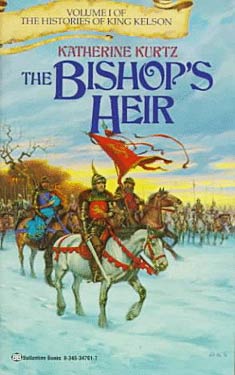
I picked up a handful of Kurtz’s Deryni books a long time ago at a college library sale, but the first one I tried didn’t immediately grab me, so I sold them to a used book store when I was clearing out some space. Since then I have read more about the series, so when another opportunity to pick some of them up for cheap presented itself I took it. The first one I read, The Bishop’s Heir is the first part of her third trilogy of Deryni books. It has young king Kelson Haldane dealing with a rift in the church and a political uprising.

Kurtz’s prose can be workmanlike and the world of this book is very close to the real world with just a splash of magic. It feels very much like the precursor to stuff like A Song of Ice and Fire. It also does little to ease new readers in; which is only a problem because the cover says book one. Still, once you get in the groove, the book works. Kelson is young and still unsure at times, wanting to be a good king but not blind to the harsh realities that he faces. The plot seems surprisingly light considering how complete this one book is. It is not structured like the usual fantasy book, being much more political than action oriented. The big piece of the plot happens early, and the last two thirds or so are merely dealing with the fallout from that encounter. By the end, was fully drawn in. It isn’t really great work, but it is very readable historical fantasy.

tgs

The Garden of Stones

Mark T Barnes

I listened to this book as an audiobook rather than read it, so I can’t guarantee my thoughts on it are the same that they would be had I read it normally. The Garden of Stones makes itself hard to like early on, has a solid middle portion before falling apart again at the end. It spends almost the whole first half introducing so many characters and concepts it is hard to keep them straight. Especially since they are all made up words. That is the part that I think the audiobook suffers in comparison to the real thing. Still, having all of these fake words showing up frequently, and then characters with unusual names that then have nicknames, sometimes multiple, makes it hard for a reader to find their footing. By the time the players and their relationships are clear, the book starts to be fun.

The Garden of Stones has three primary characters: the power mad Corajidin who wants to seize power in the Shrian Federation, the warrior-mage Indris opposed to him, and Mari, Corajidin’s daughter who is caught between family and what she believes is right. The three of them and their compatriots plot and scheme in a tense political situation the Corajidin has engineered to his own benefit. That’s all well and good for a while, but things go a bit off at the end. Mostly from a pacing point of view. The book alternates between those three POV characters, but they seem to get to the climactic moments out of order. Important events happen off page because none of those three characters are there, and the order that the chapters fall removes a lot of the possible tension. By the time it’s over you start to wonder about the timing of things, as events don’t quite fit together smoothly.

I’ve read a lot of people compare this book to Erikson’s Malazan books, which isn’t far off. But that comparison fits into me not really enjoying this book; I don’t much care for the Malazan series either. They are both dense with world building, but I find them both lacking in most other respects.

Comics

tcpv4

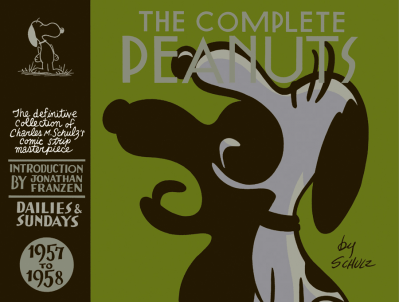
The Complete Peanuts 1957-58

This is the forth volume of Fantagraphics complete Peanuts, and it is good. Peanuts is great. I don’t really know what else to say. It is almost always funny and is just often enough poignant. In this early volume Schulz is still fleshing out his cast, with Linus getting the bulk of the focus. Good, good stuff.
fgv2

Alex Raymond’s Flash Gordon Vol 2

As a showcase for Alex Raymond’s art this is wonderful. I really wish I could track down volume 1, but the story is so episodic that it hardly matters. Flash and Dale and Zarkov move from one adventure to next at breakneck speed. They visit the various realms of Mongo, fight with the royalty and Ming the Merciless and eventually conquer. It is worth reading if only for Raymond’s art, which is exquisite.

gce1

Godland Celestial Edition Volume 1

Joe Casey & Tom Scioli

I was gifted Scioli’s American Barbarian and fell in love with it, so when I happened upon a couple of volumes of Godland, a series with his art, on sale at the KC Comic-con, I snatched them up. The first volume, unfortunately, was a huge disappointment. Like Scioli’s art, the story of Godland is very Kirby inspired, taking from his Fantastic Four collaborations with Stan Lee and his later 4th World stuff from DC. Not that Godland isn’t entirely original, it is, but is desperately tries to ape the tone of those works. In many ways it succeeds, but there is something about it that just end up feeling off.

Godland tells the story of Adam Archer, an astronaut that gained cosmic powers on an ill-fated expedition to Mars. He uses those powers to be a superhero back on Earth, fighting enemies like Friedrich Nickelhead, who looks like Destro from GI Joe, and Basil Cronus, a junkie who carries his own head around in a jar. The design of all the characters found in this first volume is nearly perfect and the plots themselves are exactly the sort of thing I was expecting, but the dialogue kills it for me. The whole thing feels slathered in a sort of glib irony – maybe an attempt to ape Stan Lee of the 60’s – that undercuts any true feelings the story could invoke. It constantly pushes the reader away, seemingly wanting them to laugh at the book and find the whole thing ridiculous. It is ridiculous, but if the book is so desperate to undercut itself why does it exist in the first place. American Barbarian was similar in many ways, but it presented itself more earnestly even when being ridiculous. Joe Casey seems desperate to make sure that readers know that he knows how ridiculous this whole thing is, and that knowing tinge is off putting.