Comic Reviews (Non-DC)

I thought about skipping this since I wrote 3000 words about the DC relaunch earlier this week, but I do read comics that aren’t from DC, and some that I’ve read recently are really, really good. So more comic reviews.

John Carter, A Princess of Mars 1 (of 5).
Written by Roger Langridge. Art by Filipe Andrade.
I have been on something of an E.R. Burroughs kick lately, so when I heard that Marvel was doing an adaptation, written by Roger Langridge of Thor: The Mighty Avenger, I knew I had to check it out. (I know about Dynamite’s series, but the covers are a little too porn-y for my tastes.) This first issue was anything but a disappointment.
Langridge is doing an adaptation, so the base of the story is already laid down for him. He does change the opening up to get to the action more quickly, and it works. Much of the explanation of Martian life in the novel is no longer necessary with the accompanying art. Right away John Carter is established as a good man, if he is more sarcastic than in the books.
Andrade’s art is where the book really shines. His Mars really looks alien, perfectly capturing the dying world look of this Barsoom (as Mars is called in the books.) His characters are sketchy and bendy and fluid. It is really just a joy to look at.
This series seems to be avoiding the Dynamite one’s problems of porny-ness but eliminating the conceit that no one on Mars wears clothes, something that almost has to be done for a visual take on the book to not seem lurid. This is just a very good comic. [****]

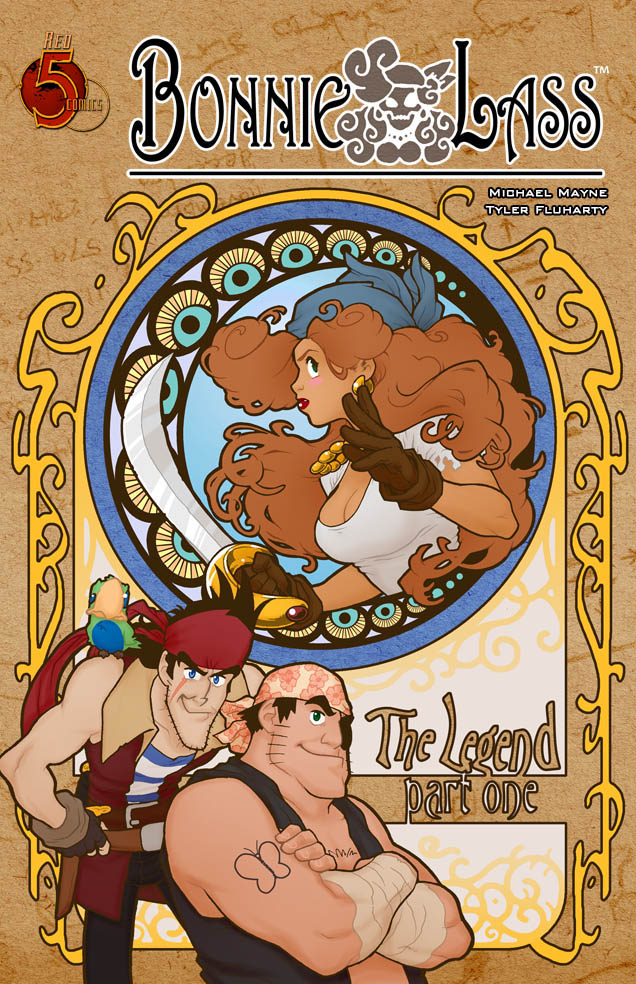
Bonnie Lass 1 (of 4).
Written by Michael Mayne and Tyler Fluharty. Art by Michael Mayne.
Nothing I’ve read recently touches Bonnie Lass for sheer energy. It is a pirate western mash-up that at its best feels like Hayao Miyazaki’s Castle in the Sky. The art is cartoony and colorful and, like the rest of the book, full of energy. There is some definite and fitting manga/anime influence. It is exciting. The story sets the stage for what promises to be a grand adventure. The titular Bonnie and her crew, consisting of her brother and one other buddy, get their hands on a treasure map and when the people who had sought to buy don’t come through with the cash they decide to search out the treasure for themselves. But first, they must escape the town because they have recently become wanted men. Action packed doesn’t tell the half of it, but it is almost a weakness. At times, like the brawl on their deck and the ship chase at the end, the action is almost perfect, but there is little downtime between action scenes, giving the book a bit of a hectic feel at time. Still, the seeds are laid for a great adventure, even if the characters haven’t been fully fleshed out yet. I’d rather this err on the side of too much action than too little. The problems with this book are slight enough that I can whole-heartedly recommend it to everybody. [****½]

Below the break are some quick reviews:
Continue reading

Rating the Relaunch

Its now three-ish weeks into the DC Relaunch and I guess its time for my take on the books released so far. I have read them all, and so far I’d call the relaunch a success. I’m going to give my take on all 27 of the books released so far with a brief review and a score from 1-10, going in alphabetical order because why not?
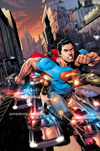
Action Comics.  Grant Morrison and Rags Morales.

The best book of the relaunch so far. Morrison gives us a significantly younger, less powerful Superman, as well as one who is more proactive. This issue moves at a frantic, frenetic pace, never really stopping to let the reader catch their breath. It is heavy on action but still manages to seed tons and tons of Superman stories to come. Most amazing is the fact that nearly throughout it all Superman is smiling. He may have a touch of Batman in his methods, but he isn’t dark and brooding. Just a great, great issue.
10/10

Animal Man. Jeff Lemire and Travel Foreman.

Another truly great book. Lemire lays the ground work for an excellent horror tinged superhero family comic. Foreman’s sparse artwork complements it perfectly, especially in the terrifying dream sequence near the end. The only flaw, if there is one, is that it is pretty dense. Lemire uses an excerpt from a fake magazine interview to explain who Animal Man is that is as clumsy as it is effective. This is shaping up to be something different than the usual superhero fare and an excellent read.
9/10

Batgirl. Gail Simone and Ardian Syaf.

Gail Simone writes Barbara Gordon’s return to Batgirl, and walking, and it is something of a disappointment. This is not a strictly bad comic, but it is somewhat overwrought, especially that last page, and too focused on what came before. There is a tepid new villain and a potentially interesting roommate and some generic superhero action. Ardian Syaf’s art is adequate, at times very good but not consistently. Simone does occasionally tend to miss with her stories (though for every bad one there are 4 good ones) and I expect this comic to improve as it goes.
6/10

Batman and Robin. Peter Tomasi and Pat Gleason.

Pat Gleason’s art is wonderful. It is detailed and elastic and a touch gruesome. I think he might be better suited for a book with monsters, like his previous work on Green Lantern Corps or something like Frankenstein or Demon Knights, but it is always very good. Tomasi lays it on a bit thick, perhaps, but subtly is not always a virtue. This is a book that new readers should be able to pick up and quickly grasp the relationships between the characters. It is little more than a simple Batman story, but it is a very executed one.
7/10
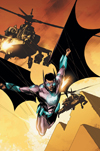

Batwing. Judd Winick and Ben Oliver.

This is a basically new character and this first issue gives the reader no reason to care about him. Winick actually tells the us very little about Batwing and introduces a ridiculous (in a bad way) villain named Massacre. The story is just unappealing and unexceptional. Oliver’s art has great figure work, but it is severely lacking in background detail. This is a problem and the books main selling point is that it is Batman in Africa, but there is little in the art to cue the reader in to the exotic locale. This is simply not a very good book.
4/10

Batwoman. J.H. Williams III and W. Haden Blackman.

This is the best looking book of the reboot. Williams art is fantastic, with inventive page layouts and stunning attention to detail. He changes the look of the book completely depending on whether Kate is being Batwoman or not. The story is also very good. It might read a little too much like the continuing adventures of Batwoman for some new readers, but since there is really only one previous Batwoman story and it is excellent this is no big deal. It does establish who Kate Kane and her friends are. Just another great book.
9/10

Deathstroke. Kyle Higgins and Joe Bennet.

This sure is a Deathstroke comic. Higgins effectively, save for some over-the-top early captions, establishes who Deathstroke is and what problem he faces. Bennet’s art is clean and effective. It is a violent comic, but that is a feature, not a bug. It is not to everyone’s taste, it is not to my taste, but it works as what it is. A comic about hired killer trying to prove he isn’t over the hill could be decent, but it is not really something I want to read. It does fill its niche with quite well, though.
6/10

Demon Knights. Paul Cornell and Diogenes Neves.

Another good book. Cornell is setting up a swords and sorcery magnificent seven and it is highly entertaining. The cast quickly shows themselves, though there is barely time to establish the scene. Neves’ art occasionally looks sloppy, but there are some great facial expressions and some awesome dino-dragons. This issue is not quite as slum dunk as the concept, but it has the story moving forward and promises great things to come.
7/10

Detective Comics. Tony Daniel.

This is a bog standard, grim and gritty Batman comic. Tony Daniel tries to write like Frank Miller, not a bad goal, but doesn’t pull it off. His art looks really good for the most part, though. The problem is that this is mostly just a Batman versus Joker story, something that even people who don’t read comics have seen a thousand times, and a not particularly good one. It ends with a gruesome surprise, but it doesn’t feel like something that will stick. This is a bad issue.
3/10
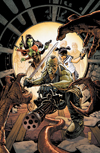
Frankenstein, Agent of S.H.A.D.E. Jeff Lemire and Alberto Ponticelli

Here Lemire sets up a science action team made of monsters lead by Frankenstein. He throws idea after idea on the page in the perfect Kirby fashion. This is an efficient and effective introduction. We meet the team, same as the Flashpoint mini-series plus a mummy, and get right down to the monster killing. Ponticelli’s art is scratchy and wobbly and a perfect look for the book. Big on action and on craziness, this is exactly the kind of book I like to read.
8/10
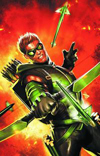
Green Arrow. J.T. Krul and Dan Jurgens.

This is a dull issue. Green Arrow has been nearly entirely rebooted. He is now much younger and more James Bond than Robin Hood. To go with this new look Green Arrow, we have art that is decidedly old fashioned. Jurgens work is not bad, but it looks like a book from the early to mid 80’s. An odd fit for a new take on an old character. The story is not bad, it is a simple superhero story. It is nice to have some of those, but this is not particularly interesting. Though I doubt Green Arrow fans will be happy with this new take, maybe the emerald archer will find some new life with this not uninteresting set-up.
5/10

Green Lantern. Geoff Johns and Doug Mahnke.

This might as well be Green Lantern issue 68, since nothing changes from before. Just like at the end of the War of the Green Lanterns crossover, Hal Jordan has lost his ring and Sinestro has returned to the Green Lantern Corps. Two thirds of the issue is inept mess Hal on Earth, realizing that without his ring he is a horrible screw up and the other third is Sinestro’s adventures in space. Mahnke’s art is amazing, as always. He makes the unreal aliens that make up much of the cast look as real as the people. This is not a fresh new take, but it is still really good. Johns’ Green Lantern work has faltered occasionally, but this is a return to from.
8/10

Grifter. Nathan Edmonson and Cafu.

Instead of writing a good mystery in this issue, Edmonson wrote a dull one confusingly. It is not a complex story, but it is told in a way to make it hard to understand, all disjointed and out of order. The art is simply adequate. There is just not a lot to recommend here. It could develop into something interesting, a man fighting monsters only he can see, but this first issue is a mess.
4/10

Hawk and Dove. Sterling Gates and Rob Liefeld.

I don’t have the somewhat comical, hateful reaction that most of the internet seems to have to Rob Liefeld’s art, but neither do I like it that much. It is not so much stylized as sloppy. With him on it, I don’t think I was ever going to like this book. It doesn’t help that it was written to deliberately play to Liefeld’s strengths and not, it seems, to tell a good story. It is also odd that Hawk and Dove seem to have come through the relaunch completely unchanged, despite not being a particularly fresh concept. This is probably a treat for Liefeld fans, but it is mostly a mess.
2/10
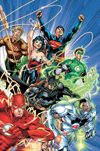
Justice League. Geoff Johns and Jim Lee.

The only problem with this comic is outrageous expectations, a problem DC brought on itself. Unlike nearly every other book, Justice League is an origin story. It is going show how the Justice League came to be. It might have been more effective to show the whole league in action, but I don’t see any reason to complain about the book being something it is not. Lee’s art is the same genre defining art it has been for 20 years, and Johns plays this issue a little more slowly than usual. Probably a bit too slowly. Batman and Green Lantern are the only members in most of the book, and their interactions ring true. GL is reckless and overconfident and Batman is more than a little dismissive, though he seems to see the advantage of the powers GL possess. This is not an outstanding issue, but it is a good one.
7/10

Justice League International. Dan Jurgens and Aaron Lopresti.

Jurgens’ writing is a bit ham-fisted, with some clumsy team building pages and some nonsense about protesters outside the Hall of Justice, but the plotting is mostly tight. It sets up a varied cast for a U.N. controlled team that might not be under control for long. Lopresti is a terrific artist, and the book is bright, colorful and expressive. Maybe it is my attachment to these characters, but I am inclined to like this book.
7/10

Legion Lost. Fabian Nicieza and Pete Woods.

Legion Lost indeed. The Legion of Superheroes, DC’s super teens from the future, has a reputation for being impenetrable. Whether that is generally true or not, it is true for this issue. It is hectic and poorly explained and downright confusing. Pete Woods are is nice, but looks unfinished on some pages. There is the seed of a good series here, with heroes from the future being stuck in the past, but it needs to slow down and breathe.
4/10

Men of War. Ivan Brandon and Tom Derenick. Jonathan Vankin and Paul Winslade.

This issue introduces the reader to the new Sgt. Rock, grandson of the old Sgt. Rock. The concept her is solid, soldiers dealing with the wake of superheroes. The execution is also solid if not particularly great. This book simply lack oomph. This first issue doesn’t really take advantage of either its war book setting or its superhero connection. It just sort of is.
5/10

Mr .Terrific. Eric Wallace and Gianluca Gugliotta.

This is an intriguing but sloppy first issue. I am fond of Gugliotta’s art, but some panels and figures just seem off. The plotting is good, with a nice balance of action and world building, but the dailogue is sloppy. I am going to give Wallace the benefit of the doubt that this was supposed to have a snarky tone, but that is not effectively communicated. Everyone in the book seems like an asshole. If it finds a consistent tone this could be a really good book. This issue was simply okay.
6/10

O.M.A.C. Dan Didio and Keith Giffen.

This is simply wall to wall action.  Office drone Kevin Kho is turned into a monster but the mysterious Brother Eye then tears his way through Cadmus Labs until he finds and destroys what he is looking for.  It is a Kirby homage that throws as many of the Kings DC ideas into the book as possible. Giffen’s art captures Kirby’s energy. It is pure fun for 20 pages. There isn’t much that isn’t fighting some kind of crazy science creation, but there doesn’t need to be.
7/10


Red Lanterns. Peter Milligan and Ed Benes.

If the whole issue was like the opening I would have rated this issue much higher. The absurd and gleeful violence in this book is entertaining. Milligan plays it so close to satire but doesn’t quite go over that line. It is definitely self aware, but not mocking the concept. Benes provides his usual trashy but competent art, which looks much better when there are blood vomiting cats on the page than absurdly sexualized aliens. If it didn’t end with overwrought Earth violence and a backstory explaining soliloquy from Atrocitus this could have been a really good issue.
5/10

Resurrection Man. Danny Abnet and Andy Lanning and Fernando Dagnino.

This book seems perfectly crafted to not appeal to me. The art isn’t necessarily bad, but it is dark and scratchy I just find it off-putting. The main characters power is interesting, that he dies and comes back to life with a new power, but we don’t learn much about him besides that. The fact that he is wanted by both the forces of Heaven and Hell is not a plus, that doesn’t interest me in the slightest. This whole issue is dull and faux edgy.
4/10

Static Shock. John Rozum and Scott McDaniel.

This is an effective attempt to horn in on Marvel’s Spider-Man market. Rozum and McDaniel do a good job of mixing superheroics and family time while still communicating who Static is.  The villain team isn’t anything that interesting, but whatever.  The art is stylized and fit’s the story and character. My only problem is that I don’t particularly care for Spider-Man, let alone knock-off electic Spider-Man.
7/10

Stormwatch. Paul Cornell and Miguel Sepulveda.

I expected better from Cornell. Sepulveda’s art looks rushed and sloppy, but it al least has a nice style. The writing, though, does little but clumsily introduce the cast. It is a good concept, though it doesn’t seem to be the same as the Wildstorm version was, though they share many characters. I know by issue 3 they are going to be fighting the moon, but this first issue is just clumsy.
6/10

Suicide Squad. Adam Glass and Federico Dallocchio.

No book got a more negative pre-realease reaction than Suicide Squad. Between the ill-advised character redesigns to the interviews with the writer that suggest a complete misunderstanding of the characters and concept, it seemed like this book would be a stinker. And it is. The art is inconsistent at best and the story is ugly and nasty and poor. There is nothing to recommend here.
2/10
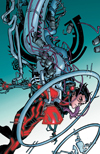
Superboy. Scott Lobdell and R.B. Silva.

Superboy is another character who got a complete reboot. He, however, seems to be coming back exactly as he was when he first arrived. This issue is dense. It may be only 20 pages, but it covers much more ground than most of the other titles. Superboy is a lab experiment, with no morals because he has had no experiences. It is as much about the N.O.W.H.E.R.E. lab that he was made in than Superboy himself. Silva’s art is clean and expressive; it looks really nice. The only problem I can see is that it seems to tie in to Teen Titans, which looks terrible.
8/10

Swamp Thing. Scott Snyder and Yanick Paquette.

Scott Snyder’s first book of the relaunch is something of a disappointment. Not that it isn’t good, it is, but because I was expecting great, which it wasn’t. There just isn’t much here. Too much time is spent trying to reconcile and recap Swamp Things history and not enough time is spent on the actual story. The story that is started and teased is intriguing, but it is unfortunate that in a comic titled Swamp Thing, Swamp Thing doesn’t appear until the last page. Paquette’s art is really good, though. This is a good start, but not a great one.
8/10

There are my thoughts on the first half of DC’s New 52. Most of the books I was really looking forward to have already come out, but there are still several good looking ones on the horizon. Wonder Woman looks great, as do Batman and Aquaman. While I have no idea what the writing will be like, I can say for sure that The Flash will be a good looking book, possibly challenging Batwoman for the best art of the relaunch. See ya later, space cowboys.

Comic Reviews for late August

Time for more comic reviews.

  • Batgirl 24. Brian Q. Miller and Pere Perez.

If there is one book disappearing in the big DC relaunch that I’m going to miss it is Batgirl. Unfortunately, this issue rushes through what was probably supposed to be an epic showdown with Steph’s in order to have an actual farewell. As a single issue, it is not that impressive. As a goodbye at the end of a phenomenal 2-year run, it is terrific. Perez’s art is perfectly fitting and there are some wonderful and touching heart-to-hearts. There are also a few great fantasy pages (due to Batgirl being infected by a Black Mercy) that are all worthy of Elseworlds miniseries on their own. It is a good issue, but only for those sentimental for this title. ***½

  • DC Retroactive The 90’s: Justice League 1. Keith Giffen, J.M DeMatteis and Kevin Maguire.

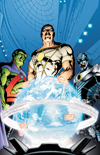
The old JLI team reunites one last time. This feels like a greatest hits of the old JLI team, in a good way. Villains who are more a danger to themselves than anything else being stopped by heroes who are more a danger to themselves than anything else. Guy Gardner is a jerk; Blue Beetle and Booster Gold are lovable doofuses. Martian Manhunter having to put up with them. If you are a fan of the old JLI, this is a worthy farewell. If you are not go die in a fire, if you can Satan spawn. JLI is one of my favorite comics, and all the characters from there a favorites of mine. Giffen and Dematteis say this is the last time they will write this crew. If so, that is sad, because we will never get anymore, but this is also a nice goodbye. I loved it. *****

  • Mystic 1 (of 4) G. Willow Wilson and David Lopez.

This is a really good comic. It is a steampunk Charles Dickens story. Two young orphan women who slave away at the orphanage where they were raised spend as much time as possible sneaking in to the library to study, in the knowing unachievable goal of being accepted as apprentice magicians. When they must leave the orphanage, they end up as maids in the castle. The art is cartoony, expressive, and just really damn good. Wilson establishes the characters and the world without losing sight of the actual story, something most writers fail to do. The friendship is poised to shatter because one’s dream was denied and given to the other. This is really good. ****½.

  • Spider-Island: Cloak and Dagger 1 (of 3). Nick Spencer and Emma Rios.

Rios’ art is great. There is really nothing else to say about that. Spenser’s writing is not quite as great. It is not bad, this comic does a good job of setting up who Cloak and Dagger are and the problems they face, but it feels hollow. The dueling thought boxes work well, except when the work in tandem. Most of the issue the two heroes seem to be on completely different pages, but sometimes they are basically finishing each other’s sentences. It just sort of shifts back and forth. I’m still interested in the rest of the mini; hopefully with the explanation of whom these characters are out of the way we can get to something substantive. **1/2

Flashpoint:

  • World of Flashpoint 3 **
  • Frankenstein and the Creatures of the Unknown 3 **1/2
  • Deathstroke and the Curse of the Ravager 3. ***

I’ll lump these together. Not because they are all equally good, Frankenstein is a good deal better than the others are, but because these are three Flashpoint minis that no one seems to be talking about. There is a good deal about how great Batman: Knight of Vengeance and Project Superman are and how terrible all the books about the Aquaman/Wonder Woman war are. While I do not disagree with that, these three were also pretty good. They are also the only three Flashpoint tie-ins, as far as I can tell, that had happy endings. World of Flashpoint is easily the weakest of the three. It follows young witch/magician/whatever Traci 13 as she teleports around the Flashpoint universe looking for help to stop her dad from nuking Europe in the hopes of saving the world. This gives her the knowledge to combat her grief-crazed father and save the world. In the end, both Traci and her father lose their magical powers and walk off to rebuild their lives. The art is somewhat bad and the dialogue is spotty, but it is a fairly enjoyable comic.
Deathstroke and the Curse of the Ravager ends the saga of pirate Deathstroke. His crew, upset with how little profit there seems to be in their current path, mutinies against Slade and his new partner — in more ways than one — Jenny Blitz. So they kill all the mutineers while the mutineers kill everyone else, leaving just Slade and Jenny. Slade finally finds his daughter Rose being held captive by yet more pirates. So they kill them too, leaving a happy family amidst the wreckage. It had to end this way, but it actually manages to be a spot touching.
Frankenstein and the Creatures of the Unknown is a comic with crew consisting of Frankenstein and his bride, a werewolf, a vampire and a creature from the Black Lagoon who try to escape killer government robots by going to Transylvania. There they find a village of monster men, all slaughter by the robots that beat them there. So while the creature and the werewolf, as well as their one human friend, try to find the scientist who created them so they can cure the werewolf’s debilitating lycanthropy, Frankenstein and the rest fight the robots. They win, and the former werewolf and creature settle down to live a long happy life, Frankenstein and his bride ride off into the sunset to save the day again. It tries to fit in too many ideas for the amount of pages available, but when the ideas are that great it is hard to fault them.

Really Quick Reviews:

  • Green Lantern Emerald Warriors 13 ***. Guy and Bats solve a locked room mystery on a space station. A very nice done-in-one.
  • Jonah Hex 70 ***½. Terrific Sook art and a thoughtful end to a very good five year run on Hex.
  • Superboy 11 ****. A fine end to a fine comic. It hints at all the great things this comic could have been had it continued. One of the real tragic losses of the relaunch.
  • Supergirl 67 ***. The only real flaw is the yucky faces. Snappy dialogue, I wish DeConnick had more time on the title.

Happy Birthday Jack Kirby

On August 28, 1917 Jacob Kurtzberg, better known as Jack Kirby, the King of Comics, was born.  As everyone should know Kirby was at least partly responsible for most of Marvel’s superheroes and for innumerable characters for many other comic companies.  From Captain America to the Fantastic Four to the New Gods, Jack Kirby is responsible for more characters that have appeared in comic books than anyone else.  To commemorate his birthday I am posting one of my favorite images ever from Jack Kirby.

Click to view it in all its glory, with its Wild Human Preserves and Orangutan Surfing Society and the Mad Hole, Country of the Screamers. This is the map of the world of Kamandi, The Last Boy on Earth.  It is a world where men are the animals and animals rule.  Like planet of the apes but with tigers and dogs.  There is enough wild imagination in this image to keep me marveling over it forever.

I love this map.  I love it so much.  DC is putting out a Kamadi Omnibus next month and you can be sure I am down for that.  Dynamite is currently publishing a series of comics called Kirby Genesis, which focus on unused Kirby concepts.  It is a pale imitation, like a glow in the dark neon tie-dyed shirt is pale, but it is as close as you get to new Kirby these days.  I like it a lot so far. With time and the inclination I could post hundreds of  amazing Kirby drawings, but I think this one is enough.


Biweekly Comic Reviews 8-22-11

Time for another set of comic reviews, though only 4 reviews this time. Most of my stuff didn’t ship and I’m saving the Flashpoint stuff for the end of the month.

  • Mega Man 3. Ian Flynn and Patrick Spaziante.

This has been everything a person could want in a Mega Man comic. It is a brightly colored action packed all ages comic that also touches on themes like the horrors of war. Mega Man nearly loses himself to robot killer he has become, but he is pulled back from the brink by Dr. Light and Roll. I could read this book forever.   [****1/2]


  • Kirby Genesis 2. Kurt Busiek, Alex Ross and Jack Herbert

It is not often I wish a comic contained less than it does, but I feel that way with Kirby Genesis. It seems like Busiek and Ross have lost control a bit trying to flood all of these Jack Kirby characters onto the page. The mass confusion appears to be intentional and I have faith that they can rein it in or explain it sufficiently to ease the confusion and construct a satisfying story. It’s just that after 3 issues the plot is still lost in the cacophony of noise color and Kirby Dots. Still, this is a comic where a Sasquatch is abducted by aliens. That’s hard to top.  [***1/2]

  • Justice Society of America 54. Marc Guggenheim and Jerry Ordway.

I never learn my lesson with the JSA. The Johns/Goyer run is my favorite comic, ever. The relaunch was good even when it meandered. Then Willingham and Sturges took over and it took until they split the team for them to find their footing. Then came Guggenheim, who was terrible. Every time I picked up the book, it was terrible. But every three months or so I would try it again and it would still be terrible. Here we have some nice Jerry Ordway art, some actually snappy dialogue and as brain dead a plot as was ever thrown in the garbage in disgust. I’m a little sad that the JSA is not coming back (immediately) with the re-launch, but if it is going to be like this then good riddance. [*1/2]

  • Daredevil 2. Mark Waid and Paola Rivera

Continuing from last month’s stellar issue is another stellar issue. Few can craft a superhero comic like Mark Waid does. The fight with Captain America to start is a joy, and it is followed by advancing the other plots introduced in the first issue. The art by is as good as you can find on the shelves right now. Even for a Daredevil hater like me this book is an absolute delight. [****]

Quick Shot Reviews:

  • Superman 714.  Chris Roberson made some fine lemonade out of some rotten lemons. [***]
  • War of the Green Lanterns 2. Utterly pointless. A waste of time and money.  [**]
  • Xombi 5. Ethereal and odd, it is sad that there is only one more issue. [****]

Biweekly Quick Comic Review 2

  • Action Comics 903. Written by Paul Cornell, art by Axel Gimenez.   I missed Paul Cornell’s work with Lex on this title, having started with 900, but unlike most people, I am thoroughly enjoying this Doomsday story. It is goofy, but in a fun way. Sure, there are plot holes you could drive a truck through, but Superman fires himself out of a cannon at the Doomsday fortress. This is merely an excuse for Superman and his allies to fight the biggest, most ridiculous threat imaginable and triumph. ***1/2
  • Daredevil 1. Written by Mark Waid, art by Paulo Rivera and Marcos Martin. Mark Waid does something not seen with Daredevil for the last quarter century: something new. He seems to be significantly brightening up the blind hero’s world. Waid is one of the best at pure superhero stories and the art in this book is fantastic. It is a new take on Daredevil that is simultaneously fresh and true to the character. This is a great comic. *****
  • Flashpoint: Project Superman 2. Written by Scott Snyder and Lowell Francis, art by Gene Ha. This is easily one of the best Flashpoint tie-ins, up there with Frankenstein. It is often gruesome, but with reason. The world of Flashpoint is a terrible place for everybody. Project Superman actually has an interesting “What if?” scenario for its main character. What if his rocket had been found but the government and not a kindly couple? I do like the reversal of his relationship with Gen. Lane, who here treats him as much like a son as possible. It also fixes a quibble I had with Flashpoint 3, that Superman would always be good. I don’t know if he will show back up in the main series, but his interactions with Gen, Lane give him reason to be a hero. ****
  • Green Lantern Emerald Warriors 12. Written by Peter Tomasi, art by Chris Batista. This title is plainly and obviously treading water until the big September reboot, but the last 2 issues have been the best of the series. A giant, green energy eating space spider is causing trouble for the corps, so Guy must form a team, without regulars like Arisia and Kilowog, to take care of it. So he gathers some red shirts and gets the job done. The only other survivor, the walrus-like Theodoric, is a character I hope to see more of. It is a good, not great, one off story. ***
  • Power Girl 26. Written by Matthew Sturges, art by Hendry Prasetya. Matt Sturges comes on to finish out this book with a pair of one shot issues. This one is pretty damn good. Power Girl is signing autographs at a Power Girl convention, which I have no problem believing exist in the DC Universe. One fan turns out to be an alien who wants to steal PG’s powers. With the help of some young fans, PG stops the alien. It isn’t complex, but it is fun and well executed. ***1/2

Even Quicker Reviews:

  • Batman: Gates of Gotham 3. Strong character work. ***½
  • Detective Comics 880. Not surprising, but still really good. ****
  • Flashpoint Wonder Woman and the Furies 2. A disjointed, sloppy mess. **
  • Flashpoint Kid Flash Lost 2. Lost is an accurate description, but it is still fun. ***
  • Flashpoint Lois Lane and the Resistance 2. Surprisingly strong, both in art and concept. ***
  • Green Lantern Corps 62. Kind of dumb. **
  • Supergirl 66. Fun, snappy superheroics. ***½
  • War of the Green Lanterns Aftermath 1. Turgid and dull. **

What’s so funny?

Lately I’ve been spending entirely too much time reading newspaper comic strips. As far as vices go it is among the worst, I know. As a warning to other who might be tempted the follow this road, I am going the explain how my predicament came to be, a roadmap of my dissolution.

It started innocently enough. All I was doing was reading Chris Sims’ FunkyWatch on ComicAlliance. Every month he catalogues his experiences gazing into the abyss that is Funky Winkerbean, and its related title Crankshaft. The comic is the bleakest of bleak outlooks that only manages to be funny when being deconstructed by someone else.

That led to me reading Comics Curmudgeon, a blog by Josh Fruhlinger that takes Sims Funky based approach and applies to all the comics in the paper. Of course, the relationship is the other way around, as the Comics Curmudgeon has been around years longer than FunkyWatch and Sims admits to being inspired by the blog in his column. Fruhlinger will comment on almost any strip, but his primary focus is on the soap strips. I don’t care about those, but his insights are amusing at the very least. Plus, you’ll never look at Marmaduke the same way after being forced to realize that he is a human devouring hell beast that has enslaved that poor family. Unfortunately, Fruhlinger also introduced me to these two Luann songs, so I can never forgive him.

This inevitably lead to me buying a Kansas City Star most days and reading the “funnies” as they are sometimes called. It is addicting, like thirty or so thirty second sitcoms everyday. I like Dustin, as I’m easily able to see myself in the underemployed main character, and Cul de Sac, which is just freakily amusing. I also have a soft spot for Blondie, despite the fact that it is rarely funny. I like the weird juxtaposition of some of the archaic elements of the strip with modern technology.

I also get too much enjoyment out of Seanbaby’s occasional eviscerating of Family Circus. Of course, I’m sure he would admit that Family Circus is an easy target, but that doesn’t make his rewrites not funny.

I’ve also bought a collection of wonderful Calvin and Hobbes stuff. It is the essential Calvin and Hobbes and the only problem I have with it is that it is not the complete Calvin and Hobbes. Seriously, Calvin and Hobbes is the best.

Lastly, since I had the revelation that is Flash Gordon, I’ve found a website that has archived tons of old comic strips, including the old Flash Gordon stuff. The site is far from comprehensive and they charge a miniscule fee for copies of the strips, but it is a relatively easy way to read some old-fashioned comic goodness. The Flash Gordon strips are wonderful. Exactly like the movie in a terribly awesome way.

All Roads lead to Helldorado

I have a treat for readers today! Since the late 80’s DC Comics have labeled many of their intentionally out of continuity stories as “Elseworlds.” While great deals of these stories, like all comics, are crap, there have been some standouts. Mark Waid and Alex Ross’s Kingdom Come is a true classic, and Batman Year 100, Gotham by Gaslight and The Golden Age are all good. (Some are probably clamoring for Superman: Red Son, but I’m not a huge fan of that one.) However, the best Elseworlds that DC ever published has to be Justice Riders.

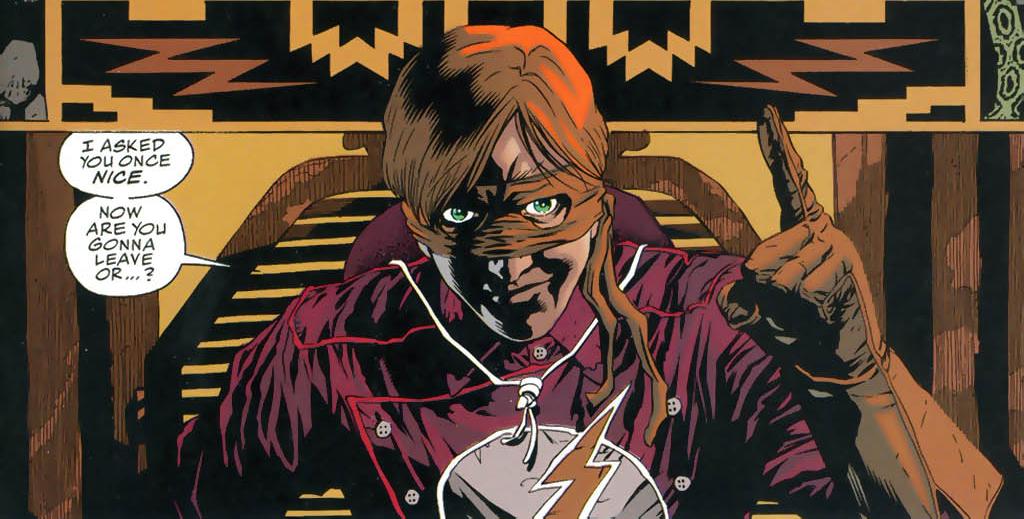
Written by Chuck Dixon with art by J.H. Williams III, Justice Riders re-imagines the Justice League as cowboys. While the high-concept is good, it would have been easy to just crank out a passable but forgettable story with little effort. Nevertheless, Dixon wrote a western that if stripped of its Superhero trappings would still be compelling, if overly supernatural, tale.

It may come as a disappointment to some that the Justice League in Justice Riders does not feature Superman or Batman. There is a simple reason for this: in the 90’s they were most often not part of the Justice League. The exception being Grant Morrison’s spectacular run on the title that started the same year that this comic was released. No, the League used for Riders is most of the rest of DC’s big 7¾besides Superman and Batman, the big 7 includes Wonder Woman, The Flash, Green Lantern, Aquaman and the Martian Manhunter¾plus some favorites from the very popular, and also spectacular, Justice League International. The star of this book is Wonder Woman, re-imagined here as Sheriff Diana Prince.

After leaving her town, Paradise, to catch some horse thieves, she returns to find it destroyed. With the dying words of her faithful deputy, Oberon Sheriff Prince vows revenge on the people who destroyed her town. So she goes recruiting. The first gunslinger to joiner is Kid Flash, the fastest gun in the west.

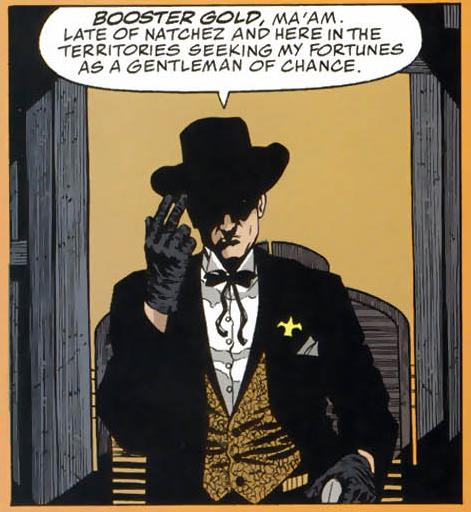
Young Wally West, who still has his super speed, quickly agrees to join Diana, though he does question her recruiting a man with his reputation. She also turns down Booster Gold, a gambler who looks exactly like Bret Maverick, preferring to decide for herself who joins her posse.

Her next target is Katar Johnson, a Native American who joins no questions asked. All he needs is his gear, which includes hawk wings, a loincloth and a shotgun. Honestly, Native American Hawkman may be the best Hawkman.

Meanwhile, still wanting to help, Booster enlists the eccentric Beetle to give him an edge over the speedy Flash. The possibly insane Beetle has just what he’s looking for.

We also get our first look at the villains, of this tale, the murderous railroad kingpin Maxwell Lord, the otherworldly Faust and their army of killer robots.

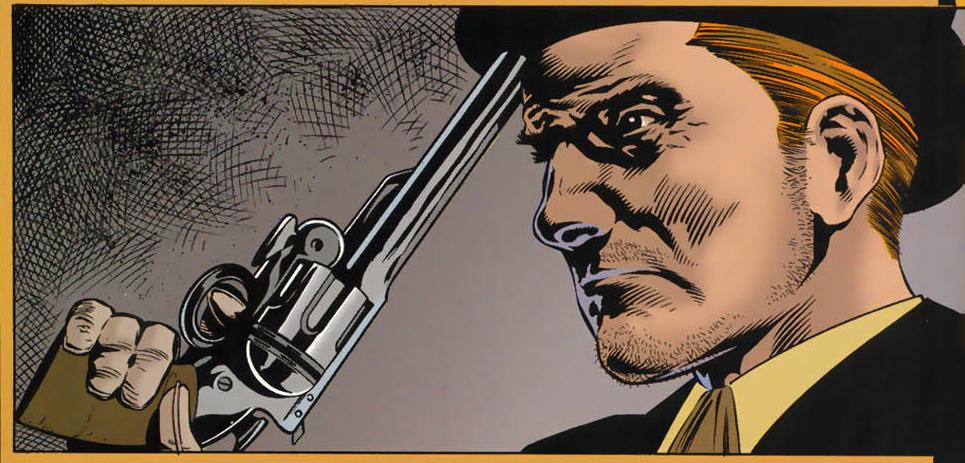
So perhaps I oversold how true of a western this is. That doesn’t matter. What does matter is that Justice Riders is a comic where the Cowboy Justice League fights an army of killer robots. All beautifully drawn by the great J.H. Williams III. It is terrific. I simply can’t emphasize enough how great the art is, as the included pictures should attest.

There aren’t many true surprises in this book, and there doesn’t need to be. Aside from the plethora of supernatural and science fiction elements, Justice Riders is a straightforward revenge western. Sheriff Prince and her group, who eventually number 7, chase Max Lord across the Southwest before the final showdown in Helldorado. There are several sumptuously drawn gunfights, and some inspired appropriations of Superhero concepts into the western framework.

There is one more wrench thrown in, one that is what puts it over the top. Kid Flash is wanted for murder in Texas and there in only one man who can track him down. The incomparable Kid Baltimore, the bowler wearing Pinkerton Detective Guy Gardner. As is always true, Guy Gardner is awesome. And his appearance in this book is just a glorious cherry on this delicious, western sundae.

It shouldn’t be hard to track a copy of Justice Riders down; I highly recommend you do so. You can get it for about $10 on Amazon. I found it for less than 5 at a local comic shop. It is bound like a paperback, so it will sit perfectly on a bookshelf. Really, go get it.

Thoughts on Green Lantern: Rebirth

A week or three ago I posted this picture as a part of my lazy Month of Gardner. It is from a pair of pages in Green Lantern Rebirth #6, written by Geoff Johns and drawn by Ethan Van Sciver, which shows the differences in how each of these Green Lanterns use their rings. Although I think these distinctions largely started there and have been used at best sporadically since then, I do really like the idea of each Lantern having a different style.

The rest of Rebirth can be problematic. For the record, I am pro-Rebirth. I like what it did and I mostly like how it did it, but there is no getting around the fact that it is a six issue long retcon or that Johns writes Hal Jordan as though he were Batman. I understand how that could grate on those who did not want to see Hal redeemed. However, I thought Emerald Twilight, the story where Hal goes bad, was somewhat terrible and I would rather have a functioning Green Lantern Corps than Kyle Raynor as Luke Skywalker. Geoff Johns also did a good job of not diminishing Kyle in bringing back Hal. Yes, Hal, not Kyle is the Green Lantern, but even in Rebirth Kyle, John, Kilowog, and Guy get their chances to shine.

However, the reader feels about the “fix” that is Green Lantern: Rebirth, these two pages are really good.

Johns is the master at shaping years of often contradictory or confusing stories, revitalizing tired characters and giving them relatable hooks for future stories. In just a few pages, he manages to get to the heart of all five of the main Green Lanterns.

First John Stewart. His constructs are actually constructed. He builds them, uses his knowledge as an architect to use his green powers more effectively. He is thoughtful and careful in how he uses his ring. Next is Guy Gardner. Rather than John’s careful approach, Guy is reckless. He is all heart and no control. Then there is Kilowog. The only non-human in this group, his ring sends out constructs that are bigger than the others are. That his ring booms shows its raw power. Kyle Raynor is an artist, and he uses flourishes and constant refinement. He is never satisfied and he never gives up. Last is Hal Jordan, who uses precision and focused power.

It really shows what every one of them is about. John and Kyle are thoughtful and somewhat introspective. Their actions are carefully considered and they are rarely rash. Guy is the opposite. He is just held back from action at all time, with almost no thought past his initial instincts. Hal is somewhere in between. He tends toward reckless and instinctive, but is more careful than Guy and choosing his targets. Kilowog’s explanation is probably the least illuminating. His booming ring shows that he cannot be ignored, but it really tells the reader little about who Kilowog is. Still, Johns goes at least 4/5 on explaining who these Green Lanterns are.

I just really like how someone who has little knowledge of these characters before reading this, like me not that long ago, would have a decent grasp of all of them from just these few pages.

Why Superman is the best.

It’s been a while since I’ve done so, but I’m getting a hankering to write about superheroes.  At first I was going to write a defense of that most unlovable of heroes, Marvel’s Ant-Man, but if I’m going to write about superheroes, I should write about the best superhero.  Since I can do that and write about the best comic at the same time, I decided to write about Grant Morrison and Frank Quitely’s All-Star Superman.  Specifically All-Star Superman #5, my personal favorite comic book ever.

As everyone should know, the only superheroes that actually matter are Superman, Batman and Spider-Man.  Sure, lots of the others are great–I like Guy Gardner and Thor– but the three I mentioned are the ones that set the standards for the rest.  Spider-Man is the perfect teenage superhero, with a simple reading being the spider powers stand in for puberty.  Batman is the man who makes himself a myth, with one of the greatest fictional locales to run around.  But Superman is the original and best superhero.  He represents the best that humanity–and in some ways America– can hope to be, an ideal to strive to.  No story better illustrates this than All-Star Superman.

All-Star Superman #5 is a story titled “The Gospel According to Lex Luthor.”  On the surface, it is a simple comic; Lex Luthor, condemned to death, allows Clark Kent to interview him in prison, to give the world his side of the story of his war on Superman.  The irony immediately obvious to every reader is that Clark Kent is Superman, which despite being the smartest man on Earth Luthor has not figured out.  However, there is much more going on here than that.  While this comic is about Luthor’s side of the story, is as perfectly contrasts the values and principles of Superman and his greatest enemy.

First, a brief explanation of Lex Luthor.  Whether in his original identity of a standard mad scientist or his revised (Post Crisis on Infinite Earths) power-mad CEO, Luthor has generally been Superman’s foremost adversary.  He has appeared in every modern Superman movie.  Luthor is, simply, Superman’s opposite in most ways.  Luthor is smart, rich and powerful as well as completely self-centered.  While his is undeniably intelligent, Luthor’s real defining trait is his narcissism.   If not for Superman, Luthor would be the most powerful person on Earth.  Superman’s superiority, instead of being an example to follow, makes Luthor insanely jealous.  While he is smart enough to gain any accolade he desires, he cannot accept Superman’s supreme physical advantage over him.   Luthor is easily one of, if not the, best comic book villains.

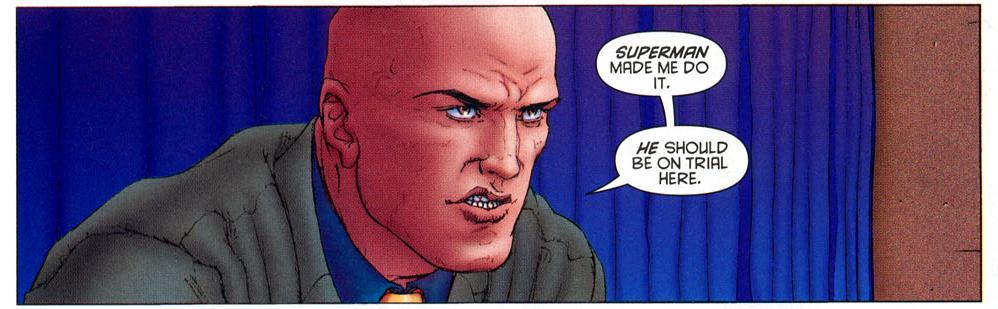
The Gospel According to Lex Luthor starts with Lex being sentenced to death for his recent (Issue 1) attack on the first manned mission to the Sun.  His defense?

He is so blinded by his personal war with Superman that he believes he needs no defense for his actions.  Before his execution, he allows one reporter to interview him: Clark Kent.

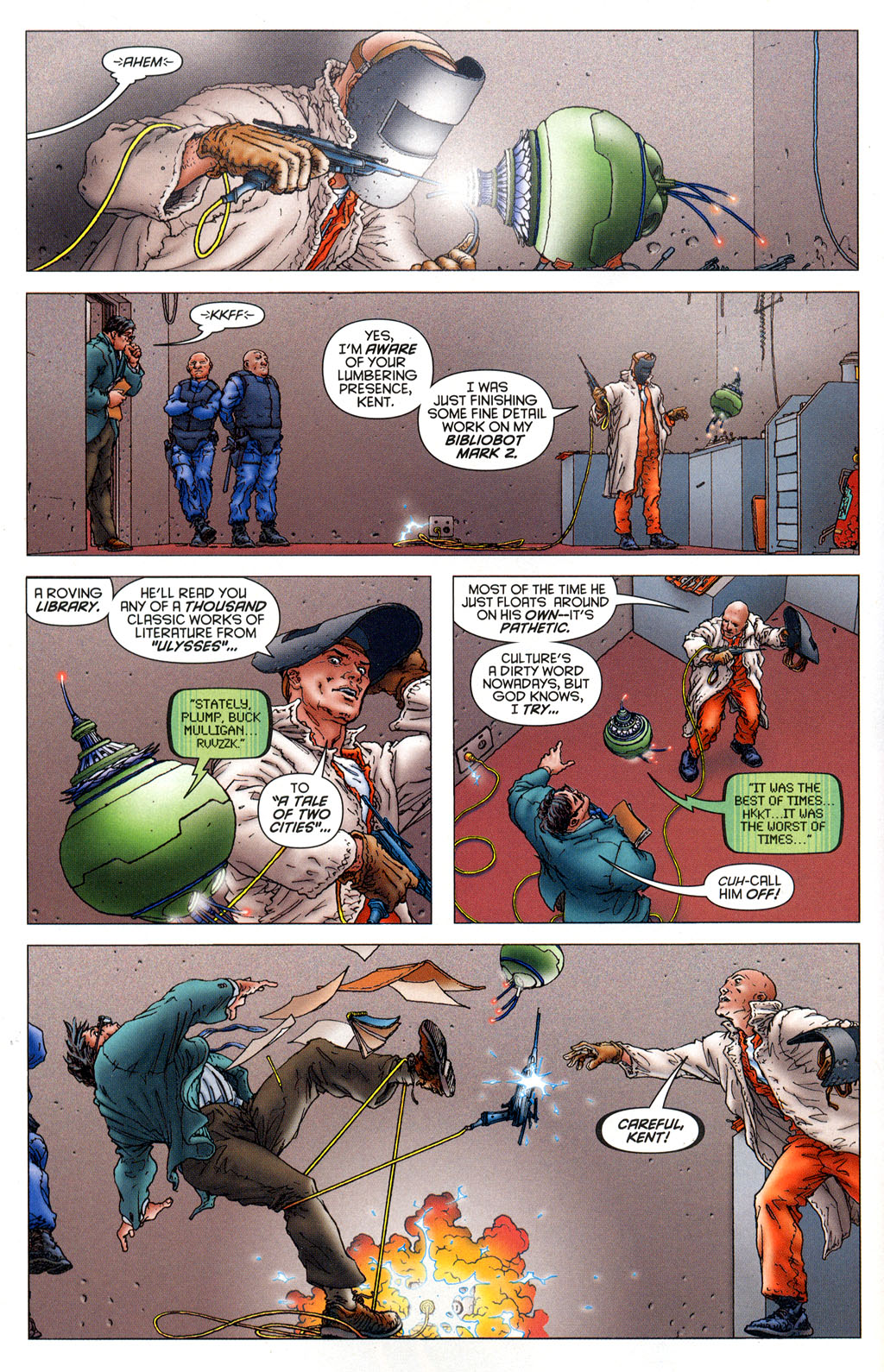
The Clark Kent of All-Star Superman is not the competent figure that he has been since John Byrne’s reboot in the 80’s. Morrison’s Kent takes the mild mannered reporter shtick much further than just mild-mannered he is a complete pantywaist.  While I prefer the version of Superman where Clark Kent is who he is and Superman is the disguise, in order to really believe no one suspects he is Superman the other way actually works a little better.  I can see why no one suspects, or even believes when confronted with it point blank, that Clark Kent is Superman.  But one of the most amazing things about All-Star Superman is how Kent’s clumsiness is just another tool in his crime-fighting arsenal.  Case and point page 4:

This also illustrates one of the fundamental differences between Superman and Lex Luthor:  Luthor spends all of his time trying to destroy his enemy; Superman goes out of his way to save him.

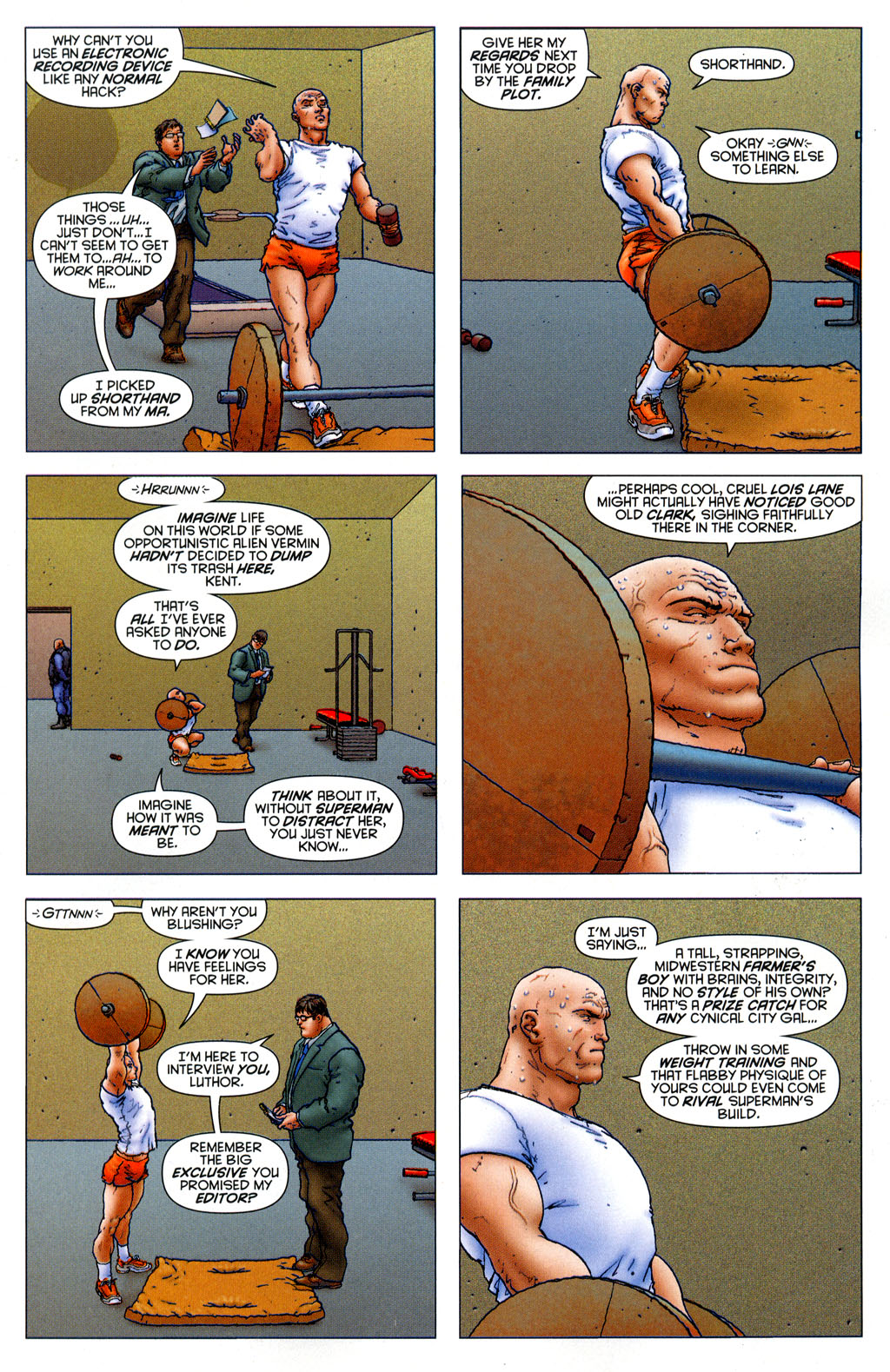
The next few pages really show how Luthor thinks, both about himself and about Superman.  He calls his guards “fat girls” and asks Clark if he feels “diminished by [Superman’s] very presence.”  While in the midst of a strenuous work our routine, Luthor focuses on questioning Clark’s masculinity.  He displays his own insecurities about Superman’s physical prowess, with the focus on Clark’s masculinity and his own hard exercise regimen.  There is some validity to Luthor’s anger here; there is no way that any person could match Superman’s strength.  But he is so focused on it that he can’t even begin to fathom that Superman could be posing as a man that appears as feeble as Clark Kent does.

We then move on to the communal area of the prison, where Lex outlines his utopian vision of society, which he calls “survival of the smartest”, while being completely oblivious to the angry stares he is getting from every other inmate. He has no fear; even of the occasionally super powered Parasite (he sucks the power out of other people, including Superman).  “Brain beats Brawn every time,” Luthor says, which he believes makes his victory inevitable, though it proves to be the opposite.

Parasite starts to absorb Superman’s powers and breaks free from his restraints, which starts a riot.  While pretending to blunder into the fray, Clark manages not only to save Lex’s life again; he also saves all the guards caught up in the riot.  All while not breaking his cover as Clark Kent.  While Lex and Clark make their escape to Luthor’s cell, they are pursued by the increasingly immense Parasite.  Superman causes a convenient earthquake, and Lex:

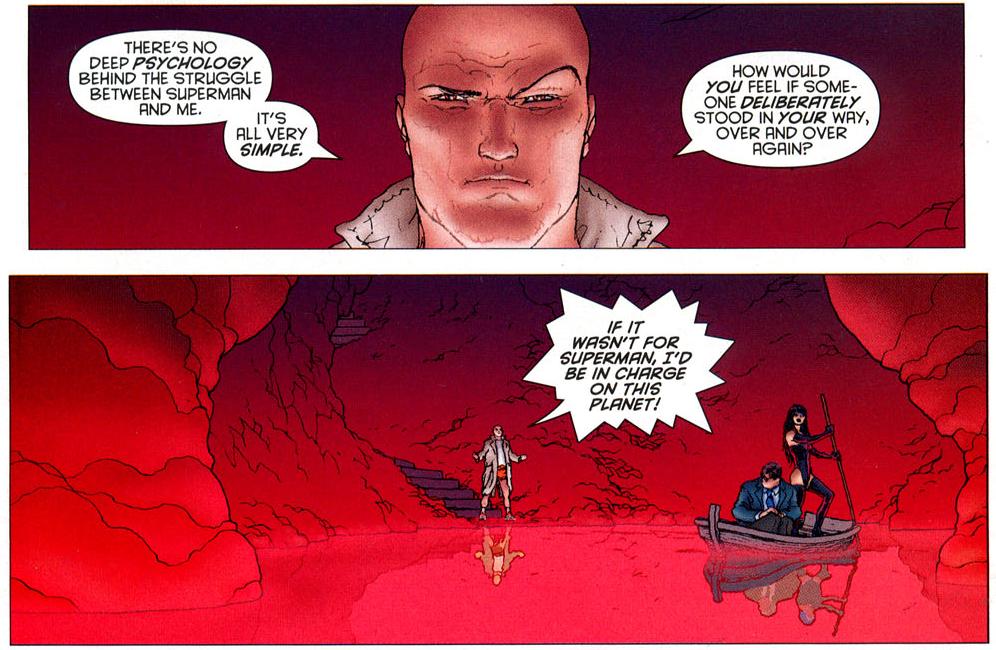
Note how quickly Luthor abandons brains for brawn.  He doesn’t even question the earthquake, he doesn’t try to think of an escape from the Parasite, he hopes for a miracle.  Then as soon as his enemy is down, he starts kicking him. Once they get to Lex’s cell, he simple continues on his tirade against Superman.  His petty grudge has completely consumed him.  He gloats about how he’s turned the newspaper and the prison against Superman, and then shows Clark his escape route.  Lex has no intention of escaping; he merely wants to show how little power the law has over him.  Here Clark almost loses it.  He does not understand how Luthor can focus only on his personal war with Superman, when together they could do so much to help the world.  But Luthor is determined to throw his life away in his maniacal quest to destroy Superman.

He also drops his final bomb:  Superman is dying.  The readers already know this, but they did not know that it was an intended part of Luthor’s plan.

While this comic defines Lex Luthor, it also defines Superman.  While incredibly intelligent, Luthor thinks only of his own quest for power.  Superman on the other hand, despite having no reason to feel anything but hate for a man who has spent his life trying to kill him, does everything he can to save Luthor from himself.  Superman’s faith in humanity is such that he thinks even the worst of us are worth saving.