Pokémon Sun & Moon

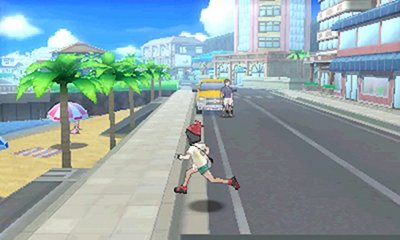
Checking my posts about previous Pokémon games, I am confident say that this game is my favorite in the series since Black & White. Maybe since all the way back to Red and Blue. Pokémon Moon is a phenomenal game. While I found Alpha Sapphire tedious, just like I found Sapphire tedious, I did like X & Y and Black & White 2, they didn’t quite grasp me like the game’s I’ve truly loved have. White grabbed my attention with its collection of all new Pokémon. There was no finding the same old monsters you’ve been seeing since 1998; throughout the main game all that could be found were new monsters. Y, which didn’t grab me the same way, tried to differentiate itself by finally moving the series into 3D polygonal graphics. It was a good and necessary change, but it wasn’t enough on its own to get me to love the game. Moon keeps the graphical improvements from Y, but also shakes of the series usual progression in some fun and interesting ways.
psm1

Pokémon Moon may be the most plot heavy games in the series. There is more than just the usual 8 gym badges interspersed with showdowns with the local Team Rocket equivalent. In fact, there are no gyms at all. The evil team stuff does take a bit of a step forward, but their plans are less world dominating maniacal and more street punks on a rampage. This is mixed with a plot about Pokémon from another dimension crossing over into this one. Replacing the gym leaders are Trial Captains and Kahunas, which are essentially the same thing, except instead of a gym they have trials for the player to complete. This works into the expanded story parts by letting the Captains and Kahunas show up more often on the adventure. Some are just the guys you see in the one scene where you fight them, others are encountered all over the island helping the player out. Each of the game’s four islands has a Kahuna, chosen by the island’s guardian Pokémon, who appoints the Captains to test people before they battle the Kahuna. A big part of the game is the local Pokémon Professor going around trying to set up an elite 4 like in the other regions. All of these different elements come together to make a game that is much more about the story of this area than previous games and a little less about the player’s quest to be the Champion. It isn’t a huge change, but it is a big enough one to make Pokémon Moon seem fresh compared to the previous generation.

psm3

There have also been rather significant to the gameplay. The big one is dumping HMs. Hidden Moves, or HMs, were a gameplay element that let the player use moves on the world map. The series relied on these for environmental puzzles in previous generations. They were also on the whole not terribly useful moves that were impossible to get rid of. It lead to most players carting around one Pokémon whose only skill was the ability to learn 3 or 4 of those moves. Sun & Moon have eliminated them in favor of several Pokémon that can be called to solve those puzzles and are gradually unlocked as the game progresses. I was never a big detractor of HMs. There were occasionally a chore, but the series has scaled them back since Diamond & Pearl and they weren’t much of a hassle. Still, I can’t claim losing them isn’t an improvement. The solution keeps the basic functionality without clogging up the player’s team.

Instead of filling up the Pokedex with tons of new monsters, the highlight of each new generation and something that is quickly becoming untenable as the number of Pokémon approached 1000, Sun & Moon adds a ton of new forms for old Pokémon. It works with an idea that has already exists, region variants that look different from others of the same kind of Pokémon, except now they can have new types. Stuff like adding dark type to Rattata. It essentially takes old Pokémon and makes them new Pokémon, but in a more interesting way than X&Y’s Mega Evolutions.

psm2

I really didn’t care for Mega Evolution. I found them goofy and not especially fun. Most of the Mega Evolutions went to Pokémon who were already strong, making them largely unnecessary. Sun & Moon add Z moves, a similar concept that just works better. They are powered by an item the Pokémon holds, and any Pokémon with the appropriate attack type can use them. Plus, they are accompanied by a goofy dance the trainer does. Instead of making one Pokémon super powerful, it gives a Pokémon on superpowered move. It is better balanced and more easy to customize to the player’s team.

I really liked Pokémon Moon. I enjoyed it enough that I am thinking of spending some significant time with the post-game. Usually I make a token effort before putting the game in my get back to pile and never getting back to it. (The big exception to this was Pokémon Pearl, which I put nearly 400 hours on.) Much like the second generation on the DS, the second 3DS generation really feels like it got things right. I again feel excited to play whatever the series has coming next. Maybe I’ll finally get around to downloading one of the original games on my 3DS.

Bravely Second: End Layer

A couple of years ago, I was wowed by Bravely Default, at least at the start. By the end I was pretty darn sick of it. The problems I pointed to in my review were pacing and balance, but I had others. The characters varied from grating to nonexistent and the plot ran about 2 chapters too far. Bravely Second, a game built on the bones of its predecessor, manages to fix all of those problems. I started out being somewhat underwhelmed with it, mostly due to how sick I still was of the end of Bravely Default, but by the time I finished it up I would rank it as one of the best RPGs on the 3DS. Bravely Second is a complete delight.

bravs1

There are so many small ways this game improves on its predecessor, starting with the characters. The party in BD consisted of Agnes, a completely generic female JRPG lead. She wasn’t bad, but she was exactly in the mold that has been used for that character since Rosa in FFIV. It had Tiz, a blank slate protagonist, and Edea, a hot headed defector the party’s team. Finally, there was Ringabel, a loveable rapscallion with a mysterious past. By the end of the game, Ringabel’s increasingly unfunny antics started to dominate the moments of levity. In Bravely Second, only Tiz and Edea return to the main party. Edea hasn’t changed, and didn’t need to. Tiz’s lack of personality has transformed with his demotion from protagonist to something of a laconic cool. He is now as close as this game gets to a silent badass. Joining the party are Yew, a wide eyed optimist suffused with bland enthusiasm, and Magnolia, who starts the same as Agnes as a sort of generic JRPG leading lady, but her quest is for revenge not activating mystical doohickeys. Agnes still has a prominent role as support, and it is a role that suits her well. Ringabel is held to a thankfully brief – and optional – cameo. The group in Bravely Second is more interesting and has a better rapport. The comic relief is split more evenly around the four party members and everyone comes off as fun instead of grating.

bravs2

The other characters, generally some sort of twisted embodiment of their class (inherited through an asterisk that bestows that class and its abilities on the player), were often interesting if underutilized. Except for Yulyana, who was neither interesting nor underutilized. In Bravely Second, the returning original asterisk holders have been given a slightly softened outlook. They are still kind of awful, but usually in a more comical than diabolical way. The new ones are split between plot centric ones with full characters and new toss off characters. Still, they managed to keep most of the good ones from the previous game and took a crack replacing the ones that didn’t work with new attempts, with some success. Like most of the game, BS’s characters are an improved revision of the first’s.

bravs3

The pacing and balance are much improved as well. No longer can you pick a strategy in the first 10 hours and use it for the rest of the game with total success. While I did attempt to experiment in the first game, it didn’t often feel rewarding. It was just as effective to stick with one or two strategies. Bravely Second’s classes dole out their effective skills a little slower, making it harder to find the perfect strategy and stick with it. Plus, the bosses do a better job of changing tactic to force the player to do the same. The game also moves at a snappier pace, with fewer bosses in each area. It is a revisit of all of Bravely Defaults haunts, but with new sights and new missions. Then there is the central conceit of the game, with the New Game+ being necessary to get the true ending. BD forced the player to run through the game several times to get to the real ending. BS has a one time trick that opens up two fully new chapters. The last half of BD was a slog, because the game was fully explored and you just had to keep doing it. BS wisely held some stuff back for the second run through.

bravs4

Bravely Second takes a good game and fixes almost all of its faults, turning a flawed yet fun experience into what should be regarded as a classic.

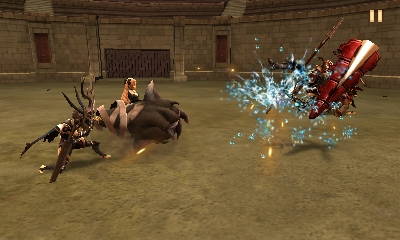
Fire Emblem Fates Birthright

When faced with the poorly explained choice between Fire Emblem Fates’ Birthright or Conquest versions, I went with Birthright. Given how the differences were explained, Conquest is that game the more closely fit with how I’ve played the series. I am just about as much of an old fan of Fire Emblem as exists in North America. I started with Sacred Stones, but quickly went back to play the first two GBA games, the fist using a translation patch and emulator, the only time I’ve actually completed a game that way. I’ve stuck with the series since, only failing to really enjoy the DS game. I liked Awakening, but I felt like it changed a little too much of the series core in an effort to expand the series fan base.

fefb3

It makes sense that when Nintendo explained what the differences between the two versions were that I would go with Conquest. Birthright was supposed to be more like Awakening; Conquest was the throwback to the early games in the series. There was one big change that I really wanted to keep, though: the world map. I started with Sacred Stones, the first game to try an Awakening like pivot for the series, but it was too rushed and too easy to have the impact that Awakening did. Still, a lot of the changes to Awakening were tried out for the first time in Sacred Stones. While I would agree that Sacred Stones is far from the best game in the series, its changes to the series’ structure were good. As much as I want an experience like Path of Radiance, I’d rather have some of the niceties of the modern games. Still, the choice for which one to buy (first, since I am going to be playing Conquest as soon as I finish with Birthright) came down to the fact that I prefer Birthright’s White and Red color scheme to Conquest’s Black and Purple.

fefb2

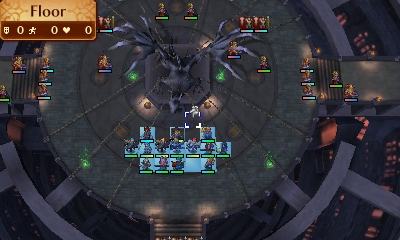
Honestly, I was pleasantly surprised by the game. Even Birthright pulls back from the cakewalk that Awakening was. There are some big changes to the pair up mechanic that stop it from completely wrecking the game’s difficulty curve. Now combo attacks always happen unless characters are paired up. Pairing up is now a defensive maneuver. It blocks enemy combo attacks and occasionally blocks main attacks. In Awakening there was no reason not to pair up, in Fates it is a situational tool. Not pairing up allows the player to combo and press the attack, pairing stops the enemy from doing the same. It turns a broken mechanic into an interesting one.

fefb5

The other big change to the formula is that they removed weapon durability. At first I thought this would simplify the game too much; judicious use of powerful weapons was an integral part of the series. The change was worked into the game perfectly. Now even the best weapons can have significant downsides and super powerful weapons are harder to find. It makes for fewer decisions for the player, but more important ones. The new weapon system really won me over by about the midpoint of the game.

It does continue the series strong focus on characters. The plot never moves past generic fantasy fluff, but the real draw is in the support conversations between the characters that make up your army. The start in out in pretty stereotypical roles, but the strong localization work really helps flesh out the collection of stock characters. The furor over this game’s localization is equal parts annoying and amusing to me. It is annoying because people who have done excellent work are getting yelled at by idiots; it is amusing because of how impotent those idiots have proven to be. Fire Emblem Fates looked like Nintendo taking a hard turn into some otaku jerkoff bullshit and the NA version deftly smoothed out the roughest, grossest parts of it, causing a teapot tempest of man-baby outrage. When the dust settled, intelligence won out and FE Fates was the best-selling game in the series in its first month. It is always good to see good work rewarded. Far from being a problem with the game the quality of the Fire Emblem Fates localization, like with nearly every game Nintendo’s Treehouse group translates, is one of its strongest features.

fefb4

I will always miss the incredibly charming sprites from the GBA games, but Birthright is one of the strongest games in the series to date. Now it’s time to find out if its supposedly more difficult counterpart is just as good.

The Ace Attorney Against the Archaeologist

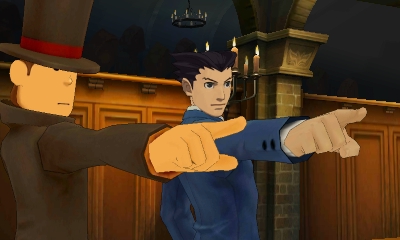
Professor Layton Versus Phoenix Wright is a crossover game that caters directly to me, featuring two of my favorite DS franchises, which makes me a somewhat sad that I didn’t enjoy it quite as much as I had hoped to. All the elements that make both series great are there, but somehow it doesn’t come together quite as well as the games from either. This is not a peanut butter and chocolate situation of two great tastes going great together; these two distinct flavors do not mix as well as one would expect.

aapl3

It is less a natural failure of mixing these two game series, but a failure of this specific game’s attempt at comingling those two worlds. While it was written by Shu Takumi the creator of the Ace Attorney series, Phoenix and Maya’s inclusion almost seems an afterthought. The structure of the game is much more like the Layton series, but the puzzles aren’t really up to snuff. Outside of the protagonist duos, the game does nothing to leverage the rest of these games excellent cast to help fill out the story. Finally, when it comes down to it, often this game just isn’t all that well written; a big problem when the game is essentially a visual novel.

It starts with Professor Layton and Luke having a girl show up on their doorstep in some sort of trouble. It is the starting point of most Layton games. Trying to help her out, Layton and Luke get pulled into a deeper mystery. And they get pulled into a mysterious book. At the same time, Phoenix and Maya travel from Japan America to England to learn from their legal system. When he gets there, he discovers that he has been put in charge of a case, a case involving the girl that Layton and Luke were protecting. After winning the case, Nick and Maya also get sucked into the mystery.

aapl2

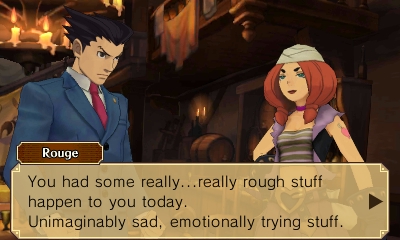
While there are several cases for Phoenix to try, they are mostly unsatisfying affairs. Mostly because the legal system in the witch trials is pointless. It is annoying to use logic when the system itself ignores it. The rules in a regular Ace Attorney game don’t exactly make sense, but they are consistent. Cases build up to their conclusions. Here they tend to just go on until someone else admits to the crime. No matter how effectively you prove your client innocent, unless you can pin the crime on someone else it doesn’t matter. Yes, they are witch hunts; they have to find someone to blame things on, but it doesn’t make for a satisfying experience.

My complaints about the Layton portions are less pronounced. A lot of the puzzles are less brainteasers and more trial and error. There are also fewer of them than the usual Layton game. They are actually tied into the game more organically than usual, but at the cost of some of the Layton’s series unique charm.

aapl4

Outside of a cameo by Inspector Chelmey and Constable Barton, the supporting cast is all new. In a lot of ways this is a good thing, it lets the game tell its own story and build an organic way for these characters to interact. Still, the crossover appeal would have been stronger if they would have dug just a little deeper. Why does Flora constantly get shoved aside? Why couldn’t Gumshoe have shown up to bumble around with Chelmey and Barton? Maybe a role for Miles Edgeworth? While they definitely should not have been allowed to take over the game, a few more familiar faces would have been appreciated. Another problem is that the investigation group expands to five people, all of which have to give their two cents at every opportunity. It slows the pace down, particularly since Maya and Luke don’t really have much to do for the bulk of the game.

There are plenty of good things, though. The overall scenario is solidly entertaining, with a suitably Layton-esque escalation near the end. Both Layton and Phoenix get their chances to shine; opportunities to bring their unique skills to the fore. Plenty of the new characters are highly entertaining. There are some interesting advancements to the trial system as well. While letting the player cross exam multiple witnesses at once is kind of ludicrous, allowing the player the use pieces of testimony to point out contradictions to other witnesses is a nice touch.

aapl1

The game is pure fan service for fans of both series. It doesn’t make either of is separate parts better, but it doesn’t diminish them enough to make them unenjoyable. Plus, there is a good chance that this is the last we see of either of these protagonists. The Layton series is headed off to the unexplored territory of Layton 7, which is not going to be like the previous games in the series. And the Ace Attorney series is heading into the past for Great Ace Attorney, with Sherlock Holmes as a supporting cast member as they try cases in Japan’s America’s Meiji Period. Professor Layton Versus Phoenix Wright is not a perfect game, but it is a fine send off for two of the best new video game characters of the last decade.

I got me a 3DS

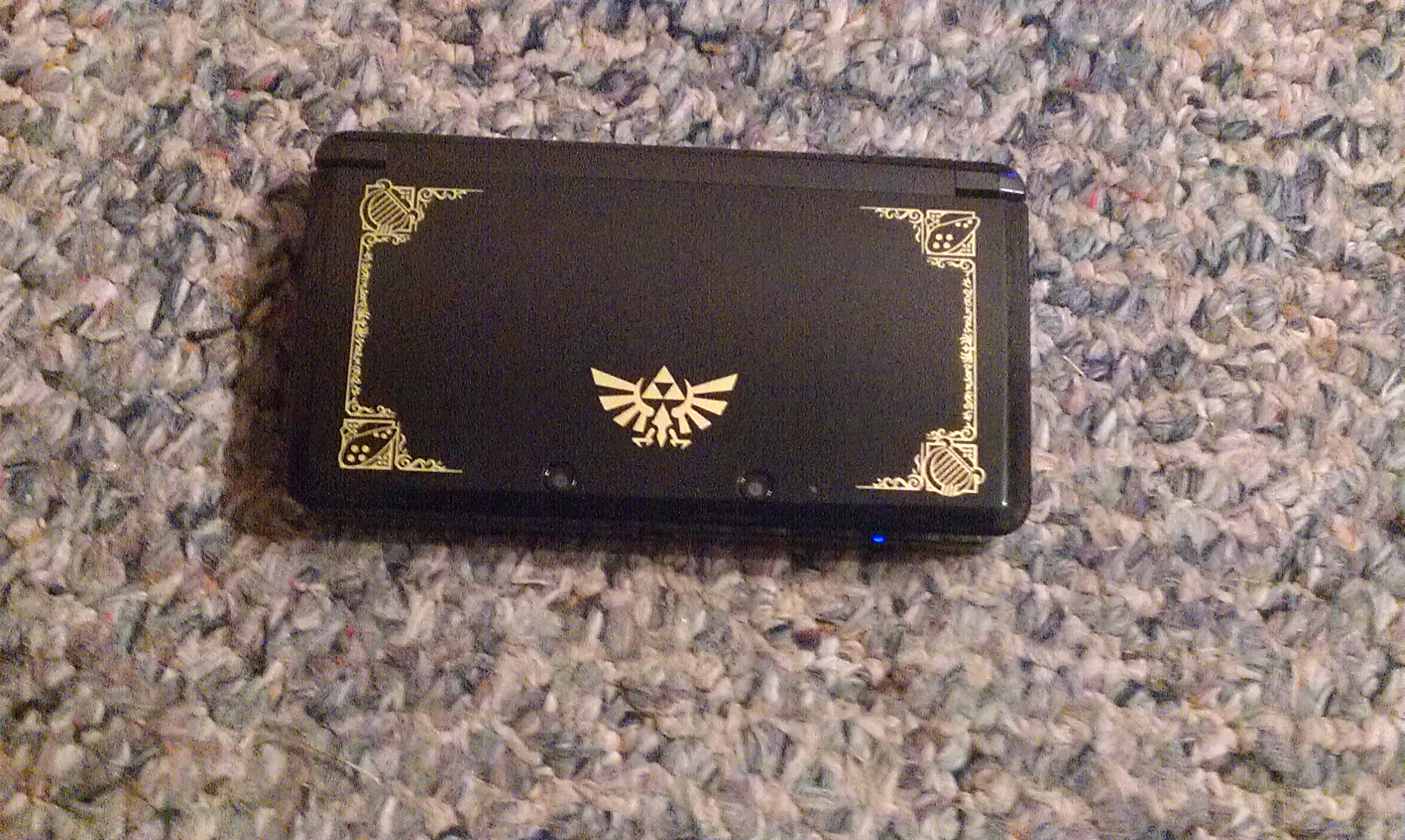
Last week I began to learn the joys of 3DS ownership. In my Skyward Sword induced frenzy, the sight of the Ocarina of Time 3DS bundle pushed me over the edge and I splurged. I mean look at this thing:

I was powerless, I had to buy it. I still regret not getting the Zelda DS lite bundle.

It helped that there are now enough games for the system to make owning not a waste of time and money. The 3DS actually had a pretty decent launch line-up, with several good games if no great ones. Since then the trickle of games, the worthwhile ones at least, released have almost exclusively come from Nintendo themselves. Which is not unusual for a Nintendo system. Right now Mario Kart 7 and Super Mario Land 3D lead my list, with Pilot Wings Resort and Star Fox 64 3D just behind. Plus, there are several worthwhile downloadable games between DSiWare and 3DSWare. And the addition of Gameboy Virtual Console, which I’ve already bought Link’s Awakening DX from. Last but not least, my DS backlog can transfer right over.

Honestly, while the 3D effect is truly awesome, I can’t really play with it on for more than about 45 min. It isn’t really a strain, but it is a bit disconcerting. So far I’ve been using to regulate my playtime on Ocarina, keeping me from plowing through the game in one sitting.

I’ve also tried it out for playing DS games. It isn’t perfect. You can either stretch the game to fit the screen, or shrink it to it’s natural resolution. Neither option is as good as playing it on a regular DS, but it is definitely playable. Some of the games actually look pretty good.

There are certainly flaws that will become apparent to me with time, but right now, flush with new ownership, I am very pleased with this machine.