The Quest

I am tired of playing my PS2.  My PS2 has certainly seen better days.  It no longer plays DVDs, it has trouble with some games despite their pristine conditions.  It won’t recognize the lid is closed unless there are several games sitting on top of the system.  The system in definitely on its last legs.  As much as I love the old guy, I am ready to move on.  Honestly, for much of the last 2 years I have been done with it.  I have played my Wii and DS and recently my brother’s PS3.  But that PS2 stayed hooked up right next to others, waiting for me to finally come and finish off my PS2 library.  Well, that time is now.

Here is the list of PS2 games that I own but haven‘t beaten:

  1. Unlimited Saga
  2. Mark of the Kri
  3. Okage: The Shadow King
  4. ChoroQ
  5. Phantom Brave
  6. Chaos Legion
  7. Forever Kingdom
  8. Silent Hill 2
  9. Darkwatch
  10. Gungrave
  11. Shining Force Neo
  12. Genji
  13. Maximo
  14. Marvel Ultimate Alliance
  15. Front Mission 4
  16. Grim Grimoire
  17. Killer 7
  18. Star Ocean 3
  19. SMT Devil Summoner 2
  20. Shining Tears
  21. Growlanser 3
  22. Drakengard 2
  23. Castlevania:  Lament of Innocence
  24. Gun
  25. Tsugunai: Atonement
  26. Wild Arms 3
  27. SMT: Nocturne
  28. Rogue Galaxy
  29. Steambot Chronicles
  30. Bully
  31. The Thing
  32. Eve of  Extinction

32 games.  My goal is to beat or just remove every game on the list.  I intend to beat most of them, but I am sure there are some on the list I will never be able to.  I’m not just going to exclude games so that I can say I cleared the list, but neither am I going to spend a lot of time playing a game that I hate.

It is quite a list, but I can already thin it.  I beat Bully and Steambot Chronicles in the last week or so, so that removes them from the list.  And there are a couple to simply remove.  I have tried on at least 4 separate occasions to play Unlimited Saga, and every time quit frustrated.  It may be a worthwhile game once you get the hang of it, but I have wasted enough time on it already.  It is off.  And Phantom Brave, while a perfectly fine game is off as well.  I am removing Phantom Brave because I already played almost 2 thirds the way through it only to lose my save.  The day may come that I decide to replay Phantom Brave, but I did not like it well enough to play it through again.  So that is 4 games off the list, with 28 left to go.

I hope to have this list finished before the end of summer.  While there are quite a few RPGs on that list, I have played most of them extensively, so that is not an outrageous goal.   Right now I am playing Gun, a decent western GTA clone and Tsugunai: Atonement, an RPG from early in the PS2’s life from Atlus that is, through the first hour, completely mediocre.  Here I go.

Wolf Pups and Trotmobiles

I want to fully recommend OkamiDen to anyone who owns a DS, but I can’t.  Not because OkamiDen is not a great game, it is, but because it too similar to its prequel Okami.

The original Okami, whether on the Wii or PS2 version, is one of the best games of the last ten years.  It is one of the few games that not only uses the Zelda action/adventure formula, but also uses it as well as the Zelda games do.  Aside from playing perfectly, Okami also looked and sounded wonderful.  It looked like a Japanese watercolor painting come to life.  Okami was just a joy to play and even to watch.  Video game consumers upheld their reputation for ignoring wonderful things by ignoring Okami.  Twice.

OkamiDen, part sequel, part remake, part port, is just the same as its predecessor.  Capcom did a terrific job fitting the game on the DS.  But in the first 5 hours or so, I have seen nothing that was not present in the first game.  It is arguably the best Zelda-like game on the DS; the only actual complaint I have with the game is that the first few dungeons are a bit too simple.  However, if the original Okami is available you should play it instead.  But that little wolf pup (Chibiterasu, the main character) is just so damn cute.  I can’t help but love him.  Play OkamiDen.  Buy it right now and play it.  Just don’t expect the same mind blowing experience as the original Okami.

I also beat Steambot Chronicles this week.  I need to write a big long love letter to this game, but I can’t.  Not right now.  Maybe it’s the fact that I played most of the game more than 2 years ago and it’s a little fuzzy.  Or maybe that fuzziness comes from the fact that I just had my wisdom teeth removed and am currently taking Vicodin.  Either way, I don’t have it in me right now.  But Steambot Chronicles is a very good game. Made by Irem and published in America by Atlus, Steambot Chronicles is a somewhat clunky sandbox game (GTA) with a great hook:  you control a mech (called a Trotmobile in the game) through a Miyazaki-esque world.  About half of the game is played by piloting a mech.  The controls take a little getting used to; one control stick controls the left leg, the other the right, L1 and R1 attack with the left and right hand respectively.  But once you master them, stomping around in a giant mech is just delightful. Your mech originally called the Earl Grey II but you can change it to whatever you want, is highly customizable.  There are all kinds of weapons/arms, legs and bodies, as well as different headlights and roof attachments.  In it, you can do all sorts of things: fight in arenas, transport people and goods, go mining, etc.

There are plenty of things to do outside the mech.  You can choose the amnesiac main character‘s, named Vanilla Beans, dialogue.  You can play him as a cocky jerk, a shy hero or anything in between.  It can make each playthrough slightly different.  One of the first things the player does is join a band with the people who found him on the beach.  By playing a Guitar Hero-esque mini-game, you can play a dozen or so instruments.  The songs are cheesy, but they fit the general tone of the game. That tone is earnestness.  This is a very earnest game.  It is somewhat sloppy, somewhat unfocused, but very earnest.  It is not a game for everyone; someone could easily be put off by the somewhat clunky nature of everything in the game.   But the world and tone make it a game that is easy to love in spite of its flaws.

That’s just Bully


I recently beat Rockstar’s Bully and surprised myself by thoroughly enjoying it.  My enjoyment is a surprise because I don’t really like Rockstar’s big franchise Grand Theft Auto and Bully does not stray from its famous brother’s legacy.  But Bully does fix one of the two big problems with GTA, which allows me to more easily ignore the other one.

As mentioned above, I have 2 major problems with GTA.  The first is that while GTA has tons of different things to do, it does not do any of them particularly well.  You shoot people, if you can manage the crappy targeting and controls.  The same goes for driving, though it is better than the shooting.  I would rather play a game that does one or two things well than a game that does lots of things badly.  For most players the sheer variety of gameplay options seems to outweigh their relative quality, but I don’t like it.  The other problem I have with GTA is the overall tone.  Sure the game is rated M for Mature, but Grand Theft Auto is mature in the same way that a 14-year-old is mature.  It has a fondness for dirty words and sex jokes but lack anything resembling actual maturity.  This juvenile vulgarity permeates the world of the game and makes the experience largely unenjoyable for me. I do see why most gamers love GTA, but I have concluded that it is just not for me.

I could easily have assumed that Bully was the same thing, like the moronic people who protested the games release did.  (I do like that they assumed that since the title was “Bully” the game would be about the main character bullying other students when it is really the opposite.)   But the setting seemed interesting enough for me to try it out, though it did put it on the shelf for about 2 years after I purchased it.

Bully is just like GTA in its variety of gameplay options.  It is maybe just a bit more focused, but in large part, it is the same.  There are tons of missions with all sorts of objectives, but none of it is really outstanding.  Where it does greatly improve on GTA in the setting.  Not that the juvenile humor is gone or has added a layer of sophistication; the big change is that it feels more right in this game.  The crude “maturity” fits right in with a pack of rabid High Schoolers.  I would say that the characters are still drawn much more broadly than they could be, but the simple school stereotypes work.  The switch from outright crime to schoolyard pranks replaces the feeling of general menace from GTA with something more playful, which I would call an improvement.

Honestly, the game fully won me over with the last boss.  (Spoilers I guess)  When your fight through the various gangs of students culminates in a fight on top of the school I can’t help but see the whole thing as a tribute to the greatest of greats River City Ransom.  There is nothing a game can do to make me enjoy it more than echo River City Ransom.

Gotta Catch’em All

I spent most of the last week or so playing the newest Pokemon release (White for me because I’m racist).  I love it.  Pokemon has lost nothing in the 13 years since it landed on American shores.  Amazingly, the Pokemon “fad” seems to have diminished slightly or not at all if the record first day sales are to be believed.  For the first time since I bought Red on a whim, I went into this game virtually blind.  I knew how the game worked, it doesn’t change drastically from game to game, but other than what the starter Pokes looked like, I knew almost nothing about this version.  Playing it blind has made me absurdly nostalgic for the old Game boy days of Pokemon.

As I said, I bought Pokemon Red on a whim way back in October of 1998, about a month after its release.  I was a newly minted teenager, flush with a small fortune in birthday money and in control of the family Game boy Pocket.  But the Game boy was a tired system, especially in the Skocy household.  The system was closing in on 10 years old at that point and while we hadn’t had it that long, we had definitely had it long enough for me to extract all the fun possible from Super Mario Land 2, Kirby’s Dreamland and Wario Blast (a Bomberman/Wario crossover).  A fortuitous Wal-Mart stop allowed me to glimpse a commercial for some game called “Pokemon.”  A kindly older, animated gentleman, who I later learned was called Professor Oak, told me how you catch monsters and force them to fight in virtual cockfights.  The screens reminded me of the Final Fantasy series, which I was already enthralled with.  I had to have this game.  After wheedling my mother for permission, as I hadn’t actually brought that birthday money with me, I became the owner of a copy of Pokemon Red.

I got in somewhat before the craze, but I soon learned that a cartoon was already airing in the morning.  So I set my VCR to record it.  Because even if I had the desire to wake up early to watch it, my mother did not allow us to watch TV before school.  To this day I have several tapes full of Pokemon cartoons.  But the cartoon was always a side attraction.  The game was where it was at.  There was so much to love about the game.  It took the gameplay of Dragon Quest and combined it with the fun of pet raising, a truly addictive combination.  The similarity to Tamogotchi and other similar virtual pets probably helped fuel the fad talk, though Pokemon has surely outlived that.  The trading aspect was the game’s crowning achievement.  There was something great about trading on the Game Boy, though I certainly do not miss the hassle of the link cable.

I can still remember my first team, the one that I first used to curb stomp the elite four into submission.  My starter was Bulbasaur.  I gave him a nickname that it kills me to not remember; he never left my party.  I used a Mankey who fell back near the end of the game, but that little pig-monkey has always been a favorite.  I had a Jigglypuff I used quite extensively despite its near uselessness.  I had a Pidgeot, the first Pokemon I caught.  My ringer, the Poke who pulled the other’s bacon off the fire when things turned south was a Gyarados, the one that an unscrupulous hiker would sell at the start of the game.  The joy of Pokemon, especially the first generation, was in the discovery.  Each of the Pokemon was a revelation.  Now everyone knows that the useless Magikarp evolves into the all-powerful Gyarados, but when I first started, I had no idea.  I hoped, guided by an already sharp grasp of video game logic, that that little fish couldn’t just be useless, but I did not know.  Each new area of the game unveiled new monsters to tame, with new abilities and skills to master.  It perfectly captured the feeling of stepping into a new world that as a player it was your job to explore.  It is no wonder it was the phenomenon that it was.

After the first game, though, the series lost some of its luster.  I played Gold and Silver, but the magic was gone.  I think a big part of that was the fact that I had scoured the internet in the months preceding the release for information about the game.  I had nothing to discover.  Then I skipped Ruby and Sapphire entirely.  I wasn’t really up on the release at the time, I had just moved on.  But when Diamond and Pearl came out for the DS is was itching for some Pokemon fun.  And Pearl scratched that itch, but it still lacked the magic of Red and Blue.

But White has recaptured that magic.  I think the key is that as soon as I decided to buy White, I stopped checking out information on it.  I made a point of knowing as little as possible about the game before I played it.  Nintendo and Game Freak helped me out by limiting the available Pokemon during the main game to only the new ones.  While many of the Pokes fall into the same archetypes as the original 150, there was enough new for it to be fresh.  I don’t think I’ll have quite as fond memories of White as I do of Red, I’m not 13 anymore, but I’m having just as much catching them all as I did back then.  The fact that it is still going strong makes me hope that there will be many future releases that rekindle this joy of discovery and collecting.

The Crystal Bearers

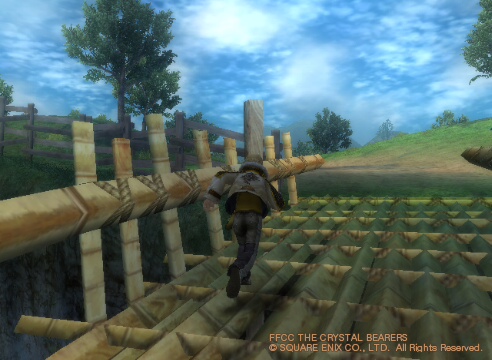
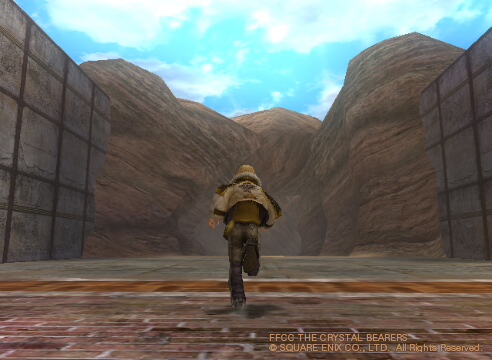
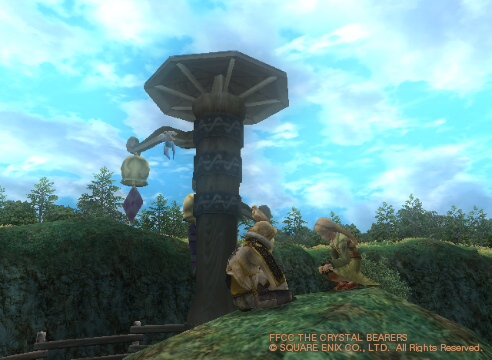
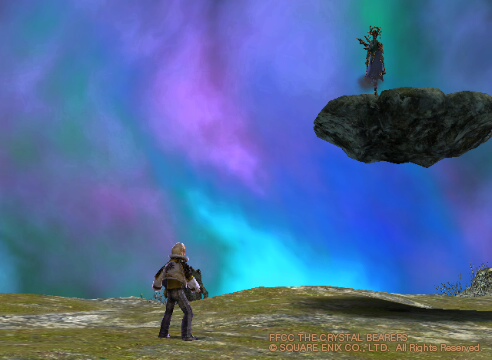
If there were ever a game that was more than the sum of its parts that game is Final Fantasy Crystal Chronicles: The Crystal Bearers.   This Square-Enix action game–if you are being generous you could call it an action-RPG–is a spin-off of a spin-off of that revered RPG institution Final Fantasy.  Being a double spin-off is not the best pedigree that a game could have, especially when it strays from the original series’ genre.  Released in December 2009, The Crystal Bearers, despite its exceedingly popular parent title, landed with a wet thud on the gaming scene.  The genre, the system, the buzz; it all worked against the game.  Even as staunch supported of the Wii as I am (best console of the generation, no contest), the game fell off my radar for most of the year, but good fortune and the clearance rack worked in my favor.

Despite its original, and not wholly unwarranted, poor reception The Crystal Bearers is at the very least an interesting game.  It is one of the most inventive and original games not only on the Wii, but also of the entire console generation.

The game’s reception is no surprise when one takes a closer look at who made it: Akitoshi Kawazu.  Kawazu is the man behind the bulk of Squaresoft’s, now Square-Enix’s, most obtuse and reviled games.  While the hate for his games is not entirely unfair, it is somewhat small-minded.  Kawazu’s games, most notably the SaGa series in its myriad forms, ply by their own always complex rules.  Mostly they look and play like regular JRPGs, but the underlying mechanics are usually different enough that playing them as though they are just another Final Fantasy game results in an awkward and unsatisfying experience.  If the player takes the time to properly learn the game’s systems, they can be some of the most satisfying games.  It is not easy to do so, though, because the games are usually obtuse and unintuitive and downright unfriendly.  Moreover, as his games are often experiments, some of those experiments are failures–I’m looking at you Final Fantasy 2.  The best way to describe Kawazu’s oeuvre is that it is an acquired taste.  While The Crystal Bearers is very different from most of Kawazu’s games, it still fits that acquired taste mold.
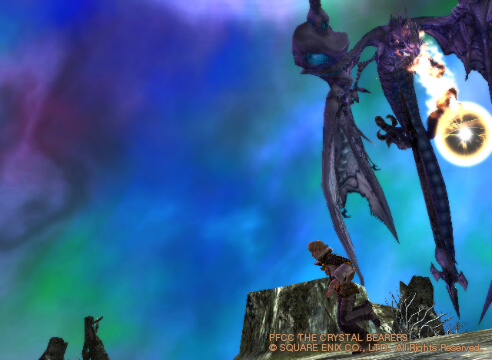
The Crystal Bearers is two different games jammed together.  There is the story mode, a sequence of partially controlled scenes and events.  The events are not exactly mini-games, but they do usually use unique mechanics specific to that one event.  They are similar in concept to QTEs but with more player control.  Some of them even use the central mechanic of the other game, grabbing and throwing things with the Wii remote. The story takes about 8 hours to play through and as far a JRPG stories go (I know that Crystal Bearers technically isn’t a JRPG, but it is still Final Fantasy) it is pretty solid.  It is not particularly well written or original, but it has its own unique charm.  The Crystal Bearers’ story doesn’t take itself too seriously, moves quickly and keeps the action coming.  Comparing the pacing to an action movie is accurate.  It doesn’t hurt that the game is darn pretty.  And I do not mean that backhanded compliment “pretty for a Wii game.”  On a pure technical level, it is not particularly astonishing, but the artistry and the design of the world are outstanding.  The story part of the game is a thrill ride with plenty of fun, though not too deep, gameplay.
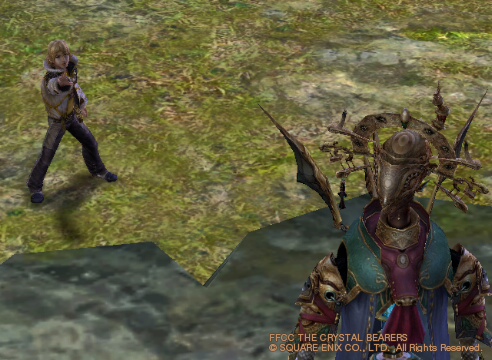
The real meat of the game is the open world parts, which are everywhere that is not a story scene.  The player only has one ability, the aforementioned grabbing and throwing.  Despite the simplicity of this core mechanic, the game has tons of ways to utilize it.  If you throw a skeleton’s head, he will stop attacking to chase after it.  If you throw two long time Final Fantasy enemy Bombs at each other they will explode fantastically.  Enemies are not just focused on the player, but they react to each other.  The King Behemoth chases other monsters around his map.  There are tons and tons of different reactions to get by throwing enemies different places or at other enemies.  Similar to the joy people get from tooling around in a Grand Theft Auto game, The Crystal Bearers gives you an open world with tons of possibilities.  I spent tons of time messing around and ended up with about 30% of the game’s medals.

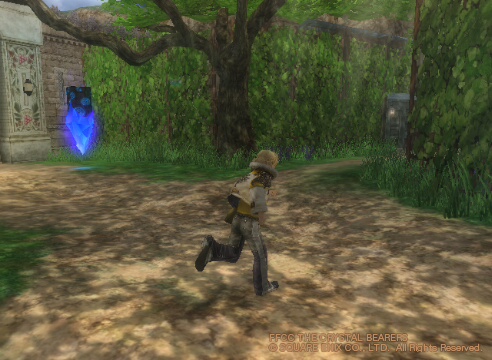
True to its predecessors, The Crystal Bearers has some baffling choices in game design.  Like the fact that everything non-story is optional.  You do not have to do anything outside of the short storyline.  So all that emergent gameplay in the field areas is easy to miss.  The player is given little incentive to explore the game, outside of sheer curiosity.  I was halfway through the game before I started really messing around with all of the field parts.  The two different games are put together, but they do not mesh very well.  The player will get out of the game what they are willing to look for.  Except for at the very end.  The last boss takes the gameplay of the field segments and uses them for the basis of the battle.  It is suitably epic and enthralling, but if the player has not kept up with the optional parts and increasing the quality of their gear, there and only there will they have a problem.


It is odd and unique and definitely not for everybody, but The Crystal Bearers is a flawed gem.  All of the wonderful emergent gameplay that the game is built for is sidelined for a focus on the trite if somewhat entertaining story.  It shows the best that Square can do, but also how they are still stuck on the recreating the success of FFVII.  At the very least, it shows that the experimental and odd Square from the PS1 days is still around; it has just been branded Final Fantasy.
The Best Games Ever

Recently, this conversation and this blog post gave me the idea to post my own 50 favorite games list.  The forum thread asks, “When was the last time you played you 50th favorite game?”  (Now it has been revised to better reflect the true nature of the question; how often do you play that games you liked but did not love?)  So, I thought I would list my 50 favorite games.  While some thought did go into this list, it is off the top of my head, so it is very possible there is some oversight and I left off some game the should be on this list.  Of course, if I liked it so much then I probably would not have forgotten it.  Here is the list, in mostly alphabetical order:

  1. Beyond Good and Evil
  2. Chrono Cross
  3. Chrono Trigger
  4. Dragon Quest 4
  5. Dragon Quest 5
  6. Earthbound
  7. Final Fantasy 6
  8. Final Fantasy 9
  9. Final Fantasy Tactics
  10. Final Fantasy XII
  11. Ico
  12. Kirby Super Star
  13. Legend of Zelda:  A Link to the Past
  14. Legend of Zelda:  Ocarina of Time
  15. Legend of Zelda:  Majora’s Mask
  16. Legend of Zelda:  Wind Waker
  17. Legend of Zelda: Twilight Princess
  18. Lunar 2: Eternal Blue
  19. Mega Man 2
  20. Mega Man 3
  21. Mega Man 9
  22. Metal Gear Solid 3
  23. Metroid Prime
  24. New Super Mario Bros. Wii
  25. No More Heroes
  26. No More Heroes 2: Desperate Struggle
  27. Ogre Battle 64:  Person of Lordly Caliber
  28. Okami
  29. Persona 3:  FES
  30. Persona 4
  31. Phoenix Wright:  Ace Attorney
  32. Phoenix Wright:  Ace Attorney:  Justice for All
  33. Professor Layton and the Curious Village
  34. Professor Layton and the Diabolical Box
  35. Professor Layton and the Unwound Future
  36. Resident Evil 4
  37. Retro Game Challenge
  38. River City Ransom
  39. Shadow of the Colossus
  40. Soul Caliber 2
  41. Star Fox 64
  42. Suikoden 2
  43. Suikoden 5
  44. Super Mario Bros. 3
  45. Super Mario World
  46. Super Mario 64
  47. Super Mario Galaxy
  48. Super Mario Galaxy 2
  49. Super Metroid
  50. Super Smash Brothers Brawl

I’m happy with this list.  It is an accurate representation of what I like and what I play.  Lots of Nintendo classic franchises, Mario and Zelda etc., and lots of RPGs.  (Now that I look at it, I realize I completely ignored computer games, which would have added at least a few games, like The Sims 2, Red Alert 2 and Baldur’s Gate 2.)  These are not the only games I play, but they are the ones that tend to resonate with me.

How often do I replay these games?  Most of them I’ve played through multiple times.  The shorter games, like Star Fox 64 or any NES game on the list, I play often.  If I can sit and beat a game in less than 2 hours, I am more likely to come back to it.  With the exception of the Persona games, I have also played all of the RPGs at least twice, although for some I haven’t played them in years.  The only games I do not see myself replaying are the Professor Layton games.  Don’t get me wrong, I love Professor Layton, but the whole game is based on solving puzzles and I’ve already solved them.  Maybe one day I will forget the solutions, but if I went back now it would be rote and boring.  I haven’t, however, played most of these games in the last couple of years.  I have played tons of new games, but my old favorites have sat on the shelf.  Which is a big change from how I’m used to doing things.  I rarely bought new games in high school; instead obsessively playing the ones I had.  I think I’ll fire up my Wii and play through Star Fox 64 or Mega Man 3 tonight.

Clinging Together

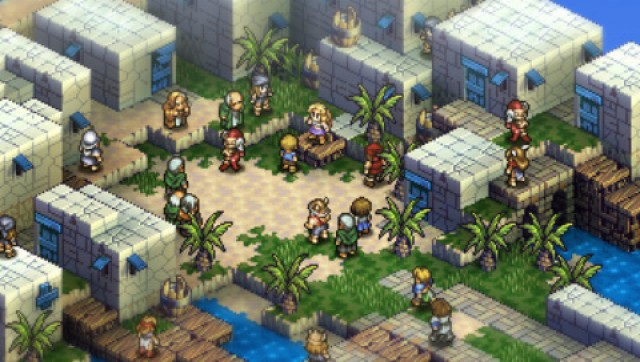
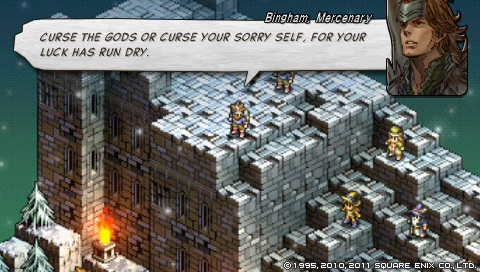
Tactics Ogre is a remake of a SNES game, but it still has plenty of progressive features.  Tactics Ogre has always been an ambitious game, but the limits of both the previous systems it has been released on, the SNES and an apparently borked PS1 port, and of it adherence to some frustrating design choices has held the game back from it greatness.  It is the predecessor to Final Fantasy Tactics, and the similarities are apparent.  They play almost identically.  While Final Fantasy Tactics largely improved and refined what the game did, Tactics Ogre is actually more ambitious in one category: the story.  One of the draws, or flaws, of Final Fantasy Tactics is its plot, a political drama that plays out like a Shakespearian tragedy (This is not meant to mean that there is a similarity in quality, only in tone).  Tactics Ogre’s story is largely the same, but it gives the player to ability to choose his path through the game, resulting in 8 different endings.  Unfortunately, to sees these ending you would have to play through the game 8 times.  There is also a progressive leveling system, unlike any I’ve encountered before but so simple a change that I’m surprised I’ve never seen it before.

With the new PSP remake, this is no longer the case.  In the Warren Report, the games ludicrously detailed repository of world history and character profiles and information that is entirely unnecessary but largely interesting, there is a feature called the Workd.  In battle there is the Chariot, this allows the player to rewind the battle in case things go badly.  The World works along similar lines,  it allows the player to go back and choose another path, changing the response the player made when it first occurred.  Therefore, instead of multiple playthroughs, now you can play to the end, then go back and see each branching point to see how it played out the other way.  While some progress may be lost–I haven’t reached the end and unlocked it yet so I don’t know–it allows players to see much more of the game easier.

The leveling system is brilliant and removes much of the hassle of grinding from the game.  Instead of each character leveling independently, the classes gain levels and every character in that class is that level.  Characters must still learn skills, with skill points that are accumulated separately from experience.  So new characters may be the same level as the old hands, allowing them to function in battle, but the will lack the accumulated skills of the others.  This allows the player to get characters quickly up to speed, but rewards them for smart use of skill points.  The new system is not perfect, though.  When each new level opens up it starts at level one.  Just like when raising to a character to match other established ones, the new classes will be mostly useless for several battles.  This is exacerbated by most random battles allowing only six units on the battlefield instead of the 10 allowed in story battles.  But this is a minor speed bump in an otherwise terrific system.

These two features make Tactics Ogre:  Let Us Cling Together more than a musty old SNES game with a facelift, but a new and original experience.  And an early favorite for game of the year.