Hotel Artemis Review

Hotel Artemis had all the makings of being a cult hit like John Wick, but in the end it just doesn’t quite come together. The movie is filled with so many interesting characters and ideas that it really hurts when the whole turns out to be less than the sum of the parts. Still, the movie is entertaining throughout and while it leaves you wondering about what might have been, there isn’t a whole lot about what it is to dislike.

The Hotel Artemis is a near future hospital for criminals. It has strict rules about admittance and membership. When a bank robbery goes wrong, a pair of brothers show up at the hospital, taking on the names of their rooms, Waikiki and Honolulu. The Hotel is run by Nurse and her assistant Everest, who rigorously enforce the rules, as show by Everest kicking out one of the brothers’ accomplices who is not a member. Also at the Artemis is a nasty little man called Acapulco and and Waikiki’s former lover Nice, an assassin. As they enter, riots break out in the streets, which leads to Nurse breaking her own rules to take in a cop that was a friend of her son, only to find that the Artemis’s benefactor, The Wolf King, is coming to have some injuries tended.

The plot keeps building and the view is stuck waiting for a explosion that never really comes. It helps that the cast is amazing. Jodie Foster plays Nurse and instills in her a marvelous combination of vulnerability and competence. Dave Bautista is Everest and doesn’t really press his range in being large and intimidating, but does it so well. The same is true for Charlie Day as Acapulco, who is at his snide, insufferable best. Sterling Brown as Waikiki is the solid center for all the rest of this to build around and Sofia Boutella is great as the mysterious Nice. Lastly, Jeff Goldblum shows up near the end to play the amiable, but dangerous Wolf King.

For most of its runtime, Hotel Artemis keeps adding wrinkles to its plot. There are the riots; there are stolen diamonds; there is a planned assassination; there is Nurse’s past; there Honolulu’s drug problems; and there is the Wolf King’s angry son. You can feel the tension ratcheting higher and higher as everyone starts to break the rules and become compromised. Then it ends. It feels like there should be another act, or at least another scene, but instead it builds to something of an anticlimax.

Until the end, I would say that I loved Hotel Artemis. It is creative and wild and interesting. But it feels like it didn’t know what to once it had introduced everything. So it just sort of let each of its little plots come to their own little resolution without any of it coming together in a meaningful way. It leaves you not so much wanting more, but wishing it had been more.

****

Ready Player One

Steven Spielberg’s latest movie, Ready Player One, is visually amazing and narratively empty. It mostly works on its own terms, even if it barely holds up to even the barest scrutiny. Mostly, it is an excuse for over the top action scenes and references to video games, comics and other movies.

The movie stars Tye Sheridan as Wade Watts, a young man who is trying to win a contest to gain control of the OASIS, a virtual reality game that everyone plays. Its creator, James Halliday, left it to whoever could solve his riddles when he died. He is opposed by the IOI corporation and their CEO Noah Sorrento. What starts as a game quickly escalates to become deadly, while Wade gets closer to fellow player Art3mis. The contest consists of finding 3 keys hidden in various locations, with puzzles based on Halliday’s favorite bits of pop culture and his own personal history.

The plot is mostly a vehicle to deliver references, which are all over the place. Some are just recognizable characters in the background. Look, is Harley Quinn! Over there is Chun Li! They don’t add much to the movie, but they don’t detract anything either. Then there are the more in depth ones, like the second challenge taking place within a virtual version of the movie The Shining or the last challenge having to do mostly with the Atari game Adventure. Only The Shining one really engages with its subject, the others are all mostly just surface. Adventure is a fitting final challenge, but how they get there is pretty clumsy.

Clumsy is how I’d describe the movie overall. The more prominent references get problematic. Like the Iron Giant. I loved seeing that in the movie, but not when it was used in some fighting. The Iron Giant is a movie about how that robot refuses to be a weapon, it gives me no joy to seem him being a weapon. Some of the other surprise characters work a lot better, but just as often the references are as clumsily inserted as Iron Giant. It doesn’t make Ready Player One unentertaining, Spielberg still knows his business even when he is working with lesser material. It is clear, though, that he is working with lesser material here.

Ready Player One almost feels like everyone made a hellish dystopia without realizing it until the last minute. It is a movie about a terrible future, where everyone would rather play a virtual reality game instead of working to fix society’s problems. The movie is about who gets to control that game, mostly by playing the game. No one seems to care that world is shit. It could work, it’s not like Blade Runner is about how terrible that world is, it mostly a noir mystery. But Ready Player One doesn’t even seem to acknowledge the state of the world, it is an unimportant detail. That is kind of my biggest problem with the movie; it is almost always focusing on the wrong things. It is a movie about the power of imagination that almost seems to have none.

***

What I Read June

I managed another couple of books in June as it dawned on me that with my summer schedule, I am going to have no more free time than I did during the semester.

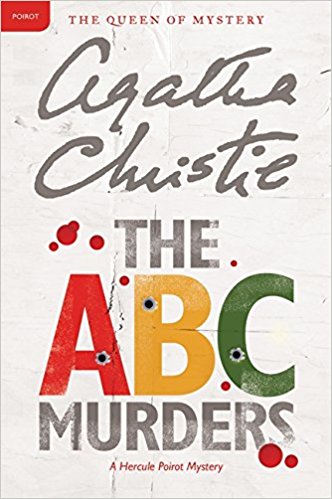
ABC Murders

Agatha Christie

I am not going to pretend that I have a lot to say about this Hercule Poirot mystery. Christie plays around with POV a lot in this one, but otherwise it is another of her mysteries. This time someone is apparently killing people based on the alphabet, Alice Ascher of Andover is killed, followed by Betty Barnard of Bexhill. Each time the killer sends a letter to Poirot, taunting him. Poirot, with the help of Hastings and some of the family members of the deceased, sets out to solve the murders. The identity of the killer isn’t readily apparent, though the general status of the culprit is pretty obvious. It is really good.

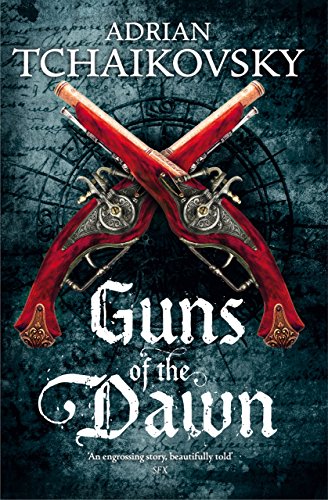
Guns of the Dawn

Adrian Tchaikovsky

This is really interesting, though I don’t think it quite follows through on its premise. It starts as kind of Austen-esque, or maybe more like Thomas Hardy, story about an impoverished noble family trying to deal with the changing times, including the fact that the eldest daughter has married below her station and war has broken out. Soon, her husband buys a commission and not long after the lone son is drafted. Eventually, women are added to the draft and the protagonist Emily is off to war.

There is a lot going on, with the home drama and the WWI style war that the protagonist is sent off to, and most of it works on its own terms. The problem I had with it is that it doesn’t really manage to meld the two halves together. The war is the war and home is home, while Emily as a character is definitely affected by what she has experienced, I don’t feel like the home portions of the book get adequate resolution. Maybe it is just that I actually found that portion more interesting than the fighting. I wanted to see how the characters personal lives played out, the grand designs of countries are far less interesting to me. It almost feels like the back quarter or so the book need to be the back half for to deliver a satisfactory conclusion.

I still highly recommend Guns of the Dawn, it is doing something different from most books of its ilk and both of its separate threads are worth reading in their own right.

What I Read May 2018

With class getting out for the summer, I finally got a chance to do some reading. I read through a couple of books about the Supreme Court I picked up because my Con Law class but hadn’t had time to read and one mediocre fantasy book I picked up out of a discount bin.

A Man Betrayed

JV Jones

I don’t know what possessed me to start reading a book series with the second book. That’s what I had with this trilogy, the second and third books I picked up for buck each at a used book store. It is fun, but largely generic fantasy. Jack is a castle baker who has mysterious parentage and mysterious powers (no points for guessing that he is probably a prince). He has escaped a castle with Melliandra, a noble’s daughter who doesn’t want to marry a mad prince. There is also Tawl, a knight who apparently failed in his quest to find some young boy (no points for guessing that boy is Jack) and Nabber, a young thief who idolizes the knight. After Jack and Melli are seperated, all of the characters save Jack end up in the powerful city-state of Bren.

There isn’t a lot new or special here; it is mostly going through familiar beats in the typical fantasy story. That is actually kind of comforting, though, when I haven’t managed to read much new in what has long been my favorite genre. It is very much from the same school that birthed Game of Thrones, the kind of fantasy that focuses on the ugly aspects of made up semi-medieval life. That probably explains some of my indifference to this book. That and not having read the first book. This is fine.

The Brethren

Bob Woodward and Scott Armstrong

A look at the inner workings of the Supreme Court in the 70’s, written while many of the Justices in it were still sitting, compiled with the secret help of Justice Potter Stewart. It follows the Court starting with Warren Burger taking over as Chief Justice. It is a rather unflinching look. None of the Justices are spared an at best humanizing look. William O Douglas comes off as selfish and condescending, but also frequently brilliant. Thurgood Marshall looks disinterested and lazy, but also personable and caring. Byron White is inscrutable. Harry Blackmun is conscientious, but indecisive. The one who comes off looking the best is William Brennan, though he is not shown to be without fault. Burger, though, comes off looking completely terrible. I don’t know that I’ve read a more unflattering portrait of a man. He is intellectually dishonest and just dishonest in general. As the book goes along even his ideological allies seem to turn on him personally.

That humanizing look is what makes The Brethren work. It shows the Supreme Court Justices as people as they try to decide the cases they see. They are sometimes petty, sometimes sometimes honorable, but always people. It makes for an enlightening and entertaining read.

Becoming Justice Blackmun

Linda Greenhouse

This biography looked almost exclusively at Justice Blackmun’s papers to tell a short version of his story. It briefly details his youth and his life before he was appointed to the Supreme Court, but it is mostly about his time on the Court. A large portion of it is about Roe v. Wade, one of Blackmun’s early opinions that he came to represent. He also drifted to the left as he sat on the bench, joining Justices Brennan and Justice Marshall to form the liberal block of the court in the 80’s. It also details how his relationship with Chief Justice Burger disintegrated, going from them being childhood friends in Minnesota to being called the Minnesota Twins when Blackmun joined the court to them barely speaking by the time Burger stepped down. It is a rather slight biography, it works mostly as a supplement rather than a thorough examination. It is well written and a very readable biography, but it too short to have much depth. Still, it is very worth the read.