Go Trickster, Go Gambler Go!

Cover of "The Shadow Rising (The Wheel of...

Cover via Amazon


Time for more Wheel of Time reread. I’m now on to The Shadow Rising, which is really the point when the Wheel of Time goes from a traditional Hero’s Quest to something more. There were hint’s of the change from as early as the start of The Great Hunt, but here is where it takes full effect. Rand is still the main character, this is still primarily his story, but there is much more time devoted to side characters and the world in general.

That switch is what I think makes people complain about how slow the start of this book is. Because the start of The Shadow Rising isn’t really that slow. Sure, they don’t get out of Tear for more than 300 pages, but a lot happens in that 300 pages. Plus, for the last time in the series, at least until A Memory of Light, the group from Emond’s Field are all in the same place. That 300 pages in Tear set up at least the next three books for each of the major characters, as well as containing quite a bit of action on its own.

There is the prologue in all but name in chapter 1. Nearly every book in the series starts with a chapter similar, with tertiary characters and storylines getting brief spotlights. We see Min with Siuan and Leane, who are a book away from getting promoted to genuine supporting characters. There are also brief snippets of Elaida, White Cloaks and Seanchan being awful. All of there things are disconnected from the story of the rest of this book, except for the Whitecloaks, but are important to the overall story.

In Tear we start with a “bubble of evil” attack, which is interesting but never satisfactorily explained. The problems Rand, Mat and Perrin deal with are symbolic of their overall struggle, though less so with Mat. Perrin is attacked by his ax, part of his ongoing struggle in choosing between the hammer and the ax as well a being symbolic of his fear of losing control of his savage wolf nature. Mat is attacked by playing cards, which I guess could be commentary on his love of gambling, but it is mostly just seems like the reason is living playing cards are neat. And Rand has to literally fight himself, which drives much of his actions, his fear of losing control of himself. We also meet Berelain, who despite never being anything other than a good guy manages to spend most of her time messing with the other heroes. She is a character whose name tells the reader just about all they need to know. Just like Thom Merrilin is Merlin, Berelain has lain bare. Then there is the Trolloc attack, along with Rand’s struggles with Lanfear. We get our first real glimpse how some of the Forsaken work. Lanfear, unfortunately, looses something when you realize that she is just Rand’s crazy ex-girlfriend, albeit one with magic powers. You also see the Forsaken undercutting each others plans just to keep one of them from gaining an advantage.

Rand spends his time in Tear ruling and trying to learn as much as he can about his fate. Moiraine’s biggest failing is her inability to share information with Rand. Even Lan realizes this. Because she wants to be in charge she never really lets Rand in, so he doesn’t let her in on his plans. The most believable part of Rand and Elayne’s romance is her helping him with how to rule.

Perrin, in his ill-fated attempts to send Faile away to safety, finds out about Whitecloaks in the Two Rivers and decides to go home. The struggle between he and Faile is as painful to read as it is inevitable. Their characters could not have acted any differently, but it is still very obvious that they are both being stupid. Faile’s defense is that she is 16, I don’t know what Perrin’s is. His whole plot in this book is one of the best storyline’s in the whole series. It has the hero returning home to find nothing as he left it, as well as one of the most true victories anyone in the series has. It is a story that could have been a book on its own as just one part of the larger story. It really is great.

Then there is the girls. Though Egwene ends up going with Rand to see the Wise Ones, Elayne and Nynaeve go to Tanchico, keeping up their hunt for the Black Ajah. Their storyline is not quite as satisfying as Perrin’s, but it is also much shorter. We also see another group of channelers besides Aes Sedai, all of which seem to be more well thought of than the actual Aes Sedai. One thing that becomes more and more apparent as the series goes along is that the Aes Sedai are really bad at their jobs. The girls in Tanchico works because Nynaeve and Elayne are a great team, both humorous and effective. Plus, they get to team up with Bayle Domon, Thom and Juilin. They really just do not get enough time to work. (in this book, they get all too much time later on.)

Rand, meanwhile, decides to surprise everybody and go into the Aiel Waste. He travels for I think the last time by Portal Stone. He actually thought this plan through very well, despite Moiraine’s misgivings. Other than his desire to find out where he came from, he needs people behind him that he can trust, and that is the Aiel. If he can get them behind him. Once their incredibly short trip is over, they all go to Rhuidean, except for Egwene. Rand’s trip trough time in Rhuidean is one of the greatest segments in fantasy fictions. It is perfect. Two chapters that perfectly encapsulate all that is great about the genre. Once Rand returns, the intricacies of Aiel society are slowly revealed, as is a plot between one clan, the Shaido and a group of obvious Darkfriend peddlers. No matter what Rand does, the bad guys always seem to be able to force him to rush. It is the same here, with Shaido leader Couladin also declaring himself Car’a’carn, the Aiel equivalent of the Dragon. It forces Rand to reveal the Aiel’s big secret, that they were once the same as Tinkers.

The book still ends as the others do, with a fight with several Forsaken. Although this time they are not at the same place. Rand fights with Asmodean in Rhuidean in one of the less memorable book ending conflicts he has. It really is kind of an anticlimax. But there is also Nynaeve getting in on the Forsaken fighting by besting Moghedien. It is really her starting to cash in on the potential she supposedly has. Her fight is much more memorable than Rand’s, if only because there are fewer to compare it to.

This is book that is somewhat light on plot, but it is big on fleshing out the world. Ideas like the World of Dreams. It was around in previous books, but in The Shadow Rising it is really fleshed out and explained. There is the first glimpse of the Aelfinn and the Eelfinn, though they aren’t completely explained. There is also the introduction of Slayer, the strange combination of Luc, Rand’s uncle, and Isam, Lan’s cousin. I’m still not sure what is up him. Also, Birgitte starts to show up and give advice. Another big change is the fleshing out of various characters love lives. Sure, there was plenty of Rand and Egwene in the early books, as well as Nynaeve and Lan. But in The Shadow Rising there is Rand and Elayne, Perrin and Faile, a hint of Moiraine and Thom. In all there is a greater focus on character in this volume, a greater fleshing out of characters outside of Rand, Perrin, Mat and Egwene. This is the book where events have grown past just rand and his immediate surroundings, and Jordan takes the time to introduce his players.

Second Quest Part 2, Kind of

If you remember, a few months ago I said I was going to beat every Zelda game, spend the year taking in the series. But after putting up my thoughts on the original Legend of Zelda, I haven’t had anymore ready to go. That is because I was playing Zelda II: The Adventure of Link. It had been nearly 20 years since I had last played Zelda II; I had only vaguely pleasant but confused recollections of it. Playing it again lately has been a largely frustrating experience. Not so much because Zelda II is a bad game, it has its problems but it is mostly well made, but because its flaws are almost perfectly suited to pissing me off.

Since I didn’t even come close to beating Zelda II, I only reached the second dungeon, I am only going to go over a few things that made me put it away. The first is the how slow getting information out of townsfolk is. This is something that only makes me mad because I am already kind of fed up with other things, but this doesn’t help. It’s like torture. Another is how the game gives out experience. Like the fact that not all enemies give experience or that some actually take it away. And last of all, is that Zelda II did not fix the unknowably arcane crap from Zelda I. That seems like all they actually kept, things like knowing exactly where to go in the woods to find Bagu or whatever his name is to get across the river. I only found out by using a guide, which I was trying to avoid.

It simply comes down to the fact that I just do not like Legend of Zelda II: Link’s Adventure. More power to the people who love it, I won’t say they are wrong but I’ll be damned if I’ll waste anymore time playing it myself. So there is at least 1 Zelda game I will not beat this year. On to A Link to the Past!

Comic Reviews from late March

These comic reviews are about a week later than I wanted, but my comics came about a week late. Still, there was plenty of good stuff in this half of last months releases.

  • All-Star Western 7: Palmiotti and Gray get Hex out of Gotham for a while, and it mostly works. Nighthawk and Cinnamon are fun characters and the new villains, the August 7, have potential. The only problem is that the back-up story is nowhere near as good as the previous one. A-
  • Aquaman 7: This books is back on track after a somewhat too heavy handed previous issue. Reis’ art is some of the best superhero work around, and Johns is on his game with his Other League he is starting. Its too bad he has to fall back on having his villain kill one just to prove how dangerous he is. Still, a solid issue. B+
  • Batman 7: This is something of a comedown from the rest of rest of this series so far. Not that this is a bad issue, but it is certainly lower key than most that have come before it. There are finally some explanations, but at the expense of not having that much actually occur in this issue. B+
  • Captain Atom 7: This continues to be one of the most underrated books DC is putting out. This take on Cap. Atom has drawn comparisons to Dr Manhattan, which is accurate, but Nate Adam is neither as intelligent as he was nor as distant. Here we get his origin, as well as a little more inside Nate’s head. Another solid issue in what has been a solid series. B
  • Flash 7: This continues to be one of the best looking books out of DC, and is also one of the least dark. While Captain Cold’s powers have changed, his character really hasn’t. There is also an effective superhero love triangle, or maybe more of a pentagon, at work here. This is just a really good traditional superhero book. A
  • Flash Gordon Zeitgeist 4: Maybe it is just because I am still new to being a Flash Gordon fan, but this series has been really entertaining so far. While it is using all the same parts as the classic 1980 film, the only version I am familiar with, it still feels remarkable fresh. I would be outright gushing about it, except that near the end there is a page with the wrong speech bubbles on it. It really breaks the reading experience. C
  • Green Lantern Corps 7: While I have largely been a fan of Tomasi on this title, even since the relaunch, but this is an issue that didn’t need to happen. It is almost entirely John Stewart returning the body of the lantern he killed to save to corps home, and being really heavy handed laying on the guilt. Plus, the art is nowhere near as good as it usually is. C-
  • John Carter: The Gods of Mars 1: The previous Marvel Barsoom mini was very good, and this one starts out on the same level. This biggest change is in the art. Perez’s art is a big change from Andrade’s and while they are both excellent, I thing Perez is a better fit. This is just an all around great issue. B+
  • Justice League 7: I have to say that I like Gene Ha’s work much more than Jim Lee’s. Otherwise, this is more of a slice of life issue than the rushed adventure of the first six issues. Johns is building tensions between the League, the government and the populace, as well as doing more interesting with Steve Trevor than anyone in at least 25 years. The best issue yet. B
  • My Greatest Adventure 6 of 6: This anthology title sadly comes to its end. I think I am only of the only people reading this, but it is really good. The Robotman story is poignant, and Garbage Man is a not quite as good take on the same story. Tanga’s story is completely different, but not especially original. Still, there were some good weird stories with really good art. B
  • Supergirl 7: This is one of the best issues that is mostly a fight scene I’ve seen in a while. Kara is out numbered and trapped, but she fights smart. Asrar’s art is still really good. The world killers are some interesting new villains, they feel like a match for someone of Supergirl’s power and are connect to her, not Superman. B+
  • Superman 7: Giffen and Jurgens get Superman. There is plenty in this issue about boring Wildstorm villain Helspont, but the parts about Clark and Superman are really good. If The writing team can maintain that tone when they get to tell their stories, then this title should move up to be among DC’s best. B-
  • Wonder Woman 7: This has been one of my favorite titles since DC relaunch, but this issue is just a miss. It is a well written, well drawn miss, but a miss nonetheless. This issue answers a question that no one ever asked because it doesn’t make any sense to ask. Where do immortal warrior women get their children? It has been long established that they don’t have children, so there was no question to ask. I hope they quickly put this frankly stupid misstep behind them and get back to the great story they were telling. C-


Me and Anime

I’m not really the biggest anime fan. At one point, back in high school, I was, but I also hadn’t actually seen much of it. Sure, I had caught the occasional episode of Dragon Ball Z or Sailor Moon over the years while watching cartoons in the morning, but normally a late riser and those were on ridiculously early so I didn’t see much. My biggest experience had probably come from playing video games, RPGs like Lunar, Chrono Trigger and Final Fantasy, that used that art style.

When I spent a summer sometime around 00 or 01 with some relatives is when I first really got to watch some, and I fell in love. I was mostly watching the Adult Swim anime block as I went to sleep, and I saw stuff like Cowboy Bebop, Trigun and Lupin the III. I went from a vague awareness that it existed to trying to stay up as late as possible to watch it. Unfortunately, my first experience left me with false impressions. I saw some of the best stuff first. Cowboy Bebop is to this day one of my favorite TV shows of any kind, and I still like Trigun and Lupin. Since all of the shows I watched were good (even Inuyasha was fairly entertaining despite its quickly tired formula) I expected everything else to be along the same lines.

So when I finally went away to college and lived somewhere with both cable and high speed internet, my misconceptions were quickly and painfully corrected. There was still good stuff on Adult Swim. The shows I’d liked were still in the rotation, and new stuff like Samurai Champloo and Case Closed were pretty entertaining. But the more I watched, especially my own illegal internet forays, the more I realized the most anime is crap. That really isn’t a strong condemnation, most TV in general is crap. My experience is what it would be like to have your only experience with American TV be Arrested Development, Firefly and Community; everything you’ve seen is so great, there is no reason to not expect similar quality from other shows. So when you turn on something like My Name is Earl (which I like a lot, especially the first 2 seasons), it suddenly becomes the worst show you’ve ever seen. For about a year, every anime I watched was the worst anime I had seen. I soon got tired of wading through the crap and watched other things. Like Arrested Development, the best TV show.

In the last few months, though, I’ve started watching some anime again. Mostly because my brothers were using my Netflix account to watch Fullmetal Alchemist and Gurren Laggan. (Quick digression: I find it really weird to share my Netflix account, because I am self-conscious about my viewing choices. Sometimes I watch weird crap because it is weird crap. Don’t you judge me!) On a friend’s recommendation, I … acquired and watched Vision of Escaflowne. I liked it quite a bit. It fuses mecha action stuff with sappy relationship junk in a way that is largely entertaining. I think maybe enough time has passed that I am willing to waste some time watching crap shows again with the hope that I’ll occasionally discover a gem. Plus, I now have more friends and acquaintances with knowledge of anime to help direct me, rather than blindly stumbling through.

So I guess the point is that I used to like anime, then I didn’t, now I kind of do again. I could easily decide it’s not worth my time again soon and go back to watching Dr. Who and Columbo when I use Netflix, but I hope not. Also, I am very open to suggestions for good shows that are available on whatever internet streaming service. So tell me some good stuff to watch. I like action shows and old stuff

Samurai Nonsense

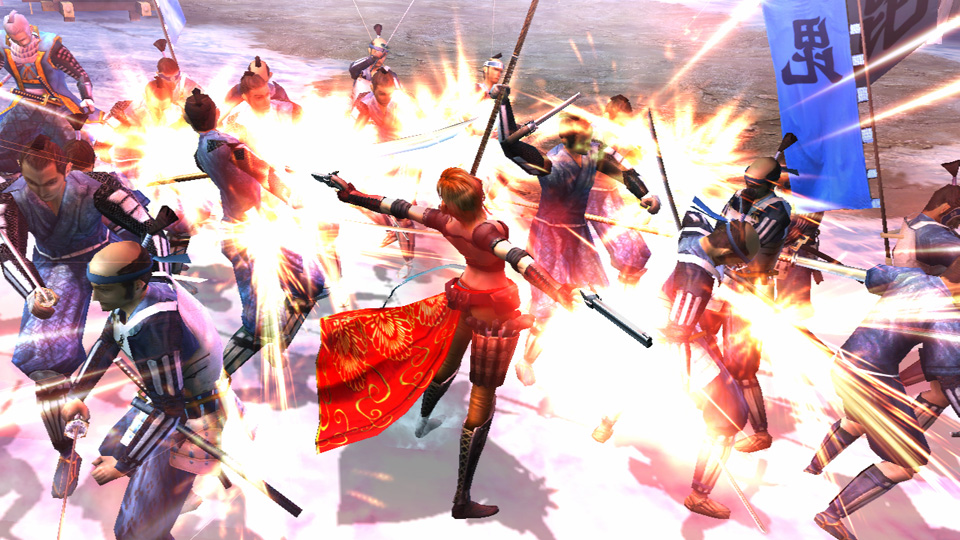
Lately my Wii gaming time has been taken up with Sengoku Basara: Samurai Heroes. Not a classic by any means, but still a solidly fun game. In many ways, it seems to be a modern version of the brawler. You choose your character and beat up tons of generic dudes with boss battles interspersed. If you’ve played Dynasty Warriors then you know exactly what to expect. It isn’t a perfect game, but there is plenty of mindless fun to be had with Sengoku Basara.

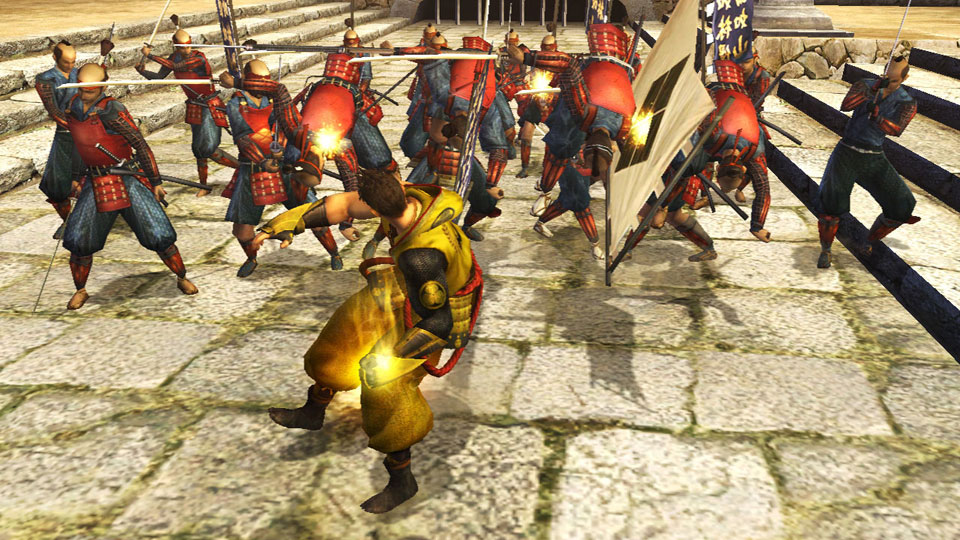
When I say it plays like Dynasty Warriors (and Samurai Warriors), I mean that Sengoku Basara’s gameplay is stolen wholesale from Dynasty Warriors‘. I haven’t played much Dynasty Warriors in a long time, but Sengoku Basara basically steals its lunch. While there are some differences, they play about 90% the same. The big difference between the two series is in how they are presented. Dynasty Warriors has this veneer of historical accuracy. Not that it is accurate, but it seems like it could be. The Warriors series are like the Hollywood version of Chinese and Japanese history. Sengoku Basara takes some names and scenarios, but throws out anything that seems even remotely historically accurate. It is the anime version of the same events.

The style of Sengoku Basara is complete nonsense and I love it. Magoichi Saica blazes across the battlefield, blowing about Samurai with a variety of shotguns and automatic weapons. She keeps a dozen or so pistols in some sort of Gatling garter around her thigh. It is hilariously ridiculous. Ieyasu fights with his fists, even on horseback. There is nothing quite like galloping across a battlefield, leaning out of the saddle to punch dudes in the face. And Masamune Date wields his six katanas like Wolverine’s claws. Every battle is filled with ridiculous stuff, the kind of half-translated insanity one would expect from an NES game. Even with how simple the gameplay is, the craziness keeps it fun for quite a while.

There are a couple of problems. The first is that battles go on a little too long. Each map takes about 20 minutes to clear. That is just a shade too long. This isn’t a big problem, but after a few levels it does get tiring. If they could have cut that down by about a third, I think it would have greatly helped the pace of the game. The other problem is that there are only about 30 levels, so after playing about five characters you’ve probably seen about all of them. Maybe I’m being too hard on the game, since it is far from light on content. I first played as Ieyasu, then as Mitsunari. After that, everyone I played as had basically the same options as those two. Playing as Magoichi had me repeating 7 of the 10 levels of Ieyasu’s path, though I did have a choice of following him or Mitsunari. In the end, it just seemed like I was playing a lot of the same levels over and over. Since the levels are slightly too long, it made the whole thing stop being fun a lot faster than it should have.

Though I am calling Sengoku Basara: Samurai Heroes beaten, my completion percentage right now sits at about 10%. There is a lot of game I apparently haven’t seen, but I’ve had my fun with it. Rather than keep playing and get burnt out, I’ll put it back on the shelf. If it is truly the heir to Streets of Rage and Double Dragon, and I think it scratches a very similar itch to those games, then I’ll occasionally pick it back up for a play through for a long time. Sometimes you just want to hammer one button and see your enemies fall.

Reading Some Comics: Queen Crab and The Ray

Since I started reading comics again four or five years ago, the writing team of Jimmy Palmiotti and Justin Gray has become one of my favorites. I have enjoyed nearly everything of theirs that I’ve read, from Power Girl to Freedom Fighters to Jonah Hex. A week or so ago I got a couple comics by them. Or at least one written by the pair of them and one that was a Palmiotti solo project. The first is the Ray, written by Gray and Palmiotti with by Jamal Igle and Rich Perrotta, is a classic superhero story with modern sensibilities. The second, Queen Crab written by Palmiotti with art by Artiz Eiguren, nearly defies description. They are both good books, though they are very different.

In some ways the Ray, the last issue of which came out a few weeks ago, is a very traditional superhero comic. It has all the pieces of the basic superhero story, but with some progressive touches. The Ray is a comic that features a very ethnically diverse cast, but it doesn’t do so in a pandering, distasteful way. Lucian Gates, the new Ray, is a Korean American but this isn’t a story about an Asian superhero, this is a story of a superhero who happens to be Asian. His friends and family are from a variety of backgrounds, but for the most point that is never the point of their character, just a simple fact.

That supporting cast is one of the things this book does so well. In many superhero books nowadays the heroes life out of the costume is disappearing, but the life Lucien Gates takes prominence. The comic introduces his supportive if not particularly helpful adoptive hippy parents, his best friend Darius and his girlfriend Chanti. As much as the book is about Lucien learning how to deal with his new powers, it is about how they affect his relationships. The slightly different focus makes this book very refreshing.

The other refreshing thing about The Ray is its more light-hearted tone. Since Ray is a hero with light based powers, his adventures tend to be very light. He mostly deals with personal trouble and big monsters. In contrast to the usual superhero book, The Ray is fun. At least until issue 3, when it all goes horribly wrong. The big change in the tone of the book in that issue is especially jarring. Going from fun and light to dark and terrible feels wrong. It works, at least in light of the ending. The big villain of the book has the powers to make his imagination real. After (spoilers!) fails to defeat him and Chanti shoots him, Lucien uses hypnosis to make him fix the past.

In all, The Ray is a fun new superhero. One that I am not especially hopeful of seeing around much in the future. But this story at least does a good job of setting up the hero’s status quo for what could be an entertaining ongoing, even if this is all we ever see from him.

Queen Crab is certainly a strange comic. I’m not quite sure how to describe it. It definitely has some elements of horror, but I wouldn’t call it a horror comic. I guess it is a surreal character study. However you would classify this book, it is certainly interesting and even very good, I would say.

Queen Crab is about Ginger Drake, a woman who gets thrown overboard by her husband on their honeymoon cruise. Only instead of drowning, she wakes up on the beach with crab pincers in place of arms. It is a set-up that could be used for a horror story, especially if the story were told from the point of view of Murray, Ginger’s new husband. It would be a story of a man’s sins coming back to haunt him, a monster in place of his murdered wife. But this isn’t Murray’s story, its Ginger’s and she isn’t a monster. No Queen Crab is a story about a woman, about a terrible event that forever changes her life.

Really, Ginger’s life is kind of a mess at the start of the book. She is cheating on her fiancé, her fiancé is cheating on her and she is being sexually harassed by her boss. Ginger mostly accepts her life as good enough, that it is as good as it gets. Though she does seem to hope that her marriage to Murray will be an improvement. Though as the plot set up indicates, it isn’t. After her transformation (caution: spoilers ahead!) Ginger does get revenge on Murray, but that is far from the end of the story. Were this the simple horror story it appears to be, that would likely be the end of it. She got her revenge, but the monster must be killed. Instead, she leaves her old life behind and goes to build a new one. Ginger didn’t come back for revenge. At least not wholly. I’ve probably given too much away already, but it really is an intriguing read. It is strange, it is different, but it is also thought provoking.

Video Game Archaeology: Dino City

It is time for more Video Game Archaeology! Video Game Archaeology is my monthly exploration of an artifact video game found during my excavations of various bargain bins and yard sales; an examination of a game cast off and long forgotten. This month’s game is Dino City from Irem for the SNES.

This game was given to me as part of a Holiday gift exchange with the intention of me covering it here.  One look at what is quite possibly the best boxart ever and I knew that I had to play this game. Dino City is possibly the least known game that I’ve covered for VGA.  The internet at large seems to have little to no recollection of it.  There are a few videos on youtube, but that is about all.  The few people that do remember this game seem to like it quite a bit and wikipedia tells me that it got fairly good reviews back in the day.  However, I have no idea why.  This is a pokey, awkward and too hard platformer with little in the way of personality.  I’m being kind of harsh, it wasn’t terrible, but neither was Dino City actually any good.

Dino City is loosely based on the straight to VHS movie Adventures in Dinosaur City.  I actually saw this movie, and if my 20 year old memories are to be believed it was not too bad.  I suspect that my memories are suspect, though.  The plot is that young Timmy and his friend Jamie try to watch TV on one of Timmy’s Dad’s experiments, who I guess is some sort of scientist possibly the mad sort, and get sucked into some sort of dinosaur land.  There they team up with some Dinosaurs to fight evil Neanderthals.  And to get back home, I guess.  This is a platformer, there really isn’t a lot of story.  The game was developed by Irem, famous mostly for R-Type and other shooters.  They also developed one of my favorite games, Steambot Chronicles for the PS2.  Honestly though, much of their output, especially on consoles, is rather mediocre.  For every R-Type, there is a Deadly Towers or Spelunker.  Still, they are at least competent creators of video games with some classics to their name.

The player can choose from either Timmy riding Rex the T-Rex or Jamie riding Tops the Protoceratops.  There is actually significant differences between the two, as Rex can only punch while Tops throws some sort of darts or something.  There is no advantage to Rex, Tops is better, as he seems to do as much damage as well as have enough range that the won’t constantly be being hit.  Which brings me to my first big problem with this game. Many enemies take two or three hits to kill, which is just unfeasible with Rex’s tiny punching range.  You can jump on enemies a la Mario, but that still takes several hits to kill them.  This leads to the player character taking plenty of extra hits.  At least the developers compensated for this, in the early levels I played at least, by leaving plenty of life refilling hearts around.  This is certainly less of a problem with Tops, since most enemies can be dealt with from a distance.  It is a completely different game depending on which dino you choose, and Tops is the right choice.  I couldn’t even hurt the fist boss with Rex, but I didn’t have much of a problem with Tops.

Another place where the game falters are the controls.  They often feel sloppy.  Your character doesn’t quite move like you would expect him to move.  Everything seems to happen in slow motion.  Maybe I am just lamenting a lack of Mario-esque momentum, but Mario is the gold standard for the genre.  But while I played, it just felt right.  It wasn’t helped by the way too high (read: cheap) difficulty.  It might be a mindset thing.  I expected it play like a Mario game, which are usually designed to allow players to build momentum and sprint through levels, but Dino City has a slowed, more precise pace.  I didn’t like it.

Dino City is actually pretty solid on the presentation side.  The graphics, while not mind blowing, are pretty good.  Especially some of the changing backgrounds, like the sunset in the third stage.  The sprites are big and colorful, just as you would expect from an SNES game.  And the music is not too bad either.  There are some decent tunes, but again, nothing much better than good.

I guess I can see some nostalgic love for this game from people who played it new, but it hasn’t stood the test of time too well.  It is hard in the least fun ways, having enemies that take forever to dispatch and tiny platforms with imprecise controls.  Really, it is the cheap difficulty that really sinks it.  Still, I would say it is worthy of remembrance for the majestic box art alone.  It is likely a game that is better than the movie it is based on, but we needn’t set the bar that low for our entertainment.

images taken from the vgmuseum.

Some Thoughts on Peyton and Being a Fan

When I heard the news that Peyton Manning signed with the Denver Broncos, my first thought was “I guess I’m a Broncos fan now.”  This was immediately followed by an overwhelming feeling of revulsion.  I’m not a Broncos fan.  I can never be a Broncos fan.  Though I am no longer a Chiefs fan as I was in my youth, some of the old prejudices are still there, and I have no desire to change them.

It did get me thinking about what kind of fan I am.  I am sure many would all me fickle, as I have changed teams in several sports, some more than once.  I don’t think I am, though.  I have been a fan of the Missouri Tigers (I don’t want to talk about that) for more than ten years.  No matter how many times I get my heart torn out, I always come back.  Maybe the shift to the SEC, a move I am not a huge fan of, will change that but I doubt it.  Even if I stay away for the next year or two, I’ll be back loving every win and dying with every loss.  But as a professional sports fan, I haven’t really had a team I stuck with yet.

Take the NFL.  I was a Chiefs fan as a kid, won over by the combination of proximity, I grew up about 75 miles from KC, and the fact that I first became aware of football about the time they signed Joe Montana.  Sure, my dad would grouse about how they were using him incorrectly, but he was already a legend.  Every Sunday after Church we got to watch Joe Montana play football.  Then Montana retired, and I was still a big Chiefs fan.  They had Neil Smith and Derrick Thomas, who cared about QB Steve Bono.  It wasn’t until years later that I lost faith in Arrowhead.  That was the QB controversy between stat machine and choker Elvis Grbac and gutsy winner Rich Gannon.  When Gannon played the Chiefs won.  That was all that mattered to me.  When the Chiefs decided to go with Grbac over Gannon for the future, I was outraged.  When Gannon signed with the Raiders, I gleefully rooted for the Raiders.  At least for the next 5 or 6 years. Rich Gannon was my favorite player for a long time.  When his glory years in Oakland ended, I realized that I was never really a Raiders fan; I was a Rich Gannon fan and a disgruntled Chiefs fan.  After Gannon was done with the Raiders, I didn’t really want to go back to being a Chiefs fan.  The divorce was final, at least in my 13 year old mind.

So I looked around the league.  I still hated most of the Chiefs rivals, the Chargers and Broncos, and was at best indifferent to the Raiders.  Outside of that, I hated the New England Patriots for their absolutely fraudulent victory over Oakland in the 2001 playoffs (the tuck rule).  The closest thing NE had to a rival was the Indianapolis Colts, a team I already kind of liked since I had lots of family in Indy who were fans.  So I started watching Colts games and soon realized I had found my team.  I loved Peyton Manning, as well as the rest of the team.  For most of the last 10 years I have been a big Colts fan.  But this off-season they blew up the entire organization.

Assuming Peyton plays at anywhere near his old level for the next few years, they really cocked it up.  Peyton, though probably diminished from his best, is still a top 5 QB.  Sure the Colts can draft Andrew Luck with the first pick, but how many sure thing first picks have not turned out as well as expected?  Almost all of them.  Manning has been a glorious exception.  At best I would say the Colts have a 50/50 chance of Luck being a success.  And I like Andrew Luck and expect him to be a good player, but I liked Joey Harrington and David Carr.  Look at what Washington had to give up to get the 2nd pick and imagine what the Colts could have got for the first pick.  They could have rebuilt without losing Manning and since they had Manning would have remained a viable threat in the AFC.  Colts owner Jim Irsay said it wasn’t about the money, which everyone knows is complete bullshit.  The money is the only reason to get rid of him.  With Manning I would have expected the Colts to win at least 10 games, without him I’d be surprised by 6 wins.

Conversely John Elway, as much as I hate old horseface, was kind of brilliant this off-season.  Landing Peyton not only got him a hall of famer with presumably several years of life left in him, it also let him extricate himself and his team from the Tim Tebow mess.  As I said when he was drafted, I really want to be a fan of Tim Tebow.  Last season was magical.  But he is not ready to be a full-time NFL starter.  He has guts and determination and those intangibles that scouts are always talking about before the draft, but he doesn’t currently have the throwing skills necessary to play the position in the NFL.  Not that I do not believe that he can learn those skills. He has the talent and the work ethic.  His stats weren’t too much worse than Steve Young’s were early in his career.   However, if I was an NFL general manager, I would not want to be putting all my faith in a QB who often can’t make basic throws.  Tebow still needs time to develop.  Last year he seemingly played on a lark, an attempt by Elway and Coach John Fox to prove he wasn’t ready, only to have it blow up in their faces.  The only way Elway could not go forward with Tebow, a player he had no faith in, was to bring in someone whom no one could object to being placed above him.  Peyton Manning was Elway’s only hope.  Now he’s the Broncos QB and Elway has shipped Tebow to New York to be someone else’s gamble.  And the Broncos are better for it.

Back to me, I’m still a Colts fan.  It isn’t the organization that I fell in love with, but they are still my team.  I am prepared to face years of mediocrity if this Luck gamble doesn’t work out, but I’m sticking with my team.  I’m also still a Peyton Manning fan.  If he play against the Colts, I’m not sure who I’ll root for.  Probably the Colts, because I still hate the Broncos.

SMT Devil Survivor, with no “witty” title

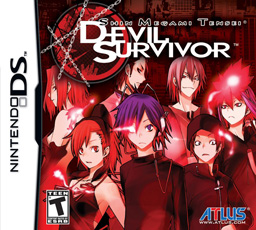
Shin Megami Tensei Devil Survivor is a game that, on paper at least, I should really enjoy.  I like strategy RPGs, I like Shin Megami Tensei and its rock/paper/scissors-esque battle system, and I like games with branching paths and different endings.  However, despite being made up almost entirely of things I like, Devil Survivor ended up being much more frustrating than fun.

It took me a while to figure out just why that is. It wasn’t because it is difficult.  I’ve played harder games than Devil Survivor, and though it was far from easy, Devil Survivor was far from too hard.  Actually, the difficulty is just about right.  It wasn’t the at times off putting character designs and characters.  Yeah, Yuzu’s boobs are weird and she’s kind of annoying, but for the most part the story stuff is pretty good.  After beating the game (taking Amane’s route out of necessity rather than choice) and thinking on it for a while I’ve realized what the problem it.  Devil Survivor needs a map.

I don’t mean an explorable map, like DQ VIII and nearly every other classic RPG.  That is not part of the game for a reason; it simply does not fit with what the game is doing.  I don’t necessarily mean a true map.  I just want some way of navigating the various game systems. I want a map of map of each character’s progress, some way of charting my progress towards the various endings.  Chrono Trigger had multiple endings, but its endings are dependent on big obvious things.  It is never hard to tell what ending you are going to get.  I don’t mind making tough decisions with real impact in games like this, I just want to know that I’m making such a decision.  With Devil Survivor, I really never knew where I stood.  I decided early on which ending I wanted to get: Atsuro’s.  I kissed his ass for four or so days in the game, only to get to Day 7 and realize that somehow I failed to unlock his ending.  I only had Amane’s and Yuzu’s endings to choose from. It was frustrating, and that frustration could have easily been avoided with a touch of transparency on the game’s part letting me know how about my progress.

It is not just in the story mechanics that need a map.  Even though Devil Survivor has the SMT series’ usual collection of demons, it lack the usual compendium.  The player can’t catalog and buy back old demons.  That makes the fusing process a constant move forward.  It doesn’t make it impossible to repeat specific builds, it doesn’t really even make it harder to do so, it merely makes it a longer more tedious process to do so.  Also, you can’t just look through a list for the demons with the right attributes for a tough battle, you have to get lucky with the auction house or fusing.  Just as with the story, Devil Survivor’s party building mechanics drops the player into the wilderness with no way to find their way around.  And for me at least, that is a big problem.

I love maps.  I doubt I would have enjoyed Super Metroid or Ocarina of Time without them.  I loved drawing maps in the Etrian Odyssey series.  Those are literal maps, sure, but the concept is the same.  I like to see where I have been and plan out where I am going.  Radiant Historia uses a timeline so the player knows where and when they are in the game’s time traveling, reality switching story.  Throughout almost all of Devil Survivor, I felt lost and I hated it. Which is sad, because otherwise it is a really good game.

Comic Reviews for Early March

I have some more comics this week. Most of DC’s best stuff hits early in the month, so I have a load of good stuff from that company.

Action Comics 7
Morrison moves back to his Brainiac/Superman introduction story and it is a strong as it has been since the first issue. This young Superman is brash and a bit reckless, but he is still the character readers have loved for 80 years. Morrison’s take on Brainiac is as brilliant as one would expect. After a few months of great back-ups, this one is completely pointless. This title still feels like the deleted scenes from All-Star Superman, but even a pale shadow of the greatest Superman story is still pretty good. A-

Animal Man 7
Lemire is working wonders on this title, and doing it in a way completely different from the previous well-loved take on this character. Animal Man is somehow a family horror comic. The horror is never far from the front of this comic, only ever a few pages away, but there is still tons of true family moments, this has some nice ones between Buddy and his son Cliff. This issue is still in cool down mode after the frightful first arc, but it is no less entertaining. A

Kirby Genesis: Captain Victory 4
After last issue’s surprise attack, this issue of Captain Victory follows his aquatic lieutenant Orca as he tries to raise their ship from the ocean it crashed into. It is also an origin story for the character. There really isn’t much surprising or original, except for a micro-troop attack, in this issue but it was well executed. Still, it is largely enjoyable. C+

Frankenstein: Agent of S.H.A.D.E. 7
What a difference an inker can make. Not a good one in this case. No offense meant to Walden Wong, but he smoothes Ponticelli’s scratchy lines, making for a comic less appealing looking than either Ponticelli’s usual look or something more traditional. The story is still the same outrageous fun that its been from the start. The only problem is that the threat doesn’t really feel threatening, not after what Frank and the gang have dealt with. A-

Green Arrow 7
The addition of Ann Nocenti to this comic immediately elevates it to being worth reading. While I don’t think this issue is especially good, but it is interesting and intelligently written. The art isn’t quite as good, but I don’t hate it. New villains Skylark could go either way, but at least they are something fairly new and original. This isn’t the best start, but it is good enough to get me back for the next issue. C

Huntress 6
This was a 5 issue mini that went on for an issue too long. There is nothing really wrong with this comic, but there is really nothing too it. Huntress’s mission was wrapped up last issue and there aren’t really any loose ends. This is mostly a twenty page prologue for the upcoming Worlds’ Finest comic. Fortunately, this comic looks good enough that is still is a largely pleasant read. C-

Justice League International 7
Eughh. After six issues of turgid team building, Jurgens decides to blow it all up. Even Lopresti’s art can’t save this mess. Though there are a few moments that are redeeming, like Guy’s worrying over the injured Ice, but mostly is it a lot of death and destruction for no reason effectively erasing all the character work over the last six issues. I tried, I really did, but I’m done with this. I just can’t. D

OMAC 7
Didio and Giffen’s romp through the Kirby created portion of the DC Universe, this time with a loose take on the Kamandi mythos. It is pure comics magic, even if the overall story is barely anything. It is sad that next issue is the last of this. Giffen’s art is very Kirby like, though it is not just a pastiche. This is the kind of story that only happens in comics, with talking Zoo animals and evil underground factories. Good stuff. B+

Saga 1
There is a lot of buzz about this comic right now, and I don’t really have anything to add. It is good. Not quite great I don’t think, but its well written with nice art. A good start to this magical sci-fi story. B

The Shade 6
In some cases I would be annoyed with a comic where the main character even admits that the current story has little to do with the main story. But the current side story in The Shade is so good that I can’t feel bad about it. Shade and his vampire daughter are still trying to track down the Inquisitor, La Sangre’s arch nemesis, in Barcelona. Robinson introduces more foreign superheroes and quickly and effectively sets up La Sangre’s status quo. Plus great art by Javier Pulido. I love this comic. A+

Swamp Thing 7
This vegetarian counterpart to Animal Man is still almost as good as that title. After nearly 7 full issues, Swamp Thing finally appears. Paquette’s art is amazing, as always, and Snyder is working his usual magic. Underneath all the creepiness, there is something of a love story brewing. Another one of DC’s best titles. B