John Carter of Mars

John Carter is almost a new addition into the pantheon of great Sci-fi movies, but ultimately it is too flawed to be considered with the absolute greats, like Empire Strikes Back and Blade Runner. John Carter is still very good and highly entertaining. Based loosely on the first two books of a series by Edgar Rice Burroughs (Tarzan), the tales of John Carter’s adventures on Mars have been delighting people for more than a century. The film version is not without its compromises, including the very title of the film, but it does a great job of conveying the look and feel of Barsoom on the big screen.

To start with, John Carter is definitely a flawed film. The plot often feels rushed, a result of not just fleshing out the events of the somewhat sparse first novel but also weaving in some elements from the second one. This movie is packed with things happening, leaving it little time to breathe or to linger on any of them. The changes to the plot are largely good ones, reading the books I never got the feeling that Burroughs put much thought into what came next so there are places in the books and especially places between books that don’t quite gel. John Carter is in some ways a better telling than the original, but it is certainly not a concise telling. The jumpiness of the plot undercuts any tension or weight much of the narrative could have had, leaving John Carter feeling slightly empty.

However, the character do a lot to make up for the plot’s shortcomings. John Carter is a world weary, sarcastic hero in the vein of Indiana Jones, though nowhere near that entertaining. His eventual love interest Deja Thoris is one of the most legitimately interesting female leads in an action movie. She manages to avoid “strong female character territory,” instead coming off as a true person, albeit one of the strange world that is this films Mars. She is a scientist warrior princess but not out of some contrivance to make her seem as awesome as John Carter, but because as a Princess she was trained to fight and choose to learn. She doesn’t just fall for John Carter, using her expertise to help him, she deceives him and tricks him, trying to convince or force him to help her. John Carter may be the main character, but Deja has goals as well, and is largely smart about pursuing them. The villains are not so fleshed out, Sab Than is just a thug and the other is his manipulator.

The green skinned, four armed Tharks are some of the best uses of CGI characters I’ve ever seen. Possibly it is director Andrew Stanton’s background in animation showing through, but even though they could not pass as real, they do seem alive. The way they move, their facial expressions, the Tharks almost steal the whole movie. Woola, Carter’s alien dog thing, does steal large parts of it. He runs around like a playful cartoon character, zipping along at his master’s heels. Though the CGI in this movie is not the best I have seen, it is probably the most believable. Because it doesn’t ask the viewer to believe these things are actually real, just that they are alive.

That goal is helped by the healthy dose of humor running through the film. John Carter is an outlandish adventure, playing it absolutely straight would be unbearable. So Carter treats his adventure’s with more than a touch of be comical disbelief. The movie is not a comedy, but it doesn’t take itself too seriously. It is very similar in tone to the Star Wars movies. It can be and is serious during the important scenes, but the heaviness of the later scenes is contrasted with the lightness of his early adventures.

In all, John Carter is a good movie. Its not mind blowing, in the 100 years it took John Carter to get to movie screens, much of it was stolen by other films. There is nothing here we have never seen before, but for the most part John Carter is a very well but together collection of now familiar elements. If you like sci-fi, and maybe felt disappointed in the Star Wars prequels, I can’t recommend this enough.

What I Read in February

February was a short month, but I still managed to read five books, though two of them were part of my Wheel of Time Reread, so I’ve only got three books to discuss today. Still, that puts me at 9 new books for the year so far, slightly ahead of the pace I need to set to reach 50 for the year. On with reviews.

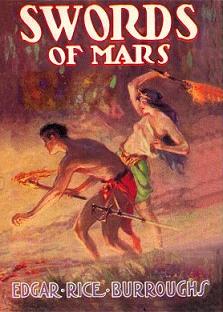
Swords of Mars
Edgar Rice Burroughs

I’ve nearly finished making my way through Burrough’s Barsoom books. Here he returns to his original hero, though he again shakes up the plot a little from the usual formula. The first half of Swords of Mars tries to be a spy thriller, with some success. It works at first, with John Carter rather easily infiltrating into criminal society in Zodanga, the city he helped destroy in A Princess of Mars. There he tries to investigate a group of assassins that are troubling Helium. But before he has to actually make any tough choices to keep he his cover, at all times he manages to hold to his morals despite the situation, Carter hears of a plot to kidnap Deja Thoris and rushes to save her. To do so he steals the mind controlled space ship of mad scientist Fal Silvas and even though he is too late to keep them from stealing Deja, he chases them to the moon called Thuria. Where he meets a few moon races and saves the day.

The two halves of this book do not fit together particularly well, but neither is bad per se. I think the imaginative sci-fi at the end is more fitting that the toothless spy at the start, but in all it is another solid entry in the Barsoom series.

The Great Hunt
Robert Jordan

The Girl with the Dragon Tattoo
Stieg Larsson

I’m not really sure I get the phenomenon this book is causing. I guess its not the first time the public has went nuts over a mediocre or bad book, I remember the love for The Da Vinci Code, let alone pure garbage like Twilight. Not that The Girl with the Dragon Tattoo is on that level, it is better than those books. However, it sits more in the good line rather than the great.

I see no reason to go over the plot, I’m sure everyone who cares knows it. The only thing I took away from this, other than a decent mystery thriller, is that the most everyone who populates this novel is almost completely emotionally dead. They do things not because they enjoy them, but because they half always done them. Blomkvist and his partner have sex no because they have any passion, but relationship or not, they have been having sex since college. I am always conscious of the fact that this is a translated work, and some of the specific word choices are subject to the whims of someone other than the writer, but a lot of the characterization falls flat for me. Luckily the pace is snappy enough that it doesn’t really linger on any of the misses or too easy moments. This is a good read, but it is far from mind blowing.

The Dragon Reborn
Robert Jordan

Quiet: The Power of Introverts in a World that Can’t Stop Talking
Susan Cain

Quiet is an exploration of the perceptions of introversion and extroversion in our society, as well as how that compares to other cultures in other parts of the world. The main thrust of the book is that in America we tend to favor the loud over the smart, often to our detriment. Not that being loud is necessarily bad, but that it isn’t actually indicative of being right. Also, that such an emphasis on talking often makes quieter people feel like they are somehow broken and that really shouldn’t be the case.

While some of the research, or lack thereof since there are a few spots were the author admits that no one has studied the basis for a point she is making, makes some of Cain’s points seem a little dubious, as someone who is pretty solidly in the introvert camp this is a very freeing book. If anything just knowing that preferring to be alone isn’t indicative of some sort disorder is a relief. The most important thing to take away from this book is that introvert/extrovert is not a good/bad dichotomy. Being an introvert should not make one feel inferior to their louder, more gregarious compatriots. What is important is knowing who you are and making that work for you. Quiet is an interesting, thought provoking read that I would recommend to anyone.

That is all for this month, I should have more than this next month, since as of right now I’ve already read five books in March, though another one or two will probably be Wheel of Time books.

The Sword in the Stone

Wheel of Time Book 3: The Dragon Reborn.

Before I start going over The Dragon Reborn, I have to be upfront about something. This book is my absolute favorite book. Not just in the series, but period, out of all the books I like this one the best. So if I get to gushing outrageously, you know the reason why.

The first thing that jumps out at me is that for a book titled The Dragon Reborn, the character that the title refers to appears very little. Rand dominated the first two books of the series, clearly establishing himself as the series true protagonist. However, that put his growth as a character pretty far ahead of most of the cast. At the end of the last book, he accepted his role, he now only needs to actualize it. So that leaves page time for the rest of cast to grow and develop, especially Perrin and Mat.

Mat is the breakout character of this book. In the first two volumes, Mat has been little more than a nuisance. An amusing nuisance, but as much a hindrance as a help. Yes, it was mostly due to the Shadar Logoth dagger he picked up, but picking up daggers from Shadar Logoth is just the kind of problem he causes. Elayne, Nynaeve and Egwene, affectionately or derivatively referred to as the Supergirls, also get much more than their brief chapters from The Great Hunt, getting out and getting involved as much as the guys. Lastly, Perrin takes over as the primary star of the this book, and his personal difficulties that will rage for the rest of the series are clearly outlined. So basically everybody but Rand gets some significant page time.

We start with Rand and his allies hiding in the mountains, waiting. Rand is impatient, but he doesn’t really know where to go and he doesn’t want to leave his friends. Moiraine is waiting to try to turn the situation in Almoth to hers, and Rand’s, favor. As well and Moiraine and Suian played Rand at the start of the last book, she fails pretty herd here. Moiraine still thinks she is in control. And if she would have just shared her plan with Rand, let Rand think it was at least partly his decision, then he would have likely followed her. The Aes Sedai’s habit of secrecy really hinders her plan. So after some Trollocs attack, and Rand almost loses control he leaves, sneaking away in the night to what he believes he must to become the Dragon Reborn. After the first five or so chapters, it is exit Rand for the bulk of the book. From here on there are just a few fireside snippets and the last chapters.

So Perrin, Loial, Lan and Moiraine chase after him. Perrin takes center stage. He is much more laid back than Rand, but no more eager to be under Moiraine’s control the he was. But he knows the she knows more than he does, that he can use her help. Especially due to his wolfbrother nature. His worries over that are exacerbated when they encounter a man with similar powers who has given in entirely to the wolves. That is Perrin’s struggle for most of the rest of the series, his fear that if he uses his wolf powers he will lose his humanity. We also see the effects of a Ta’veren on the world, with chance skewing wildly in the towns that Rand has visited. Soon, they stop in a town that has seen plenty of excitement, what with hunters of the horn and Aiel. The Aiel War, which took place almost 20 years before the series, is the inciting incident for many events of the series. And things such as the hatred the general WoT populace has for the Aiel. Which is why they put a captured Aiel in a cage. Perrin saves him because Perrin isn’t a horrible human being, and cares more for what is right than what people will think of him. Saving Gaul, the Aiel, also catches the eye of Faile, a hunter for the horn. Pretty quickly she worms her way into the group and into Perrin’s thoughts. Their tumultuous relationship is the other side of Perrin’s future worries. Now that Perrin is set, the book moves to the other half of the group from Emond’s Field.

The girls and Mat are headed back to Tar Valon for learning and healing respectively. The girls are simultaneously punished and elevated. They are thrust right into the web of mistrust and deceit that is Aes Sedai politics. Their plight also shows just how precarious the plans of Suian and Moiraine, the only confirmed good guy Aes Sedai, are. Whitecloaks are at the gates, the Black Ajah has revealed themselves and Suian can only trust three half-trained girls. It seems like a really dumb idea, but laid out like Suian lays it out it makes sense, if only because no Aes Sedai would willing give up information for nothing. The only people that Suian can be absolutely sure aren’t Darkfriends are the ones that were almost killed by them. So now, Elayne, Nynaeve and Egwene play Nancy Drew to try to figure out where the Black Sisters went and what they are up to.

While the girls are ostensibly being taught, it has never been clear to me exactly what the Aes Sedai know how to do. I would guess there is a significantly longer list of weaves that they no longer know than ones they are shown still knowing. Of course, we don’t see the girls doing much learning, because that would be boring, so instead we only see the aftermath of lessons and important meetings. I like how they take the Amyrlin’s lack of direction as license to do whatever they want in tracking down the Black Ajah. Despite already being caught unawares once, they are jumping headlong in once again. Also, as the book goes on the power dynamics of the trio start to shift. Nynaeve is no longer above the other two, and they start to realize that. Plus, Nynaeve is far from the best leader.

Mat, meanwhile, gets his first POV chapters. And finally, readers can find out exactly what he is up to. From the first moment we are in Mat’s head the book becomes about twice as entertaining. Jordan outdoes himself with Mat. He is the perfect rascal. He hates boundaries, hates being confined. As soon as he thinks someone is trapping him in, he starts looking for ways to get around it. Which gets him into trouble, like how he is more susceptible to Lanfear’s promises of power than Rand or Perrin. Though to Mat’s credit, he knows enough not to out and out trust her. But it also earns him some respect from the Amyrlin. She knows she can’t get far bullshitting Mat, so she is honest with him, at least as honest as an Aes Sedai can be. I would be remiss if I didn’t mention Mat’s duel with Galad and Gawyn, which is one of the truly great moments in the series, moments that this book has more than its fair share of.

Poor Suian, her carefully laid plots go awry because she was forced to rely mostly on Two Rivers folk, and they help each other out. She needed, or thought she needed, Mat kept in the tower, but in order for the girls to accomplish much they had to have her notes of authority. How could she have foreseen them giving one to Mat, allowing him to escape Tar Valon? In a truly unfortunate way, the Two Rivers folk are largely responsible for her fall from being Amyrlin.

We get a few chapters of the great Mat/Thom duo. Thom playing straight man to Mat’s foolish antics is just about the perfect pairing. I think Thom sees a young version of himself in Mat, and can’t help but be caught up with the exuberant youngster. We also start to get an idea of just how much trouble the world is in, with every country seemingly controlled by a member of the now freed Forsaken. There is Rahvin in Caemlyn and Sammael in Illian and Be’lal in Tear. In just the first couple of books, the world got a whole lot more dangerous, and they were running for their lives to start with.

So with Rand sidelined, we see the rest of the cast evolve or at least learn more about them. Mat absolutely will not be forced, but given the choice he will usually do the right thing and he sticks by his friends. He rushes after the girls once he finds out they are in trouble, no matter who or what else might be after them. Perrin, always careful for fear of hurting someone, is greatly troubled by his powers and hesitant to use them, even to the point of endangering everything. And the girls are prodigies, but reckless. They know no fear, but need to learn caution. No of their obstacles are as dangerous or as life shattering as Rand’s, but in The Dragon Reborn they all truly begin the road to facing them.

One last note on Moiraine. Though she bungles handling Rand at the start of the book, it is clear that while she was gone in The Great Hunt she upped her game. Coming face to face with the Forsaken and realizing she was not up to that challenge I think forced her to reevaluate her plans. But being gone from the group allowed them to assert their independence from her, meaning that she still loses. At least until she can reassess again.

In the end, all roads lead to Tear, to the Stone of Tear specifically. That is where the girls are lured, that is where Perrin and Moiraine follow Rand. That is where the Aiel were headed. Amazing that the fortress had stood untaken for centuries, only to be breached about a dozen times on one night. Also, because I am apparently incredibly dense, I read this book about 4 times before I realized the Callandor is the Sword in the Stone from King Arthur. The last few scenes in Tear are truly great because so much is happening at once. The Aiel are attacking, Rand is having a showdown with Ishamael, Moiraine takes out Be’lal, Mat and Juilin are freeing Egwene and the rest and Perrin is fighting to save Faile from the Black Ajah’s trap. It is a breathtaking finish that puts quite an exclamation point on the end of the first part of the Wheel of Time. After this book, Rand is the Dragon Reborn, mo more hiding or doubts. In some ways it is the point where the series really gets going.

Despite or even because of Rand’s absence from the bulk of this book it is one of the best. While the scope of this series was large from the start, by leaving Rand out for a book, Jordan really emphasizes the importance of the supporting cast. When friends of mine pick up the Wheel of Time for the first time, I always tell them that the need to at least read through the Dragon Reborn. If they don’t care for it then they should stop. I’ve had a few only decide to stick with the series because they went ahead and read the third volume. It is not only incredibly good, but it also really brings the world to life more than the previous two books. I absolutely love it.
The DCnU after 6

It has now been six months since the DC relaunch, time enough for the shock and the new car smell to wear off, time to get enough issues out to really assess the quality of all of the books. At this point I am relatively satisfied with DC’s offerings. Some of the books have been disappointing, but those books have been offset by a similar number of positive surprises. Because I hate myself, I guess, I … acquired … and read the first six issues of every single one of the New 52. Then I rated them from best to worst. Actually, I’m going to go over them in the opposite order.

52) Hawk and Dove: This series is a mess. I don’t know what hold Leifeld has over DC that they keep giving him books not just to draw but to write, but they really need to put a stop to it. This is an incoherent, ugly comic with absolutely nothing to recommend about it. The original writer Sterling Gates ducked out early, and it only got worse from its miserable first issue.

51)Batman: The Dark Knight: There are two legitimately good Batman books in the relaunch and even the pedestrian Detective Comics is much better than this pile. It seems to be an artist showcase for David Finch, which is baffling because his art is aggressively terrible. He is also writing, or co-writing later, and the story is a muddle. Avoid.

50) The Savage Hawkman: I’ll give the Savage Hawkman credit for at least having interesting, if not especially good, art. But the story is a jumbled mess and Hawkman is still as big a mess as ever. Continue reading

Ignoring the Backlog

Sorry about how dead its been around here lately. There were some changes to my work schedule and some rethinking of my writing priorities has left me with less time and drive to write. The time part of the problem was unfortunate and unavoidable and really shouldn’t be a problem anymore. The loss of motivation is harder to shake. Near the end of last year I realized that writing on this blog was feeling more like a chore and less like a hobby. SO I tried to shake thing s up at the start of the year. Unfortunately, my planned changes actually made writing seem more like a chore.

This whole thing has been part of a more general malaise I’ve been in for the last month and a half. I’ve felt no desire to read or play video games, let alone write about what I’ve been reading and playing. Finishing a book I wasn’t quite liking and starting one I do like, along with taking a short break period, has helped me get back into reading. My indifference to videos games has two root causes I think. The first and most easily fixed is that I didn’t like the games I was playing. Coming on the heels of Zelda: Skyward Sword and Donkey Kong Country Returns any game is going to seem weak. Going from those new classics to middling slogs like Glory of Heracles and Lost in Shadow is just asking to hate video games. (Its not that those 2 games are particularly bad games, just games that are much longer than they are interesting.) But I’ve since put those games aside, soon I’ll find something I actually like.

The second problem I’m having is one I’ve caused myself, a mindset that keeps me coming back to games that I have long since stopped liking. I caught myself up in what I am calling backlog syndrome. Backlog syndrome causes players to play crappy games just because they already paid money for them, and playing a game they’ve already beaten would be wasting their time. I got into that mentality with he help of the really cool website backloggery.com, which allows you to compile a list of all of your video games by system and my how much progress you’ve made in them. At fist this site was a big help to me. A few years ago, while I was buying games all the time, I found myself barely playing them and spending most of my time replaying a few favorites, like Chrono Trigger, Final Fantasy 6 and Ocarina of Time. But once I saw how many games I had bought and played little if any, I decided to slow my purchasing until I had played most of the games I had already purchased. For a few years the goal of beating all the games I own kept me playing new and interesting games that I probably wouldn’t have had time for otherwise.

Now, however, I have all but run out of games to beat. The few that I have left are left because they are terrible. Or are fine but for some reason I just don’t like them. I do have a couple of supposed classics sitting untouched on my shelf, Super Mario Sunshine and SMT Nocturne for example, but I’ve found myself spending too much time lately trying to push through drek.

So I am trying to break out of this backlog eliminating mindset that I’ve been in for so long. I am no longer going to pay attention to what I “need” to beat. I have no more goals of cleaning out my backlog. In what is probably not a revelation to anyone else, I am going to play what I want to play just because I want to play. Since I’ve made this decision I have felt a weight lift from my shoulders. Not a particularly heavy weight, but there is a definite difference. Playing video games no longer feels like a chore. I’m still playing new games on my DS, games that I would be playing anyway but now the motivation is just to play games, not to tick off a mark on a checklist of games I’ve played. And I’ve stared replaying Chrono Cross, a favorite of mine from a decade ago that I’ve felt a hankering to revisit. Hopefully this keeps me playing happily for some time.

Sky Crawlers

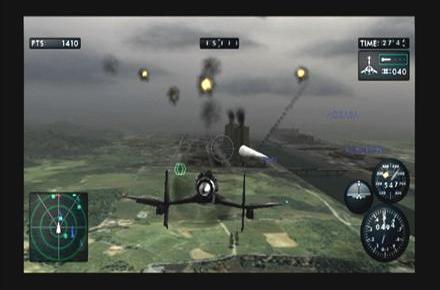
I’ve only got a few missions left before finish the story section of Sky Crawlers: Innocent Aces (since writing this I’ve finished) and I’m somewhat at a loss for what to say about it. This is partially due to my not really having a reference point to judge it against. I haven’t played too many flight sims. I did enjoy Sky Crawlers, for the most part, but I could believe that other games do the flight thing better than this one. I also don’t have much to say about the story. I haven’t seen the movie this is based on, though I understand that the stories aren’t really connected. (Is the movie still on Netflix? I should watch it.) Its anime nonsense. Enjoyable anime nonsense, but nonsense nonetheless. I just can’t take a story seriously when it features pubescent super-pilots called ‘Kildren.” Its just not possible.

I can at least make a note of the controls. I think it would be fair to call me a fan of the Wii’s motion controls. For most games they add to the experience despite the inherent slight loss of precision. So listen to me when I say that the default controls in Sky Crawlers are an unforgivable crime. Their problems are numerous and glaring. First, the game wants the player to put the Wiimote into their left hand and the nunchuck in the right. Yes, it wants you to hold it opposite of every other Wii game ever. Its akin to an NES game telling the player to play with the controller upside down. In Sky Crawlers, the wiimote operates as the throttle. The actual steering is left to the nun chuck. But the nunchuck flat doesn’t work as its supposed to. No part of this control scheme is useable, let alone intuitive. It is simply awful. After the tutorial, I realized the complete failure of the motion control and switched to a wavebird and never looked back.

The only other thing of note are the tactical maneuvers. If you can stay close enough to an enemy long enough you can execute a special maneuver the puts the player right behind them. There are three levels, but I have never found a reason to wait past the first one. Sure, higher levels actually get you behind some of the tougher enemies, but for 90% of the game you could have shot down the enemy 4 or 5 times while you wait for the meter to fill up. I don’t like the system because instead of letting the player pull off amazing moves, like flips and barrel rolls in Star Fox, the player pushes one button and the game does it for them. Still, even with it the dog fights are fun.

Sky Crawlers is a decently enjoyable game. Not worth full price, but its worth digging out of a bargain bin. Its not like there are a lot of flight sim options out there for the Wii. And who knows, you might like this games nonsensical anime stylings.

Comic Reviews for Late February

So I guess I’m doing comic reviews again. We’ll see if I can keep this consistent or if it is doomed to be a sporadic thing. Not too many titles this week.

Justice League #6: The new Justice League’s first story comes to its cacophonous conclusion. I’m not jumping on the rapidly filling up hate train for this title, but I would say that this story didn’t quite come together as well as it could have. In the end it is all empty noise and confusion. Lee’s art is as explosive as usual and John’s has a strong handle on the team’s various personalities, so its not all bad just a touch incoherent and soulless. C+

The Flash #6: The art in this titles remains as impressive as it has been since Manapul took over drawing it at the start of the previous Flash title. The story, while less exceptional than the art, is solid. The Flash is one of the few books on the shelves that actually lets the hero’s out of costume life actually play a part as of late. The love triangle among Barry, Iris and Patty is as entertaining as the quite good superheroics, even though I am fairly certain that Barry will end up with the woman who was until recently Mrs. Flash. A-

Aquaman #6: Prado does finishes over Reis breakdowns instead of just inking this issue, but it is not that significant a departure other than some wonky faces. Aquaman takes an issue off as we focus on his wife Mera. Johns really needs to turn the volume on this issue down. In big hero v villain fights his eschewing of subtlety is often a plus, but this issue could stand to be much less bombastic. Mera breaking the wrist of a handsy pervert would be more effective than her crushing all of the bones in his arm. For all its overloud warts, this is an effective if blunt bit of character work for Mera. B-

All-Star Western #6: This issue reinforces that Jonah Hex is an awful bastard. He is cowboy Punisher, a man the reader can only root for because his enemies are even worse than he is. The highlight of this issue is the extended gunfight between Hex and some child slavers, where Palmiotti and Gray step back and let Bernet tell the story with his art. Which he does beautifully and gruesomely. The back-up story is just as good as main one, bringing this story about the Barbary Ghost to a close, but leaving the door open for her to return in either another back-up or in the main story. This is an excellent comic. A

The Ray #3: This series has been a bright spot amongst a sea of darker titles. A ray of light, if you will. This issue turns a bit darker, but is still primarily fun, classic superheroics. The villain is a man who makes reality his own movie, a fitting villain for a book set in Southern California. I’m sad that this is only a four issue series. Good stuff here. B

The Shade #5: This is one of the best books on the stands. Robinson, teamed with a variety of excellent artists like this issue”s Javier Pulido, has recaptured the magic of his Starman run from a decade ago. His work since has been hit-or-miss, but he has yet to go wrong when writing the Shade. Here we meet La Sangre, the Shade’s adopted vampire daughter, and have an adventure in Barcelona searching for a vial of the Shade’s blood. The art is beautiful and the writing is intelligent and highly literate. A

New Mutants #38: Marvel’s double shipping policy means a change of artist, but it is not that big of a problem. This series is on the verge of being as fun as it should be, but for some reason I’m just not engaged. Maybe it’s the cast. I’m a fan of the classic New Mutants, I like Doug, Dani and Bobby and I’m okay with Amara, but I just don’t care for Warlock or Nate Grey. Warlock is supposed to be a joke character, but even with his goofy way of speaking he isn’t that funny and Nate is just aggressively boring. Plus, this issue tries to bring back Bird-Brain, one of the worst characters in X-Men history, which is saying something. C+

Voodoo #6: This title always seems to be just on the verge of taking off and being truly good. But it never quite gets there. Still, at the end of every issue I’m eager for the next one, ready for everything to fall into place so I can proclaim this series truly excellent. Basri is a terrific artist with a clear, fine style. With Williamson taking over for Marz the title has shifted from being a Sci-Fi tinged spy story to a spy tinged Sci-Fi story. Hopefully soon Voodoo will get it together and give readers some answers. B-

Next week look for the next VGA and for my reread of The Dragon Reborn, as well as some musings on my present video game playing and lack thereof.

What I Read in January

January was a good month of reading for me.  My goal for this year is 50 new books, which means a little over 4 a month and I’m already ahead of pace.

The Master Mind of Mars

E.R. Burroughs

After five books, Burroughs Barsoom stuff was starting to feel a bit stale. He had been telling the same basic story over and over. With Master Mind, Burroughs does something completely different. Instead of a straightforward adventure story, this is a combination of that and of social satire. Ulysses Paxton is transported to Mars, just like John Carter was, and ends up helping out Ras Thavas, a mad scientist who is experimenting with brain transplants. The story balances critiques of the anti-religious city-state that Thavas calls home and their rival religious fundamentalist city. Though there is some token mocking of Thavas’ compatriots, it is mostly a take down of the fundamentalists. Though there is plenty of adventure and mad science, the memorable part of the Master Mind of Mars is the satire. It is plenty entertaining. It isn’t a mean critique, but it is an accurate one. While I prefer the first few books for their novelty and sense of adventure, at least this story has its own identity. Good stuff.

The Fighting Man of Mars

E.R. Burroughs

This is back to the straight adventure, but with the same energy that the first few books had. It helps that the protagonist is a normal Martian and not the superhero like John Carter. Tad Hadron is just a guy. Plus, there are several twists on the original formula. There is Tavia, a slave girl that Hadron saves who, unlike most of the rest of the female characters in the series, as competent a fighter as most of the men. Then there is the kidnapped girl, Sonoma Tora, who turns out to not be worthy of Hadron’s devotion. In all it is a worthy addition to the series, if not quite as interesting as Master Mind is.

The Eye of the World

The Spy

Clive Cussler and Justin Scott

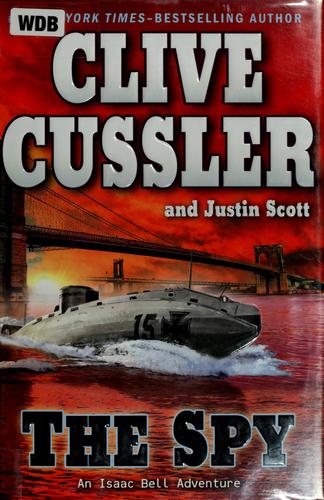
This is the third of Justin Scott and Clive Cussler’s Isaac Bell adventures. They take place in the early 20th century, with a focus on then cutting edge technology. Instead of taking place primarily in the west and dealing with train and railroad policing, The Spy is set on the east coast and is features a mystery about a saboteur trying to disrupt the makers of brand new battleship technologies.

These are very much guilty pleasures for me. The setting, in the time of Teddy Roosevelt, is one of my favorite time periods. Isaac Bell is the prototypical hero, perfect if not particularly interesting. This is just a fun book. The supporting cast isn’t quite as vibrant as it was in the previous two books. The villain is good though. He is a bit obvious, as there really isn’t much mystery as to who is behind it. The Spy is a fun little adventure, but nothing remarkable.

Assassin’s Apprentice

Robin Hobb

This is the first book in the Assassin’s trilogy, which is the beginning of a series of books taking place inside the same world. This came highly recommended and though I liked it, Assassin’s Apprentice didn’t really blow me away.

The plot follows the early life of young FitzChivalry Farseer, the bastard son of a prince who is trained to be an assassin for the King. It is a very slow building book, leisurely setting introducing all the players in the royal court and Fitz’s other friends. Also, it lays the seeds for a conflict that I assume is going to run through the trilogy. Other than his training, the novel mostly focuses on a growing conflict with pirates who kidnap villages only to return them as lifeless zombies.

That storyline is put off for the next book, while the climax of this one deals with a somewhat rushed plot to usurp the throne. This is one of my complaints with Assassin’s Apprentice. The other problem is some funny POV stuff near the beginning, where the prose shifts from past to present tense for a bit an annoys the crap out of me.

Still, I see why this series has the reputation it does. It didn’t love this particular book, but I did like it quite a bit. If the next two parts of the trilogy can payoff this one’s set up it will make for a wonderful series.

Calvin and Hobbes 10th Anniversary Book

Bill Watterson

You should like Calvin and Hobbes, this is an essential part of any healthy person’s life. This is a small collection of the comic’s strips, a mere taste of what C&H has to offer, but it does have the added benefit of commentary from Bill Watterson. I find that sometimes with commentary like this it is possible to learn too much about the creator of something, that they are not quite as brilliant as their work would suggest. That is not the case here. Though I do not agree with everything Watterson writes, especially about the effects of merchandising his comic, I definitely respect his opinions. This is a definite must for fans of Calvin and Hobbes.

Sheepfarmer’s Daughter

Elizabeth Moon

Another first volume, this one obtained from the Baen Free Library, this is the first part of the Deed of Paksenarrion. Sheepfarmer’s Daughter is somewhat dry, almost like a historical recounting of an actual military campaign. It is a very heavily military and D&D flavored fantasy, one that focuses on the daily lives of low rank soldiers.

Paks is the large daughter of a farmer, who runs away to join a mercenary company rather than marry the man to which her father has betrothed her. This book covers her early training and seasoning, ending with her starting to realize her potential as a paladin. The world is not especially interesting, it is simply a boilerplate fantasy setting. All the stock fantasy trappings are here, with nothing to make is stand out at all. That in itself is not a deal breaker, but there are other problems. Like the flat characters. Other than Paks, nearly everyone else is just one or two character ticks around a name. The only somewhat interesting part is the battles themselves. They are well written, but it is not enough to overcome the tedium of the rest of it.

The Lure of the Mask

Harold MacGrath

This is an old adventure/romance novel that is somewhat light on both adventure and romance. While there is a thread of something truly interesting here, with the mystery of the anonymous singing woman and her masked identity, the plot is too reliant on coincidence. Events happen, but the characters do little to shape or even participate them. And there is a startling lack of payoff. Everything works out because that’s how novel’s end, not because the character’s actions came naturally to this conclusion. There is little reason to revisit this 100 years after it was published, there are better examples of the genre and from the time period. However, I can’t say there wasn’t a kind of inconsequential charm to

The Secret World of Arrietty Review

Anytime a new Studio Ghibli film comes out is time for celebration. Especially when Hayao Miyazaki is at the helm. Even his lesser works, like the recent Ponyo, are still better than nearly any other animated films released in any given year. Miyazaki did not helm The Secret World of Arrietty, but he did write the screenplay and oversaw the production. First time director Hiromasa Yonebayashi, who worked as an animator on several previous Ghibli films, proves his worth here. Arrietty is a wonderful film.

The Secret World of Arrietty is the story about the relationship between Arrietty, a tiny Borrower, and Shawn, the sick young boy who moves into the house where Arietty and her parent live. She and her parents are Borrowers, people about six inches tall that live under the floorboards. They sneak around at night to borrower everything they need to live, like sugar cubes and the occasional tissue. They are careful to not let any of the big people to see them, lest their curiosity accidentally, or intentionally, doom the tiny folks. Despite this, Arrietty and Shawn form a friendship that simultaneously proves that interaction with people need not necessarily doom the Borrowers and that avoiding them is absolutely for the best. As a side note, Spiller, a wildman borrower who helps out Pod, steals both scenes he is in.

As always from Ghibli, Arrietty looks amazing. The animation quality is top notch, and the settings and backgrounds are absolutely beautiful. There is always some piece of beauty on the screen to take in. The film’s greatest triumph is the sense of scale. Nearly everything in the world of regular people, called Beans by the Borrowers, are a danger to them or has an alternate use. Nails not set flush are used as precarious steps, a pin becomes a makeshift sword and fishhooks with some line are used are repelling equipment. The interaction between the big people and the Borrowers are believable in a way that they could never be in live action. The film is worth seeing for the scale alone.

The sound is also mostly good. Wil Arnet as Pod does a bit of a Christian Bale Batman impression, but he is perfectly calm and unruffled at all times. Amy Poehler’s Homily is his opposite, always excited and on the edge of a nervous breakdown. The other voices are mostly very good, if only because they don’t draw attention to themselves. Except for David Henrie as the sickly Shawn, who sounds completely lifeless. The music is mostly excellent as well. With the exception of the awful ending credits song.

The middle part of the film is almost painfully slow at times. Arrietty tries to blend the adventure of many of Miyazaki’s movies, like Princess Mononoke and Castle in the Sky, with the more slice of life styled film’s like Spirited Away or My Neighbor Totoro, but in the end doesn’t really satisfy as either one of them. There is not action for an adventure movie, nor enough reflection for magical drama. But what is there is eminently entertaining. From a narrative standpoint, The Secret World of Arrietty is somewhat empty, but it has heart and beauty and that makes up for a lot.

The Grave is No Bar to My Call

Wheel of Time Reread Part 2: The Great Hunt

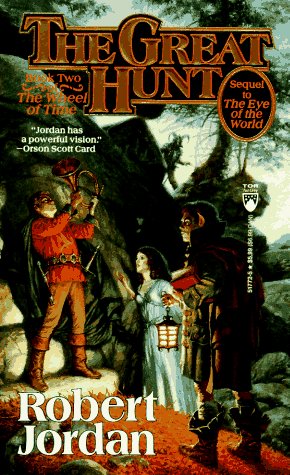
Before I get started with The Great Hunt, I’d like to remind everyone that there is now a firm-ish release date for A Memory of Light, the last book in the Wheel of Time series. January 8, 2013. That is a little later than I was expecting, but I am much in favor of taking the time to get it right rather than getting it out as fast as possible. No matter how long it takes, I’ll still think it was too long a wait anyway, because I want to be reading it now.

On with the hunt. We start with Rand practicing his sword fighting with Lan. Even an oblique a compliment as Lan telling Rand he is good enough not to stab himself in the foot is, from Lan at least, an indication that Rand is pretty damn good with a blade already. Despite the mistakes she makes leading the boys, Moiraine plays Rand perfectly here. Rand would likely do the opposite of what Moiraine wanted him to do, but at the very least he wants to know where she intends to lead him before he follows. By ignoring him, she gets him to delay his decision. If he doesn’t know what she wants him to do, how can he avoid doing that? In addition, he is so far from home and has just had him world ripped from him completely. Where would he go? Continue reading