Underage Drinking: A National Concern


The most delightful and entertaining movie of the summer, so far, is Winnie the Pooh. It has, of course, been mostly overlooked. In part because it opened against the juggernaut that is the final Harry Potter film. The target demographics don’t quite overlap as they might have 7 Harry Potter’s ago, but then again; what demographic does Harry Potter not cover. Another reason for Winnie the Pooh’s lack of attention is sadly that it is a traditional, 2-D animated film, a creature that has not quite been driven to extinction in US cinemas but is certainly in the endangered species list. The decreasing frequency and increasing irrelevance of animated movies saddens me, and occasionally causes me to champion movies that aren’t actually very good just because I want more traditionally animated films (Hello, The Princess and the Frog). This is not the case with Winnie the Pooh. The characters that have charmed people for 80 or so years are captured here as well as they ever have been on film. Winnie the Pooh is a perfect children’s movie, and like the best children’s movies is not just for kids, but is enjoyable by all. Continue reading

Tsugunai: Atonement is probably one of newest games that will be covered here on Video Game Archaeology. The goal here is to explore forgotten, old games and Tsugunai only barely qualifies as old. Ten years was my intended cut off point and Tsugunai is not quite there. However, Tsugunai meets the other criteria, that the game be forgotten or at least not well known, no question. Even though it is only from the last console generation, Tsugunai: Atonement seems to have been well and truly forgotten.
Continue reading
Now that I’ve started getting my comic books from an online service and get a shipment every other week, I’ve decided to do biweekly short comic reviews. I’ll be writing some brief thoughts on a handful of comics every other week or so. I won’t be reviewing all that I read, just the ones I feel like I have something to say about.
With this issue, Flashpoint goes from being merely slow to being pointless. Last issues (hilarious) cliffhanger is quickly ignored and the plot moves on, but Flash and friends haven’t really done anything yet. This sort of slow build could be effective, but this is only a 5 issue series and we’ve already burned through three of them. I also take offense to the idea that Superman would be a hero no matter what. I would be fine if he didn’t return after this issues cliffhanger. ** (2 stars)
The War of the Green Lanterns finally concludes. This crossover has been plagued with shipping problems and I’ll need to go back and reread the whole thing to really rate it. This issue was big on noise but short on sense. As is the way with Johns’ Green Lantern stories, it all comes down to Hal and Sinestro. It is suitably explosive, but the logic behind most of it is either not explained or nonexistent. *** (3 stars)
A fallout issue that follows up on the crossover that just ended. Most of the Lanterns who got their rings from the corrupted Mogo give them up, but one feels that she belongs in the Corps. So she and John Stewart go to her sector and try to stop a war. In general, this is the kind of story I want to see from Green Lantern Corps, highlighting a new/unknown member while still being about the main characters. Unfortunately, this is not a particularly good example of how to do that, unlike last months Emerald Warriors, which was perfect. *** (3 stars)
Marc Andreyko comes on for two issues between Simone leaving and DC blowing the whole thing up. I like the concept of this story, exploring the WWII origins of some of the Birds characters that is really unexamined. Unfortunately, the art, as it has done for most of this series, hampers the writing. Not the Billy Tucci pages, those are good. But Adriana Melo is not great (weird faces) and her style clashes horribly with Tucci’s. **½ (2 ½ stars)
Snyder’s excellent run on this title continues. Francavilla’s art is stupendous. Excellent use of color, with red and green tinting everything. There is a lot of good in this issue, but some stuff is unwanted. Like the opposite surprising appearance of the Joker and James Jr.’s goofy plan. Of course complaining about the Joker being in a Batman story is also really dumb. **** (4 stars)
Brian Q Miller’s excellent 2 years of Batgirl comes to end, part 1. As usual, this issue is great. It does feel like this is a larger story crammed into less space than would be desirable, but the snappy dialogue and excellent characterization are still in full effect. I am really going to miss this book. Month in month out this is one of DC’s best. **** (4 stars)
Superboy under Jeff Lemire has also been one of DC’s best books. Much like Batgirl, this issue seem to be trying to compress a longer story into the issue left before the relaunch, with longer building subplots abruptly coming to a head. Very good, if rushed. ***½ (3 ½ stars)
While most of the Flashpoint tie-ins haven’t been very good, Frankenstein has been a welcome exception. This issue is not quite as good as the last one, but when you open with Frankenstein killing Hitler there is nowhere to go but down. Still, this is good stuff, though the art suffers in spots. **** (4 stars)
On the first page of this comic is a cast list. None of those characters appear. This issue exists to explain who Black Bolt is and bring him back to life. Presumably, this is a necessary step for later parts of this story, but it still makes for a disappointing issue. ** (2 stars)
I was going to criticize this issue for being too slow, then I realized that was dumb, just because this issue doesn’t get to any actual vampire fighting. However, the heroes survive a plane crash and infiltrate a castle full of Nazi vampires. And it is drawn by Sean Murphy, who is really good at drawing. Best of all, I don’t see this mini-series getting anything but better. **** (4 stars)
Even Quicker Reviews

After 10 years of being the dominant pop culture phenomenon, Harry Potter seems poised to finally fade into the background with the release of the final film, Harry Potter and the Deathly Hallows Part 2. It is not going to disappear, not with the theme park and whatever is going on with Rowling’s new pottermore website, but with no significant new content on the horizon, Potter’s popularity will certainly diminish. Luckily, for Potter fans, Deathly Hallows Part 2 ends the series with a suitable bang. Continue reading
Charlie wants an Abortion
Episode 2 of It’s Always Sunny in Philadelphia decides to hit a controversial topic that was ignored in the first episode: Abortion. Of course, instead of taking a firm stand one way or the other, though the anti-abortion people come off worse, the show uses the subject to mock the characters not the debate. Continue reading

Horrible Bosses is not a great movie, especially not in the sense of being large. It is a small movie. There are few big moments or big scenes or big laughs. It stays on fairly even keel from most of it’s run time. That does not mean that it is not entertaining. Horrible Bosses is entertaining throughout. While the plot is not terrific, the excellent cast keeps the movie funny and enjoyable.
Three friends, played by Charlie Day, Jason Bateman and Jason Sudeikis, decide they hate their bosses and feeling trapped in their current jobs plot to have their bosses killed. So they try to hire someone to kill their bosses for them. There isn’t much else too it. Most of the humor comes from characters, not gross out situations like many other R-rated comedies. Fortunately the characters, and especially the actors that play them carry it well.
Bateman, Sudeikis and Day are mostly known as television guys, but they are always funny and underrated. Bateman, the glue that held the best TV show of the last decade, Arrested Development, together, plays a man stymied in his climb up the corporate ladder. Sudeikis, an underrated SNL guy, is a womanizer upset with the son who took over the family business and Charlie Day, possibly the funniest guy currently on TV, is a dental assistant and registered sex offender. The three work really well together, their friendship never feels forced on screen. Just as good as our trio of heroes are, their bosses are at least as good. Kevin Spacey is hysterically evil, Colin Farrell is just about as terrible and useless as a person gets and Jennifer Aniston is great as a sexually rapacious dentist. And there is Jamie Foxx’s hilarious turn as the trio’s “murder consultant.” No one turns in a truly great performance, but everyone is funny.
This is not a movie to inspire much of a strong reaction from the viewer. The humor comes less out of the murderous set-up and more from the amusing interactions among the characters. Which is why it is important that this film has a cast full of great comedians. With a few exceptions, like an incident with an epipen, Horrible Bosses doesn’t rise much above being humorous or amusing, but the stellar cast keeps the movie from being forgettable.
I read four books in June and that is starting to look like my average for this year. But there were some gems in the four books I read this month. Especially A Princess of Mars and Yiddish Policeman’s Union
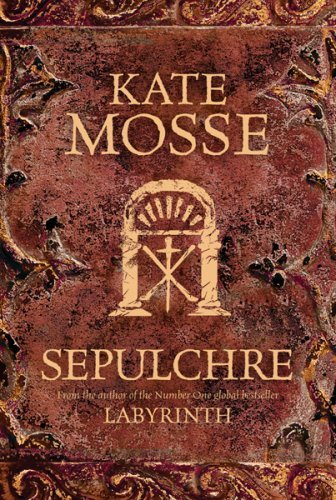
Sepulchre, Kate Mosse
Sepulchre follows two stories set about 200 years apart. In the present day, (2007) American Meredith Martin is in France doing research for a biography she is writing, as well as looking for information about her birth parents. That information is tied to the adventures of Leonie Vernier in the late 19th century. Meredith searches for her family and has a romance with a young British hotel owner. While not uninteresting, it is easily the weaker half of the story. Leonie and her brother Anatole visit their recently deceased uncle’s young wife while trying to avoid a murderous rival of Anatole’s. Leonie spends most of her time exploring the wild grounds of the family estate, the Domaine de la Cade and painting. Of course, the two threads weave together by the end.
The character Leonie is fun. Her adventures drive the novel. I was much more interested in the historical setting than the present day one, and Leonie’s is the point of view that really explores it. She develops and interest in the occult, or at least tarot, and bonds closely with her aunt, who is not much older than she is. She is a woman of the times, leaving most of the decision making to her brother, but she shows more initiative and independence than the most of the other women in her story, such as her aunt. She is just an interesting, complex character.
The problem is that Mosse uses a many many words to tell a rather small amount of story. It is not a bad story, or even badly told, but it is often plodding. It makes for a slow read, but still a mostly satisfying one.

A Princess of Mars, Edgar R. Burroughs.
The first book of Edgar Rice Burroughs Barsoom series is simply perfect pulp adventure. Civil War veteran John Carter is transported to Mars. In its wrecked, dying remains he fights with giant green aliens and falls in love with a red Martian princess.
The plot, a planetary romance, has more in common with fantasy novels than science fiction ones. The prose is simple, as are the characters. There is a refreshing lack of depth and nuance to John Carter. He does what is right because it is right, or at least his definition thereof. The people, yeah lets call them people, he meets are either unrepentantly evil or we are told they are good. It is simple, but the focus is on the adventure of the plot and not on the characters.
John Carter, whose Earthly biology helps him even against the massive green Martians, finds himself on a world in decay. The bestial Green Martians make their in the ruins of ancient cities and even the more human Red Martians do not fully grasp the technology of their past. Through his heroic actions, he shows the Green Martians about human emotions and help Dejah Thoris, the princess, unite her people with the Green Martians and defeat their mutual enemy. Mostly through exciting, straightforward action.
This book is still remembered and popular for a reason. It is just a thrill ride in 200 or so pages. It is also clearly not a great work. The setting and the action are great enough to mostly overcome the simplicity.
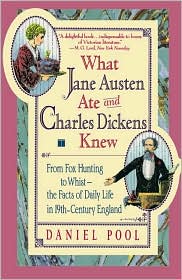
What Jane Austen Ate and Charles Dickens Knew, Daniel Pool
This is brief but entertaining overview of life in Victorian times. It is definitely aimed more at readers of the literature at the time than a wholly historical perspective, which is not a bad thing. Unfortunately, it relies heavily on examples from the text of various novels. So most of the information from this book can be gleaned from context in the novels it is seeking to explain. Still, it is an entertaining enough read and does clarify some aspects of life in those times that a person today would not know. Worth it for a big fan of novels of the time who has not quite exhausted the fiction of the time. So it may deepen your understanding of the ones you’ve read and prepare you to dig deeper. Unnecessary, though.

Yiddish Policeman’s Union, Michael Chabon
Reading Chabon is a revelation. Yiddish Policeman’s Union is by far the best novel I’ve read this year and the best in some years previous. Before I even get to any sort of review, I implore you to go and read this. It combines an alternate history set up with a noir plotline. It is wonderful.
Yiddish Policeman’s Union follows Meyer Landsman, a police detective in Sitka, Alaska. In the world of the novel there was essentially a Jewish reserve made in Alaska during World War II after the quick collapse of Israel, so most of the population is Jewish. The world diverges more from the real one, but it is tangential to the plot, merely part of the wonderful exploration that is the novel. Meyer investigates the death of a junkie in his apartment building who turns out to be much more than a simple junkie. As these things often do, the mystery goes farther than anyone can imagine.
Chabon writes with an absolute love of words, piling them on the page in joyful, absurd, inventive sequences. In a story that, while winding, is little more than a simple detective thriller he manages to craft a thoughtful, imaginative but not totally imagined new world. The world of Yiddish Policeman’s Union is often bleak, but the story never is. Terrible things may happen, but the characters always keep a sense of humor that buoys the novel. The cast is real; they are human, with failures and faults but also honor and convictions. Chabon has not only created a believable alternate world, not a task many speculative fiction writers seem to be up to, but he has also populated it with characters that ring true. Yiddish Policeman’s Union is absolutely terrific. I can recommend no book more.
I had a post ready to go last week, but I scrapped it because I didn’t like the tone. It was whiny and petulant examination of my increasing disillusionment with video games. I still believe much of what I wrote that video games and the community around them no longer seem to be for me. Maybe I’m growing up (God forbid) or maybe the games really are changing. Either way, I didn’t like the way I complained about my malaise, especially now that I’ve determined the actual cause for it: the games I’ve been playing lately.
Those games are Donkey Kong Country 2 and Viewtiful Joe Double Trouble. They are not necessarily terrible games, but they seemed perfectly suited for ticking me off and disappointing me. Just piles of tedium and bullshit; enough to make me want to quit playing video games entirely.
DKC2, which I’ve already wrote about somewhat, has two big problems. The first is its reliance on Diddy’s animal friends. Rambi the rhinoceros and his cohorts should be analogous to Mario’s various power-ups; useful and needed to reach some secrets, but not necessary to complete the stage. Instead of being supplemental tools, they become the very purpose of more than half the stages. And that’s not counting the three or so mine cart levels. The sheer amount of gimmick levels is disappointing because the “normal” levels are so good.
The animal problem is largely a personal preference, but the other problem is just pure bullshit. That other problem is DKC2’s save system. DKC2 tries to move beyond the earlier game continuation model derived from arcades. There are no continues or passwords, but a more modern hard save. Unfortunately, Rare seemed to think that simply being able to save was too easy, so they clogged the system up with tons of bullshit.
First, saving requires banana coins, which are scattered about the stages. Resident Evil uses a similar system, but that game is based on the idea of scarcity. The fear of not having enough drives the game. Even Resident Evil, though, was kind enough to let keep your typewriter ribbon through after you save. Not in DKC2, all your banana coins disappear when you load your save.
The bullshit doesn’t end there. You can only save at the “Kong Kollege” in each area. But the “Kollege” is not immediately available. No, you have to beat 2 or 3 stages before it usually opens up. So you had better hope you have enough lives to do that left after you beat a boss, because you’ll probably have to fight it again. Alternatively, you could go to a previous area to save, but then you also have to pay Funky Kong a couple of you banana coins to fly to the proper area. If you don’t have enough coins, or if you die, then you have to replay a few early levels to earn the coins needed to leave the area. It is an unending cycle of tedium and bullshit.
Viewtiful Joe: Double Trouble, on the other hand, is simply a disappointment. Clover Studios/ Platinum Games has a pretty much flawless track record, with games ranging from merely very good, like MadWorld and Viewtiful Joe 2, to true classics such as Okami. But Viewtiful Joe DS is not very good at all. Instead of being a handheld game, it desperately tries to recreate the home experience. It also tries to make use of all of the DS’s functions. These toe goals work against each other to make a mess of a game. The two changes from the console games are the screen size and the controls. The controls had me trying to use the touch screen, hit the shoulder buttons and use the d-pad all at the same time. Which had my hands cramping within 20 minutes. The screen size severely limits the series’ trademark stylish action. Together it makes the game a slow, dull, physically painful experience.
Amazingly, once I beat DKC2 — yeah, I beat it, it was not going to beat me — and quit playing Viewtiful Joe, I starting liking video games a whole lot more again. Sure I’m still not too thrilled about where they seem to be headed, as there is less and less of the stuff I like, but now I’m rediscovering the joy of The Legend of Zelda: Majora’s Mask, possibly the most underrated Zelda game. Also, I’m finally starting to come around to Dragon Quest VI. The job system is dumped on me halfway through is starting to be interesting, even if the story is still lackluster.
But video games, yeah I love those. I’m going to go replay Suikoden now, because nothing can restore your faith in video games like the first 2 Suikoden games, except of the holy trinities of the SNES: either the trio of Super Metroid, Super Mario World and Link to the Past, or the trio of Earthbound, Final Fantasy III (VI) and Chrono Trigger.
I’m getting back to doing TV reviews, only now as re-watches, with more of a focus on commentary about the episode and less about determining their relative quality. Also, instead of sticking with Futurama, I’ve decided to rotate shows after every season. So now I’m doing It’s Always Sunny in Philadelphia Season 1. Next, I’ll do Home Movies Season 1, then Arrested Development Season 1 and then back to Futurama. The plan is for an episode every Saturday, but we’ll see how well I keep up with that. On with the shows
It’s Always Sunny In Philadelphia
Episode 1: The Gang Gets Racist. Continue reading

