Now Playing April 2016

Beaten

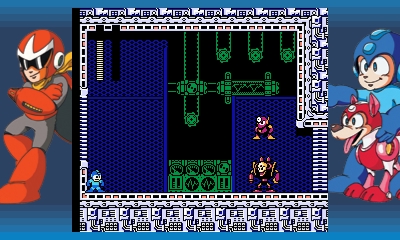
Mega Man Legacy Collection – Wrote about it here. The only game I beat was Mega Man 2, but I played some of all of them and got close to the end of Mega Man 3.

Star Fox Zero – review coming soon.

Ongoing

Super Mario RPG – Progress was made, a write up is coming. It is taking me way too long to beat what is a fairly short RPG. I am liking it much more than I expected and probably more than I would have if I had played it back in the day. It is definitely the odd duck when it comes to Mario’s forays into this genre.

Bravely Second – It is too early to say if this game has fixed the problems of the first title, since that game’s flaws did not become apparent until far into the game, but it has certainly retained the first game’s charms. It brought back the best characters from the first game, added some fun new ones and kept the spirit of adventure and job shenanigans. I am having a blast with this so far. It can be too chatty at times, and some of the new classes are strange, but I am liking it a lot.

Trails in the Sky – wrote about it here. I am done with this game for the foreseeable future, and likely with this series. I still hope they all get localized, but I am not particularly eager to play them.

Magical Quest Starring Mickey Mouse – I’m about halfway done, but I haven’t had the time I’ve wanted to play recently. I should have a write up before too long.

Enslaved Journey to the West – I haven’t played much more than the opening, but I think I am going to like this. It is so unlike everything else I’ve played on the PS3. It is colorful and fun.

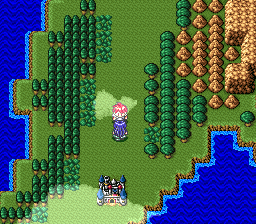
Return to Popolocrois – I said I wasn’t going to rush through this game, and I am not. Especially since all of my 3DS time is now Bravely Second time. This game is still suffused with warmth and charm that few other games can touch, but that does not in itself make it a particularly compelling experience. Still, I am going to take this at a relaxed pace between tons of other 3DS RPGs this year and hopefully get it finished sometime.

Upcoming

Hyper Light Drifter – I got this for PC when I wanted it for WiiU. But WiiU was a dicey proposition, so I figured I would just take it on the platform I had. Since I’ve borrowed an Xbox controller from my brother to play it with, I hope to spend some time with it in the near future. So far all the Kickstarter games that I’ve gotten have been excellent; I hope this continues the trend.

Illusion of Gaia – This is the first game that I am playing for my 25 SNES project that I am actually playing on my SNES. It was more than a decade ago that I stumbled on this game at a garage sale. I hadn’t actually heard of it, but something made me determined to buy it. I’ve sat down with the intention of playing several times in the intervening years, but I’ve never gotten more than an hour into it. I have heard so many good things about it that I am not going to give up this time. It seems like the perfect early summer game, so I hope everything works out.

Sparkster – This is due up once I finish Super Mario RPG and Magical Quest. I expect to get to it before the end of the month and play it in conjunction with Illusion of Gaia. No promises.

Trails in the Sky FC

This game came so highly recommended that I’ve kept playing it, waiting it to turn into something good. About two thirds the way through the game, I realized that I am never going to warm up to it. This game is never going to morph into something else and it is not really what I want to play. Trails in the Sky does what it does very well, I am just not particularly interested in playing it.

Most of the things I really love about JRPGs aren’t really part of Trails in the Sky. The sense of world spanning adventure, like the 8 and 16-bit Final Fantasies all the way up to Skies of Arcadia and Xenoblade, is largely absent. Or strong, interesting battle systems. Or any system of character building. Trails in the Sky seems to be largely disinterested either of those things. That isn’t really a complaint. Not all games have to be all things, but I went in expecting one thing and got something entirely different.

Trails in the Sky’s battle system is fine, but the game doesn’t give the player a lot of opportunities to explore it. In the first half of the game there are only a few interesting battles and the game keeps rotating the last party member so you can’t get a feel for any sort of party cohesion. I am sure there are more efficient ways to get through some of the battles, but the game doesn’t really give the player the chance to explore their options.

As for a sense of exploration, the game has almost nothing to offer. Every area is just a largely well-rendered corridor. Exploration isn’t just not encouraged, it is all but impossible. It reminds me a lot of FFXIII, with its forcing the player to go a certain way, with no chance to backtrack or look around. Again, this is clearly not the game’s focus, but it is disappointing in a game sold to me as a classic JRPG adventure.

Then there is the story, in many ways the game’s greatest strength. Even that left me cold. Not that it is not effective in its storytelling, it is. But that it is inefficient. Trails in the Sky seems to be written on the assumption that anything one line of dialogue can do, three lines can do better. Every conversation runs on longer than it has any reason to, until any interest in the game’s forward momentum is lost. Expecting that to change after the halfway mark is a fool’s game. Trails in the Sky is what it is. I don’t begrudge the people who enjoy it their fun, but I don’t have time for it.

Mega Man Legacy Collection

The recently released on 3DS Mega Man Legacy Collection is just about a perfect product. Not that the six games in the collection are perfect, though Mega Man 2 and 3 are as close as any game comes, but this package is damn near perfect. The Mega Man Legacy Collection isn’t just the six NES Mega Man games slapped on a 3DS cartridge; it is a crafted collection that does its best to get to the heart of what made these games great in the first place.

mmlc4

One point constantly brought up about MMLC is the accuracy of the ports. This has not been understated. The games play just like they did on the NES, warts and all. For most players this level of accuracy is not necessary. That is why most compilations don’t bother, instead opting to slap as many games on the disc as possible and call it a day. I don’t necessarily mind that approach. It is a great way to discover lost gems. I first encountered Gain Ground on a PS2 Sega Genesis collection. I don’t know if it is a good or accurate port; I do know that it is an excellent game that I likely never would have encountered elsewhere. Even though the usual compilations give players a cheap, effective way to experience old games, it is rarely the best way to replay favorites.

mmlc2

A sloppily ported favorite isn’t the game you remember. I’ve purchased just about every version of Mega Man 3 available. Except for the NES game, which I borrowed and rented repeatedly, but never actually owned. Even to my untrained eye the 3DS and WiiU Virtual Console version aren’t quite right. For starters, the colors are way off. That is to say nothing of the even more compromised Anniversary Collection version. They are playable, but if you put the up next to the MMLC version of the game it is night and day. The games here look good and play good.

mmlc1

What sets this game apart from other such collections is how much care is evident in the extras. Aside from just the games the MMLC includes a wealth of extras. It shows a level of care and thought that isn’t usually present in these collections. The challenge mode is great, as is the ability to practice against bosses whenever you want to. Maybe my favorite part is the extensive Museum mode, filled with art and info about all the bosses and enemies from the various games. It is heaven for a big Mega Man fan.

It all comes down the fact that the Mega Man Legacy Collection has six excellent games presented with the utmost care. There isn’t a better way to play these games.

Now Playing in March 2016

I didn’t play much besides Fire Emblem in March. That and Ace Attorney. I just didn’t make time to play much. Honestly, my interest in new games keeps dropping lower. I still feel little desire to pick up a new system, being more content to go down with the WiiU ship and reassess my commitment to this hobby once game for it and the 3DS dry up.

Beaten

Fire Emblem Fate: Conquest – read about it here.

Ace Attorney: Trials and Tribulations – read about it here.

R-Type III – Read about it here.

Ongoing

Legend of Zelda Twilight Princess –

loztp

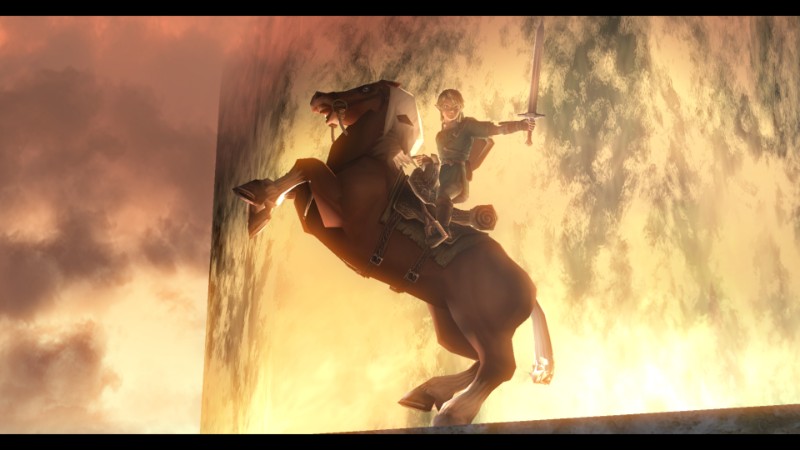
I just played through this last year, so while I jumped on the HD remake, I was not quite as eager to play it. Still, arguing on the internet got me to fire it to see just how slow the opening section is. It’s not that slow. It doesn’t rush, but the game builds its world with care and gives the player interesting things to do for about 45 minutes before the action starts in earnest. I’ll get to the rest of the game before too long, but for now that taste was enough to sate me.

Bravely Second Demo – The Bravely Second demo shows what the game is: more Bravely Default. As someone who liked the first game just fine, that sounds great. I hope the end of the game doesn’t fall apart quite as much, but this demo shows that it kept most of the good parts around. I can’t wait for the full game.

Return to Popolocrois

popo1

I’ve only barely cleared the intro, but it is about what I expected. It is really low key and charming. It doesn’t make for a pressing, compelling experience, but it is certainly relaxing. At some point I will write this game up, but it might be some time because I am not going to rush through it.

Trails in the Sky – The more I play this game the more it seems like something I should like, but for some reason I just don’t. I can’t quite put my finger on it, and things aren’t helped by the fact that my PSP always seems to be dead. I will push on through and finish up in April.

Lufia and the Fortress of Doom – read about it here.

Super Mario RPG – I’ve made it about halfway through this and it’s been an amazing experience so far. It is very much a product of 16-bit era Squaresoft and I forgotten how well they had master role playing games on the SNES. I don’t think it captures the Mario experience as well as later Mario RPGs nor is it as good as Square’s best on the system, but it is close enough to both that it is just wonderful.

Upcoming

Bravely Second – I am getting kind of RPGed out, but I am glad we are seeing this game. The first game was great until about the third time through it, so hopefully they change the structure some, but I am up for another romp with these mechanics.

Enslaved Journey to the West – I’ve got this downloaded on my PS3 and I’ve already played the intro, but I will start it in earnest next month some time. I hope it lives up to the praises some friends of mine have sung for it.

Star Fox 0 – I am equally dreading and anticipating this game. I love Star Fox 64, but I don’t really care for any other game in the series. I guess the two Gamecube games weren’t horrible, but I kind of hated the DS game. This series feels in many ways like Nintendo’s Sonic the Hedgehog. It was great once, but they don’t know how to evolve the series to keep it relevant. At least this one seems to actually just be the stuff people want out of Star Fox.

Magical Quest Starring Mickey Mouse – Another SNES game I’ve never played. The 16-bit Mickey games seem to be rather well-regarded, but I’ve never touched them. I don’t expect it to take me long to get through it. I’ll get on it right after I finish Super Mario RPG.

25 Years 25 Games #7: R-Type III

I’m not going to lie to you and say that I legit beat R-Type III. I am pretty crappy at shmups and R-Type III is dang tough. Still, I persevered and exploited the crap out of saves states to see all that the game has to offer. Even that way it wasn’t easy. Difficulty aside, there is a lot to like about this game.

One thing that stands out about this game is that it is designed for the SNES. R-Type III is not, like many shmups, based on an arcade game. The SNES tended to struggle with those, chugging along with massive slowdown. That was usually caused by all the moving sprites on the screen. The SNES just wasn’t fast enough. R-Type III, though, was designed around the limitations of the system. It has larger but relatively few obstacles and moves along a something of a slow pace anyway. The end result is a game that both looks good and plays good. Those large obstacles tend to be big, lush sprites. And the slower pace lets the player always feel in control.

Another thing that makes R-Type III stand out is its level design. Most shmups I’ve played (and let me be clear that I am far from an expert) would feature some background hazards and mostly a lot of enemies the same size as the player’s ship to deal with. R-Type III is all about the levels. It gives the whole game something of a puzzle feel. Using the SNES’s special mode 7 rotating effects, among other tricks, the game’s environments become the highlights. They rotate around player and change dynamically as the player progress. Foreknowledge isn’t exactly required, but big portions are reliant on know where to be. The first level starts with a highlight, the player fighting a big mech that crashes into the background. It gives the game a distinct feel, much like Super Castlevania 4 and its use of similar effects. It isn’t perfect, though. While they look great, the moving backgrounds can really make the game feel cramped.

It does have plenty of replay value. The big upgrade tool on the R-Type series is the force pod, a pod that sits at the front or back of the player’s ship and fires for them. R-Type III has three different types of Force Pods, chosen at the beginning of the game. They have different uses for the three kinds of weapon upgrades the player can get. None are strictly better than the others (or at least I am not skilled enough to tell which are better) but some are better in certain situations. You can also move the pod from the front of the ship to the back, changing the direction your powerful shots go. It again make for a slightly more strategic take than the usual pure twitchiness of a shmup.

There is just no getting around that difficulty. Without abusing save states I doubt I could have cleared the second stage. The game is quite short, so the difficulty helps to keep interest in a game the otherwise be just a blip. The SNES isn’t exactly known for its shmups, that once important genre was better served on the Genesis and TG16, but R-Type III is an excellent, exclusive title for the system. It is just the kind of game I am doing this project to experience.

25 Years 25 Games #6: Lufia and the Fortress of Doom

My goal was, and still is, to beat 25 SNES games to celebrate the 25th Anniversary of the SNES. But Lufia and the Fortress of Doom is proving to be quite the stumbling block. The SNES is known for its JRPGS and while I am intimately familiar with the cream of the system’s crop, I have never managed to spend much time with some of the genre’s second tier games. That is where, by most accounts, Lufia fits on the SNES hierarchy. RPGs tend to take a lot more time to complete than brawlers or platformers, but I thought I could space them out and keep the write-ups coming at a steady clip. Lufia is smashing that plan to pieces.

All pictures stolen from Hardcore Gaming 101

All pictures stolen from Hardcore Gaming 101

I have been playing Lufia off and on since the start of February. So far I have found it stultifying and dull. Part of that is because I have played the first few hours before, when I borrowed it for a week from a friend in grade school. The other is that other than the intro, there just isn’t anything interesting about the first five hours or so of Lufia. It plays like a checklist of all the usual JRPG tropes. Burned villages, mystery orphans, suddenly resurgent monsters, all the classics. When done right, those things can work. What it usually takes is strong writing. The Lunar games don’t stray far from cliché, but everything is done with enough charm that it works. The localization of Lufia is bland. There is little personality or reason to get invested in these characters or this world.

fortressofdoom-42

That is not to say there aren’t some good ideas. The callous disregard for one destroyed kingdom kind of works, with people being more annoyed that legitimately concerned. Working with the princess because the King doesn’t care gives it something to work with. Too bad that results in the first hour and half consisting of running back and forth between two places, with almost no sense of progress.

The one outstanding part of the game so far is the opening. Lufia starts the player at the end of another story, setting the backstory by allowing the player to take control of the legendary heroes. That part works perfectly well. It is great to start with characters that are already supremely powerful; wiping the floor with what is essentially a final boss. It is also the only early story moment that manages much emotion. Even not knowing the four characters, seeing them have to make the sacrifice they do is powerful. Unfortunately, none of that is carried over into the rest of the game.

fortressofdoom-10

So am giving up on Lufia halfway through. For now, anyway. I am simply moving it to the bottom of the list. If I get back to it great, if not too bad. When I do get back to it, I will do another write up, assuming I have anything new to say about it. I might not. If I want to finish this project, I need to keep moving. My list of games to play did include 26 or 27 just in case I proved incapable of beating one. For now, I am moving on from Lufia to Super Mario RPG and some kind of shooter, I haven’t decided yet.

Fire Emblem Fates: Conquest

As soon as I finished up Fire Emblem Fates: Birthright I downloaded and started playing Conquest. After about three or four missions, I hit my limit on that unique to Fire Emblem blend of anguish, frustration and triumph and switched over to something else. I love Fire Emblem, but at a certain point I need to take some time to recharge. Coming back after that, I gained a greater appreciation for Conquest.

Honestly, the differences on the gameplay side between Conquest and Birthright were overblown. The lack of extra missions is a small loss; it is not like I took much advantage of that in Birthright. There are some differences, but the experiences are closer than they are different. The two biggest gameplay differences are what made Conquest the superior experience for me.

fefc1

The first is that it uses more traditional Fire Emblem character classes. Birthright threw me off with its changed up weapons and classes. Those changes were largely superficial, like calling axes clubs and the like, but it was enough to throw me off occasionally. Conquest sticking with Cavaliers and Knights instead of Samurai made everything just that much more comfortable for me. I do enjoy seeing Intelligent Systems change things up with the classes, but for a long time series veteran it was a barrier. The mixing of those different classes is what gives Fates its unique feel in the series, that the world is larger and more varied than the world of the previous games. Still, when it comes down to personal preference, I like the older stuff.

The other, more important difference is the variety of mission objectives. Birthright only has one type of mission, Rout the Enemy. You kill all the enemies on the map before they kill you. Conquest gets back to a more traditional Fire Emblem array of mission objectives. There are Kill the Boss missions, Survival missions, Escape, among others. That is where Conquest gains its complexity and maybe a slight decrease in difficulty. I might actually argue it makes things easier, having maps where a suicide run against a boss can end the whole mission rather than having to wipe out the army. Still, the variety makes for more interesting tactical decisions. Some units might be strictly better at killing enemies than others, but a survival mission adds greater importance to units that can tank, like Knights. When your only goal is to kill all the enemies, then a unit’s ability to kill becomes by far its most important skill. Having those other objectives really lets other units have a chance to shine. Of course, by the end of the game the difference is academic. Everything at that point can kill.

fefc2

Where the game falters, though, is with its characters. While their classes might be the usual, the characters that join up in Conquest are a strange lot. To me they are a not exactly appealing lot. That veneer of seediness that Nintendo’s localization team has done their paint over shines through here. These characters often seem deliberately created to appeal to certain subsections of the pervy otaku audience. From the overly suggestive, and frankly stupidly attired, Camilla, to the crassness of Nyx’s “I only look young” routine to whatever the fuck is going on with Charlotte. Even when they aren’t unsettling, the characters are just too weird for their own good. Maybe this was also true of Birthright’s cast, but since I didn’t have other ninjas or samurai to judge them against it was less noticeable, but I don’t think I’m coming out of Conquest with many additions to my list of favorite Fire Emblem characters, other than maybe the imports from Awakening.

fefc3

I still maintain that there really isn’t any sensible story related reason to side with Nohr at the choosing point, and playing Conquest hasn’t really changed that. The game jumps through some elaborate hoops to keep the player on the side of good while not disrupting his work for a murderous maniac. Neither game has an especially strong story, that is hopefully reserved for Revelations, but the one in Conquest has some truly absurd leaps of logic. Every character seems willing to acknowledge the problem of King Garon being a crazy murderer, but no one seems willing to even consider taking the steps needed to solve that problem. Or at least not the most direct one.

Still, the improvements to playability in Conquest give it a slight edge over Birthright in my book. I still think Nintendo and IS are crazy for essentially dumping three Fire Emblem games on the world at the same time, but with the video game industry slowly killing everything I love about video games, I’ll take a gift like this any way Nintendo wants to package it. Now it is time for another break before I tackle Revelations.

Ace Attorney: Trials and Tribulations

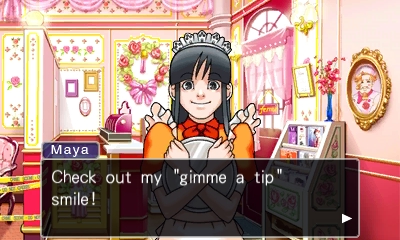
It is not quite accurate to say that the Ace Attorney series is what made the DS for me, but it is not exactly inaccurate either. There are too many great games on the DS to credit its legacy to any one game or series. From a cartload of Dragon Quest and Pokemon games to quirkier stuff like Professor Layton or Trauma Center, the DS library is stuffed with great games. No game did more to sell me the system than the original Phoenix Wright: Ace Attorney. The series kept me enthralled throughout the life of the system, even if they never quite recaptured the magic after the original trilogy. The final game in that original set of games, Trials and Tribulations is the glorious culmination of the series to that point.

aatt3

I refrained from calling any of these games the best in the series as I’ve played through them, but having finished Trials and Tribulations I am confident calling it the best. It has the strongest set of cases and an excellent finale that brings the whole trilogy full circle. It starts with the strongest intro case, one starring Mia Fey as a rookie defending a hapless college age Phoenix. It not only introduces gameplay concepts, it also introduces all relevant characters and sets the stage for the big finale.

What sets this game apart is how strongly its central theme comes through. It is a game about identity. The first case has Phoenix’s girlfriend, Dahlia, playing an obviously fake role. At least, it is obvious to everyone save Phoenix. The next case has a dual layered secret identity, with two people claiming to be a famous thief and establish their alibi. The third case brings in a fake Phoenix. The prosecutor in this game, Godot, is a complete unknown. When the game finally builds to its epic final case, they whole thing is a mix of secret identities and hidden agendas. None of the other games use an idea repeatedly like hidden identities are used in Trials and Tribulations. It don’t know what, if anything, the game is trying to say with them, other than a general quest for the truth. Phoenix is constantly faced with chameleons in this game, and each time he is able to untwist their lies and false faces to get to the truth.

aatt4

The last case in particular is a triumph. It is the perfect conclusion to this trilogy. It’s completely ridiculous, but in a completely Ace Attorney way, managing to combine Phoenix’s story from this game with the trilogy long story about the Fey family to create a story that ties up nearly everything in a complete bow. That case also somehow has time to put something on a capper of the stories and Edgeworth and Franziska von Karma as well. That is a case is personal for everyone involved, concluding with the series trademark tragedy-tinged optimism.

Coming out of this game I can see why Capcom chose to move on from Phoenix after this game. His story was over; they were not going to top this. The obvious next step, which ended up as something of a side-step, would have been games starring Myles Edgeworth. He was still a character with plenty of stories to tell. The route they took with Apollo Justice was probably the worst possible one. They didn’t go back to Phoenix for inevitably diminished returns, nor did they go for a clean break. Instead they brought back Phoenix in a smaller role that all but ignored these three games. The fact that Maya is not a part of that game is telling as to how far wrong it gets Phoenix.

aatt2

There are no weak cases in this game. As I’ve already written, the first and last cases are excellent, but the middle two and a half are also good. The second case is likely the weakest, if only for that whiff of missed opportunity. Its two connected cases and complex blackmail schemes are fine, but none of its characters leave a strong impression. Mostly because they aren’t given the opportunity to. The game spends a lot of time with the client and the culprit, but other characters are kind of left by the wayside. The next is a complex puzzle that happens to feature this game’s embarrassing stereotype. Still, it is an altogether excellent case. After that is a return to Mia and the origin of the villain from the opening case, it exists solely to set the case for the finale.

While all of the main characters get plenty of development, none grow more in this game than Mia. Due to the unfortunate murder in the first game, Mia was never more than a small presence in the game. She was a character that quite literally didn’t have a life outside of the case. In Trials and Tribulations she truly develops into a character worth caring about.

aatt1

That is the beauty of the Ace Attorney series. A positive development like learning more about Mia is tinged with sadness because she is already dead. It is true in characters like Pearl, whose cheerful innocence belies the tragedy of her upbringing and situation. Trials and Tribulations is only possible because of the games that came before it, but it is a wholly satisfying conclusion to Phoenix Wright’s story.

Fire Emblem Fates Birthright

When faced with the poorly explained choice between Fire Emblem Fates’ Birthright or Conquest versions, I went with Birthright. Given how the differences were explained, Conquest is that game the more closely fit with how I’ve played the series. I am just about as much of an old fan of Fire Emblem as exists in North America. I started with Sacred Stones, but quickly went back to play the first two GBA games, the fist using a translation patch and emulator, the only time I’ve actually completed a game that way. I’ve stuck with the series since, only failing to really enjoy the DS game. I liked Awakening, but I felt like it changed a little too much of the series core in an effort to expand the series fan base.

fefb3

It makes sense that when Nintendo explained what the differences between the two versions were that I would go with Conquest. Birthright was supposed to be more like Awakening; Conquest was the throwback to the early games in the series. There was one big change that I really wanted to keep, though: the world map. I started with Sacred Stones, the first game to try an Awakening like pivot for the series, but it was too rushed and too easy to have the impact that Awakening did. Still, a lot of the changes to Awakening were tried out for the first time in Sacred Stones. While I would agree that Sacred Stones is far from the best game in the series, its changes to the series’ structure were good. As much as I want an experience like Path of Radiance, I’d rather have some of the niceties of the modern games. Still, the choice for which one to buy (first, since I am going to be playing Conquest as soon as I finish with Birthright) came down to the fact that I prefer Birthright’s White and Red color scheme to Conquest’s Black and Purple.

fefb2

Honestly, I was pleasantly surprised by the game. Even Birthright pulls back from the cakewalk that Awakening was. There are some big changes to the pair up mechanic that stop it from completely wrecking the game’s difficulty curve. Now combo attacks always happen unless characters are paired up. Pairing up is now a defensive maneuver. It blocks enemy combo attacks and occasionally blocks main attacks. In Awakening there was no reason not to pair up, in Fates it is a situational tool. Not pairing up allows the player to combo and press the attack, pairing stops the enemy from doing the same. It turns a broken mechanic into an interesting one.

fefb5

The other big change to the formula is that they removed weapon durability. At first I thought this would simplify the game too much; judicious use of powerful weapons was an integral part of the series. The change was worked into the game perfectly. Now even the best weapons can have significant downsides and super powerful weapons are harder to find. It makes for fewer decisions for the player, but more important ones. The new weapon system really won me over by about the midpoint of the game.

It does continue the series strong focus on characters. The plot never moves past generic fantasy fluff, but the real draw is in the support conversations between the characters that make up your army. The start in out in pretty stereotypical roles, but the strong localization work really helps flesh out the collection of stock characters. The furor over this game’s localization is equal parts annoying and amusing to me. It is annoying because people who have done excellent work are getting yelled at by idiots; it is amusing because of how impotent those idiots have proven to be. Fire Emblem Fates looked like Nintendo taking a hard turn into some otaku jerkoff bullshit and the NA version deftly smoothed out the roughest, grossest parts of it, causing a teapot tempest of man-baby outrage. When the dust settled, intelligence won out and FE Fates was the best-selling game in the series in its first month. It is always good to see good work rewarded. Far from being a problem with the game the quality of the Fire Emblem Fates localization, like with nearly every game Nintendo’s Treehouse group translates, is one of its strongest features.

fefb4

I will always miss the incredibly charming sprites from the GBA games, but Birthright is one of the strongest games in the series to date. Now it’s time to find out if its supposedly more difficult counterpart is just as good.

Now Playing in February 2016

I spent a lot of time with my 3DS in February, but not so much with either of my home consoles. It looks to be the same for the next few months with the wealth of 3DS rpgs hitting now or in the near future. I am also happily surprised with myself that I am staying on top of my SNES deep dive.

Beaten

Mario & Luigi: Paper Jam – see here.

The Death and Return of Superman – see here.

Joe & Mac: Caveman Ninjas – see here.

Prince of Persia –

pop08

I initially intended to have a full post about this game, but in the end I don’t think I actually had that much to say about the game. I wanted to like it, but it has some pretty glaring flaws. Like how the story ends completely unresolved. It actually ends up being something of a shaggy dog story, albeit one that is fun to play. Fun, but far from perfect. For about the first half of the game I thought it was suffering from some bad input lag, and then I learned how the game worked. It isn’t really an action game; it is more of a rhythm game. There are only four possible actions to take and the intricate looking platforming is just recognizing which button you need to press. The game will play out that action when it is necessary, which isn’t always immediately. Until how it works clicks it can be frustrating. When things are going well it looks great, but it really isn’t that engaging to play. It just sort of goes with minimal player input. Maybe the old Prince of Persia games were the same, but this one was somehow everything I wanted and still largely unsatisfying.

Ongoing

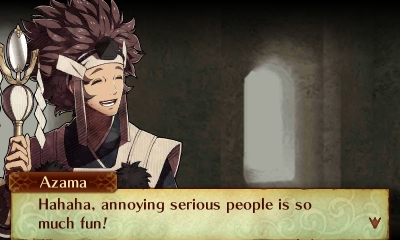
Fire Emblem Fates: Birthright –
fefb1

I don’t want to go on too long about this game, since I am currently writing up a full blog post about it, but there are some things worth mentioning. In that post I’ll go on longer about how excellent the localization is. The fact that Treehouse’s work here has come under fire is frankly ridiculous. Nintendo excising some embarrassing otaku wankbait from their own game is not censorship, and by all reputable accounts they have done a marvelous job polishing a pretty pedestrian story. Also, there was some struggle for me to decide with version to buy, because I thought it made more sense to start with the easier game and learn this entry’s particulars than to do that with the hard one. I was always going to play both or all three, I guess. Lastly, this game is really good. The disappointing DS game seems so long ago now.

Codename STEAM – see here. This one is likely going on the shelf for a while, because my 3DS looks to be pretty busy for the next few months.

Final Fantasy Explorers –

ffex

This has all the ingredients of something I would really like. I’m a big fan of Monster Hunter and of the Crystal Chronicles games, both of which have similarities to this. And while I didn’t play this enough to give it a fair and complete judgement, through the first three hours it just feels sloppy. The Final Fantasy nostalgia does not appear to have been applied with much though, it’s just kind of there. It’s got the names and the look, but not the feel of Final Fantasy. The gameplay is structured like MH, but it is loose and unsatisfying. The bosses don’t feel like dangerous obstacles to overcome, but inert damage sponges that just take way too long to kill. I might have more to say if I ever find more time to play this, but it has been put at the bottom of a very long list.

Ace Attorney: Trials and Tribulations – I played through the first two cases of this Phoenix Wright finale. It has just as much verve and energy as I remembered. I really need to go reread what I said about the first two games, but this one really starts with a bang. The first case is especially tight, introducing this game’s central players while also quickly teaching new players how to play the game. I’ve actually forgotten most of the details of these cases, so it is almost like experiencing them for the first time again. On an unrelated note, I hope a miracle occurs and we get the Sherlock Ace Attorney game. It seems unlikely, but a man can dream.

Lufia and the Fortress of Doom – The more I play this the less I feel like it was something I missed back in the day. I don’t want to damn it, especially when I am only through the first quarter or so of the game, but so far there is little here to recommend this game over any of the classic SNES JRPGs. It seems to be the very definition of a by the books jrpg, like a Dragon Quest game with the charm drained out of it. It still isn’t quite bad, but spectacularly unspectacular.

Yakuza 5 – I’ve barely scratched the surface here, but already system improvements from the previous PS3 games are evident. It also does the smart thing and starts the player as Kazuma. I like splitting the game up among a handful of protagonists, but Yakuza 4 kept Kazuma out of it for way too long. I’ve barely played this enough to get a handle on the what the game is going to be about, but this series never disappoints.

Upcoming

The Legend of Zelda: Twilight Princess HD – I’ve got this on preorder, but I just played the game last year, so I might not be that quick to jump into it. Damn that amazon prime preorder discount. Still, I am pretty excited to argue with people about Zelda after this release and some games’ reputations shift. (I’ll still be repping Skyward Sword as one of the top games in the series) The WiiU has quietly become quite the Zelda playing machine. If only it had downloadable versions of the DS games.

Return to Popolocrois – Again with the Amazon Prime discount. I played through most of the PSP Popolocrois game and found it charming if dated. This one, which is a Harvest Moon Story of Seasons crossover game, looks to keep the charm and hopefully lose some of the oldness. It does have the misfortune to come out in the midst of a deluge of 3DS RPGs of sorts, having to compete with the likes of FE Fates, Bravely Second, Mario & Luigi Paper Jam and Hyrule Warriors. Not all of those are straight RPGs (and it’s probably really stretching to include Hyrule Warriors) but it does make for some pretty crowded territory for Popolocrois. I hope it finds an audience.

Fire Emblem Fates Conquest & Revelations – There are two more paths in this game. The first one already took me about 40 hours to beat; I can’t wait to spend another 80 with it. I took the easy path first, which was good because it took me a long time to grasp the changed pair up mechanic.

Mega Man Legacy Collection – I’m not intending to spend a lot of time playing this, I mostly bought to support a worthy venture. This is how more people should do classic game compilations. I am happy to have a near pixel perfect version of some of the best games ever to play on the go.

Enslaved: Odyssey to the West – I picked this up on a PSN sale. It looks great. I don’t know if I’ll actually have time to get to it, but hope springs eternal.

Super Mario RPG – This is the next game for my SNES project, after I finish with Lufia. Then I’ll be forced to get into the shooters before coming back for some more RPGs. This is probably the most well-known game I’m playing for this SNES celebration, but somehow I’ve never found the time to put much time into it.