2nd Quest: Spirit Tracks

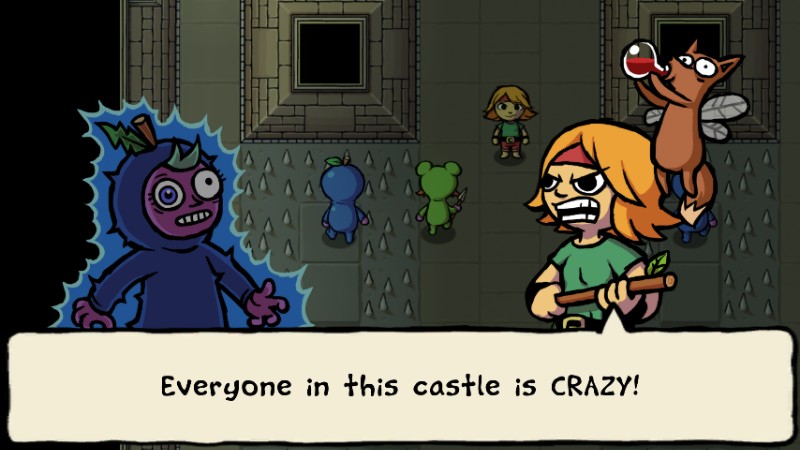
The Legend of Zelda: Spirit Tracks is a very good game. It fixes all of the problems of its predecessor on the DS, though not without adding a few of its own new ones, while keeping that game’s strengths. Despite this, I would definitely consider Spirit Tracks to be one of the lesser Zelda games. It does everything it does well, but it lacks the one thing that makes the Zelda series so notable: ambition.
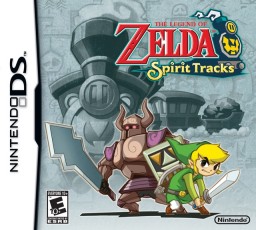
The_Legend_of_Zelda_Spirit_Tracks_box_art

Spirit Tracks is a small game. And a familiar game. This is not the smallest Zelda game, Minish Cap feels a lot more constrained. It is not the first game to build off the set up of its predecessor, Majora’s Mask plays almost identically to Ocarina of Time. But it is the first time that a Legend of Zelda game brings almost nothing new to the table. Ocarina of Time brought the series to 3D, Majora’s Mask has that whole 3 day cycle going for it, Wind Waker has sailing, Phantom Hourglass had a completely new control scheme, etc. Spirit Tracks is a refinement of Phantom Hourglass, but little else. It does have a new setting going for it, but other than switching out the ocean for the train that setting is largely the same as Phantom Hourglass. It’s only real innovation is the games obnoxious instance on using the DS mic for playing instruments and using weapons. That is also the games worst feature, by far. The biggest fault the game has not that it fails in any way; it is that it doesn’t try.

It does fix most of the problems from Phantom Hourglass. I thought the controls worked well in PH, but they are just that much more responsive and effective here. It is mostly slight changes, like a double tap rolls instead of drawing a curlicue, but they add up for a noticeably better controlling game. It also fixes the central dungeon idea that integral to PH. While there is still a central dungeon, but all of my complaints with it are fixed. It is no longer timed and you no longer have to repeat sections of it. The stealth segments are still there, but divorced from the other elements they work.
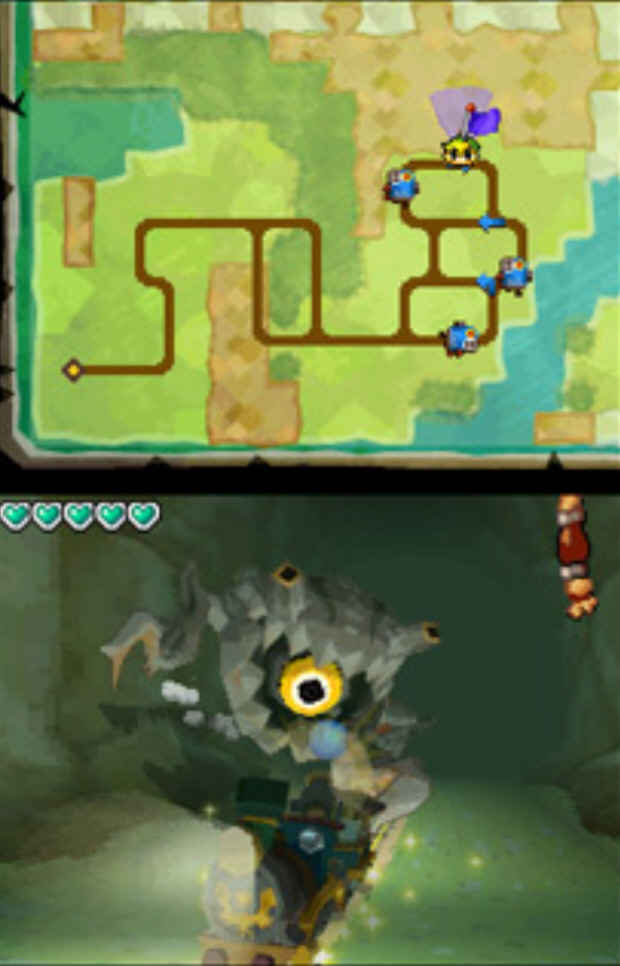
the-legend-of-zelda-spirit-tracks-train-boss-screenshot

While the first couple dungeons are rather simple, they ramp up to a satisfying complexity. It works with a limited array of tools to make the player think his way through obstacles. Instead of relying heavily on the tool found in each of the elemental dungeons, all the previously acquired tools are put to use. From the third dungeon on they are all excellent. The one fly in the ointment playing this game are the Locomo Flute Duets. I complained about them when I first reviewed this game, but this time I didn’t have as much trouble with them. In fact, I passed all of them but one on the first try. The thing is, I have no idea what caused me to fail the one time I did. The game does not provide any feedback as to what you are doing wrong when you fail. It just makes you start over The time after I failed I just about gave up since I did so badly, but the game decided I did it good enough to pass. What is most frustrating is not the failing, it is the lack of feedback.
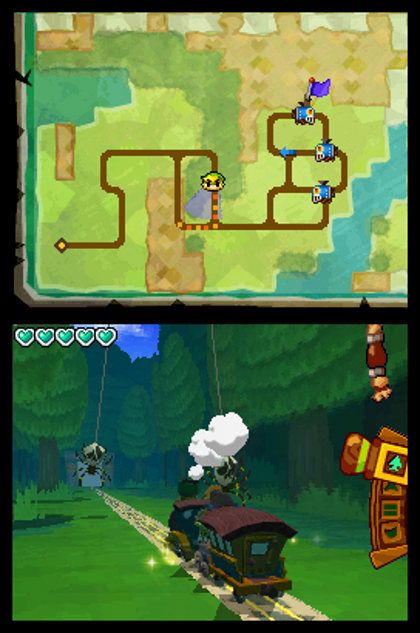
zelda-spirit-tracks-forest-420

The one problem that wasn’t fixed is the overworld. It is still stifling and small; a chore to explore instead of joy. Having just played Twilight Princess the contrast could not be more stark. TP has an expansive, interesting world, Spirit Tracks has a series of rail, including some that only appear when you find certain items. It is no fun. And this game has a world that I’d like to explore, but I can’t because the game sticks you to the rails

The Legend of Zelda Spirit Tracks is not a bad game. For the most part, the game is excellent. It just lacks that creative spark that makes this series one of my favorites. There are other games that I would definitely call other games in the series failures, but none exhibit the total lack of ambition that Spirit Tracks does. It just feels kind of by the numbers, which is a huge problem.

Now Playing in September ‘14

I actually played a lot of games in September.  I got through a couple of PS3 games that have been sitting on my backlog, as well as a couple of smaller download titles on the WiiU and spent a bunch of time with a couple of great 3DS games.  It was a good month, especially with the fall release season starting to heat up.  In October I’ve got Smash Brothers and Bayonetta 2 coming, assuming that I can keep from jumping on any of the other games that I’m on the fence with, like Hyrule Warriors and Theatrhythm Curtain Call.

Beaten

Professor Layton versus Phoenix Wrightwrote about it here

Metroid Fusion –

np1

This game is simultaneously loved for being a new 2D Metroid game that came almost a decade after Super Metroid and hated for not being Super Metroid. Both stances are valid. Fusion is not as good as Super Metroid; it has some serious handholding flaws. But the further we get away from the Golden Age of Metroid (2002-2007, which featured Fusion, Zero Mission and the Prime Trilogy) the better the games from then start to look. Despite losing two buttons from Super Metroid, Metroid Fusion plays great and it looks great. I actually really like the story it tells, though it sows the seeds for the storytelling tragedy that is Other M, but I wish it could have told its story without railroading the player quite so often. Still, this is a very good game.

Smash Bros Demowrote about it here

Teslagrad – This is exactly the kind of game I hope for when I pick up download and indie titles. It is a small, but delightful metroidvania game. It also tells a story without flooding the game with words. All of the abilities the player gains add to his mobility; giving the player a terrific sense of empowerment. A lot of it based on a kind of polar magnetism. The player must use positive and negative polarity to push and pull the character through death traps. It is just a joy to explore this game. The one fly in the ointment are the bosses. They are just a little too long when the player can only take one hit. Yes, checkpoints are frequent so death is not that great an impediment, but the bosses were anti-fun sticking points. Still, Teslagrad is an excellent game.

Tomb Raider (2013) – This game got a ton of praise last year and as a fan of some previous games in the series I was eager to play it. Tomb Raider does a lot of things very well, but it is a prime example of my current disillusionment with the AAA marketplace. It takes a series that was largely about exploring a 3D space and replaces that with, what else, shooting. It turned the game into primarily a shooter. I’ve got more about this game coming soon, but for now I’ve got to say that it sucks that everything has to be a shooter to get any attention these days.

Metal Slug, Metal Slug X and Metal Slug 3 – My friend and I got together one day and ploughed through the first three Metal Slug games, with the superior remix X replacing 2. I love this series. As far as I’m concerned it is the best run and gun series to exist (screw you Contra!). I try to make it a yearly thing to play a few of the good games in this series. Hopefully soon I’ll have time to get to 6, if just to punch tanks with Ralf. This series is just pure fun.

Sly Cooper Thieves in Time

np3

I greatly enjoyed the Sly Cooper Trilogy on the PS2. The first had promise, but was somewhat limited. The second fulfilled that promise and was one of the great platform games from that generation. The third game, while still good, faltered under the built up cruft of the series. The fourth game in the series is much like the third game. It is still a good game, but too much of the game is not about Sly Cooper performing heists but instead about increasingly ridiculous and tenuously tied to goal missions involving Sly’s buddies Bentley and Murray. It just tries to do too much, distracting from the very good core of the gameplay.

Ongoing

Yakuza 4 –

np2

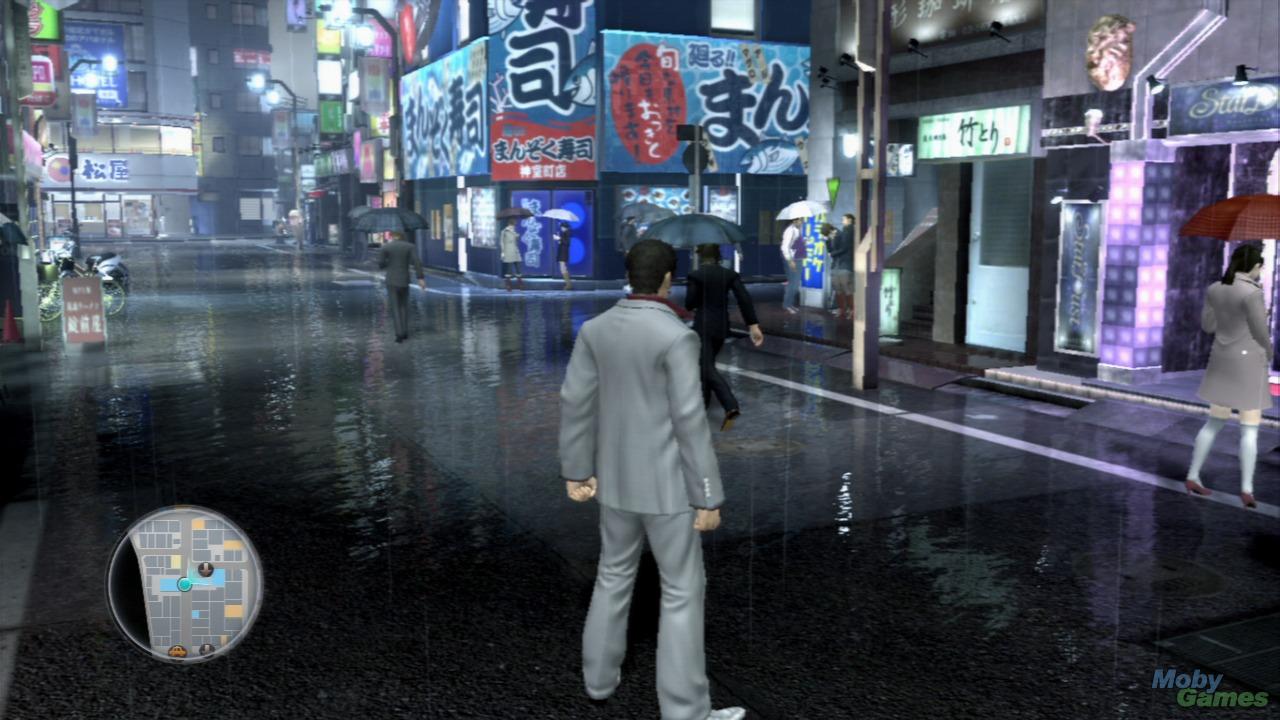
I just got started with this, only playing the first episode so far. It looks and plays like Yakuza 3, which is a very good thing. If you are not familiar, Yakuza is like playing a Japanese crime movie with a touch of great video game logic.

Tomb Raider Underworld – I’ve played through the first area or so, but I have thoughts on this game. Once I finish, I think I’ll write something about this and Tomb Raider (2013). My biggest takeaway so far is that Lara is disturbingly out of place in this game. Or at least her character model is. The rest of the world looks realistic, Lara is a cartoon. It doesn’t fit together.

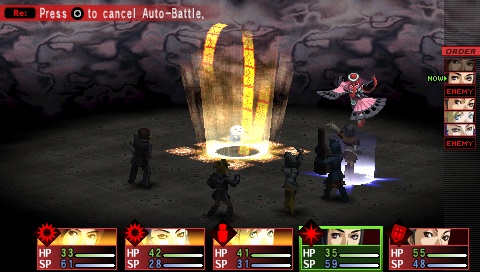
Persona 2: Eternal Punishment – I haven’t put all that much time into this. I am eager to dig in, but I’m playing it on my PSP and my handheld time has been taken by other games, and will continue to be for the foreseeable future. Through a couple of hours, it seems much like its other half, Persona 2: Innocent Sin.

Persona 3: The Answer – I started this up as well, but the reports of its difficulty make me wary. As much as I loved Persona 3, its difficulty was occasionally unfair. It wasn’t too hard, but it would be cheap and cost the player an hour or so of playtime. From what I’ve heard, this game features that sort of thing more heavily. I’m not stopping already, but I did allow myself to get distracted by a lot of other games.

The Legend of Zelda Spirit Tracks – I should be finishing this up in the next couple of days, with my 2nd Quest post to follow. It improves on Phantom Hourglass in just about every way, but it still feels lacking.

Upcoming

Bayonetta 2 – This hits at near the end of the month, and my frothing demand for this game increases.

Legend of Zelda: Skyward Sword – Once I finish with Spirit Tracks, my Zelda series replay is down to just this and 4 Swords Adventure. I am going to get this done before the end of the year.

Okami HD – I picked this up on sale from PSN, making it the third time I’ve paid for this game. One of my absolute favorite games. I can’t wait to dig into it.

Smash Bros 3DS – It hits tomorrow. I will play nothing else for at least a week. I can barely form words, let alone string them together into coherent thoughts. I want this game.

I’ve Got the Smash Bros Fever

We are one week away from Smash Bros 3DS and I couldn’t be more excited, a huge change from where I was about a month ago. I was excited for Smash Bros then, but not for the 3DS version. All of my excitement was reserved for the WiiU game. Unfortunately, at that time the release day for that version was unknown, while I knew the 3DS one was hitting in early October. I didn’t really care about it, but I was planning on buying it; it’s not like I was going to not play new Smash Bros if it’s available. In the last couple of weeks my outlook has changed entirely. All thanks to the demo that Nintendo distributed.

Since I earned Platinum Status in Club Nintendo (of course I did) I not only got early access to that demo, I got codes for four demos. So shared a couple with my brothers and one with my cousin and we played some Smash. According to my 3DSes internal clock, I’ve played that demo for just short of ten hours so far. With just the demo! I expected the 3DS game to feel compromised, to feel like it had been cut down to fit on the handheld. While the demo is only a tiny slice of what appears to be a humongous game, it didn’t compromised at all. The controls, other than the fact that they are not customizable in the demo, are perfect and the game runs as smooth as butter. It doesn’t look great in stills, but in motion the game looks great. With three people playing, plus one computer opponent, the game didn’t slow down at all. I thought it would feel cramped, but it really doesn’t. Each of the five available characters feel unique, but worthwhile. If the rest of the cast plays half as well as this crew, I don’t know when I’ll ever quit playing Smash Bros.

Those five characters are Mario, Link, Pikachu, Villager and Mega Man. It is a pretty great sample of what the game has to offer. Mario, Link and Pikachu are the stars of Nintendo’s biggest franchises, Mega Man is the highly anticipated guest star and Villager is the representative of Nintendo’s latest upstart hit. It is good cross section of the available fighters. I’m no fighting game expert, so I can’t put together and in-depth evaluation of their strengths and weaknesses, but I did get a general feel for them.

First, the returning characters. Mario is, as always, vanilla. He is pretty agile, has some range and just enough power. I don’t really feel the need to use Mario when other options are available, but he is decent. Link was one of the biggest disappointments in Brawl. He wasn’t that strong, but he was slow. There really wasn’t anything that Link did well that similar characters didn’t do better. If you wanted a heavy with a sword, just use Ike, if you wanted something speedier you could use Toon Link. Regular Link sucked. He is much improved here. He seems to be a little more sturdy and powerful. Pikachu is a character that I’ve never really used. He is an annoyance; fast and just strong enough to cause problems. He feels much like he always has, but I’m not a Pikachu player.

The newcomers, though, are a lot of fun. Villager doesn’t feel particularly effective, but his moves are off the wall enough that he is enjoyable anyway. His tree planting/chopping attack is super unwieldy but also super powerful. He can grab just about any projectile, hide in his pocket and throw it back at his attacker. Figuring out just how to use him is difficult, but the results are almost always entertaining. Mega Man is my favorite so far. His regular attack, his classic buster, is not a particularly effective attack. It can annoy and help keep distance, but isn’t really the centerpiece that most characters attacks are. His smash attacks, though, are almost uniformly excellent. Taking the form of his special weapons from his other games, they are all situationally useful. He is another character that takes some getting used to, but once you figure him out he is great.

Aside from the characters, the demo also lets the player get a handle on some of the new items and weapons. There are plenty of small changes, the baseball bat is not aluminum, and plenty of new additions. The highlight so far is the wind bellow thing; I don’t know what it is called. On the one stage available it is worth almost two kills on its own.

Judging the game simply by the tiny sliver that is the demo, I am almost ready to call it my game of the year. It is a blast and I can’t wait to play the full version.

The Ace Attorney Against the Archaeologist

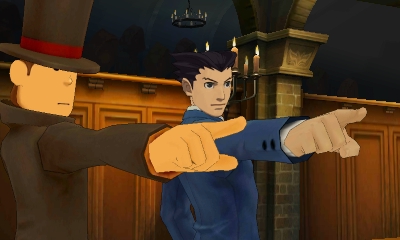
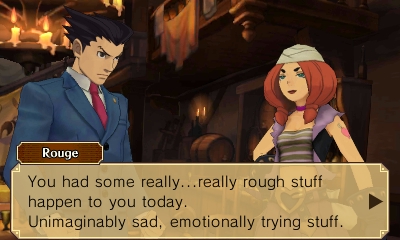
Professor Layton Versus Phoenix Wright is a crossover game that caters directly to me, featuring two of my favorite DS franchises, which makes me a somewhat sad that I didn’t enjoy it quite as much as I had hoped to. All the elements that make both series great are there, but somehow it doesn’t come together quite as well as the games from either. This is not a peanut butter and chocolate situation of two great tastes going great together; these two distinct flavors do not mix as well as one would expect.

aapl3

It is less a natural failure of mixing these two game series, but a failure of this specific game’s attempt at comingling those two worlds. While it was written by Shu Takumi the creator of the Ace Attorney series, Phoenix and Maya’s inclusion almost seems an afterthought. The structure of the game is much more like the Layton series, but the puzzles aren’t really up to snuff. Outside of the protagonist duos, the game does nothing to leverage the rest of these games excellent cast to help fill out the story. Finally, when it comes down to it, often this game just isn’t all that well written; a big problem when the game is essentially a visual novel.

It starts with Professor Layton and Luke having a girl show up on their doorstep in some sort of trouble. It is the starting point of most Layton games. Trying to help her out, Layton and Luke get pulled into a deeper mystery. And they get pulled into a mysterious book. At the same time, Phoenix and Maya travel from Japan America to England to learn from their legal system. When he gets there, he discovers that he has been put in charge of a case, a case involving the girl that Layton and Luke were protecting. After winning the case, Nick and Maya also get sucked into the mystery.

aapl2

While there are several cases for Phoenix to try, they are mostly unsatisfying affairs. Mostly because the legal system in the witch trials is pointless. It is annoying to use logic when the system itself ignores it. The rules in a regular Ace Attorney game don’t exactly make sense, but they are consistent. Cases build up to their conclusions. Here they tend to just go on until someone else admits to the crime. No matter how effectively you prove your client innocent, unless you can pin the crime on someone else it doesn’t matter. Yes, they are witch hunts; they have to find someone to blame things on, but it doesn’t make for a satisfying experience.

My complaints about the Layton portions are less pronounced. A lot of the puzzles are less brainteasers and more trial and error. There are also fewer of them than the usual Layton game. They are actually tied into the game more organically than usual, but at the cost of some of the Layton’s series unique charm.

aapl4

Outside of a cameo by Inspector Chelmey and Constable Barton, the supporting cast is all new. In a lot of ways this is a good thing, it lets the game tell its own story and build an organic way for these characters to interact. Still, the crossover appeal would have been stronger if they would have dug just a little deeper. Why does Flora constantly get shoved aside? Why couldn’t Gumshoe have shown up to bumble around with Chelmey and Barton? Maybe a role for Miles Edgeworth? While they definitely should not have been allowed to take over the game, a few more familiar faces would have been appreciated. Another problem is that the investigation group expands to five people, all of which have to give their two cents at every opportunity. It slows the pace down, particularly since Maya and Luke don’t really have much to do for the bulk of the game.

There are plenty of good things, though. The overall scenario is solidly entertaining, with a suitably Layton-esque escalation near the end. Both Layton and Phoenix get their chances to shine; opportunities to bring their unique skills to the fore. Plenty of the new characters are highly entertaining. There are some interesting advancements to the trial system as well. While letting the player cross exam multiple witnesses at once is kind of ludicrous, allowing the player the use pieces of testimony to point out contradictions to other witnesses is a nice touch.

aapl1

The game is pure fan service for fans of both series. It doesn’t make either of is separate parts better, but it doesn’t diminish them enough to make them unenjoyable. Plus, there is a good chance that this is the last we see of either of these protagonists. The Layton series is headed off to the unexplored territory of Layton 7, which is not going to be like the previous games in the series. And the Ace Attorney series is heading into the past for Great Ace Attorney, with Sherlock Holmes as a supporting cast member as they try cases in Japan’s America’s Meiji Period. Professor Layton Versus Phoenix Wright is not a perfect game, but it is a fine send off for two of the best new video game characters of the last decade.

Defending the Wii’s Legacy

Despite being the highest selling console of the last generation, I’ve noticed lately that the Wii has the reputation of being a failure. This is very wrong. While the Wii might not have the best library of games, it does have a particularly unique and varied one. The Wii is a console with more delightful experiments than outright masterpieces. Once the player moves past Nintendo’s first party offerings, separating the wheat from the chaff can be difficult, I know. However, there is a lot of good wheat to be harvested from the Wii’s crop of games. Not all of them are for everybody, but there are a ton of really good games. I really hate to see the system remembered as a novelty console with crap games. I am going to take a stand against this misrepresentation. This is the battle I choose to fight; this is my hill to die on.  No really, I just think it is a cool system with a bad rep.

wii1

You have to start with Nintendo’s not inconsiderable contribution to their cause. No one else may have been putting their A-Team on Wii games, but Nintendo had probably their best slate of first party titles since the SNES. Super Mario Galaxy and Super Mario Galaxy 2 are both absolute gems; two of the best games ever made. New Super Mario Bros Wii may not be quite that great, but there is little to match the joy of simultaneous 4-player Mario. The Zelda series had both Twilight Princess and Skyward Sword, each a somewhat flawed but still terrific game. While I acknowledge the troubles some people have with the controls, I will defend Skyward Sword to my last breath; that game is amazing. The system had a new Punch Out!! game and two Kirby games. It had Metroid Prime 3, the Prime Trilogy release and Other M (which as bad as it is as far as story goes, still plays fairly well). They put out a whole host of solid Mario sports and party games, a bunch of high quality casual titles like Wii Sports, Big Brain Academy and Endless Ocean. They published a good handful of RPGs like The Last Story and Xenoblade. The point is Nintendo simply killed it with will software on the Wii, even if they were determined to leave a lot of the interesting stuff in Japan.

The games not from Nintendo are much more hit or miss, but there is still a lot of good stuff across a ton of genres. The Wii gave a lot of developers a chance to try new things and bring back some old things. There are ton of great Point and Click Adventure games. Many of them are also available on PC, sure, but the ubiquity of the Wii seemed to be a factor contributing to the genre’s resurgence. Thanks to the wiimote working like a light gun, there are also a ton of rail shooters, like House of the Dead Overkill. Some people tried to bring popular genres like FPSs to the console, with some success in games like The Conduit and Red Steel 2.

wii3

The point of this wasn’t supposed to just be listing Wii games that are largely good. I could do that for a long time; there are tons of them. This is outlining a new mission statement. I want to use this blog to put a spotlight on Wii games. I want to highlight the excellent software that exists for the console. If I am being honest, this is partially motivated by the fact that a lot of these games are really cheap right now, so picking up interesting sounding title to see how good they actually are is not a cost intensive venture. It is easier to explore a system’s library when the bulk of that library can be had for next to nothing. This is an informal project I am going to keep at for some time. At least until I figure out to capture video so I can start my “SNES kid plays Genesis” series. My goal, such as it is, it to write about at least one unheralded Wii game a month for the foreseeable future.

Persona 2: Innocent Sin

p2is0

Persona 3 FES is the game that got me into the Shin Megami Tensei mega series. I had been aware of the series before that, but I had never had the opportunity to play any of the games before.  I knew about Persona 2 Eternal Punishment for PS1, but I never saw it in the wild.  The same goes for Nocturne.  Even if I had encountered them, there is a good chance that I would have passed on them; I don’t tend to be a fan of stuff that is “dark.”  But I had heard enough good buzz about Persona 3 that when the re-release was happening I made sure to snag a copy.  It was a great decision.  Since that I had purchased nearly every SMT game, most of them right at launch.  Unfortunately, I often find the games to be as draining as they are enjoyable, so they tend to sit on my backlog.  I bought Persona 2 Innocent Sin for the PSP even though I didn’t own a PSP (my brother did and I did have inconsistent access to it, but I didn’t have one of my own).  It sat on my shelf untouched until a couple of weeks ago.  That was a waste.  I don’t consider P2: IS to be as good of a game as the PS2 Persona games, but it was still an excellent experience.

Persona 3 pulled me in with a solid, thoughtful story.  Yes, it relied plenty on anime clichés, but it was still a well-constructed narrative.  Plus, the Social Links systems let the player feel in control of the protagonist without actually giving the player any control.  The plot is going to play out the same regardless of how the protagonist spends his free time.  Persona 3 kept me playing for 90+ hours with an excellent battle system.  It was tough but almost always fair.  It was all about knowing and exploiting enemy weaknesses while hiding your own.  There were some problems, like the fact that the player only controls the main character, leaving the rest of the party in the hands of the occasionally moronic AI, but it was largely a fine system.

p2is3

Persona 2 Innocent Sin does not match an excellent plot with a great battle system.  The battle system part fails utterly to hold up its end of that bargain.  The story of Innocent Sin is one of my favorite game stories I’ve ever encountered, but the battle system is at best a distraction and at worst a serious flaw.  It seems interesting at first, but it manages to be both complex and unchallenging.  There are a lot of factors at play with the battle system.  Each character can equip a persona, but they have different levels of compatibility with each of them, other than each characters main persona which only they can use.  However, other than being able to use a persona or not the compatibility doesn’t really matter that much. It costs a little more MP to cast with a poor compatibility, but MP refillers are easy to come by.  Each persona has eight levels and they learn new skills as they level up.  Using them, especially in combo attacks, levels them up.  It is necessary to get them leveled up to be useful, but it also discourages experimentation.  You don’t want to get all new personas just to have no skills.  Learning those combo attacks either requires the player to experiment extensively or to already know about them.  The other big part of the battle system is talking to demons.  This is necessary to get cards needed to make new personas, but mostly it is just tedious.  Some of the interactions between the demons and your party can be very amusing, but once you realize that the demons react the same way every time it starts to feel like a chore.  There are two big flaws with battle system.  The first problem with all of this is that the game is so easy that the player doesn’t really need to learn more than a couple of attacks and then can just cheese through most of the game.  It is just too easy.  The other is that the encounter rate is ridiculous.  You can hardly take two steps without getting drawn into another too easy battle.  It drags the pace of the game to a terrible halt.

p2is2

The problems with the battles are mitigated with how great the story is.  I don’t want to spoil it too much, but it is just great.  It manages to have well written complex characters and a just balls-out crazy plot.  The game starts with protagonist Tatsuya fixing his motorcycle at school.  After meeting with his teacher, he has a run in with Lisa, a classmate.  She tells him that there are rumors going around about terrible things happening to people who wear the school symbol on their uniform.  Their investigation leads them to a Michel, a punk from the rival school.  Events at that meeting set those three searching for the truth behind the rumors that are becoming true.  Soon they are joined by Maya and Yukino, two reporters looking into the same thing.  Soon it becomes apparent that group has a deeper connection.  Each character has is complex and multifaceted.  Michel tries his hardest to be cool, though deep down he is really insecure and Maya hides her fear behind constant upbeat cheeriness.  They form a genuinely likable party.

Those rumors they are investigating are where a lot of the fun comes in.  It starts as stuff like inter-school rivalries and disliked Principals wanting to be respected and girls claiming they are a pop group.  Soon it escalates to secret societies, ancient prophecies and hidden Nazis.  Just when you think the game has hit maximum craziness, it finds another gear.  It all manages to be justified by the game’s central premise that someone is making rumors come true.  This power gets progressively stronger, so more and more outlandish rumors start becoming real.

p2is1

Then there is the ending, which is something of a gut punch.  But it does set up the second half of this game, Persona 2 Eternal Punishment.  I’ve got that off of PSN and am eager to see how this story ends.  My only fear is that the localization isn’t up to snuff.  Atlus may be the king of the localization game now, but they weren’t quite there back in the late ’90s.  Just look what happened with the first Persona game.  I am certain the EP is better than that, but I wish the PSP remake would have made It over here, though I understand why it didn’t.  Still, it is half as entertaining as Innocent Sin was, I am sure it won’t matter too much.

Now Playing August ‘14

I didn’t play a lot of games in August.  I played a few games for quite a long time a piece, but I didn’t really play that many different games.  Lots and lots of hours disappeared into Twilight Princess and Harvest Moon.

Beaten

Tom Clancy’s Ghost Recon Shadow Wars – This is a strategy game along the same lines as Fire Emblem and Final Fantasy Tactics.  It plays somewhere in between those two games.  You control a squad of soldiers, each with different skills.  While the characters do level up, there isn’t much character building going on.  All of the characters skills are strictly linear.  The big problem with the game is that for most of it one of the characters can practically beat each map by herself.  The cloaked stealth unit Banshee has a knife that can one-shot most enemies and a special skill that lets her take an extra turn.  It is just unfair unless you are dealing with mechanical enemies.  Otherwise, it is a pretty solid game.

id

Ittle Dew – I kind of want to complain because it is just a real short Zelda clone, but it is also a real good Zelda clone.  Once I got used to the sword swing, the game was just smooth.  It is really funny and has some great animation.  The only problem with game is that it is very short.  There are three mini-dungeons, one big dungeon and the barest scrap of an overworld.  I finished it pretty quickly and it really left me wanting more. I guess that is a good thing.

Castlevania Symphony of the Nightwrote about it here

The Legend of Zelda: Twilight Princesswrote about it here

Pikmin 3wrote about it here

Harvest Moon Grand Bazaar wrote about it here.  I didn’t actually beat it, but I played a year and a half and feel pretty done with it.  I’ve grown a lot of crops and romanced my gal of choice.  I’m done for now, maybe forever.

Ongoing

Legend of Zelda Spirit Tracks – After I beat Twilight Princess I started in on this.  It is pretty much the same as the previous DS Zelda game, with some improvements and a few inexplicable steps backwards.  I won’t make a lot of progress until after I beat Professor Layton vs Phoenix Wright, but it is next on the list.  I still intend to finish my 2nd Quest before the end of the year.  I’ve only got three games left, including this one.

Yoshi’s Island – I am slowly going through this game.  I really respect this game and how just well-made it is, but I don’t really like playing all that much.  It is just a little too slow and pokey.  I appreciate this game more than I like it.

Persona 2 Innocent Sin – This game is great.  The battle system is more complex than difficult, but the plot manages to be both really well written and absolutely insane.  I love it.  I’ll have more to say once I beat it.

Resident Evil 5 – I should have this finished before too long.  Wrote about it here.

id2

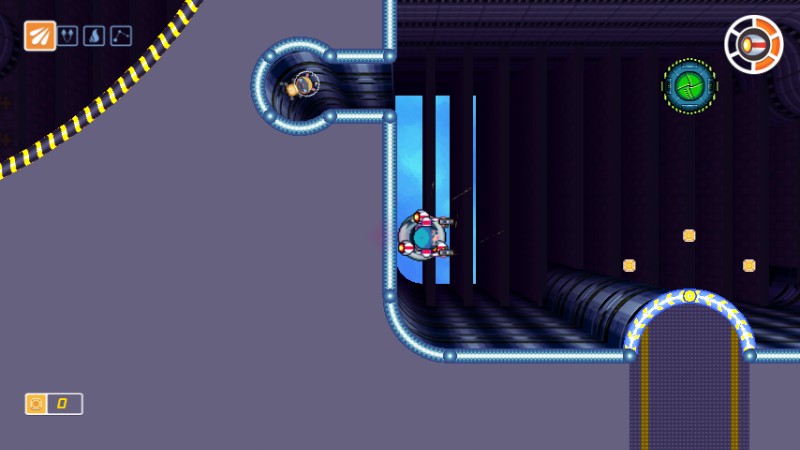
Scram Kitty and his Buddy on Rails – I think I hate this game.  Not because it’s not a good game, but because I am terrible at it.  It is a kind of on rails shooter/platform game.  I’m just having a lot of trouble grasping the controls.  I understand what I am supposed to do, but I am simply unable to do it.  I think I will keep trying for at least the next week, before I give it up for Teslagrad.  Maybe I’ll get back to it at some point.

Pushmo World – I pushed some more mo’s, but there are plenty of mo’s to push in this game.

Shin Megami Tensei: Strange Journey – I played this last month, but I didn’t make much progress.  Unlike Persona 1, which I just kind of hate, I refuse to give up on this game.  I will not let it beat me.

Upcoming

Professor Layton vs Phoenix Wright – I am so excited for this game.  It is two of my favorite series, both with hazy futures, combined into one last hurrah.  I have been excited for this game since it was announced almost four years ago.  I’m so happy.

Persona 2 Eternal Punishment – I’ll finish Innocent Sin soon and this one is next on the list.  I am determined to beat down my backlog of this series, but it is slow going.

Ys 7 – I’ve little experience with the Ys series, but I’ve heard good things about this game.  It is going into my PSP one I finish Innocent Sin.

Yakuza 4 – Last month didn’t work out, but this game it still high on my to play list.

Metal Slug Series – It has been too long.  I am going to set aside one weekend to play through my Anthology disc.

2nd Quest: Twilight Princess

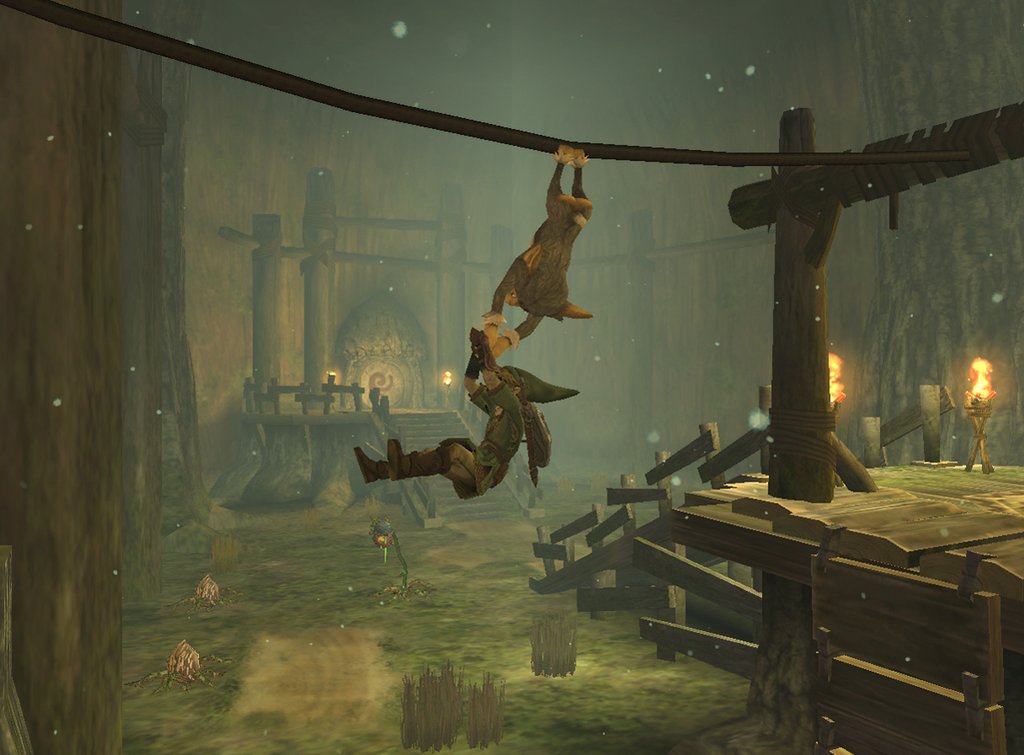
This was supposed to be 4 Swords Adventures, but that has been put on hold indefinitely. (I have misplaced the disc. I was playing 4 Swords with the Wii, my brother wanted to play Smash Bros, so he took out 4 Swords and I am fairly sure he put it in the Smash Bros case. The problem is I don’t know where he put the Smash Bros case, so I can’t play anymore 4 Swords.) I turned to the next game on the list, Twilight Princess. Twilight Princess has a strange reputation; for a game that earned such high review scores and has such high sales, no one seems to like it all that much. After playing it through for the first time since it was brand new, that doesn’t seem fair. Twilight Princess is a flawed game, but it is also an incredibly ambitious game and largely well made.

tp1

More so than any other game in the series, Twilight Princess follows in the footsteps of Ocarina of Time. That was something that fans claimed to want and something that the Zelda series withheld for a long time. The games following Ocarina played mostly the same, but the structure and tone were quite different. Instead of Ocarina’s Hyrulian epic, Majora’s Mask was a nightmare sidestory and Wind Waker was a nautical cartoon. Both are fun games, but they didn’t feel much like Ocarina of Time or A Link to the Past. Twilight Princess, despite its lupine digressions, was built on that model. It takes place in the traditional Hyrule, it follows the traditional structure. It is consciously a Zelda game. It feels a little like Nintendo saying goodbye to that kind of Zelda game. It had already moved away from that limiting structure, but they gave the fans one last romp through Hyrule.

In a move unusual for Nintendo, the game heavily invests in its story. It is full of scripted events and puts supreme effort into telling its tale, which it does well, with a few exceptions. Some reviewers lambast Nintendo for refusing to get in step with modern standards in regards to things like voice acting. Unlike most developers, Nintendo never embraced idea of the interactive experience; instead they continued to make games. The long time lack of voice acting in their games stems from that. Twilight Princess is one of the few times I really felt the lack. This game does have tremendous storytelling pretensions, but it doesn’t quite have the ability to realize them. The problem is not in the story it tries to tell; that is suitably epic and grandiose. It needs more than the grunts and slow moving dialogue that it has to tell that story.

tp2

It starts with young Link in the small village of Ordon; really letting the player get to know the inhabitants of the village while simultaneously learning the basics of how to play the game. That is the classic start to a Legend of Zelda game, essentially a tutorial that also does a lot of work narratively. From there it sticks largely to the same formula as usual, but greatly expanded. Each area of the game is bursting with new and intriguing characters, not the least of which is Midna, the replacement for Navi. She is an amazing character; strongly motivated and both mischievous and courageous. Outside of the big three of Link, Zelda and Ganon, I would call Midna the greatest creation in the series. Also great is the new villain Zant, though he falters greatly after his excellent introduction.  There are tons of side quests and extra secrets to find.  Some of this extra stuff is good, like the fun bug hunting mini-game, while some are not, like switching from 4 pieces of a heart to 5.  While the story never really goes far from being a Zelda story, it delivers it with a sense of grandeur that is only present in the most well regarded entries in the series.

The game is full of little compromises like the lack of voice acting. It adds the wolf transformation, but the player loses one of the item slots. While switching equipped items has been streamlined, the game makes the player switch them far more often. The context sensitive stuff, like picking up things off the ground or throwing vs dropping seems too finicky and somewhat imprecise. In all the controls in the Gamecube version feel just a little off, as though it lost some precision when the adapted it to the Wii control scheme. The controls are far from bad, but there are just enough times where things don’t seem to work right that it is worth distracting. The hunt the light bug segments are somewhat annoying, but they are also oddly paced. The areas where the bugs are hidden get progressively bigger and the hunt becomes more frustrating.

tp3

One part where the game absolutely doesn’t falter is in the dungeons. The game doesn’t have the usual easy starter dungeon; it gets right into the meat. There are a lot of them in this game and they are almost uniformly great. They are expansive and challenging. Puzzles span multiple rooms and require creative uses of all Link’s abilities. While they largely follow Ocarina’s set up of themes, but the dungeons are greatly different from their predecessors. Like much the rest of the game, the dungeons are at their best when they echo Ocarina without copying it directly. Despite Nintendo’s own word on the matter, I would say any Zelda timeline is at best nebulous. However, this game is clearly a sequel to Ocarina, albeit a distant one. The world of Twilight Princess is a decayed echo of Ocarina of Time. That comes through in the dungeons. Like the Temple of Time that seems to be built on the ruins of the Forest Temple. In all they are some truly excellent dungeons.

There are enough niggling problems that I can’t really call Twilight Princess one of the better Legend of Zelda games. I rank it just on the bottom side of the middle of the pack. None of its flaws are especially big, they are all small things. Unfortunately, there are just enough of them that it occasionally makes playing the thing a horrible chore. These flaws hold back what is truly and excellent game underneath them.

tp4

Down on the Farm

I am just finishing up my first year on the farm in Harvest Moon Grand Bazaar. I’m watching my Peach trees grow and getting pretty cozy with the Mayor’s daughter. The Harvest Moon series is one I have a lot or respect for. I often opine about the preponderance of violent video games. I don’t care that there are violent video games, only that there sometimes seem to only be violent video games. Not every game has to be about murder and revenge and the Harvest Moon series is proof of that. Unfortunately, it is not a series that seems to have a lot of money behind it. A new one hits handhelds every year it seems, only slightly improved from the previous year’s version. It is a problem, but one that is usually confined to uber-series like Call of Duty and sports franchises. Harvest Moon is tiny compared to those, but it does have its loyal fans. I consider myself one, though more in theory than practice, since I haven’t played most of the games in the series.

hvgb1

My biggest experience with the series is with the N64 game. The original SNES game feels like something of a rough draft. It has many of the elements of later games in the series. Harvest Moon 64 seems like the ideas of that first game fully realized. I have occasionally sampled the series since then, but outside of some ambitious games in the Gamecube/PS2 era, it has mostly felt like more of the same. The bulk of them aren’t bad games by any means, but they haven’t showed much evolution from the 64 version. Still, I felt the urge to play some Harvest Moon and since it seems that Harvest Moon 64 will never be rereleased, I picked up HM Grand Bazaar, which had a largely good reputation.

After one year of game time, I am enjoying it quite a bit. I have a good handle on my farm and what I want to do. I really like that the game seems to have a completely new cast. As much as I like HM64, the games I played after it seemed to rely a little too heavily on returning characters from that game. Yes, there were always new townsfolk and the old ones were often adjusted somewhat, but it felt kind of the same. Here, the rather small village is full of new, or at least new to me, characters. I have enjoyed getting to know the inhabitants of this village. My one problem is that it does seem really small. Maybe I am misremembering what the old games were like, but it doesn’t feel like there are many characters here, as interesting as they may be.

hvgb3

With one big exception, things have been both expanded and streamlined from HM64. There are more crops, more recipes and simple more things to do. Before, players were fairly constrained in what they did with their farm each season. There were few crops to choose from and only a couple of kinds of animals. Now not only are there more crops to choose from, players can also plant trees to make an orchard or grow tea. I haven’t done the math to determine which option makes the most money, but at least there are options. The big problem is this games big hook. The Bazaar from the title is new way the player has to sell their goods. In previous games, there is a delivery box to dump everything the player has to sell in. Someone comes by at the end of every day to take the contents of the box to market and the player gets their money. In Grand Bazaar, the player hordes their stuff in their initially limited storage and on the weekend runs a stall at the weekly to sell the goods. It isn’t a bad idea, except that the game doesn’t do anything interesting with it. It isn’t fun to run the stall. It doesn’t change the amount of money the player would normally get. The Bazaar merely takes something that was simple, dumping grown crops in the pick-up box, and makes it complex and time consuming. One day a week the player has to spend standing in one spot occasionally tapping the “A” button to sell turnips. It would be more useful if the Bazaar was monthly instead of weekly, but that would too greatly restrict the flow of money. The whole system is the biggest flaw of the game.

hvgb2

I guess a changeup of some kind is coming to the Harvest Moon series this fall. I don’t know how it is going to shake out when all is said and done, but unless this split in the series turns into no Harvest Moon games, then it will likely be a good change. For a long time this series has been stuck in two ways. The first is that there hasn’t been much evolution on the gameplay side. I may not have played all the games from the start to now, but the ones I have played are largely the same. That is not necessarily a problem, but with a series that has seen an annual release for the better part of a decade it is tiring. I don’t know if it is lack of time, money or ambition, but the series hasn’t really evolved since it came to the DS and even that seemed to be sliding back from the somewhat more ambitious Gamecube games. The other problem the series faces is its localization. I don’t mean to slander the fine folks at Natsume, but their localizations have been flawed. I would guess that most of those problems come from lack of resources. They just don’t have the time or manpower to do as good a job as everyone would like. This fall, though, there will be essentially two Harvest Moon games, each attempting to fix at least one of these flaws. Natsume is publishing a game titled Harvest Moon. It looks to be a significant departure from the previous games in the series, most likely due to the fact that it has a different developer. It is a different game, but Natsume owns the name Harvest Moon. This new HM game looks to take some inspiration from Minecraft, attempting to make a much more player driven game. The original developer, a part of Marvelous Entertainment, is still making farming games, though. Story of Seasons is the “true” continuation to the classic series, and looks to play much like the previous releases, with localization now being handled XSeed. Xseed has proven themselves to quite adept, maybe not Atlus good but a close second. So this new could have a much more flavorful story. However this split in the series shakes out, it should be interesting for players. I hope it is a shot in the arm for this series, sparking new evolutions and advances without sacrificing the series considerable charms.

I’m Not Scared Anymore

I’ve been playing Resident Evil 5 with my brother in short bursts the last few weeks. Though certainly enjoyable, it has quickly become clear why this game doesn’t enjoy the near universal acclaim that its predecessor does: it isn’t scary in the least. Not that Resident Evil 4 was all that scary, it wasn’t. It was, though, still nominally a horror game, albeit one straddling the line between horror and action. Resident Evil 5 has strayed far from that line. What made the Resident Evil series so enjoyable, despite being kind of clunky and constrained, was the novelty of playing essentially a schlocky horror movie. It if not created then at least popularized the Survival Horror genre. Resident Evil 5, as well made as it may be, is not a Survival Horror game.

re5

I am not an expert on horror or on the Resident Evil series. You can count the number of horror movies I’ve watched on one hand, even If you count horror comedies like Shaun of the Dead. I avoid horror movies like the plague. I am a big scaredy baby and I derive no joy from scaring myself with horror films. I was occasionally mocked in college for leaving the common area of my dorm suite whenever the group chose a scary movie. Oddly, I do generally enjoy horror games. I don’t play a whole terrible lot of them, but I tend to enjoy them when I do. Mostly it is because the gameplay of survival horror games is somewhat slower and more thoughtful than most action games. Resident Evil, at least in its original incarnation, exemplifies this trend. I have neither played every game in the series, nor do I obsess over the mythology, but I have some experience with the series. I fiddled around with the first game on the Playstation, and beat one path of RE2, but I never touched RE3 or Code Veronica. I did play the REmake and RE0 on the Gamecube. Then came RE4, and it shook the whole series up, being pretty much the best action game ever made while keeping one foot in the survival horror realm. Most would agree that RE4 isn’t scary; many would argue that no RE game has ever really been scary. They aren’t wrong, but recall that I am a big scaredy baby. Resident Evil 4, despite not being all that scary, managed to freak me out pretty regularly. While I greatly enjoyed that game, the vagaries of one console ownership kept from playing further in the series for the better part of a decade.

re52

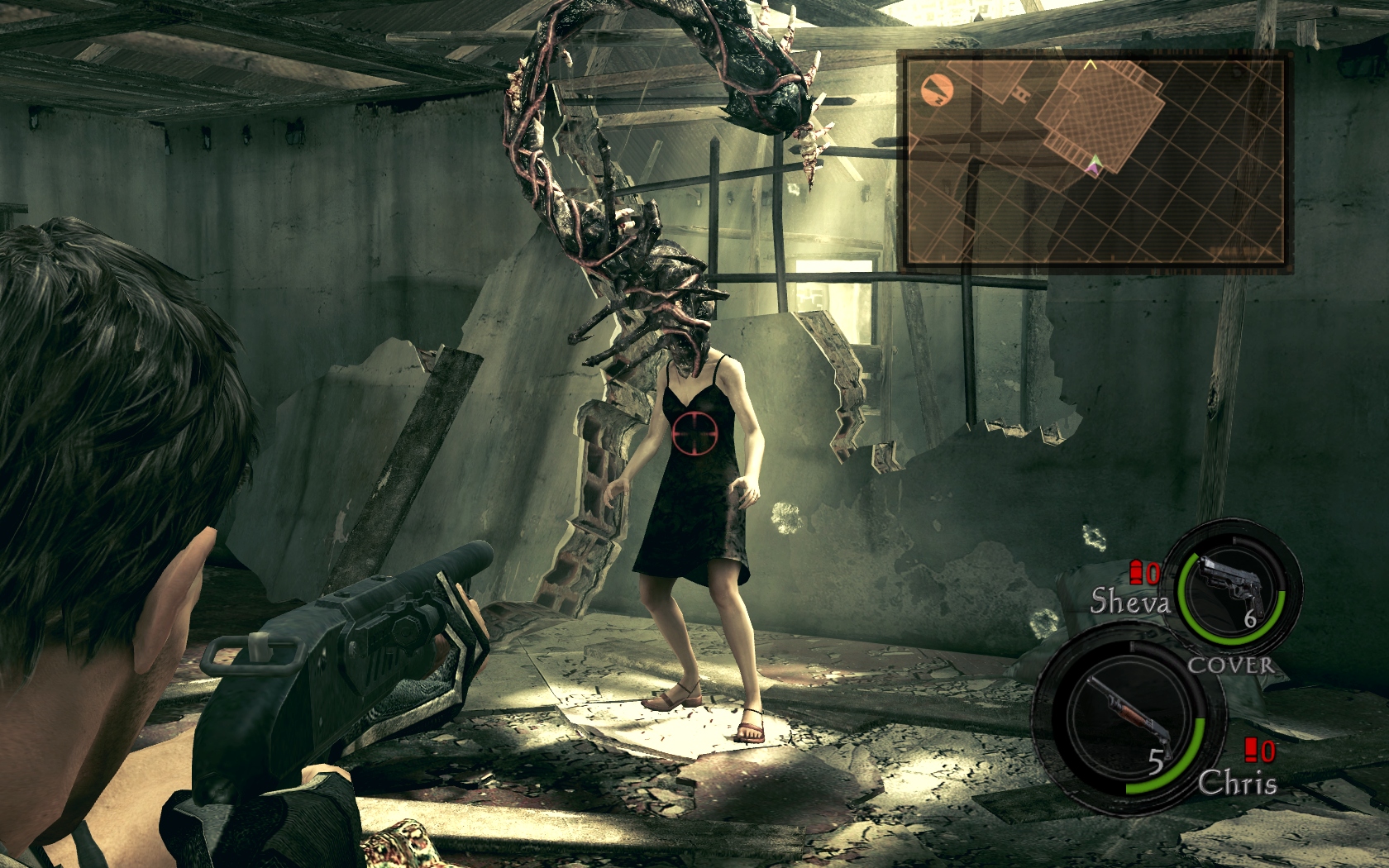
Now I’ve played RE5, and despite being largely similar to RE4 it is a lesser game. The biggest thing missing is that it isn’t scary; not in the slightest. Why not? Because the game is co-op. One of the few things that kept RE4 somewhat unsettling is that, for the most part, you are alone. Leon is alone in a village full of people that are becoming monsters. It is a scary premise. In RE5, Chris is flanked constantly by a teammate. It doesn’t greatly change how the game plays, but it does greatly change the psychology of the game. Instead of a lone survivor facing danger around every corner, you play as part of a tag team ruthlessly taking apart everything that stands in your way. It is scary to be alone, but significantly less so with a partner. Especially since, like all Resident Evil games, the scares in this game are all cheap jump scares. It is all spring loaded cats. Those things tend to lose their effect when you are not alone and already tense. In RE4, you hear that chainsaw start off screen and it freaks you out. You have to find its wielder or you will die. Resident Evil 5 is less scary because there appears to be a safety net in the form of Sheva. RE5 isn’t actually any easier, the player is no less likely to die than in its predecessor, but it seems different all the same. It all comes down to that second player.

re53

Otherwise, the game is pretty great. And playing co-op is a ton of fun. They smoothed off the rest of the adventure portions of the game, leaving it to be mostly shooting. There is much less inventory management and the like. The story and setting is still classic Resident Evil, evil corporations and zombie plagues. It has the same general array of weapons and enemies. Primarily, it is more Resident Evil 4 and who didn’t want that?