What I Read in December 2016

Four books in December, with a couple left half read. If you include the comic collections I read I got to my goal of 55 books in 2016. It was a near thing, though. In 2017 I am upping my goal to 60 books, a little over one book a week. I think I can manage it. I’m off to a good start so far. It was an odd smattering of books I read in December. I didn’t intend it to be so, but the month turned into a Wimsey heavy month. I had one book on my Kindle forever and another I found for a buck while doing some Christmas shopping and couldn’t resist picking it up.

liagb

Lost in a Good Book

Jasper Fforde

I decided to reread the second book in Fforde’s excellent Thursday Next series. I have read the first one, The Eyre Affair, three or four times, but I haven’t really reread any of the later volumes. I had forgotten how slowly Fforde rolls out his book world. The idea of jumping into books is central to The Eyre Affair, but the rules aren’t really explained in that one. Fforde set himself a difficult task by creating two different alternate realities in this series, with the strange world inside of books being set against the strange world outside of the books. Which is itself the world inside of a book, since these are books. So not only does the reader have to contend with a world where fictional characters live lives outside the confines of the stories we read about them in, but also a world where cloning is advanced and the Crimean War continued for a century. So it makes sense that he was slow to roll out the book stuff, never giving the reader more than was necessary for any given story.

Lost in a Good Book has Fforde painfully destroying the happy ending he built for Thursday in the last book. It doesn’t come off as backtracking, though, but in the story just continuing. She beat Jack Schitt in the first book, but Goliath Corporation is still around and wouldn’t be finished with her. The events of this book build out of those of the last without simply repeating them, like all good sequels do. While this book does tear apart Thursday’s “real” life, it gives her an outlet in BookWorld, where literature lovers get to see famous characters in a different light, though they are still informed by their original stories. I love the Thursday Next books, and will likely reread the rest of the series in the coming year, but I find them hard to recommend. I don’t know many people who have read enough classic literature to get a lot out of these. It is not that works Fforde plays with are obscure – it is mostly Dickens, various Brontes and Shakespeare – but nearly all of them are the stuff people I know were forced to read in high school and never thought of again.
hh

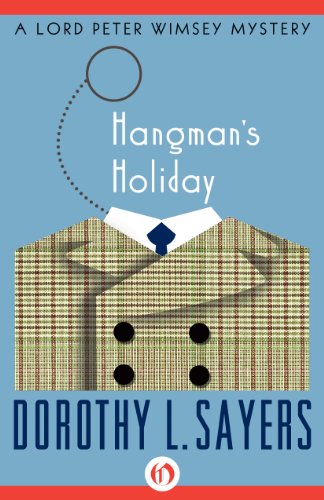
Hangman’s Holiday

Dorothy Sayers

This collection of short stories is billed as a Lord Peter Wimsey book, but most of the book’s takes do not feature him. The bulk of the stories are Montague Egg stories. That doesn’t make them bad; most of these are quite good. Sayers indulges in some macabre plots that maybe wouldn’t work over a full novel. Some are almost just absurdly dark jokes. Still, these are some well executed mysteries. The most memorable are one where a joke goes too far and a terrified man murders the innocent joking tormentor and one where a doctor husband perpetrates unspeakable crimes on his ill wife. Also one that has to do with mass feline murder. Still, if you are reading this volume expecting Peter Wimsey I think you will be somewhat disappointed, since even in his stories he isn’t all that present.

apod

A Presumption of Death

Jill Patton Walsh/Dorothy Sayers

It will seem odd in light of my slight grumbles about the previous book, but I quite liked this Wimsey continuation from Patton Walsh even though Lord Peter himself barely appears in the book. I think this book flows more naturally than Thrones, Dominations, likely because it is all Patton Walsh’s work and not her finishing an unfinished Sayers manuscript. That book, while mostly very good, had an uneven quality to it. This one is more cohesive. It does use Sayers’ Wimsey Papers, a fictional series of wartime letters between the characters of the Wimsey series, at the front and back, but those operate as separate pieces from the rest of the story.

A Presumption of Death has Lord Peter’s wife, Harriet Vane, step into his role as amateur sleuth while he is out of the country doing intelligence work in the early days of WWII. She has relocated from London to their home in the country, taking both her children and those of Lord Peter’s sister. With everyone doing what they can for the war effort, the local police are shorthanded when a woman turns up murdered during an air raid drill. Since it will be easier for another woman to look into some aspects of the victim’s life, Harriet is recruited to aid in the investigation. This leads to her question land girls, city girl moved to the country to help farm, as well as the pilots at a nearby military base.

The only real problem with this mystery is that the mystery itself frequently takes a backseat to the daily struggles of the war effort. The characters spend more time dealing with wartime considerations, including an uncomfortable look at the succession to the Wimsey title, than they do investigating the mystery. That is a problem with expectations, though. That this book is as much about that war effort and its effects on several families as it is about a murder mystery is not a problem with the books, but a problem with the readers’ expectations. I found it engrossing and a fast read, though I wish it could have got to the point with the mystery a little faster. It seems all but solved fairly early, but is disregarded for quite some time as other stories play out first. Still, I enjoyed it.
moh

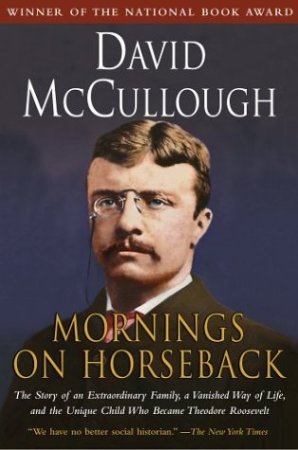
Mornings on Horseback

David McCollough

This is partly a look at the early life of Theodore Roosevelt and partly an examination of his family. The eventual president is the central character of the book, but Mornings on Horseback exists to illuminate the home life that young Theodore would have had. How his parents met and came to marry, his father New York royalty and his mother the daughter of southern plantation owners. McCollough does a great job of making the Roosevelt family come alive, so Teedie doesn’t overshadow his other family members. Like the stolid, elder Theodore cuts an imposing, though generous picture as a man who is committed to his family and charity or the eldest child Bamie, whose health problems mad he seem to always strive to be useful to the family.

While their financial fortunes never really wavered, at least not through the portion of their lives this book covers, is does show the ups and downs they faced. All four of the Roosevelt children had some health problems growing up and their parents spared no expense in their care. That also meant that they never attended traditional schools. Or the household tensions during the Civil War, with the children’s Uncles on their Mother’s side being Confederate heroes but their staunchly abolitionist father not serving. Last it gets into Theodore’s days in the West, with him leaving New York after his wife and mother died on the same day. There is a lot to chew on in the relatively slim tome that goes a long way to helping the reader understand the make-up of Theodore Roosevelt and the family he came from.

What I Read November 2016

Four books again in November, though I did read a lot of a couple books I didn’t manage to finish (Republic of Thieves and Mornings on Horseback) so next month I might be able to get 5 read. Or not, what with the holidays taking up a lot of time.

sechofww

The Secret History of Wonder Woman

Jill Lepore

This is an amazing book for anyone who is a fan of Wonder Woman or Golden Age comics or simply a fan of fantastic weirdos. The Secret History of Wonder Woman tells the story of the character’s creators. Not only William Moulton Marston, the credited creator and writer of the comic from its inception until his death, but also Elizabeth Holloway and Olive Byrne, his wife and their lover.

As is made clear over the course of this excellent book, William Moulton Marston was a fantastic weirdo. I don’t mean that in any malicious way; it is just that he lived a live that was odd by any measure. What is most amazing his how many aspects of his life found their way into his work on Wonder Woman, which came comparatively late in his life. He was a psychologist and lawyer, but his wife was the breadwinner. Mostly because Marston himself was not especially successful at his endeavors. He invented an early version of the lie detector test, but was unable to market it well. They were all tied to the feminist movement of the early 20th century, with some of the leaders of the that organization being closely related to this extended family and some their ideas being referenced in Wonder Woman stories, as well as some of Marston’s own idiosyncrasies – like the emphasis on bondage. Lepore does an excellent job of illuminating these people, keeping their weirdness but making them seem very human.

It shows how Wonder Woman started as a strong feminist character, created by a strong, if unusual, feminist and how that legacy was erased once Marston died and control of the character was wrested from his family. This is an amazing book about some amazing people.

tmm

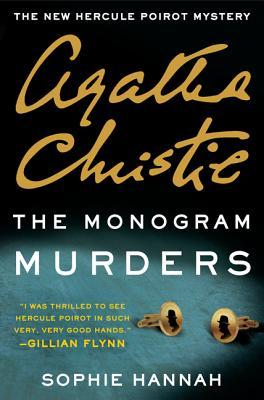
The Monogram Murders

Sophie Hannah, Agatha Christie

This is a continuation of Agatha Christie’s Poirot stories and it reads like one. For better or worse, Hannah has done an excellent job of aping Christie’s Poirot. The plot doesn’t quite hold up to that standard, but this does feel remarkably like a lesser Christie. The mystery centers around three people found dead at the same hotel, with all of their rooms set up the same way. While the three had not come to the hotel at the same time, they were all connected to events in a small town years before. Its twists get a little ludicrous, but that is not unheard of for Christie. The biggest problem Poirot’s sidekick Catchpool, who is preposterously bad at his job. I know having a somewhat dull counterpart to the detective is a staple of detective novels, but Catchpool, who ends up carrying large parts of this somewhat overlong book, is among the least competent police men I’ve ever encountered in a novel. That is probably the biggest thing that keeps this from being more than a lesser Poirot story. Still, I enjoyed it enough to seek out more.

adttd

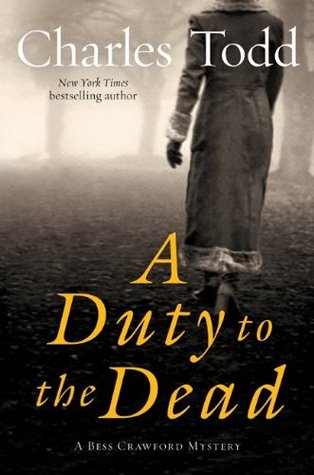
A Duty to the Dead

Charles Todd

I’ve read the first three books of this series of WW1 mysteries completely out of order, which largely doesn’t matter does confuse things a little. Bess Crawford is a WW1 nurse who tries to honor the last request of a soldier in her care who died. She goes to his home and ends up embroiled in a mystery that goes back to that soldier’s childhood, when his step-brother was accused of killing one of their servants. Since then he has been locked in an insane asylum. Events in this small town, as well as the soldier’s dying request, lead to doubt that brother’s culpability, but the four brothers are the only real suspects. It isn’t the best mystery I’ve ever encountered, feeling a little bloated and overstuffed for what turns out to be a not all the complex case. I would read further books in the series, but so far all three that I’ve read have been passable but not particularly exciting.
hmc

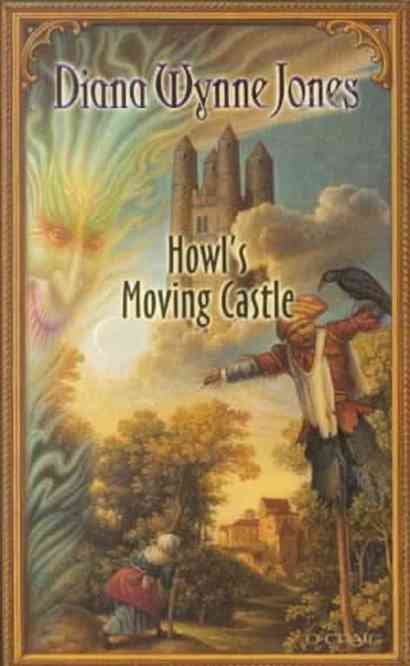
Howl’s Moving Castle

Diana Wynne Jones

I was not familiar with this book before the amazing Studio Ghibli movie, but I liked that enough to jump on a cheap copy of this a few years ago that I only now got around to reading. I know at the time of the movie’s release there were some grumblings about how the movie differed from the book. After reading the book, those complaints were well founded. While I love the movie for what it is, it is definitely Miyazaki’s story that just happens to use her world and characters.

The book is great. Sophie is the eldest of the Hatter girls, who believes she is doomed to failure. When her father dies, her step-mother arranges promising apprenticeships for the two younger daughters while she and Sophie run the family hat shop. That largely amounts to Sophie running the hat shop while her step-mother does whatever. The Witch of the Waste, confusing Sophie for one of her sisters, curses her to be an old lady. Sophie then leaves the hat shop and wanders the countryside, eventually finding the Moving Castle, the home of the Wizard Howl, who has as bad a reputation as the Witch of the Waste. There, Sophie agrees to help Calcifer, the fire demon, to break his contract with Howl. This leads to her living in the castle and getting to the bottom of several mysteries around the Kingdom of Ingary.

One of the greatest strengths of this book is that there is only one villain, the Witch of the Waste, and even her story ends up being more pathetic than anything else. There are a lot of characters with conflicts with each other, but none of them are evil. Sophie’s step-mother can be kind of selfish, but she is a young widow who loves her children even if she might do what is best for her if not necessarily best for them. Howl is kind of a scoundrel, but he is a good guy deep down. Calcifer the fire demon only wants to be free, even if that might cause trouble for other people. Howl’s Moving Castle is kind of meandering at times, a little picaresque, but many of its episodes are a lot of fun and the world and characters are mostly a lot of fun. I think I’ll have to track down its sequels.

What I Read October 2016

I finished four books in October, my goal number. One of them was a book that I had been working on for months, but never really seemed to make much progress. I am not having my best year reading, but I think I am still going to finish up above 50 books read, which is my usual goal.

tgtbam

The Good, The Bad and Me in my Anecdotage

Eli Wallach

Eli Wallach is a great actor and a good storyteller, but in this autobiography he seems to be too nice a guy to have any truly eye catching stories. That is not to say that there isn’t a lot of worth here, because this book is a lot of fun. But every time it brushes up against someone or something controversial, Wallach only has nice things to say. He seems like a genuinely nice guy, with a lot of passion for his profession, but his anecdotes would have been a more interesting if they were a little more salacious. He has stories about Marilyn Monroe, Marlon Brando, Steve McQueen and many others, but the worst anyone comes off is mischievous or troubled.

That is a really unfair way to put things. I know that. Wallack packs this relatively short volume with a lot of detail and a lot of stories, from his earliest memories to his experiences in the war to his struggles starting a family while also starting an acting career. It really made me wish I could have seen him on the stage, because that seems to be where his heart lied. He shows a lot of passion for the art of acting and while he has plenty of good stories about many of his classic films, he seems to remember working on the theater more fondly.

citadel

Citadel

Kate Mosse

I read the previous book in this loose trilogy, Sepulcre, though I can’t remember a single detail about it. Other than the setting, I guess. This book is set in the same region of France, that is what binds the books together, but it takes place mostly during WW2. The protagonist is Sandrine, a young girl who is trying to eke out a living in occupied France, and the book follows her experiences throughout the war. It starts with her as a naïve girl who is inadvertently connected to something bigger. As it goes along, she takes a more active role in the French Resistance and in the seach for the Codex, a manuscript hidden in the area by a monk from the dark ages that is said to be very powerful.

While quite enjoyable once it gets up to speed, its pacing can generously be described as leisurely. It is a long book, nearly 700 pages, and it takes forever to get moving. Usually, I am not one to complain about that, but there isn’t enough book once things are moving to make up for the long set up. It does set up something that should be a lot of fun, an all-female group of resistance fighters. Only the last third of so of the book actually deals with them, the first parts of the book showing how they got involved. Really, it is a long time before what the Codex is, and why they are after it even becomes clear. But those last 200 pages or so, when to book all but becomes Indiana Jones are a lot of fun, though beware the sucker punch of an ending.

deryniris

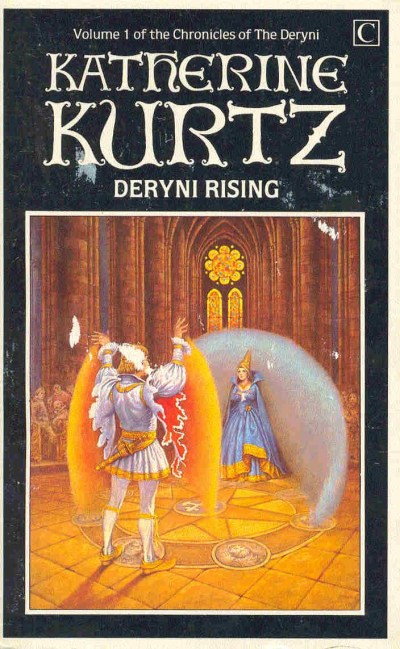
Deryni Rising

Katherine Kurtz

I read another book in this series, a later book that was the first of a trilogy – I had somehow ended up with three separate trilogy starting Deryni books – and I feel much the same way about this book as I did that earlier one. This isn’t bad, though the prose can be dry, but there isn’t much here to draw the reader back. This one tells the story of how young Kelson became King. That is entirely it. His father is killed, and he must navigate the court along with his father’s closest advisor and Deryni, which is basically a person with magically inclined blood, Morgan. His mother, who hates the Deryni, opposes Morgan’s being there and trumps up treason charges against him. He and Kelson must avoid that while getting Kelson ready for everything that might happen at his coronation. It is moderately entertaining, truly medieval fantasy. Not a lot happens, there are a lot of plots already in motion when the book starts and it doesn’t go out of its way to fill the reader in on any details of how things were set up, only the effects. Still, I liked it enough that I would read the rest of the series if I stumble upon in.

powerup

Power Up

Chris Kohler

I like Kohler. I liked his appearances on Retronauts over the years. I’ve liked reading his stuff at Wired. I didn’t, however, greatly enjoy this book. It is uneven; some chapters are excellent, others don’t really seem to have a reason to be in the book. Some of it is out of date, which is the unfortunate effect of a decade going by since this was originally published, but there are chapters that only vaguely connect with the rest of the book. Still, the goods parts outweigh the bad and even the bad chapters aren’t especially bad. The strongest parts are the earliest chapters, where Kohler outlines the growth of video games as a storytelling medium, growing from narrative free games like Pong, to relatively more sophisticated things like Donkey Kong to full stories like in Legend of Zelda. He presents a clear thread of growth. Also detailed are the rise of JRPGs like Dragon Quest and Final Fantasy and the beginnings of the music game genre. It is all good informative stuff. The chapter on Akihabara is much less compelling, even ignoring the fact, as noted in the book, that it is no longer exactly true. Still, the book is certainly worth a read for fans of video game history.

glce

Godland Celestial Edition Volume 2

Joe Casey & Tom Scioli

I really bounced off this series hard. I love Scioli’s art, and I like premise quite a bit, but the writing, especially the dialogue, is really off putting. These characters defy any sort of connection or even amusement. They are unpleasant and uninteresting. This volume covers a lot of ground, with a lot of villains and one of the protagonists sisters disappearing in space and I guess it is all building to something, but the further in I got the less I cared. A lot of ideas are thrown onto the page, but the ratio of good to bad is truly unfortunate. I get that it is trying to ape the constant energy of Jack Kirby, but it doesn’t have the cohesion of his work. It ends up being a pale imitation; it feels cynical in a way that Kirby’s stuff never does. I doubt I will be getting Volume 3. Instead I’ll just ready Scioli’s excellent American Barbarian again.

What I Read September 2016

Another month that was slightly disappointing. I just can’t get on track this summer. Still, I read three books. One of which I had been working on for at least a month or two before the start of September. This month I don’t have any proclamations about getting back on track. I don’t know that I will. I have at least one book I know I’ll finish, but I don’t really know what I’m reading after that.

mctus

Marvel Comics: The Untold Story

Sean Howe

This is a great read for a comics fan. It details Marvel Comics growth from a small Golden Age outfit to the dominant comic book line in the USA to what caused the company to crater in the middle 90’s. It tells the stories, or at least parts thereof, of comics luminaries like Jack Kirby, Stan Lee and Steve Gerber. Howe does a great job of capturing the personalities that made Marvel what it was while keeping the bigger picture clear. It paints Stan Lee as a self-mythologizing opportunist. It strips him of some of his geek myth, but it doesn’t villainize him; it merely makes him more human. There is no discounting the big hand he played in making Marvel comics, but it also shows how early he checked out of the day to day comics business for generally unsuccessful attempts to get the properties on TV and into film. It shows how great artists, like Jack Kirby and Steve Ditko, were given almost nothing for their great contributions to the comics medium. These are not thing unknown outside of the book, but Marvel Comics The Untold Story gives the story a very human face.

If there is a flaw, it is that the book deals much more thoroughly with the early days of Marvel than the later days. It is filled with tons of details from the 60’s and 70’s, but by the time it gets to the 90’s it becomes more scattershot. Some of that is likely due to recency, some of it due to greater interest in Stan and Jack. There is still good stuff as the book nears its end, but it doesn’t quite match the early stuff. If you like superhero comics, this is nearly a must read. It is the best behind the scenes look at comics that I have ever encountered.

btf

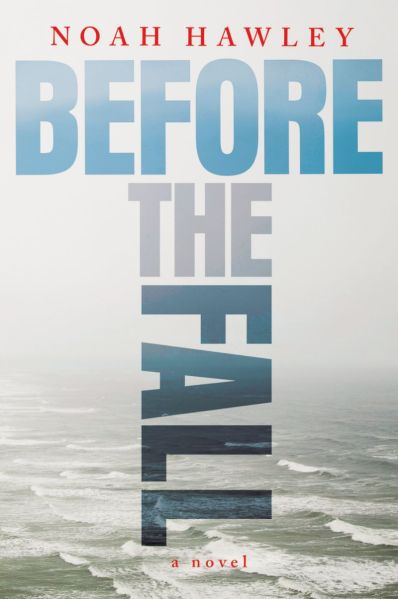
Before the Fall

Noah Hawley

Another Kindle book I picked up, this one because I knew Noah Hawley from writing on the really great Fargo TV show. A lot of that sensibility travels over to this book, though it really doesn’t have much in common with that show. Before the Fall is about a plane crash just off the coast in the Atlantic Ocean, leaving only two survivors. One is an aging painter who was a friend of one of the families on the plane and the young boy he managed to swim back to shore with. It then explores the lives of the people who perished on the plane and attempts to determine what caused the plane to crash.

A large thread in the story is a Fox News like TV station that was run by one of the victims. One of their talking heads tries to place suspicion on the survivor, for no reason other than spite. The book does create some compelling characters, both before and after the fateful flight, but it keeps them at such a remove that it can be hard to feel like you know anything about them. That is necessary, though, to keep up the mystery until the books somewhat disappointing conclusion.

I liked Before the Fall a lot, except for a couple of things. The first is that ending. It spends most of its pages setting up such a compelling mystery that it would have been a tall task to live up to it, but what is there is really disappointing. The other thing is that the book was largely written in the present tense, which I almost always find off putting. This book was no exception.

magic-bitter-magic-sweet

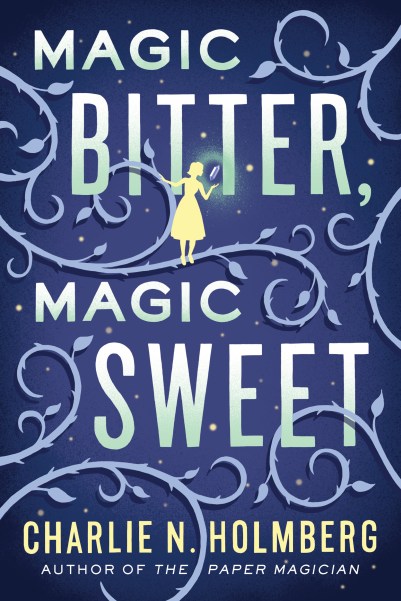
Magic Bitter, Magic Sweet

Charlie N Holmberg

Speaking of books written in the present tense, Charlie N Holmberg’s Magic Bitter, Magic Sweet does it as well. I don’t like it anymore here. This is a short book that I liked less the further I got into it. It starts with an amnesiac woman who can add magic to her baked goods. It is a novel and interesting premise for a story, but it is rather quickly abandoned and everything it is replaced with is less interesting. Her town is attacked and she is sold into slavery to a strange, otherworldly man. He has her bake goods for faerie tale analogs, with the protagonist, Maire, growing more desperate. At the same time she is meeting with a different otherworldly man who is trying to get her to remember who she is. It is fine, but my interest waned with each new development or revelation.

What I Read August 2016

Only three books this month, though it was a rather busy month. I also finished up some comics reading, getting through some old newspaper strips and one of the collections I picked up a Planet Comic-con Kansas City earlier this summer. Even though I fell short of my monthly goal, I am more than satisfied with what I read this month. Also, I have enough half-finished books that I should more than make up for it in September.

mora

The Murder of Roger Ackroyd

Agatha Christie

This is a book that gets two reactions: one knowing the twist and one not knowing. I didn’t get to experience that first one. I’m not too upset, The Murder of Roger Ackroyd is famous and famous for its twist, that I have been spoiled on it in the 90 years since the book was published is no surprise. However, that kept me from reading it with truly fresh eyes. I read it knowing the outcome, so I spent my time looking for the real clues and seeing if Christie played fair. As far as I can tell, she did. Still, the revelation lacks some of the impact it might have had if I came into it blind. The retired Hercule Poirot comes out of retirement to investigate a murder is a small village. He meets with the townsfolk and aided by the town doctor looks into the murder of one Roger Ackroyd. He does the usual things, checking the alibis and opinions of the possible suspects before the surprising revelation the murderer. Even being spoiled about the culprit I enjoyed this quite a bit. Christie earned her reputation.

tbhk

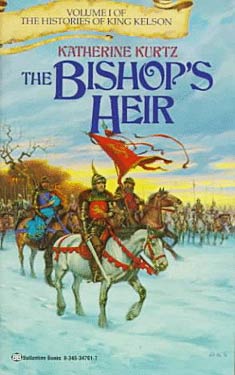
The Bishop’s Heir

Katherine Kurtz

I picked up a handful of Kurtz’s Deryni books a long time ago at a college library sale, but the first one I tried didn’t immediately grab me, so I sold them to a used book store when I was clearing out some space. Since then I have read more about the series, so when another opportunity to pick some of them up for cheap presented itself I took it. The first one I read, The Bishop’s Heir is the first part of her third trilogy of Deryni books. It has young king Kelson Haldane dealing with a rift in the church and a political uprising.

Kurtz’s prose can be workmanlike and the world of this book is very close to the real world with just a splash of magic. It feels very much like the precursor to stuff like A Song of Ice and Fire. It also does little to ease new readers in; which is only a problem because the cover says book one. Still, once you get in the groove, the book works. Kelson is young and still unsure at times, wanting to be a good king but not blind to the harsh realities that he faces. The plot seems surprisingly light considering how complete this one book is. It is not structured like the usual fantasy book, being much more political than action oriented. The big piece of the plot happens early, and the last two thirds or so are merely dealing with the fallout from that encounter. By the end, was fully drawn in. It isn’t really great work, but it is very readable historical fantasy.

tgs

The Garden of Stones

Mark T Barnes

I listened to this book as an audiobook rather than read it, so I can’t guarantee my thoughts on it are the same that they would be had I read it normally. The Garden of Stones makes itself hard to like early on, has a solid middle portion before falling apart again at the end. It spends almost the whole first half introducing so many characters and concepts it is hard to keep them straight. Especially since they are all made up words. That is the part that I think the audiobook suffers in comparison to the real thing. Still, having all of these fake words showing up frequently, and then characters with unusual names that then have nicknames, sometimes multiple, makes it hard for a reader to find their footing. By the time the players and their relationships are clear, the book starts to be fun.

The Garden of Stones has three primary characters: the power mad Corajidin who wants to seize power in the Shrian Federation, the warrior-mage Indris opposed to him, and Mari, Corajidin’s daughter who is caught between family and what she believes is right. The three of them and their compatriots plot and scheme in a tense political situation the Corajidin has engineered to his own benefit. That’s all well and good for a while, but things go a bit off at the end. Mostly from a pacing point of view. The book alternates between those three POV characters, but they seem to get to the climactic moments out of order. Important events happen off page because none of those three characters are there, and the order that the chapters fall removes a lot of the possible tension. By the time it’s over you start to wonder about the timing of things, as events don’t quite fit together smoothly.

I’ve read a lot of people compare this book to Erikson’s Malazan books, which isn’t far off. But that comparison fits into me not really enjoying this book; I don’t much care for the Malazan series either. They are both dense with world building, but I find them both lacking in most other respects.

Comics

tcpv4

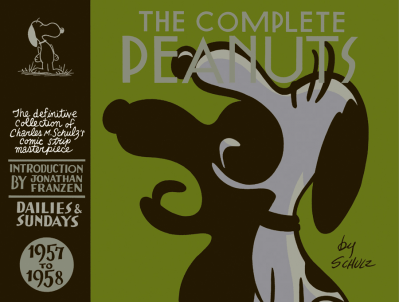
The Complete Peanuts 1957-58

This is the forth volume of Fantagraphics complete Peanuts, and it is good. Peanuts is great. I don’t really know what else to say. It is almost always funny and is just often enough poignant. In this early volume Schulz is still fleshing out his cast, with Linus getting the bulk of the focus. Good, good stuff.

fgv2

Alex Raymond’s Flash Gordon Vol 2

As a showcase for Alex Raymond’s art this is wonderful. I really wish I could track down volume 1, but the story is so episodic that it hardly matters. Flash and Dale and Zarkov move from one adventure to next at breakneck speed. They visit the various realms of Mongo, fight with the royalty and Ming the Merciless and eventually conquer. It is worth reading if only for Raymond’s art, which is exquisite.

gce1

Godland Celestial Edition Volume 1

Joe Casey & Tom Scioli

I was gifted Scioli’s American Barbarian and fell in love with it, so when I happened upon a couple of volumes of Godland, a series with his art, on sale at the KC Comic-con, I snatched them up. The first volume, unfortunately, was a huge disappointment. Like Scioli’s art, the story of Godland is very Kirby inspired, taking from his Fantastic Four collaborations with Stan Lee and his later 4th World stuff from DC. Not that Godland isn’t entirely original, it is, but is desperately tries to ape the tone of those works. In many ways it succeeds, but there is something about it that just end up feeling off.

Godland tells the story of Adam Archer, an astronaut that gained cosmic powers on an ill-fated expedition to Mars. He uses those powers to be a superhero back on Earth, fighting enemies like Friedrich Nickelhead, who looks like Destro from GI Joe, and Basil Cronus, a junkie who carries his own head around in a jar. The design of all the characters found in this first volume is nearly perfect and the plots themselves are exactly the sort of thing I was expecting, but the dialogue kills it for me. The whole thing feels slathered in a sort of glib irony – maybe an attempt to ape Stan Lee of the 60’s – that undercuts any true feelings the story could invoke. It constantly pushes the reader away, seemingly wanting them to laugh at the book and find the whole thing ridiculous. It is ridiculous, but if the book is so desperate to undercut itself why does it exist in the first place. American Barbarian was similar in many ways, but it presented itself more earnestly even when being ridiculous. Joe Casey seems desperate to make sure that readers know that he knows how ridiculous this whole thing is, and that knowing tinge is off putting.

What I Read in July 2016

Another kind of lacking month from me. I just haven’t been reading as much as I usually do lately. I think I can still get back on track over the last half of this year, but I am way off my pace right now. Still, I got three books in July, which isn’t too bad, and I have a handful of one that I half finished. Hopefully I can get those done by the end of August and boost my numbers a little bit. I also meant to read more nonfiction this year, and I haven’t really done that, so I am going to make a concerted effort to fix that as well.

hardrev

Hard Revolution

George Pelecanos

I read The Sweet Forever from Pelecanos a couple of years ago and enjoyed it. Since then the rest of his books have been on my long list of things to read and I happened upon a paperback copy of Hard Revolution. If anything I liked it more than The Sweet Forever, though I don’t recall the book perfectly.

Set in 1968, Hard Revolution takes place in DC around the time of Martin Luther King, Jr’s assassination and the reaction to that. The fractured and tense nature of race relations in the city and the country provide the backdrop and backbone for this story. It follows a pair of police officers, the young black officer Derek Strange and veteran officer Frank Vaughn, as they investigate the murder of a couple of young black men, one of them Strange’s brother. At the same time, two separate groups are planning robberies. One group wants to knock off a convenience store; the other a bank. The book takes a long time to set its pieces in place, but that is largely where it is most effective. Pelecanons is terrific at setting and tone. Tons of period detail, largely stuff about local sports and music, helps ground the work in its time and place. What car a character drives and what music the listen to tell the reader important things about those characters. It doesn’t sugar coat things, but presents the times with their warts all apparent.

I know that Strange is the protagonist of other such novels, so I am not surprised that his story is not complete here, but while he is certainly an interesting protagonist, he doesn’t actually get that much to do. All the time on the set up, set up for a half dozen characters that have major roles in this story, leaves very little for the police work side of the story. The balance between committing the crime and solving the crime are unequal. It left me wanting to know more about Strange, but not feeling like I knew enough about him for a story where his personal relationships should very important. It is also a very dark tale. It all comes together with the death of MLK with things looking bleak for just about everyone involved. Other than some minor quibbles, I liked this book a lot. The set up stuff that dominates the book is its best stuff. It creates, or maybe recreates, a world where each character’s history almost makes their actions inevitable.

fbf

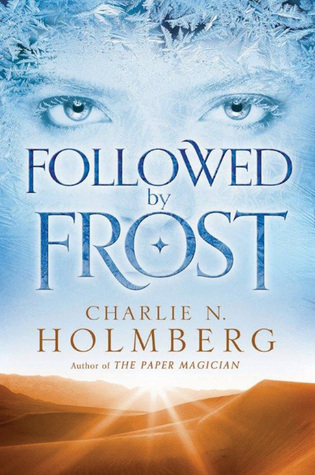
Followed By Frost

Charlie N Holmberg

I enjoyed Charlie N Holmberg’s delightful if slight Paper Magician trilogy, so I went ahead and picked up this book by her. It is largely more of the same which is largely a good thing. It is a little rough getting its premise set up, but once protagonist Smitha is cursed and sets out on her odyssey it really hits its stride.

Smitha is a selfish brat in the way that many teenagers are, perhaps a little worse. She is in desperate need of some growing up. Unfortunately, Followed by Frost hits something of a sour note in forcing that growth. When a local young man proposes marriage to her despite her making it clear she wasn’t interested, she sets up down hard. Too bad it turns out that he is wizard and curses her to have her whole body be as cold as her heart. It is going for a fairy tale sort of opening, but placing this blame on Smitha is a backwards way of looking at what is more the wizards awkwardness and inability to handle rejection. She was undoubtedly mean, but the punishment completely outsized compared to the crime.

Fortunately, it really picks up once Smitha is cursed. She first flees to the north, but the unnatural cold that follows her makes it impossible for her to live with other people. The cold is so bad that she is hunted. Eventually, she finds a way to make her curse useful and finds romance in the doing. From there on it becomes a full on romance. That fairy tale feeling from the beginning holds throughout the book. It is an effective way to frame this story, which sees Smitha grow from a spoiled young girl to a thoughtful woman. While the wizard who placed the curse on her disappears completely after the curse, Smitha’s interactions with Death, brought to her by the curse, are much better. Aside from the mixed message about gender relations, Followed by Frost is a pretty great fantasy romance.

nemesis

Nemesis

Agatha Christie

This one felt like a big change from the other Miss Marple stories that I read, mostly because Marple is a major player throughout the book. In the previous handful of Marple books, she has been more of a goad to get the investigators on the right track or even just a deus ex machina to come in at the end with a solved mystery. This time she is actively investigating. The whole thing is a little contrived, though. I realize that is the point of a lot of the book, that Miss Marple is acting on a strange deathbed request from an acquaintance, but there are other parts that don’t make sense either. Like how she ends up staying where she does, put up by people who don’t know her and have secrets to hide. While I did like having a more active Miss Marple, her actually being the focal character of the book, but mystery wasn’t Christie’s best. The only way it keeps up for the length of the book is by having no one know what mystery is being investigated for nearly the first half. I guess that has its own sort of appeal as a mystery, but to me Nemesis didn’t quite work.

What I Read June 2016

I only managed to read two books in June, being caught up with other things and really just not getting most of the several books I started finished. I hope July will get me back on track, especially since my schedule has cleared significantly, but only time will tell. At the very least I have a pair of Christie mysteries that I should finish before the end of the month.

t,d

Thrones, Dominations

Dorothy Sayers & Jill Patton Walsh

This is a Peter Wimsey story, started by Sayers and finished much later by Walsh. And while I did enjoy it, it does seem largely like two different books forced together. It starts as more of a family drama or comedy, with the Wimsey family adjusting to the marriage of Peter and Harriet. There are class conflicts, since Harriet is from a lower class and just some general unfamiliarity that arises with any new addition to a family. Still, the class and sexual dynamics on display in the early part of the book is easily the most engaging part.

It takes nearly a third of the book for the mystery to get going in earnest. And from then on it is a largely by the books murder mystery. It’s fine. The beautiful, and bored, wife of a theater producer is found murdered, and Wimsey, with much help from Harriet, look into it. Harriet is interested because she fears her advice, for the wife to go to their country home and redecorate to occupy herself, is what lead to her being killed. There are the usual array of possible suspect and motives, conflicting timelines and alibis. You know, all the stuff that make up the backbone of mysteries. There is also an interlude with Wimsey dealing with some problems with new King and his lover that is not explored as fully as it could have been. Thrones, Dominations is a nice addition to the Wimsey series. It is not the best entry in the series, but neither is it among the worst.

goaw

Girl on a Wire

Gwenda Bond

I so enjoyed Bond’s Lois Lane books that I also picked up one of her other books. This one is a about circus performers, with the main character, Juliet Maroni, being a wire walker like her father. There is a big rivalry between the Maroni family and the Garcia family, with overt shades of Romeo and Juliet. Overt to the point that the protagonist’s love interest is named Romeo. There is also the possibility of circus magic and increasingly difficult and exciting acts that the young characters of the book put on.

It’s fun. I didn’t enjoy it as much as I like the Lois Lane books, but that is mostly a product of the subject matter. Circuses were never really my thing, but I love Superman and his extended cast of characters. The characters here are largely believable and engaging, and the mystery at the center of the plot is, while predictable, intriguing. At the very least this book is worth a look.

Comics

assc

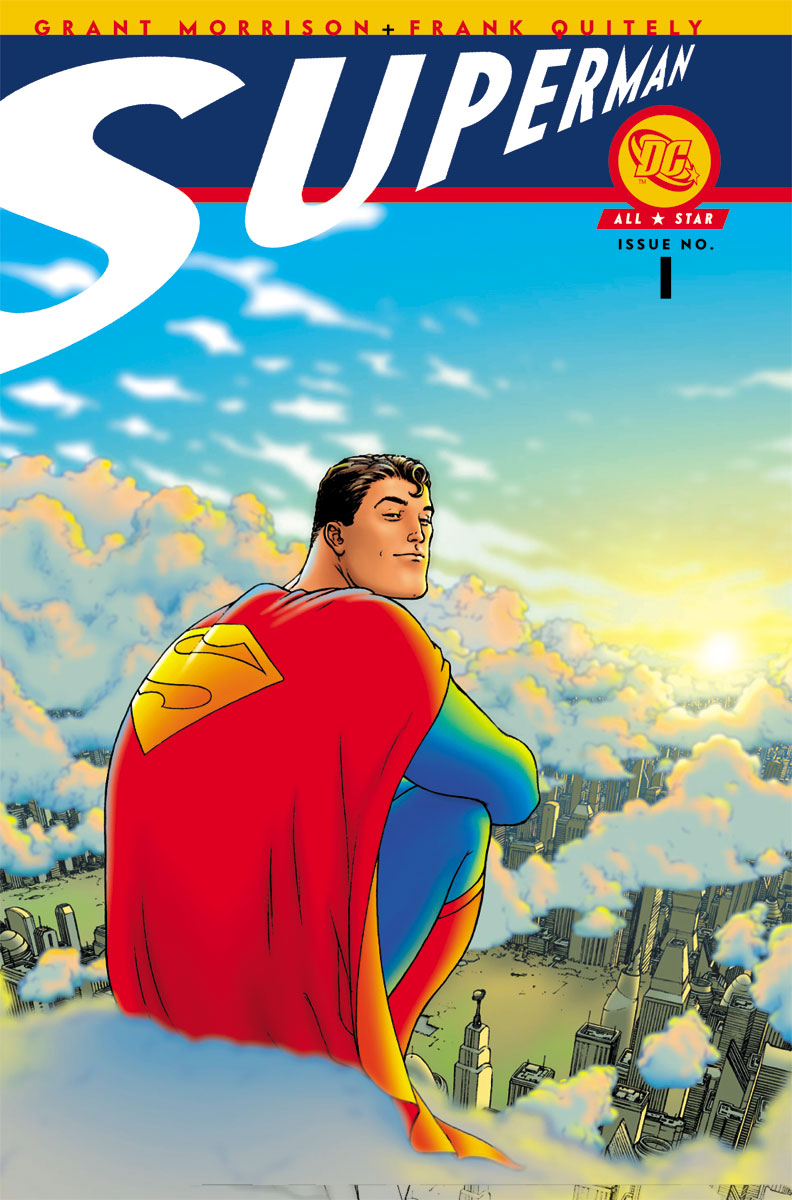
All-Star Superman

I had an internet argument about whether or not Grant Morrison was great, and I read this to reassure myself that he indeed is. All-Star Superman, which I’ve written about before, is great. I would call it the single greatest work in the medium of comics.

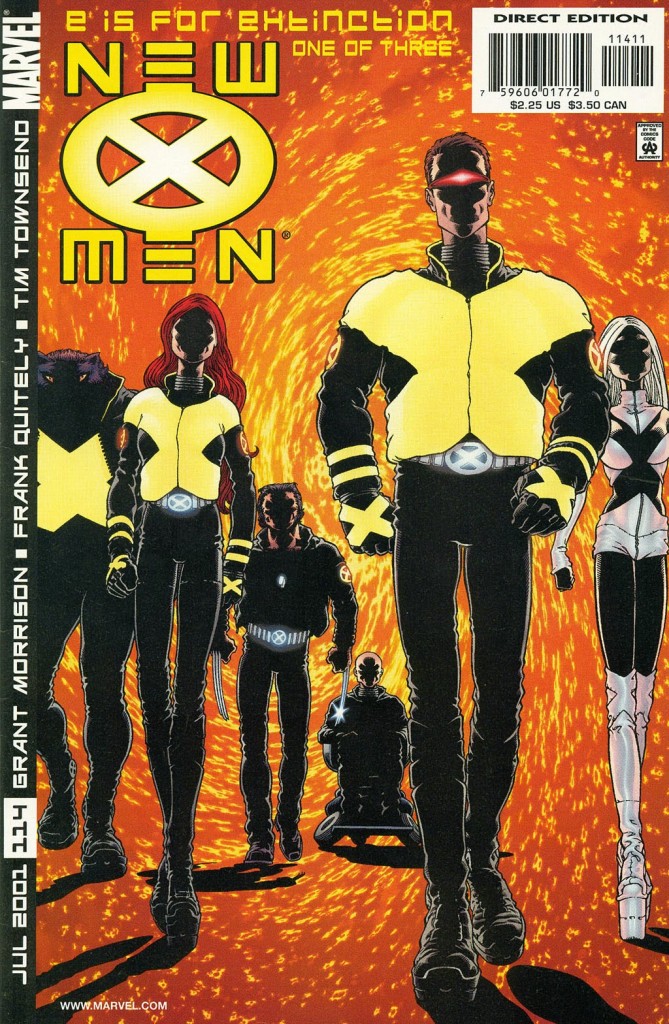
nxm

New X-Men

I also read this on my trek through some Grant Morrison stuff. It isn’t quite the revelation it was coming out of the execrable 90’s X-Men stuff, but large parts of it still hold up. Unfortunately, for much of it the art is not one of those parts. It is unreadably bad at points. Even good artists, like Ethan Van Sciver and Phil Jimenez, turn in some bad work on that book. I can only assume they were rushed. The story, while constantly inventive, feels inordinately rushed. There are plot lines that need time to develop and instead jump around in fits and starts. Still there are great stories, like Riot at Xavier’s and Assault on Weapon Plus, but there are nearly as many straight duds. That said, it is still one of the best X-Men runs.

fgcc

Flash Gordon

This recent and all too short series from Jeff Parker, Doc Shaner and Jordie Bellaire is one of my favorite things I’ve read in a long time. It is a simple and heartfelt update of Flash Gordon that keeps all the pulpy fun while smoothing out some the edges that are apparent in the work from nearly 80 years ago. To wit, it gives Dale much more to do without doing anything to sideline Flash. This only manages to tell two or so early Flash stories before it sadly ends, but they are worth it. It starts with Flash, Dale and Zarkov arriving on Arboria and then moves on to Sky City. The art is simply wonderful, and the story nails distinct personalities for Flash, Dale and Zarkov that are true to their roots and still feel fresh. This is just a great book.

What I Read May 2016

There is a theme this month, and that theme is Lois Lane. I was interested in the non-fiction book Investigating Lois Lane, but when I went to buy it I encountered a pair of Lois YA novels, so I snapped them up as well. And that took care of most of my book reading for the month of May. I really hope there are more of those YA books to come, they were very good.

tbigh

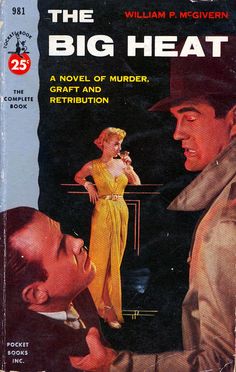
The Big Heat

William P McGivern

My local library had a sale, and I picked up a dilapidated copy of this, along with a half dozen other books, for about a quarter a piece. This is just a lean, muscular noir piece, turned into a well-respected movie. A police detective looks into a case despite being warned off, which gets his wife killed. He then resigns from the force and gets revenge. There isn’t anything especially unique about this story, but it is reasonably well told.

ill

Investigating Lois Lane

Tim Hanley

This is an insightful and illuminating look at the history of one of comics’ most prominent characters. Hanley takes us through the creation and evolution of Lois Lane, both in the comics and in other media, from the start of Action Comics up to the present day. There is a lot of good stuff in there, especially for fans of the character or even just Superman. It shows how her strengths as a character seemed to show through despite the stories she was in frequently undercutting her. I don’t want to just regurgitate the information found in the book, but it did give me plenty the think about and some stories I want to track down.

Tim Hanley writes in a clear, engaging style and while this isn’t the most intellectually rigorous subject matter he does make some thoughtful points. I did grow somewhat annoyed about how often it came back to the idea that Lois’ stories were being put on the backburner for Superman’s when these stories were taking place in a book titled Superman. Lois’ biggest problem, as displayed by this book, is that she is a supporting character. Still, there are a lot of great and plenty of terrible stories that Investigation Lois Lane can inform you about.

llf

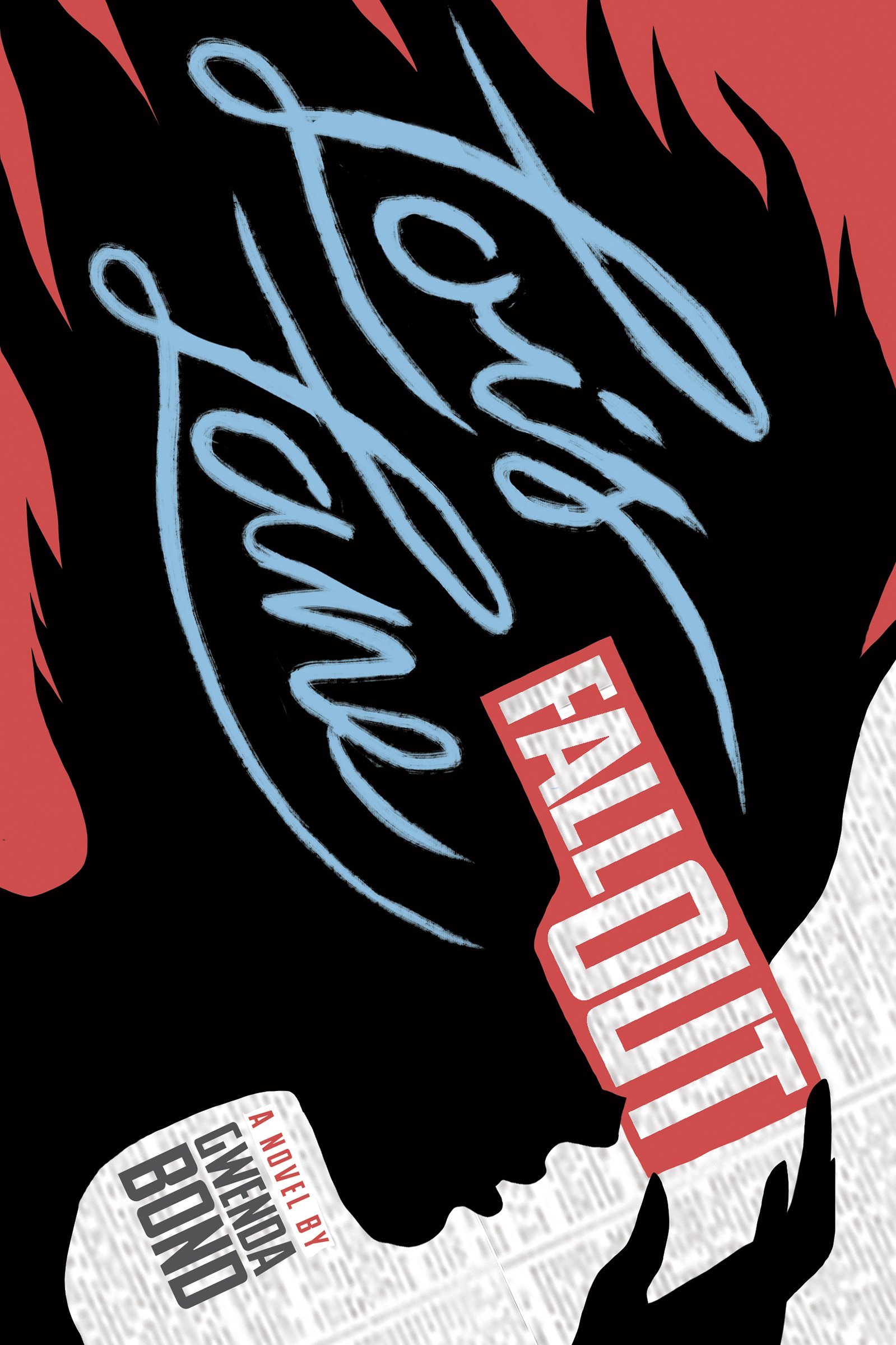
Lois Lane: Fallout

Gwenda Bond

This book, and its sequel are pretty much perfect. Gwenda Bond takes Lois Lane and perfectly reimagines her as a high school student, albeit one in a world that has a touch more science fiction than our own. Lois is a 16 year old army brat whose family has relocated to Metropolis. She has a reputation for getting into trouble, usually by sticking her nose into tricky situations to help people. She quickly does the same at Metropolis while joining the Daily Planet as a correspondent for their youth blog. Also, she has an online relationship with a mysterious boy from Kansas who she met looking into this mysterious flying man her and her father saw while driving through the state. She is basically everything you could want from a teenage Lois Lane.

In this book, she gets entangled in a plot that uses at risk kids in some sort of experiment to develop a hive mind, only the hive mind isn’t being shut off and they keep recruiting new kids. They are doing this using a sort of VR video game that all the kids are playing. Lois, along with her fellow young journalists, investigate and try to get to the bottom of things, all while she tries to seem like she is following the rules to keep her dad off her back. It is amazingly fun.

lldd

Lois Lane: Double Down

Gwenda Bond

As soon as I finished the first one I went back in for seconds. I am a huge sucker for the Superman mythos and characters, and this is one of the better takes on them I’ve encountered. This time, Lois helps out a couple of her new friends. One, Maddy, has a twin who is having some problems after she went to a mysterious research lab in order to earn a few extra bucks. The other is the son of the disgraced former mayor, who has recently been released from prison. While they investigate how the Mayor can appear in two places at once, they also look into why Maddy’s sister is having blackouts. As impossible as it seems, the two cases might be connected.

This book is a delight. Since it doesn’t need to spend the time on set up, it really gets to dig into Lois, as well as her friends and relationships. Readers get to know more about the protagonist through how she deals with her friends, her problems and her romantic issues with the mysterious SmallvilleGuy. While the weird sci-fi plot never relents, the book really lets the reader get to know its protagonists. While I am far from an expert on the genre, it is easily one of the best YA books I’ve read.

Comics

ambar

American Barbarian

Tom Scioli

This was a belated Christmas gift (thanks Buge) that I tore into really fast. I’m still not quite sure what to make of it. On its surface, American Barbarian is the finest Kirby pastiche. It is a world where no idea is too big or too crazy to be put on the page. It reads like a half joke, but you can’t help marvel while you laugh. Meric, the titular red white and blue haired barbarian, seeks revenge on the giant evil Pharoah Two-tank Omen for the murder of his family in a post-post-apocalyptic world. Every page contains more and more amazing stuff. Tom Scioli has crafted something here unlike anything else you can find, and it is amazing. Writing about it is hard, since even thinking about it makes me as giddy as if I’d just eaten a bag of sugar.

setsmy

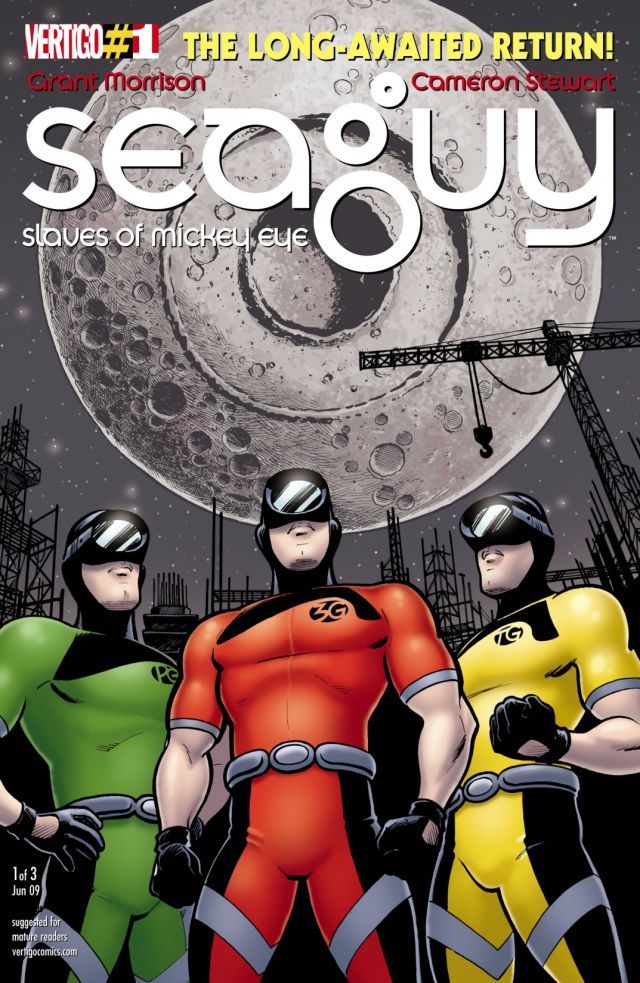
Seaguy: The Slaves of Mickey Eye

Grant Morrison/Cameron Stewart

This is not actually a collection, because I don’t think a collection exists for this mini-series, but I read it as one series and it deserves to be considered. This one picks up sometime after the original Seaguy and continues that story. At the end of that story, Seaguy had his memory wiped and was given a new partner. But he keeps seeing the ghost of Chubby the Tuna and having vague memories of his previous adventures. The villainous Seadog does his best to remove the threat to his idyllic world that Seaguy poses, but Seaguy keeps coming back. I don’t really want to get deeper into it than that, that would spoil the surreal fun of this series. It is definitely worth reading, Morrison is a master and Cameron Stewart is likewise great.

sk

Superman: Kryptonite

Darwyn Cooke/Tim Sale

Realizing that even with a purchase earlier in the week, see the next entry, I had not encountered wide swathes of the recently departed Darwyn Cooke’s work, I picked this up in a comixology sale. This has Cooke writing, but it is drawn by Time Sale. I liked this, but it is strange. It starts off as one thing, a story as close as Superman gets to noir, before shifting into some full on sci-fi stuff by the end. It is not an elegant transition. I still really enjoyed the story, but it is not as great as I’d hoped it would be after the first two issues. The story supposedly details Superman’s first encounter with Kryptonite, but it also tells a story about a new Metropolis business upstart and an interstellar entity. Clark, Jimmy and Lois are tasked with figuring out what is up with a supposedly reformed mobster as he opens a casino and gives tons of money to charity. Meanwhile, someone is messing with some Kryptonite while showing Clark visions of the past on Krypton. While the story doesn’t quite work at the end, it is still looks great and reads fine. Definitely worth a look.

rspth

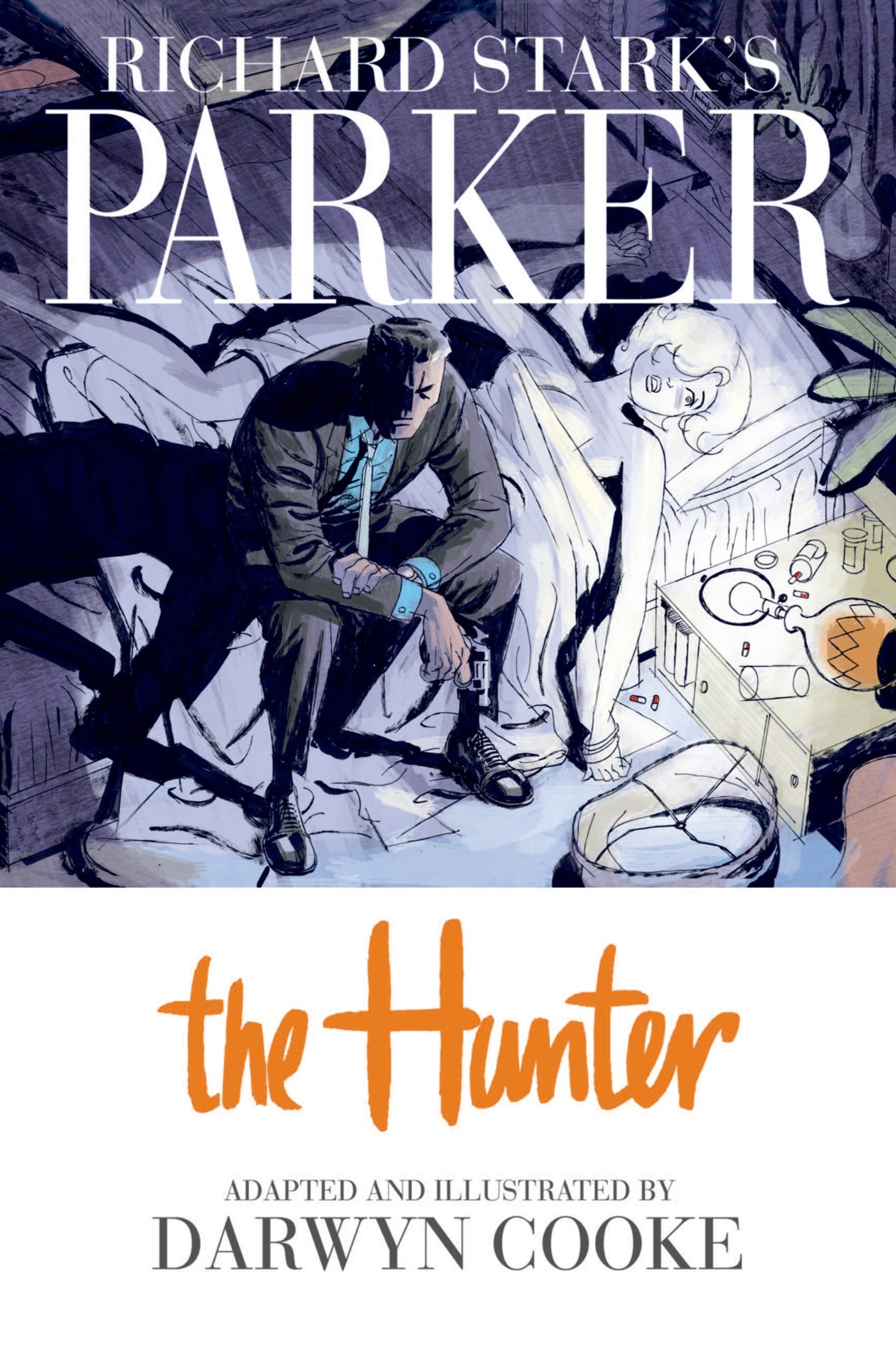
Richard Stark’s Parker: The Hunter

Darwyn Cooke

I picked this up, along with the other three Parker books, just days before Cooke tragically passed away. I’ve read plenty of other things written or drawn by Darwyn Cooke, but if the other Parker books maintain this level of quality, then they might be his masterwork. His art is wonderful, distinctive and creative. His works with limited colors in this book, and what he does use is excellent. Then there is the story, which is simple and nearly perfect. Parker has a kind of seductive competence to him; he is cool enough that it is easy to forget that he is basically a monster. He is a sociopath. The only thing only slightly redeemable about him is that most of the people he deals with are just as bad as he is. Still, thanks to Cooke’s mastery, you do end up sympathizing with him for most of the book. This is good, good stuff.

What I Read April 2016

April was not a banner month for me, with me only managing to finish two books. I did read a handful of comic TPBs, but that is not really the same thing. I expect to get back on track in May.

cw

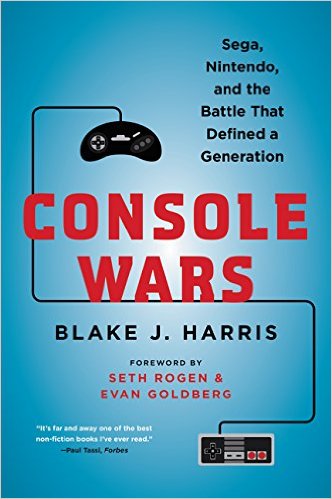
Console Wars

Blake J Harris

This book purports to be the story of Sega and Nintendo and the 16-bit console wars. It really isn’t. It is the story of Sega and the 16-bit console wars, with a chapter about Nintendo’s rise and one about them buying the Mariners. That isn’t to say it’s not good, the story of Sega’s rise and fall is one worth reading, but Nintendo is only a small part of this book. I am sure the writer had much greater access to former Sega employees than Nintendo ones, which results in getting the story from their perspective.

Judging it for what it is and not what it isn’t, Console Wars is a fascinating read. The events that lead to Sega making such a splash with the Genesis and then failing utterly to capitalize on that success is a good one. It does spend a little too much time lionizing the Sega of America crew, seeming to suggest that if Kalinske and crew had been allowed to set their own course then Sega would have never fallen, but I am not sure that is the case. Still, the way they took it too Nintendo for the first handful of years the Genesis was on the market was kind of amazing.

One thing that really did drive me nuts about this book is how wrong it got some stuff about games. I know it was written from the perspective of the guys at Sega, but to suggest that Buster Douglas Knockout Boxing is even in the same league as Mike Tyson’s Punch-Out!! is ludicrous.

tgh

The Glass House

Ashley Gardner

This is the third of these Captain Lacey detective novels I’ve read and the series isn’t quite clicking for me. It is mired with characters that might be interesting, but they don’t interact with each other, only Lacey and often seem to be clogging up the mystery. That is honestly a nitpicky problem, but it is just one that comes to mind that keep me from fully enjoying these books.

In The Glass House, Captain Lacey finds a young woman who was fished out of the Thames and tries to find out how she got there. He finds a lot of people with motives, but his investigation also leads him closer to people he would rather avoid. The mystery is solid, with each revelation leading to a completely new line of questioning. If only the series character stuff moved with the same life as the mystery. That stuff just kind of trudges along. Still, it’s not a bad book.

Collected Comics Reading

aaa1

Angela: Asgard’s Assassin Vol 1: Priceless

Kieron Gillen, Marguerite Bennet, Phil Jiminez, Stephane Hans

I like all the creators involved in this comic, and they do a good job. However, this book mostly just left me cold. I don’t care about the character Angela and this book did nothing to change that. The whole story requires every character to act like a dick for no good reason to work, with each and every one of them coming off looking stupid. The art is good, at least. Honestly, I am being too harsh on this book because it really isn’t bad, it is just a (sorta) superhero comic about a hero that I find actively disinteresting.

sv1

Silk Vol 0: The Life and Times of Cindy Moon

Robbie Thompson, Stacey Lee

A lot of my complaints about Angela could be repeated here. I picked up the books during a sale, willing to try them out, but neither really moved the needle for me. I liked this one a little more than Angela, if only because Silk’s goals are at least understandable. Angela is kind of an inscrutable character, which does not make her the most engaging protagonist. Silk is mostly just a female Spider-Man. I don’t know whose idea it was to shoehorn her into Spidey’s origin, but it almost works. The book has a peppy tone and some really engaging art, but this is not a character whose continued adventures I am especially interested in reading about. Especially since it ends with a lead in to a reality altering crossover. Spider-Man fans would likely get a kick out of this, but I am not a member of that group.

jath

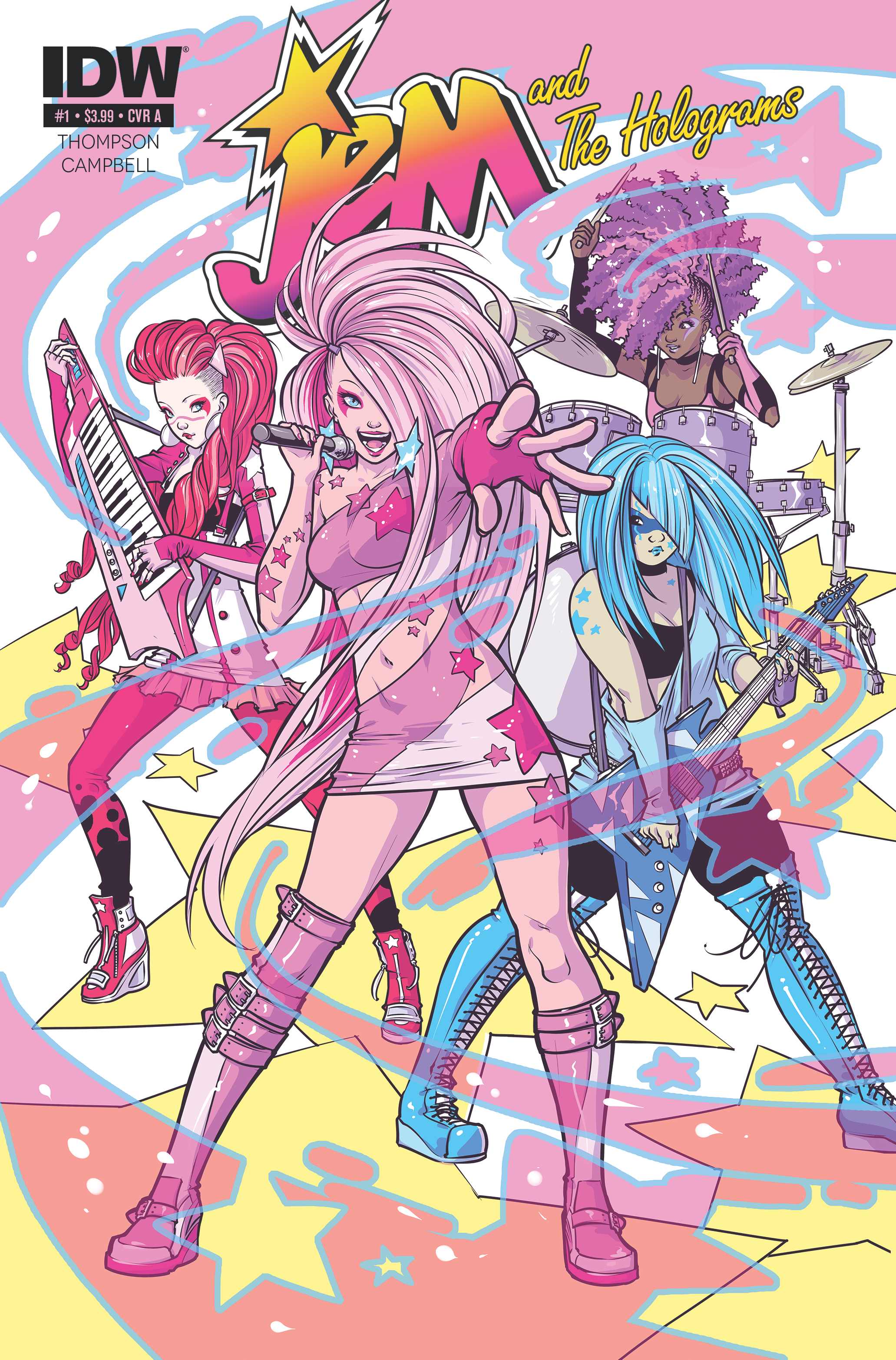
Jem and the Holograms Vol 1

Kelly Thompson, Sophie Campbell

I am not the biggest fan of Jem and the Holograms the 80’s cartoon. It is just a little too old for me and I never saw it as a kid. But I heard enough good things about this comic that when I saw it on sale on comixology I went ahead and snatched it up. It is great, especially Campbell’s art. The book looks excellent, with distinct and expressive characters and just an overall great look. The story occasionally seems like its treading a little water, but it does a good job of introducing all the characters and providing some compelling conflicts for those characters to face. I realize I am being vague about this, but while there really isn’t anything too shocking or surprising with the story, readers should experience it for themselves. A great book.

wwe1

Wonder Woman Earth One

Grant Morrison, Yannick Paquette

I’ve got a big post about this coming soon, but in the meantime I will say that I liked it very much. It is conflicted and strange at times, but it is one of the most thoughtful Wonder Woman comics I’ve read in a long time. Morrison really does take things back to the characters roots, for good and ill. Wonder Woman is a strange character, so any one actually trying to engage with her is going to produce something a little strange.

sg

Seaguy Vol 1

Grant Morrison, Cameron Stewart

I’m not quite sure what to make of this; I really think I’ll need to read it again. It is a strange coming of age tale for a strange sort of hero. Seaguy is a man is a scuba suit, a would be hero in a seeming utopia with everything run my one Mickey Eye, an anthropomorphic eyeball that acts as sort of a Mickey Mouse type character. With his sidekick Chubby da Choona, Seaguy sets out a series of surreal adventures. It is a world where everything is both great and unsatisfying, so when even the smallest adventure appears, Seaguy jumps at the chance. For such a slim volume, there I a lot to unpack here. Seaguy is beautiful (Cameron Stewart’s art is great), haunting, sad and funny all at once. The sequel has now shot to the top of my to buy list.

desc

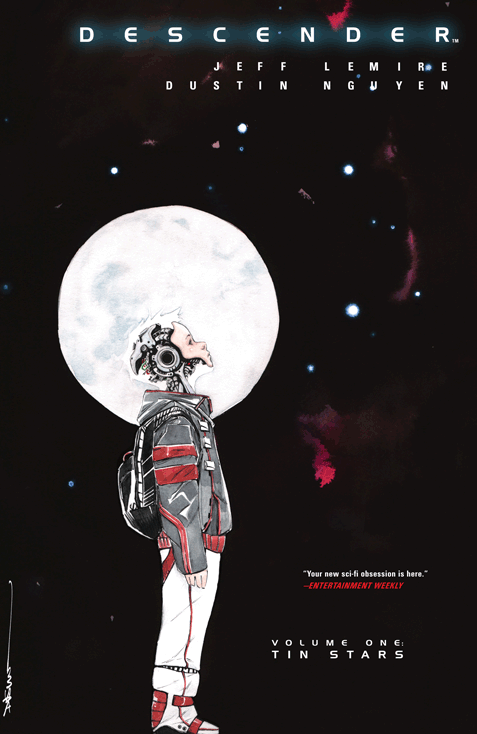
Descender Vol 1

Jeff Lemire, Dustin Nguyen

Descender is something like a comic version of Mass Effect, but told with some actual storytelling ability. Ten years after giant robots show up and decimate living populations on several planets, people have all but stamped out robots. On a backwater colony, a small robot boy named Tim-21 wakes up to find everyone in the colony dead, possibly including the boy he was supposed to be the companion of. His creator finds out that that little robot might be the key to figuring out what drew the giant murderous robots, so he sets out with a team to retrieve it. The book is just incredibly well done. You feel for the characters, even those that are far from perfect. And there are so many possibly directions for this story to go that I am eager to get more. Because this book is just the first chapter, it whets the appetite for what I hope is a lengthy story to come. I will likely jump on the recently released second volume sooner rather than later.

What I Read March 2016

I read the usual four books in March. I haven’t had the time I’d like to stay on my reading lately, but I think I can still keep up this pace.

bossyp

Bossypants

Tina Fey

Tina Fey is a very funny woman. I absolutely loved 30 Rock and her movies with Amy Poehler are mostly really good. This book translates that into to prose form. It works. It is a comedic series of anecdotes telling stories from Fey’s life if not her life story. She tells how she got into the comedy and theater, how she became a writer, then sometimes performer on SNL to 30 Rock. It is clearly written in the same voice that permeated her time on Weekend Update and 30 Rock. I don’t know what else to say that doesn’t harm the reading of a comedy book. It is good stuff.

tmm

The Master Magician

Charlie N Holmberg

The third in Charlie Holmberg’s Paper Magician series.  Like the previous two, I liked it, but I do have some problems with it.  Mostly that none of these books have much in the way of a middle.  The Master Magician sets the table with a good beginning, before hurtling past all the story possibilities raised to get to its conclusion. It is still a fun ride, and Ceony is a really great main character. Holmberg does an excellent job setting up an interesting world and magical system, but it just doesn’t feel like there is enough space to explore it satisfactorily.

tpbride

The Princess Bride

William Goldman

I have frequently called this my favorite book ever. Somedays it is. It has been overshadowed by the excellent film version, but the book still has plenty to offer. It works an amazing trick of containing the same events, plus or minus a Zoo of Death, with a lot of the same fun adventurous tone that still manages to have the complete opposite outlook. The movie is a sweeping tale of love and adventure, the book is a tale about how love and adventure are futile and end terribly. It is a similar experience but with completely different conclusions. It is also very funny. Read it sometime.

royalc

Royal Chaos

Dan McGirt

Comedy writing is hard and there is nothing quite as painful as bad “funny” writing. Royal Chaos is nothing but that. It tries to be a humorous take on generic fantasy tropes, it ends up being an excruciatingly unfunny march through all the stuff people hate about fantasy novels. Royal Chaos is the second book of what I guess was a trilogy about Jason Cosmo, some dude who ends being or being mistaken for the hero of legend. After his wizard pal’s fiancé is murdered, they team up to get revenge. There is nothing more to it than that. It reads like a novelized version of someone’s D&D game, with all of their funny jokes included. Except you’re not reading it with your gaming buddies while you knock back a few a beers and this stuff isn’t funny on its own. I bought this book because I thought the cover looked funny in a bad way. This is a case where you can judge a book by its cover, because the insides reflect the outsides. It is goofy, but not particularly well-done.