25 SNES #2: Radical Dreamers

The second game in my quest to explore more fully the SNES video game library is a strange one. A good one, but it is truly one of the oddest games that I have ever encountered. Radical Dreamers is a visual novel with some light RPG elements. Honestly, it is pretty light on the visual part of visual novel as well. It is also a sequel of sorts to Chrono Trigger, which is quite possibly the best game on the system as well as my personal favorite. So in making a sequel to a popular game, Squaresoft chose not only to change the genre, or to release it only on a little used platform, but it also buries the lead so deep many players are likely to not get ever realize what they are playing. Still, it turned out to be a fairly entertaining game, especially with the fan-translation by Demiforce.

Radical Dreamers - Nusume Nai Houseki (Japan) (BS) [En by Demiforce v1.4] (~Radical Dreamers - Le Tresor Interdit) 0000

That Squaresoft would make a sequel to Chrono Trigger is not odd. Especially one that follows up one of the biggest dangling plot threads from the game. That the perfect storm of factors that lead to Chrono Trigger’s creation weren’t able to be recreated wasn’t a surprise; that they got the minds behind the two biggest RPG franchises together to make it in the first place was something of a minor miracle. Still, that it was not really an RPG is a strange choice. It was also only released on Satellaview, an early attempt by Nintendo for some sort of online gaming, is also a curious choice. I am sure Nintendo was eager to get other companies to support his endeavor. A fairly short visual novel was probably a good choice for that platform. These two choices are compounded by not being upfront that this is a follow up to Chrono Trigger. Players were likely an hour or more into the game before the oblique references to Chrono Trigger added up to enough make it clear that it takes place in the same world and it is most of the way through the game until Magus reveals himself.

Radical Dreamers - Le Tresor Interdit 0014

Still the game itself is a lot of fun. It follows a trio of adventurers, Kid, Serge and Magil, as they break into Viper Manor in an attempt to steal the Frozen Flame from the villain Lynx. Most of the main scenario of the game consists of running through the mostly abandoned mansion trying to find where the Flame is hidden. It really builds the characters well in its rather short running time. Serge, the player character, is somewhat inexperienced, which means that Kid and Magil spend a lot of time helping him out. The center of the game is the relationship that develops, aided by the player, between Kid and Serge. Magil holds himself somewhat separate. In all, it is a compact, fun adventure, though some of the battles can get annoying. The music is quite good, and the few instances where it really uses graphics they look pretty nice.

Radical Dreamers - Le Tresor Interdit 0007

After the main scenario is completed players can activate a handful of others. Those are mostly comedy or just plain weirdness. In one Magil falls in love, in another he is a space cop and even a mecha pilot. I didn’t complete all of them, but they fit in with the title. They are all something like dream sequences, fitting for a game called Radical Dreamers.

If the main scenario sounds familiar, that is because it was expanded to be the opening part of the eventual “real” sequel Chrono Cross. The broad strokes are the same, though many of the details are changed and it serves merely as the opening of a much larger adventure. Really, the only thing that was lost in conversion was that Magil was secretly Magus. The Viper Manor portion of Chrono Cross was probably the best part of that game; the rest seems a little lost.
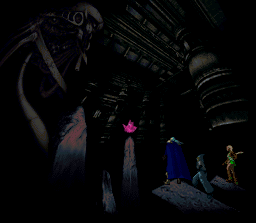
Radical Dreamers - Le Tresor Interdit 0017

Still, the existence of Chrono Cross and this game’s scarcity condemn it to be little more than a footnote in the grand scheme of things. It is a small little project that served as the basis for something much better. The game is still worth playing, even if just for an excuse to see the weirdness.

Radical Dreamers - Le Tresor Interdit 0021

Good night, Konami

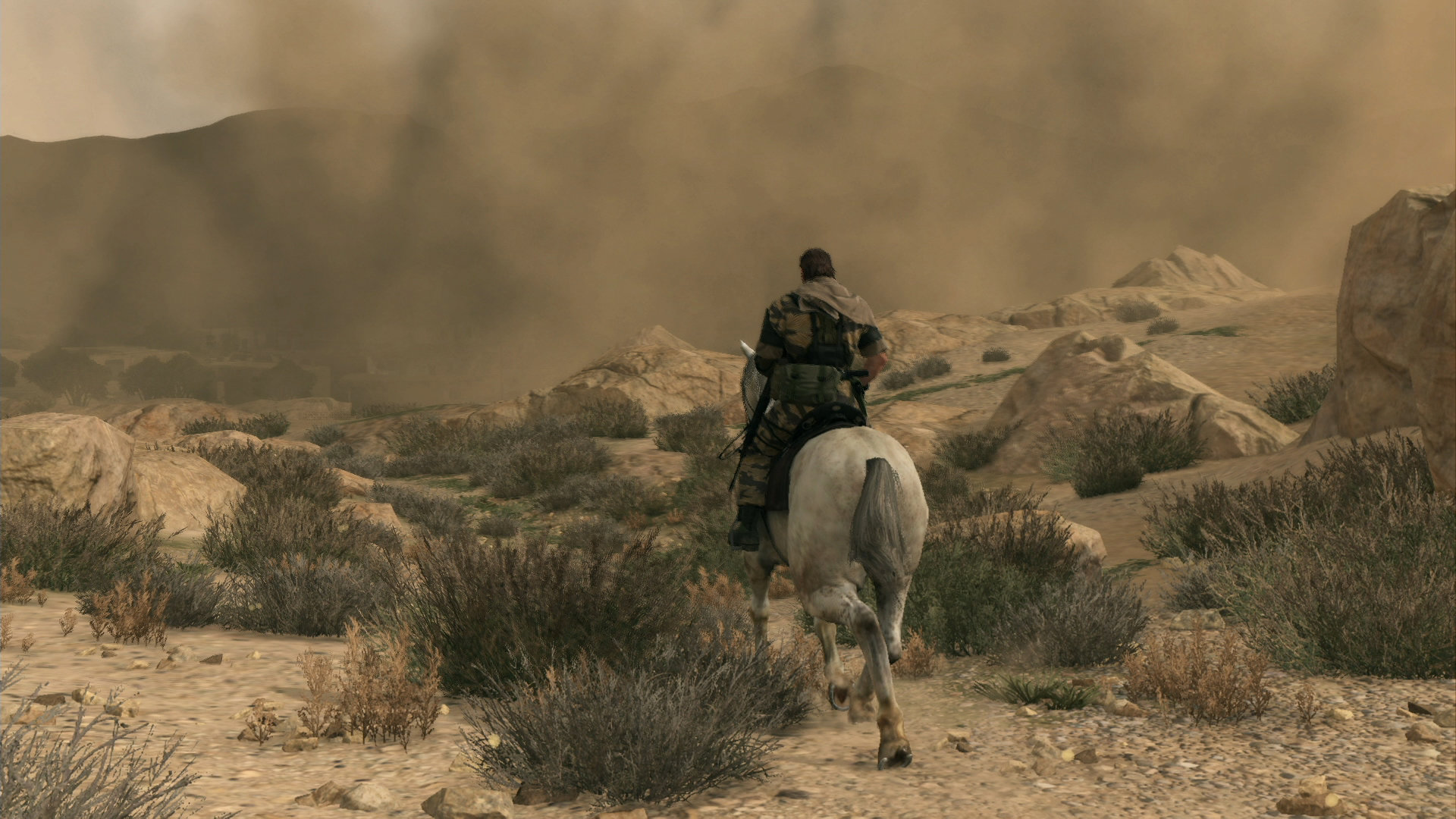
It has been a long time since I played Metal Gear Solid V: The Phantom Pain, but I haven’t really stopped thinking about it or trying to write this blog post; I am merely having trouble finding the words to express my thoughts about the game. MGSV is a game that has inspired many thoughts, most, but not all, of them complimentary to the game. Not only is it a massive game, but it is also likely the last game in the series. Or maybe just the last legitimate game in the series. On top of that, it seems to be Konami’s last video game, as they make an inelegant exit from the industry to focus on the actually profitable parts of their business. In many ways, MGSV feels like the last game of an era. Maybe that is because I played on the PS3, but it feels something like a farewell to that generation and a farewell to the last vestige of Japanese influence on the current gaming industry.

Part of me wants to use a post about The Phantom Pain to eulogize Konami; the hardest part of playing this game is having to reconcile its mastery with the loss of that titan. The video game industry without them simply feels wrong. Each console generation has winnowed out companies that were able to adapt to the new technology. They may have been masters at one point, but their times passed and they went away, with new developers rising to take their place. Mid-tier companies like Jaleco and Sunsoft sputtered and failed in the transitions to 16-bit and 3D. Throughout all of that, though, there were some stalwarts, companies like Nintendo, Capcom and Konami. No matter the system, you could expect to see their games among their most well regarded. (With the obvious exception of Nintendo on non-Nintendo systems) For more than two decades Konami developed a great mix of big time titles, like Castlevania, Gradius or Contra, and slightly lesser known fare like Legend of the Mystical Ninja and Suikoden. They pumped out tons of quality titles in all sorts of genres. Since the days of the Playstation, their biggest hit has been inarguably Metal Gear Solid. While Castlevania and Contra withered on the home console side, both series managing to make marks only with frequent and frequently excellent handheld titles, Metal Gear Solid kept the attention of gaming community. It is only fitting that with Konami making a lamented and ungainly exit from the video game business, Metal Gear Solid V is their last hurrah.

mgsv1

Eulogizing would make more sense if The Phantom Pain was a backward looking game, but it is not. It is still out there on the forefront of the gaming scene, where the series has always been. While it does play in many ways like previous MGS games, it does so much more. The first three MGS games were each one or two missions. Snake starts with a goal and each boss and area is another step in achieving that goal. MGSIV, for better and worse, expanded that, being comprised of several missions. MGSV takes that a step further; it is a full campaign. Snake deploys into two giant sandboxes with a giant list of missions to accomplish. This added scope leads to more gameplay systems added to an already complex game. Now, Snake runs an entire military force. The more he builds his base, the greater the resources available to Snake in the field. The base building plays into the online component. It also plays into the new buddy system, where Snake brings along a companion with a certain set of skills. It turns the whole thing into a very complex web that is surprisingly painless to navigate. The depth is there for players that want to dig into it, but it is also possible to just understand that bigger numbers are better and just play the game.

Where the game falters, at least somewhat, is in the story. The broad strokes are great, but that is all there is; the game is only the broad strokes. It plays as though the story portions weren’t finished, especially knowing how long winded the previous MGS games could be. Since I don’t want to spoil the big reveal that has certainly already been spoiled for everybody, I will say that the somewhat simple tale of revenge and a man slowly becoming the things he hates are done well.

mgsv2

That is really my problem in examining this game: I am not invested in it is enough. I can’t provide a strong break down of the gameplay because I was that player that barely took the time to understand it and just figured bigger numbers are better. Mind you, I played the game for near on 100 hours, but I never really dug too deep into all of my options. I used the same load out for most missions. I hand a tranq pistol and a tranq sniper rifle. I knocked dudes out and tied balloons to them to take them to my base. I snuck whenever that was an option and tried to avoid killing. And I am not enough expect enough in the story of Metal Gear to get really analyze its themes. I have missed too many chapters, including the opening one to this game. I am rarely an expert on games; I am more of a tourist. I come through and see the sights, but I don’t stop long enough to really dig deep into the details. I am fine with that, I would rather play a lot of different games than learn one completely. But The Phantom Pain is a game that needs to be examined by an expert.

What Metal Gear Solid V: The Phantom Pain is to me is a last trip through a series and a company that is going away. I don’t know that it is a good farewell to either. It feels like an evolutionary step for Metal Gear, a game the takes the series to a new place just waiting for another game to perfect it, like MGS3 did for the original. And it doesn’t inspire much reflection on Konami, other than that at one point they used to make excellent games like this as a matter of course. I was glad to play this game, but it ends on a bittersweet note because I know that there will not be any more like it.

Every year, video gaming changes further from what it was when I started playing and I am less and less interested in putting forth the effort to track down the stuff I like. The pool of new games I want to play dwindles every year and every year I care a little less. The Phantom Pain is the first game in long while to remind me that there are things that I have never done in a game. If only other games offered similar new experiences.

25 Years, 25 Games #1: Super Bomberman

I decided to ease myself into this 25 Years, 25 SNES Games project with Super Bomberman. More so than any other game on my list, this one I knew what I getting going in.  It’s Bomberman.  Everyone’s played some version Bomberman before. Right?

sbm1

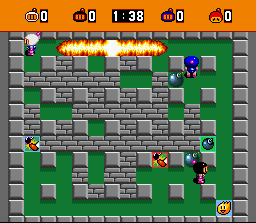
Maybe not everyone has played Bomberman, but since his last game came out more than a half decade ago, maybe people don’t know Bomberman.  Well, they should; his games were great. They spanned most consoles from the NES all the way to Wii, Xbox 360 and PS3. While Hudson Soft other supposed mascots, the one that stuck around throughout the history of the company was Bomberman.  The games, at the heart of their most important mode, can trace their style of play back to Pac-Man and other single screen character action games.  Players control a little robot in a maze, trying to clear paths or trap monsters/other players with their bombs.  On the surface it is simple, but the complexity is hidden just beneath the surface, especially against living, breathing opponents.

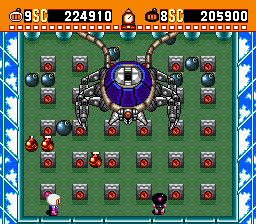
sbm2  While I was a fan of Bomberman, I had never played any of the Super Bomberman games, of which I understand there are four.  I spent a ton of time with Wario Blast (featuring Bomberman) on Gameboy, which instilled a love of the little robot in me.  I also spent some time with various N64 games and a few download titles since.  But I never really even knew about the SNES games at the time.  Super Bomberman is a good, if not spectacular, rendition of Bomberman.  You blow up enemies and pick up power-ups.  There is a story mode, where you play against the computer, pretty simple with some fun but unspectacular bosses to fight.

sbm3I am given to understand that the other Super Bomberman games are better than the first one.  That seems likely.  This game is a pretty no frills experience.  It has just story mode and battle mode.  Each works just fine, but there are few bells and whistles.  Still, the game is still a lot of fun.  Bomberman stuck around so long because the core game is so very good.  Though this game provides little beyond that experience it is still a worthwhile experience just for that.

This game really makes me pine for the days when games like this came out.  That is maybe (absolutely) being unfair to the robust indie and download game market, but I can’t help but look back on the days when something like this could get a boxed release and be a well-remembered game.  Games like Bomberman aren’t exactly gone, but they have become rare and have been shoved off to the sidelines of the gaming world.  The closest recent example of game like this that I can think of is Nintendo’s Boxboy; a game that is relatively simple on the surface, but has satisfying depths to plumb.  Really, this is just an old game enthusiast yelling at kids to get off my lawn.  I am growing increasingly disconnected with modern gaming, and going back and playing games like this makes it clear to me how much more I liked games back then.

sbm4

So, Super Bomberman; it is a good game.  One that is a perfectly fine game, but maybe isn’t as worth playing now thanks to other Bomberman games that just offer more.  I have heard the Saturn Bomberman is the cream of the crop, but there is too much of the series I haven’t played. Still, I’d call the first SNES game I played this year an unqualified success.

Now Playing in December 2015

Beaten

Xenoblade Chronicles X – I beat it, and I have a post upcoming.  Hold me to that, I have a lot I want to say about this game, which I recently named my game of the year.

SteamWorld Heist – I also have some things to say about this game.  Right now I’ll just call it one of the best strategy games I’ve played in a long while and a perfect marriage of great gameplay with a charming world.

Ongoing

Rune Factory 4 – This is just the sort of game I make these posts for: games that I like, and maybe have something to say about, but won’t likely ever beat or manage to write a full post about.  In the past I have not been a big fan of the Rune Factory branch of the Harvest Moon tree. One of the most compelling aspects of that series is that there is no fighting.  Adding that to the game, and making it not appreciably more fun than the farming, seems to defeat the purpose.  Still, I am really enjoying my time with this game.  It is fun to play and really makes you feel like you are accomplishing something even if you play in little bursts.  Plus, the whole cast here is new to me, not like many Harvest Moons with their repeats of certain characters.  Once in a while a game from this series really hits the spot, and now is one of those times.  Will I make it past the first year or through the whole of the story? I doubt it, but I will likely get 15-20 of good enjoyment out of this game before I wander off for more exciting pastures.

Legend of Heroes: Trails in the Sky – Still slogging through this.  The bloom is off the rose at this point.  While I don’t think it is a bad game, I do have several bones to pick with this game.

Codename STEAM – A Christmas present, this game landed with something of a thud earlier this year and seems to be pretty much forgotten already.  That is unfortunate.  While it has some pretty big flaws, through the first five or six chapters it has been highly satisfying.  The story is delightfully bonkers. I am sure I will have more to say about this game.

Monster Hunter 4 Ultimate – I think I am falling back into this rabbit hole.  Maybe it is time to see what the back half of this game’s content looks like.

Prince of Persia – I got this for Christmas as well, and I like it quite a bit through the first three or so areas.  I am having some problems with somewhat delayed reactions with the controls, but that might be on me.  Still, it is a good looking game and I love climbing all over environments.

Never Alone – I want to like this game, but I don’t.  At least not at the start.  It is just a little too pokey and slow.  Maybe it will grow on me, I certainly hope so, but so far it feels just a little lackluster.

Upcoming

Mario & Luigi: Paper Jam – I like most of the games in both series, so playing the mash up seems like a no-brainer.  Plus, at the rate I’m burning through Codename STEAM, I’ll be ready for something new by the end of the month.

Super Bomberman – I am starting off my SNES reevaluation with this game from a classic series.  It seemed like a nice, familiar way to ease myself into this.

Radical Dreamers – This will be my second SNES game of the year.  It is a game that has been near the top of my playlist for a long time, but I needed some sort of incentive to actually play it.

Yakuza 5 – I finally got it downloaded, but Xenoblade was taking all my time.  Then I played my (7 year old) Christmas gift, Prince of Persia.  As soon as I finish that, I am jumping right into this. Maybe sooner.  

A Lesson Unlearned

A long time ago, when I was still a naive youngster of 21 or 22, I made some bad decisions. That isn’t unusual; most people in their early twenties make some mistakes. One I made involved a PS2 game called Ar Tonelico. The mistake was that I purchased and played it. It served as a wake-up call to the trend that Japanese games were following and helped me avoid games with similar content going forward, but I still had the embarrassment of having played that in my mind. In the better part of a decade since that game came out, I have successfully avoided similar titles, knowing better that to even get them for a laugh. Unfortunately, I made a similar mistake again with the 3DS (and Vita) game Conception 2.

The thought processes that lead me to buy Ar Tonelico were sound. The previous year I had played Atelier Iris, a charming if insubstantial game with its focus evenly spread between adventuring and crafting. It had a nice throwback feel that helped offset its apparent cheapness. Finding that the team behind it, the developer Gust and publisher NIS America, were putting out another game with a similar look I was intrigued. I didn’t look into it a ton; it was a niche title that wasn’t getting a whole lot of press so there wasn’t a lot to check. I just semi-blindly purchased it at a time when I had some money. I mean, I was in college, and that meant I didn’t really have a steady cash flow, just times when I could buy video games and times when I couldn’t. Ar Tonelico had the good fortune to come out in a time when I did have money. It starts out not especially disconcerting, just some 2D sprites and a battle system all about protecting the magical singer in the back row. Then the game introduces “diving” which has the main character enter the singer/mages (called Reyvateils in the game but that doesn’t matter) which unlocks abilities and costumes. Every discussion about diving, though, is framed with sexual innuendo. It quickly crosses the line odd to creepy with stuff like inserting song changing crystals into the girls’ “installation ports.” It is uncomfortably pervy. It was also a sign of things to come.

The appearance of somewhat skeevy sequences, at least to American sensibilities, in Japanese games has long been a thing. In Lunar 2 you can find pin-up pictures of most of the female portion of the cast, as well as a few joke ones. Many JRPGs have an inexplicable bath scene or the like. Ar Tonelico was the crest of a wave games that existed just for those pervy moments, followed by just about the rest of NIS’s output and stuff like Senran Kagura. As a lover of Japanese games, it was inevitable that I would stumble upon one of these nightmares; Ar Tonelico just happened to be the one that I played. After seeing that crap first hand, and I played all the way through it just for the amusement of my roommate, who found the whole thing bafflingly hilarious, I knew better than to pick up anything like it going forward. Or so I thought.

When Atlus released Conception 2 for the 3DS and Vita, I ignored it. There were other, more interesting games coming out at the same time and it set off my skeev-o-meter like crazy. However, this summer, amid of drought of interesting 3DS software, before Legend of Zelda Triforce Heroes, I picked it up digitally during a sale. The game itself is not very good, but that is compounded by its focus jiggling anime titties and weird sexual innuendo. It starts right in the title: Conception. It is all about making babies. The central mechanic for party building in this game is called “class-mating,”(I must admit that that is a terrific pun. Kudos to the localization team) in which the protagonist and his female classmate of choice go through a special process that results in the creation of “star children” who make up the bulk of the player’s party. Those kids get stronger the closer the protagonist and the woman are, so the game is actually about romancing anime ladies to make babies, except that any reference to sex must be oblique. Aside from some brief amusement at the pun in class-mating, this whole thing is just off-putting. Almost as much as the Headmaster at the school where all this happens. He talks exclusively in lurid references to the women present. I’ll repeat that. The headmaster of the game’s school setting talks about nothing except how hot he thinks the games girls are. He is just some super creeper. I’ve enjoyed some games that have elements of dating sims. I love Persona 4 and it has plenty of that. But that is only one element of Persona 4; most of the game is about chasing down a killer as an anime Scooby-Doo gang. It strays into weird hijinks occasionally, but it doesn’t linger there. Conception 2, those parts are not additional, they are the focus of the game. The game exists primarily for pseudo-sexual encounters with its female characters, the dungeons and battles are merely there to pad things out. The whole endeavor is gross.

I think I have truly learned my lesson this time. There is no enjoyment to be had for me in this sort of game. With the game market in Japan continuing to shrink, leaving what developers that remain the unenviable choice of having to either risk not finding an audience or banking on the otaku crowd that eats up this creepy bullshit. Conception 2 went for that second option

25 Years 25 Games: A Celebration of the Super Nintendo

The Super Nintendo, the greatest video game system to ever exist, at least until this point, was released in the USA on August 23, 1991. 2016 marks its 25th anniversary. To celebrate, I’ve decided to beat 25 SNES games that I’ve either never played or at least never beaten. Some of the games I have chosen are classics that I just never managed to play, like Contra 3 or Super Mario RPG, others are hidden gems, like Skyblazer or Robotrek. Throughout the year I am going to try to beat these games and chronicle my attempts to play them. If I manage to get some sort of streaming going I might stream some of this, but otherwise I will just be writing about my experiences here.

I do have a list of games I intend to cover, though I do not have it whittled down to exactly 25 games, nor do I have the order that I plan to play them completely mapped out. Being the math expert that I am, I realize that I need to do two games a month, with one extra, to get them all done in a year. Here is the list:

  • Run Saber
  • Super Bomberman
  • Sparkster
  • Gradius 3
  • Contra 3
  • R-Type 3
  • Lufia
  • Lufia 2
  • DoReMi Fantasy
  • Space Megaforce
  • Radical Dreamers
  • Skyblazer
  • Illusion of Gaia
  • Terranigma
  • Magical Quest
  • Uncharted Water
  • Super Mario RPG
  • Saturday Night Slam Masters
  • Secret of Evermore
  • Legend of the Mystical Ninja
  • Joe and Mac
  • Death and Return of Superman
  • Actraiser
  • Wild Guns
  • Robotrek
  • Pocky & Rocky 2

I know I’m starting with Super Bomberman and that I’ll get to Super Mario RPG sooner rather than later, but otherwise my only plan is to spread out the RPGS, for obvious time related reasons.

It is kind of amazing that I could call a system my favorite of all time and still make a list of games such as above. There are some widely acclaimed classics on that list. It isn’t that I didn’t play a lot of SNES games, but I was pretty late to the SNES party to have the time to play everything the system had to offer before I and everyone else moved on to the PS1 or N64. I didn’t get an SNES until 1997, when the systems life was rapidly fading. I still spent a couple of years doing nothing but playing SNES games, but it wasn’t long before the siren’s song of Final Fantasy VII and Ocarina of Time grew too tempting.

Now, 25 years after the SNES first graced our shores, I feel the desire to dig deep into it library and really see all that the system had to offer. Not that 25 more games to the ones I’ve already played is all the system’s library, but it is a good start. Now it is time to play with super power.

Now Playing for January 2015

It wasn’t a bad start to the year.  I finished up Persona Q; then spent most of the month with Curtain Call and Baldur’s Gate.  I didn’t quite get on with finishing my Legend of Zelda replay, but that should be finished next month.

Beaten

Persona Q: Shadow of the Labyrinthwrote about it here.

Theatrhythm Curtain Call – I thought the first Theatrhythm was a near perfect exercise in nostalgia for the Final Fantasy series, but this sequel blows that game completely out of the water.  There is just so much more.  More songs, more characters, more games to choose from; it simply has more.  It also added button play, instead of being just touch screen, but I stuck with the stylus.  Other than there being more there isn’t a whole lost that is strictly new about this game.  Still, I feel confident saying that this is the perfect nostalgia delivery system for the Final Fantasy series.  It is great.

Monster Hunter 4 Ultimate Demo – This is only a demo, but I did play it a lot.  It plays largely like Monster Hunter 3, but minus the underwater parts, a good change, plus some jumping stuff.  Also, there are a few new weapons.  I tried them out, but don’t think I’ll be using them.  I’ll either stick with my trusty Hammer or switch to something with a more defensive bent, like the Lance or the Gunlance.  So for it is a great game.

Baldur’s Gate Enhanced Editionwrote about it here.

Persona 4 Arena Ultimax

p4au

I’m never sure when to call a fighting game beaten. I got this for Christmas and since then have played through the story mode and little else.  Still, the game seems largely the same as the non-Ulitmax version.  The story is done differently, instead of each character going through essentially the same story, there is one big story that each character has a role to play.  It feels a little like a reunion special to a finished series.  Everyone feels essentially right, but the whole thing feels kind of unnecessary.  Still, aren’t all games unnecessary?  Persona 4 Ultimax is as good as a fighting game sequel to an RPG could hope to be.

Ongoing

Persona 2: Eternal Punishment – Moving right along with the Persona series.  So far it is a lot like the other Persona 2 (big surprise) but since it is the original PS1 version instead of the PSP remake there are a lot of system changes that the game lacks that just makes it a little more difficult to navigate.

Mario and Luigi Dream Team – More progress has been made, but Persona Q and Theatrhythm really got in the way.  It is just as good as the previous few games in the series that I’ve played, but it seems to be shaking up to be long one.  15 hours seems like little more than a quarter of the game.

Chariot

chariot

I’ve only played the first few stages of this, but I am already loving this game.  It is charming and difficult.  I hope to get the chance to play it co-op before too long.  It is just tons of fun.

Legend of Zelda: Skyward Sword – I should be done with this before too long.  I’ve worked my way more than halfway through this, but it is a long game and not an easy one to play for long periods of time.  It is physically demanding.

Upcoming

Monster Hunter 4 – It’s coming and it will take all of my time with it.  The demo really got my appetite whetted.  This is good stuff.

Indiana Jones and the Fate of Atlantis – I’ve got a new mouse for my computer and I’m eager to start clearing up my Steam backlog with it.  I might play Bastion instead, but I’ll get to one of them.

Popolocrois – I’m also planning to get back to this one.  I played through the first story last year, but while the game is very charming, it was just a bit too simple.  Still, I do want to see how the rest of the game goes.

Gunman Clive 2 – I just downloaded this and it shouldn’t take me long to get through it.  The first one was a delightful little sliver of a game, hopefully this one is just as good.

Persona Q

I love Persona 3 and Persona 4. They are some of my favorite games on the PS2, well-realized on both the gameplay and story sides of things. I also have greatly enjoyed the Etrian Odyssey series on the DS and 3DS. Though the two series are plenty different, such as Persona’s incredibly well written characters and Etrian Odyssey’s player created blank slates, they also have significant overlap. Both are fairly difficult dungeon crawlers, imbued with an old school sensibility that forces players to fend for themselves at times. The announcement that Atlus was making a game that combined the gameplay of Etrian Odyssey with the characters from those two Persona games was about the best thing I could imagine. While the end result was an excellent game, it didn’t quite live up to my exaggerated expectations. Everything combined nicely, except for the cast. There are just too many characters there for any of them to get their due. Persona Q: Shadows of the Labyrinth expertly turns the various systems of both Persona and Etrian Odyssey into an engaging gameplay experience, but can’t quite make room for all the characters in the story.

pq2

The battle system is an odd mix of the two series. It has the Shin Megami Tensei series’ elements and focus on hitting weakness, but also Etrian’s binds. It uses Personas, but not in the same way that rest of the series does. Each character has their set Persona, but each character is allowed a secondary Persona. They don’t alter stats or anything like that; they are simply receptacles for extra skills and a slight HP/TP boost. The boost is the biggest quirk of the battle system. The bonus HP/TP regenerates at the end of every battle. It incentivizes using some skills in every battle, but not going all out. It is best to use one strong skill, which is essentially free, and finish battles quickly rather than get drawn into a long battle. The boss battles turn things on their head, though. Instead of quickly know outs, they are going to be long drawn out fights. They tend to be more frustrating than fun, since you have to change your strategy around completely to make it work.

It is a battle system prone to wide swings in momentum. Critical hits or hitting a weakness gives that character a free use of a skill. If you can consistently hit weakness the battle turns in your favor, if not you drain your resources very quickly. It can be frustrating, when only a few battles sends you back to heal up, but when things are going right it is quite satisfying. Also, instant death magic in this game is stupidly overpowered. To make the majority of a breeze, just jam Naoto, who has both flavors of instant death magic, into your party and obliterate everything in your path. Combine it with the skill impure reach, easily available at low levels, and she destroys the game by herself. It makes it hard to look at anything else when one strategy is so overwhelmingly effective.

pq4

The dungeon crawling is the best in any of the Etrian games, better than those in Strange Journey, the DS attempt at a similar style game. Each floor brings a new and tougher puzzle. In terms of complexity, Persona Q’s floors start out near the middle of an Etrian game and work up from there. They tend to be very windy with specific puzzles rooms. The difficulty of the puzzles depends on the player’s fear of the FOEs. The game conditions players to fear them, but often if you treat them like a boss battle the FOEs can usually be defeated. They tend to hand out both drops for good equipment and a healthy chunk of experience, making it worth the player’s time.

The story is the big disappointment with game is the story. I came in wanting to enjoy it, expecting to enjoy it. And to a certain extent it is. The central storyline, that of Rei and Zen and why the two teams are stuck in the dungeon is solid. Nothing too unexpected or groundbreaking, but it is a solid enough foundation to build this story on. The problem is with the characters. All of the returning characters from Persona 3 and Persona 4 are, in their own games, great characters. Combined, however, there are just too many of them, so none of them can get enough focus to feel real. It doesn’t help that none of them can actually change, since they have to go back into their own games from right where they disappeared.

pq3

Really, there are just too many characters around. Only 5 can go in the party at once, but all 17 them talk as though you brought them along in the dungeon. So the whole cast gets reduced to one drop in characteristic. Teddy is after the girls, that is his only motivation. Chie likes meat, Akihiko protein and Rise the P4 MC. Some of them do come off better than others, though. Little Ken from P3 strikes up an unlikely friendship with P4’s Kanji. Occasionally Mitsuru gets through an uncharacteristic fun. Aigis was never my favorite character, but here her robot act, as overplayed as it is, is a fun counterpoint to the rest of the game. For the most part, the one-note cliché’s the characters are reduced to drop in far too often to to interrupt the player’s progress through the dungeons. A few times is okay, but it is constant and unceasing, making what should be a delight something that is more than a little frustrating.

The last problem with the game is that it hangs around just a little too long. Persona Q took me about sixty hours to beat, but I stopped enjoying it after about forty five. I trudged through the last dungeon, which is fine on its own merits, continuing with the game out of a stubborn desire to not let the game beat me. I should have just let it go; I would likely have remembered it better. Now that I’ve beaten it, I like it again, but I don’t love it. If I were to redo my Top 10 list from last year, it would either move from where I put it at to slot 10 or just off the list at 11, or maybe just stay where it was. Persona Q: Shadow if the Labyrinth is as good as anyone should have expected it to be, but that doesn’t mean I didn’t get my hopes up way too high and set myself up for some slight disappointment.

Smashing Once Again

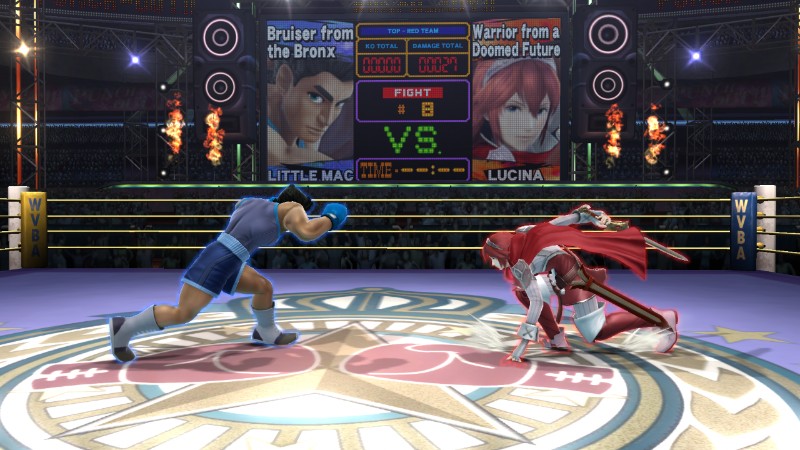
I’ve now spent a lot of time with the WiiU version of the new Smash Bros. At its heart it is the same game, but there are some significant differences between the two versions. Both are worthwhile, but the 3DS game is a fun distraction, the WiiU one is Smash Bros the way it is supposed to be played. It looks great, plays great and introduces some great new additions to the series.

The 3DS game’s exclusive Smash Run mode was a fun time waster; it wasn’t the best thing ever, but it grew on me the more I played it and was a decent way to change things up. That is replaced on the WiiU with Smash Tour. Smash Tour is a terrible single player mode; it is absolutely no fun without other players. As a multiplayer game it plays like something between regular Smash Bros and a very limited Mario Party. It makes it much less entertaining than Smash Run. If you have a group around to play Smash, then you likely want to play Smash, the other modes are for when you have to play alone. Smash Tour fails utterly as a single player experience.

sm44

Really, the single player side of Smash Bros WiiU is severely limited. All-Star mode is still All-Star mode. The same goes for Home Run challenge and the Multi-man Smash modes. Those are all familiar and fun. Event mode is also back, and the varied challenges found there are excellent, though somewhat brief. I completed all of them after just a few hours. Nintendo did add coop play to almost all of the single player modes, making them worthwhile when there are exactly two players. The new target mode is now some Angry Birds knock off that I don’t quite get. I don’t enjoy it at all and would rather have the old individualized courses from Melee back. They also screwed up Classic. I’m not sure how to describe it, instead of the simple choices and series of matches from even the 3DS version; it is now just an asinine mess. I kind of hate it. Maybe the real fun is to be had with Master/Crazy Orders, which I’ve barely touched. Still, even more than on the 3DS game I miss the Subspace Emissary. As goofy and unnecessary as that was, I still really loved it. It is now the only reason to keep Brawl around.

sm43

As disappointing as that stuff may be, it is all just a distraction from what really matters: the fighting. It is pitch perfect, looks, sound , controls, everything. There are only really slight tweaks from the previous games, but Smash Bros has played about perfectly since its inception. It has always been deceptively simple. This game’s (I really wish they had come up with a subtitle like Brawl or Melee) supersized roster seems, at least through a few dozen hours of play, to much better balanced that the earlier games. I ranked the fighters based on the 3DS game and even though it is the same roster for this one, if I did that list off the WiiU game it would be significantly different. I loved Jigglypuff the first time around, now I can’t use her at all. But Dark Pit, a character I quickly dismissed before, has fast become a favorite. The classic Smash fighting is h=just as broad and chaotic and addictive as ever.

The big revelation is 8-player Smash. Smash Bros has always been chaotic, but doubling the number of fighters just makes things insane. To account for this, Nintendo added a handful of supersized stages. It is amazing how much a fight can change just based on the stage chosen. 8-player in a small arena like Yoshi’s Island is just pure madness, with little to no way to control the battle; there are just too many variables. It is great. But a map like Palutena’s Temple is completely different. That map has more than enough space for eight fighters to find space and terrain suited to every character. It is about choosing your battles and battle ground. It takes a lot longer and is a completely different game, but it is still a lot of fun. No matter the map, the craziness of 8-player Smash is awesome.

sm42

Like the rest of the series, Smash Bros WiiU is crammed to the gills with content. To go along with hundreds of trophies, there is also equipment and alternate specials. The equipment is not big deal, they are much like Brawl’s stickers and just as useless. That is not really true, there are a lot of things you can do with them, but it is fiddle and uninteresting. The alternate specials are a different matter. Each character has three versions of each of their special attacks, most only a slight variation on the normal take on it. I haven’t come close to unlocking all of them, but they can really change how a character works. For example, some attacks add a wind effect that pushes enemies away but doesn’t actually hit them. It is not effective for racking up the damage, but it great for pushing players off the edges. All of the alternate options let’s players customize characters within reason. It doesn’t completely remake them, but it can do enough to completely reshape how to go about using that character effectively. It is great.

sm41

I don’t know that Smash Bros is my game of the year, but it is the game from this year that I am sure to continue playing for the longest. I am a little burnt out now, after putting 40+ hours on the 3DS and nearing that again on the WiiU, but I would guess that I’ll keep returning to Smash for years to come. That is how it has been for every other game in the series. Melee was the first Gamecube game I purchased and the last one I played. It is a similar situation with Brawl and it will be the same with this one. I love Smash Bros and this one is the best one yet.

Defending the Wii’s Legacy

Despite being the highest selling console of the last generation, I’ve noticed lately that the Wii has the reputation of being a failure. This is very wrong. While the Wii might not have the best library of games, it does have a particularly unique and varied one. The Wii is a console with more delightful experiments than outright masterpieces. Once the player moves past Nintendo’s first party offerings, separating the wheat from the chaff can be difficult, I know. However, there is a lot of good wheat to be harvested from the Wii’s crop of games. Not all of them are for everybody, but there are a ton of really good games. I really hate to see the system remembered as a novelty console with crap games. I am going to take a stand against this misrepresentation. This is the battle I choose to fight; this is my hill to die on.  No really, I just think it is a cool system with a bad rep.

wii1

You have to start with Nintendo’s not inconsiderable contribution to their cause. No one else may have been putting their A-Team on Wii games, but Nintendo had probably their best slate of first party titles since the SNES. Super Mario Galaxy and Super Mario Galaxy 2 are both absolute gems; two of the best games ever made. New Super Mario Bros Wii may not be quite that great, but there is little to match the joy of simultaneous 4-player Mario. The Zelda series had both Twilight Princess and Skyward Sword, each a somewhat flawed but still terrific game. While I acknowledge the troubles some people have with the controls, I will defend Skyward Sword to my last breath; that game is amazing. The system had a new Punch Out!! game and two Kirby games. It had Metroid Prime 3, the Prime Trilogy release and Other M (which as bad as it is as far as story goes, still plays fairly well). They put out a whole host of solid Mario sports and party games, a bunch of high quality casual titles like Wii Sports, Big Brain Academy and Endless Ocean. They published a good handful of RPGs like The Last Story and Xenoblade. The point is Nintendo simply killed it with will software on the Wii, even if they were determined to leave a lot of the interesting stuff in Japan.

The games not from Nintendo are much more hit or miss, but there is still a lot of good stuff across a ton of genres. The Wii gave a lot of developers a chance to try new things and bring back some old things. There are ton of great Point and Click Adventure games. Many of them are also available on PC, sure, but the ubiquity of the Wii seemed to be a factor contributing to the genre’s resurgence. Thanks to the wiimote working like a light gun, there are also a ton of rail shooters, like House of the Dead Overkill. Some people tried to bring popular genres like FPSs to the console, with some success in games like The Conduit and Red Steel 2.

wii3

The point of this wasn’t supposed to just be listing Wii games that are largely good. I could do that for a long time; there are tons of them. This is outlining a new mission statement. I want to use this blog to put a spotlight on Wii games. I want to highlight the excellent software that exists for the console. If I am being honest, this is partially motivated by the fact that a lot of these games are really cheap right now, so picking up interesting sounding title to see how good they actually are is not a cost intensive venture. It is easier to explore a system’s library when the bulk of that library can be had for next to nothing. This is an informal project I am going to keep at for some time. At least until I figure out to capture video so I can start my “SNES kid plays Genesis” series. My goal, such as it is, it to write about at least one unheralded Wii game a month for the foreseeable future.