A Wild Breath of Fresh Air

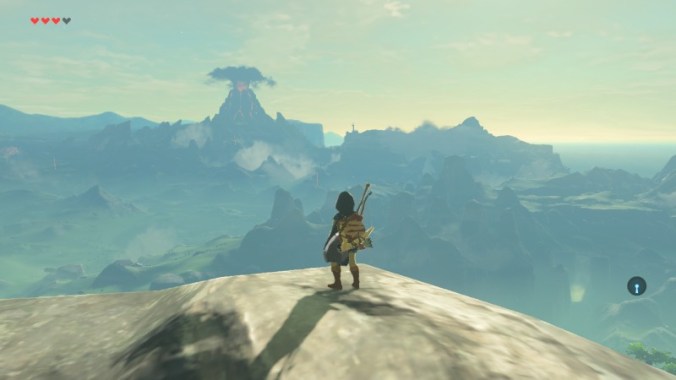
I have beaten Legend of Zelda: Breath of the Wild and gotten the good, or more accurately full, ending, but I have far from finished with the game. For all that it was hyped in ways that didn’t sit well with me and seemed to be Nintendo bowing to current gaming trends and shifting focus on the parts of the Zelda series that have never really drawn me in, in the end Breath of the Wild was everything it was ever cracked up to be. I may love the Zelda series, but this is one of the few games, not limited to the Zelda series, that when I finished I thought I had just played the best game of all-time. Those feelings might not hold, but they aren’t exactly coming. I loved Legend of Zelda: Breath of the Wild from the start and that love never wavered over more than 60 hours of playing the game. Plus, I expect to get another 30 hours of enjoyment, at least, out of it still.

On paper, Breath of the Wild is targeting players that aren’t me. The previous Zelda games, the ones that everyone can’t help but trash when talking about how great this game is, were my jam. There are few gaming experiences more satisfying to me than a Zelda dungeon. Breath of the Wild all but eliminates them as separate entities, replacing them with four small mini-dungeons and 120 one room shrines. They have essentially broken the dungeons up into individual rooms and spread them across Hyrule. It should have turned me off, but somehow it didn’t. The rooms themselves are still as satisfying, though I miss the larger considerations of classic dungeons like Ocarina of Time’s Water Temple. Breath of the Wild also emphasizes its over-world, a gameplay conceit that has consistently left me cold. Open World in my mind translates into empty; into replacing quality with quantity. Even in open world games that I like, like Metal Gear Solid V, the open world added little. Breath of the Wild, in contrast, is positively overflowing. And it does it without compromising the series excellent gameplay.
I loved everything about this game, it is hard for me to think about it critically and not just gush over it. The story might be considered a weakness, but the only complaint that I had is that it left me wanting more. With 100 years between the initially calamity and destruction of Hyrule and Link’s awakening, all interactions with the main cast are done via flashback. It gives the player just enough to feel like they know the characters. Which makes their fates (slight spoiler, but it has been 100 years) all the more tragic. I especially loved the search for memories of Link’s time with Zelda before everything went pear shaped. Searching out these links to the past both give greater insights into the story and push the player to explore, which is where the game shines most brightly.

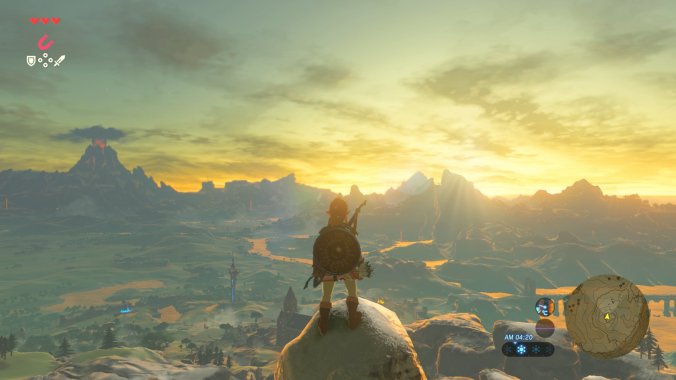
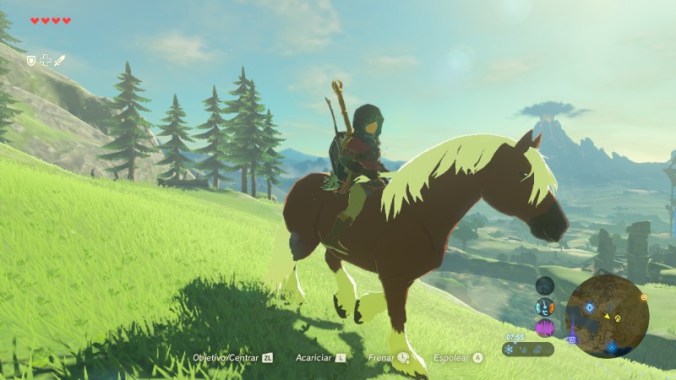
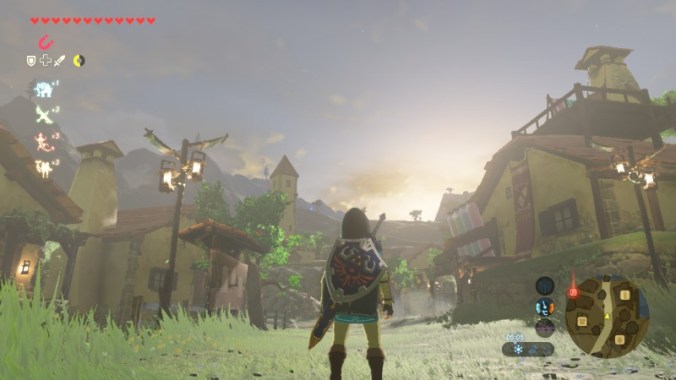
This is hands down the best looking open world game I’ve ever played. It might not be the most technically impressive, but any shortcomings are more than made up for by the stunning art direction. It is just a joy to explore; it is impossible to resist climbing just one more hill to see the view from the top. The pictures that lead to new memories are more than incentive enough to explore the secret filled spaces of Hyrule. Even where there is no memory, there is something else to find, whether that is a shrine or a Korok puzzle or just an interesting view.

Like they largely removed dungeons, the bosses are also lacking. There are roughly five in the game, and all are largely the same entity. There are almost random bosses to be found on the world map, very interesting ones, but that doesn’t really make up for the uniformity, and lack of challenge, in the bosses proper. But that isn’t really a problem. The bosses are undeniably lacking, but it seems like a very deliberate emphasis on other things rather than a failing.

The narrative around Breath of the Wild is that it breaks all kinds of Zelda traditions, but that isn’t entirely the case. It reimagines the series structurally, but it keeps the gameplay largely similar to how it has been for the last two decades. It removes structures set down since the original Legend of Zelda for the feeling of exploration that that original game engendered. The dungeons are gone, as are most tools and the all-encompassing search for magical doo-dads. It is in many ways a simplified take on the series. In place of all that stuff is just a need for exploration. And the exploration friendly ability to climb anything. But it still plays like Zelda. For all that it limits the character to a handful of multi-use powers, but they are still employed in familiar ways. It is still Zelda.

It is just a great game. Any complaint I can come up with is a nitpick. All I want to do is keep playing the game. There are few other games that take as long as this one did for me to beat that my immediate response to the credits rolling was to start playing again. Breath of the Wild is something special, the kind of game that only comes around once every handful of years. I can’t think of any better gaming experiences I’ve had and only a few as good.

Super Mario Replay: Super Mario Bros 3

Again, I am just going to link to my previous Super Mario Bros 3 blog post. This is a game that I come back to fairly often and I don’t have anything in the way of fresh realizations from my recent play through. As much as I like to point out Super Mario Bros 2 as an underrated gem, its real problem is being sandwiched between possibly the most influential video game ever in Super Mario Bros and a legitimate, best game of all-time masterpiece in Super Mario Bros 3. SMB3 does essentially everything right, gets all the juice it possibly can out of the NES and most importantly is just a blast to play. It is possibly for a knowledgeable player to blast through in an hour or so and is just as much fun for a novice to wander around in for five.

Playing the three NES games as the All-Stars version did a lot to make the experience feel fresh. The games still play like they should, but there is novelty to playing these NES games when they look like early SNES games. Other than the graphics, the one big change this game brings is save functionality. Being able to save would fundamentally change the series, but all it does with these games made without that feature in mind is let you play the game at your own pace. That is not a big deal in this age of Virtual Console save states, but you do play a game differently when you have to beat it all in one sitting or start over from the beginning. I don’t think it will ever be more than a curiosity, but I am glad it exists. Next time, I’ll probably stick with the originals, but I am glad to have seen these versions of the game.

Early Zelda: Breath of the Wild Thoughts

Legend of Zelda: Breath of the Wild is amazing.  It more than lives up to the considerable hype.  I love it and am glad to say that the few trepidations I had going in have proved unfounded.  While most people seemed to be won over instantly at the idea of an open world Zelda, I was scared that Breath of the Wild would play like an open world game.  I feared that the tightly designed, often dense worlds of the Legend of Zelda would be replaced by a blandly generated open world. Both of those fears have been assuaged by playing nearly 20 hours of the game over its first  week after release.

While the openness is the first thing that grabs the player upon starting up the game, it obvious pretty soon that Nintendo and Zelda Producer Eiji Aonuma didn’t throw the baby out with the bathwater.  The prerelease hype and the reviews have all focused on its ties to the original Legend of Zelda, and that game’s influence is clearly felt, but it doesn’t ignore the series past that. The structure of the game has been rethought, continuing a trend that arguably began with Skyward Sword and was very evident in A Link Between Worlds, but the moment to moment gameplay is just another step along the evolutionary path that the series has been on since the series went 3D with Ocarina of Time.

I understand that many people found Skyward Sword stifling, but it controlled like a dream.  People will argue about the motion controls for sword fighting; I think they are being ridiculous, but setting the motion aspects aside, Skyward Sword was a delight to move around in.  That is something that has been true of the series since it went 3D.  Few 3D games feel as good to move around in as the Zelda games do.  There is a reason that so many games stole Z-targeting from the series.  Compare that to popular open world games like Grand Theft Auto or Bethesda’s output and it is night and day.  The player character in Skyrim glides over the world, never really seeming to interact with it.  Some of that has to do with the fact that Elder Scrolls games are designed to be played from the first person perspective, some of it has to do with the fact that Bethesda games have big, well considered worlds but play like janky pieces of crap.  Breath of the Wild takes the open world, but it still plays like Zelda, a feat that I didn’t think could be achieved, but they did it.  I thought at best we would have an Assassin’s Creed situation, games that play fine,but the player interacts with the world in very limited ways.  

Then there was my fear that wewould get the usual open world, which usually translates to empty world.  The really open Zelda game was Wind Waker, which featured both small dense islands to explore and wide and empty ocean.  That was built into the game: the ocean is big and empty. The best Zelda games have forsaken openness for density. A Link to the Past’s Hyrule is not especially big, but there is a lot to find and do.  People love Majora’s Mask and that game is undeniably tiny.  The clear winner as far as game density goes is Skyward Sword.  There is the big, largely empty sky, but that exists mostly to let the player fly around on the back of a bird, once on the ground there is always something to do or see.  It essentially turned theoverworld areas into open air dungeons.  Their density made for difficult traversal, but unlocking the secrets of each of the three main areas never stopped being enticing. While not as dense as Skyward Sword, Breath of the Wild has kept that denseness while expanding Hyrule bigger that it has ever been before. This is an open world where little piece of the map has something to do or see.  Maybe it is just a simple rock moving puzzle to find a little korok spirit, maybe it is a shrine, perhaps a rare or unique specimen of flora or fauna and sometimes, rarely, it is just a beautiful view.

That beautiful view thing might be something people could say for many games, but I have not seen a game that astounds me like this game has with how it looks.  It is not the most technically impressive game in existence, but its art design is unparalleled. I have only explored at best a quarter of Breath of the Wild’s Hyrule and perhaps I’ve only seen the best of it, but if it can maintain this level of things to do and see over the course of what promises to be a nearly 80 hour game, it will certainly go down in history as an all-time great.

Games of Lordly Caliber

In the last two weeks there have been two great releases on the dying WiiU.  In fact, not just on the dying WiiU, but on its also dying Virtual Console.  Both of them are n64 games and both are games that meant a lot to me as a youngster: Ogre Battle 64: Person of Lordly Caliber and Harvest Moon 64.

I was an RPG kid. I fell in love with the genre thanks to Nintendo Power’s Final Fantasy 2 (I know it is actually 4, but it was originally released her as two, that is what the NP guide called it, and in my recollection it is always going to be 2) guide. That is right, the guide not the game. I couldn’t have been more than 6 years old when I saw that and it was everything I wanted to see. I hadn’t yet read Lord of the Rings or any similar fantasy, but I loved movies like Willow and The Princess Bride which transported me to fantastical worlds. That was much like the joy I got out of games like The Legend of Zelda, Dragon Quest or Legacy of the Wizard. That Nintendo Power guide made Final Fantasy 2 look like that turned up to 11. Since I didn’t have an SNES, I set about looking for the first Final Fantasy. I eventually found it in a Wal-Mart bargain bin along with a treasure trove of NES classics that I knew nothing about. I still wonder what all else was in that under $10 bin in which Wal-Mart was attempting to clear out it back NES stock to make room for the growing Genesis and newly released SNES. Though I had played some RPGs before and despite that fact that Final Fantasy 1 was not much like Final Fantasy 2, finding that game thanks to reading that guide is what made me a JRPG fan.

That did not mean I actually got to play them. I lost the Christmas console war to my brother, so at a date as late as 95 (I can’t recall exactly), we got a Genesis instead of an SNES. In a happier world that would have led me to Phantasy Star, but I was not so lucky as to even know that it existed. Instead, I spent a couple of years playing Sonic the Hedgehog, Golden Axe and X-Men 2: The Clone Wars. Good games all, but nothing that could scratch my RPG itch. Eventually I saved my allowance to buy my own SNES and finally seized my chance to experience that Golden Age of RPGs. After a few years SNES games got harder to find and it became obvious what must happen: we needed to upgrade consoles again.

I already knew that all the RPGs had gone to the PlayStation; it was 1999 and I was a tuned in 14-year-old. I read EGM and Game Informer, not nonsense rags like Nintendo Power. But as much as I wanted to play Final Fantasy VII or Xenogears, I knew I had to have Ocarina of Time. Though I didn’t own either system, I had played both of them; I did have friends. I had played Mario 64 and it was a revelation. I had also played Crash Bandicoot and it was a game I had played. If Ocarina of Time was the game that all the magazines made it out to be, then how could I not play it? The other game for the N64 that I felt I had to play was Harvest Moon 64.

I can’t tell you precisely why that was.  Maybe it was my youthful iconoclasm. My friends and playground acquaintances were enraptured over the violence of Goldeneye and Turok, but while I enjoyed playing games with my friends, the games themselves didn’t really do anything for me. I didn’t object to the violence; I was 14 and that was objectively the coolest shit ever. That 90s extreme trash was still popular, though waning. The ads for Harvest Moon 64 were like something from another planet. It features the main character running through the woodlands, trailed by his faithful dog, with a resolute look on his face. At the bottom an anime girl in coveralls fed birds out of the palm of her hand, while the text detailed the relaxing challenge the game would provide. It looked cute, though not childish; the characters looked familiar – the style is not too different from Pokémon – but the game looked different. I was entranced by its pastoral siren’s song.

It looked like RPGs that I loved, but relocated to a new milieu. That was a move that had paid off before. While most RPGs stuck with the usual medieval fantasy, Earthbound had blown my mind by setting that same kind of game in familiar everyday territory. Pokémon did something similar, with its regular town setting contrasted with the monster collecting and battling. Harvest Moon 64 seemed to taking it to a more rural setting. Once I played the game, I realized that it wasn’t quite what I had imagined.

Harvest Moon 64 is largely an RPG with farming replacing the fighting, but it ends up feeling more like The Sims than RPGs that came out around the same time. It combined a surprisingly addictive farm management game with a simple but solid life sim. The main gameplay might be the farming, but what drew me back for months were the relationships I built up with the townsfolk in the game. Despite a cast that would now be called limited and the player’s limited ability to interact with them, at the time it was brand new. That the game had even somewhat life-like townsfolk back then was amazing to me. I spent tons of time learning the routines of the various shopkeepers and eligible bachelorettes. I spent even more time going to the library to use their dial-up internet to look up character’s favorite foods or when special events happened.  

That dial-up internet part is a big part of the appeal, I believe. I never had a lot of information while playing HM64, and that I did manage to get off the internet often proved unreliable. Sussing everything out was entirely up to me. I think that is part of the reason no Harvest Moon game has grabbed like HM64 in the years since. I’ve played some and had fun with them, but I usually make it through couple of seasons before wandering off for some a little more immediately rewarding. Usually, I spend some time looking up how to romance or befriend various characters before getting a little annoyed that it takes more time than I am willing to put into.

If opaque games with little documentation about how they work are your thing, then the other sort of RPG for the N64 that hit VC is for you. I don’t know that I’ve ever played a game as purposefully obtuse as Ogre Battle 64: Person of Lordly Caliber. Nowadays it would likely drive me crazy; back then it just seemed deep and mysterious.

I love Ogre Battle 64, but I didn’t have that time of intense longing for it that I did for Harvest Moon 64. The only real story about me wanting it is about Final Fantasy Tactics. Before we got that N64, I did borrow a PlayStation from a cousin and one of the games he had was Final Fantasy Tactics. Unfortunately, he didn’t loan us a memory card, so I never saw more than the first few battles, but those were enough to convince me that it was one of my all-time favorite games. I looked into other games like that and learned about Tactics Ogre, but I never saw or had the opportunity to play. When my family went N64 over PS, I thought I would never have the chance to play either of them. Then I saw Ogre Battle 64 in EGM. It looked like everything I wanted and it was on the system I had. So on our annual trip to Toys’R’Us, I used my saved up mowing money to pay the $60+ asking price for the game. I’ve never regretted it.

While it doesn’t play much like FFT, it is a game with a very similar focus, understandable since both the Ogre Battle series and the Ivalice Final Fantasy games sprang from the mind of Yasumi Matsuno. They are both games that are about war in much closer detail than other RPGs and they are games with more complex looks at characters than the simplistic good vs evil that most games presented. It had the same look and feel, while presenting a game that was more than good enough.

I love this game, but that is in spite of its various systems, some of them hidden, that determine how you proceed in the game. Classes unlock when you have characters that meet the requirements, but the game doesn’t even hint at what those requirements are. That includes owning the classes starting equipment. There is a morality system for both the army and the individual units. Your current standing is visible, but it is not spelled out how to affect that standing. Maps have things hidden about them, but it takes either knowing where to look or systematically scouring each map after it has been beaten. Now nearly all of this game’s secrets are available on the internet for you to find, playing it back in 2000 I felt like a pioneer, venturing out into the great unknown. Finding out that there are other spell casting pedras, but now where they are meant searching for missing elements. Looking for the equipment to unlock the Dragoon or Princess or Lich classes. Learning how to get the good ending, or the bad ending, or any of the other four endings.

My first, and to date only complete, play through started out well, but somewhere about ⅔ through the game I somehow switched from the good path to the bad path, meaning I missed out on both the awesome characters you get for being good, cool carry-overs from the SNES game I never played, and I missed out on the badass evil characters you can recruit instead. I took the mediocre path. I have long wanted to go back and do it right. And do it wrong.

I can’t currently speak to the specific details of how these games play, I haven’t put more than an hour or so into either of them for more than a decade, but they are chief among the games I think of when I think back to my days playing the N64. Yes, I spent the better part of a year playing Smash Bros with a few friends most days after school; yes, I played through Ocarina of Time no less than four times. However, Harvest Moon 64 and Ogre Battle 64: Person of Lordly Caliber are certainly their equal in my memories of that system being my primary gaming platform. I am glad they are on the VC for new fans to find them.

Now Playing in Feb 2017

Beaten

Super Mario Land 2 – read about it here.

Super Mario Bros 2 – read about it here.

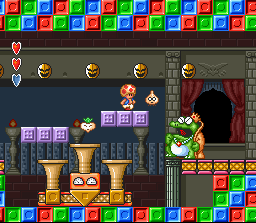
Fire Emblem Heroes – Nintendo’s latest mobile game is the game that I was afraid they’d make since they announced they were doing mobile games. For the most part their FTP games have been fairly consumer friendly, from Mario Run’s pay once for the whole game policy to Pokémon Picross’s hard cap of $30 it will take from the player. Fire Emblem Heroes looks like a FTP game targeting big spending whales. That doesn’t really affect me, since I am not going to spend any money on this game. Still, with no money spent, I have managed to clear all but the last couple of stages on the hardest difficulty. It is Fire Emblem light, with a mix of your favorite characters from across the series. While there is considerable depth in the game’s skill system, the maps and battles are so simplified that it hardly matters. It isn’t a true Fire Emblem experience, but it is fun enough to pull out for 10 minutes during my lunch break. Still, while I might check in occasionally as new content drops, I am pretty will done with it at this point.

Ongoing

Terra Battle – After fiddling around with Fire Emblem Heroes for a week or two, I redownloaded this FTP game that I had some fun with last year. There is a lot to like in this game, with its appealing mix of puzzle and rpg gameplay and a very deep lore and effective world building. However, like most FTP gatcha games, the monetization elements really get in the way of actually enjoying in the gameplay. I mean, there is a fun game in here, but it is hard to find it through a lot of junk. I think I’m done with these free phone games for a while again, at least until Nintendo adds plenty of more content to Fire Emblem.

Hyrule Warriors –

hw1

The combination of opportunity and hype for Breath of the Wild got me to spend some time with Hyrule Warriors. It is a Musuo game, sometimes those hit the spot but I have yet to play one that ends up being more than a middling experience. I only cleared the first four or five maps, but this is a lot of fun. There is a wide variety of playable characters and the game appears to be just full of Zelda fan service. I won’t be finishing this game anytime soon, since I am dumping it for Breath of the Wild as soon as I can, but I will come back to it.

Yakuza 0 –

y0

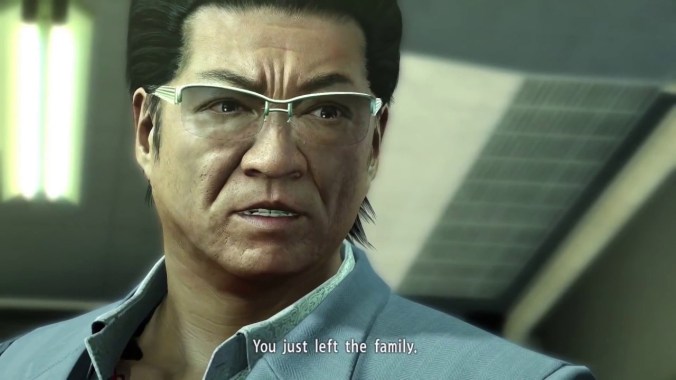
This seems to be the first Yakuza game that is becoming a hit here in the states and I am glad if this series is getting its long deserved recognition. I only played the first two chapters and this is more of what I absolutely loved about Yakuza 4 and 5. It has some minor improvements, but the games were already really good. I haven’t got far enough to really get into the game, but I expect I will love it when I finally do.

Dragon Quest VIII – I didn’t put as much time into this as I had hoped to. I just didn’t spend a lot of time with my 3DS and I let my brother take the cart for a week or two. I loved this game when I first played it more than a decade ago (? … !!!!!) and through the first half dozen or so hours it holds up. The loss of graphical fidelity hurts some. Dragon Quest VII isn’t the most complex game; a lot of its appeal is in its verisimilitude. It removes the abstractions of scale that many games have with their world map. DQ8 is mostly to scale. They kept that scale here, but the illusion doesn’t work as well when the game doesn’t look as good. Still, it is a solid game.

Super Mario Bros 3 – I started this and cleared the first couple of worlds. I should be done with it before too much longer; it is not a long game. Though the All-Stars version adds a save feature, the game was not designed with that in mind. I really haven’t changed my mind much about the game; it is absolutely one of the best games ever made.

Super Mario 64 – I skipped ahead a few games in my Mario series replay because as excellent as nearly all Mario games are, I needed a change of pace. Mario 64 is that change of pace. It has been a long time since I played it, long enough that many parts of the game don’t come completely natural to me like they do with Mario 3 or Mario World. Still, a lot of this game is purely iconic. I should be done with it not long after I finish Mario 3 and should have a post ready to go not much later.

Robotrek – I am progressing slowly, but I am still working on it. I will get this game beaten sooner rather than later.

Upcoming

Legend of Zelda: Breath of the Wild – I couldn’t be more pumped for this. I’m getting it for WiiU, where it will make a fine farewell to a tragically overlooked console and likely be worth quite a bit of money down the road. This is likely to knock everything else on this list around, because I will be playing Zelda forever.

Super Mario World – I am skipping around just a bit to play Super Mario 64, but I will get to this sooner rather than later.

Super Mario World 2: Yoshi’s Island – After World, I will move on to this. Playing the GBA version on Virtual Console, as that is the only one available to me.

Lufia 2 & Terranigma – I will get to these last few SNES games, but they are on the back burner a little bit. I mean, Breath of the Wild.

Frustrated Hype

There is no game coming out this year that I am more excited for than The Legend of Zelda: Breath of the Wild, which I should have in my hands already and I’ll see you in a couple of years when I come up for breath. Hell, I don’t think I’ve been this excited for a game since the similarly delayed Legend of Zelda: Twilight Princess a decade ago. Still, there is something in the early reactions that I find incredibly annoying. The game is getting the same kind of hype that helped contribute to me losing interest in Game of Thrones. Like with that TV/book series, much of Zelda’s early lauding is built on tearing down what came before it. As someone who has had a lot of fun with those games, it finds that turns me away more than it gets me interested. I doubt I will result in a clean break for me with Zelda like it did with A Song of Ice and Fire, at least partly because I still really like what Nintendo is putting out and partly because I like Zelda a lot more than I ever enjoyed George R R Martin’s work.

Today!

Today!

While its fans’ crapping on the rest of the genre wasn’t what turned me off to A Song of Ice and Fire, it did make it easier for to just decide to give up on the series. I dug into the series a year to two before A Feast for Crows came out and enjoyed it. Then A Feast for Crows hit and I found it rather underwhelming. When the promised second half didn’t show up the next year, or the year after, I kind of started to lose interest. At least, I did until it was announced that HBO was working on a TV adaptation. That sparked a reread and the realization that once the shock of the discovery was gone, I didn’t really like the books that much. That is the biggest reason I am not into the series anymore; it kept my interest through the rush of its twists and turns, but I didn’t like anything else about it.

What really didn’t help the situation were my online interactions with GoT fans. The primary method I’ve seen fans of the series use to build up it up is by tearing down other fantasy series. ASoIaF/GoT is better than Wheel of Time because it is so real. It is so dark and gritty, unlike all that other silly fantasy crap. Not only did I find these arguments unconvincing, it was also frustrating to see stuff I liked consistently put down by people hoping to push something that I really didn’t like. Being more realistic is not necessarily a positive thing in a fantasy series. Being dark and gritty is often just code for being cynical and pre-teen edgy. I am glad for fans of the series to have as faithful and successful an adaptation as Game of Thrones appears to be, but it success doesn’t render other similar series inferior.

That is the same feeling I am getting from some of Breath of the Wild’s hype. Nintendo is purposefully comparing their new Zelda to the original Legend of Zelda. That is fine, and it appears to have resulted in a truly excellent game. But that has morphed in many places to the full on tearing down of every Zelda game between the original and this new one. It is some baffling revisionist history, like there haven’t been at least three masterpieces in between. This is not true of everybody, many are careful to point out that while A Link to the Past didn’t have the original’s freedom it was still an excellent game, but most of the games are getting written off as misguided crap.

I never thought I would put myself into arguing against the original Legend of Zelda, but people vastly overstate the sense of ‘freedom’ in that game. It may have been one of my original gaming loves, but that game is a lot of opaque crap that has been wisely discarded. Getting past the Lost Hills or the Lost Woods is a cool trick once you know it, but it is understandably frustrating to anyone who doesn’t know how it works. Finding most of the secrets on the over world involves either already knowing where things are or painstakingly burning each bush or bombing likely walls. It isn’t fun; it is tedious. There is a lot to love about the game, but its relative openness is not the game’s biggest selling point.

Then there are the supposedly hyping comparisons to Skyrim, as though being a wide open janky piece of crap would be an improvement for the series. I know that I am the extreme outlier for my take on that game and Bethesda’s output in general, but what I’ve always liked more about Nintendo’s output over a lot of the open world crap that is dominating the current gaming landscape is that their games actually have well considered gameplay. I would rather Skyward Sword’s tightly designed, dense overworld to the wide open nothing that I see all over the place. From what I’ve seen of Breath of the Wild it appears to avoid the traps that nearly every other open world games fall into. Like Metal Gear Solid V, Breath of the Wild appears to still be a tightly designed game that is also an open world. As long as it still plays like Zelda, everything else is just gravy.

What annoys me is the hype that depends on putting something else down to make whatever is being hyped look good. You don’t have to tell me that the Wheel of Time is crap to try to convince me that A Song of Ice and Fire is good. Twilight Princess and Skyward Sword don’t have to be misbegotten junk to make Breath of the Wild a fresh experience. It can sell on its own merits; the other games in the series don’t need to be buried to build it up. Again, I am excited for Breath of the Wild as have been for a game in a long time, but that excitement has nothing to do with Skyward Sword, other than the fact that this game seems to be using a similar art design.

Super Mario Replay: Super Mario Bros 2

I started and lost a version of this blog post and I don’t really feel much like rewriting it. Especially since I’ve already said just about all I have to say about the game in my 25 Years of NES entry on it. So this one is going to be short; just a few observations from my recent play through of the All-Stars version of the game.

smb2

Super Mario Bros. 2 is a still great, and the All-Stars version just makes it better. It is already a game notable for being bright and colorful, this version just adds to that. There is just something so inviting about this game. It doesn’t have the game changing importance of the first game or Super Mario 64, nor is it as virtuosic a display of game design as Super Mario Bros 3, Super Mario World or Super Mario Galaxy, but Super Mario Bros 2 is one of the most pleasant games in the series to play. With the Mario series that is really saying something. Nearly all the games are pleasant, but this one stands out in that regard.

That’s it. Shortly it will be time for Super Mario Bros. 3, which might turn out to be as short as this one. It depends on how much I have to add to what I’ve already written about that game.

Super Mario Replay: Super Mario Land 2

Super Mario Land 2: 6 Golden Coins is not especially good. This really hurts to admit; it was one of the few worthwhile Gameboy games I owned for the first few years that I owned that machine. Playing it now, it is hard to deny that it is only passable because most Gameboy platformers are simply crap. It does improve on a lot of things from its predecessor, but many of those improvements come with drawbacks that make it hard to definitively say that it is the better game.

sml23

Super Mario Land 2 is certainly a better looking game than its predecessor. Mario looks more like the Mario from Super Mario World, which came out the year before, and each of the games six worlds is bursting with personality. It is also a bigger game than the first Gameboy outing, with 32 stages compared to the firsts 12. And all of those stages are platform stages, no weird shooter segments this time. There is more of that genuine Mario feel, with everything being on model, fire flowers instead of superball and no exploding koopas.

sml22

It does suffer in how it plays, though. The bigger, better looking Mario takes up a lot more of the screen real estate, meaning that the player can see less of the level. It is a problem common to Gameboy platformers, leading to too many blind jumps and cheap hits. The game also feels a little floaty. The edges of enemies and platforms are not particularly clear, again leading to cheap hits. It might be the worst playing Mario game that Nintendo ever made.

The game did give the Mario series Wario, the perfect secondary antagonist for the series. It isn’t like Evil Mario is the most original idea ever, but Wario as he evolved after this game is great. He was good enough here that he promptly took over the Gameboy series from Mario. The next game was Wario Land: Super Mario Land 3. Though it is called Super Mario Land 3, I am considering it a Wario game and including it in my Super Mario Replay.

sml24

Super Mario Land 2 is a game that means a whole lot to me. I played it so many times on cross country trips, as my family drove from western Missouri to Indiana every summer to visit relatives. I know the ins and outs of this game like no other game in the Mario series. Still, playing it now, with fresh eyes, it is hard not to notice its shortcomings. It is certainly an ambitious game, there are few Gameboy games that look better. But like most GB games of its ilk, it is a pale shadow of the home console games of the same time. It is trying its hardest to be portable Super Mario World, but that just isn’t possible on the Game Boy. I can’t say that it isn’t a worthwhile addition to the series, but it certainly isn’t the best.

Super Mario Replay: Super Mario Land

For a nearly 30 year old Gameboy game, Super Mario Land remains remarkably playable. It is a fine game made within the constraints of the time and situation of its creation. Judged solely on the merits of how fun it is to play in 2017, it is unfortunately lacking.

Super Mario Land is one of only two actually worthwhile Gameboy launch titles, along with Tetris. It hit shortly before Super Mario Bros 3 and played and looked mostly like the first Super Mario Bros. Much like the other game that looks and plays the most like Super Mario Bros, The Lost Levels, Super Mario Land is a distinct step back from that seminal game in just about every way.

sml2

Being a step back in the graphics department is understandable; it is on less powerful hardware that comes with its own bad screen. Unfortunately, it is also a step back in the controls and length. Super Mario Land plays surprisingly sloppily. The edges of platforms are inconsistent, jumps are kind of twitchy and everything just feels a little off. It isn’t enough to really ruin the game, but it never feels quite right. It is still a good sight better than most GameBoy platform games, mostly because the stripped down graphics actually play to the systems strengths. It is easy to see where you are going, no blind jumps because the screen doesn’t cover enough real estate for you to see where you’re jumping.

The short length is probably the biggest problem with the game. SMB had 32 levels, SML has 12. And they are not particularly long or difficult levels. The game can be beaten start to finish in about 45 minutes. The game consists of four worlds of three stages each. Even with just 12 stages, 2 of them are not normal stages but scrolling shooter stages. Honestly, with the floaty controls and shooter levels, it is no surprise to learn that this game was not developed by Mario creator Miyamoto’s team but by the crew responsible for Metroid and Kid Icarus. It feels more like a Kid Icarus follow up than a Mario one.

sml

I would call out the world of Super Mario Land as being weird, but that is a moving goalpost with the Mario series, especially in the third entry America had seen, with each one being quite different than the last. Still, Mario 1 laid out the basics and Mario 2 added a ton of recurring enemies and characters as well as establishing character differences that have stuck since, very little of Mario Land has been follow up on. Princess Daisy is a mainstay of the various ancillary sports titles, but little else from this game’s Egypt and Ancient China episodes have been seen again. At this point, the setting feels very un-Mario-like. It doesn’t help that familiar elements are a little different as well. There is no fire flower in this game, instead of fire balls Mario tosses bouncing super balls. Instead of kicking turtle shells, they explode. They are traditional Mario elements that don’t work the same way they do in any other Mario game.

Super Mario Land is available on 3DS for less than $5 and that feels about right. It is still mostly enjoyable to play these days, but it is impossible to forget that this is a GameBoy game.

Now Playing in January 2017

Beaten

River City Tokyo Rumble – read about it here.

Monster Hunter Generations – read about it here.

Secret of Evermore – read about it here.

Super Mario Bros – read about it here.

Super Mario Bros The Lost Levels – post coming soon.

Runbow nojan2

This game is an absolute delight. I didn’t manage to beat the Bowhemoth, but I did see the ending for the campaign. It is a series of bite sized challenge levels. Each level has its own little challenge, like scrolling backwards or rising lava, but every level has the gimmick of the background changing colors, which reveals or hides similarly colored platforms. It works perfectly. It can be really tough, but stages are tiny, rarely taking more than a minute to complete, and numerous so even if you get stuck there is also a different challenge you can face. It is also jam packed with charm. Aside from the characters made for this game and their numerous outfits, there are also more than a dozen stars of other indie darlings like Shovel Knight or Shantae to play as. Everyone plays the same, though I do think there are plenty of unique taunts, but it really lets the play customize their experience. It also features up to 9 player multiplayer. I’ve only had the chance to experience 2 player so far, but it is also a lot of fun. I can see myself returning to this game for a long time, to finish unbeaten stages and go for high scores. It is really just a wonderful experience.

Aeterno Blade – This is a kind of janky metroidvania game. I’d hesitate to just call it bad, but other than a pavlovian enjoyment of filling out the map there really wasn’t much here I liked. There are a lot of combos one can do with battle system, but in order to make them viable it turns a lot of the enemies into damage sponges. The game looks like a PS1 game, a style of low res polygonal graphics that I can’t imagine anyone was clamoring to see again. I bought it on a deep discount and didn’t hate it, but there are much better games in this style available no matter the system you buy it for.

Ongoing

Paper Mario Color Splash – I’ve barely had the time to start this, but I like it so far. The dialogue especially has been impressive. Even the supposedly disappointing Paper Mario Sticker Star was a joy in its story sequences, so there was no reason to expect this to be any difference, but I am happy to see that it is just as good as I expected. It remains to be seen if the gameplay is as good, but it is promising through the first hour or two.

Remember Me – The more I play this, the more it becomes clear that this is a better idea for a game than it is a finished product. It is close to a good game, or even a great game, in many ways, but by the time I end each play session it feels like a chore. Hopefully it comes together over the second half; though that is usually the opposite of how game experiences go.

Dragon Quest VIII –nojan1

I’ve barely started on this game, but so far it is just as good as I remember it. There is something about the job system Dragon Quests that never quite clicks for me. I enjoyed DQ 6, 7 and especially 9, but my favorites have not been the ones to use a job system, like 4, 5 and, assuming my recollection matches the other 50 or so hours of the game, 8. Dragon Quest 8 is the most simple and straightforward game in the series since at least DQ5, maybe even further back than that. It is just a handful of characters on a quest, with twists and turns that don’t change the central nature of the story. Still, it does what it does very well and those characters as a lot of fun.

Elliot Quest – This game is a whole lot bigger than it seems. I thought I was near the end, but it turns out I was closer to the midpoint than the finish line. This game does have some problems, like the occasionally unresponsive controls and some punishing death penalties, but it is mostly really enjoyable. So far I would call it Zelda 2 done right. It plays much the same way as that second tier NES classic, but even at its most punishing it is more forgiving and overall just feels fairer. It helps that the player’s primary weapon is ranged, emphasizing avoiding enemies rather than toe to toe combat. I expect to have this finished before too long and maybe have more to say about it.

Robotrek – Its going, its going.

Upcoming

Enslaved Journey to the West – I stared this game last year, but barely got started on it before I got distracted. I intend to go back and beat it as soon as I finish with Remember Me.

Inazuma Eleven – I’ve got about 4 or 5 unbeaten games I bought digitally on my 3DS, and my goal this year is to try to finish them. Both because I have enjoyed what I’ve played of most of them, I am halfway through this one, but also as an excuse to not spend money on new games. I really intend to cut down on how much I spend on games this year.

Terranigma, Lufia 2 – These, along with the already started Robotrek, are the last of the SNES games I meant to beat last year. I will keep plugging away at them and hopefully finish sooner rather than later.

Super Mario Bros 2, Super Mario Bros 3 – This year’s project is the entirety of the Super Mario series, and a good afternoon should get me through both of these games. After that things start to take a little longer, but if I can get at least these two done in February I’ll be in a good place.