Super Mario Replay: The Lost Levels

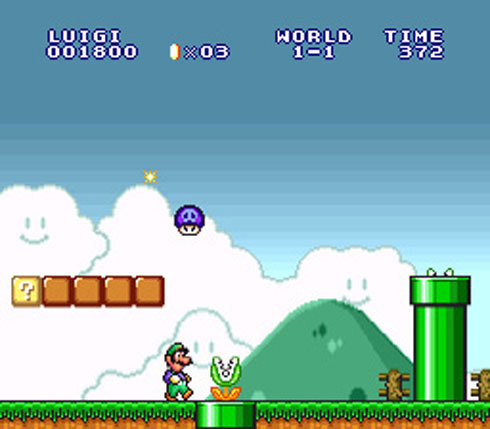
When I made my list of Mario games to play/replay it never occurred to me to put The Lost Levels on the list. It was mostly just an oversight, but The Lost Levels is an entirely unnecessary addition to the series. I’ve dabbled with it in the past, but quickly came to the absolutely correct conclusion that the Super Mario Bros 2 we got in America was the better game and the more important addition to the series. Still, when I decided that I would freshen up my replays of the NES games by playing the Super Mario All-Stars version of the games, I realized that there was fourth game on that cart and needed to play The Lost Levels to really do this thing right.

smr21

Everything good about the The Lost Levels can be found in the original Super Mario Bros. Almost everything new it adds is strictly worse than what came before it. Like the poison mushroom. It is the opposite of the power up mushroom, but the game is already full of ways to take that power up from the player, it didn’t need one more to just make things even more difficult. Difficult this game is; it is very much Super Mario Bros for super players, a category of people that I do not fall in. All of this is not to say that The Lost Levels is without its charms; it is more Super Mario Bros which is never a bad thing. It may be harder in some generally unfun ways, but the core game is still that same Mario goodness and no amount of poison mushrooms or invisible blocks can destroy that completely.

The good news is that Nintendo seems to have learned the right lessons from this game. None of the Mario games after this, even those that are definitely sequels, rely on bullshit difficulty like this game. It is a one off for the series, a dead end that is honestly better left forgotten or as just a footnote to the proper Super Mario Bros series.  This post comes off as an afterthought because it is.  I’m sorry for not engaging more fully with this game, but there is little here I enjoy; I’d rather just move on to good Mario games, like every other game in the series but this one.

Super Mario Replay: Super Mario Bros

My big project here this year is going to be a replay of the Super Mario series, mainline games only. That means no spin-offs or sports titles. Like previous projects like 25 Years of NES, the Wheel of Time Reread, Second Quest and 25 Years of SNES, I expect this year long project to take me at least 15 months and become a hateful chore by the end of it. Right now though, I am hoping the ending of this will coincide with the release of Super Mario Odyssey and I can play that game with the character’s history in mind. No promises, though.

smr11

So we start with Super Mario Bros. Not the 1985 NES game, though; this time I am playing the Super Mario All-Star version on the Wii through the 25th Anniversary Edition. I decided to play it, and the other NES games, in this format because it gives me something else to say about them. There really isn’t much left to say about Super Mario Bros. I’ve already written about it once.  The All-Stars version gives me at least two things to talk about. One is the newly added save system. I am in favor of saving my progress and not being forced to complete a game in one sitting. Super Mario Bros is not designed with this in mind. In fact, it is designed to facilitate playing through quickly. I am avoiding warping so I can see more of the game than I usually do, but all the different hidden Warp Zones that were built into this game are a thing of beauty. Assuming you know what you are doing you can get to just about any stage in a matter of minutes. Saving robs the game of most of its challenge. You still have to get through without dying, but you can take it one World at a time and methodically take this game apart even if you aren’t any good at it.

smr12

The other thing is interesting thing about the All-Stars version are the new graphics. It makes the characters look like SMB3 characters, but with SMW detail and color depth and fancy backgrounds. The original version of Super Mario Bros looks good in a primitive, familiar way. You’ve seen this game and those sprites for 30 years; that is what they are supposed to look like, the lack of detail notwithstanding. The All-Star graphics take some getting used to, but they actually look really good. It does create some dissonance with a game that looks like a SNES game but definitely plays like an NES game.

smr13

As for the game itself, I don’t know what to say about it. I don’t think a game exists that has been more thoroughly discussed and dissected that Super Mario Bros. I’ve already written about it once. It is the ur video game, its primordial essence is a building block for nearly every game that came after it. Honestly, even all these years later it is still a lot of fun to play. It is perfect in its simplicity. Everyone should play it.

25 Years 25 Games 22: Secret of Evermore

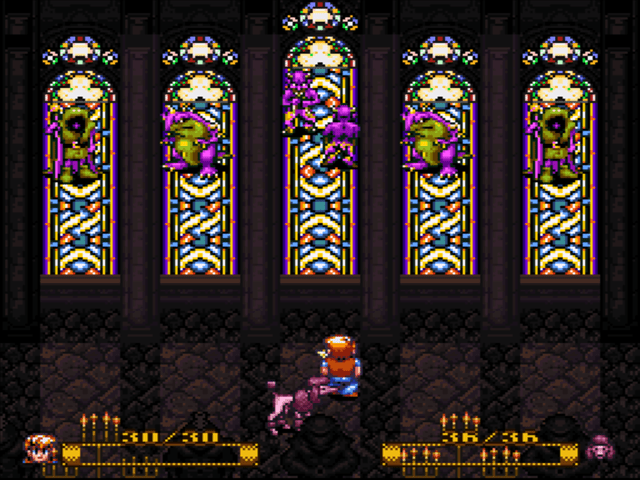
Secret of Evermore is a Squaresoft SNES game that is largely forgotten when talking about the 16-bit RPG giant’s output. It’s not Final Fantasy or Chrono Trigger or even Secret of Mana. Though Secret of Mana is part of the reason the game is remembered by those who do remember it. Secret of Evermore is the first and only game developed by Squaresoft USA. It plays much like Secret of Mana and got a bad rep largely for supposedly preventing us in the USA from getting Secret of Mana’s real sequel. That loss appears to have more to do with Squaresoft’s falling out with Nintendo and the difficulties in compressing the dialogue to fit onto an American cartridge. Still, while the game is not actually connected to the Mana series, Evermore is built along the same lines.

soe1

For better or worse, Secret of Evermore does feel “American.” It weird, but it is weird in a somewhat familiar way. The protagonist is an everyday kid that gets sucked into an alternate reality with his dog. The closest thing he has to a personality is that he loves what sound like terrible science fiction movies. His dog has more going on, if only because the dog changes form in each area of the game, going from a monstrous cave dog to a sleek greyhound to a fancy poodle to a jet power toaster. It is something at least.

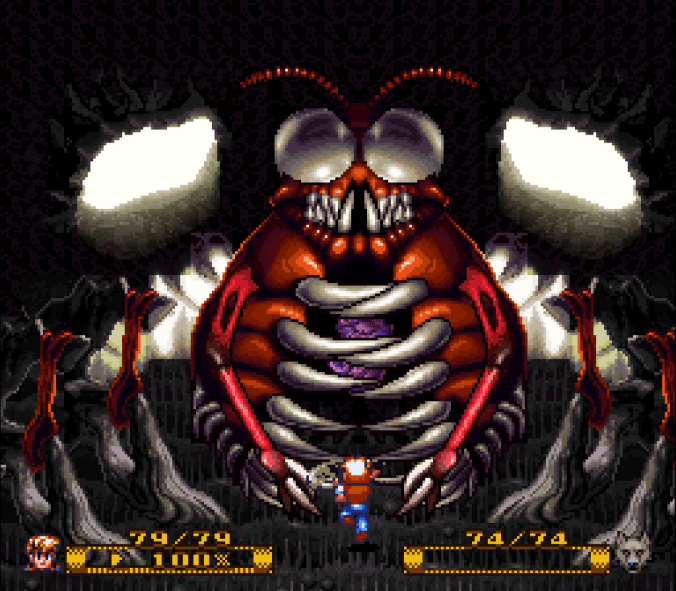
The game starts with the main character getting sucked into a prehistoric world and movies through a few different realms before ending in a science fiction world. Each world is the creation of one of the people who were originally involved in an alternate reality experiment, and each one created a world to their liking. The game plays out a little like Chrono Trigger, moving from one setting to a completely different one every handful of hours. The game looks good, though not great. The music, though, is pretty great. It does play a lot like Secret of Mana. It has that same hit and wait battle system, with a meter at the bottom that must charge before you can effectively attack again. It has the ring menus for choosing spells and weapons. There are some changes to how spells work, but the game is definitely a sibling of Secret of Mana.

soe2

There are two things that stop the game from being one of the SNES’s greats. The first is one of those changes from Secret of Mana, the differences in the magic system. Magic in Secret of Mana was already a low point, since you had to level it up by repeatedly casting spells. That seems to be somewhat alleviated by having only one character in Secret of Evermore, but something new added to what in Secret of Evermore is called Alchemy makes it even more tedious. In order to alchemy, you have to have the spell ingredients. That means you have to scour levels with dog to find invisible ingredients or spend all of your money stocking up on ingredients so you can cast the magic. Plus, you still have to level up each spell individually. So you cast the spell repeatedly to level up so it is strong enough to be useful, but then you run out of ingredients so you can’t actually cast it. It really makes you want to stick with some magic you learn early in the game, assuming you stocked up on enough spell ingredients to keep casting the high level versions of it. Without checking a guide there is no way of knowing which spells are actually worth using, other than leveling them up some and comparing, but that leads to even more ingredient hunting.

soe3

The problem with alchemy is connected to the game’s other big problem: it is horribly balanced. One area will be super tough, but it will be followed by one that is super easy. One boss will be little more than a speed bump, but the next one might be a game ending obstacle. One spell you get fairly early (Crush) is super powerful, but the effectiveness of alchemy is all around a crap shoot. The whole game just feels super uneven.

That unevenness is not particularly surprising given that this was a rookie team making their first game. It feels like a rookie effort. There are quite a few good ideas here and a lot to like, but the game also feels kind haphazard. It is a good game, but there are a lot of good action-rpgs on the SNES. Games like Illusion of Gaia or A Link to the Past. Secret of Evermore doesn’t belong in the upper echelon of SNES games, but it is a worthy addition to the system’s library and still decently fun to play today.

25 Years 25 Games 21: Uncharted Waters: New Horizons

This is going to be the second game I didn’t complete. With Lufia I just got bored and couldn’t force myself to keep with it at the time. I don’t feel the same way with Uncharted Waters: New Horizons; it may in fact be a masterpiece. With this game I am drowning. There is just too much. It is a detailed and complex game with little in the way of tutorial or explanations. It is just the sort of game I would have spent months when I was younger, now I just don’t have the time to devote what could be hundreds of hours to learning the ins and outs of this game.

uwnh1

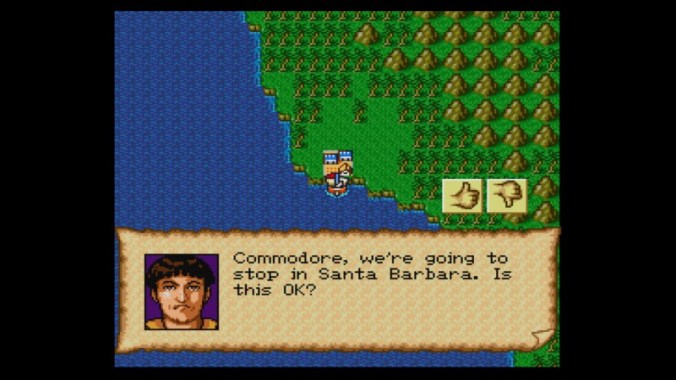
There is a lot to love about this game. The graphics are not the most impressive on the SNES, but while the characters are squat, they are sufficiently detailed to get things across. It actually looks a lot like Final Fantasy IV, a game that was released three years before Uncharted Waters: New Horizons was. Still, the look of the game is more simple than unappealing. It manages to convey a lot of information with a small number of sprites. The trading and exploration systems are fairly deep, especially for a 16-bit game.

Where the game trips me up is just how much there is to do in this game. There are eight protagonists to choose from, exploration, trading and combat to sort through as well as a metric ton of other factors to take into consideration. Each of the characters has their own storyline and their own focus. Otto and Catalina are focused more on combat, being a privateer and a pirate respectively. Then there is Ernst and Pietro, who have stories mostly about exploration. There is also Ali, who is a straight up merchant. And finally Joao, who does a bit of everything. I tried Catalina, Ernst and Joao and was able to make a little bit of progress as each of them. But the game is big, and I never really felt like I knew what I was doing or making any real progress.

uwnh2

The game starts with a brief story segment outlining each character’s goals. Then you outfit a ship, guessing blindly at first at exactly how to make that happen, and set sail. You can fire on other ships, though there isn’t really any explanation on how combat works you’ll have to figure it out on your own, or stop at other towns to buy or sell goods. You do have to keep track of your supplies, like food and water as well. There are just so many things you could do, with little to no in game explanation on how or why you would do those things that the game makes me feel as though I am drowning. I am doing things, but I am not sure I am making progress or even treading water.

uwnh3

I’ve tried to read FAQs and watch videos to get a better idea of how to play the game and what I’ve learned is that I need to play the game a lot more than I have time for. I have enjoyed what I’ve played so far, but this game is too much of an undertaking for me to really complete. Still, from the dozen or so hours I put into the game it is clear that there is something here. I just don’t have the time or inclination to plumb its depths and find its treasures.

Monster Hunter Generations

There is no replacing the feeling of the first time a Monster Hunter Game clicks. I dabbled slightly in the PSP games and Tri for the Wii, but Monster Hunter didn’t really come together for me until I played Monster Hunter 3 Ultimate. That game enthralled me. Then came Monster Hunter 4U, which was objectively better in numerous small ways. I still liked it, but it didn’t quite have that same thrill of discovery that MH3U had. When Monster Hunter Generations came out, I thought up a way to get that feeling back. I played the previous two games using the Hammer as my primary weapon. With MHG, I would make the experience fresh by not using my go to weapon. It seemed like a good idea at the time.

mhg2

Though the game is in many ways a backwards facing anniversary title, Capcom actually changed things up more than it initially seems with Generations. There are only a handful of new monsters, I believe there are exactly seven new beasts, and the graphics are all but indistinguishable from MH4U, but the combat has gotten a significant, for this series at least, facelift. The new wrinkles here are Hunter Arts and Styles. It keeps 4’s mounting, the ability to leap onto a monster’s back and inflict significant damage, and one of its four Hunter Styles exists just to facilitate mounting. There is also a style that is mostly the same as the old way of playing, one that gets extra Arts and one that rewards precise evasion. The Arts are mostly flashy new moves to supplement the usual array of combat techniques available to the player. While the game doesn’t really lose the deliberate pace of combat from previous games, the arts make things more flashy and video gamey. That is a terrible description, but I don’t know how else to describe it. For all the ridiculous weaponry of this series, it had an internal realism. You might be able to swing around a sword larger than your character, but you couldn’t shoot into the air like a rocket or perform a shoryuken. The Hunter Arts don’t break things, but they do push the series a little further than it had gone before.

mhg3

My goal going into Generations was to not use the Hammer. I had stuck primarily to that weapon in the two previous Monster Hunter games and I hoped that changing my weapon would help freshen up the experience. The different weapons in Monster Hunter play differently enough that changing them almost makes it feel like playing a whole new game. Unfortunately for me, I really only like the version of the game that involves bashing dinosaurs in the face with a giant maul. I did try to use other weapons this time, which I think is why this game didn’t initially click for me.

First I tried the lance. I love the lance in theory; it makes me feel like my character is a straight up Medieval Knight. The lance is also slow and cumbersome and defensive. It is basically the opposite of my beloved hammer. A few fights against easy monsters quickly showed me that neither the lance, nor its sibling the gunlance, was the weapon for me. Next was the long sword, which was a suitably aggressive weapon, but it ended up feeling too fiddly. It lacks the straightforward elegance of the hammer. The next pair of weapons I tried were the ones that worked best. The trusty sword and shield, while somewhat boring, are perfectly fine weapons. They were my go to when I absolutely needed to sever a tail in previous games. They are easy to use and are very adaptable, especially with the new oils that can be applied to the sword that gives it special properties. I also got some mileage out of the Charge Blade. Honestly, I think that is the weapon I should have spent more time with, but it takes time to learn a new weapon and I was tired of wasting my time at this point.

mhg4

In the end, I switched back to the Hammer and everything fell into place. That is the weapon for me. In the future I may dabble with a handful of other weapons. I like to use bowguns in multiplayer, the Hunting Horn is close enough that I really should learn it and sometimes you just need to cut off a tail. However, I don’t think I’ll ever attempt to make anything but the hammer my primary weapon going forward.

Monster Hunter Generations is just more Monster Hunter. The game’s fresher fighting isn’t really much different from what it was before and everything else in this game is intentionally a call back to another game in the series, which is a decade old at this point. If/when Generations U (called Double X in Japan since Generations was X) comes over here I may or may not pick it up, but I will definitely be right there when the inevitable Monster Hunter 5 shows up. This series is one of the few reliable joys in the current gaming landscape that doesn’t come courtesy of Nintendo.

mhg5

River City Tokyo Rumble

I love River City Ransom. It is my #2 favorite game of all-time. When I heard that one of those recent Japan-only follow ups was actually going to make it across the pond, I got pretty excited, especially when I saw that it was sticking with the classic NES look. Bad timing, a small print run and my reticence to drop $30 on a digital title led to the game passing me by early this fall. I was more than happy to find it under the tree at Christmas, though. That this game looks and plays so much like that NES classic is reason to be a little leery of my opinion of it. This is a game made to press my nostalgia buttons.

rctr1

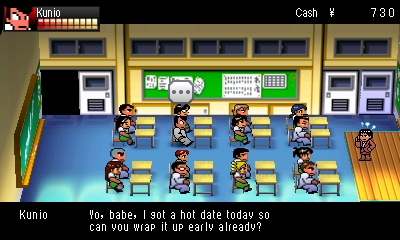
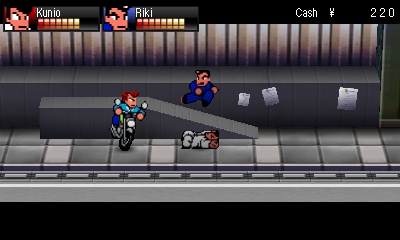
River City Tokyo Rumble manages to be both a follow up to the game Americans actually like, River City Ransom, while not completely ignoring the crappy game that gave the series its start, Renegade. Last year I played through Shin Nekketsu Koho: Kunio-tachi No Banka which was enjoyable in a lot of ways, but was also clearly more of a follow up to Renegade than River City Ransom. River City Tokyo Rumble is very much in the same vein as River City Ransom. There are town areas, shops, RPG-elements and free smiles. While the game plays like a sequel to River City Ransom, the story is very much a sequel to Renegade. It starts with Kunio’s buddy getting beaten up in the parking lot and the characters that join Kunio are ones that were bosses in Renegade but didn’t appear in River City Ransom. While that does keep the game from perfectly hitting the nostalgia like it could have, but it also makes it feel somewhat fresh and new for those that rightly don’t much enjoy Renegade.

rctr2

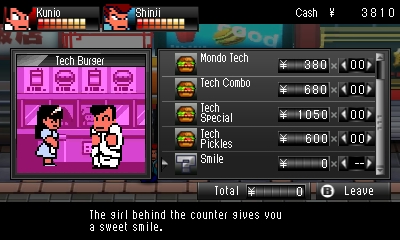
There are some changes from the River City Ransom formula and most of them are sideways steps rather than strict improvements. Gone is getting stat increases from food, instead there is an experience system. It works, but it makes the restaurants and shops less important or interesting. They only refill health and willpower. Useful, to be sure, but not as important as improving stats. Players can now accumulate all of the special attack scrolls they can get their hands on without being limited to how many can be equipped. The map opens up slowly, but it is now broken up into freely visit able, once unlocked, areas instead of one big map. Each area is small enough that is hurts the game sense of progression, since the only difference between areas are the enemies in them. It is reminiscent enough of River City Ransom to delight that way, but different enough to not just feel like a cash in.

rctr4

Some of those differences add quite a bit to the game. Once change is a new system of odd jobs the player can take on. Most of them are pretty mundane, go to a certain place or beat a certain enemy, but it is more than enough incentive to keep the player running around the game’s world. Then there is the gradual accumulation of moves, which far outstrips those available in the NES game. By the end of this game Kunio is an unstoppable death cyclone. It also adds a few difference partner characters, with Shinji and Misuzu in addition to the usual Riki. The new leveling system works against that, though, since they each have to be leveled up with the player and soon fall far behind Kunio.

rctr3

While it is a far from perfect, River City Tokyo Rumble feels a lot like the Mega Man 9 to River City Ransom’s Mega Man 2. It isn’t as perfect a recreation of the old aesthetic as MM9, it evokes a similar feeling of playing a game just like the games you used to play. The changes to the system, the humorous off beat odd jobs and a story that goes real big by the end makes the game feel even more like a 2D take on the Yakuza series. I’ve always felt River City Ransom and Yakuza shared a lot despite originating nearly 20 years apart and this game doesn’t dissuade me of that notion. And while I am usually not one to complain about price, despite the addition of a dodgeball mode this game feels awful slight for the full $30 price tag. Still, for fans of old school brawlers and River City Ransom in particular, River City Tokyo Rumble is well worth playing.

Yakuza 5

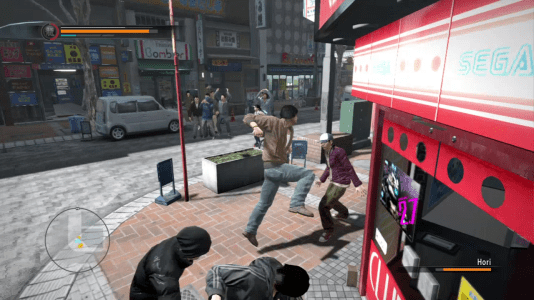
I don’t think I’ve written about my love for the Yakuza series much. And I do love it, though it is unlike other games I tend to enjoy or write about here. I have been a fan of the series ever since I picked up the original game way back in 2008 or so. I was initially put off, having read bad reviews, likely from that rag Game Informer, but as the second game was nearing release, I picked up the first game used and has a blast with it. It felt like the distant descendant of River City Ransom, with an RPG’s attention paid to the story. While I wasn’t able to find a copy of the sequel, I did nab Yakuza 3 & 4 when I got a PS3. I only finished the fourth game a little more than a year ago, just before Yakuza 5 finally hit. I purchased and downloaded it right away, but put off playing it for a while since I had just spent so much time with Yakuza 4. I’m glad I did, because Yakuza 5 is probably the best game in the series and it deserves to be played fresh.

yakuza55

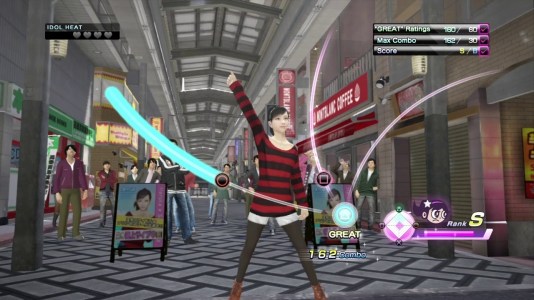
Like its predecessor, Yakuza 5 splits the game into chapters, each with a different protagonist. Each of these chapters could be their own game, though those games would be a little short. It starts with Kazuma Kiryu, the series longtime protagonist, while Shun Akiyama and Taiga Saejima make return appearances. While there is no sign of Tanimura, Yakuza 4’s fourth protagonist, he is replaced by Tatsuo Shinada. Also, for the first time in the series Kazuma’s adopted niece/daughter/ward Haruka Sawamura is playable. Each of these chapters has its own setting, storyline, and tone. Yes, they eventually connect, but they also stand on their own right up until their conclusions. Kiryu’s chapter is a very much a traditional Yakuza game, with a city to explore and lots of thugs to fight. Saejima’s chapter features another prison break for him, as well as an extended stay in the mountains. The third chapter is a curve ball, starring Haruka as she gets her start as a pop star. All of the fighting is replaced with dance battles and rhythm game musical numbers. At least, they are until the president of her talent agency turns up dead and in debt to genial lender Akiyama. From there the two split the chapter as they try to win a singing competition and get to the bottom of a murder mystery. The last chapter is back to Yakuza business as usual, but this time with a character completely unfamiliar with the criminal underworld. While their stories are separate, they all lead to the same place, with one mastermind behind the whole thing.

yakuza52

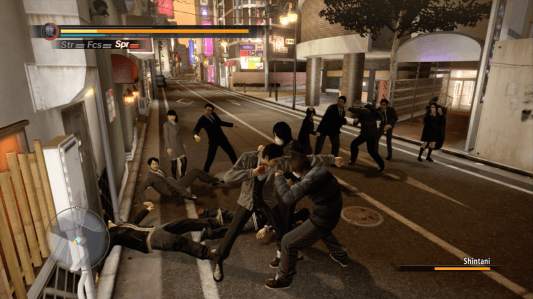
The most amazing thing about Yakuza 5 is how varied the gameplay is and how satisfying everything it. I have long criticized a lot of open world games, like GTA, for offering the player thousands of things to do, except none of them are fun. While not everything available to player to do in Yakuza 5 is fun or remotely worth doing, the bulk of the central modes are enjoyable. Kiryu starts the game with a job as a taxi driver, and his racing and driving missions are surprisingly fun. That same goes for Haruka’s rhythm games and Shinada’s adventures in the batting cages. The standout is the hunting minigame with Saejima. There you take to the snowy mountains with just a gun and a small pack to hunt bears, as well as host of other woodland creatures. All of these things are different from the main brawling gameplay, but all of them are also worthwhile in their own right. The pool minigame isn’t half bad either, nor is the golf, though you can safely avoid the slot machines.

yakuza53

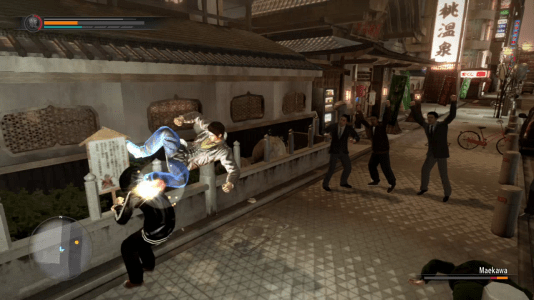
The Yakuza series doesn’t seem like the sort of thing I would like. It is a very violent game. Overtly, obscenely, unnecessarily violent. But that violence tends to stop short of killing. This is not a murder simulator. The dudes you pummel in the streets might not realistically survive the beatings they get put through, but the game dutifully shows them alive, if aching, after every fight. That goes a long way for me. Even though this is a game about criminals, taking a life is not something even they take lightly. It is a game that strikes a tone similar to Metal Gear Solid. That series can ponder the nature of loyalty while at the same time have Snake track down hidden cartoon monkeys in the forest. This is a game where the protagonists can get caught up in all sorts of silliness, like a man getting into multiple fist fights with a bear, but still features long cutscenes where the characters ruminate on what it means to be a man and how to go about keeping their manly honor.

yakuza54

The tragedy of the Yakuza series is that Kiryu will always be the star, even though it would likely be better for him if he weren’t. By the third game in the series he has retired to Okinawa to run an orphanage, but in each game since he gets drawn back into the action. In the last game worthy successors were created in Saejima and Akiyama, but fans would revolt if Kiryu weren’t in it. Even in the game world he is such a legend that he is deliberately pulled into the action so a character can prove themselves by beating him (they can’t). The trio of non-Kiryu fighters in this game would be more than enough for the game on their own. Akiyama is a personal favorite of mine, with his lackadaisical approach to life, but his deathly serious take on his job. Shinada’s story is the most disconnected from the rest of the game, but it is also the most satisfying. He is a former professional baseball player who was framed for cheating and banned from the sport. More than a decade later he is prompted to investigate the conspiracy that got him banned for life. He is joined by the apparently unscrupulous loan shark Takasugi. While the normally carefree Shinada is forced to confront some darkness he had ignored, Takasugi proves to me much more soft-hearted than he initially appeared. It is an altogether satisfying little story. However enjoyable the other stories may be, the heart of the game is the relationship between Kiryu and Haruka. He gives everything up to let her live her dream, but by the end she realizes that her dream, which began as a way to provide for her surrogate family, will prevent her from being with them.

yakuza51

Yakuza 5 is a jambalaya of a video game. Everything is thrown into the pot and the flavors meld perfectly. The tone ranges from silly to somber, from awesome to heartbreaking. I have enjoyed each and every game I’ve played in this series, but I don’t think any of them are quite as good as Yakuza 5 is. It is too bad I’ll never get to play the Japan only spin off, but at least we can look forward to Yakuza 0, Yakuza 6 and Yakuza Kiwami over the next year or so. That is almost enough to finally get me to spring for a PS4.

Now Playing December 2016

Beaten/Abandoned

Pokémon Moon – read post here.

Shantae: Half Genie Hero – read post here.

Mighty No. 9 – read post here.

Yakuza 5 – read post here.

DoReMi Fantasy – Read post here.

Never Alone –

na1

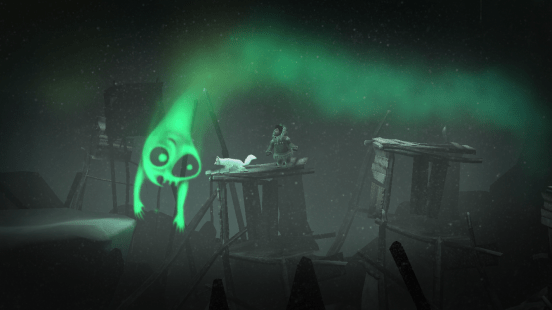
It makes me feel bad, but I didn’t like this game. It is a game that clearly had a lot of effort put into it and it is exactly the kind of game I tend to enjoy. It is a story heavy puzzle platform game. It goes to great length to get details of the Inupiaq folk tale right and is filled with great details. However, the gameplay is floaty and imprecise. Maybe it is just the WiiU version, but I encountered numerous bugs and glitches. I got stuck right at the end because the game simply didn’t work right until I shit it off and started it over again. When things work right, the game is solidly satisfying, though still unspectacular, but too often it didn’t.

Uncharted Waters: New Horizons – I’ve got a slightly longer post about this game coming up, but I am abandoning it. Not that it isn’t a solid game, because it is, but because it is drowning me in complexity. I have played it long enough that I have a feel for how the game works, so I will write it up, but I feel like I could play this game for another 30 or 40 hours before feeling finished with it.

Ongoing

Secret of Evermore – I’ve passed the point when this game is a delightful romp and into the part where it becomes a slog. The spell system is the biggest offender. Needing to level up spells, like in Secret of Mana, was bad enough. Now those spells are also limited in number of charges available by spell ingredients. So you have to go find ingredients to cast the spells to level them up so they are useful, then go get more ingredients so you can actually cast the spells against current enemies. The whole rigmarole is sapping all of the goodwill the game built up in the first half dozen or so hours.

Pokémon Picross – Free to play, but I’ve cleared the portion of the game that is actually free. Picross in general is great and this version is highly enjoyable. Enjoyable enough that I am thinking of dropping the $5 bucks or so that would keep me playing for another dozen hours or so. Really, this is a full-fledged release that Nintendo with a disguised demo. Also, kudos to Nintendo to limit the amount of money someone could spend on this game to $30, the cost of a retail 3DS game. I don’t intend to put that much money into it, but the addictive nature of picross puzzles has me wanting to unlock another few dozen or so more stages. Good thing Nintendo hasn’t left players short of picross options.

Runbow –

rb1

This game is a delight. I’ve only cleared about a dozen of this games many bite-sized stages, but that has been enough to make me a big fan. It takes on central mechanic, with color changing backgrounds and platforms that disappear when the background changes and combines with a ton of small, specific challenges. Sometimes the world flips upside down, sometimes there are spikey enemies. They are just the right length to keep players trying out just one more until the next thing you know you’ve been playing for three hours. I will definitely be playing as much of this as I can.

Elliot Quest – I got back into this game when I was trying to finish up some download games that had built up on my WiiU. It is still Zelda 2 done right, but getting back into it after leaving it sit for a few months is rather difficult. Right now I am lost after finishing a fairly long dungeon, but it is a satisfying kind of being lost, not a frustrating one. It remains a charming little game.

Monster Hunter Generations – I wasn’t enjoying this game so much when it first came out. After another dozen or so hours I realized the problem wasn’t the rather significant changes to the game’s combat, but that I was forcing myself to use weapons like the Gunlance and the Sword and Shield and not falling into using my natural love: the Hammer. I’ve tried all available options, but Monster Hunter only feels right to me when I am smacking dragons in the face with a chuck of boulder on a stick.

SMT 4: Apocalypse –

smt4a

Ten hours was enough for me to realize that while this game may be very good, it is just not what I want to play right now. SMT 4 was great and Apocalypse makes some subtle improvements to its systems that make things just slightly easier to play. The story is not an improvement, but so far it hasn’t been a detriment. It is rather dark and oppressive and I am in the mood for something more upbeat right now. I’ll get back to this before too long, but it is going on the backburner for now.

Upcoming

River City Tokyo Rumble – Christmas game 1. I was pretty pumped for this before it came out, but when I missed the opportunity to get it with the keychain I put it on the back-burner. The few minutes I tried out after my brothers got it for me for Christmas were really promising. I love River City Ransom and this looks to be the Mega Man 9 to that game’s Mega Man 2.

Paper Mario Color Splash – Christmas game 2. One of the few WiiU releases I missed out on, but I am really glad I’ve got it now. Unlike seemingly everyone else on the internet I liked Paper Mario Sticker Star. It wasn’t the game Thousand Year Door fans wanted, but I felt it succeeded on its own terms. This looks to improve on that.

Robotrek/Lufia 2 – I am still planning on finishing last year’s 25 Years of SNES project and these two are on the docket after I finally finish with Secret of Evermore.

Remember Me – I got this a few years ago with Playstation Plus and enjoyed the first few chapters. Then I let my Plus membership lapse. Recently I purchased the game in a Humble Bundle and I think I’m going to finish it up. I’ve heard a lot of great things about Dontnod’s other game, Life is Strange, but I don’t see a reason to buy that game when I’ve already got this on the play.

Shantae: ½ Genie Hero

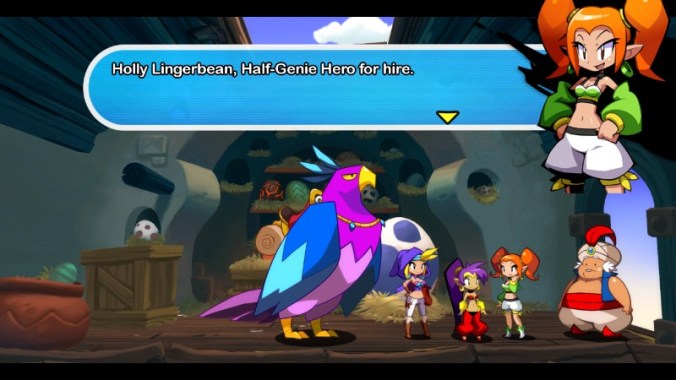
Wayforward does good work. They are the go to company for solid, if only rarely spectacular, licensed games as well as updates on classic games. They are the ones behind games like A Boy and his Blob, Contra 4, DuckTales Remastered and Batman: The Brave and the Bold. As good as those games, as well as a couple of handfuls of others across primarily the Wii, DS and 3DS, are Wayforward has always done their best work on their original titles. Those include the Mighty games – Mighty Switch Force, Mighty Milky Way, etc. – and the Shantae games. When Wayforward went to Kickstarter to fund the latest Shantae game, Shantae Half-Genie Hero, it seemed like the surest possible bet. While the game missed its projected release date by more than a year, the finished product turned out to be everything fans hoped it would be.

shgh

Shantae: ½ Genie Hero breaks no new ground. While its story doesn’t pick up from its predecessor Shantae and The Pirate’s Curse, the gameplay doesn’t stray far. The biggest difference is in our heroes abilities, with Shantae reverting to her dance triggered transformations rather than relying on skills like those of Risky Boots. The same transformations that she used in her first two games. Well, not exactly the same, but similar. Still, while Shantae is a riff on the same kind of game people have been playing for more than 25 years, everything about it is so well done that it just warms the heart.

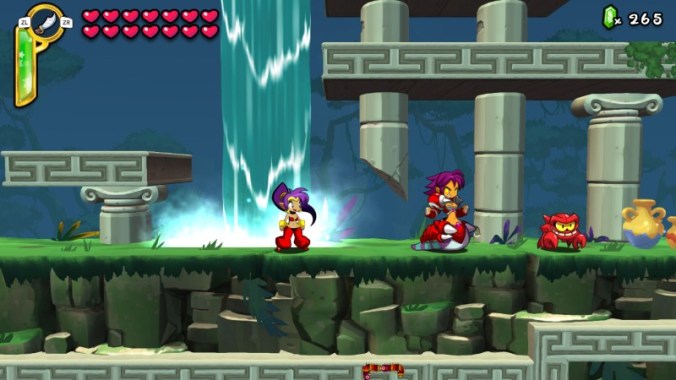
First of all, the graphics and sound are excellent. It shares a general look with DuckTales Remastered, but it simply looks better. It is not the pixel art of previous games, but it is fluidly animated and is frankly one of the best looking 2D games I’ve ever seen. It still has that usual Shantae look, which includes a lot of cartoonish voluptuousness for better or worse, and Sequin Land has never looked so good. The game also has some great tunes, I don’t know how else to say it, they are just some awesome listening.

shgh3

Gone is any sense of this game as a sort of Metroidvania, the game is strictly level based. Each level has two or so distinct areas and while each area has places to explore, the play out completely linearly. The stages are largely really well designed, each with distinct challenges. One takes place in the air during a flying carpet race. Another has Shantae lost in a spooky mansion. While they don’t really break any new ground, they are interesting and fun to play though. The linear nature makes for some awkward bit, when you must go back to stages to look for doodads and power-ups. It is tempting to run back to each stage after completing the next one and getting a new power-up, and the game encourages this by gating the unlocking of the next stage behind completing some tasks for the townsfolks. They are not onerous tasks and the time spent searching for whatever the citizen or Uncle Mimic needs can also be used to scrounge up extra hearts and collectibles. They are fun to explore, up to a point and by the end of the game it reaches the point where it stops being fun and starts being a little tedious.

shgh2

Shantae controls as well as usual. Unlike the original GBC game, her hair actually feels like it has sufficient length to make a good weapon. I did have a little bit of a problem with the difficulty curve. The first stage, after the quick opening one, is likely to be the most difficult task in the game save for the final level. You haven’t really had a chance to get any extra hearts or power-ups at that point, so it is all about the player’s skill. After that, when the player gets more and more hearts and finds numerous healing items, the folds like tissue paper. Until the last stage, which is suitably challenging.

shgh4

Most of my complaints here are nitpicks, reasons why Shantae: ½ Genie Hero is not the best game ever, merely an extremely good one. My expectations for this series grows with each game I play, and each time the new game exceeds them. I don’t really know is this game is better than the previous one, but at the very least it is as good. Shantae: ½ Genie Hero joins Shovel Knight as one of the best Kickstarter triumphs.

Top 10 Games 2016

Before I get to the actual Top 10 list, I have some other business to attend to, some honorable mentions and games left off the list for various reasons. First is that it should be noted that I really only played new games on 3DS and WiiU this year. I don’t have a PS4 or Xbox1 and I don’t have any concrete plans to get either. (The Last Guardian, Final Fantasy XV, the Final Fantasy XII remake, Yakuza 0, 6 and Kiwami and Persona 5 are actually getting pretty close to forcing my hand about picking up a PS4, but I’m not there until at least after Christmas) While the WiiU sputtered into an early grave, the 3DS had a hell of a year. There were more good 3DS games than I could reasonably play. I didn’t end up with time to play Shin Megami Tensei 4: Apocalypse or River City Tokyo Rumble enough to accurately rate them. The same goes for Return to Popolocrois and Final Fantasy Explorers, but judging on my limited time with each neither seemed likely to make my Top 10 list.

Now on to the honorable mentions, of which I have four. The first three are all remakes and compilations. I didn’t play much of The Legend of Zelda: Twilight Princess HD since I just played it not that long ago, but what I’ve seen it seems to a fine update of what was already a very good game. It doesn’t appear to be as ambitious a remake as Wind Waker or the 3DS versions of the N64 games, but it is still a good game. Then there is the Sega 3D Classics Collection and Mega Man Legacy Collection. They are great games, or collections of great games, but they are not new games. The Mega Man Legacy Collection, especially, is an impressive collection of old games. That is a game that does it all right, bringing together some perfectly recreated old games with tons of the packaging and boxing of those games. It does an amazing job of preserving not just the games, but the ephemera around the games.

The last of my honorable mentions is Yakuza 5. It is hands down the best game I played this year. It is also a game that was released in December of last year and 2012 in Japan. If I had managed to play it last year, it would have been my number one. I was tempted to fudge things to make it this year’s number one. No other game I played this year had anywhere close to as many fist fights with bears.

Now, on with the list, with links to any posts I’ve written about these games. (Last minute edit: I’ve spent the last two weeks or so suddenly being enthralled by Monster Hunter Generations which forced me to find a place for it on the list, but I didn’t want to take anything off. So now the last two tie for tenth place)

sf02(tie) 10: Star Fox 0 – I called Star Fox 0 a damn fine game, but not a great one and I stand by that. It is a game that flashes the greatness of this series one truly excellent entry, but the rest of it is full of Nintendo experimentation. The game on the whole is a messy; not all of the new things work and it does more to show what doesn’t work than what does, but it doesn’t stop the whole package from being a lot of fun.

mlpj4(tie) 10: Mario & Luigi Paper Jam – I might be giving this a little boost over some game competition (notably Bravely Second End Layer) thanks to it being the only dose of Mario and company I had this year, but that doesn’t stop it from being a solid game. The further I get away from it, the less the somewhat tedious endgame dominates my memory of the game, like it did when I wrote it up earlier this year.
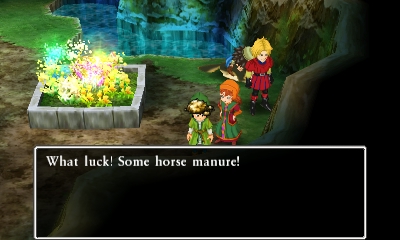
dq739: Dragon Quest VII – This is among my least favorite of the numbered Dragon Quest games, but like the rest of the series it overflows with charm and humor. Clearly, I do like the game, but for every fun bit with Maribel or Ruff there is a baffling decision like hiding the job system for the first half of the game. DQVII is a great 40 hour game that takes about 70 hours to beat. Still, the good 40 hours more than outweighs the bloat that has creeped in.

mhg8: Monster Hunter Generations – More has changed with this game from MH4U than it first initially appears, especially since graphics aren’t really one of the things that are different.  Still, the new hunter styles give every weapon even more flexibility than it already had there is so much good content that you could place this game for a year and not run out of things to do.

tms47: Tokyo Mirage Sessions #FE – This isn’t even close to what I expected from a SMT/FE crossover, but the finished product was a pretty enjoyable JRPG. It is the Persona game people have been waiting for since Persona 4 came out, with just a dash of Fire Emblem thrown in. It is all pastels and nonsense, but shockingly enjoyable.

bbb6: BoxBoxBoy – BoxBoy was simple perfection and the sequel is more of the same. It is the puzzle platformer distilled to its essence and is all the more enjoyable for it. It keeps the same simple concepts of the original, but with a few new wrinkles.

shgh5: Shantae: ½ Genie Hero – Not the best game I’ve Kickstarted, which would be Shovel Knight, but it is in the same league. It has beautiful graphics and it fulfills the promise that was the original GBC Shantae. It uses the same set tools as that game, but fixes all of little problems that crept in thanks to the limited nature of the system it was on. This is a great platform game with solid physics and a great sense of empowerment. It is just so good.

psm24: Pokémon Moon – A strong year for the 3DS kept what is one of the strongest Pokémon games from landing even higher on my list. It keeps the foundations of the series in place, but shakes up many of the series’ traditions. It makes for a fresh feel to a familiar experience. And since the basics of Pokémon are so well constructed it works very well.

aasoj43: Phoenix Wright Ace Attorney Spirit of Justice – I can’t say that the series has really been wandering in the wilderness for most of the last decade; the last few games have all been solid, but Spirit of Justice is easily the strongest this series has been since Trials and Tribulations. It does everything this series does so well.

kpr12: Kirby Planet Robobot – I don’t think Nintendo has a series quite as consistent as Kirby. Yeah, it alternates between normal platform games and oddball titles like Rainbow Curse, but those platform games are all excellent. Planet Robobot is a Kirby game; that is really all you need to know about it. There are lots of powers to absorb. Tons of levels that are easy to beat, but somewhat difficult to master. It is simply a very well made game.

ffex1: Fire Emblem Fates – I am rolling all three versions of this game – Birthright, Conquest and Revelations – together as one title. It is essentially three paths through one game, though those paths share very little other than the same game world. I don’t think this is my favorite Fire Emblem, none of the three paths feels exactly right to me, but I can’t deny the sheer amount of enjoyment I got from this supersized package.